
Latest News
Nigeria’s Security Depends on Empowering Youths — Gen. Buratai

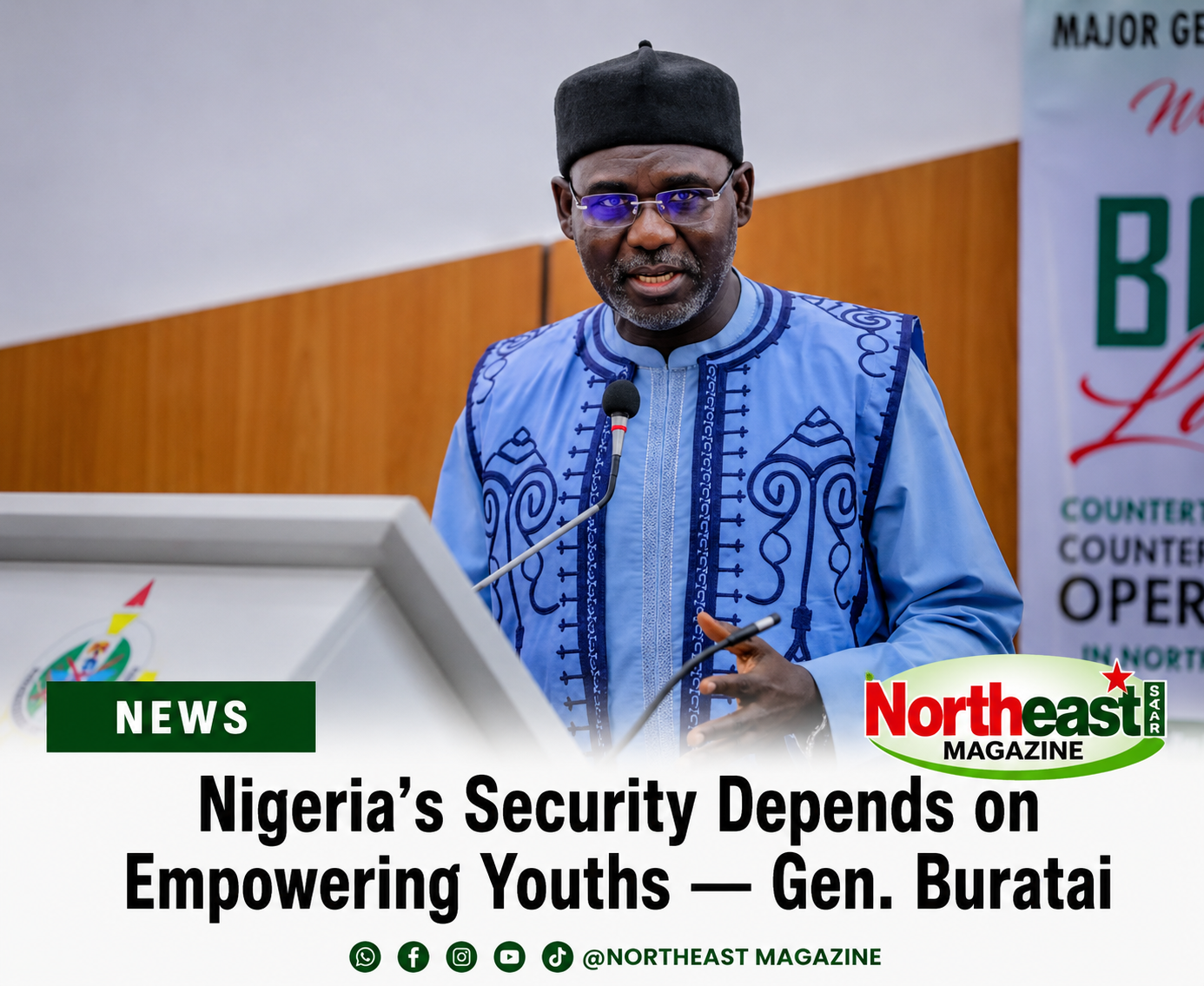
Nigeria’s Security Depends on Empowering Youths — Gen. Buratai
By Auwal Ahmad Umar
Former Chief of Army Staff Lt-Gen. Tukur Yusufu Buratai (rtd), has warned that Nigeria’s security and future stability may remain under threat unless the country deliberately invests in and empowers its youthful population.
the Gen. Buratai stated that at University of Ilorin while delivering a lecture with titled “The Armed Forces of Nigeria and National Security: The Youth and National Security Aspirations”, Buratai said the intersection between youth development and national security has become critical to Nigeria’s survival amid rising insecurity across different parts of the country.
Quoting former United States Secretary of State Hillary Clinton, the retired military officer said, “A nation’s security is only as strong as its commitment to its young people.”
He noted that insurgency, terrorism, cybercrime, separatist agitation, banditry, and organised criminal activities continue to challenge Nigeria’s unity and development, stressing that the country’s youthful population remains both its greatest strength and potential vulnerability.
“If neglected, this same demographic could become our greatest vulnerability. How effectively government at all levels and the Armed Forces engage, empower and integrate youths into national security frameworks will determine Nigeria’s trajectory towards stability or turmoil,” Buratai said.
The former army chief explained that the Armed Forces of Nigeria have evolved from a small colonial constabulary established in 1863 into a major institution responsible for defending the sovereignty and territorial integrity of Africa’s most populous nation.
According to him, the changing nature of security threats now requires a broader understanding of national security beyond military operations alone.
“Today, national security extends beyond merely defending territorial borders.” Cybersecurity, economic stability, climate risks, and intelligence coordination have become central to the survival of modern nations,” he stated.
Buratai observed that more than 60 per cent of Nigeria’s population falls within the youth category, making it necessary for government and security institutions to harness their creativity, patriotism, and innovation for national development.
He said frustrated youths often become targets for recruitment by criminal and extremist groups, while empowered youths could serve as defenders of peace, unity, and national stability.
The retired general also reviewed the historical role of the Armed Forces in the Nigerian Civil War, peacekeeping missions across Africa, and ongoing counter-insurgency operations within the country.
He identified Boko Haram and ISWAP insurgency in the North-East, banditry and mass kidnappings in the North-West and North-Central, separatist violence in the South-East, and oil theft in the South-South as major security concerns confronting Nigeria.
Buratai further warned that growing instability across the Sahel region, particularly in Mali, Burkina Faso, and Niger, has compounded Nigeria’s security challenges.
Drawing lessons from Colombia and Sri Lanka, he recommended a blend of military action, socio-economic reforms, intelligence-sharing, and community engagement as the most effective strategy for tackling insecurity.
“Military force alone cannot defeat an ideology. Nigeria must combine security operations with development, justice, inclusion, and opportunities for young people,” he said.
The former army chief proposed the recruitment of 50,000 youths annually into the Armed Forces over the next five years, the establishment of state intelligence centers for information sharing, and the introduction of civic security training for tertiary institution graduates.
He also advocated the creation of a Security Trust Fund to support military equipment procurement, personnel welfare, and youth employment within the security sector.
Buratai urged young Nigerians to see military service as a patriotic and noble responsibility.
“The country needs your brains, your strength and your courage. Nigeria’s security is a national project that requires the participation of every citizen, especially the youth,” he added.

By Auwal Ahmad Umar
Billiri has gained a 120MVA substation, while a separate upgrade in Gombe city gives the grid more capacity. For businesses, the measure of both projects will be how reliably electricity reaches their premises.
In Billiri, a farmer who mills grain before taking it to market needs electricity at harvest time. A trader selling perishable goods needs it long after the market closes. For both, the value of a new power substation will be measured in the hours they can keep working.
Minister of Power Engr Joseph Olasunkanmi Tegbe made that connection between electricity and livelihoods when he inaugurated a transmission substation in Billiri and an expanded facility in Gombe, the state capital, at separate ceremonies on Thursday.
“Here in Biliri, farmers need power to process their produce, traders need it to preserve the goods they sell, and artisans need it to run their tools,” Tegbe said. “For each of them, the value of this investment will be measured in the work they can do and the income they can earn.”
Tegbe said inadequate electricity infrastructure had held back businesses in both communities even as their settlements grew and trade expanded. He said President Bola Ahmed Tinubu’s administration was investing in sections of the grid where transmission constraints limited the power available for productive use.
What the projects add
The Billiri substation has two 60MVA transformers with a combined capacity of 120MVA, according to the Managing Director of the Transmission Company of Nigeria (TCN), Engr. Sule Ahmed Abdulaziz. The transformers step down electricity from 132kV to 33kV, and six outgoing lines carry it into the distribution network serving the area.
Abdulaziz said the World Bank financed the project, which Chris Ejik International Limited executed under the Federal Ministry of Power and TCN.
In Gombe city, the work centred on an existing substation. TCN installed an additional 300MVA transformer and replaced a 30MVA unit with a 100MVA transformer. The replacement more than triples the capacity of that unit to step down power for distribution.
From the grid to the shop floor
The upgrades increase the amount of electricity the two substations can handle. How much of that capacity translates into longer hours of supply for a miller or welder also depends on the condition of the lines that carry power from the substations to customers.
Governor Alhaji Muhammadu Inuwa Yahaya took up that issue in remarks delivered by the Commissioner for Energy and Mineral Resources, Sanusi Ahmed Pindiga. He thanked the federal government for the projects and urged TCN and the distribution companies to maintain their respective networks so that residents could benefit from the investment.
The governor also asked customers to report faults promptly and protect equipment in their communities. Tegbe made a similar appeal over the risk of vandalism, saying the protection of electricity infrastructure “requires the vigilance of all of us”.

By Aliyu Isah
Plan International Nigeria has called for sustained investment in teachers’ welfare, professional growth and emotional well-being as it reviewed the outcomes of a two-year education support programme in conflict-affected parts of Sokoto and Adamawa States.
The organisation made the call at the closing ceremony of the Teachers in Crisis Contexts (TiCC) project held in Abuja on Thursday, where education stakeholders examined the programme’s achievements, implementation challenges and prospects for sustaining its interventions.
Supported by the European Union, the initiative, known as Building Resilient Education Systems: Supporting Teachers’ Professional Development, Well-being and Policy Reforms in Crisis-Affected Contexts, was carried out by Save the Child Initiative (STCI) and the Forum for African Women Educationalists (FAWE), in partnership with the Nigeria Union of Teachers (NUT).
Speaking at the event, Plan International Nigeria’s Country Director, Dr Charles Usie, said the programme sought to improve teachers’ professional skills, working conditions and acceptance within communities affected by insecurity and humanitarian emergencies.
He explained that the interventions included capacity-building activities, the provision of teaching equipment and measures to help teachers integrate into schools serving vulnerable communities.
Usie, however, identified the difficulty of getting educators back into classrooms after attacks as one of the major obstacles encountered during the project.
He noted that assaults on schools and other public facilities often leave teachers traumatised, with many reluctant to return to their workplaces because of fears for their safety.
According to him, education and health facilities are frequently among the institutions exposed to attacks during emergencies, making the protection and psychological recovery of their workers a critical concern.
The country director said the project had produced an approach that could be adapted and introduced in other parts of Nigeria facing similar challenges.
He also praised STCI for its role in implementing the programme, describing the organisation as a valuable partner in humanitarian assistance and development initiatives.
However, Usie emphasised that the long-term success of such interventions would depend on government ownership, noting that development organisations could initiate and test solutions but could not independently guarantee their continuation.
He said state and federal authorities needed to incorporate successful interventions into public policies, provide adequate funding and establish institutional arrangements to ensure that the gains were not lost after external support ended.
Also speaking, Sokoto State Commissioner for Basic and Secondary Education, Prof. Ahmad Ala, reiterated the state government’s commitment to improving teachers’ skills, professional development and overall welfare.
Ala stressed that consistent investment in educators was necessary to strengthen teaching standards and improve pupils’ learning outcomes.
The closing ceremony attracted education officials and representatives of relevant institutions from Sokoto and Adamawa States, who reviewed the programme’s performance and discussed lessons that could inform future interventions.
Those present included education commissioners from both states, alongside representatives of the NUT, Teachers Registration Council of Nigeria (TRCN), Universal Basic Education Commission (UBEC), Plan International Nigeria, FAWE and STCI.
At the end of the meeting, stakeholders drew up a Sustainability Action Plan outlining measures to preserve the programme’s achievements and explore opportunities to extend successful interventions beyond the project’s lifespan.
The plan is expected to provide guidance for continued efforts to protect teachers’ welfare, strengthen their professional capacity and improve the resilience of education systems in communities affected by conflict and insecurity.

Da’awa council defends NERDC chief, seeks proof of religious bias in curriculum

What Gombe’s grid upgrade could mean for farmers and traders

Tinubu Delivered for Balanga, Deserves Your Votes in 2027—Gov. Yahaya

APC National Chairman Settles Gombe Central Contest, Raises DCP Ahmed’s Hand as Party’s Senatorial Candidate

NGX Ends Week in the Green as ₦1.54 Trillion Boosts Investors’ Fortunes

Gombe Eyes Livestock-Led Economic Growth as Inuwa Yahaya Meets Minister

-
 Politics5 months ago
APC National Chairman Settles Gombe Central Contest, Raises DCP Ahmed’s Hand as Party’s Senatorial Candidate
-
 Economy11 months ago
NGX Ends Week in the Green as ₦1.54 Trillion Boosts Investors’ Fortunes
-
 Agriculture4 months ago
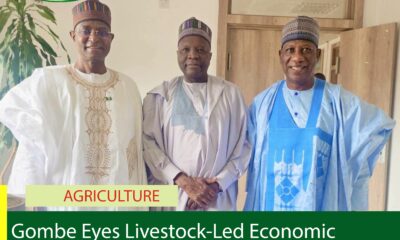
Gombe Eyes Livestock-Led Economic Growth as Inuwa Yahaya Meets Minister
-

 Education12 months ago
Dangote Launches Landmark ₦1 Trillion Scholarship Scheme to Support 1.3 Million Nigerian Students
-
 Sport8 months ago
Gombe Aquatic Sports Body Unveils Board, Sets Stage for Competitive Debut
-

 Economy12 months ago
CBN’s End to Cash Withdrawal Limit
-

 Striking the Balance4 months ago
The $2,500 Threshold: Why Raising Nigeria’s GDP Per Capita Is Our Best Non-Kinetic Strategy for Peace
-

 Borno8 months ago
Police Bust Kidnap Ring in Maiduguri, Rescue 7-Year-Old, Recover ₦1.5m Ransom
شركة تنظيف مكيفات بجازان
May 24, 2026 at 2:53 am
I very delighted to find this internet site on bing, just what I was searching for as well saved to fav