
Education
FUGA Begins Five-Year Strategic Planning Retreat, Targets Digital Transformation and Sustainable Growth

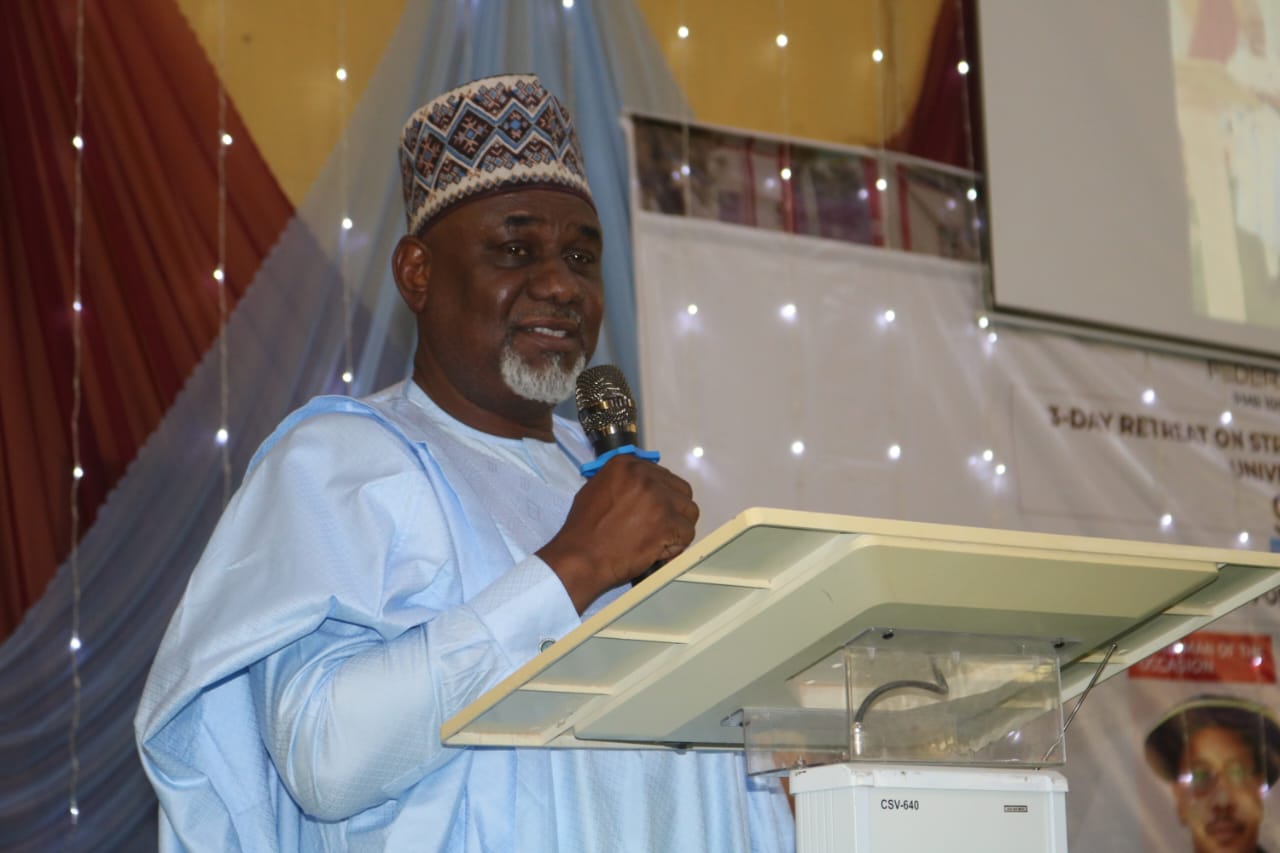
FUGA Begins Five-Year Strategic Planning Retreat, Targets Digital Transformation and Sustainable Growth
By Njadvara Musa, Damaturu
The Vice-Chancellor of Federal University Gashua, Professor Yaqub Ahmed Geidam, has reaffirmed the institution’s determination to embrace innovation, digital transformation, and sustainable development as the university commenced a three-day retreat to develop its 2026–2031 strategic plan.
The retreat, involving major stakeholders from the university community, aims to produce a comprehensive blueprint to guide the institution’s academic, administrative, and infrastructural development over the next five years.
This was disclosed in a statement issued by Adamu Saleh, Head of Information and Public Relations of the university, and made available to journalists in Damaturu on Thursday.
Participants at the retreat include members of the university council, the management team, deans, directors, heads of departments, labour unions, students, and representatives of Flexisaf Edusoft Consult.
Speaking during the opening session, Professor Geidam described the exercise as a critical step toward shaping the future direction of the university.
According to him, the retreat represents a foundation for defining the institution’s priorities, strengthening its identity, and positioning it for greater relevance in Nigeria’s higher education sector.
The Vice-Chancellor explained that since assuming office on February 11, 2026, he had embarked on extensive consultations and assessments involving stakeholders, institutional structures, and available resources to better understand the university’s needs and opportunities.
He noted that initiating the strategic planning process within his first 100 days in office was intentional and aimed at providing a clear roadmap for sustainable progress.
Professor Geidam said the university occupies a strategic position in advancing access to quality education while also addressing social, environmental, and economic challenges affecting communities within the Sahel region.
He identified several priority areas expected to shape the new development framework, including the introduction of market-driven academic programmes such as biotechnology, cyber security, information technology, software engineering, entrepreneurship, and Islamic banking and finance.
The Vice-Chancellor also stressed the importance of expanding student enrolment in a structured manner supported by improved infrastructure and enhanced welfare services.
On digital transformation, he emphasised the university’s commitment to modern learning systems through blended learning approaches and the adoption of advanced learning management systems.
Environmental sustainability also featured prominently in his remarks, with Professor Geidam highlighting the institution’s FUGA Green Code initiative as a vital component of its long-term vision due to the university’s location within an ecologically vulnerable environment.
He further called for a results-orientated implementation framework backed by measurable performance indicators, monitoring systems, and accountability mechanisms to ensure effective execution of the strategic objectives.
Professor Geidam stressed the importance of inclusiveness in the planning process, maintaining that the success of the strategic plan would depend largely on how well it reflects the collective aspirations of stakeholders across the university community.
The retreat also attracted several prominent academics and experts, including J. D. Amin, Aliyu Suleiman Kantudu, Mohammed D. Madawaki, Mustapha Bala Abubakar, Halima Idrisa Gambo, Fatima Alfa Tahir, and Hamidu Usman.
The Vice-Chancellor expressed optimism that the contributions of the participants and resource persons would help produce a practical, forward-looking, and globally competitive strategic document capable of transforming the university.
He urged all participants to contribute meaningfully and approach the assignment with commitment and a shared vision for the institution’s future.
At the conclusion of the retreat, the university is expected to unveil a consensus-driven strategic plan designed to position Federal University Gashua as a leading institution for academic excellence, innovation, and sustainability in Nigeria and beyond.

Governor Inuwa Yahaya Pledges Immediate Action on Education Reform Report
By Auwal Ahmad
Gombe State Governor, Muhammadu Inuwa Yahaya, has pledged to immediately begin implementing recommendations contained in the report of the Taskforce Committee on the Reforms and Revitalisation of Basic and Technical Education, describing the document as a blueprint for transforming the state’s education sector.
The governor made the commitment on Friday while receiving the report from the committee, represented by veteran educationist Tom Mataimaki Maiyashi, alongside the Commissioner for Education, Aishatu Umar Maigari, who chaired the taskforce.
Mr Yahaya said the recommendations would play a central role in his administration’s efforts to improve learning outcomes, strengthen technical education and produce a skilled workforce capable of meeting future demands.
“On the report, I want to assure you that we are not going to abandon this document. We shall study it immediately and begin implementation of the recommendations,” the governor said.
He disclosed that his administration had already commenced major structural changes in the education sector, pointing to the merger of the Ministry of Higher Education with the Ministry of Education as one of the first reform measures.
“We will do structural adjustments in the education sector. I can even say that we have started because I have now merged the Ministry of Higher Education and the Ministry of Education to become one ministry, which is what is obtainable even at the federal level. This will strengthen coordination, improve policy implementation and enhance service delivery across all levels of education,” he said.
The governor explained that the reforms are in line with his administration’s 10-year development agenda, DEVAGOM, which prioritises education as a driver of sustainable development.
Reflecting on his administration’s record since assuming office in 2019, Mr Yahaya said the government inherited an education sector facing numerous challenges but had made significant progress through investments in infrastructure, teacher development, school enrolment, access to quality education and institutional reforms.
“We knew how we met this sector when we came into office in 2019, and we thank God that we have been able to achieve so much. I want to reiterate the pledge I made that we will leave Gombe better than we met it in the education sector. That commitment remains unwavering, and we shall continue to invest in reforms that will guarantee quality education for our children and future generations,” he said.
Speaking on behalf of the committee, Mr Maiyashi commended the governor for constituting the taskforce, describing the initiative as a demonstration of visionary leadership and commitment to improving education in the state.
He said the committee’s report presents an honest assessment of the challenges facing basic and technical education in Gombe and contains practical recommendations capable of addressing the identified gaps.
“The recommendations are practical, realistic and fully implementable. We urge the government to begin implementation because doing so will significantly transform the state’s education system and position Gombe as a model of educational excellence,” he said.
Earlier, the Commissioner for Education, Mrs Maigari, said the taskforce was inaugurated in November 2025 with the mandate to assess the condition of basic and technical education in the state and recommend practical measures to restore standards.
She said the committee examined issues relating to teachers, infrastructure, governance, school administration, student welfare, learning conditions, security and community participation before developing recommendations grouped into eight priority reform areas requiring urgent government intervention.
Mrs Maigari thanked Governor Yahaya for demonstrating what she described as exceptional political will by assembling a team of experienced education experts whose contributions enriched the quality of the report.
The taskforce comprised Mrs Maigari; former Executive Secretary of the National Board for Technical Education (NBTE), Dr Nura A. Yakubu; former Executive Secretary of the Universal Basic Education Commission (UBEC), Dr Hamid Bobboyi; education consultant and former Kaduna State Commissioner for Education, Mr Tom Mataimaki Maiyashi; Executive Chairman of the Gombe State Universal Basic Education Board (SUBEB), Dr Sadiq Gombe; and the Permanent Secretary, Special Services and Political, Government House, Gombe.
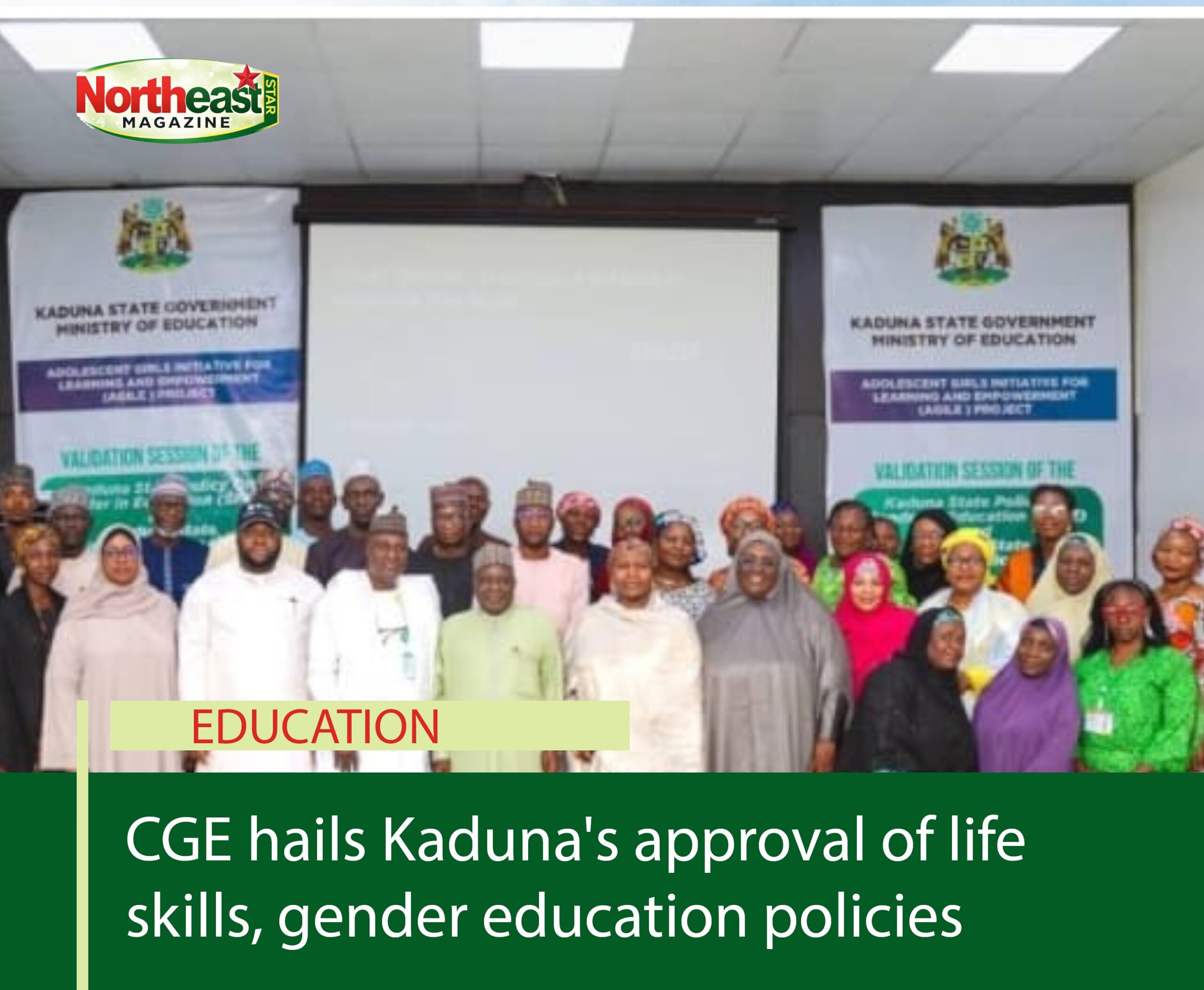
CGE hails Kaduna’s approval of life skills, gender education policies
By Aisha Gambo, Kaduna
The Centre for Girls’ Education (CGE) has commended the Kaduna State Executive Council for approving the Kaduna State Life Skills Policy and the State Policy on Gender in Education (SPGE 2026–2030).
The Executive Director of the organisation, Habiba Mohammed, made this known in a statement issued on Wednesday in Kaduna.
She said the approval marked a transition from donor-supported, time-bound interventions to a sustainable, government-led framework for delivering life skills education and promoting gender equity in schools.
According to her, the Life Skills Policy will equip young people with the knowledge, skills, attitudes and values required to succeed in education, employment and life, while the Gender in Education Policy provides a framework to promote equity, inclusion, participation, retention, completion and improved learning outcomes.
“The approval moves life skills and gender equity from the margins of the classroom into the core of Kaduna State’s education system,” she said.
Mohammed said CGE contributed to the development and validation of the policies through its system-strengthening project, which was supported by Co-Impact, the OASIS Initiative and the Malala Fund, in collaboration with the Adolescent Girls Initiative for Learning and Empowerment (AGILE) and the Kaduna State Ministry of Education.
She said the policies built on more than 18 years of the organisation’s Safe Space model, which independent evaluations showed had helped reduce child marriage, increase school enrolment and delay early marriage.
According to her, the AGILE programme in Kaduna has reached more than 127,319 girls and 6,250 boys aged 14 to 18, while over 1,400 female and male teachers have been trained as mentors.
She added that institutionalising the model through public policy would ensure that life skills education became a permanent component of the state’s education system.
Mohammed said the policies would address barriers to school access, retention and completion, particularly for girls and other vulnerable learners.
She added that they would also institutionalise life skills as a co-curricular programme, strengthen evidence-based decision-making across the state’s 23 local government areas and guarantee continuity beyond donor-funded programmes.
The executive director commended Gov. Uba Sani for providing the leadership that made the policy approval possible.
She also appreciated the Commissioner for Education, Prof. Abubakar Sani Sambo, the Kaduna State Ministry of Education, the AGILE State Project Implementation Unit, the World Bank and other stakeholders for their contributions to the process.
Mohammed reaffirmed CGE’s commitment to supporting the Kaduna State Government with technical assistance during the implementation phase, including teacher training, gender-responsive education sector budgeting and monitoring.
She said the ultimate goal was to ensure that every girl and boy in Kaduna State had the opportunity to learn, develop and thrive.
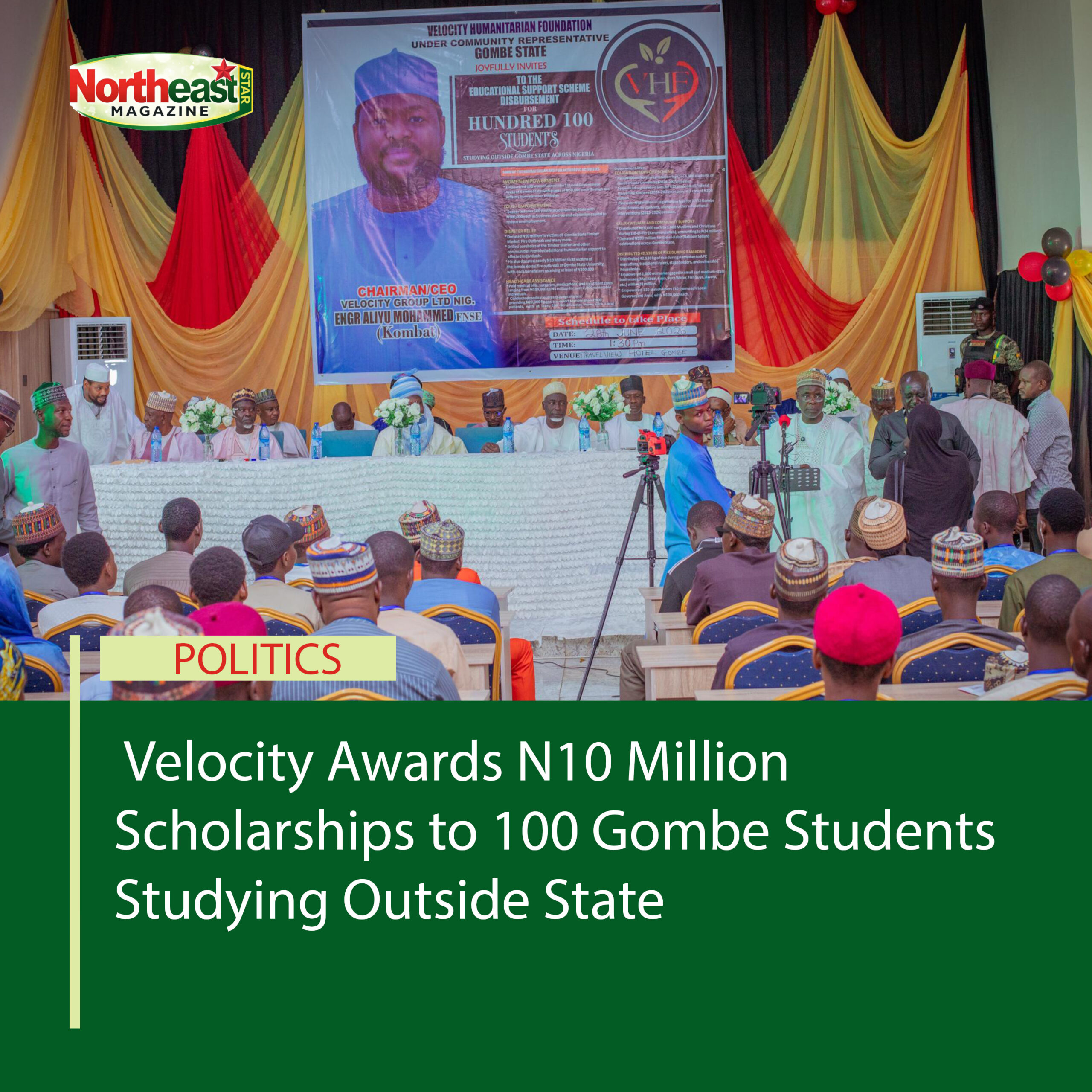
Velocity Awards ₦10 Million Scholarships to 100 Gombe Students Studying Outside State
By Auwal Ahmad, Gombe
The Velocity Humanitarian Foundation has disbursed ₦10 million in scholarships to 100 indigent students of Gombe State studying in higher institutions outside the state, as part of its commitment to expanding access to education and easing the financial burden on students.
The beneficiaries, drawn from different local government areas of Gombe State, each received ₦100,000 under the Foundation’s Educational Support Scheme (ESS), an initiative funded by philanthropist and founder of the Foundation, Engineer Aliyu Muhammad Kombat.
Speaking during the presentation ceremony on behalf of the founder, the chairman of the Velocity Humanitarian Foundation, Adamu Aliyu Ibrahim, said the organisation has consistently invested in education, healthcare and other humanitarian interventions aimed at improving the lives of residents.
“As you can see, the foundation has been rendering many services in our community. We have been paying school fees for students and settling medical bills for our citizens, among other interventions,” Ibrahim said.
He explained that the latest intervention was designed to support Gombe indigenes pursuing their education outside the state.
“We gave scholarships to 100 students, with each beneficiary receiving ₦100,000, making a total of ₦10 million. This support is specifically for Gombe State indigenes studying in institutions outside the state,” he stated.
Ibrahim disclosed that the foundation had earlier settled tuition fees for students of Gombe State University and Federal University Kashere during the 2024/2025 academic session.
“We paid the school fees of students in Gombe State University and the Federal University, Kashere, for the 2024/2025 academic session. The intervention amounted to about ₦280 million for students who could not afford their fees,” he revealed.
According to him, the selection process for the latest beneficiaries was based on proof of studentship rather than academic performance or formal applications.
“The beneficiaries were screened with their documents to confirm they are genuine students. This scholarship is not based on application or merit. Once you are a verified student from Gombe State, you qualify for consideration,” he explained.
He noted that the initiative was introduced after numerous requests from Gombe students studying in other parts of the country who felt left out of previous educational interventions.
“Many students outside the state kept calling us, saying they had seen the Foundation supporting students within Gombe and asking when it would be their turn. That informed our decision to extend the programme to them,” Ibrahim said.
Speaking on the motivation behind the foundation’s educational interventions, Ibrahim said the founder has always been passionate about giving back to society.
“The founder has always asked how he could help his people. Even many years ago, we discussed that when the opportunity came, we would dedicate ourselves to supporting those in need. Today, that vision is becoming a reality,” he added.
He urged the beneficiaries to make proper use of the financial assistance by focusing on their studies and preparing themselves to become responsible citizens capable of contributing to society.
“We expect them to use this support wisely, complete their education successfully and become people who will also help others in the future,” he said.
Also speaking, a member of the Foundation’s Community Committee, Abubakar Dazaria, described the initiative as a significant investment in the future of Gombe State.
“This is a special programme organised by the Velocity Humanitarian Foundation under the leadership of Engineer Aliyu Muhammad Kombat. It is an Educational Support Scheme designed to assist Gombe State indigenes studying outside the state,” Dazaria said.
He explained that beneficiaries were selected from various local government areas after verification of their academic records and studentship.
“Today’s disbursement of ₦10 million is just one phase of the programme.” The Educational Support Scheme is a continuous intervention, and subsequent batches will be implemented based on the decision of the Foundation’s founder,” he added.
Dazaria said the initiative reflects the foundation’s long-term commitment to supporting education and complementing government efforts to improve access to higher learning for young people in Gombe State.

Shiekh Kouyateh Warns Liberia’s US Deportee Deal Could Raise Regional Security Concerns

Daura Emirate Confers ‘Sarkin Maganin Kasar Hausa Babba’ Title on Dr Mukhtar Jibrin

Gombe Reconstitutes Heritage Committee to Preserve State’s Historical Assets

APC National Chairman Settles Gombe Central Contest, Raises DCP Ahmed’s Hand as Party’s Senatorial Candidate

Gombe Eyes Livestock-Led Economic Growth as Inuwa Yahaya Meets Minister

Gombe Aquatic Sports Body Unveils Board, Sets Stage for Competitive Debut

-
 Politics2 months ago
APC National Chairman Settles Gombe Central Contest, Raises DCP Ahmed’s Hand as Party’s Senatorial Candidate
-
 Agriculture3 weeks ago
Gombe Eyes Livestock-Led Economic Growth as Inuwa Yahaya Meets Minister
-
 Sport5 months ago
Gombe Aquatic Sports Body Unveils Board, Sets Stage for Competitive Debut
-

 Striking the Balance1 month ago
The $2,500 Threshold: Why Raising Nigeria’s GDP Per Capita Is Our Best Non-Kinetic Strategy for Peace
-

 Economy8 months ago
NGX Ends Week in the Green as ₦1.54 Trillion Boosts Investors’ Fortunes
-

 Economy9 months ago
CBN’s End to Cash Withdrawal Limit
-

 Environment3 months ago
World Environment Day: NGO Urges Nigerians to Embrace Nature-Based Solutions Against Climate Change
-

 Education8 months ago
Dangote Launches Landmark ₦1 Trillion Scholarship Scheme to Support 1.3 Million Nigerian Students