
Column
A Journey of Dedication, Professional Excellence and Leadership in Hajj Administration

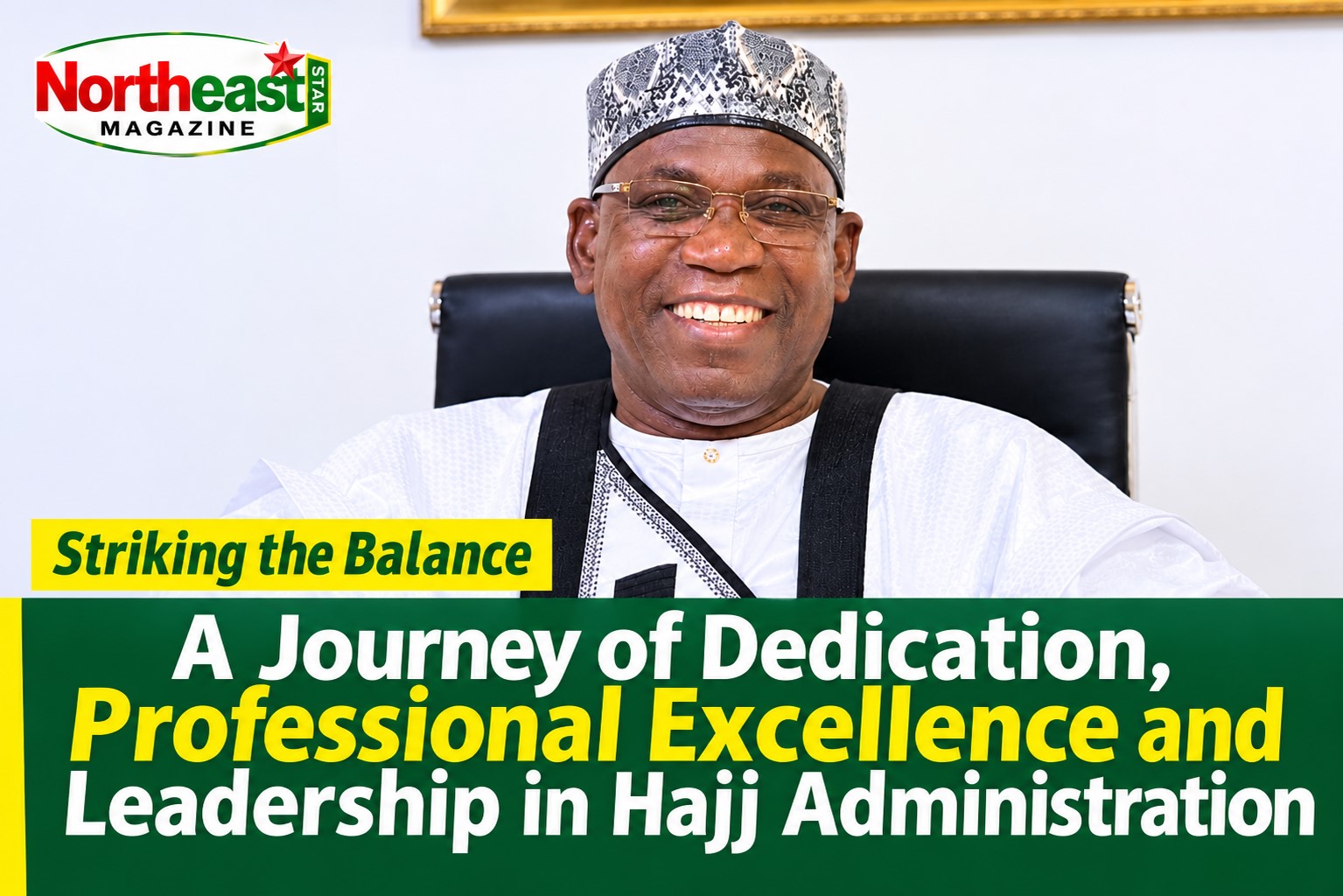
A Journey of Dedication, Professional Excellence and Leadership in Hajj Administration
“From Centre Officer to Director General: The Story of a Career Built on Service, Experience and Commitment to Pilgrims’ Welfare”
By Auwal Ahmad Umar
In public service, leadership is often best understood through the journey that precedes it. The positions an individual occupies, the responsibilities undertaken, the knowledge acquired and the experience accumulated over the years provide important insights into the making of a public administrator. For Alhaji Ahmed Umar Labbo, whose professional career has been devoted to Hajj operations and pilgrims’ welfare, his emergence as Director General of the Jigawa State Pilgrims Welfare Board represents a career shaped by continuous learning, institutional experience and progressive responsibilities.
Born on 10 January 1960 in Kafin Hausa, Jigawa State, Alhaji Ahmed Umar Labbo has built a professional identity around the administration and coordination of Hajj activities. He commenced his professional career at the Jigawa State Pilgrims Welfare Board on 15 April 1992. His career progression through various positions within the pilgrims’ welfare administration reflects a working knowledge of the operational, administrative, commercial and welfare dimensions of Hajj management.
His journey, which began with foundational education in Kafin Hausa, developed through secondary and professional studies before advancing to university qualifications and specialised training. Over the years, he has occupied positions ranging from Centre Officer and Zonal Officer to Head of Welfare Services, Director of Research, Planning and Documentation, Director of Commercial Services and Director of Operations, before assuming the position of Executive Secretary and subsequently Director General.
Beyond the titles, his professional journey provides an account of an administrator whose experience has been accumulated within the Hajj operational environment, an area of public administration that requires careful planning, effective coordination, financial discipline, attention to detail and commitment to the welfare of pilgrims.
Early Life and Educational Foundation
Alhaji Ahmed Umar Labbo was born in Kafin Hausa, where he began his educational journey. Like many individuals whose professional lives are shaped by the values acquired during their formative years, his early education provided the foundation upon which he would later build his career.
He attended Kafin Hausa Central Primary School between 1972 and 1978, completing his primary education before proceeding to Government Secondary School, Gwaram, where he studied from 1978 to 1983.
His secondary education marked an important stage in his academic development, exposing him to a broader learning environment and preparing him for further studies.
However, his educational journey did not end with secondary school. Recognising the importance of specialised knowledge and practical skills, he proceeded to the School of Social and Rural Development, where he studied between 1987 and 1989.
This period provided an opportunity to develop knowledge relevant to social development, community administration and institutional responsibilities.
In 2002, he further attended the School of Social and Entrepreneurship Development, adding another dimension to his professional development. His academic pursuits also included studies at Bayero University Kano in 2000.
These educational experiences demonstrate a continuing interest in acquiring knowledge beyond the traditional classroom environment, particularly in areas connected with administration, social development and organisational management.
Advancing Academic and Professional Qualifications
One of the notable features of Labbo’s professional profile is his continued commitment to academic advancement and professional development.
At a stage when many professionals concentrate primarily on their established careers, he continued to pursue further qualifications to strengthen his understanding of public administration and organisational leadership.
On 8 May 2025, he obtained a Postgraduate Diploma in Public Administration and Policy (PGDPAP) from the University of Maiduguri.
The qualification is particularly relevant to his responsibilities in public-sector administration, where policy implementation, institutional management, accountability and effective service delivery are central to organisational performance.
He subsequently obtained a Master of Public Policy and Administration (MPPA) from the Federal University Dutse on 5 August 2026.
The master’s qualification further strengthened the academic dimension of his professional profile, particularly in the areas of public policy, administration, governance and institutional management.
For an administrator whose career has involved progressively higher responsibilities within a government institution, the combination of practical experience and formal academic training provides an important foundation for understanding the relationship between policy decisions and operational outcomes.
His professional development also extends beyond conventional academic qualifications.
He undertook an Executive Certificate programme in Hajj Operational Efficiency and Strategic Coordination at the Hajj Institute.
This specialised training is directly connected to his professional field and addresses important aspects of organising and coordinating Hajj activities.
The programme’s focus on operational efficiency and strategic coordination reflects the importance of professional competence in managing the complex arrangements associated with annual Hajj exercises.
He also undertook training in Polymorphic Leadership in Hajj and Umrah at Hajj Expert London, United Kingdom, further broadening his exposure to leadership approaches within the pilgrimage industry.
His additional professional credentials include Fellow Chartered and Financial Analytical (FCFA), as indicated in his professional record, as well as training associated with the Financial Planning Skills Institute and National Financial Integrity (NFI).
Together, these qualifications reflect an interest in combining administrative knowledge, financial awareness, professional ethics and specialised Hajj management training.
A Career Built Around Hajj Operations
The defining feature of Alhaji Ahmed Umar Labbo’s career is that his professional experience has been developed within the Hajj operational environment.
The administration of Hajj is a demanding responsibility involving several interconnected activities. These include pilgrims’ registration, documentation, financial arrangements, accommodation, transportation, welfare services, operational planning and coordination with relevant authorities.
The exercise requires institutions to prepare well in advance, establish effective administrative structures and ensure that pilgrims receive the necessary guidance and support throughout the pilgrimage.
For state pilgrims’ welfare boards, the responsibility extends beyond facilitating travel. They must also coordinate the different stages of the pilgrimage and respond to the needs of pilgrims before departure, during their stay in Saudi Arabia and upon their return.
It is within this specialised environment that Labbo has developed his professional experience.
His progression through different positions at the Jigawa State Pilgrims Welfare Board has exposed him to several important areas of Hajj administration.
Rather than building his career around one department, he has worked across operational, welfare, research, commercial and administrative functions.
Such exposure provides an opportunity to understand how the different components of Hajj management relate to one another and why coordination among departments is essential to the successful organisation of the annual pilgrimage.
From Centre Officer to Zonal Officer
One of the early positions in his career was that of Centre Officer.
The position formed part of his professional exposure to the administrative and operational processes involved in pilgrims’ welfare management.
As he progressed, he assumed the responsibility of Zonal Officer, a position that broadened his administrative experience and exposed him to responsibilities beyond the immediate operational environment of a single centre.
Zonal administration is an important component of pilgrimage management because it provides a link between the central administrative structure and activities conducted across different locations.
The responsibilities associated with such a position require coordination, communication, supervision and attention to administrative procedures.
These experiences contributed to his understanding of the importance of an organised operational structure in managing Hajj-related activities.
His early career positions therefore provided a foundation for the greater responsibilities that would follow.
Commitment to Pilgrims’ Welfare
Another important stage in his professional development was his appointment as Head of Welfare Services.
Pilgrims’ welfare is one of the most important responsibilities of any state pilgrims’ welfare board.
The Hajj journey involves people of different ages, educational backgrounds and personal circumstances. Many pilgrims require guidance, assistance and support to navigate the different stages of the pilgrimage.
Effective welfare administration therefore requires planning, responsiveness, communication and coordination.
The welfare department plays an important role in ensuring that pilgrims receive relevant information and assistance and that their concerns are addressed through appropriate institutional channels.
Labbo’s experience as Head of Welfare Services provided him with direct exposure to this important aspect of Hajj administration.
It also placed him within a critical area of the Board’s operations, where the human dimension of pilgrimage management is particularly visible.
For pilgrims, the success of Hajj is not measured only by the completion of travel arrangements. Their experience also depends on the quality of support, information, guidance and assistance available throughout the exercise.
This makes welfare administration an essential component of pilgrimage management.
Leadership of Committees and Institutional Responsibilities
Labbo also served as Head of various committees of the Board.
Committee leadership is an important part of institutional administration because many organisational responsibilities require collaboration among departments and officials.
Within a pilgrims’ welfare institution, committees may be assigned responsibilities relating to planning, coordination, operational preparation and other administrative matters.
Serving in different committee leadership positions provides exposure to collective decision-making, administrative coordination and the importance of following established procedures.
It also requires the ability to work with different professionals and contribute to the implementation of institutional responsibilities.
His experience in this area added another dimension to his career, preparing him for positions involving broader administrative oversight.
Research, Planning and Documentation
Another significant position in his career was Director of Research, Planning and Documentation.
Research, planning and documentation are essential to effective public-sector administration.
In an institution responsible for organising an annual international pilgrimage, decisions must be supported by proper planning, accurate information and reliable documentation.
The Hajj exercise operates within a structured environment involving timelines, regulatory requirements, financial considerations and logistical arrangements.
Consequently, institutions must pay attention to the quality of information available to decision-makers and the systems used to document administrative processes.
The research and planning function provides an opportunity to examine operational requirements, identify areas requiring improvement and support institutional preparations.
Documentation, meanwhile, helps maintain administrative records and provides a basis for continuity and accountability.
Labbo’s experience as Director of Research, Planning and Documentation therefore formed part of his broader exposure to the administrative and strategic dimensions of Hajj operations.
Commercial Services and Financial Administration
His career also included service as Director of Commercial Services.
The commercial dimension of Hajj administration involves important considerations relating to the financial and service arrangements required for the pilgrimage.
Managing these responsibilities demands attention to financial procedures, service delivery, institutional regulations and the need to ensure that arrangements are properly coordinated.
Pilgrims’ welfare boards operate within a system where financial planning and operational requirements must be carefully aligned.
The commercial services function is therefore an important part of the overall administrative structure.
Labbo’s experience in this directorate, alongside his additional professional exposure to financial planning and analytical training, contributed to the range of responsibilities he had undertaken within the Board.
His professional qualifications in financial analysis and integrity further complement the financial and administrative aspects of his career.
Director of Operations: A Major Stage in His Career
Among the positions he occupied before his elevation to the executive leadership of the Board was Director of Operations.
The operational department is central to the organisation of the annual Hajj exercise.
It deals with the practical arrangements required to translate administrative decisions and plans into coordinated activities.
The successful conduct of Hajj operations requires attention to multiple responsibilities, including documentation, travel coordination, logistics, accommodation arrangements and communication with relevant stakeholders.
These activities must be organised within specific timelines and in accordance with applicable guidelines.
The Director of Operations therefore occupies an important position within the institutional structure, particularly during preparations for the annual pilgrimage.
Labbo’s experience in this role represented another stage in his professional development, bringing together the knowledge and exposure he had acquired from previous assignments.
His earlier responsibilities in welfare services, research, planning, documentation and commercial administration provided different perspectives on the demands of Hajj management.
The operational directorate offered an opportunity to apply such institutional knowledge within a broader coordination framework.
From Executive Secretary to Director General
A major milestone in Labbo’s professional journey came with his appointment as Executive Secretary on 23 March 2023, according to the career record supplied.
His subsequent appointment as Executive Secretary on 1 July 2023 is also listed in his professional record.
He was later appointed Director General on 1 January 2024.
The progression from directorate-level responsibilities to executive leadership marked an important development in his career within the Jigawa State Pilgrims Welfare Board.
As Director General, his responsibilities extend across the institution’s administrative and operational structure.
The office requires coordination of the various departments, supervision of institutional activities and attention to the policies and procedures guiding the Board’s responsibilities.
It also involves ensuring that different units work towards common institutional objectives.
For an organisation responsible for managing the state’s Hajj operations, leadership requires an understanding of the pilgrimage process, the administrative framework and the needs of the people the institution serves.
Labbo’s career history indicates that his professional experience has been accumulated across several of these areas.
His appointment therefore places him at the centre of an institution whose responsibilities are directly connected to the religious obligations and welfare of intending pilgrims from Jigawa State.
Understanding the Demands of Modern Hajj Administration
Hajj administration has become increasingly complex, requiring state institutions to maintain effective coordination with national authorities, service providers and relevant institutions in Saudi Arabia.
The annual exercise involves several stages, beginning with preparations and registration in the home state and continuing through the organisation of travel, accommodation and other essential services.
The responsibilities also include providing pilgrims with relevant information and ensuring that they understand the procedures and requirements associated with the pilgrimage.
For administrators, these responsibilities demand continuous learning and adaptation.
Changes in operational requirements, service arrangements and regulatory procedures mean that pilgrimage institutions must remain informed and prepared.
This is why specialised professional training is important.
Labbo’s Executive Certificate in Hajj Operational Efficiency and Strategic Coordination, together with his training in Polymorphic Leadership in Hajj and Umrah, reflects the relevance of continuous professional development to his chosen field.
His academic qualifications in public administration and policy also provide a complementary foundation for understanding institutional responsibilities.
The combination of these areas of learning is particularly relevant to an institution where public administration and specialised pilgrimage operations intersect.
Leadership, Experience and Institutional Development
Leadership in public institutions is not defined by position alone. It is also reflected in the ability to understand institutional responsibilities, coordinate people and resources and maintain effective administrative systems.
For the Jigawa State Pilgrims Welfare Board, the Director General’s office requires an appreciation of the relationship between administrative efficiency and pilgrims’ welfare.
The Board must operate within established government policies and applicable Hajj guidelines while responding to the needs of intending pilgrims.
Its responsibilities require effective collaboration among departments and proper coordination with external stakeholders.
Labbo’s professional background provides experience in several of these areas.
His work in welfare services connects with the human needs of pilgrims. His experience in commercial services relates to financial and service arrangements. His work in research, planning and documentation connects with institutional preparation, while his experience in operations addresses the practical coordination of the pilgrimage.
These different responsibilities provide a broad professional background for executive administration.
However, the significance of leadership ultimately rests on how institutional responsibilities are translated into measurable improvements in service delivery.
For the Board, important areas of focus include timely preparations, effective communication, transparent administrative procedures, responsible financial management and accessible welfare support for pilgrims.
These remain important considerations for any institution entrusted with managing the pilgrimage of citizens.
Continuous Learning and Professional Development
Another defining aspect of Labbo’s profile is his commitment to continuous education.
His progression from primary and secondary education to professional institutions and universities demonstrates a sustained interest in expanding his knowledge.
The acquisition of a postgraduate diploma in public administration and policy and a master’s degree in public policy and administration, alongside specialised Hajj training, reflects the importance he attaches to professional development.
His additional credentials in financial analysis and integrity also indicate an interest in areas relevant to organisational accountability and administrative management.
In contemporary public administration, professional experience remains valuable, but it is increasingly important for administrators to update their knowledge and understand changing institutional demands.
For Hajj administrators, this includes keeping abreast of operational procedures, coordination requirements and developments affecting pilgrimage management.
The ability to combine institutional experience with continued learning is therefore an important consideration in the administration of pilgrims’ welfare institutions.
A Career Defined by Service to Pilgrims
The story of Alhaji Ahmed Umar Labbo is closely connected to the administration of Hajj operations in Jigawa State.
His professional journey has taken him through different departments and responsibilities, exposing him to the various components of pilgrimage management.
From his early assignments as Centre Officer and Zonal Officer to his responsibilities in welfare services, committee leadership, research, planning, documentation, commercial services and operations, his career has developed within the same institutional environment.
His progression to Executive Secretary and ultimately Director General represents the latest stage of that professional journey.
For him, the central responsibility of the institution remains the effective organisation and administration of Hajj activities for intending pilgrims from Jigawa State.
The pilgrimage is a significant religious undertaking for Muslims, and the institutions responsible for facilitating it carry an important public responsibility.
Every stage of the exercise requires careful preparation and coordination, while the welfare of pilgrims remains a central consideration.
As Director General, Labbo’s professional experience places him within an administrative structure that must continually respond to these responsibilities.
Looking Ahead
As the Jigawa State Pilgrims Welfare Board continues to undertake its responsibilities, the demands of modern Hajj administration will require sustained attention to planning, coordination, financial accountability and pilgrims’ welfare.
The expectations of intending pilgrims also make effective communication and reliable service arrangements important components of institutional performance.
For Labbo, the next chapter of his professional journey will be closely associated with how the Board continues to discharge its mandate under his leadership.
His background across different directorates provides a basis for understanding the institution’s operations from multiple perspectives.
His academic and professional qualifications also reflect the value of continued learning in a specialised area of public administration.
Ultimately, the measure of leadership in pilgrimage administration is closely connected to the quality of services provided to pilgrims, the efficiency of institutional processes and the ability to manage public responsibilities transparently.
Conclusion: A Journey of Experience and Professional Growth
From his early education in Kafin Hausa to his emergence as Director General of the Jigawa State Pilgrims Welfare Board, Alhaji Ahmed Umar Labbo’s journey reflects several decades of education, professional development and service within Hajj administration.
His career progression through operational, welfare, research, planning, commercial and executive responsibilities provides an account of professional growth within a specialised public institution.
His academic qualifications, professional certifications and specialised Hajj training further illustrate his continuing engagement with the knowledge and skills relevant to his field.
As he occupies the position of Director General, his professional journey offers an opportunity to reflect on the importance of experience, institutional knowledge and continuous learning in public administration.
His story is, above all, a story of a career built around one central area of public service: the organisation and administration of Hajj operations and the welfare of pilgrims.
For an institution entrusted with facilitating one of the most important religious journeys in the lives of its beneficiaries, that responsibility carries significance beyond administrative titles. It is a responsibility that demands dedication, professionalism, accountability and an enduring commitment to service.
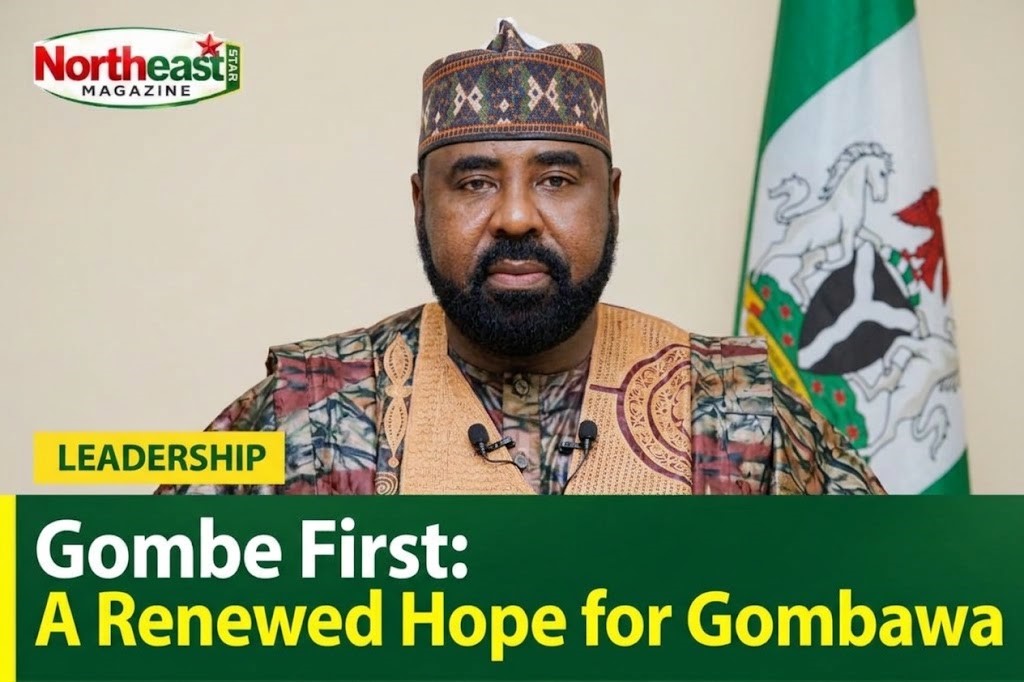
By Ibrahim Sani Shawai
The true measure of leadership lies in its impact on the lives of the people. For Gombawa, this means creating opportunities for decent livelihoods, providing quality education for our children, ensuring access to affordable healthcare and building communities where every citizen has a fair opportunity to thrive.
This is the vision Dr Jamil Isyaku Gwamna brings to his aspiration to lead Gombe State: putting Gombe first and making the welfare, dignity and prosperity of its people the central purpose of governance.
His message, “Continuity with Purpose: Consolidating Gains, Expanding Opportunity,” reflects the understanding that development is a continuous process and a collective responsibility. It requires preserving what works, strengthening existing achievements, addressing emerging challenges and ensuring that the benefits of progress reach more households and communities across the state.
At the national level, President Bola Ahmed Tinubu’s Renewed Hope Agenda provides an important framework for advancing these aspirations. Dr Gwamna envisions a stronger partnership between Gombe State and the Federal Government, one that translates shared priorities into strategic investments, productive enterprises, employment opportunities and improved living standards for Gombawa.
Governor Muhammadu Inuwa Yahaya’s administration has established important foundations for the state’s development. The responsibility ahead is to consolidate these achievements, build on the progress already made and respond more effectively to the evolving needs and aspirations of the people.
Central to Dr Gwamna’s vision is human capital development. He believes that infrastructure must ultimately serve people by connecting communities to schools, healthcare facilities, markets and economic opportunities. Beyond physical projects, governance must deliver measurable improvements in livelihoods and create an environment in which individuals and businesses can reach their full potential.
His background in business and management also informs his emphasis on economic productivity, private-sector participation, responsible leadership and strategic partnerships. He believes that a thriving economy must be driven by productive enterprises, supported by policies that encourage investment, strengthen local businesses and create sustainable jobs, particularly for young people.
Equally important, Gombe First must mean fairness, inclusion and shared prosperity. Every community deserves to be heard, every citizen deserves dignity and equal consideration, and public resources must be managed responsibly for the collective good. Our diversity should remain a source of strength, unity and a shared commitment to the progress of our state.
As we approach 2027, our politics must be driven by ideas, constructive engagement and a clear vision of the future we want for Gombe. We must encourage meaningful conversations, strengthen our collective resolve and place the interests of Gombawa above every other consideration.
By supporting President Bola Ahmed Tinubu’s Renewed Hope Agenda, consolidating the developmental gains of Governor Muhammadu Inuwa Yahaya’s administration and embracing Dr Jamil Isyaku Gwamna’s vision, we can build a stronger partnership that advances Gombe’s development and expands opportunities for present and future generations.
The task before us is clear: sustain the gains, deepen development, expand opportunities and ensure that the people remain at the heart of governance.
Gombe First. A Renewed Hope for Gombawa.
Ibrahim Sani Shawai
Spokesperson to Dr Jamil Isyaku Gwamna
3rd November, 2026
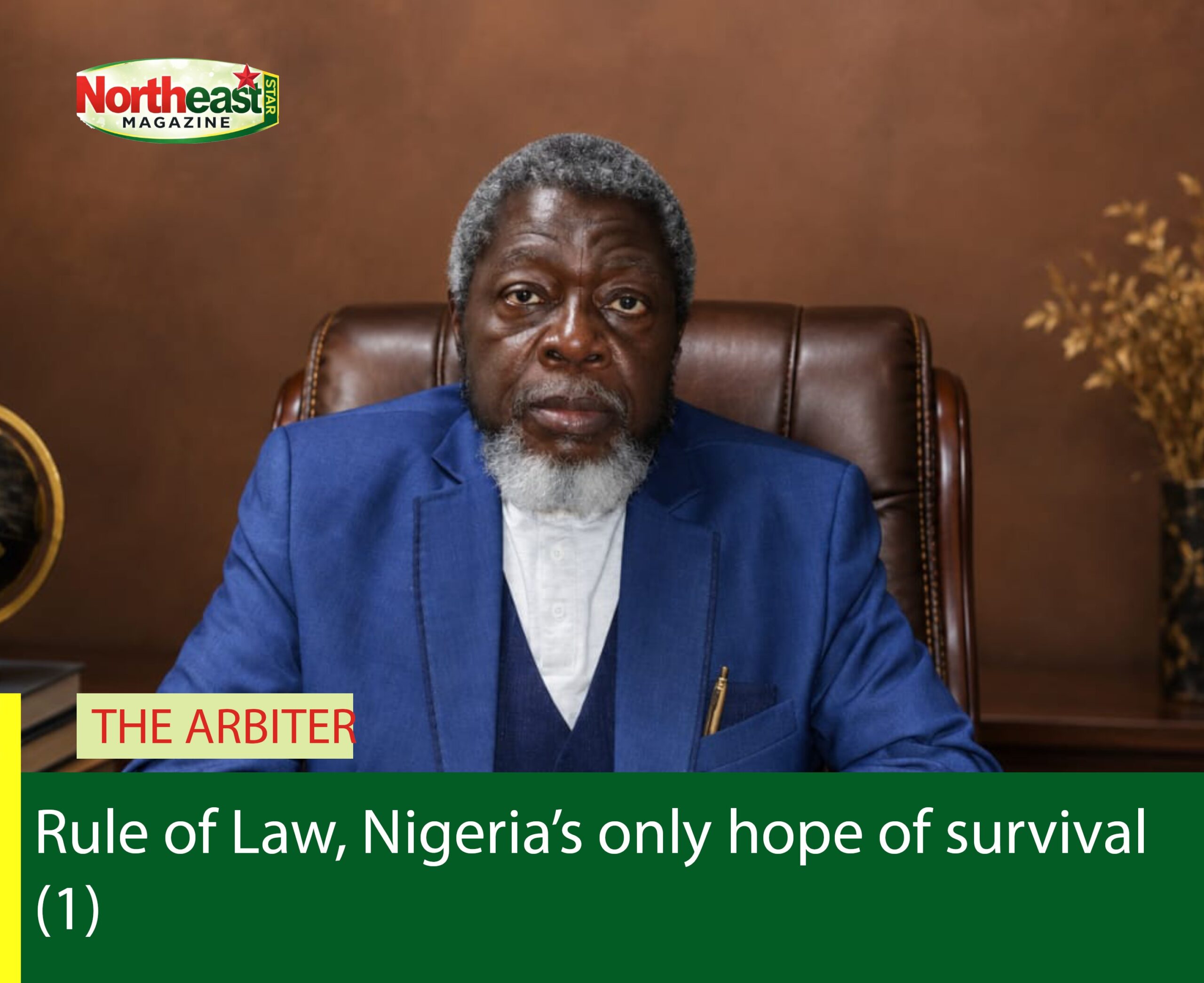
By Hassan Gimba
Originally published in December 2021, this article is being republished because its concerns about the rule of law, insecurity, and the fear ordinary Nigerians experience remain relevant today. It serves as a timely reminder of the urgent need to protect citizens, uphold justice, and restore peace and security across the country.
Our current situation of a glaring failure of the rule of law must disturb any Nigerian who has come of age. The average citizen today lives in fear. When you retire into your house, you pray to God to deliver you from evil marauders who have removed peace from the calmness of the night. When the sun rises, you again rely on God to protect you from those who have made the law their own.
In Nigeria today, the rule of law has taken flight. Charlatans carrying guns that are daily becoming accessible to any riff-raff who want to own any quantity can erect a checkpoint on any federal road and operate for hours, kidnapping, killing and maiming passengers. Sometimes they set cars on fire with commuters, comprising women, children, infants, and the elderly and sick, trapped inside.
They can walk for hours unhindered, despite our drones and Tucanos, with tens, sometimes hundreds, of their prisoners from the main road into the bushes. Many times, they videotape such operations, up to the torturing of their captives and send them to all to see on social media. They rape their female victims – single or married – irrespective of their age or physical condition. The unlucky men who tingle their fancies get sodomised, too. And nothing happens because the rule of law does not affect them.
Many of the women who make it out alive come out pregnant or, worst of all, with some diseases. Those “captured” with a heavy pregnancy that would not allow them to move quickly or far got shot dead. This scenario happened to Pharmacist Hannatu Mohammed in Zaria in August this year. Kidnappers killed her because she could not move fast enough because of her pregnancy. She left behind two children.
There was this story of a captive who gave birth to twins in the camp of these bandits. They threw the newborns to their dogs for breakfast. The woman went mad. Another case was that of a newborn who was fed sleeping pills once it started crying.
In all these cases and many more, reported and unreported, that cannot be catalogued here because of their number, the living victims and their families cry alone; friends and family mourn the dead. They receive nothing – no justice and no mention of compensation or even condolence – because those who should protect and care for them are engrossed in feeding their fantasies. The rule of law can go to blazes!
In November this year, gunmen raided the staff quarters of the University of Abuja and made it a hell for two hours. They abducted six people, including two professors, a deputy registrar and three family members. The Minister of the FCT, Muhammad Bello, however, told the university’s governing council that the crime was carried out to raise doubts about security in the nation’s capital and to attract publicity. How did he know that? Did he confer with the bandits, or confirm their motives? Another question: what are the other uncountable and routine crimes perpetrated daily in the country meant to achieve – like the raids on the Nigerian Defence Academy (NDA), police stations, prisons (I do not call them “Correctional” because I doubt if they have corrected anybody) and other government facilities?
What are the daily blockades of roads, killings, burning, maiming and kidnapping of passengers meant to achieve? What about the attack on the rail tracks, abduction of school children, raiding of airports and houses of individuals to kidnap – to achieve what?
It has now reached an unfortunate and unpardonable level that kidnappers negotiate terms of release with kidnapped victims’ loved ones. There are stories that even the military and paramilitary forces pay for their kidnapped members to be released. The forces of anarchy have cowed the enforcers of the rule of law.
Well, true or false, bandits who raid wherever they want and kidnap whoever they wish are now a government unto themselves. They collect taxes from farmers before the locals may till their farms. Farmers also pay “taxes” before they can harvest from their farms.
Nigeria’s situation fills all reasonable humans with dread. Last week, just when we were shocked at the unprovoked incineration of passengers on a bus, another sad news hit the airwaves. The people of Maza-Kuka in Ba’are village of Mashegu Local Government Area in Niger State were made to cry when 16 worshippers were shot dead while observing the early morning prayers in a mosque.
Without the rule of law, no nation can survive as an entity. All failed states are so because non-state actors have overwhelmed constituted authority.
Many can swear by whatever they worship; Nigeria is on the brink, and at any moment the nation can tip over. The search now is for who will pull us back. In this treatise, I will discuss this.
How did we find ourselves in this sorry pass? One school of thought believes our security forces are well below the required number and, therefore, overstretched in most cases. Others theorise they lack technological facilities, coupled with low motivation because of poor welfare.
But is it? Nigeria, with a population of about 200 million, has a force strength of close to 400,000. That is one police officer per 500, or 0.2 per cent of the populace. The United Nations’ (UN) standard for the police-to-people ratio is one police officer for every 450 citizens. Perhaps ours should be one law enforcement officer for 45 people.
Togo, with a population of 8 million, has 4,000 police officers. That is one police officer per 2,000, or 0.05 per cent of the population, but God help you if you break any law in the country. Benin Republic, with a populace of 11.5 million, has 10,000 police. That is 0.08 per cent, or one police officer for every 1,150 citizens. But try to break the law in that country and see. These are just two West African countries that have shown the rule of law can thrive, not because security forces watch the population eagle-eyed.
Yes, our police lack the technological edge to deal with modern crimes, and, worst of all, their welfare and training are not the best. Their salary is paltry, and, even at that, they don’t always get paid when due.
But the failure of the rule of law here is not so much about the number of our security agents as about their low morale, their poor application of themselves to duty – very like all public service employees, disruption of morals in the citizenry, and the historical failure to punish offenders. Above all is the dearth of a responsive leadership to bind us into a nation of law-abiding, love-your-brother people.
Therefore, we can say moral decadence is at the root of our problems as a nation. However, the right leadership can correct it. We shall look at this. We shall also look at how failing to punish criminals has affected our collective security and the way out in our next instalments.

Lest I Forget

A Journey of Dedication, Professional Excellence and Leadership in Hajj Administration

Gombe First: A Renewed Hope for Gombawa

Meet Prof Lamela Silas: The Forensic Accounting Expert Seeking to Govern Gombe

APC National Chairman Settles Gombe Central Contest, Raises DCP Ahmed’s Hand as Party’s Senatorial Candidate

NGX Ends Week in the Green as ₦1.54 Trillion Boosts Investors’ Fortunes

Gombe Eyes Livestock-Led Economic Growth as Inuwa Yahaya Meets Minister

-
 Politics4 months ago
APC National Chairman Settles Gombe Central Contest, Raises DCP Ahmed’s Hand as Party’s Senatorial Candidate
-
 Economy11 months ago
NGX Ends Week in the Green as ₦1.54 Trillion Boosts Investors’ Fortunes
-
 Agriculture3 months ago
Gombe Eyes Livestock-Led Economic Growth as Inuwa Yahaya Meets Minister
-

 Education11 months ago
Dangote Launches Landmark ₦1 Trillion Scholarship Scheme to Support 1.3 Million Nigerian Students
-
 Sport7 months ago
Gombe Aquatic Sports Body Unveils Board, Sets Stage for Competitive Debut
-

 Economy11 months ago
CBN’s End to Cash Withdrawal Limit
-

 Striking the Balance4 months ago
The $2,500 Threshold: Why Raising Nigeria’s GDP Per Capita Is Our Best Non-Kinetic Strategy for Peace
-

 Environment5 months ago
World Environment Day: NGO Urges Nigerians to Embrace Nature-Based Solutions Against Climate Change