
Borno
Dr Kyari Dikwa Hails Zulum Over 400-Bed Teaching Hospital, Education Projects

By Auwal Ahmad Umar
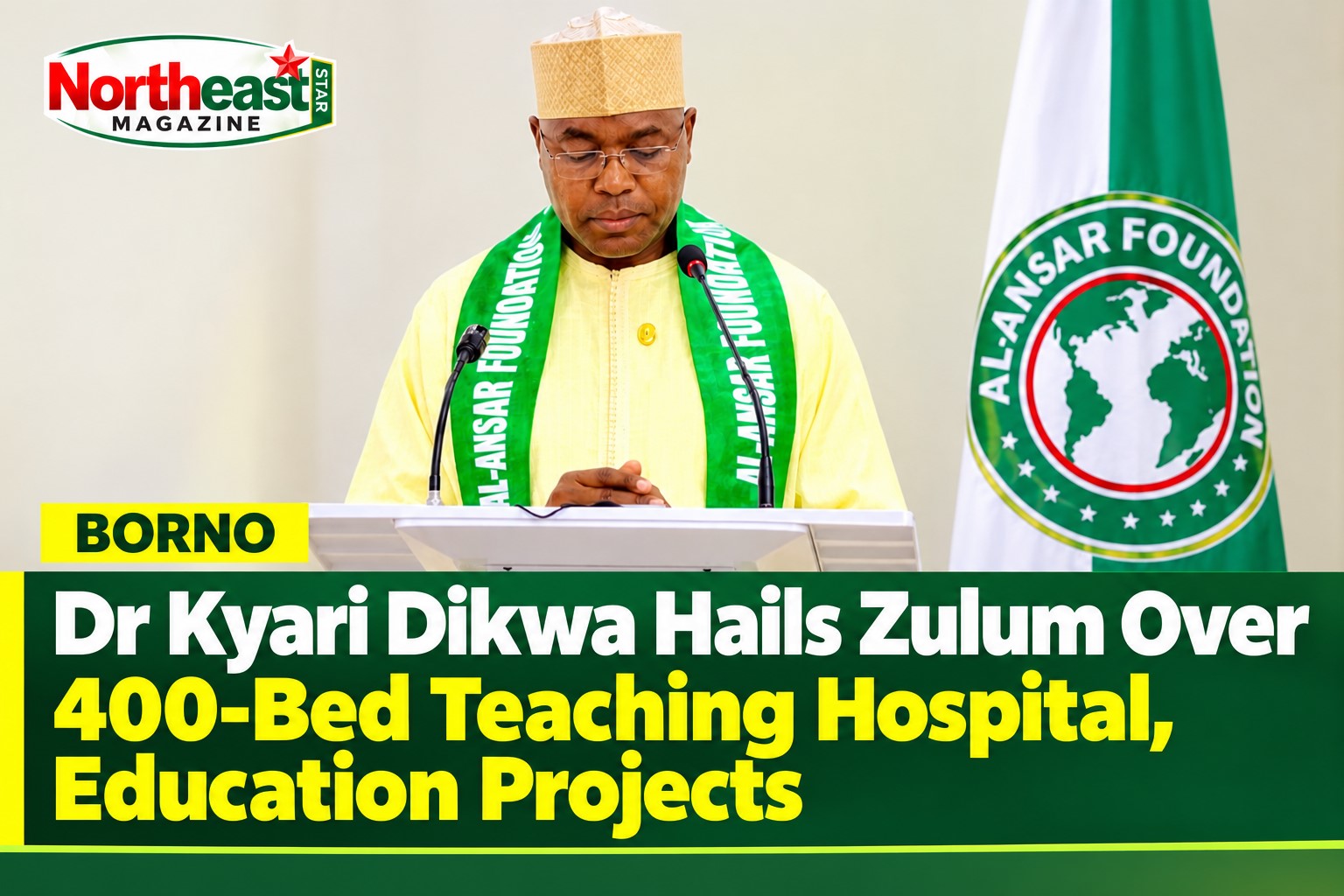
Borno elder statesman, Dr. Mohammed Kyari Dikwa and the Founder and President of Al-Ansar Foundation has commended Borno State Governor, Professor Babagana Umara Zulum, for investments in healthcare and education, describing the commissioning of the 400-bed Kashim Ibrahim University Teaching Hospital and other educational facilities as significant milestones in the state’s rebuilding efforts.
Dr Mohammed Kyari Dikwa stated this in a congratulatory letter to the governor, made available to Northeast Star Magazine in Abuja.
He said the hospital would strengthen access to specialist healthcare, improve medical education and help address the shortage of qualified health professionals in Borno State and the wider Northeast.
“The successful completion and commissioning of the magnificent 400-bed Kashim Ibrahim University Teaching Hospital, alongside other landmark educational projects, represents an extraordinary achievement that will undoubtedly remain one of the most enduring legacies of your administration,” Dr Dikwa said.
The letter was addressed to Governor Zulum at the Government House in Maiduguri.
According to Dr Dikwa, the hospital is equipped with diagnostic facilities, 13 specialist departments, a medical college complex, student accommodation and staff housing.
He said the facilities would improve healthcare delivery and reduce the need for residents to travel outside Borno State to access specialised medical treatment.
“Of particular significance is the potential of this remarkable institution to substantially reduce medical tourism, improve access to specialised healthcare, strengthen medical education and address the shortage of qualified healthcare professionals across Borno State, the North-East and neighbouring countries within the Lake Chad region,” he said.
Dr Dikwa, who is also the founder of Al-Ansar University, Maiduguri, said the teaching hospital could create opportunities for medical training, research and collaboration among healthcare institutions.
He described the project as an investment in human welfare, saying its benefits would extend beyond healthcare infrastructure to include improved access to quality treatment and the development of skilled medical personnel.
The foundation also commended the governor for the commissioning of the Yerwa Practice Mega Primary School and other educational facilities designed to support orphans and vulnerable children.
Dr Dikwa said the initiatives reflected the state government’s commitment to human capital development, social inclusion and providing opportunities for disadvantaged members of society.
He praised the governor’s efforts to translate development plans into tangible projects despite the challenges confronting Borno State.
“What makes your leadership truly exceptional is your ability to transform vision into reality, promises into tangible achievements, and public resources into institutions that directly improve the lives of ordinary citizens,” he said.
He added that the projects were laying the foundation for a more prosperous, educated, healthy and self-reliant Borno State.
The foundation’s president said the administration’s investments in healthcare and education would serve both present and future generations.
He also prayed for Allah to reward the governor for his contributions to the state, grant him good health and wisdom, and enable him to achieve more during his remaining tenure.
“May He bless your remaining tenure with even greater accomplishments, preserve your honour and dignity, and make your legacy a source of lasting benefit to the people of Borno State and humanity at large,” Dr Dikwa said.
He concluded by expressing the foundation’s appreciation for the governor’s efforts towards the rebuilding and transformation of the state.
By Tada Jutha, Maiduguri
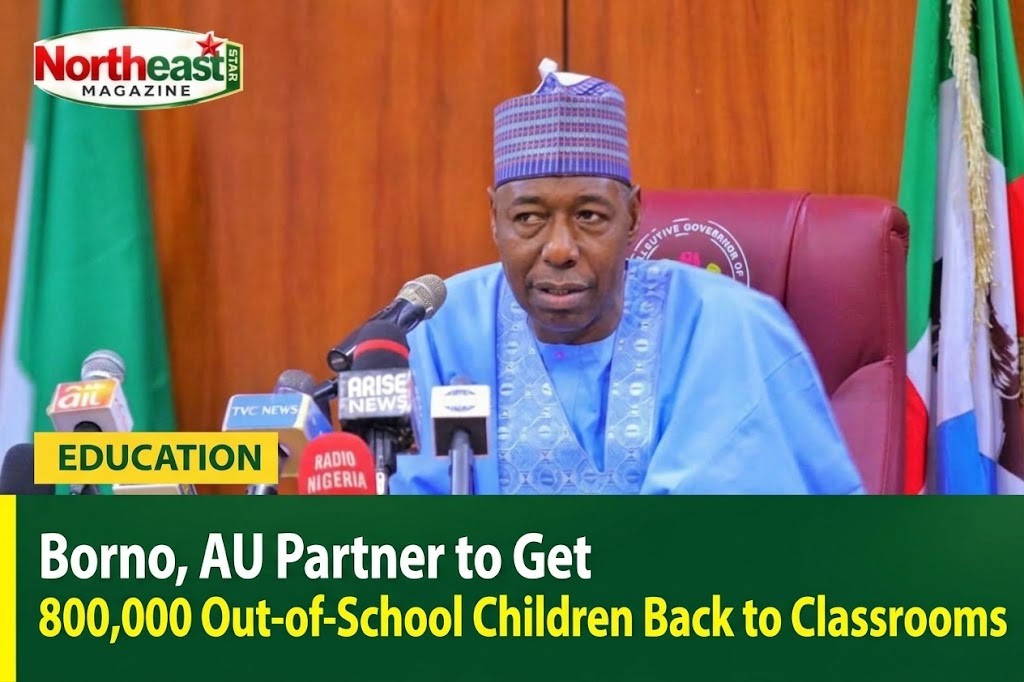
Borno State Governor, Babagana Zulum, has called for stronger collaboration with the African Union (AU) to expand educational opportunities for an estimated 800,000 children still out of school in the state.
Zulum made the appeal on Thursday while receiving a delegation led by the AU Chairperson’s Special Envoy for Children Affected by Armed Conflict, Ambassador Jainaba Jagne, at the Government House in Maiduguri.
The governor said the number of out-of-school children in Borno had dropped from more than two million about seven years ago to approximately 800,000, but stressed that additional support was needed to ensure more children, particularly those affected by conflict, could return to formal education.
He described education as a key driver of development and urged the continental body to support efforts to enrol vulnerable children and provide them with opportunities to learn and build better futures.
Zulum explained that education remained central to his administration’s strategy for moving Borno from emergency humanitarian interventions towards recovery, stabilisation and sustainable development.
According to him, the state government has invested in rebuilding schools, recruiting teachers and expanding access to learning, with particular attention to girls and children facing social and economic disadvantages.
He emphasised that protecting children affected by conflict went beyond providing immediate humanitarian assistance, noting that their education, welfare and social reintegration were essential to lasting peace and security.
The governor identified psychosocial care, vocational training, community acceptance and access to quality education as critical measures for helping children recover from the effects of insurgency.
He also reaffirmed his administration’s commitment to providing safe and inclusive schools in line with the principles of the Safe Schools Declaration.
Beyond education, Zulum urged the AU delegation to support improvements in primary healthcare, particularly in communities with limited access to advanced medical facilities.
He identified the need for trained health workers, modern medical equipment and improved nutrition services, saying these interventions would help address childhood malnutrition and other health challenges affecting vulnerable families.
The governor further called for economic empowerment programmes for mothers, arguing that stronger household incomes would improve families’ ability to provide food, education and other necessities for their children.
He said strengthening women’s livelihoods would help reduce the vulnerability of children and support their overall well-being.
Zulum welcomed the AU’s efforts to promote education and child protection, expressing his administration’s readiness to deepen cooperation with the Union, the Federal Government, the United Nations and other development partners.
He said such partnerships were important for advancing education recovery, youth empowerment, child protection and peacebuilding across Borno State.
In her remarks, Jagne commended the Borno State Government for its interventions aimed at rehabilitating and reintegrating children affected by insurgency.
She said the experience gained from the state’s programmes could provide useful lessons for other African countries confronting similar challenges.
The envoy explained that her engagements with the state’s First Lady, Associate Professor Falmata Babagana Umara Zulum, and visits to the Bulumkutu Interim Care Centre and Muna Vocational Centre had provided an opportunity to assess the initiatives supporting affected children.
Jagne said the delegation would share its observations with AU member states to highlight the interventions being implemented in Borno.
She also disclosed that the delegation had brought educational materials for more than 1,000 children, alongside hygiene supplies for adolescent girls undergoing reintegration.
The visit underscored the importance of cooperation between the Borno State Government and international partners in addressing the long-term effects of conflict on children, particularly through education, healthcare, skills development and community-based support.

By Tada Jutha, Maiduguri
Police in Borno State have arrested six people suspected of stealing a man’s phone and using it to withdraw N5.65 million from his bank account.
The suspects were arrested by operatives of the Command’s Crack Unit after Commissioner of Police Naziru Abdulmajid ordered an investigation, police spokesperson ASP Nahum Daso said in a statement.
The incident happened on October 13, when Abba K., of Damboa Road in Maiduguri, boarded a commercial tricycle. He later noticed that his Infinix Smart 8 phone was missing from his pocket.
Police said investigators used digital forensics and intelligence gathering to identify and arrest the six suspects. They allegedly confessed to taking the phone and withdrawing N5.65 million from the victim’s account, which they shared among themselves.
The police said they recovered both the phone and the full amount. The suspects are expected to be charged in court after the investigation is completed.
The Command urged commuters to stay alert on public transport and report suspicious activity to the nearest police station.
By Tada Jutha, Maiduguri
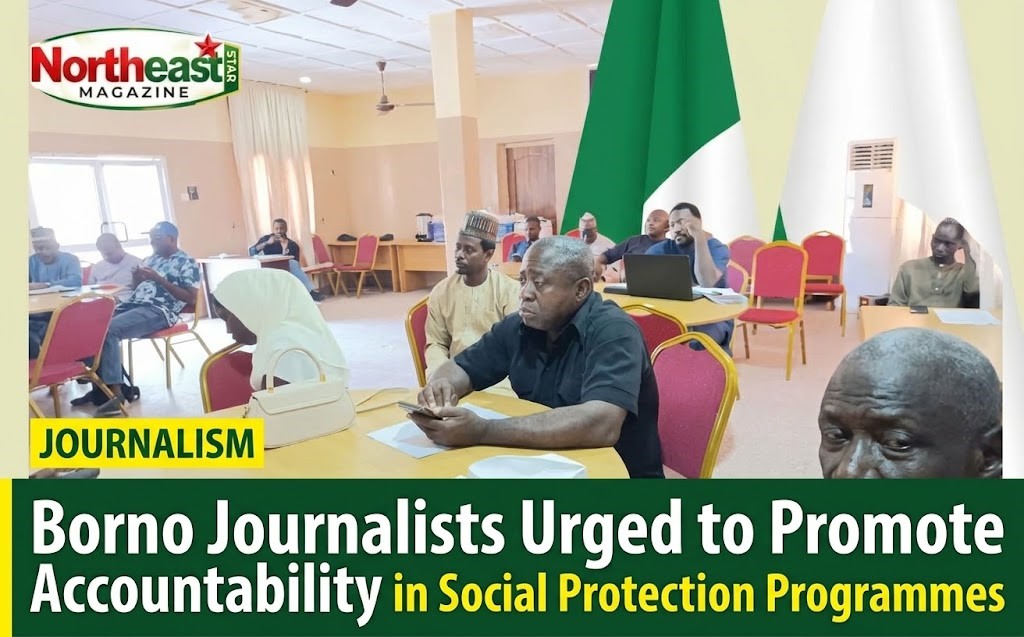
Journalists in Borno State have been urged to use their various media platforms to promote transparency, strengthen public accountability and raise awareness of social protection programmes designed to improve the welfare of vulnerable citizens.
The call was made on Wednesday at a media capacity-building workshop organised by the Sirri Care Foundation (SCAF) in Maiduguri, the Borno State capital.
The workshop forms part of an accountability initiative implemented by GIZ, commissioned by the German Federal Ministry for Economic Cooperation and Development (BMZ), and funded by the European Union to strengthen inclusive social protection systems in the state.
Speaking at the event, the Executive Director of SCAF, Dr Susan Tanwie, described the media as a critical partner in ensuring that government policies and social protection interventions reach the people they are intended to benefit.
Tanwie, whose organisation serves as a consulting NGO for the project, said journalists have an important responsibility to amplify the concerns of citizens, monitor the implementation of social welfare programmes and hold relevant authorities accountable for their commitments.
She explained that the initiative seeks to address the limited awareness among citizens about existing social protection programmes, their entitlements and the procedures for accessing available support.
According to her, effective media engagement would help bridge the information gap and empower citizens to understand their rights and demand improved service delivery.
The project team leader, Samuel Orahi, also urged journalists to prioritise social accountability in their reports, noting that the relationship between government and citizens is founded on mutual responsibilities.
“What we are basically talking about is that social contract that the government has with those who are the right-holders,” Orahi said during an interactive session with participants.
He explained that citizens, through the electoral process, entrust elected leaders with the responsibility of protecting their interests and providing essential services, including education, healthcare, social welfare and other forms of assistance.
Orahi stressed that the media must help citizens understand these obligations while scrutinising the extent to which public institutions fulfil their responsibilities.
He further noted that the initiative was particularly timely, given the political campaign period, when discussions about government performance, public welfare and service delivery become increasingly important.
He encouraged journalists to use such opportunities to deepen public understanding of social protection policies and ensure that issues affecting vulnerable groups receive adequate attention in the media.
The workshop provided an opportunity for journalists to examine how responsible reporting, public engagement and sustained scrutiny of government interventions could contribute to a more transparent and inclusive social protection system in Borno State.

Premature Births: UNICEF, Experts Seek Better Newborn Care to Curb Deaths in Gombe

Dr Kyari Dikwa Hails Zulum Over 400-Bed Teaching Hospital, Education Projects

Borno, AU Partner to Get 800,000 Out-of-School Children Back to Classrooms

APC National Chairman Settles Gombe Central Contest, Raises DCP Ahmed’s Hand as Party’s Senatorial Candidate

NGX Ends Week in the Green as ₦1.54 Trillion Boosts Investors’ Fortunes

Gombe Eyes Livestock-Led Economic Growth as Inuwa Yahaya Meets Minister

-
 Politics4 months ago
APC National Chairman Settles Gombe Central Contest, Raises DCP Ahmed’s Hand as Party’s Senatorial Candidate
-
 Economy11 months ago
NGX Ends Week in the Green as ₦1.54 Trillion Boosts Investors’ Fortunes
-
 Agriculture3 months ago
Gombe Eyes Livestock-Led Economic Growth as Inuwa Yahaya Meets Minister
-
 Sport7 months ago
Gombe Aquatic Sports Body Unveils Board, Sets Stage for Competitive Debut
-

 Education11 months ago
Dangote Launches Landmark ₦1 Trillion Scholarship Scheme to Support 1.3 Million Nigerian Students
-

 Economy11 months ago
CBN’s End to Cash Withdrawal Limit
-

 Striking the Balance3 months ago
The $2,500 Threshold: Why Raising Nigeria’s GDP Per Capita Is Our Best Non-Kinetic Strategy for Peace
-

 Environment5 months ago
World Environment Day: NGO Urges Nigerians to Embrace Nature-Based Solutions Against Climate Change