
Latest News
Ex-Gombe Deputy Governor Hails Velocity Foundation for Empowering Christian Clergy in Gombe


Ex-Gombe Deputy Governor Hails Velocity Foundation for Empowering Christian Clergy in Gombe
By Auwal Ahmad Umar
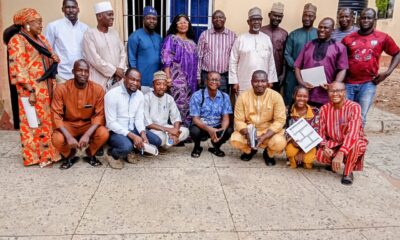
Former Deputy Governor of Gombe State, Charles Iliya, has praised the humanitarian efforts of the Velocity Humanitarian Foundation, describing its support for Christian clergy as a significant contribution to peacebuilding, religious tolerance and community development in the state.
Speaking at an empowerment programme organised by the foundation, Iliya said the initiative reflects the founder’s commitment to promoting unity and improving the welfare of religious leaders, regardless of faith or background.
He noted that the intervention would enable Christian clerics to strengthen their service to their congregations while encouraging peaceful coexistence among people of different religious beliefs.
According to him, the foundation’s decision to extend assistance to Christian leaders demonstrates that genuine humanitarian service should not be influenced by ethnic or religious considerations.
Iliya said such interventions complement government efforts aimed at improving the living conditions of vulnerable residents and fostering social cohesion across communities.
He urged the Velocity Humanitarian Foundation to sustain its charitable programmes, stressing that many disadvantaged families and religious leaders would continue to benefit from its interventions.
The former deputy governor also appealed to wealthy individuals, corporate organisations and other philanthropists to emulate the foundation by investing in initiatives that promote inclusiveness, social welfare and sustainable community development.
Also speaking, the Gombe State Chairman of the All Progressives Congress (APC), Alhaji Mohammed Inuwa Dantata, commended the foundation for demonstrating that compassion and humanitarian service should rise above political, ethnic and religious differences.
He said the foundation’s support for Christian clergy sends a strong message of unity and mutual respect, values he described as critical to maintaining peace and stability in Gombe State.
Dantata encouraged beneficiaries to make effective use of the assistance provided to improve their lives and communities, while urging the foundation to broaden its humanitarian outreach to include more vulnerable groups across the state.
Representing the foundation, Abubakar Danzariya said the organisation remains committed to supporting vulnerable people irrespective of their religion, ethnicity or political affiliation.
He explained that the empowerment of Christian clergy aligns with the foundation’s broader vision of reducing hardship, promoting social justice and strengthening harmony among diverse communities in Gombe State.
According to him, the founder of the foundation, Engr. Aliyu Muhammad Kombat, believes that every citizen deserves equal opportunities and access to support that can improve their standard of living.
Danzariya said the foundation would continue to implement programmes in education, healthcare, youth and women empowerment, humanitarian assistance and community development as part of its long-term strategy for improving livelihoods.
He added that the interventions are designed to produce sustainable results by enhancing the well-being of vulnerable residents and creating opportunities for self-reliance.
Danzariya also appreciated community leaders, Christian organisations and volunteers who partnered with the foundation to ensure the successful implementation of the programme.
He reaffirmed the commitment of Engr. Kombat to building a more peaceful, united and prosperous society through sustained humanitarian interventions that reach people without discrimination.
By Aliyu Isah
Plan International Nigeria has called for sustained investment in teachers’ welfare, professional growth and emotional well-being as it reviewed the outcomes of a two-year education support programme in conflict-affected parts of Sokoto and Adamawa States.
The organisation made the call at the closing ceremony of the Teachers in Crisis Contexts (TiCC) project held in Abuja on Thursday, where education stakeholders examined the programme’s achievements, implementation challenges and prospects for sustaining its interventions.
Supported by the European Union, the initiative, known as Building Resilient Education Systems: Supporting Teachers’ Professional Development, Well-being and Policy Reforms in Crisis-Affected Contexts, was carried out by Save the Child Initiative (STCI) and the Forum for African Women Educationalists (FAWE), in partnership with the Nigeria Union of Teachers (NUT).
Speaking at the event, Plan International Nigeria’s Country Director, Dr Charles Usie, said the programme sought to improve teachers’ professional skills, working conditions and acceptance within communities affected by insecurity and humanitarian emergencies.
He explained that the interventions included capacity-building activities, the provision of teaching equipment and measures to help teachers integrate into schools serving vulnerable communities.
Usie, however, identified the difficulty of getting educators back into classrooms after attacks as one of the major obstacles encountered during the project.
He noted that assaults on schools and other public facilities often leave teachers traumatised, with many reluctant to return to their workplaces because of fears for their safety.
According to him, education and health facilities are frequently among the institutions exposed to attacks during emergencies, making the protection and psychological recovery of their workers a critical concern.
The country director said the project had produced an approach that could be adapted and introduced in other parts of Nigeria facing similar challenges.
He also praised STCI for its role in implementing the programme, describing the organisation as a valuable partner in humanitarian assistance and development initiatives.
However, Usie emphasised that the long-term success of such interventions would depend on government ownership, noting that development organisations could initiate and test solutions but could not independently guarantee their continuation.
He said state and federal authorities needed to incorporate successful interventions into public policies, provide adequate funding and establish institutional arrangements to ensure that the gains were not lost after external support ended.
Also speaking, Sokoto State Commissioner for Basic and Secondary Education, Prof. Ahmad Ala, reiterated the state government’s commitment to improving teachers’ skills, professional development and overall welfare.
Ala stressed that consistent investment in educators was necessary to strengthen teaching standards and improve pupils’ learning outcomes.
The closing ceremony attracted education officials and representatives of relevant institutions from Sokoto and Adamawa States, who reviewed the programme’s performance and discussed lessons that could inform future interventions.
Those present included education commissioners from both states, alongside representatives of the NUT, Teachers Registration Council of Nigeria (TRCN), Universal Basic Education Commission (UBEC), Plan International Nigeria, FAWE and STCI.
At the end of the meeting, stakeholders drew up a Sustainability Action Plan outlining measures to preserve the programme’s achievements and explore opportunities to extend successful interventions beyond the project’s lifespan.
The plan is expected to provide guidance for continued efforts to protect teachers’ welfare, strengthen their professional capacity and improve the resilience of education systems in communities affected by conflict and insecurity.
Latest News
VentCope Reaches Over 400 Displaced Persons with Mental Health Support in Abuja, Adamawa
By Auwal Ahmad Umar
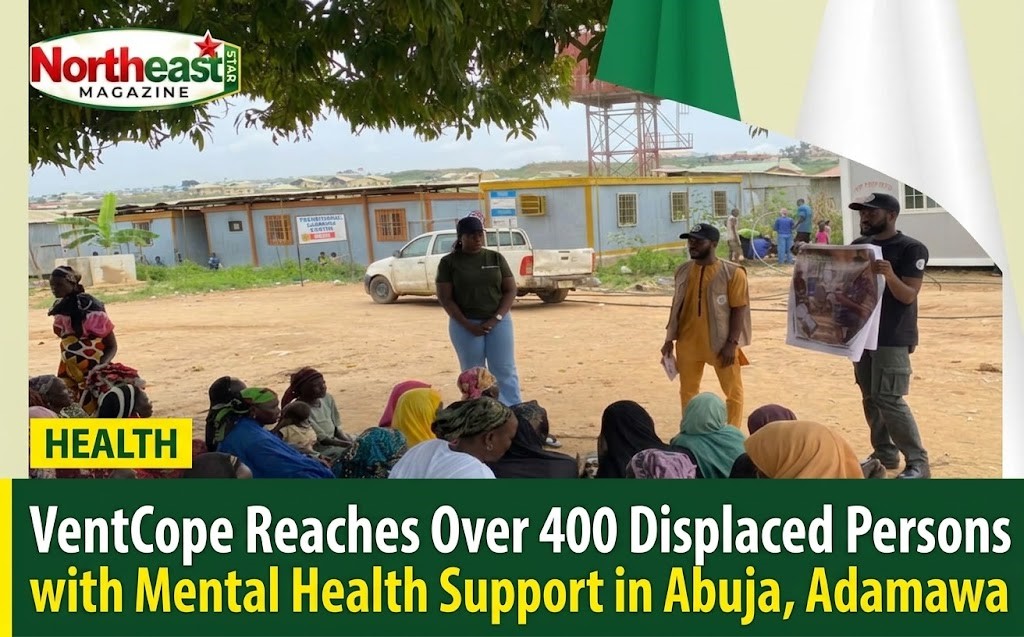
The Vent Cope Relief Initiative (VentCope) has reached more than 400 people in five internally displaced persons (IDP) and resettlement communities in Abuja and Adamawa State with mental health awareness and psychosocial education.
The initiative was organised to commemorate the 2026 World Mental Health Day and the International Day for Disaster Risk Reduction, with support from SelvedgePsych and Mutaru Development Initiative.
The outreach covered Wassa IDP Settlement in Abuja, as well as Damare IDP Camp, Fombina IDP Camp, Salama Resettlement Camp and Labondo Integration Settlement in Adamawa State.
The sessions were designed to help participants understand the emotional and psychological challenges associated with displacement and other adverse experiences, including how these challenges can affect their wellbeing, daily activities and ability to cope with difficult circumstances.
Participants were also sensitised to the importance of psychosocial recovery, particularly for individuals and families who continue to experience emotional distress and other difficulties long after the immediate effects of a crisis have subsided.
The programme aligned with the 2026 World Mental Health Day theme, “Lived experiences heard: real voices, real change,” which emphasises the need to listen to people’s experiences and recognise their mental health needs.
Speaking on the initiative, Sharon Yabilsu-Guyuk, Executive Director of VentCope, said recovery from adversity should go beyond physical survival to include emotional wellbeing and the ability to rebuild lives.
“Surviving adversity is important, but it is not the end of the recovery journey. People can continue to experience distress and face difficulties in their everyday lives long after the immediate crisis has passed,” she said.
Yabilsu-Guyuk stressed the need to give greater attention to psychosocial recovery, noting that people affected by difficult experiences require support to cope with their challenges, regain their ability to function and rebuild their lives.
She added that mental health and psychosocial support should not be overlooked in efforts to assist people affected by displacement and other crises.
The activities marking the International Day for Disaster Risk Reduction also examined the concept of home beyond the provision of physical shelter.
Reflecting the 2026 theme, “Resilience Starts at Home,” discussions highlighted how home represents more than a place to live, particularly for displaced people who may have lost their familiar surroundings and support networks.
For affected individuals and families, home can also represent safety, meaningful relationships, family connections, belonging and a sense of emotional stability — aspects of life that displacement can disrupt.
The outreach underscored the importance of integrating mental health awareness and psychosocial support into humanitarian responses, particularly for displaced populations who may continue to face emotional and social difficulties long after emergencies have ended.
Through the initiative, VentCope and its partners sought to draw attention to the need for sustained support that enables affected communities not only to overcome immediate crises but also to recover, regain stability and rebuild their lives.

APC Appoints Sa’adu Hassan Campaign DG, Unveils 2027 Leadership Structure in Gombe

A Journey of Dedication, Professional Excellence and Leadership in Hajj Administration

Gombe First: A Renewed Hope for Gombawa

APC National Chairman Settles Gombe Central Contest, Raises DCP Ahmed’s Hand as Party’s Senatorial Candidate

NGX Ends Week in the Green as ₦1.54 Trillion Boosts Investors’ Fortunes

Gombe Eyes Livestock-Led Economic Growth as Inuwa Yahaya Meets Minister

-
 Politics4 months ago
APC National Chairman Settles Gombe Central Contest, Raises DCP Ahmed’s Hand as Party’s Senatorial Candidate
-
 Economy11 months ago
NGX Ends Week in the Green as ₦1.54 Trillion Boosts Investors’ Fortunes
-
 Agriculture3 months ago
Gombe Eyes Livestock-Led Economic Growth as Inuwa Yahaya Meets Minister
-

 Education11 months ago
Dangote Launches Landmark ₦1 Trillion Scholarship Scheme to Support 1.3 Million Nigerian Students
-
 Sport7 months ago
Gombe Aquatic Sports Body Unveils Board, Sets Stage for Competitive Debut
-

 Economy11 months ago
CBN’s End to Cash Withdrawal Limit
-

 Striking the Balance4 months ago
The $2,500 Threshold: Why Raising Nigeria’s GDP Per Capita Is Our Best Non-Kinetic Strategy for Peace
-

 Environment5 months ago
World Environment Day: NGO Urges Nigerians to Embrace Nature-Based Solutions Against Climate Change