
National News
Road to Progress: KEPYO Praises Gov. Idris for Boosting Rural

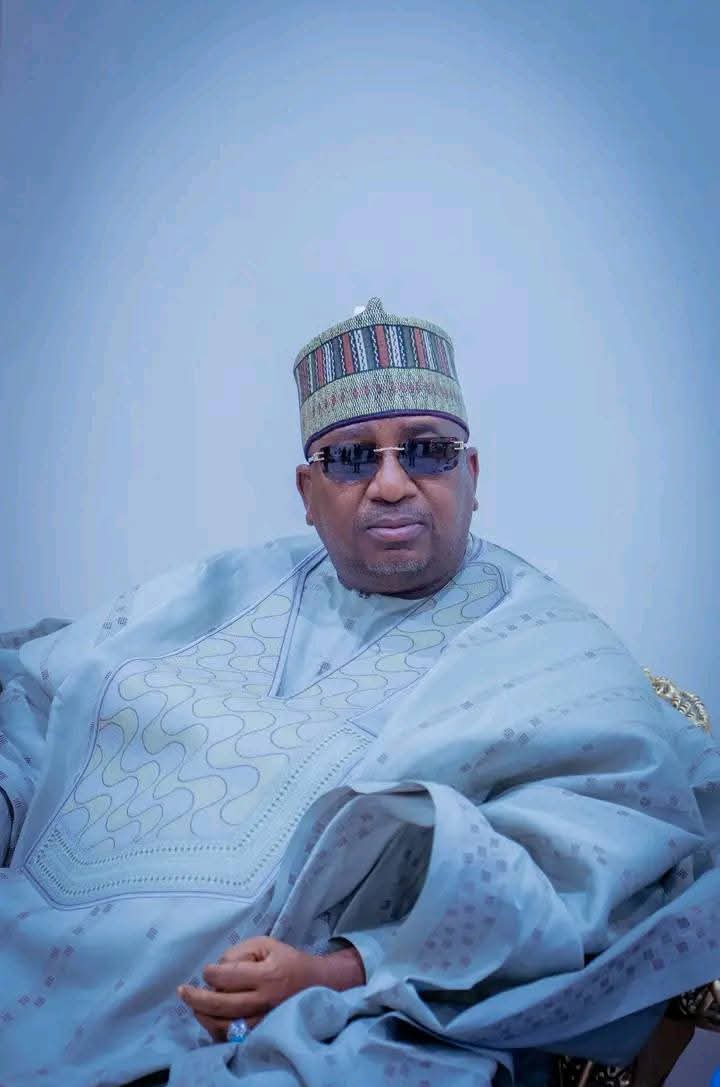
Road to Progress: KEPYO Praises Gov. Idris for Boosting Rural
By Jamila Muhammad
A youth advocacy group in Kebbi State, the Kebbi Progressive Youths (KEPYO), has praised Governor Nasir Idris for the completion of the Kangiwa–Chibike road, describing the project as clear evidence of his commitment to fulfilling campaign promises.
In a statement issued on Sunday, KEPYO spokesperson, Comrade Musa Adamu, said the road project reflects a leadership approach grounded in accountability and practical delivery. He noted that the governor’s performance in infrastructure development continues to strengthen public confidence in government.
“The completion of the Kangiwa–Chibike road is a strong indication that Governor Idris is not just making promises, but delivering on them,” Adamu said. “This kind of leadership inspires trust and reassures citizens that their expectations are being taken seriously.”
The group observed that the road has long been a pressing need for communities in the area, particularly in addressing transportation difficulties, enhancing trade, and improving access to essential services.
According to Adamu, the project is expected to stimulate economic activities across the benefitting communities, while also contributing to broader rural development.
“With this development, we anticipate a ripple effect on commerce and livelihoods in the area. It is a project that will bring lasting benefits to the people,” he added.
KEPYO also called on other public office holders to emulate what it described as the governor’s purposeful leadership style, stressing that sincere governance ultimately translates into visible impact on citizens’ lives.
The group reaffirmed its support for policies and programmes aimed at advancing development and improving the welfare of residents across Kebbi State.

By Auwal Umar, Gombe
Gombe State Governor, Muhammadu Inuwa Yahaya, has urged Nigerian journalists to leverage emerging technologies to improve the speed, efficiency and quality of news delivery while preserving professional judgment, ethical standards and their responsibility to the public.
The governor also called on Media Trust Group to sustain its reputation for integrity, credibility and responsible journalism while exploring new approaches to media production and audience engagement.
Inuwa Yahaya made the call on Thursday at the official launch of Media Trust Group’s Converged Newsroom at the organisation’s corporate headquarters in Abuja, where he was represented by his deputy, Manassah Daniel Jatau.
The facility brings together the editorial operations of the media organisation’s print, television, radio and digital platforms under a unified system designed to improve coordination and accelerate news delivery.
The governor commended Media Trust’s transition from traditional print journalism to a multimedia operation, describing it as evidence of vision, adaptability and commitment to the changing demands of the media industry.
He, however, cautioned that technological advancement must complement rather than replace the critical thinking, professional judgment and public service obligations of journalists.
“Journalists must take advantage of technology to improve their work, but they must not allow technology to take over their functions. Rather, they should use it to simplify processes, improve efficiency and strengthen the quality of their output,” he said.
Inuwa Yahaya further urged the media organisation to devote greater editorial attention to public education, particularly in modern agricultural practices, climate change and sustainable food production.
He said increased media coverage of these issues, especially in Northern Nigeria, could help farmers abandon outdated methods, adopt improved agricultural techniques and contribute more effectively to food security and economic growth.
The governor also reaffirmed his administration’s commitment to sustaining and strengthening its longstanding partnership with Media Trust Group, describing the relationship as mutually beneficial.
Speaking at the event, Deputy President of the Senate, Senator Barau Jibrin, praised Media Trust for embracing innovation and responding proactively to changes in the media landscape.
He described the converged newsroom as a commendable initiative that demonstrates the importance of adapting to evolving realities in the industry.
Similarly, the Minister of Information and National Orientation, Mohammed Idris, commended Media Trust founder, Kabiru Yusuf, for his vision, consistency and dedication to building a respected media institution.
Idris reaffirmed the Federal Government’s commitment to press freedom and responsible journalism, noting that the media remains an essential public service that must be guided by professionalism, accuracy and accountability.
He challenged Media Trust to transform the new facility into a centre of excellence capable of setting benchmarks for technological innovation, ethical reporting and effective public engagement.
Earlier, the Chairman of the Media Trust Group Board described the converged newsroom as a pioneering initiative, which he said was the first of its kind in West Africa.
He explained that the facility combines technology, collaboration and audience data to strengthen editorial operations and foster closer relationships with readers, viewers and listeners.
According to the organisation, the integrated newsroom brings together Daily Trust, Weekend Trust, Aminiya, Teen Trust, Trust TV, Trust Radio and Digital Trust under one operational framework.
The system is expected to improve collaboration among editorial teams, strengthen coordination and enable faster delivery of news across the group’s various platforms.
In his vote of thanks, the Group Chief Executive Officer and Editor-in-Chief, Ahmed Shekarau, expressed appreciation to the Gombe State Government and other participating state governments for their enduring partnerships with the organisation.
Shekarau specifically acknowledged the invitations extended to Gombe, Jigawa, Borno, Yobe and Taraba states, describing them as recognition of the longstanding and mutually beneficial relationships between the media group and the respective governments.
He assured audiences, clients and other stakeholders that Media Trust would continue to innovate, improve its services and strengthen its capacity to respond to their changing needs.
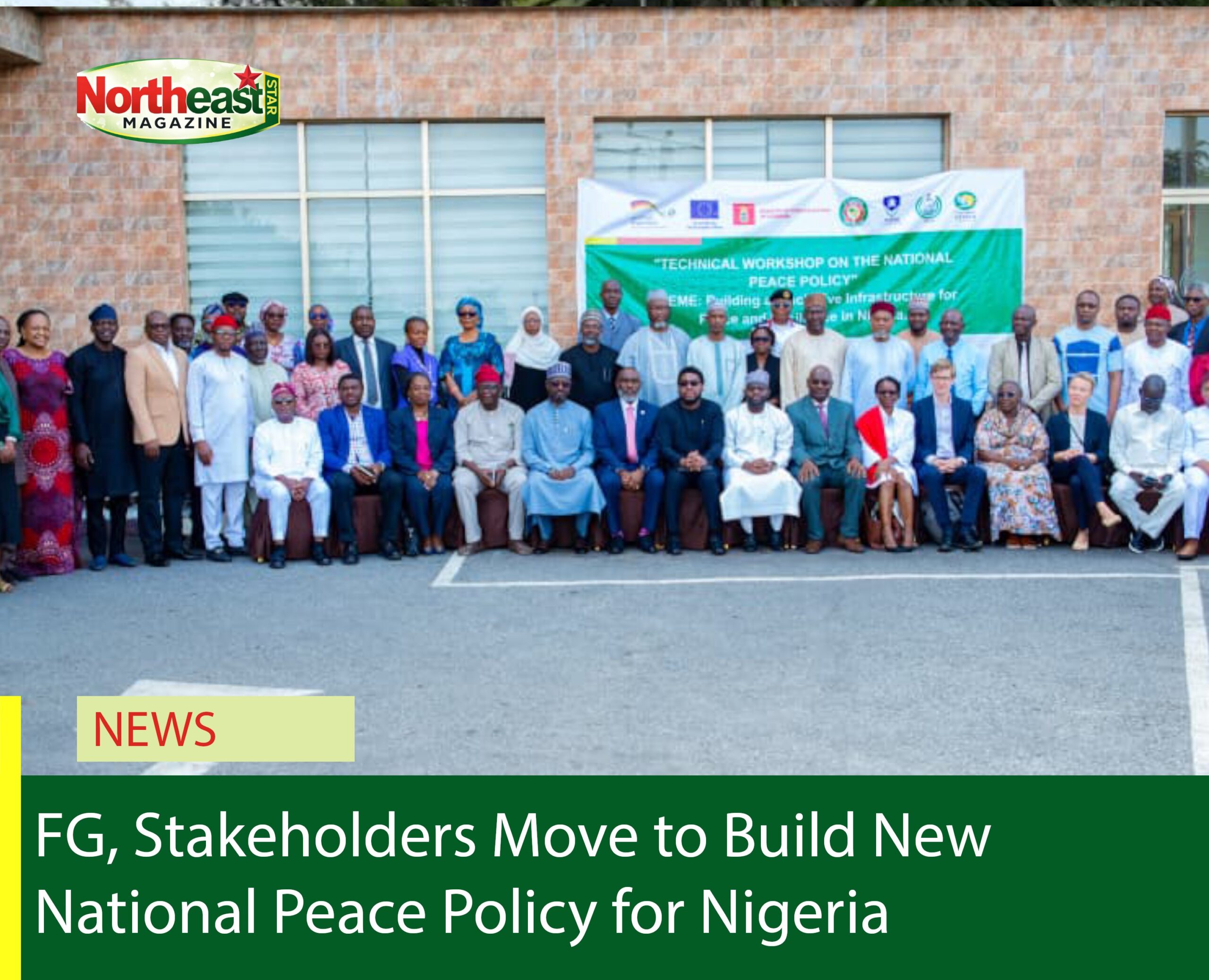
By Auwal Umar, Gombe
The Federal Government and key stakeholders in Nigeria’s peacebuilding sector have begun work on a new National Peace Policy designed to strengthen conflict prevention, improve institutional coordination and promote sustainable peace across the country.
The initiative was announced in a statement signed by Hafsah Matazu, Programme Manager at the Office for Strategic Preparedness and Resilience (OSPRE), and made available to journalists in Gombe on Thursday.
OSPRE and the Institute for Peace and Conflict Resolution (IPCR), in partnership with Triple Peace Africa, convened a three-day technical workshop on “Building an Inclusive National Infrastructure for Peace and Resilience.”
The workshop brought together representatives of federal ministries, departments and agencies, members of the National Assembly, state peace commissions, subnational institutions, civil society organisations and peacebuilding practitioners from across the country.
Speaking at the meeting, OSPRE Director-General, Chris Ngwodo, said the proposed policy was aimed at creating a framework that reflects Nigeria’s current peace and security realities.
He said the process would also take into account developments that have emerged since the country’s previous attempt to establish a National Peace Policy in 2012.
The Director-General of IPCR, Joseph Ochogwu, described the proposed policy as a critical framework for strengthening Nigeria’s peacebuilding system, saying it would provide the institutional and operational foundation for coordinated peace efforts.
Also speaking, the Special Adviser to the President on Homeland Security, Major General Adeyinka Famadewa (rtd), said the policy would promote a more proactive approach to conflict management.
According to him, the framework would help move the country away from responding to conflicts only after they occur towards anticipating risks and preventing violence before it escalates.
The Chief Executive Officer of Triple Peace Africa, Paul Nyulaku, said the emerging framework reflected a broad consensus among stakeholders on the need for a new approach to building lasting peace in Nigeria.
The Chairman of the House of Representatives Committee on Peacebuilding and Social Cohesion, Sadiq Abbas Tafida, pledged the commitment of the House to supporting the policy and ensuring that adequate resources are provided for its implementation.
Participants at the workshop called for a whole-of-government and whole-of-society approach to peacebuilding, linking federal institutions with state and local governments, state peace commissions, civil society organisations and community-based actors.
They also stressed the need for a completely renewed policy framework capable of responding to Nigeria’s changing security, social and economic realities while taking advantage of emerging opportunities for peacebuilding.
In his remarks at the close of the workshop, the Director-General of the National Orientation Agency (NOA), Lanre Issa-Onilu, urged stakeholders to ensure that the proposed policy is rooted in Nigeria’s national values.
He said the framework should also serve as a tool for civic mobilisation, national unity and stronger social cohesion.
Representatives of participating institutions subsequently signed a communiqué committing themselves to deeper collaboration, improved institutional coordination and greater alignment of peacebuilding initiatives across the country.
The resolutions from the workshop are expected to form part of broader consultations across the federation as the Federal Government and stakeholders work towards producing an inclusive National Peace Policy and a stronger national infrastructure for peace and resilience.
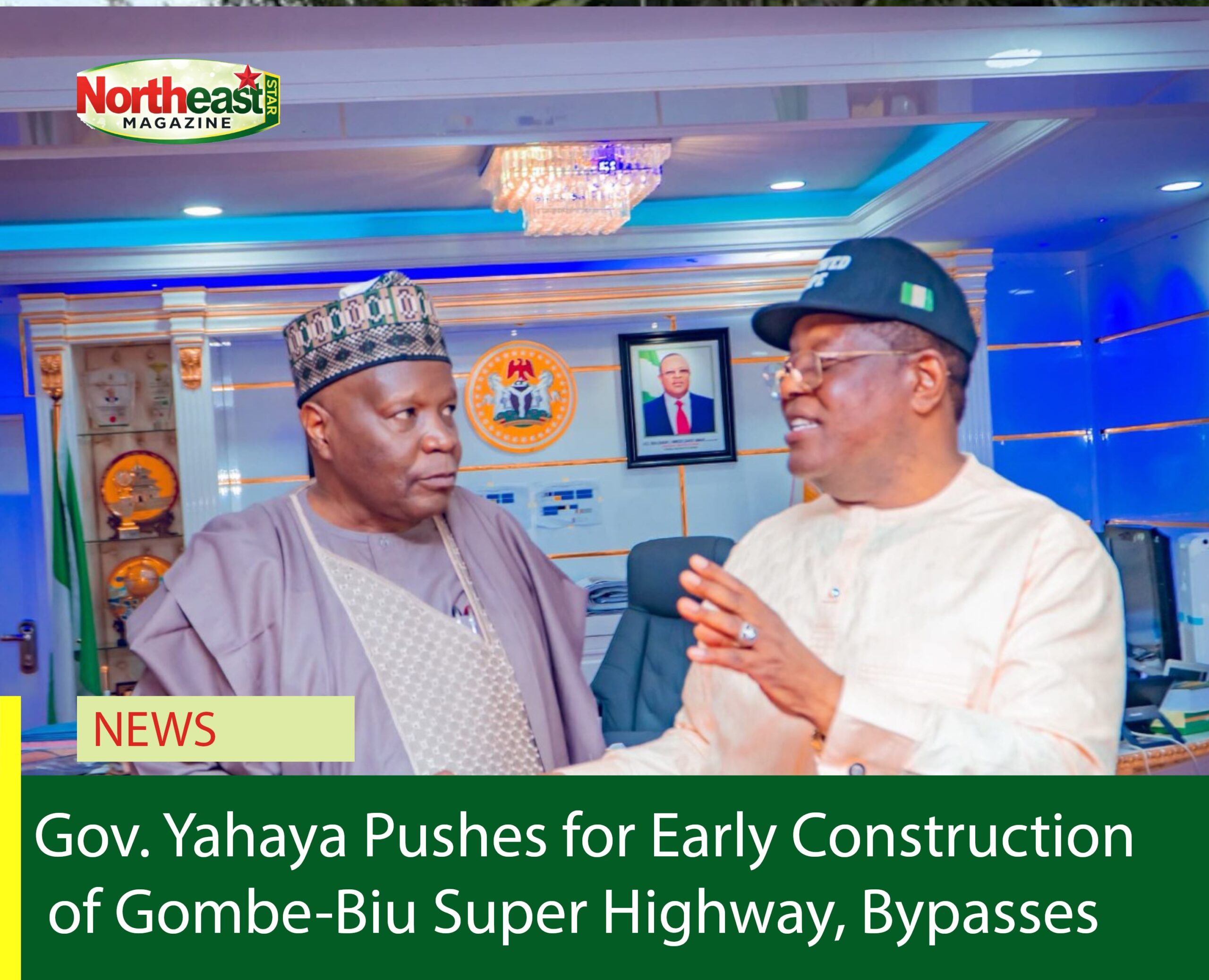
By Auwal Ahmad Umar
Gombe State Governor Muhammadu Inuwa Yahaya has renewed his call for the Federal Government to accelerate construction of the Gombe-Biu section of the Akwanga-Jos-Bauchi-Gombe-Biu-Maiduguri Super Highway.
The governor made the call on Monday in Abuja during a meeting with the Minister of Works, David Umahi, where he also sought federal intervention on additional road projects considered critical to Gombe State’s economic development.
In a statement issued by Ismaila Uba Misilli, Director-General, Press Affairs, Government House, Gombe, the governor said the projects would strengthen connectivity and help unlock the agricultural, commercial, industrial and tourism potential of the state and the wider North-East.
Governor Yahaya has consistently advocated the early commencement of the Gombe-Biu section of the super highway, describing the corridor as strategically important to Gombe and other parts of the region.
The project was recently approved and flagged off by the Federal Government, with Mr Umahi joining the governor and members of the National Assembly in Gombe for its groundbreaking ceremony.
Following the groundbreaking, Mr Yahaya is now seeking sustained federal commitment towards the commencement of full-scale construction and timely completion of the road.
Bypasses for Gombe metropolis
The governor also proposed the development of northern and southern bypasses around Gombe metropolis.
According to him, the proposed bypasses would provide alternative routes into and out of the state capital, reduce pressure on existing roads and improve connections to the Gombe-Biu corridor.
He said the infrastructure would also facilitate the movement of people, agricultural produce and goods while creating opportunities for economic expansion around the metropolis.
Responding, Mr Umahi described the Gombe-Biu section of the super highway as a priority of the President Bola Tinubu administration.
The minister said the governor’s request to commence construction from the proposed point of interest would be considered as work begins.
Mr Umahi also expressed confidence in Hitech Construction Company, the contractor handling the project, describing the firm as one of the country’s capable companies for major infrastructure projects.
The minister commended Mr Yahaya for his persistence in seeking federal projects for Gombe and said his recent visit to the state had strengthened his understanding of the development taking place there.
“Since my visit to Gombe, I have become like your ambassador. Anywhere I go, I talk about your state and the developmental strides I have witnessed,” Mr Umahi said.
He added that Gombe had demonstrated what could be achieved through what he described as genuine development and visionary leadership.
Mr Umahi assured the governor that the Federal Government would deliver the super highway, expressing optimism that its completion would have a significant impact on residents and businesses across the region.
Other strategic roads
The minister also acknowledged the governor’s continued advocacy for the rehabilitation and reconstruction of other major roads linking Gombe with neighbouring states.
They include the Gombe-Bajoga-Potiskum, Gombe-Dukku-Darazo and Gombe-Bauchi corridors.
The roads are important to Gombe’s economy, particularly for farmers and traders who depend on them to transport agricultural produce to markets and connect communities with major commercial centres.
The governor’s renewed push comes as Gombe seeks stronger integration into the Federal Government’s infrastructure programme, with road connectivity seen as a key driver of economic growth across the North-East.

Borno, AU Partner to Get 800,000 Out-of-School Children Back to Classrooms

Plan International Pushes for Lasting Support for Teachers in Crisis-Hit Communities

Newborn Deaths: Gombe, UNICEF Strengthen Skills of 104 Health Workers

APC National Chairman Settles Gombe Central Contest, Raises DCP Ahmed’s Hand as Party’s Senatorial Candidate

NGX Ends Week in the Green as ₦1.54 Trillion Boosts Investors’ Fortunes

Gombe Eyes Livestock-Led Economic Growth as Inuwa Yahaya Meets Minister

-
 Politics4 months ago
APC National Chairman Settles Gombe Central Contest, Raises DCP Ahmed’s Hand as Party’s Senatorial Candidate
-
 Economy11 months ago
NGX Ends Week in the Green as ₦1.54 Trillion Boosts Investors’ Fortunes
-
 Agriculture3 months ago
Gombe Eyes Livestock-Led Economic Growth as Inuwa Yahaya Meets Minister
-
 Sport7 months ago
Gombe Aquatic Sports Body Unveils Board, Sets Stage for Competitive Debut
-
 Education11 months ago
Dangote Launches Landmark ₦1 Trillion Scholarship Scheme to Support 1.3 Million Nigerian Students
-

 Economy11 months ago
CBN’s End to Cash Withdrawal Limit
-

 Striking the Balance3 months ago
The $2,500 Threshold: Why Raising Nigeria’s GDP Per Capita Is Our Best Non-Kinetic Strategy for Peace
-

 Environment5 months ago
World Environment Day: NGO Urges Nigerians to Embrace Nature-Based Solutions Against Climate Change