
Defence
Troops Disrupt Terror Supply Route, Capture 18 Suspects in Bornok


Troops Disrupt Terror Supply Route, Capture 18 Suspects in Borno
By Tada Jutha, Maiduguri
Troops of Operation Hadin Kai (OPHK) have arrested 18 suspected logistics suppliers linked to Boko Haram insurgents in Borno State, in what security sources describe as a significant disruption of the group’s support network.
The suspects were intercepted along the strategic Maiduguri–Magumeri road while allegedly travelling towards Gubio, with plans to continue to the Gudumbali–Kujawa axis, areas long identified as strongholds of insurgent activity in northern Borno.
A credible military source disclosed in Maiduguri that the operation was carried out following intelligence reports on movements suspected of being tied to terrorist logistics channels. According to the source, the arrested individuals were on a mission to deliver supplies to fighters operating in remote communities.
“The suspects were stopped along the route while heading towards Gubio to hand over materials intended for terrorists,” the source said, adding that the axis remains a known enclave for insurgent operations.
Preliminary investigations reportedly revealed that the suspects admitted to regularly procuring and transporting goods for the insurgents. The confession, according to the military, exposed a pattern of civilian involvement in sustaining terrorist activities across parts of Guzamala and Kukawa Local Government Areas.
“They acknowledged participating in the purchase and delivery of essential items to the terrorists who are still active in those areas,” the source noted.
The suspects were also said to have cited unemployment and economic hardship as reasons for their involvement, a development the military believes underscores the deeper socio-economic drivers of insurgency in the region.
Security officials say the arrests reinforce earlier remarks by the Chief of Defence Staff on the link between economic challenges and the persistence of terrorist logistics networks in the Northeast.
“Our findings highlight the dangerous role of civilian collaborators in enabling terrorist operations, especially in isolated communities around Gubio and Gudumbali near the Niger border,” the military source added.
The Nigerian Army has reiterated the need for a balanced strategy in tackling insurgency, urging authorities to complement ongoing military operations with non-kinetic measures such as economic empowerment and job creation.
According to the military, addressing unemployment and poverty remains critical to dismantling the support systems that have sustained the insurgency for nearly two decades across the Northeast.
By: Zagazola Makama
Nigerian troops have foiled an overnight attack by Islamic State West Africa Province (ISWAP) fighters on a military position in Gombi Local Government Area of Adamawa State, killing two insurgents and recovering a cache of weapons and other items.
The attack occurred at about 12:18 a.m. on November 9 at Zangula Kilba Junction, where the insurgents reportedly launched an assault on troops stationed in the area.
Security sources said the soldiers responded with heavy firepower, forcing the attackers to retreat after two of them were killed during the exchange.
The troops recovered two AK-47 rifles, four magazines and 115 rounds of PKT ammunition following the encounter.
Other items seized included three belts of empty PKT ammunition links, two cases of locally manufactured explosives, a pair of desert boots, a camel-back backpack, an Android mobile phone, a wristwatch and ₦15,000 in cash.
No casualty was recorded among the military personnel during the confrontation.
The sources added that troops had commenced a search of the surrounding area to gather further intelligence and determine the possible escape routes used by the fleeing insurgents.
The latest encounter highlights the continued military operations against insurgent groups in the North-East, as troops work to protect their positions and prevent armed groups from extending their activities into vulnerable communities.
By: Zagazola Makama
Troops of Operation Enduring Peace have killed a suspected bandit and recovered four motorcycles and other items following a gunfight with armed men in Kanam Local Government Area of Plateau State.
The encounter occurred at about 5:30 p.m. on Monday, November 9, when soldiers deployed along the Wanka axis spotted a group of suspected armed men approaching on motorcycles.
Security sources said the troops, who were manning a blocking position around Wanka Village, immediately opened fire on the approaching group, triggering an exchange of gunfire.
The superior firepower of the soldiers reportedly forced the armed men to retreat, leaving one of their members dead and abandoning four motorcycles at the scene.
Items recovered by the troops included four Honda motorcycles, two mobile phones, a packet of cigarettes and seven tablets of Tramadol.
The recovered materials have been taken into military custody for investigation to determine their possible connection with criminal activities in the area.
The operation is part of ongoing military efforts to restrict the movement of armed groups, strengthen security along vulnerable routes and prevent attacks on communities across Plateau State.
The military has continued to deploy troops to strategic locations and conduct patrols as part of efforts to contain insecurity in the state.
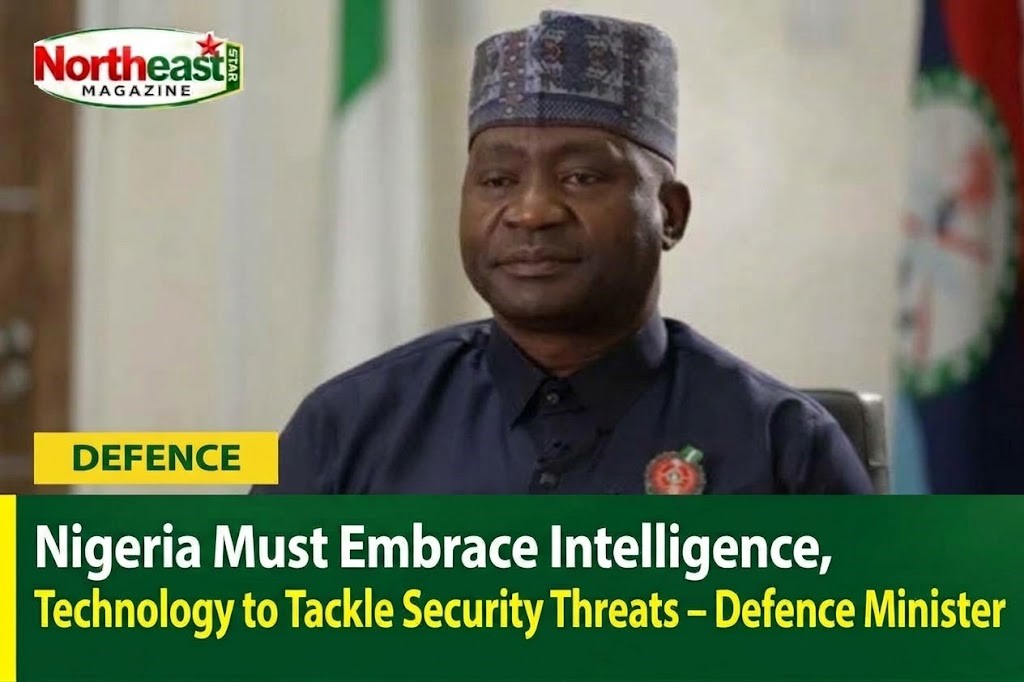
By Jamila Muhammad
Nigeria needs to strengthen intelligence gathering, deploy modern technology and improve cooperation among security agencies to confront evolving security threats, the Minister of Defence, retired Gen. Christopher Musa, has said.
Mr Musa made the call on Monday in Abuja at the conference and awards ceremony of the Defence Correspondents Association of Nigeria (DECAN), where he stressed the need to complement conventional military operations with more sophisticated approaches to national security.
The conference was themed “Beyond Kinetic Warfare: Harnessing Technology and Intelligence-Led Operations for Nigeria’s National Security”.
The minister, represented by his Senior Special Adviser on Foreign Relations, retired Air Commodore Steven Ogunmodede, said the changing nature of insecurity required security institutions to rethink how they detect, prevent and respond to threats.
He commended DECAN for choosing a theme that reflected the realities confronting the Nigerian Armed Forces and other security agencies.
According to him, military achievements should not be judged solely by visible activities such as troop deployments, battlefield engagements, territorial gains and arrests, as many critical security successes depend on intelligence and preventive action.
He said terrorists, criminal groups and other hostile actors were increasingly exploiting technological tools, financial networks, information systems and weaknesses in coordination among security agencies.
Mr Musa argued that an effective response required a combination of combat readiness, accurate intelligence, technological innovation, strategic planning and stronger collaboration among relevant institutions.
He explained that intelligence-driven operations enabled security agencies to identify threats before they materialised, trace criminal networks, anticipate attacks and conduct targeted interventions to minimise casualties.
The minister, however, cautioned that acquiring modern equipment alone would not guarantee success without adequately trained personnel, dependable systems and sound professional judgement.
He described technology as an instrument for enhancing military effectiveness, rather than a substitute for the expertise, discipline and decision-making abilities of security personnel.
Mr Musa said the Ministry of Defence and the Armed Forces were committed to improving intelligence sharing, strengthening situational awareness and adopting methods capable of enhancing operational performance.
He added that security institutions needed to remain innovative and responsive to emerging threats, while ensuring that investments in technology delivered measurable improvements in protecting citizens and safeguarding Nigeria’s territorial integrity.
The minister also called for closer coordination across the country’s security framework, noting that no single agency had all the resources, information and expertise required to address the nation’s security problems.
Turning to the media’s role in national security, Mr Musa said defence reporting required a careful balance between citizens’ right to know and the need to protect sensitive military activities.
He maintained that responsible journalism could promote transparency, strengthen public understanding of security operations and improve confidence in government institutions.
The minister noted that intelligence successes were not always visible to the public, explaining that operations that successfully prevented attacks might attract little attention, while sensitive intelligence could not always be disclosed without compromising security.
He said the absence of dramatic military engagements should not necessarily be taken as evidence that security agencies were inactive.
Mr Musa urged security institutions to communicate with the public accurately and promptly, saying credible information was essential to sustaining public trust.
He also encouraged defence correspondents to uphold professional standards, verify information and exercise sound judgement in reporting security developments.
While acknowledging the importance of media scrutiny in improving the performance of the Armed Forces, he warned that publishing unconfirmed claims or disclosing sensitive operational information prematurely could put military personnel, ongoing missions and civilians at risk.
He said journalists should continue to hold security institutions accountable while remaining mindful of the potential consequences of their reports in a sensitive operational environment.

Court Convicts Ruth Ogunleye Over Defamatory TikTok Posts Against NDA Commandant
Adamawa: Army Repels ISWAP Attack, Recovers AK-47 Rifles, Explosives
Troops Kill Suspected Bandit, Recover Four Motorcycles in Plateau Gun Battle

APC National Chairman Settles Gombe Central Contest, Raises DCP Ahmed’s Hand as Party’s Senatorial Candidate

NGX Ends Week in the Green as ₦1.54 Trillion Boosts Investors’ Fortunes

Gombe Eyes Livestock-Led Economic Growth as Inuwa Yahaya Meets Minister

-
 Politics5 months ago
APC National Chairman Settles Gombe Central Contest, Raises DCP Ahmed’s Hand as Party’s Senatorial Candidate
-
 Economy11 months ago
NGX Ends Week in the Green as ₦1.54 Trillion Boosts Investors’ Fortunes
-
 Agriculture3 months ago
Gombe Eyes Livestock-Led Economic Growth as Inuwa Yahaya Meets Minister
-

 Education11 months ago
Dangote Launches Landmark ₦1 Trillion Scholarship Scheme to Support 1.3 Million Nigerian Students
-
 Sport7 months ago
Gombe Aquatic Sports Body Unveils Board, Sets Stage for Competitive Debut
-

 Economy11 months ago
CBN’s End to Cash Withdrawal Limit
-

 Striking the Balance4 months ago
The $2,500 Threshold: Why Raising Nigeria’s GDP Per Capita Is Our Best Non-Kinetic Strategy for Peace
-

 Environment5 months ago
World Environment Day: NGO Urges Nigerians to Embrace Nature-Based Solutions Against Climate Change