
Health
Troops kill ISWAP Shura member in Yobe offensive


Troops kill ISWAP Shura member in Yobe offensive
By Tada Jutha, Maiduguri
Troops of Operation Hadin Kai have killed a senior commander of the Islamic State West Africa Province (ISWAP), identified as Abu Jarir, during a coordinated military operation in Yobe State, security sources have said.
The operation, which involved both ground forces and air support, was carried out along the Babangida–Dapchi axis, a strategic corridor in the state.
Military sources told Premium Times-style reporting that the strike followed credible intelligence on the movement of the insurgent leader and his fighters within the area.
“It was around 6:12 p.m. on April 22 that our troops, acting on intelligence, engaged the terrorists in the Babangida general area and successfully neutralised Abu Jarir,” one of the sources said.
Abu Jarir was said to be a member of ISWAP’s Shura council, a top decision-making body within the group. His killing is considered a major blow to the insurgents’ leadership structure in the Lake Chad region, which covers parts of Nigeria, Niger, Chad and Cameroon.
Security officials also disclosed that ISWAP’s overall commander in the Lake Chad region, identified as Ba Shuwa, reportedly dispatched a search team to recover the body of the slain commander shortly after the incident.
The search party, according to the sources, was later sighted moving on motorcycles around the Aljanna Jaule area of Yobe State.
Military authorities have yet to issue an official statement on the operation.
However, sources said troops have continued exploitation operations across the Babangida–Dapchi axis and parts of the Sasawa Forest, as the military intensifies efforts to weaken insurgent networks in the North-east.
The Nigerian military has, in recent months, sustained pressure on ISWAP and Boko Haram factions through a combination of air strikes and ground offensives, targeting their hideouts and supply routes across the region.
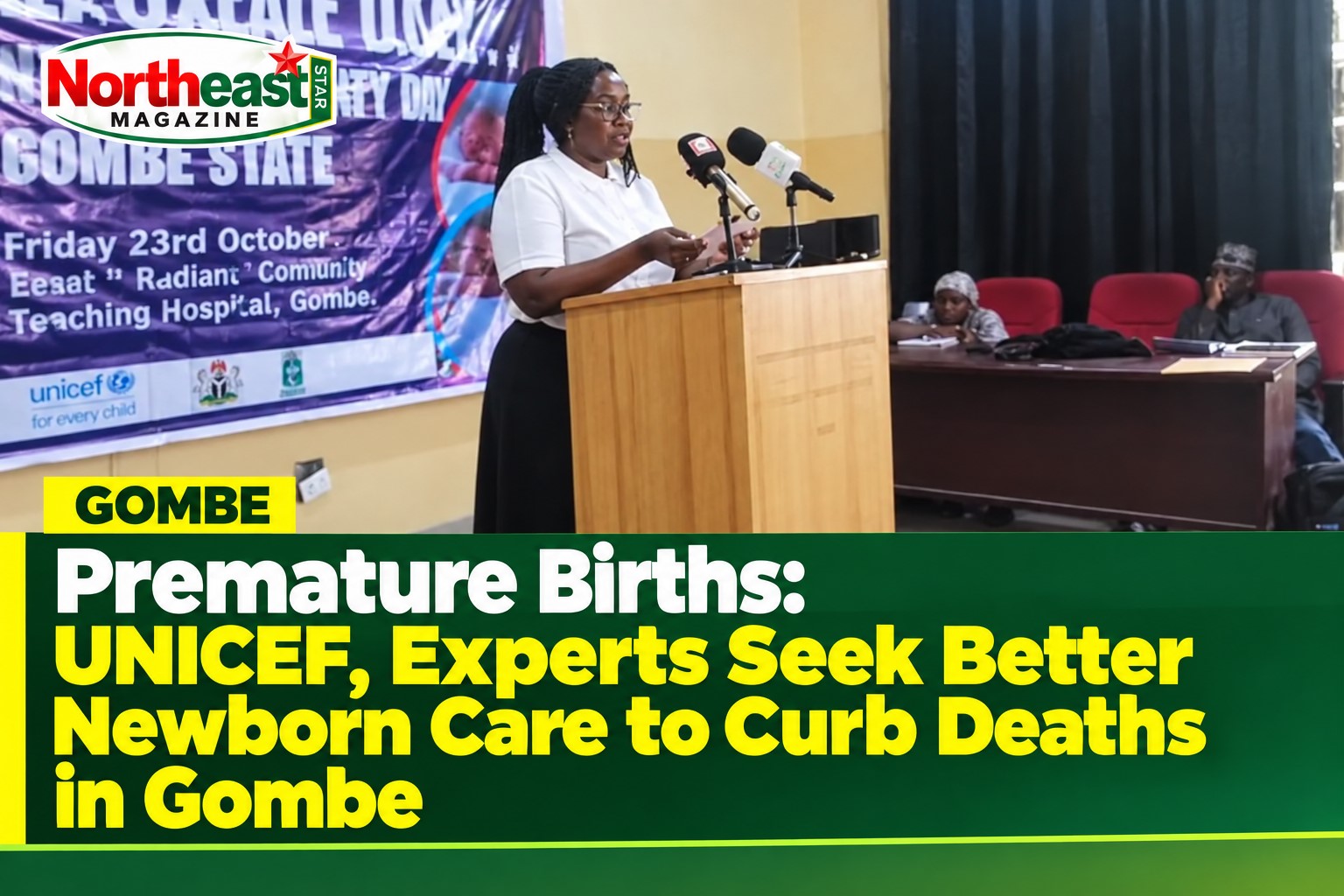
By Auwal Ahmad, Gombe
Premature birth remains a major challenge to newborn survival in Nigeria, with babies born before completing 37 weeks of pregnancy often requiring specialised medical attention to survive and develop properly.
In Gombe State, health experts and development partners have called for stronger neonatal services, better-equipped health facilities and sustained follow-up care to reduce deaths among premature babies and improve their long-term health.
The stakeholders made the appeal during a media dialogue on Friday to mark the 2026 World Prematurity Day commemoration in Gombe, organised by the United Nations Children’s Fund (UNICEF) in partnership with the state government.
The event was held under the theme “Small Babies, Big Potential: Invest in Follow-up Care to Protect Their Future”, highlighting the need to support children born prematurely beyond their initial treatment.
Oluseyi Olosunde, a health officer with UNICEF’s Bauchi Field Office, said premature birth remained a significant factor in newborn deaths across Nigeria, stressing that improving care for affected babies was essential to reducing child mortality.
He said efforts to lower deaths among children under five must prioritise newborns, particularly those born prematurely, who may require specialised treatment and continued monitoring after leaving health facilities.
According to him, UNICEF is working with the Gombe State Government and other development partners to improve newborn survival through health worker training, immunisation, and improvements in healthcare infrastructure.
Olosunde also called for increased public education to challenge harmful beliefs about premature babies, particularly in rural communities where misconceptions could affect how families respond to their needs.
He said babies born prematurely should not be viewed as cursed or incapable of achieving their potential, adding that communities needed accurate information about the medical causes of premature birth and the support required for affected children.
He urged health authorities and development partners to produce educational materials in local languages to help families understand premature birth and their responsibilities in caring for affected babies.
Maryam Usman, a health officer with the Gombe State Primary Healthcare Development Agency, said UNICEF had trained frontline health workers in 56 primary healthcare facilities to strengthen their capacity to care for premature babies.
She said the training would help improve the quality of care available to newborns and increase their chances of survival.
Usman also acknowledged the contributions of the state government, UNICEF and other development partners in providing essential equipment for the management of premature babies.
She added that the provision of tricycle ambulances would help improve emergency transportation, particularly for patients requiring urgent medical attention.
A consultant paediatrician and neonatologist at the Federal Teaching Hospital, Gombe, Rabo Adeniji, called on governments at all levels to strengthen Universal Health Coverage for newborns to ensure that families could access essential healthcare services.
Adeniji commended UNICEF for supporting activities marking World Prematurity Day, including capacity-building sessions, media engagement and workshops that allowed health professionals to exchange experiences.
She described the support as encouraging for professionals working to improve newborn care.
The neonatologist also urged journalists to use their platforms to raise awareness about premature birth, promote the welfare of affected children and counter myths that could discourage families from seeking appropriate medical care.
The stakeholders stressed that improving survival outcomes for premature babies would require sustained investment in specialised healthcare, stronger referral systems, public awareness and continued support for children after birth.
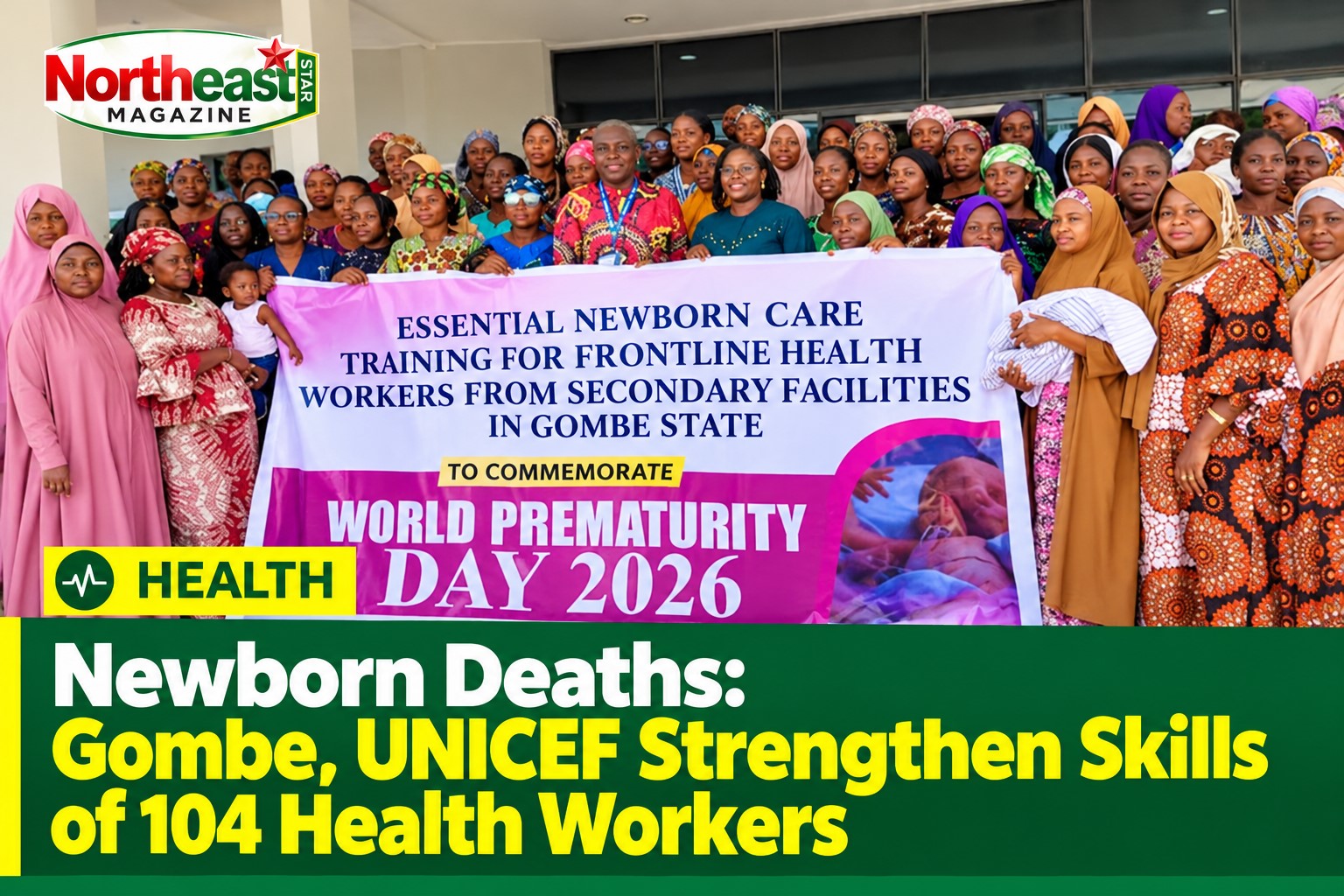
By Auwal Ahmad Umar
The Gombe State Government and the United Nations Children’s Fund (UNICEF) have trained 104 healthcare workers to improve the quality of newborn care and reduce preventable deaths, particularly in communities across northern Nigeria where neonatal mortality remains a major concern.
The intervention focused on equipping frontline medical personnel with the knowledge and practical skills needed to care for newborns, including premature babies and infants requiring specialised medical attention.
The latest two-day training brought together 48 healthcare workers from secondary health facilities in the state. It followed an earlier session involving 56 personnel from primary healthcare centres, bringing the total number of trained workers to 104.
Speaking in Gombe on Thursday, the Executive Secretary of the Gombe State Primary Health Care Development Agency, Abdulrahman Shuaibu, described improved newborn care as an important step towards reducing deaths that could otherwise be prevented through timely and appropriate medical intervention.
Shuaibu explained that some babies were delivered within communities before being referred to secondary hospitals for specialised treatment when complications developed.
He said healthcare workers in such facilities needed adequate training to respond effectively to newborn emergencies and provide appropriate treatment.
The agency’s executive secretary noted that neonatal and infant mortality remained a significant challenge in the state, requiring a joint response from the government, healthcare professionals and development partners.
He expressed hope that the programme would contribute to a reduction in newborn deaths across communities.
Shuaibu also urged participants to share the skills and knowledge acquired during the training with colleagues who were unable to attend, stressing that wider knowledge-sharing would help improve newborn care across more health facilities.
He said the initiative complemented the state government’s ongoing efforts to improve healthcare infrastructure and services at primary and secondary levels. He also appreciated UNICEF and other development partners for supporting health interventions in the state.
A UNICEF health officer at its Bauchi Field Office, Oluseyi Olosunde, said the training was organised to mark the 2026 World Prematurity Day.
Olosunde explained that the programme was designed to improve medical care for newborns, especially premature infants and those who require specialised attention.
He emphasised that the quality of healthcare provided to mothers and babies before, during and after delivery played a crucial role in determining survival outcomes.
The UNICEF official said the participants included nurses, midwives and doctors responsible for maternal and newborn healthcare throughout pregnancy, childbirth and the postnatal period.
He encouraged the health workers to apply the knowledge gained in their respective facilities to improve treatment outcomes and protect the lives of mothers and infants.
Olosunde expressed concern over the persistently high rate of newborn deaths in several northern Nigerian states, emphasising the importance of building the capacity of healthcare personnel to provide effective services.
Also speaking, a consultant paediatrician at the Federal Teaching Hospital, Gombe, Raymond Mercy, called on healthcare professionals to prioritise proper medical attention for newborns.
Mercy, a member of the Paediatric Association of Nigeria and the Nigerian Society of Neonatal Medicine, said Nigeria’s neonatal mortality rate was estimated at between 34 and 41 deaths per 1,000 live births.
She noted that the country’s high burden of newborn deaths underscored the urgent need to improve healthcare delivery and strengthen the capacity of medical personnel to manage complications affecting newborns.
The training forms part of broader efforts to improve maternal and child health outcomes by ensuring that healthcare workers are better equipped to provide quality care to mothers and their babies.
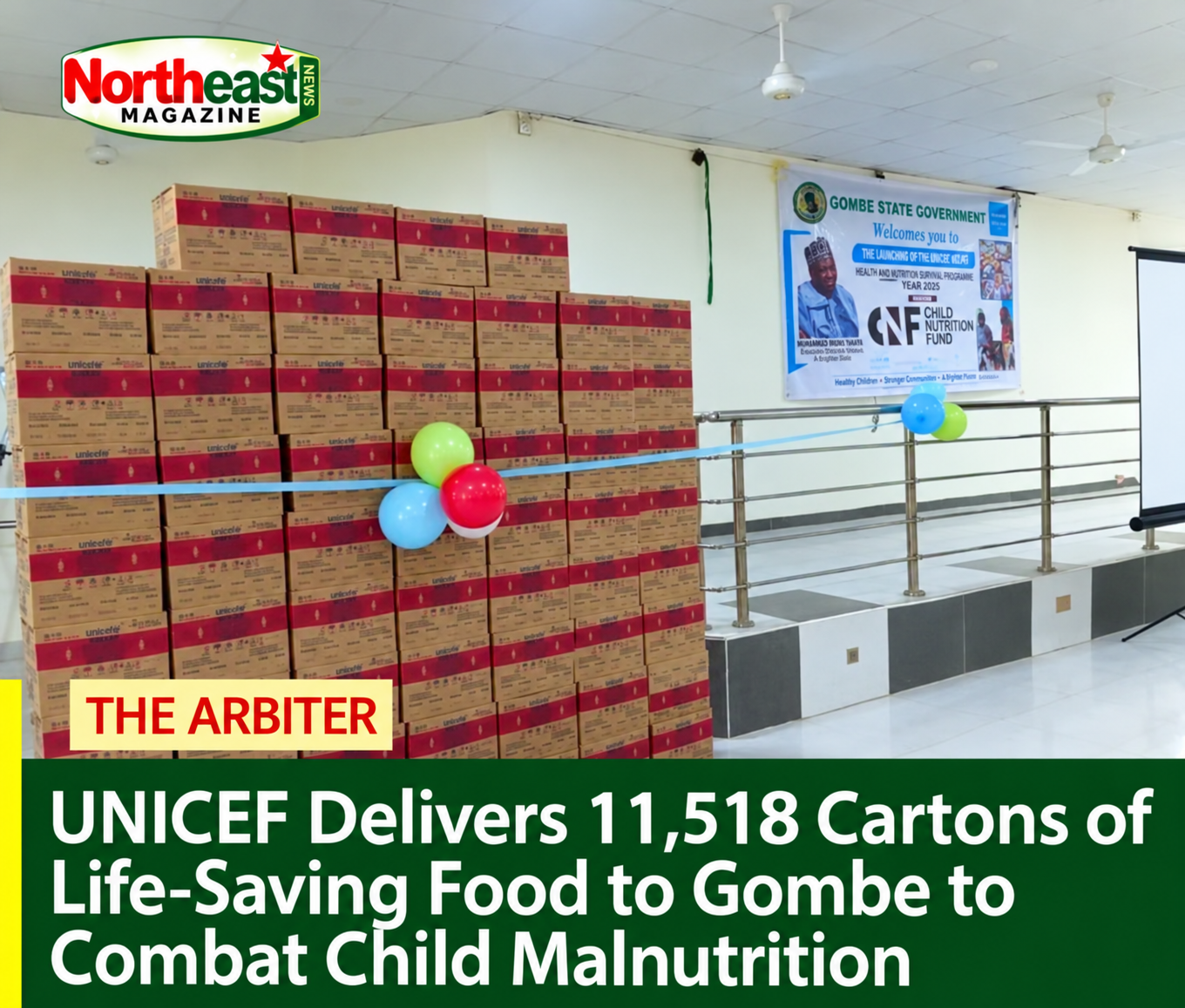
By Auwal Ahmad Umar
The intervention follows Gombe State’s N500 million nutrition contribution, matched by an equal amount through the Child Nutrition Fund.
The United Nations Children’s Fund (UNICEF) has supplied 11,518 cartons of Ready-to-Use Therapeutic Food (RUTF) to the Gombe State Government as part of efforts to tackle severe acute malnutrition among vulnerable children.
The consignment is expected to strengthen the state’s nutrition response by improving access to essential therapeutic food for children battling the life-threatening condition.
Speaking at the official handover ceremony, the Chief of UNICEF Bauchi Field Office, Dr Nuzhat Rafique, praised the Gombe State Government for committing N500 million as counterpart funding for nutrition interventions in 2025.
According to her, the state’s contribution was matched with an additional N500 million through the Child Nutrition Fund, providing resources for the procurement of critical nutrition supplies.
Rafique explained that the donated RUTF contained millions of sachets designed to support the recovery of children suffering from severe acute malnutrition.
She emphasised the need for proper distribution and monitoring to ensure the supplies reach the children for whom they were intended.
The UNICEF official also urged community-based organisations, including Mama2Mama and Fathers for Good Health, to step up public awareness about the appropriate use of RUTF.
She warned that the therapeutic food was specifically formulated for children with severe acute malnutrition and should not be treated as ordinary food.
Rafique further stressed that children undergoing treatment must complete their prescribed course, urging parents and caregivers to follow the guidance of health workers to achieve the best possible outcomes.
She commended the state government for establishing a committee to prevent the diversion, abuse and misuse of aid supplies, while calling for stronger accountability and monitoring systems to safeguard the donated products.
The Gombe State Commissioner for Women Affairs and Social Development, Professor Bertha Abdu, expressed appreciation to UNICEF for its continued support, particularly in programmes designed to improve the welfare of women and children.
She noted that proper nutrition was essential to children’s healthy growth, warning that nutritional deficiencies could have lasting consequences for their physical development and overall wellbeing.
Similarly, the Commissioner for Science, Technology and Innovation, Habu Dahiru, said raising children who are physically healthy and mentally fit was crucial to the state’s long-term development.
Dahiru highlighted the importance of RUTF in treating severe acute malnutrition and disclosed that the state government was complementing UNICEF’s efforts through the local production of nutrient-rich food.
He said the ministry had increased production of its locally developed nutritious food and was working with the North-East Development Commission to expand the production facility.
According to him, the expansion is intended to increase production capacity and enable the facility to meet nutritional needs in Gombe and neighbouring states.
The commissioner expressed the ministry’s willingness to deepen collaboration with UNICEF and other development partners to expand the initiative, particularly to support efforts to address moderate malnutrition.
He also assured that the government would closely supervise the distribution of the donated RUTF to prevent diversion and ensure that eligible children receive the treatment.
The Commissioner for Budget and Economic Planning, Micah Sunday, described UNICEF as a strategic development partner whose interventions have continued to support the state government’s efforts to improve children’s welfare and development.
Sunday stressed that tackling malnutrition goes beyond improving children’s physical health, explaining that adequate nutrition also plays a vital role in brain development, learning and general wellbeing.
He added that improving children’s nutritional status would help them grow into healthier, better-educated and more productive members of society.
The latest delivery is expected to boost Gombe State’s efforts to combat severe acute malnutrition and expand access to life-saving nutritional treatment for vulnerable children.
The intervention also underscores the importance of sustained government investment, partnerships with development organisations and transparent distribution systems in addressing child malnutrition across the state.

Premature Births: UNICEF, Experts Seek Better Newborn Care to Curb Deaths in Gombe

Dr Kyari Dikwa Hails Zulum Over 400-Bed Teaching Hospital, Education Projects

Borno, AU Partner to Get 800,000 Out-of-School Children Back to Classrooms

APC National Chairman Settles Gombe Central Contest, Raises DCP Ahmed’s Hand as Party’s Senatorial Candidate

NGX Ends Week in the Green as ₦1.54 Trillion Boosts Investors’ Fortunes

Gombe Eyes Livestock-Led Economic Growth as Inuwa Yahaya Meets Minister

-
 Politics4 months ago
APC National Chairman Settles Gombe Central Contest, Raises DCP Ahmed’s Hand as Party’s Senatorial Candidate
-
 Economy11 months ago
NGX Ends Week in the Green as ₦1.54 Trillion Boosts Investors’ Fortunes
-
 Agriculture3 months ago
Gombe Eyes Livestock-Led Economic Growth as Inuwa Yahaya Meets Minister
-
 Sport7 months ago
Gombe Aquatic Sports Body Unveils Board, Sets Stage for Competitive Debut
-

 Education11 months ago
Dangote Launches Landmark ₦1 Trillion Scholarship Scheme to Support 1.3 Million Nigerian Students
-

 Economy11 months ago
CBN’s End to Cash Withdrawal Limit
-

 Striking the Balance3 months ago
The $2,500 Threshold: Why Raising Nigeria’s GDP Per Capita Is Our Best Non-Kinetic Strategy for Peace
-

 Environment5 months ago
World Environment Day: NGO Urges Nigerians to Embrace Nature-Based Solutions Against Climate Change