
Borno
60,000 Nigerians Return Home as IOM Expands Lifeline for Stranded Migrants

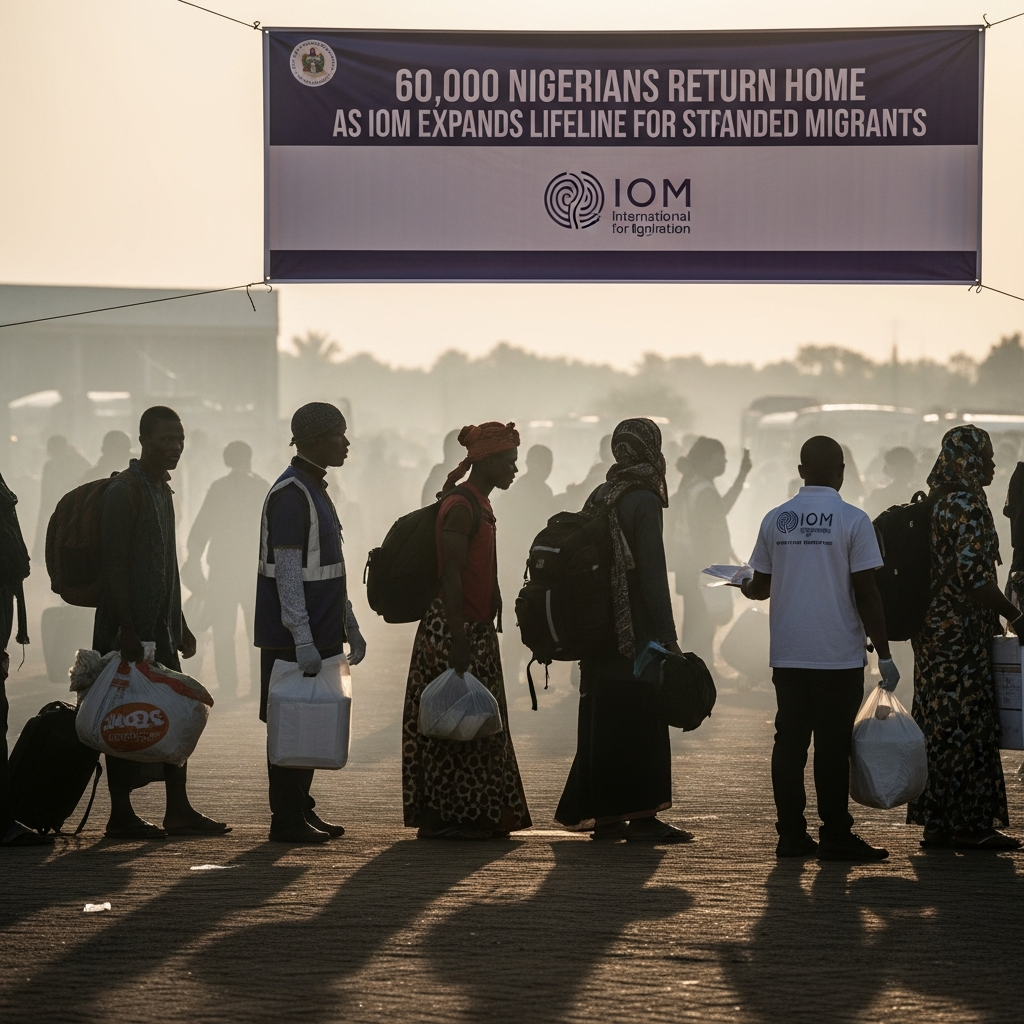
60,000 Nigerians Return Home as IOM Expands Lifeline for Stranded Migrants
By Tada Jutha, Maiduguri
No fewer than 60,000 Nigerians who were once stranded along dangerous migration routes across West and Central Africa have now safely returned home, marking a major milestone in humanitarian efforts led by the International Organization for Migration (IOM).
The returnees are being supported through structured reintegration programmes designed to help them rebuild their lives, regain stability, and restore dignity after enduring harsh conditions abroad.
IOM Chief of Mission in Nigeria, Sharon Dimanche, disclosed this in a statement issued in Maiduguri, Borno State, noting that the initiative has been ongoing since 2017. She explained that the programme provides tailored support to migrants as they transition from uncertainty to self-reliance.
“Through our reintegration support, migrants are empowered to rebuild their livelihoods and move forward with dignity,” she said, adding that many beneficiaries are already making meaningful progress in their communities.
Dimanche highlighted the recent return of 181 Nigerians from Libya on March 10, 2026, describing it as a significant step that reflects the strong collaboration between IOM, the Federal Government of Nigeria, the European Union, and its member states.
She noted that for many returnees, the journey back home represents a turning point, away from exploitation, abuse, and life-threatening migration experiences, and toward a future anchored on recovery and opportunity.
Beyond facilitating returns, the IOM has provided reintegration assistance to over 38,000 Nigerians. The support includes vocational training, business start-up grants, educational opportunities, and psychosocial care aimed at helping returnees reintegrate into society successfully.
“The return of migrants is not the end of their story,” Dimanche emphasized. “With the right support, they can rebuild their lives, grow, and contribute meaningfully to their communities.”
She added that successful reintegration not only transforms individual lives but also strengthens communities and supports long-term development.
Data from the organization shows that in 2025 alone, 14,787 Nigerians were assisted to return home safely, while more than 2,500 have already benefited from the programme in 2026.
Dimanche also raised concern over the vulnerability of many migrants, revealing that a significant number of those assisted are survivors of human trafficking, exploitation, and severe abuse along migration routes.
She stressed the need for sustained, route-based interventions that ensure access to protection services, safe return pathways, and continuous reintegration support for affected individuals.
The IOM reaffirmed its commitment to working with partners to provide life-saving assistance and create opportunities for returnees to rebuild their futures, one life at a time.

By Tada Jutha
Borno State Governor, Professor Babagana Zulum, has called on members of the All Progressives Congress (APC) Presidential Campaign Council’s Contact and Mobilisation Committee to strengthen coordination, deepen consultations and develop effective strategies to mobilise voters ahead of the 2027 general elections.
Zulum made the call on Tuesday during a meeting of the committee in Abuja, where he urged members to work collectively and demonstrate commitment to achieving the objectives assigned to them by the party’s national leadership.
The governor, who serves as Coordinating Director of Contact and Mobilisation, said the committee had a critical responsibility to harmonise the activities of its various units and groups to ensure effective implementation of the council’s mobilisation plans.
He identified the re-election of President Bola Ahmed Tinubu and Vice President Kashim Shettima as the committee’s central assignment, stressing the need for a coordinated approach to engaging voters across the country.
Zulum also emphasised the importance of regular meetings to assess ongoing activities, measure progress and identify areas requiring improvement in the committee’s mobilisation efforts.
According to him, sustained consultations and the pooling of members’ experience would strengthen the committee’s capacity to deliver on its mandate.
He urged members to maintain unity of purpose and ensure that their individual and collective efforts aligned with the directives of the APC leadership.
Those who attended the meeting included Senator Adams Oshiomhole, Deputy Director-General of the Presidential Campaign Council in charge of mobilisation; the Minister of State for Education, Professor Suwaiba Said Ahmad; the Minister of Women Affairs, Imaan Sulaiman-Ibrahim; and Abike Dabiri-Erewa, Chairman and Chief Executive Officer of the Nigerians in Diaspora Commission (NiDCOM).
The meeting focused on improving coordination and strengthening voter mobilisation efforts in support of the APC’s presidential campaign.
By Auwal Ahmad Umar
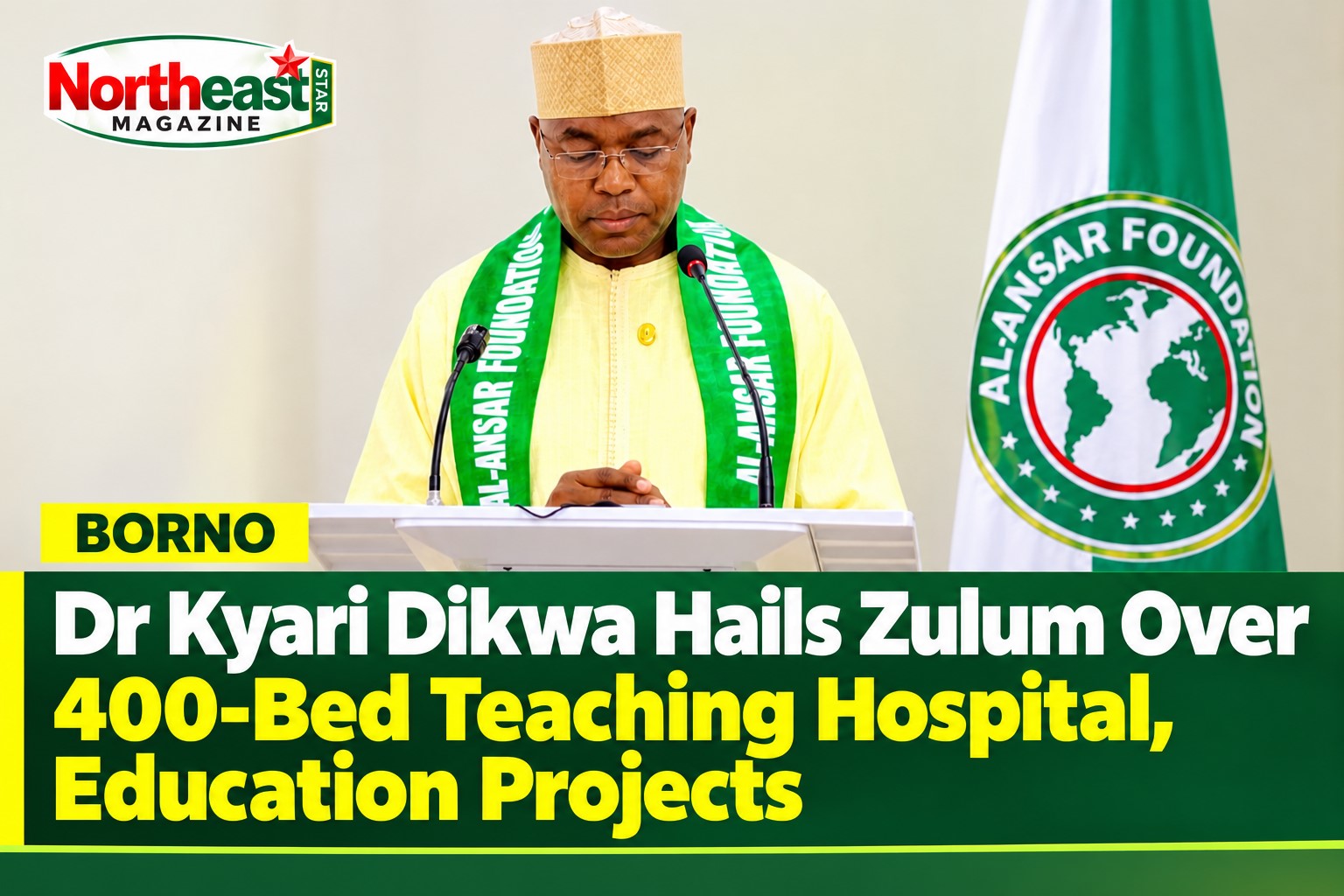
Borno elder statesman, Dr. Mohammed Kyari Dikwa and the Founder and President of Al-Ansar Foundation has commended Borno State Governor, Professor Babagana Umara Zulum, for investments in healthcare and education, describing the commissioning of the 400-bed Kashim Ibrahim University Teaching Hospital and other educational facilities as significant milestones in the state’s rebuilding efforts.
Dr Mohammed Kyari Dikwa stated this in a congratulatory letter to the governor, made available to Northeast Star Magazine in Abuja.
He said the hospital would strengthen access to specialist healthcare, improve medical education and help address the shortage of qualified health professionals in Borno State and the wider Northeast.
“The successful completion and commissioning of the magnificent 400-bed Kashim Ibrahim University Teaching Hospital, alongside other landmark educational projects, represents an extraordinary achievement that will undoubtedly remain one of the most enduring legacies of your administration,” Dr Dikwa said.
The letter was addressed to Governor Zulum at the Government House in Maiduguri.
According to Dr Dikwa, the hospital is equipped with diagnostic facilities, 13 specialist departments, a medical college complex, student accommodation and staff housing.
He said the facilities would improve healthcare delivery and reduce the need for residents to travel outside Borno State to access specialised medical treatment.
“Of particular significance is the potential of this remarkable institution to substantially reduce medical tourism, improve access to specialised healthcare, strengthen medical education and address the shortage of qualified healthcare professionals across Borno State, the North-East and neighbouring countries within the Lake Chad region,” he said.
Dr Dikwa, who is also the founder of Al-Ansar University, Maiduguri, said the teaching hospital could create opportunities for medical training, research and collaboration among healthcare institutions.
He described the project as an investment in human welfare, saying its benefits would extend beyond healthcare infrastructure to include improved access to quality treatment and the development of skilled medical personnel.
The foundation also commended the governor for the commissioning of the Yerwa Practice Mega Primary School and other educational facilities designed to support orphans and vulnerable children.
Dr Dikwa said the initiatives reflected the state government’s commitment to human capital development, social inclusion and providing opportunities for disadvantaged members of society.
He praised the governor’s efforts to translate development plans into tangible projects despite the challenges confronting Borno State.
“What makes your leadership truly exceptional is your ability to transform vision into reality, promises into tangible achievements, and public resources into institutions that directly improve the lives of ordinary citizens,” he said.
He added that the projects were laying the foundation for a more prosperous, educated, healthy and self-reliant Borno State.
The foundation’s president said the administration’s investments in healthcare and education would serve both present and future generations.
He also prayed for Allah to reward the governor for his contributions to the state, grant him good health and wisdom, and enable him to achieve more during his remaining tenure.
“May He bless your remaining tenure with even greater accomplishments, preserve your honour and dignity, and make your legacy a source of lasting benefit to the people of Borno State and humanity at large,” Dr Dikwa said.
He concluded by expressing the foundation’s appreciation for the governor’s efforts towards the rebuilding and transformation of the state.
By Tada Jutha, Maiduguri
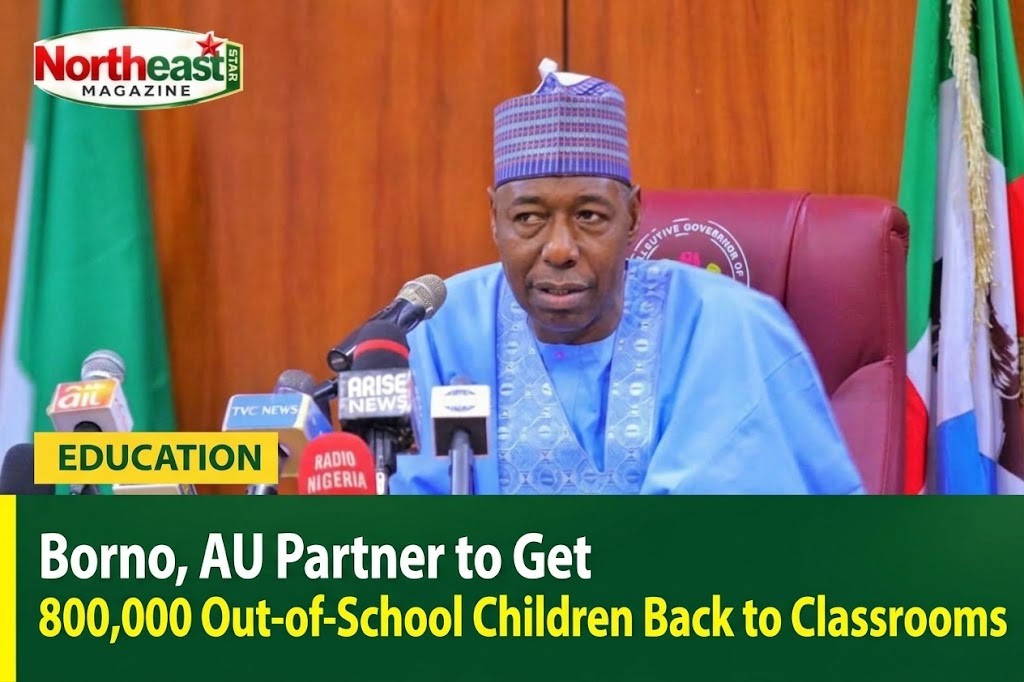
Borno State Governor, Babagana Zulum, has called for stronger collaboration with the African Union (AU) to expand educational opportunities for an estimated 800,000 children still out of school in the state.
Zulum made the appeal on Thursday while receiving a delegation led by the AU Chairperson’s Special Envoy for Children Affected by Armed Conflict, Ambassador Jainaba Jagne, at the Government House in Maiduguri.
The governor said the number of out-of-school children in Borno had dropped from more than two million about seven years ago to approximately 800,000, but stressed that additional support was needed to ensure more children, particularly those affected by conflict, could return to formal education.
He described education as a key driver of development and urged the continental body to support efforts to enrol vulnerable children and provide them with opportunities to learn and build better futures.
Zulum explained that education remained central to his administration’s strategy for moving Borno from emergency humanitarian interventions towards recovery, stabilisation and sustainable development.
According to him, the state government has invested in rebuilding schools, recruiting teachers and expanding access to learning, with particular attention to girls and children facing social and economic disadvantages.
He emphasised that protecting children affected by conflict went beyond providing immediate humanitarian assistance, noting that their education, welfare and social reintegration were essential to lasting peace and security.
The governor identified psychosocial care, vocational training, community acceptance and access to quality education as critical measures for helping children recover from the effects of insurgency.
He also reaffirmed his administration’s commitment to providing safe and inclusive schools in line with the principles of the Safe Schools Declaration.
Beyond education, Zulum urged the AU delegation to support improvements in primary healthcare, particularly in communities with limited access to advanced medical facilities.
He identified the need for trained health workers, modern medical equipment and improved nutrition services, saying these interventions would help address childhood malnutrition and other health challenges affecting vulnerable families.
The governor further called for economic empowerment programmes for mothers, arguing that stronger household incomes would improve families’ ability to provide food, education and other necessities for their children.
He said strengthening women’s livelihoods would help reduce the vulnerability of children and support their overall well-being.
Zulum welcomed the AU’s efforts to promote education and child protection, expressing his administration’s readiness to deepen cooperation with the Union, the Federal Government, the United Nations and other development partners.
He said such partnerships were important for advancing education recovery, youth empowerment, child protection and peacebuilding across Borno State.
In her remarks, Jagne commended the Borno State Government for its interventions aimed at rehabilitating and reintegrating children affected by insurgency.
She said the experience gained from the state’s programmes could provide useful lessons for other African countries confronting similar challenges.
The envoy explained that her engagements with the state’s First Lady, Associate Professor Falmata Babagana Umara Zulum, and visits to the Bulumkutu Interim Care Centre and Muna Vocational Centre had provided an opportunity to assess the initiatives supporting affected children.
Jagne said the delegation would share its observations with AU member states to highlight the interventions being implemented in Borno.
She also disclosed that the delegation had brought educational materials for more than 1,000 children, alongside hygiene supplies for adolescent girls undergoing reintegration.
The visit underscored the importance of cooperation between the Borno State Government and international partners in addressing the long-term effects of conflict on children, particularly through education, healthcare, skills development and community-based support.

A Journey of Dedication, Professional Excellence and Leadership in Hajj Administration

Gombe First: A Renewed Hope for Gombawa

Meet Prof Lamela Silas: The Forensic Accounting Expert Seeking to Govern Gombe

APC National Chairman Settles Gombe Central Contest, Raises DCP Ahmed’s Hand as Party’s Senatorial Candidate

NGX Ends Week in the Green as ₦1.54 Trillion Boosts Investors’ Fortunes

Gombe Eyes Livestock-Led Economic Growth as Inuwa Yahaya Meets Minister

-
 Politics4 months ago
APC National Chairman Settles Gombe Central Contest, Raises DCP Ahmed’s Hand as Party’s Senatorial Candidate
-
 Economy11 months ago
NGX Ends Week in the Green as ₦1.54 Trillion Boosts Investors’ Fortunes
-
 Agriculture3 months ago
Gombe Eyes Livestock-Led Economic Growth as Inuwa Yahaya Meets Minister
-

 Education11 months ago
Dangote Launches Landmark ₦1 Trillion Scholarship Scheme to Support 1.3 Million Nigerian Students
-
 Sport7 months ago
Gombe Aquatic Sports Body Unveils Board, Sets Stage for Competitive Debut
-

 Economy11 months ago
CBN’s End to Cash Withdrawal Limit
-

 Striking the Balance4 months ago
The $2,500 Threshold: Why Raising Nigeria’s GDP Per Capita Is Our Best Non-Kinetic Strategy for Peace
-

 Environment5 months ago
World Environment Day: NGO Urges Nigerians to Embrace Nature-Based Solutions Against Climate Change