
Latest News
TCN: The Vote of Confidence In Tinubu’s Abdulaziz Reappointment

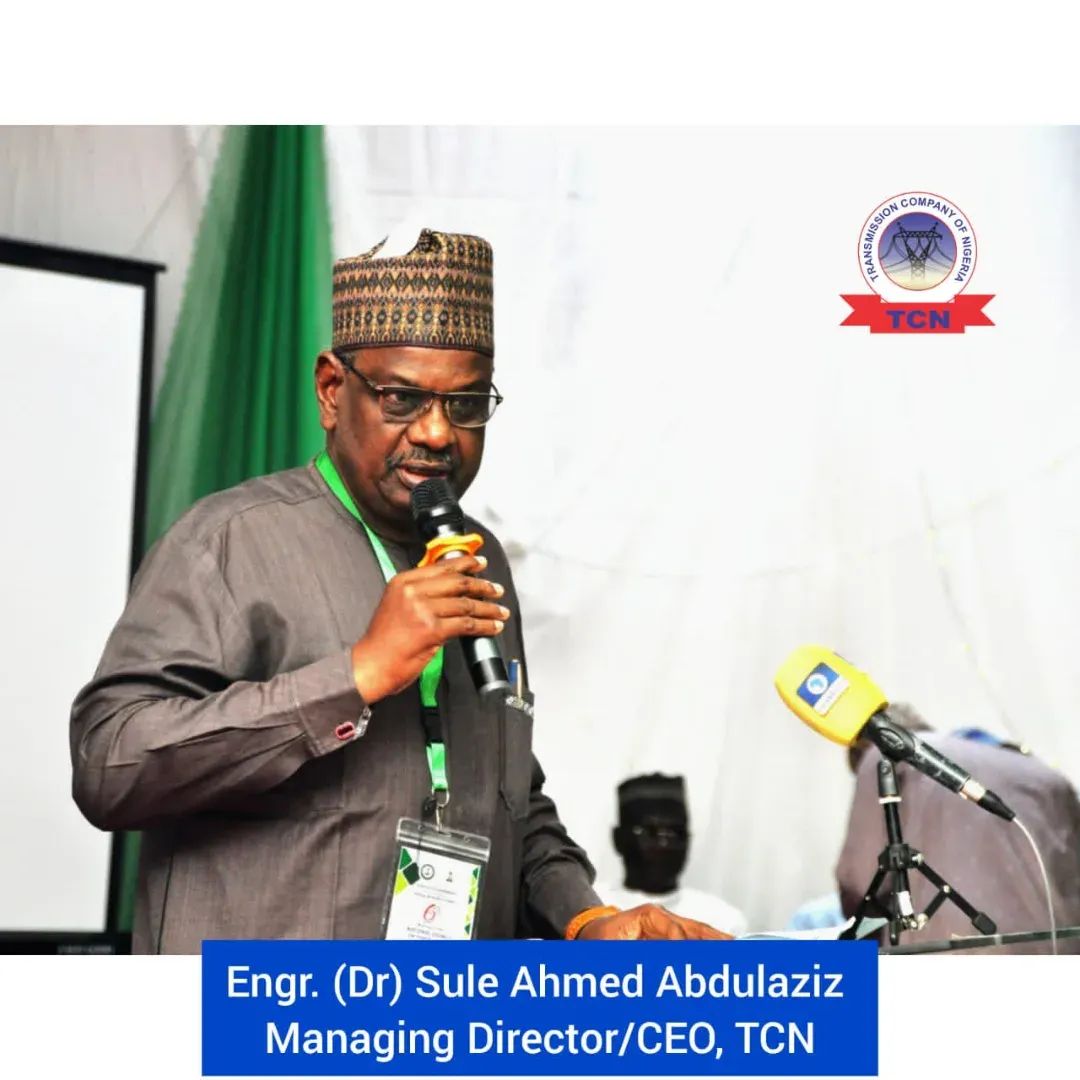
TCN: The Vote of Confidence In Tinubu’s Abdulaziz Reappointment
By Caleb Johnson
Nigeria’s electricity sector is understandably in an upbeat mood following the reappointment of Sule Ahmed Abdulaziz as Managing Director of the Transmission Company of Nigeria (TCN) by Bola Ahmed Tinubu for another five-year term.
The reappointment, coming to a sector as sensitive and strategic as electricity transmission, goes beyond just some routine gestures. The president has, with the decision passed, a clear vote of confidence on Abdul’aziz. Coming from a president known for placing a premium on performance and results, the gesture becomes even more significant. Yet, few observers of Nigeria’s power sector would argue that Abdulaziz does not deserve the recognition.
Since assuming leadership of TCN, Abdulaziz has approached the task with quiet determination. Right from the beginning, Abdul’aziz has rolled up his sleeves, placed his head firmly on the workbench, and set about delivering the mandate entrusted to him. And in truth, his assignment as the head of TCN, managing Nigeria’s national transmission grid is at once simple and complicated.
Simple, because the problem he was brought to address does not require complex theoretical benchmarks to measure success. Power transmission is measurable in real, practical terms: how much electricity the grid can evacuate, how stable the system is, and how efficiently energy moves from generation plants to distribution networks.
The complication, however, lies in the difficult operating environment. Nigeria’s transmission infrastructure has long suffered from underinvestment, aging equipment, and growing demand. Delivering meaningful results under such circumstances, therefore, requires not only technical expertise but also resilience, managerial discipline, and the ability to coordinate multiple moving parts across a vast national grid.
Yet, despite the precariousness of the task, it is noteworthy that under Abdulaziz, TCN has not only remained operationally stable but has also recorded measurable progress across several fronts.
One of the most celebrated achievements during his tenure is the expansion of Nigeria’s national electricity transmission capacity. Through deliberate upgrades and targeted infrastructure investments, the country’s transmission wheeling capacity has grown significantly. Today, the grid is capable of wheeling about 8,700 megawatts of electricity, a substantial improvement from previous years. Earlier grid simulations also confirmed the network’s ability to transmit over 6,000 megawatts reliably, marking an important step toward strengthening Nigeria’s energy backbone.
This expansion did not occur by chance. It was driven by concrete infrastructure improvements, including the installation of additional power transformers, the construction and upgrading of substations, and the reinforcement of key transmission lines across the country. Each of these interventions contributed incrementally to improving the grid’s capacity to evacuate power generated from plants.
Indeed, it was during Abdulaziz’s stewardship that Nigeria recorded a historic milestone in electricity transmission. In March 2025, the country achieved its highest ever power transmission on record. On that occasion, TCN successfully transmitted 5,801.84 megawatts of peak generation nationwide. The grid also delivered 128,370.75 megawatt-hours of daily energy, another record in the country’s electricity history.
These numbers may appear technical, but they tell the story of man whose determination has culminated in Nigeria’s transmission network gradually improving in its ability to move electricity efficiently from generators to distribution companies. For a country where the inability to evacuate generated power has often been cited as a major bottleneck, this progress is significant.
Another important aspect of Abdulaziz’s tenure has been the aggressive installation of new transformers and the reinforcement of transmission infrastructure nationwide. Between January 2024 and November 2025, a total of 82 power transformers were commissioned across various substations in the country. These installations added more than 8,500 megavolt-amperes (MVA) to the national grid’s capacity.
Transformer installations may not always attract headlines, but they are critical components of electricity infrastructure. By improving voltage stability and enhancing the grid’s ability to evacuate electricity from generating stations, these installations directly contribute to a more reliable power system.
Equally noteworthy is Abdulaziz’s progress in advancing major power infrastructure projects funded by international development partners. Under his leadership, transmission projects valued at over $1.16 billion have moved forward with support from institutions such as the World Bank, the African Development Bank, and Agence Française de Développement.
Among these initiatives is the Abuja Feeding Scheme, designed to strengthen electricity supply to Nigeria’s federal capital territory through additional substations and reinforced transmission lines. Other projects include the construction of new high-voltage transmission lines and substations aimed at improving the reach and resilience of the national grid.
Beyond physical infrastructure, Abdulaziz has also overseen important steps toward the modernisation and digitisation of TCN’s operational systems. Modern grid management increasingly depends on automation and digital monitoring, and TCN has taken strides in this direction.
Under his administration, several substations have been digitised and automated, improving operational efficiency and system responsiveness. The introduction of Generation Load Drop Sensitivity (GLDS) technology has also strengthened grid management by enabling faster responses to sudden fluctuations in electricity supply or demand. These innovations have reportedly contributed to a significant reduction in grid disturbances, estimated at about 76 percent over a five-year period.
Another area where Abdulaziz’s leadership has been evident is in strengthening grid stability through systematic maintenance and rehabilitation programmes. His administration launched initiatives such as the Nigeria Electricity Grid Maintenance, Expansion and Rehabilitation Programme (NEGMERP), which focuses on upgrading aging infrastructure and ensuring that existing facilities remain functional and efficient.
Through improved system planning and better grid visibility enabled by integrated technologies, TCN has been able to adopt a more proactive approach to maintenance and expansion. The result is a transmission network that is gradually becoming more resilient and better equipped to handle Nigeria’s growing electricity demand.
Abdulaziz’s influence has also extended beyond Nigeria’s borders. He has played a role in strengthening regional electricity cooperation within West Africa. As chairman of the executive board of the West African Power Pool, he has contributed to initiatives aimed at integrating electricity markets across the subregion.
Under his watch, the North Core Project has continued to advance, linking the transmission networks of Nigeria, Niger, Benin, and Burkina Faso. The project is designed to facilitate cross-border electricity trade and improve energy security across West Africa.
Taken together, these achievements reinforce the age-old belief that when the right individuals are placed in positions that align with their competence and experience, results tend to follow.
Leadership in public institutions often determines whether policies remain on paper or translate into real outcomes. In Abdulaziz’s case, the evidence suggests that the latter has been the case. His tenure has been marked more by measurable incremental improvements that collectively strengthen Nigeria’s power transmission capacity.
President Tinubu’s decision to retain him for another term therefore sends a clear message about the importance of continuity in critical sectors. In infrastructure development, consistency in leadership often allows long-term projects to mature and deliver their intended benefits.
While it is appropriate to commend the president for keeping faith with a performer, it is equally important to remember an old saying: the reward for good work is often more work. The expectations surrounding Abdulaziz’s second term will undoubtedly be higher.
Nigeria’s electricity challenges remain formidable. Demand continues to outpace supply, infrastructure gaps still exist, and the national grid must continue expanding to accommodate future generation capacity.
But with a foundation already laid during his first tenure, the coming years present an opportunity to consolidate gains and push the transmission network to even greater levels of efficiency and reliability.
For now, however, the reappointment stands as a recognition of work done and a call to even greater service in the years ahead.
Johnson writes from Abuja
By Aliyu Isah
Plan International Nigeria has called for sustained investment in teachers’ welfare, professional growth and emotional well-being as it reviewed the outcomes of a two-year education support programme in conflict-affected parts of Sokoto and Adamawa States.
The organisation made the call at the closing ceremony of the Teachers in Crisis Contexts (TiCC) project held in Abuja on Thursday, where education stakeholders examined the programme’s achievements, implementation challenges and prospects for sustaining its interventions.
Supported by the European Union, the initiative, known as Building Resilient Education Systems: Supporting Teachers’ Professional Development, Well-being and Policy Reforms in Crisis-Affected Contexts, was carried out by Save the Child Initiative (STCI) and the Forum for African Women Educationalists (FAWE), in partnership with the Nigeria Union of Teachers (NUT).
Speaking at the event, Plan International Nigeria’s Country Director, Dr Charles Usie, said the programme sought to improve teachers’ professional skills, working conditions and acceptance within communities affected by insecurity and humanitarian emergencies.
He explained that the interventions included capacity-building activities, the provision of teaching equipment and measures to help teachers integrate into schools serving vulnerable communities.
Usie, however, identified the difficulty of getting educators back into classrooms after attacks as one of the major obstacles encountered during the project.
He noted that assaults on schools and other public facilities often leave teachers traumatised, with many reluctant to return to their workplaces because of fears for their safety.
According to him, education and health facilities are frequently among the institutions exposed to attacks during emergencies, making the protection and psychological recovery of their workers a critical concern.
The country director said the project had produced an approach that could be adapted and introduced in other parts of Nigeria facing similar challenges.
He also praised STCI for its role in implementing the programme, describing the organisation as a valuable partner in humanitarian assistance and development initiatives.
However, Usie emphasised that the long-term success of such interventions would depend on government ownership, noting that development organisations could initiate and test solutions but could not independently guarantee their continuation.
He said state and federal authorities needed to incorporate successful interventions into public policies, provide adequate funding and establish institutional arrangements to ensure that the gains were not lost after external support ended.
Also speaking, Sokoto State Commissioner for Basic and Secondary Education, Prof. Ahmad Ala, reiterated the state government’s commitment to improving teachers’ skills, professional development and overall welfare.
Ala stressed that consistent investment in educators was necessary to strengthen teaching standards and improve pupils’ learning outcomes.
The closing ceremony attracted education officials and representatives of relevant institutions from Sokoto and Adamawa States, who reviewed the programme’s performance and discussed lessons that could inform future interventions.
Those present included education commissioners from both states, alongside representatives of the NUT, Teachers Registration Council of Nigeria (TRCN), Universal Basic Education Commission (UBEC), Plan International Nigeria, FAWE and STCI.
At the end of the meeting, stakeholders drew up a Sustainability Action Plan outlining measures to preserve the programme’s achievements and explore opportunities to extend successful interventions beyond the project’s lifespan.
The plan is expected to provide guidance for continued efforts to protect teachers’ welfare, strengthen their professional capacity and improve the resilience of education systems in communities affected by conflict and insecurity.
Latest News
VentCope Reaches Over 400 Displaced Persons with Mental Health Support in Abuja, Adamawa

By Auwal Ahmad Umar
The Vent Cope Relief Initiative (VentCope) has reached more than 400 people in five internally displaced persons (IDP) and resettlement communities in Abuja and Adamawa State with mental health awareness and psychosocial education.
The initiative was organised to commemorate the 2026 World Mental Health Day and the International Day for Disaster Risk Reduction, with support from SelvedgePsych and Mutaru Development Initiative.
The outreach covered Wassa IDP Settlement in Abuja, as well as Damare IDP Camp, Fombina IDP Camp, Salama Resettlement Camp and Labondo Integration Settlement in Adamawa State.
The sessions were designed to help participants understand the emotional and psychological challenges associated with displacement and other adverse experiences, including how these challenges can affect their wellbeing, daily activities and ability to cope with difficult circumstances.
Participants were also sensitised to the importance of psychosocial recovery, particularly for individuals and families who continue to experience emotional distress and other difficulties long after the immediate effects of a crisis have subsided.
The programme aligned with the 2026 World Mental Health Day theme, “Lived experiences heard: real voices, real change,” which emphasises the need to listen to people’s experiences and recognise their mental health needs.
Speaking on the initiative, Sharon Yabilsu-Guyuk, Executive Director of VentCope, said recovery from adversity should go beyond physical survival to include emotional wellbeing and the ability to rebuild lives.
“Surviving adversity is important, but it is not the end of the recovery journey. People can continue to experience distress and face difficulties in their everyday lives long after the immediate crisis has passed,” she said.
Yabilsu-Guyuk stressed the need to give greater attention to psychosocial recovery, noting that people affected by difficult experiences require support to cope with their challenges, regain their ability to function and rebuild their lives.
She added that mental health and psychosocial support should not be overlooked in efforts to assist people affected by displacement and other crises.
The activities marking the International Day for Disaster Risk Reduction also examined the concept of home beyond the provision of physical shelter.
Reflecting the 2026 theme, “Resilience Starts at Home,” discussions highlighted how home represents more than a place to live, particularly for displaced people who may have lost their familiar surroundings and support networks.
For affected individuals and families, home can also represent safety, meaningful relationships, family connections, belonging and a sense of emotional stability — aspects of life that displacement can disrupt.
The outreach underscored the importance of integrating mental health awareness and psychosocial support into humanitarian responses, particularly for displaced populations who may continue to face emotional and social difficulties long after emergencies have ended.
Through the initiative, VentCope and its partners sought to draw attention to the need for sustained support that enables affected communities not only to overcome immediate crises but also to recover, regain stability and rebuild their lives.

Two Dead, Gombe APC Chairman, Campaign DG Injured in Road Crash

Borehole Drillers Unearth 851 Rounds of Ammunition in Borno

Gombe Approves 97km Roads, ₦3.8bn Emergency Vehicles as Kolmani Drilling Resumption Nears

APC National Chairman Settles Gombe Central Contest, Raises DCP Ahmed’s Hand as Party’s Senatorial Candidate

NGX Ends Week in the Green as ₦1.54 Trillion Boosts Investors’ Fortunes

Gombe Eyes Livestock-Led Economic Growth as Inuwa Yahaya Meets Minister

-
 Politics5 months ago
APC National Chairman Settles Gombe Central Contest, Raises DCP Ahmed’s Hand as Party’s Senatorial Candidate
-
 Economy11 months ago
NGX Ends Week in the Green as ₦1.54 Trillion Boosts Investors’ Fortunes
-
 Agriculture4 months ago
Gombe Eyes Livestock-Led Economic Growth as Inuwa Yahaya Meets Minister
-

 Education11 months ago
Dangote Launches Landmark ₦1 Trillion Scholarship Scheme to Support 1.3 Million Nigerian Students
-
 Sport8 months ago
Gombe Aquatic Sports Body Unveils Board, Sets Stage for Competitive Debut
-

 Economy11 months ago
CBN’s End to Cash Withdrawal Limit
-

 Striking the Balance4 months ago
The $2,500 Threshold: Why Raising Nigeria’s GDP Per Capita Is Our Best Non-Kinetic Strategy for Peace
-

 Environment6 months ago
World Environment Day: NGO Urges Nigerians to Embrace Nature-Based Solutions Against Climate Change