
Latest News
Sokoto: Encomiums For Aliyu’s Health Impact

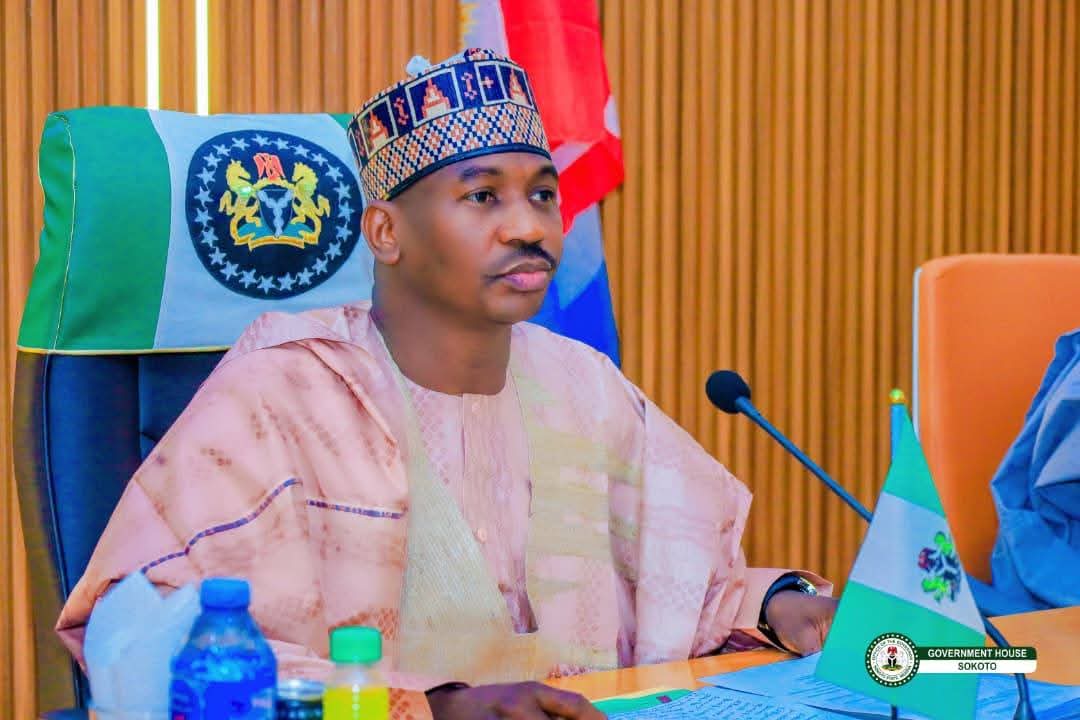
Sokoto: Encomiums For Aliyu’s Health Impact
By Shuaibu Abubakar
It’s not everyday that international development partners openly pour encomiums on a Nigerian leader. This rare fit is reserved for leaders who made the conscious efforts to put the health of the people first, and where the impact is almost instant. In this situation, the people begin to live again, as once comatose hospitals come back to life. Health facilities that once existed only in name begin to experience a transformation never before believed possible.
That is the quiet revolution unfolding in Sokoto State under Governor Ahmad Aliyu and that’s why he has been receiving commendations from international organisations. In Sokoto, what used to be a grim landscape of dilapidated structures, absent personnel, and empty wards is gradually giving way to something more reassuring. We now have functional hospitals that inspire confidence, and primary healthcare centres that now serve as genuine first points of care that people can trust and rely on.
Unlike the Sokoto of yesterday, where many public health facilities had become shadows of their intended purpose. Where health facilities stood, but healthcare was nonexistent. Where equipment was scarce, and where available, often obsolete. Where health workers were either too few or unevenly distributed, leaving rural communities especially vulnerable. The result, under such circumstances was a predictable system that could neither prevent nor respond effectively to health challenges, particularly among women and children, where the grim numbers piled up.
Today, that narrative is being rewritten through deliberate policy choices anchored on the state government’s 9-SMART agenda on health. It is this framework that is driving a coordinated push not just to renovate structures, but to revive an entire system. And unlike the selective interventions of the past, this one is beginning to show signs of depth and sustainability.
One of the most telling indicators of this shift is the growing confidence of development partners in the state’s health sector. Institutions such as National Primary Health Care Development Agency (NPHCDA), World Health Organization (WHO), UNICEF, Solina Group, Centers for Disease Control and Prevention (CDC), and African Field Epidemiology Network have not only taken note, they have openly commended the state’s commitment to healthcare reform.
Such endorsements are not handed out lightly. They are often the result of measurable actions. They are an endorsement of infrastructure upgrades, improved funding for immunisation programmes, and a clearer policy direction. In the case of Sokoto, these efforts appear to be converging in a way that signals seriousness of purpose.
This commitment was further underscored during the 8th Sokoto State Government Council on Health Meeting that brought together a high-level policymakers, development partners, and health sector stakeholders. The meeting was a working session aimed at positioning the state at the forefront of efforts to accelerate Universal Health Coverage (UHC) in Nigeria.
While it was organised by the State Ministry of Health, it was the collaboration with the United Nations Population Fund (UNFPA) that made the meeting which provided a platform to review progress and refine strategies under the health component of the 9-SMART Innovation Agenda for significant. The emphasis, in the end, was clearly to strengthen primary healthcare, improve service delivery, and ensure that even the most vulnerable populations are not left behind.
And it was also at this meeting that one of the most significant announcements was made. UNFPA committed over ₦4.6 billion in funding for healthcare delivery in 2026. Beyond the headline figure, however, was an initiative that speaks directly to one of Nigeria’s most persistent health challenges; maternal and child mortality.
Through a newly unveiled Community Midwifery Scholarship and Bonding Scheme, 500 young women from hard-to-reach communities will receive full scholarships to study midwifery. According to UNFPA’s Assistant Representative, Audu Alayande, 250 beneficiaries will be trained this year, with another 250 to follow next year. Upon completion, they will be deployed directly to rural primary healthcare centres. The government confirm that these health workers will be at their rural posting for at least two years after graduation.
This is more than a training programme; it is a targeted intervention designed to bridge a critical gap, the shortage of skilled birth attendants in underserved areas. By linking training to deployment, the scheme avoids a common pitfall where trained personnel cluster in urban centres, leaving rural communities exposed.
Complementing this is the state government’s own effort to address workforce shortages. Governor Aliyu has confirmed the recruitment and deployment of over 1,500 nurses and midwives to underserved communities. This move is backed by a two-year mandatory rural posting policy, designed to ensure a more equitable distribution of healthcare workers across the state.
Policies like this often face resistance, especially from health workers who prefer urban posting, but they are necessary in contexts where urban bias has long undermined rural healthcare delivery. To make the policy workable, the state has introduced incentives aimed at encouraging compliance. The idea behind this initiative is an acknowledgment that policy must be matched with practical support.
Beyond personnel, the state is also investing in essential medical supplies. The distribution of sexual, reproductive, and other essential drugs to all 23 local government areas is a critical step in addressing maternal and child health challenges. These supplies have been targeted at high-burden primary healthcare centres, where the need is most acute.
The involvement of the First Lady, Fatima Aliyu, in this aspect of the intervention adds another layer of visibility and advocacy, particularly around issues affecting women and children. While symbolism alone cannot drive change, it often helps sustain attention on critical social issues, especially in communities where awareness can be as important as access.
Taken together, these efforts point to a government that is not merely reacting to health challenges but attempting to anticipate and systematically address them. The focus on primary healthcare is especially significant. Globally, strong primary healthcare systems are the backbone of effective health delivery, serving as the first line of defence against disease and the foundation for achieving Universal Health Coverage.
Of course, it is still early days. Healthcare reform is a long-term endeavour, and sustaining momentum will require consistency in funding, monitoring, and policy execution. The gains recorded so far must be protected from the familiar pitfalls of political transitions and bureaucratic inertia. This is where the people of Sokoto must make a statement at the polls, and return Gov. Aliyu for another term.
But for now, there is enough evidence to suggest that Sokoto State is moving in a direction that prioritises people over optics. The transformation of once-neglected facilities into centres of hope, the deliberate investment in human resources, and the strategic partnerships with global health institutions all point to a model that, if sustained, could redefine healthcare delivery in the state.
Clearly, this is a signal that the state government remains fully committed to the protection of women and children. And in a country where healthcare often competes with other priorities, Aliyu’s commitment is not just commendable, it is necessary. Yet, everything crumbles if he’s not re-elected. The people of Sokoto clearly have their jobs cut out for them. Vote for continuity and progress, or return to the days of ghost healthcare. The choice is theirs!
Abubakar writes from Sokoto.
Latest News
Ex-Gombe Deputy Governor Hails Velocity Foundation for Empowering Christian Clergy in Gombe

Ex-Gombe Deputy Governor Hails Velocity Foundation for Empowering Christian Clergy in Gombe
By Auwal Ahmad Umar
Former Deputy Governor of Gombe State, Charles Iliya, has praised the humanitarian efforts of the Velocity Humanitarian Foundation, describing its support for Christian clergy as a significant contribution to peacebuilding, religious tolerance and community development in the state.
Speaking at an empowerment programme organised by the foundation, Iliya said the initiative reflects the founder’s commitment to promoting unity and improving the welfare of religious leaders, regardless of faith or background.
He noted that the intervention would enable Christian clerics to strengthen their service to their congregations while encouraging peaceful coexistence among people of different religious beliefs.
According to him, the foundation’s decision to extend assistance to Christian leaders demonstrates that genuine humanitarian service should not be influenced by ethnic or religious considerations.
Iliya said such interventions complement government efforts aimed at improving the living conditions of vulnerable residents and fostering social cohesion across communities.
He urged the Velocity Humanitarian Foundation to sustain its charitable programmes, stressing that many disadvantaged families and religious leaders would continue to benefit from its interventions.
The former deputy governor also appealed to wealthy individuals, corporate organisations and other philanthropists to emulate the foundation by investing in initiatives that promote inclusiveness, social welfare and sustainable community development.
Also speaking, the Gombe State Chairman of the All Progressives Congress (APC), Alhaji Mohammed Inuwa Dantata, commended the foundation for demonstrating that compassion and humanitarian service should rise above political, ethnic and religious differences.
He said the foundation’s support for Christian clergy sends a strong message of unity and mutual respect, values he described as critical to maintaining peace and stability in Gombe State.
Dantata encouraged beneficiaries to make effective use of the assistance provided to improve their lives and communities, while urging the foundation to broaden its humanitarian outreach to include more vulnerable groups across the state.
Representing the foundation, Abubakar Danzariya said the organisation remains committed to supporting vulnerable people irrespective of their religion, ethnicity or political affiliation.
He explained that the empowerment of Christian clergy aligns with the foundation’s broader vision of reducing hardship, promoting social justice and strengthening harmony among diverse communities in Gombe State.
According to him, the founder of the foundation, Engr. Aliyu Muhammad Kombat, believes that every citizen deserves equal opportunities and access to support that can improve their standard of living.
Danzariya said the foundation would continue to implement programmes in education, healthcare, youth and women empowerment, humanitarian assistance and community development as part of its long-term strategy for improving livelihoods.
He added that the interventions are designed to produce sustainable results by enhancing the well-being of vulnerable residents and creating opportunities for self-reliance.
Danzariya also appreciated community leaders, Christian organisations and volunteers who partnered with the foundation to ensure the successful implementation of the programme.
He reaffirmed the commitment of Engr. Kombat to building a more peaceful, united and prosperous society through sustained humanitarian interventions that reach people without discrimination.

Zulum assesses security situation, ongoing capital projects in Borno South
By Tada Jutha, Maiduguri
Borno State Governor Babagana Zulum performed his official government duties on Thursday from the Zonal Department of Monitoring, Evaluation and Special Projects (MESP) office in Biu, Biu local government area.
This underscores his administration’s commitment to grassroots governance and bringing government closer to the people.
The Biu MESP zonal office, which operates under the Governor’s Office, was established and commissioned by Governor Zulum in 2022 to strengthen public service delivery, enhance accountability, improve project monitoring and evaluation, and accelerate infrastructural development across the Southern Borno senatorial zone.
Similar zonal offices have also been established in Monguno and Bama to serve the Northern and Central Senatorial Districts, respectively.
Thursday’s engagement marked the first time Governor Zulum officially operated from the Biu Zonal Office since its establishment, making it a significant milestone in the decentralisation of government operations.
The Governor, while in the office, met with the Sector 2 Commander of Operation Hadin Kai, Brigadier General Edet Effiong, and the Brigade Commander, 29 Taskforce Brigade, Benishiekh, on how to consolidate the recent gains in the counterinsurgency operations.
The governor’s decision to conduct official state business from the facility reflects his leadership philosophy of taking governance to the grassroots rather than confining government activities to Maiduguri.
Throughout the past seven years, Zulum has maintained a unique style of governance, travelling extensively across all 27 local government areas to personally assess projects and engage directly with the community.
In addition to operating from the Government House, the governor has, since assuming office in 2019, regularly conducted official functions from the Musa Usman Secretariat, which serves as his second operational office for attending to state affairs.
Zulum is currently on a working tour of Southern Borno. On Wednesday, he flagged off the 2026 Wet Farming Season and launched the sales and distribution of 200 truckloads of NPK fertiliser at 50 per cent subsidised rates, alongside the distribution of free agrochemicals, knapsack sprayers, certified seeds, water pumps and 10,000 bicycles to smallholder farmers in Kwaya Kusar Local Government Area.
During the visit to Biu, the governor also announced the employment of 100 unemployed graduates from Biu Local Government Area as part of measures to tackle youth restiveness, political thuggery and other social vices. The announcement was made during a courtesy visit to the Emir of Biu, Alhaji (Dr) Mustapha Umar Mustapha II.
The governor also met with members of the National Youth Service Corps (NYSC) serving in Biu, where he announced a welfare package of ₦50,000 for each corps member.
As part of the intervention, corps members who are nursing mothers will receive an additional ₦200,000 each, while the NYSC Zonal Inspector was given ₦250,000. Other NYSC officials, including the liaison officer, received ₦100,000 each in recognition of their service and commitment.
Latest News
Foreign Drug Courier Arrested as Military Warns of Cross-Border Support for Boko Haram, ISWAP
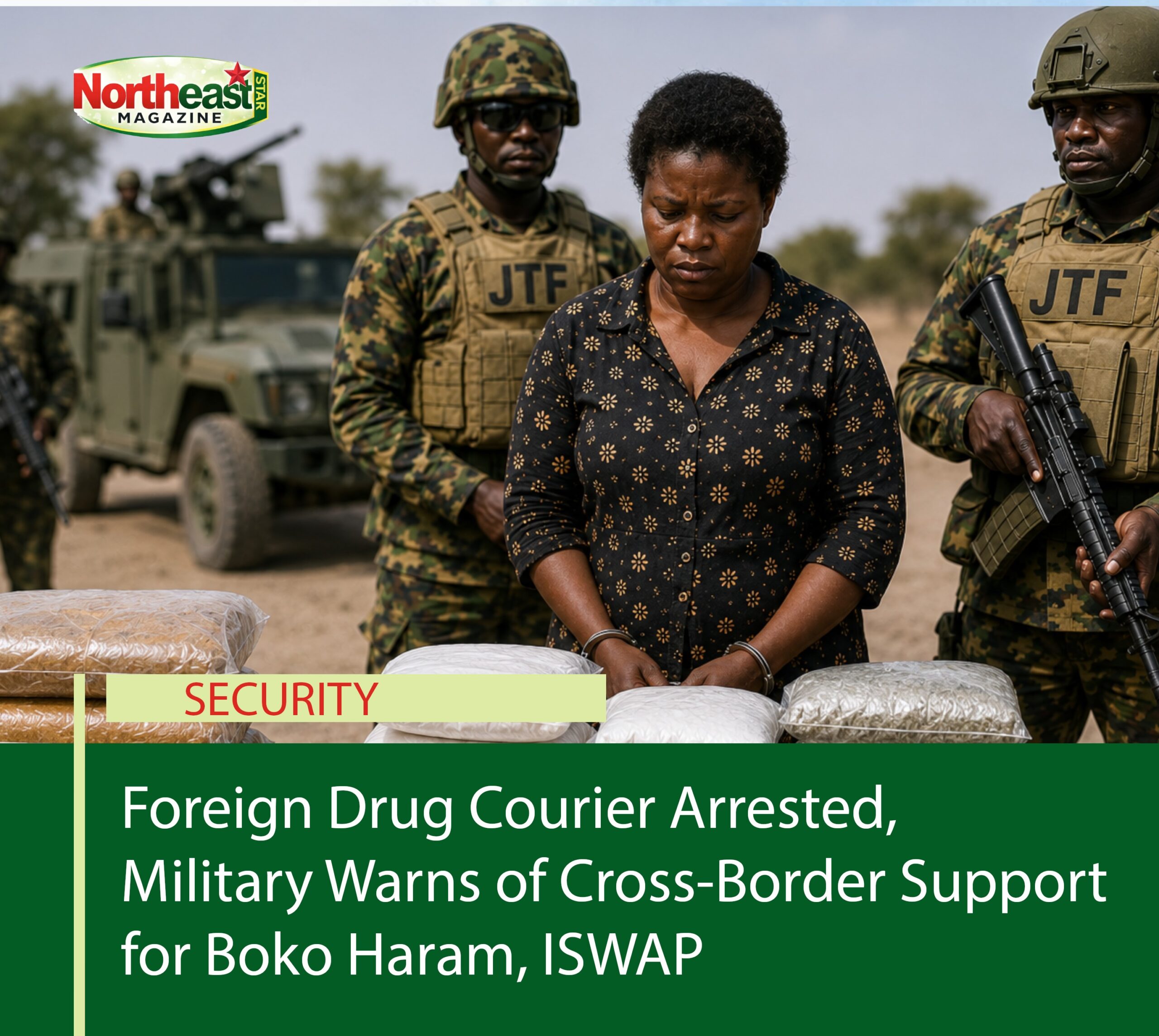
Foreign Drug Courier Arrested as Military Warns of Cross-Border Support for Boko Haram, ISWAP
By Tada Jutha, Maiduguri
The arrest of a Chadian woman allegedly transporting illicit drugs and other prohibited items to Boko Haram and Islamic State West Africa Province (ISWAP) fighters has once again drawn attention to the growing challenge posed by cross-border support networks fuelling insurgency in Nigeria’s northeast.
Security experts have repeatedly warned that the involvement of foreign nationals in terrorist logistics complicates counter-insurgency operations, particularly in the Lake Chad Basin, where Nigeria shares porous borders with Chad, Niger and Cameroon.
The movement of drugs, weapons, finances and other supplies across these borders enables terrorist groups to sustain attacks, recruit fighters and evade security operations, making regional cooperation essential to ending the insurgency.
Against this backdrop, troops of Sector 3, Northeast Joint Task Force (JTF), Operation Hadin Kai (OPHK), have arrested a 48-year-old Chadian national, Mrs Rachael Samuel, for allegedly transporting illicit drugs, alcoholic beverages and other prohibited substances believed to be destined for Boko Haram and ISWAP terrorists operating in the Lake Chad Islands.
The Acting Media Information Officer of Operation Hadin Kai, Captain Mohammed Goni, disclosed in a statement that the operation marked another major breakthrough in the military’s campaign to dismantle the logistics networks sustaining terrorist activities across the North-east.
According to him, the suspect was intercepted on Thursday during an intelligence-led operation along the Maiduguri-Monguno highway while travelling towards Kwatan Doron Baga in Kukawa Local Government Area of Borno State.
He identified the suspect as a Chadian citizen from Kelo in Chari-Baguirmi Province, adding that preliminary investigations indicate the recovered items were intended for terrorist elements operating within the Lake Chad region, which spans Nigeria, Chad, Niger and Cameroon.
Items recovered from the suspect included seven compressed bundles of suspected cannabis weighing about 30 kilogrammes, two 10-litre containers of hydromercuric chloride, popularly known as “Suck and Die”, one carton containing 48 bottles of dry gin, 61 bottles of herbal alcoholic beverages, a mobile phone, two Automated Teller Machine (ATM) cards, cash and other personal effects. The military estimated the street value of the seized items at several millions of naira.
Captain Goni said the suspect remains in military custody while the recovered exhibits have been secured pending transfer to the appropriate law enforcement agencies for further investigation and prosecution.
He noted that the interception demonstrates the military’s resolve to deny terrorists access to supplies that sustain their operations.
According to him, intelligence reports have consistently shown that terrorist groups frequently rely on illicit drugs and intoxicants to stimulate fighters, suppress fear and facilitate violent attacks. Preventing the consignment from reaching its destination, he said, has disrupted a critical component of the terrorists’ logistics chain.
The Theatre Command commended the troops for their vigilance and professionalism, assuring Nigerians that operations against terrorists and their collaborators, including cross-border networks, would continue without relent.
The military also appealed to members of the public to continue providing timely and credible intelligence to security agencies to support ongoing efforts aimed at restoring lasting peace and security across the North-east.

Dr Dikwa Hails Dr Mai Adamu’s Appointment to National Salaries Commission

Gov. Inuwa Mourns CP Hassan Gwani, Describes Death as National Loss

Ashaka Cement Expansion: Inuwa Demands More Jobs for Gombe Indigenes

APC National Chairman Settles Gombe Central Contest, Raises DCP Ahmed’s Hand as Party’s Senatorial Candidate

The $2,500 Threshold: Why Raising Nigeria’s GDP Per Capita Is Our Best Non-Kinetic Strategy for Peace

NGX Ends Week in the Green as ₦1.54 Trillion Boosts Investors’ Fortunes
-
 Politics4 weeks ago
APC National Chairman Settles Gombe Central Contest, Raises DCP Ahmed’s Hand as Party’s Senatorial Candidate
-
 Striking the Balance1 week ago
The $2,500 Threshold: Why Raising Nigeria’s GDP Per Capita Is Our Best Non-Kinetic Strategy for Peace
-
 Economy7 months ago
NGX Ends Week in the Green as ₦1.54 Trillion Boosts Investors’ Fortunes
-
 Sport4 months ago
Gombe Aquatic Sports Body Unveils Board, Sets Stage for Competitive Debut
-

 Environment2 months ago
World Environment Day: NGO Urges Nigerians to Embrace Nature-Based Solutions Against Climate Change
-

 Education7 months ago
Dangote Launches Landmark ₦1 Trillion Scholarship Scheme to Support 1.3 Million Nigerian Students
-

 Economy7 months ago
CBN’s End to Cash Withdrawal Limit
-

 Politics2 months ago
APC Primary Committee Declares Gombe Senatorial Polls Credible, Transparent