
Latest News
Sokoto: Encomiums For Aliyu’s Health Impact

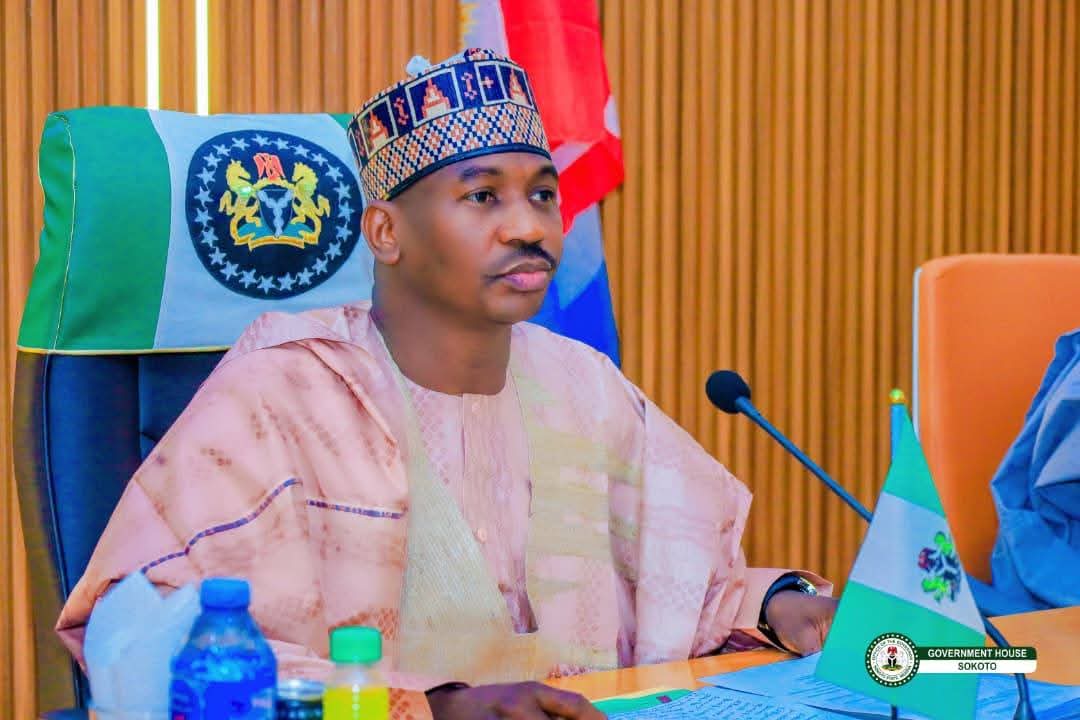
Sokoto: Encomiums For Aliyu’s Health Impact
By Shuaibu Abubakar
It’s not everyday that international development partners openly pour encomiums on a Nigerian leader. This rare fit is reserved for leaders who made the conscious efforts to put the health of the people first, and where the impact is almost instant. In this situation, the people begin to live again, as once comatose hospitals come back to life. Health facilities that once existed only in name begin to experience a transformation never before believed possible.
That is the quiet revolution unfolding in Sokoto State under Governor Ahmad Aliyu and that’s why he has been receiving commendations from international organisations. In Sokoto, what used to be a grim landscape of dilapidated structures, absent personnel, and empty wards is gradually giving way to something more reassuring. We now have functional hospitals that inspire confidence, and primary healthcare centres that now serve as genuine first points of care that people can trust and rely on.
Unlike the Sokoto of yesterday, where many public health facilities had become shadows of their intended purpose. Where health facilities stood, but healthcare was nonexistent. Where equipment was scarce, and where available, often obsolete. Where health workers were either too few or unevenly distributed, leaving rural communities especially vulnerable. The result, under such circumstances was a predictable system that could neither prevent nor respond effectively to health challenges, particularly among women and children, where the grim numbers piled up.
Today, that narrative is being rewritten through deliberate policy choices anchored on the state government’s 9-SMART agenda on health. It is this framework that is driving a coordinated push not just to renovate structures, but to revive an entire system. And unlike the selective interventions of the past, this one is beginning to show signs of depth and sustainability.
One of the most telling indicators of this shift is the growing confidence of development partners in the state’s health sector. Institutions such as National Primary Health Care Development Agency (NPHCDA), World Health Organization (WHO), UNICEF, Solina Group, Centers for Disease Control and Prevention (CDC), and African Field Epidemiology Network have not only taken note, they have openly commended the state’s commitment to healthcare reform.
Such endorsements are not handed out lightly. They are often the result of measurable actions. They are an endorsement of infrastructure upgrades, improved funding for immunisation programmes, and a clearer policy direction. In the case of Sokoto, these efforts appear to be converging in a way that signals seriousness of purpose.
This commitment was further underscored during the 8th Sokoto State Government Council on Health Meeting that brought together a high-level policymakers, development partners, and health sector stakeholders. The meeting was a working session aimed at positioning the state at the forefront of efforts to accelerate Universal Health Coverage (UHC) in Nigeria.
While it was organised by the State Ministry of Health, it was the collaboration with the United Nations Population Fund (UNFPA) that made the meeting which provided a platform to review progress and refine strategies under the health component of the 9-SMART Innovation Agenda for significant. The emphasis, in the end, was clearly to strengthen primary healthcare, improve service delivery, and ensure that even the most vulnerable populations are not left behind.
And it was also at this meeting that one of the most significant announcements was made. UNFPA committed over ₦4.6 billion in funding for healthcare delivery in 2026. Beyond the headline figure, however, was an initiative that speaks directly to one of Nigeria’s most persistent health challenges; maternal and child mortality.
Through a newly unveiled Community Midwifery Scholarship and Bonding Scheme, 500 young women from hard-to-reach communities will receive full scholarships to study midwifery. According to UNFPA’s Assistant Representative, Audu Alayande, 250 beneficiaries will be trained this year, with another 250 to follow next year. Upon completion, they will be deployed directly to rural primary healthcare centres. The government confirm that these health workers will be at their rural posting for at least two years after graduation.
This is more than a training programme; it is a targeted intervention designed to bridge a critical gap, the shortage of skilled birth attendants in underserved areas. By linking training to deployment, the scheme avoids a common pitfall where trained personnel cluster in urban centres, leaving rural communities exposed.
Complementing this is the state government’s own effort to address workforce shortages. Governor Aliyu has confirmed the recruitment and deployment of over 1,500 nurses and midwives to underserved communities. This move is backed by a two-year mandatory rural posting policy, designed to ensure a more equitable distribution of healthcare workers across the state.
Policies like this often face resistance, especially from health workers who prefer urban posting, but they are necessary in contexts where urban bias has long undermined rural healthcare delivery. To make the policy workable, the state has introduced incentives aimed at encouraging compliance. The idea behind this initiative is an acknowledgment that policy must be matched with practical support.
Beyond personnel, the state is also investing in essential medical supplies. The distribution of sexual, reproductive, and other essential drugs to all 23 local government areas is a critical step in addressing maternal and child health challenges. These supplies have been targeted at high-burden primary healthcare centres, where the need is most acute.
The involvement of the First Lady, Fatima Aliyu, in this aspect of the intervention adds another layer of visibility and advocacy, particularly around issues affecting women and children. While symbolism alone cannot drive change, it often helps sustain attention on critical social issues, especially in communities where awareness can be as important as access.
Taken together, these efforts point to a government that is not merely reacting to health challenges but attempting to anticipate and systematically address them. The focus on primary healthcare is especially significant. Globally, strong primary healthcare systems are the backbone of effective health delivery, serving as the first line of defence against disease and the foundation for achieving Universal Health Coverage.
Of course, it is still early days. Healthcare reform is a long-term endeavour, and sustaining momentum will require consistency in funding, monitoring, and policy execution. The gains recorded so far must be protected from the familiar pitfalls of political transitions and bureaucratic inertia. This is where the people of Sokoto must make a statement at the polls, and return Gov. Aliyu for another term.
But for now, there is enough evidence to suggest that Sokoto State is moving in a direction that prioritises people over optics. The transformation of once-neglected facilities into centres of hope, the deliberate investment in human resources, and the strategic partnerships with global health institutions all point to a model that, if sustained, could redefine healthcare delivery in the state.
Clearly, this is a signal that the state government remains fully committed to the protection of women and children. And in a country where healthcare often competes with other priorities, Aliyu’s commitment is not just commendable, it is necessary. Yet, everything crumbles if he’s not re-elected. The people of Sokoto clearly have their jobs cut out for them. Vote for continuity and progress, or return to the days of ghost healthcare. The choice is theirs!
Abubakar writes from Sokoto.

By Tada Jutha, Maiduguri
Troops conducting counter-terrorism operations in Adamawa State have killed more than 21 suspected Boko Haram and Islamic State West Africa Province (ISWAP) fighters during an offensive around the Kopre Mountain area of Hong Local Government Area.
The operation, conducted by troops of Operation Hadin Kai (OPHK) alongside the Office of the National Security Adviser’s Tactical Team and personnel of the 226 Battalion, followed intelligence indicating the presence of terrorists in the mountainous terrain.
The Acting Media Information Officer of Operation Hadin Kai, Capt. Mohammed Goni, disclosed this in a statement on Thursday.
According to him, troops moved into the difficult terrain in the early hours of Wednesday and engaged the terrorists in two separate encounters.
“More than 21 suspected terrorists were killed, while others escaped with gunshot wounds,” the military spokesman said.
Goni said the troops subsequently overran the terrorists’ camp, destroying structures, equipment and supplies believed to have been used to sustain their activities in the area.
Items destroyed during the operation included motorcycles, bicycles and jerry cans containing petrol, which the military said were part of the terrorists’ logistical network.
The troops also recovered several weapons and ammunition, including AK-47 rifles, magazines and a substantial quantity of 7.62mm ammunition.
The latest offensive is part of intensified military efforts to locate civilians abducted from communities in the North-East and disrupt terrorist networks operating across the region.
The military said the operation was linked to efforts to trace victims abducted from the Mussa community and the Lassa school following separate incidents reported in 2026.
Hong Local Government Area, characterised by rugged mountains and extensive forest cover, has remained challenging for security forces because of the terrain, which can provide hiding places for armed groups.
The military has increasingly relied on intelligence-driven operations, supported by ground troops, to locate terrorist hideouts, destroy their logistics and rescue civilians held by insurgents.
Goni assured that Operation Hadin Kai would sustain its offensive against terrorist groups, with particular attention to locating abducted persons and dismantling camps and supply routes used by the insurgents.
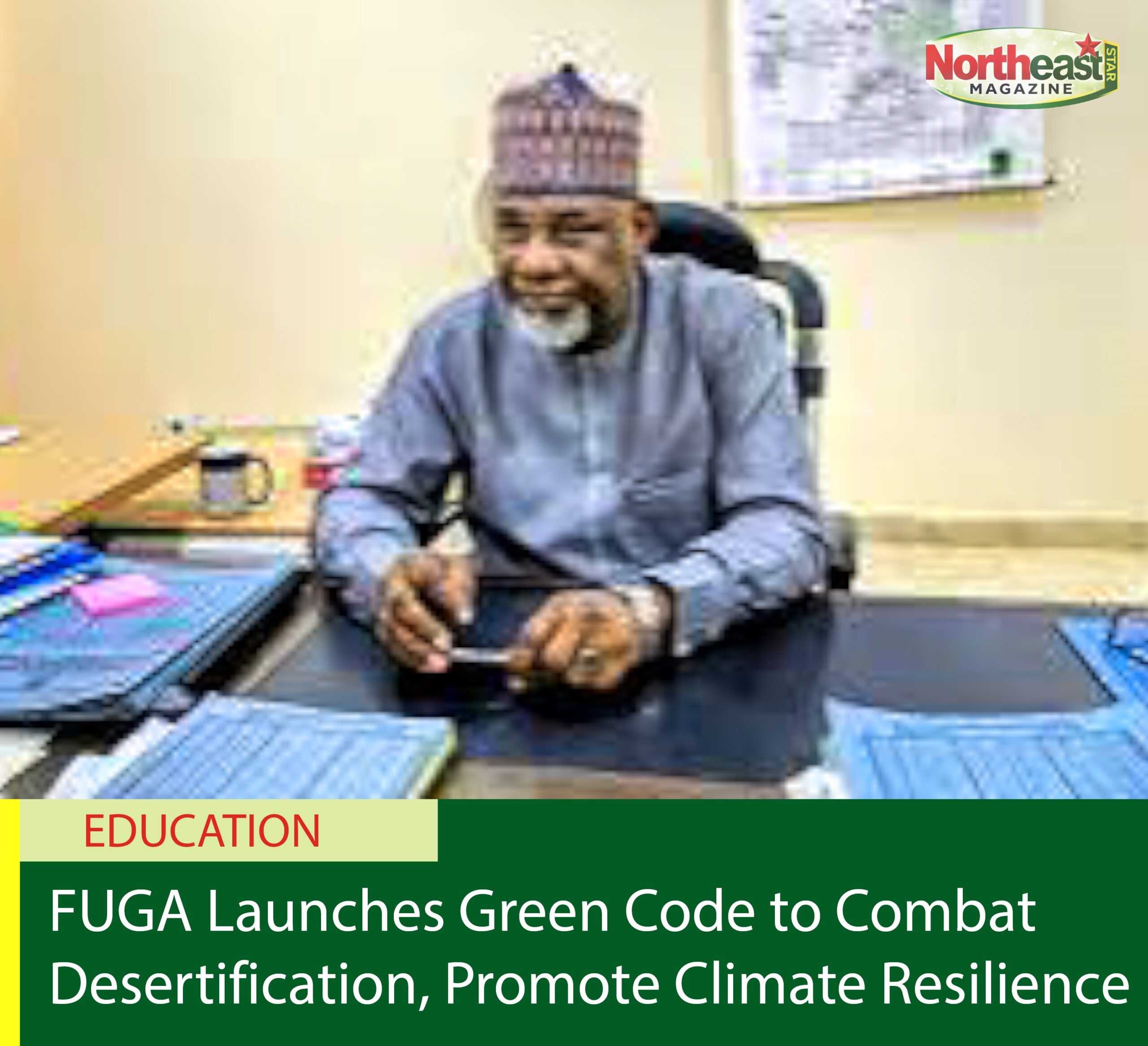
By Auwal Ahmad Umar
The Vice-Chancellor of the Federal University Gashua (FUGA), Professor Yaqub Ahmed Geidam, has officially launched the FUGA Green Code (FGC), an institutional environmental initiative aimed at combating desertification, restoring vegetation and promoting climate resilience through tree planting.
This was contained in a press statement signed by Adamu Saleh, Deputy Director, Information and Public Relations of the University made available to Northeast State Magazine in Damaturu.
The initiative was launched on Saturday, August 15, 2026, at the University under the theme “Restoring the Climate through Tree Planting.” The ceremony was attended by the Mai Bade, representatives of the Federal and Yobe State Governments, members of the University community, development partners, traditional leaders, students, members of the host community, and the media.
Speaking at the occasion, Professor Geidam described the FUGA Green Code as more than a tree-planting campaign, calling it a long-term institutional commitment to environmental restoration, sustainability and climate action.
He noted that the realities of climate change and desertification in Yobe State were evident in declining vegetation, exposed soil, rising temperatures, wind erosion and increasing pressure on natural resources. As a university situated within the fragile Sudano-Sahelian environment, he said, FUGA could not afford to merely discuss environmental challenges without taking practical steps to address them.
The Vice-Chancellor explained that the initiative was designed not only to increase tree cover but also to restore degraded land, protect the environment, improve the University campus, restore biodiversity and cultivate a culture of environmental responsibility among staff, students and the wider community.
He said the University was determined to transform FUGA into a model Green Campus for the Nigerian dryland environment, where sustainability would be practised and demonstrated, not just taught in classrooms.
Professor Geidam noted that purposeful action, scientific knowledge, innovation and community participation could help restore the environment despite the challenges posed by the Sahelian climate. Addressing students, he urged them to take ownership of the initiative through the FGC Student Ambassadors Programme, which is expected to produce environmental champions and climate advocates among the student population.
He challenged them to embrace the slogan “One Student, One Tree,” stressing that planting a tree was only the beginning—nurturing it to maturity was the real measure of success.
“You must become not merely tree planters, but tree custodians. Every tree you plant should become a living symbol of your contribution to the future,” he said.
Professor Geidam also called for partnerships with government agencies, development organisations, the private sector, civil society organisations, environmental institutions, traditional leaders and host communities to expand the impact of the initiative, saying such collaborations would focus on tree planting, environmental research, climate education, innovation, capacity building and community engagement.
He emphasised that the University’s environmental responsibility extended beyond its campus, noting that FUGA and its host communities shared the same environment and faced similar climate-related challenges.
He therefore expressed the University’s readiness to work with traditional institutions, farmers, youths, community organisations and other stakeholders to extend the FUGA Green Code beyond the University.
Professor Geidam assured that Management was committed to making the initiative a long-term institutional programme rather than a one-day campaign, and would support research, partnerships, student participation, staff engagement and community involvement.
He described the FUGA Green Code as the University’s response to desertification, a contribution to climate resilience and an investment in the wellbeing of present and future generations.
In his welcome address, the Chairman of the FUGA Green Code Committee, Professor James Ishaku Dantata, described the initiative as more than a tree-planting campaign a collective commitment to environmental stewardship, climate resilience, combating desertification, restoring biodiversity and building a model green campus for future generations.
Professor Dantata noted that FUGA was located within a fragile Sahel ecosystem, and that the initiative aimed to encourage members of the University community and neighbouring communities to become custodians of nature by planting, nurturing and protecting trees while promoting sustainable environmental practices.
He stressed that the success of the FUGA Green Code would not be measured by the number of trees planted on launch day, but by the number that survived through sustained care and protection, urging the University community to embrace the spirit of “Plant, Protect and Preserve.”
“As we formally launch the FUGA Green Code today, let this day be remembered as the day we collectively resolved to transform our campus into a thriving symbol of environmental sustainability and climate action,” he said.
Signed:
Latest News
Sheikh Al-Moustapha Kouyateh Pushes Pan-African Agenda, Calls for Industrialised and Sovereign Africa
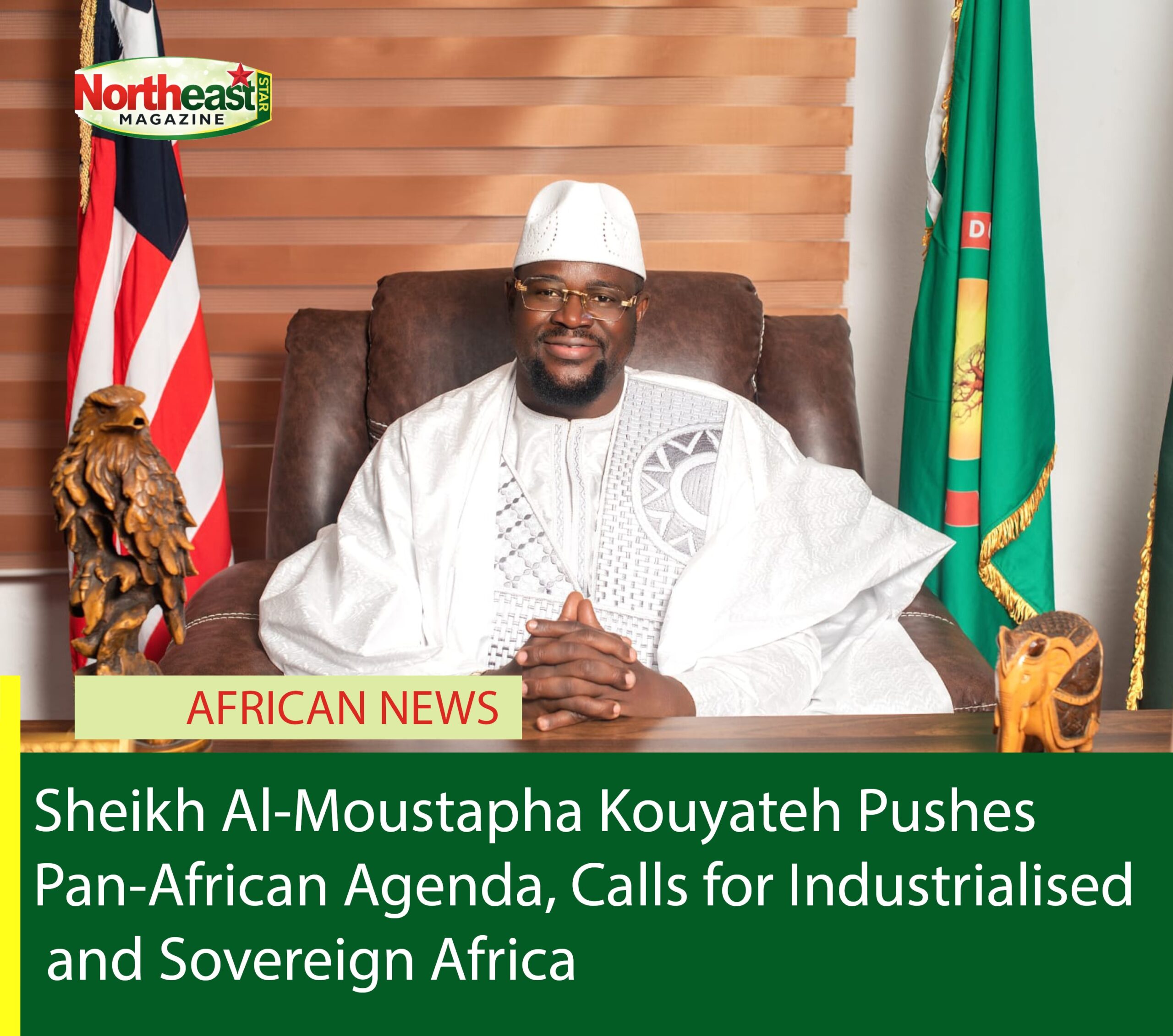
Sheikh Al-Moustapha Kouyateh Pushes Pan-African Agenda, Calls for Industrialised and Sovereign Africa
By Auwal Ahmad
Sheikh Al-Moustapha Kouyateh, widely known as “Farafina Mansa,” has renewed his call for a united, economically independent and industrialised Africa, urging African nations to prioritise local value addition, accountable leadership and reconciliation as the foundation for sustainable development.
The prominent Pan-African advocate, who previously served as Liberia’s Ambassador-at-Large, High Representative for Special Missions and Special Envoy to the President, has built his public profile around a vision that seeks to transform Africa from a supplier of raw materials into a continent driven by manufacturing, innovation and economic self-reliance.
Speaking through his long-standing advocacy, Kouyateh argues that Africa’s vast natural resources should serve as a catalyst for prosperity on the continent rather than enriching foreign economies.
“Africa must control its own destiny by processing its resources locally, creating industries, jobs and wealth for its people,” Kouyateh has consistently maintained in articulating his development philosophy.
At the centre of Kouyateh’s agenda are four principles he describes as essential for Africa’s future: reconciliation, empowerment, accountability and development.
According to him, lasting peace and national cohesion are prerequisites for political stability and economic progress. He believes African countries must first address internal divisions before pursuing broader continental integration.
He also advocates empowering Africans to take greater control of their economies through industrial growth and local ownership of strategic sectors, while insisting that public officials must remain accountable for the management of national resources.
For Kouyateh, development should ultimately translate into improved living standards for ordinary citizens rather than benefiting only political or business elites.
One of the concepts closely associated with Kouyateh’s advocacy is what he calls “Dangotization”—an economic model that encourages African countries to process their raw materials locally instead of exporting them in their unprocessed form.
The idea, inspired by Africa’s growing industrial capacity, promotes investment in manufacturing, value addition and domestic industries capable of generating employment and strengthening economic sovereignty across the continent.
Supporters of the approach argue that it could reduce Africa’s dependence on imported finished goods while increasing revenue from its abundant natural resources.
Kouyateh served for more than two years in Liberia’s government as Ambassador-at-Large and Special Envoy, during which he said he declined remuneration attached to the office.
He explained that the decision reflected an earlier pledge made during his 2014 Senate campaign in Montserrado County to dedicate much of his income to public-interest causes, including education, healthcare and governance reforms.
During his tenure, however, Kouyateh became an outspoken critic of the management of Liberia’s natural resources, arguing that concession agreements involving key mineral assets delivered insufficient benefits to Liberians.
He also raised concerns about transparency in contracts involving major international mining companies, including references to agreements with ArcelorMittal.
His remarks generated political debate and drew criticism from sections of Liberia’s political establishment. After declining calls by lawmakers to retract some of his statements and apologise publicly, he eventually left office following a vote of no confidence.
Following his exit from government, Kouyateh intensified his Pan-African activities through the establishment of the African People’s Movement (APM), an organisation that promotes African unity, economic independence and responsible governance.
The movement is described by its promoters as one inspired by leading Pan-African thinkers, including Professor PLO Lumumba, and seeks to advance policies that encourage continental integration beyond national and ethnic boundaries.
Its vision centres on an Africa capable of transforming its own resources, strengthening regional cooperation and ensuring that economic growth directly benefits African citizens.
Kouyateh continues to advocate for deeper cooperation among African nations, arguing that sustainable prosperity depends on industrialisation, responsible leadership and stronger economic integration.
His message consistently emphasises reconciliation among peoples, economic empowerment, transparency in governance and development that creates opportunities for future generations.
For many supporters, the man known as “Farafina Mansa” remains one of the contemporary voices championing an Africa that is politically sovereign, economically resilient and firmly in control of its own development path.

Ummah University Appoints Acting Registrar, Bursar Ahead of Academic Activities

2027: We’re Yet to Pick Presidential Candidate —Northern Igbo Assembly

Gov. Inuwa Woos Northern Academics, Women Ulamas for Knowledge-Based Solutions to Region’s Challenge

APC National Chairman Settles Gombe Central Contest, Raises DCP Ahmed’s Hand as Party’s Senatorial Candidate

Gombe Eyes Livestock-Led Economic Growth as Inuwa Yahaya Meets Minister

Gombe Aquatic Sports Body Unveils Board, Sets Stage for Competitive Debut

-
 Politics3 months ago
APC National Chairman Settles Gombe Central Contest, Raises DCP Ahmed’s Hand as Party’s Senatorial Candidate
-
 Agriculture2 months ago
Gombe Eyes Livestock-Led Economic Growth as Inuwa Yahaya Meets Minister
-
 Sport5 months ago
Gombe Aquatic Sports Body Unveils Board, Sets Stage for Competitive Debut
-

 Economy9 months ago
NGX Ends Week in the Green as ₦1.54 Trillion Boosts Investors’ Fortunes
-

 Striking the Balance2 months ago
The $2,500 Threshold: Why Raising Nigeria’s GDP Per Capita Is Our Best Non-Kinetic Strategy for Peace
-

 Economy9 months ago
CBN’s End to Cash Withdrawal Limit
-

 Education9 months ago
Dangote Launches Landmark ₦1 Trillion Scholarship Scheme to Support 1.3 Million Nigerian Students
-
 Environment3 months ago
World Environment Day: NGO Urges Nigerians to Embrace Nature-Based Solutions Against Climate Change