
Bauchi
APC Coalition Opposes Bala Mohammed’s Alleged Defection, Cites Risks to Party Unity


APC Coalition Opposes Bala Mohammed’s Alleged Defection, Cites Risks to Party Unity
By Muhammad Ahmad, Bauchi
A coalition operating under the banner of the APC Solidarity Group and Allied Associations has rejected reports of a planned defection by Bauchi State Governor, Bala Abdulkadir Mohammed, to the All Progressives Congress (APC), warning that such a move could destabilise the party ahead of the 2027 general elections.
In a statement jointly signed by the Director of Programmes and External Affairs, IB. Muhammad, and the group’s Secretary, Abubakar Abdullahi, and made available to journalists on Friday in Bauchi, the coalition expressed strong reservations over the governor’s possible entry into the ruling party.
The group reaffirmed its loyalty to the APC, noting that the party had recently regained internal cohesion and renewed confidence among members, which it said was crucial for its electoral prospects in 2027, including continued support for President Bola Ahmed Tinubu.
According to the coalition, admitting Governor Mohammed into the party at this stage could undermine the fragile unity already achieved. It accused the governor of consistently criticising the APC-led Federal Government and raising allegations against the ruling party during his time in the opposition.
The statement also pointed to what it described as waning public support for the governor’s administration in Bauchi State, arguing that his political standing may not add value to the APC.
It further highlighted existing political tensions between Mohammed and key APC stakeholders, including former governor Isa Yuguda, ex-Speaker Yakubu Dogara, Minister of Foreign Affairs Yusuf Maitama Tuggar, and Senator Shehu Buba Umar. The coalition warned that bringing the governor into the party could deepen divisions and trigger internal conflicts.
Beyond personality clashes, the group raised concerns about ideological differences and questioned the governor’s consistency in political alignment, suggesting that his defection could weaken party discipline and dampen the morale of long-standing members.
The coalition cautioned that accepting the governor could pose strategic challenges for the APC in Bauchi State, particularly as preparations intensify for the next election cycle.
Reiterating its position, the group declared that the governor, popularly known as “Kaura,” should not be admitted into the party, urging APC leaders to prioritise unity and stability.
It maintained that its stance was guided by a commitment to protect the integrity, cohesion, and electoral strength of the APC in the state.

Bauchi to Deploy Biometric Attendance in Health Facilities to Tackle Absenteeism
By Ahmad Muhammad, Bauchi
The Bauchi State Government has unveiled plans to introduce a biometric attendance system across public health facilities as part of efforts to address absenteeism among health workers and improve healthcare delivery.
The Commissioner for Health and Social Welfare, Dr. Sani Mohammed, disclosed this on Tuesday in Bauchi while receiving members of Advocacy for the Implementation of Maternal, Newborn, and Child Health (MNCH) Innovations in Nigeria.
He said the initiative was aimed at strengthening accountability in the health sector by closely monitoring the attendance and activities of healthcare workers, especially in facilities where patients often endure long waiting times due to staff lateness, absenteeism, and other operational lapses.
According to the commissioner, the visit by the advocacy team also created an avenue for the ministry to hear directly from communities on the difficulties they face in accessing healthcare services across the state.
Dr Mohammed noted that while health workers must be held accountable for their responsibilities, some delays in accessing care occur even before patients arrive at health facilities. He therefore urged caregivers and families to plan early when seeking medical attention, stressing that government efforts alone may not be enough to address every challenge confronting the sector.
He, however, reaffirmed the state government’s commitment to improving maternal, newborn, and child health services, revealing that a special welfare package had already been approved to boost the morale of health workers, attract more professionals into the system, and reduce manpower shortages in public facilities.
Speaking earlier, the leader of the Advocacy Champions, Shamsiyya Aliyu, highlighted several concerns raised by communities, including the shortage of skilled personnel, delays in referrals, and what she described as the poor attitude of some health workers, which she said continues to hinder access to quality healthcare in parts of Bauchi State.
Aliyu explained that the group was seeking stronger collaboration with the ministry to deepen public awareness on postpartum haemorrhage and encourage early antenatal registration, facility-based deliveries, postnatal care, and the adoption of innovative maternal and child health interventions across the state.
She said the project was being implemented by the AIM-MNCH Consortium, a partnership involving Pathfinder International Nigeria and the Africa Centre of Excellence for Population Health and Policy (ACEPHAP), alongside other key organisations working to improve maternal, newborn, and child healthcare outcomes in Nigeria.
She added that the consortium also includes the Centre for Communication and Social Impact (CCSI) and the Medical Women’s Association of Nigeria (MWAN), all working together to strengthen collaboration and improve health outcomes for women and children across the country.
The planned deployment of the biometric attendance system is expected to form part of broader reforms by the Bauchi State government to enhance efficiency, accountability, and patient care within the health sector.

Shehu Emerges Bauchi JUSUN Chairman, Vows Better Welfare for Judiciary Workers
By Ahmed Muhammad, Bauchi
Mohammed Salisu Shehu has emerged as the new Chairman of the Judiciary Staff Union of Nigeria (JUSUN), Bauchi State chapter, promising to champion improved welfare, better working conditions and modern facilities for judiciary workers in the state.
Shehu made the pledge shortly after he was sworn in on Saturday in Bauchi, where he unveiled key priorities of his administration aimed at strengthening the state’s justice system and improving the welfare of judicial staff.
He said one of the immediate concerns of his leadership would be the rehabilitation of courtrooms and the provision of modern facilities to create a more conducive environment for judicial operations.
According to him, improving infrastructure within the judiciary is critical to enhancing staff productivity and ensuring efficient and timely dispensation of justice.
The new JUSUN chairman also assured members that his administration would pursue better salary structures, allowances, housing support and official vehicles as part of efforts to improve staff welfare.
He noted that a more motivated workforce would not only boost efficiency but also help curb corruption within the system.
Shehu further reaffirmed the union’s commitment to protecting the rights and interests of its members while promoting professionalism, fairness and accountability in the discharge of their responsibilities.
He also pledged to work closely with government and relevant stakeholders to ensure the full implementation of financial autonomy for the judiciary at both state and federal levels in line with constitutional provisions.
Earlier, the National Legal Adviser of JUSUN and Chief Returning Officer of the election, Mahmud Ibn-Amin, announced that Shehu won the chairmanship election with 445 votes, defeating Mohammed Jaja, who polled 75 votes.
Ibn-Amin described the election as peaceful, transparent and credible, saying it reflected the confidence reposed in the new leadership by members of the union.
Also elected into office was Abdulhamid Waziri, who emerged as Secretary of the union.
The emergence of the new leadership is expected to usher in renewed efforts toward improving staff welfare and strengthening the justice delivery system in Bauchi State.

Bauchi Moves to Tackle Water Crisis as Stakeholders Endorse New WASH Policy
By Musa Garba
Stakeholders in Bauchi State have validated the state’s Water, Sanitation and Hygiene (WASH) Policy 2026–2030, setting the stage for a coordinated push to improve access to clean water and sanitation services across the state.
The validation workshop held on Friday in Bauchi reviewed and endorsed the policy, which is expected to serve as a strategic guide for addressing persistent challenges in water supply, sanitation infrastructure, and hygiene practices, especially in underserved communities.
Speaking at the event, the Permanent Secretary in the Bauchi State Ministry of Water Resources, Samaila Tela, said the document was developed to provide a sustainable pathway for delivering WASH services to residents across the state.
He explained that the validation process was necessary to allow stakeholders to critically review the policy and ensure that it reflects the realities and priorities of communities.
Tela said the framework offers a broad roadmap aimed at expanding access to safe, reliable and inclusive water, sanitation and hygiene services, while also strengthening the institutions responsible for delivering them.
According to him, the policy also places an emphasis on improving infrastructure, encouraging positive hygiene behaviour, and building resilience against climate-related threats that affect the sector.
He said effective implementation of the policy would not only improve public health but also protect the environment and open up economic opportunities for local communities.
Also speaking, a representative of WaterAid Nigeria, Mashat Mallo, said the policy gives priority to expanding water supply services in rural communities and small towns, where access remains limited.
He noted that the strategy includes the rehabilitation of broken water systems, the extension of piped water networks, and the deployment of renewable energy solutions, such as solar-powered water schemes, to improve service delivery.
Mallo added that the policy also proposes the construction of WASH (water, sanitation, and hygiene) facilities in schools, health centers, and public spaces, particularly in rural and periurban areas where sanitation gaps remain pronounced.
He said the framework aligns with Nigeria’s commitment to Sustainable Development Goal 6, which seeks to ensure access to clean water and sanitation for all.
The validation workshop was organised by the Women’s Development Association for Self-Sustenance (WODASS) with support from WaterAid Nigeria, bringing together government officials, development partners, and sector stakeholders to fine-tune the policy before its implementation.
With the endorsement of the document, expectations are now high that Bauchi State will move from policy formulation to action in addressing long-standing water and sanitation deficits.

ADC Backs NBA, Insists Courts Have No Role in Party Leadership Disputes

NASS Reaffirms Backing for Military After Deadly Borno Attack

ADC Elects New Leadership in Nasarawa, Sets Sights on 2027 Power Shift

Dangote Launches Landmark ₦1 Trillion Scholarship Scheme to Support 1.3 Million Nigerian Students

NGX Ends Week in the Green as ₦1.54 Trillion Boosts Investors’ Fortunes

Formal Rebuttal to the Recent Interview Granted by Retired Major General Ali Keffi on Arise TV
-
 Education4 months ago
Dangote Launches Landmark ₦1 Trillion Scholarship Scheme to Support 1.3 Million Nigerian Students
-
 Economy4 months ago
NGX Ends Week in the Green as ₦1.54 Trillion Boosts Investors’ Fortunes
-
 Column4 months ago
Formal Rebuttal to the Recent Interview Granted by Retired Major General Ali Keffi on Arise TV
-

 Economy4 months ago
CBN’s End to Cash Withdrawal Limit
-

 Gombe4 months ago
Gombe Shines Again, Ranks Second in Northeast at 2025 PHC Leadership Challenge
-
 Politics4 months ago
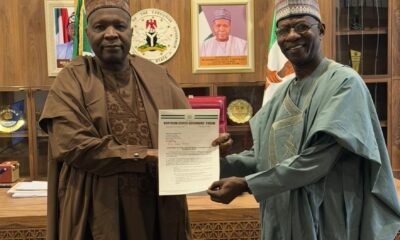
NSGF names Ezekiel Gomos as Director-General, setting stage for stronger regional collaboration
-

 Gombe4 weeks ago
A tribute to Dr Langa Hassan Bangunji (JP) – an icon of Scholarship, Leadership and Community Service
-

 Latest News4 months ago
Anglican Church Expands Footprint with 15 New Dioceses, Total Hits 176