
Businesss
Fuel Import Debate Heats Up as Experts Fault World Bank Advice, Cite Legal and Economic Risks

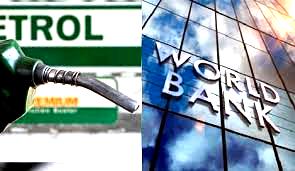
Fuel Import Debate Heats Up as Experts Fault World Bank Advice, Cite Legal and Economic Risks
By Auwal Ahmad Umar
Fresh controversy has trailed recent policy recommendations by the World Bank on Nigeria’s petroleum sector, with leading energy experts warning that the advice could derail the country’s push for self-reliance and undermine existing laws.
The criticism follows suggestions contained in the Bank’s Nigeria Development Update, which encouraged deeper fuel importation and full liberalisation of the downstream oil sector. Analysts, however, say such proposals are not only poorly timed but also risk reversing gains in local refining capacity.
A renowned energy economist, Ken Ife, described the recommendation as counterproductive, arguing that it contradicts Nigeria’s long-term economic strategy.
“You cannot ask a country striving for economic independence to return to a system that made it vulnerable in the first place,” he said during a televised interview. “That approach weakens the very foundation Nigeria is trying to build.”
Ife pointed out that the advice runs contrary to the provisions of the Petroleum Industry Act, which prioritises domestic crude supply to local refineries under the Domestic Crude Obligation framework. According to him, sidelining local refining in favour of imports would amount to disregarding both policy direction and statutory requirements.
He warned that increasing reliance on imported fuel could expose Nigeria to global supply shocks, drain foreign exchange reserves, and discourage ongoing investments in domestic refining—particularly at a time when private sector players are expanding capacity.
“We are gradually building enough refining strength to meet local demand and even export. Reversing that progress would be a costly mistake,” he added.
Another industry analyst, Kelvin Emmanuel, echoed similar concerns, questioning both the practicality and credibility of the recommendation. He revealed that the contentious report had reportedly been withdrawn from the World Bank’s website, further fueling debate over its conclusions.
Emmanuel dismissed claims that imported petrol could be cheaper than locally refined products, insisting that prevailing global conditions make such projections unrealistic.
“Given current crude oil prices and logistics costs, no importer can deliver petrol into Nigeria at a lower price than what is being suggested,” he said. “When you factor in freight, insurance and market risks, the numbers simply do not add up.”
He explained that rising crude prices, driven in part by geopolitical tensions in the Middle East, have significantly altered global pricing dynamics. According to him, any perception of cheaper imports often comes at the expense of product quality.
“The only time imported fuel appears cheaper is when standards are compromised—and that has been a recurring issue in the past,” he noted.
On the broader economic impact, Emmanuel argued that Nigeria’s fuel price pressures are less about scarcity and more about inconsistencies in implementing domestic supply policies. He maintained that strict adherence to local crude supply obligations would stabilise prices and reduce volatility.
He also criticised the Bank’s position on expanding social safety nets through borrowing, warning that such an approach could worsen the country’s fiscal burden.
“Support systems are necessary, but financing them with loans raises serious concerns. Borrowing should be tied to development projects, not consumption,” he said.
While both experts acknowledged that parts of the World Bank’s economic analysis remain valuable, they cautioned that its recommendations on fuel policy could have unintended consequences if adopted without careful consideration.
As Nigeria navigates its energy transition and economic reforms, the debate highlights a growing divide between global advisory institutions and local industry stakeholders over the best path toward sustainable growth and energy security.

By Auwal Ahmad Umar
The Nigerian Midstream and Downstream Petroleum Regulatory Authority (NMDPRA) is seeking stronger police backing to clamp down on illegal petroleum operators, impersonators and other regulatory violations in Niger State.
The Authority’s Niger State Coordinator, Engr. Musa Isyaku, MNSE, made the request on Tuesday, September 15, 2026, during a meeting with the Commissioner of Police, Niger State Command, CP Adamu Abdullahi Elleman, mnips, at the Command Headquarters in Dutsen-kura, Minna.
“We need stronger collaboration with the Nigeria Police Force to effectively enforce petroleum regulations and deal with illegal and unlicensed operators,” Mr Isyaku said.
He said security support was critical to the Authority’s inspection and enforcement activities, particularly when its officials visit facilities operated by suspected illegal or unlicensed businesses.
Mr Isyaku also called for police intervention over alleged cases of individuals impersonating NMDPRA officials to extort petroleum marketers.
“We have also received concerns about individuals impersonating NMDPRA officials to extort marketers. We are seeking the Police Command’s assistance in addressing these cases,” he said.
He further raised concerns over the alleged illegal fabrication of NMDPRA identification cards and number plates, urging the police to investigate and take appropriate action.
Responding, CP Elleman assured the delegation that the Police Command would deepen its cooperation with NMDPRA and provide security support for legitimate regulatory operations.
“We are committed to strengthening our synergy with NMDPRA, particularly in enforcement, inspection and the protection of regulatory personnel,” the commissioner said.
Mr Elleman also assured the Authority that the complaints presented during the meeting would receive appropriate investigative attention.
The meeting highlighted the shared interest of NMDPRA and the Police Command in strengthening regulatory compliance, protecting legitimate petroleum businesses and curbing illegal activities across Niger State’s petroleum sector.

Inuwa Yahaya Tells New Ashaka Cement Owners: Expansion Must Benefit Gombe Communities
By Auwal AHmad Umar
Gombe State Governor, Muhammadu Inuwa Yahaya, has asked the new owners of Ashaka Cement Company to ensure that their planned expansion of production translates into tangible benefits for host communities and does not come at the expense of the environment.
Mr Yahaya made the demand on Monday when the Group Managing Director and Chief Executive Officer of HBM Nigeria PLC, Lolu Alade-Akinyemi, led the company’s executive management team on a courtesy visit to the governor at the Government House in Gombe.
The delegation included the Managing Director of Ashaka Cement Limited, Ibrahim Aminu.
The governor said the proposed expansion of the cement plant presented an opportunity for the company to deepen its contribution to Gombe’s economic development through employment, local sourcing, community investment and stronger corporate social responsibility programmes.
“While profit maximisation remains a legitimate objective of businesses operating in a liberal economy, companies must equally recognise and fulfil their responsibilities to the communities and environment in which they operate,” Mr Yahaya said.
He urged HBM Nigeria PLC to sustain the goodwill enjoyed by Ashaka Cement in Northern Nigeria and use its strategic position to strengthen the company’s contribution to the construction and manufacturing sectors.
Mr Yahaya specifically raised concerns over the impact of heavy trucks associated with Ashaka Cement’s operations on roads around the plant.
He said some roads constructed by the state government had suffered damage as a result of heavy-duty haulage activities and urged the company to explore ways of supporting their improvement.
The governor also assured the new owners of the state government’s continued cooperation, saying Gombe would provide an enabling environment for responsible and sustainable industrial development.
Earlier, Mr Alade-Akinyemi disclosed that HBM Nigeria PLC plans to increase Ashaka Cement’s production capacity to two million metric tonnes per annum.
He said the expansion would create additional jobs while generating more business opportunities for transporters, suppliers and other operators within the company’s value chain.
According to him, the ownership transition followed the integration of Lafarge into Huaxin Building Materials Group, a global manufacturer of cement and building materials.
He assured the governor that the change in ownership would not alter the company’s relationship with Gombe State.
“Our commitment to the government and people of Gombe State remains steadfast and ironclad,” Mr Alade-Akinyemi said.
He added that the company would prioritise local content, strategic partnerships, community development and corporate social responsibility under the new ownership.
Mr Yahaya also urged Ashaka Cement to position itself to play a major role in the construction of the Gombe-Biu Super Highway.
The governor commended President Bola Ahmed Tinubu for awarding the contract for the project, describing the highway as an important infrastructure intervention that would benefit Gombe and neighbouring states.
He said the expected use of concrete pavement on the highway presented an opportunity for Ashaka Cement to supply some of the materials required for the project.
“Ashaka Cement should position itself to supply the cement required for the construction of the super highway, particularly as the project is expected to utilise concrete pavement,” the governor said.
The governor further said the road project would improve connectivity, stimulate commerce and strengthen the operating environment for businesses and industries across the region.
Mr Alade-Akinyemi, in turn, commended the governor for what he described as purposeful leadership and efforts to promote infrastructure, economic and industrial development in Gombe.
He pledged that HBM Nigeria PLC would strengthen its partnership with the state government and increase its contribution to the state’s economy and the wellbeing of its host communities.
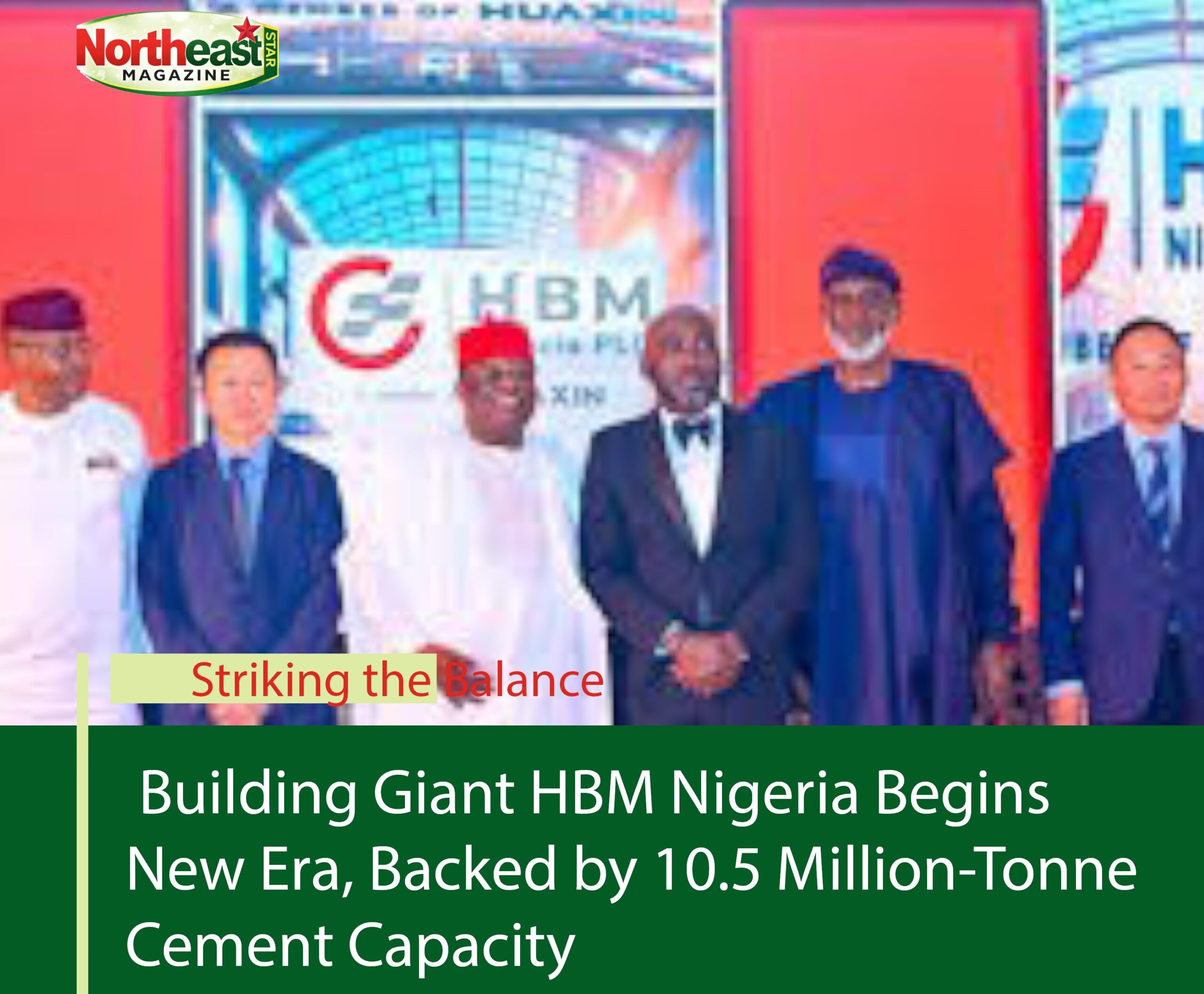
Building Giant HBM Nigeria Begins New Era, Backed by 10.5 Million-Tonne Cement Capacity
By Auwal Ahamd Umar
With an installed cement production capacity of 10.5 million metric tonnes per annum, HBM Nigeria Plc remains one of the largest building materials companies in the country, serving a broad spectrum of customers across the construction value chain.
The company operates cement manufacturing plants in Ogun, Gombe and Cross River states, alongside ready-mix concrete facilities in Lagos, Abuja and Port Harcourt, giving it one of the most extensive production and distribution networks in Nigeria’s construction sector.
Industry observers say the transition from Lafarge Africa Plc to HBM Nigeria Plc signals more than a change of name. It reflects the company’s ambition to deepen its role in supporting Nigeria’s infrastructure expansion, housing development and industrial growth while leveraging the technical expertise and global reach of its parent company, Huaxin Building Materials Group.
The new corporate identity was officially unveiled on Monday, marking a significant milestone in the company’s transformation journey and strategic alignment with its new shareholder structure.
In a statement signed by the Head of Corporate Communications, Ginikanwa Frank-Durugbor, the company said the rebranding underscores its commitment to delivering innovative building solutions while creating sustainable value for stakeholders.
As HBM Nigeria Plc embarks on this new phase, the company says it remains focused on innovation, sustainability and operational excellence, with the goal of creating long-term value for shareholders, customers and the wider Nigerian economy.
Speaking on the transition, the Group Managing Director and Chief Executive Officer, Lolu Alade-Akinyemi, described the new identity as a reflection of the company’s future-focused vision.
“HBM Nigeria Plc represents an exciting new chapter in our journey as a leading building solutions company. While our corporate identity is evolving, our commitment to Nigeria remains unwavering,” he said.
According to him, the company will continue to provide quality cement, concrete, aggregates and innovative building solutions that support infrastructure development, housing growth and industrialisation across the country.
Mr Alade-Akinyemi explained that the transition would be implemented through a phased process across the company’s nationwide operations to ensure seamless business continuity for customers, investors, employees and host communities.
The Chairman of HBM Nigeria Plc, Gbenga Oyebode, said the transition positions the company for long-term success while preserving the values and principles that have guided its operations for decades.
“We are confident that HBM Nigeria Plc will continue to create sustainable value for shareholders, strengthen stakeholder trust and deliver on its long-term ambitions,” he said.
The company noted that while the corporate identity has officially changed, the rollout of branding assets, operational integration and customer-facing communications will continue progressively across all touchpoints to ensure consistency and a seamless experience for stakeholders.
Formerly known as Lafarge Africa Plc, HBM Nigeria Plc is a member of the Huaxin Building Materials Group, a global construction materials manufacturer founded in 1907 and headquartered in Wuhan, China. The company is listed on the Nigerian Exchange Limited and remains one of the key players in Nigeria’s building and construction industry.

Borno, AU Partner to Get 800,000 Out-of-School Children Back to Classrooms

Plan International Pushes for Lasting Support for Teachers in Crisis-Hit Communities

Newborn Deaths: Gombe, UNICEF Strengthen Skills of 104 Health Workers

APC National Chairman Settles Gombe Central Contest, Raises DCP Ahmed’s Hand as Party’s Senatorial Candidate

NGX Ends Week in the Green as ₦1.54 Trillion Boosts Investors’ Fortunes

Gombe Eyes Livestock-Led Economic Growth as Inuwa Yahaya Meets Minister

-
 Politics4 months ago
APC National Chairman Settles Gombe Central Contest, Raises DCP Ahmed’s Hand as Party’s Senatorial Candidate
-
 Economy10 months ago
NGX Ends Week in the Green as ₦1.54 Trillion Boosts Investors’ Fortunes
-
 Agriculture3 months ago
Gombe Eyes Livestock-Led Economic Growth as Inuwa Yahaya Meets Minister
-
 Sport7 months ago
Gombe Aquatic Sports Body Unveils Board, Sets Stage for Competitive Debut
-
 Education11 months ago
Dangote Launches Landmark ₦1 Trillion Scholarship Scheme to Support 1.3 Million Nigerian Students
-

 Economy11 months ago
CBN’s End to Cash Withdrawal Limit
-
 Striking the Balance3 months ago
The $2,500 Threshold: Why Raising Nigeria’s GDP Per Capita Is Our Best Non-Kinetic Strategy for Peace
-

 Environment5 months ago
World Environment Day: NGO Urges Nigerians to Embrace Nature-Based Solutions Against Climate Change