
Gombe
Inuwa Yahaya Defends Gombe Projects, Says Government Focused on Grassroots Development


Inuwa Yahaya Defends Gombe Projects, Says Government Focused on Grassroots Development
By Auwal Ahmad Umar
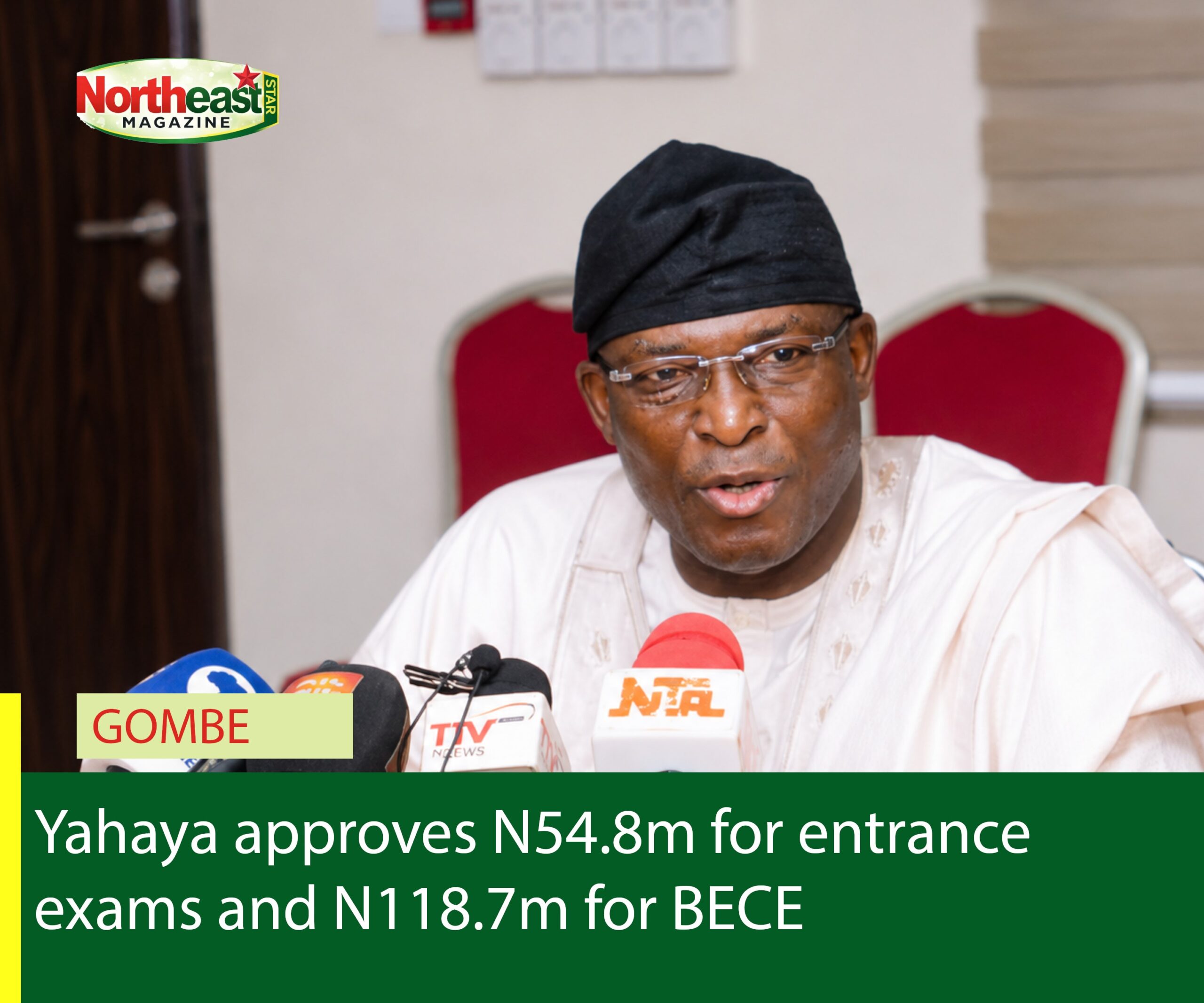
Gombe State Governor, Muhammadu Inuwa Yahaya, has approved N54.8 million for the conduct of mock and special entrance examinations and another N118.7 million for the Basic Education Certificate Examination (BECE) across the state.
The approvals are part of a series of interventions by the state government aimed at strengthening the education sector, supporting tertiary institutions and improving socio-economic infrastructure across Gombe State.
The state Commissioner for Information, Moses Kiari, disclosed this while outlining recent approvals by the government.
According to him, the N54.8 million approved for the mock and special entrance examinations would facilitate the effective conduct of the examinations and ensure that eligible students have the opportunity to participate under proper and coordinated arrangements.
Mr Kiari said the intervention reflected the administration’s commitment to maintaining a credible education system and ensuring that students were not disadvantaged by inadequate funding for essential examination activities.
The governor also approved N118.7 million for the conduct of the Basic Education Certificate Examination across the state.
The commissioner described the BECE as an important component of the basic education system, serving as a major assessment at the end of the basic education cycle.
He said the funding would support the effective administration of the examination while contributing to efforts to improve the quality, credibility and accessibility of basic education in the state.
Beyond basic education, Mr Kiari said the governor had approved N148.76 million as the Consolidated Academic Staff Allowance (CATA) for academic staff of Gombe State University.
He said the intervention was intended to support lecturers in discharging their teaching, research and other academic responsibilities.
According to him, investment in the welfare and professional development of academic staff remained an important part of the government’s human capital development agenda.
The government also approved the relocation of Tudun Hatsi Market to Tukuru, with N200 million earmarked by the state government for infrastructure associated with the relocation.
An additional N60 million was approved by the Gombe Local Government for the exercise.
Mr Kiari said the relocation was aimed at improving urban planning, traffic management and the orderly conduct of commercial activities while creating a safer and more conducive environment for traders and residents.
He added that the exercise would also provide an opportunity to preserve a historic mosque as a state monument.
The commissioner said the compensation provision demonstrated the government’s consideration for the interests and livelihoods of people affected by development projects.
He said the various approvals reflected the administration’s commitment to strengthening public institutions, improving service delivery and investing in human capital.
The government reiterated its commitment to implementing programmes that directly improve the lives of residents and deploying public resources responsibly to achieve sustainable development across Gombe State.

By Jamila Muhammad
Gombe State Governor, Muhammadu Inuwa Yahaya, has expressed grief over the death of former Commissioner for Information, Alhaji Garba Jijji Gadam, who passed away in Gombe after a prolonged illness.
The governor’s condolence message was contained in a statement issued on Sunday by the Director-General, Press Affairs, Government House, Gombe, Alhaji Ismaila Uba Misilli, and made available to journalists in the state.
Governor Yahaya described the late Jijji Gadam as an accomplished public servant, politician and community leader whose contributions to the development of Gombe State would remain memorable.
He said the deceased served the state in several capacities, including as Special Adviser, Commissioner for Information and Chairman of a Local Government Council, where he demonstrated commitment to public service and the welfare of the people.
The governor commended the late politician’s dedication to his responsibilities, describing his death as a painful loss to his family, associates and the wider Gombe community.
He extended his condolences to the Jijji Gadam family, relatives, friends and associates, urging them to accept the tragedy as part of Allah’s divine decree.
Governor Yahaya prayed to Almighty Allah to forgive the shortcomings of the deceased, accept his good deeds and grant him eternal rest in Jannatul Firdaus.
He also prayed for strength and comfort for the bereaved family during the period of mourning.
By Auwal Ahmad Umar
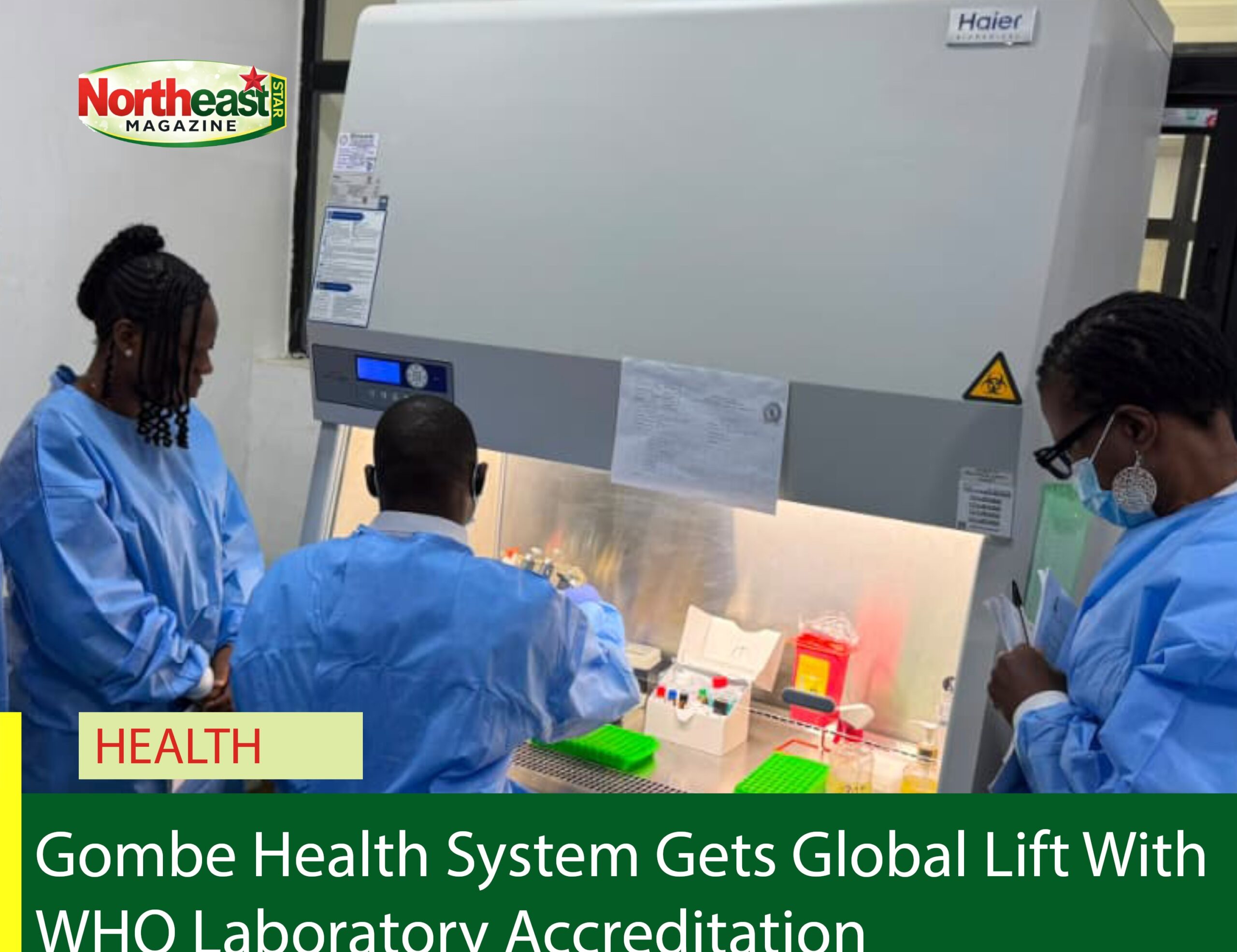
Gombe State has strengthened its disease surveillance and diagnostic capacity after the Molecular Diagnostic Laboratory of the Gombe State Specialist Hospital secured accreditation from the World Health Organisation (WHO) for measles and rubella testing.
The accreditation has formally brought the facility into the WHO Global Measles and Rubella Laboratory Network, positioning Gombe among a select group of health facilities in Nigeria with internationally recognised capacity to confirm suspected cases of the two vaccine-preventable diseases.
The development represents a major boost to Gombe State’s healthcare system, particularly in the areas of disease surveillance, laboratory diagnosis and emergency response.
The Chief Medical Director of the Gombe State Specialist Hospital, Dr Dawa Sambo, described the achievement as a significant milestone, attributing it to sustained investment by the administration of Governor Muhammadu Inuwa Yahaya in healthcare infrastructure, diagnostic services and human capacity.
Dr Sambo said the accreditation would reduce the state’s dependence on distant reference laboratories for confirmation of suspected measles and rubella cases.
He explained that medical laboratory scientists in Gombe can now conduct the required diagnostic tests locally, reducing the time between sample collection and confirmation.
“Faster laboratory confirmation is critical to effective disease surveillance because it enables health authorities to respond more quickly when suspected cases are detected,” Dr Sambo said.
He added that the shorter turnaround time would strengthen the ability of surveillance teams to investigate suspected cases promptly and introduce appropriate containment and vaccination measures, particularly during outbreaks.
To obtain the accreditation, the laboratory underwent a rigorous assessment against WHO quality and technical requirements.
The assessment covered areas including sample collection and handling, biosafety, testing procedures, data management, quality assurance and proficiency testing.
The facility was also required to demonstrate consistent performance through External Quality Assessment and proficiency panel testing, as well as competence in the use of Enzyme-Linked Immunosorbent Assay (ELISA) for the serological detection of measles and rubella infections.
The accreditation is particularly significant for the North-East, where suspected samples have historically had to be transported over considerable distances to designated reference laboratories for confirmation.
Such logistical challenges could delay the confirmation of suspected infections and slow the deployment of appropriate public health interventions.
With the Gombe laboratory now accredited, health authorities have access to additional diagnostic capacity closer to affected communities, potentially enabling faster investigations and responses to suspected outbreaks.
The development also strengthens Gombe’s contribution to Nigeria’s participation in the global measles and rubella surveillance system.
The state is now among only eight locations in Nigeria with WHO-accredited capacity for measles and rubella laboratory testing.
Beyond the international recognition, the accreditation is expected to deliver practical benefits to public health, including faster diagnosis, stronger disease surveillance, quicker outbreak response and improved protection of children and communities.
For the Gombe State Specialist Hospital, the recognition is also an endorsement of the quality of its laboratory services and the technical competence of its personnel.
The achievement further demonstrates the importance of sustained investment in healthcare infrastructure, skilled personnel and quality assurance in building a health system capable of meeting international standards.
For Gombe, the WHO accreditation represents more than a laboratory achievement; it provides the state with stronger tools to detect vaccine-preventable diseases early and respond to public health threats more effectively.

Yahaya Approves N54.8m for Entrance Exams, N118.7m for BECE

APM President Kouyateh: Dangotization Can Turn Africa’s Resources into Jobs, Wealth

Inuwa Yahaya Tells New Ashaka Cement Owners: Expansion Must Benefit Gombe Communities

APC National Chairman Settles Gombe Central Contest, Raises DCP Ahmed’s Hand as Party’s Senatorial Candidate

Gombe Eyes Livestock-Led Economic Growth as Inuwa Yahaya Meets Minister

Gombe Aquatic Sports Body Unveils Board, Sets Stage for Competitive Debut

-
 Politics2 months ago
APC National Chairman Settles Gombe Central Contest, Raises DCP Ahmed’s Hand as Party’s Senatorial Candidate
-
 Agriculture3 weeks ago
Gombe Eyes Livestock-Led Economic Growth as Inuwa Yahaya Meets Minister
-
 Sport5 months ago
Gombe Aquatic Sports Body Unveils Board, Sets Stage for Competitive Debut
-

 Striking the Balance1 month ago
The $2,500 Threshold: Why Raising Nigeria’s GDP Per Capita Is Our Best Non-Kinetic Strategy for Peace
-

 Economy8 months ago
NGX Ends Week in the Green as ₦1.54 Trillion Boosts Investors’ Fortunes
-

 Environment3 months ago
World Environment Day: NGO Urges Nigerians to Embrace Nature-Based Solutions Against Climate Change
-

 Economy8 months ago
CBN’s End to Cash Withdrawal Limit
-

 Education8 months ago
Dangote Launches Landmark ₦1 Trillion Scholarship Scheme to Support 1.3 Million Nigerian Students