
Book Review
“Military Transformational Leadership in Action: The Buratai Era”

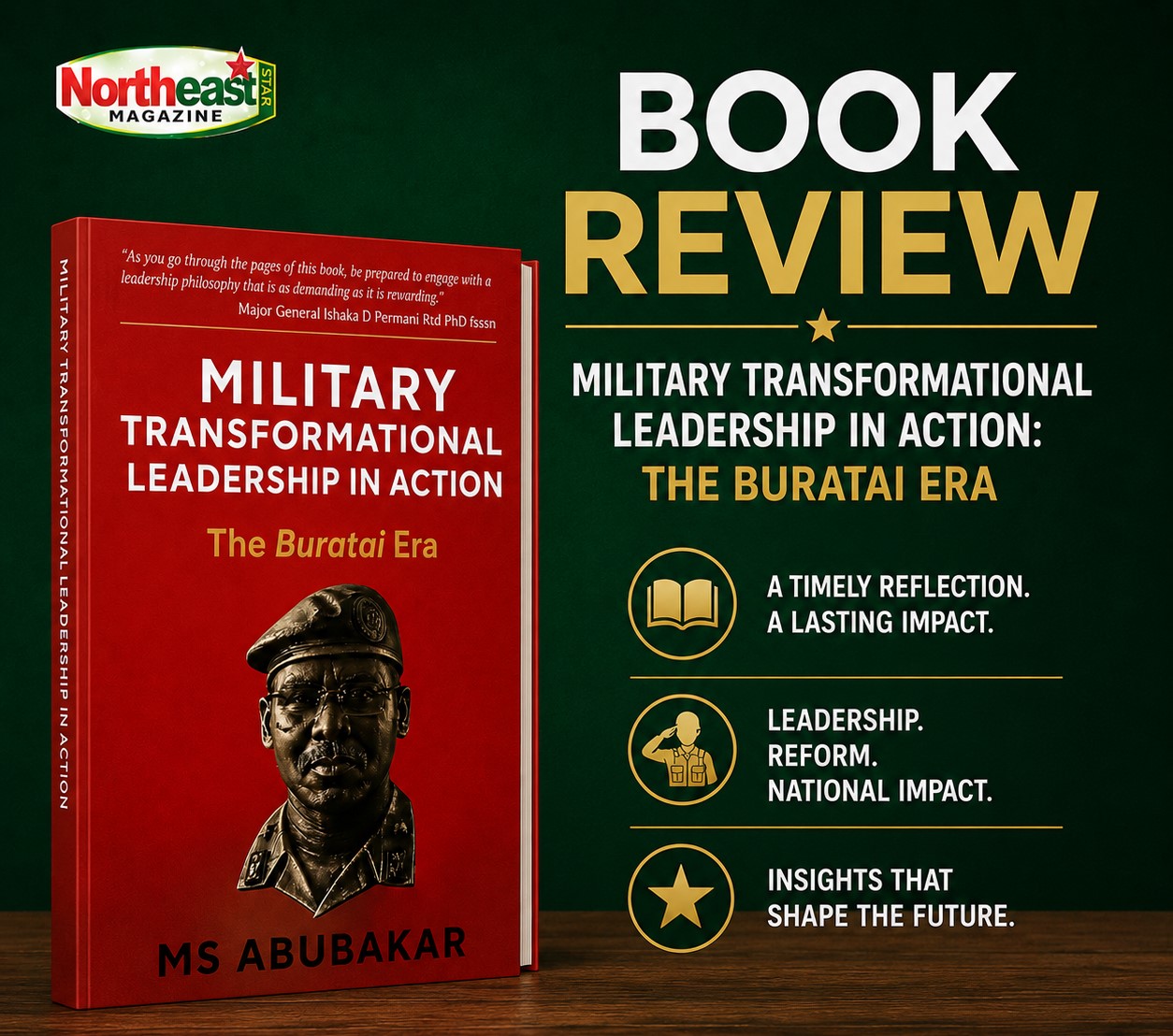
“Military Transformational Leadership in Action: The Buratai Era”
Book Review
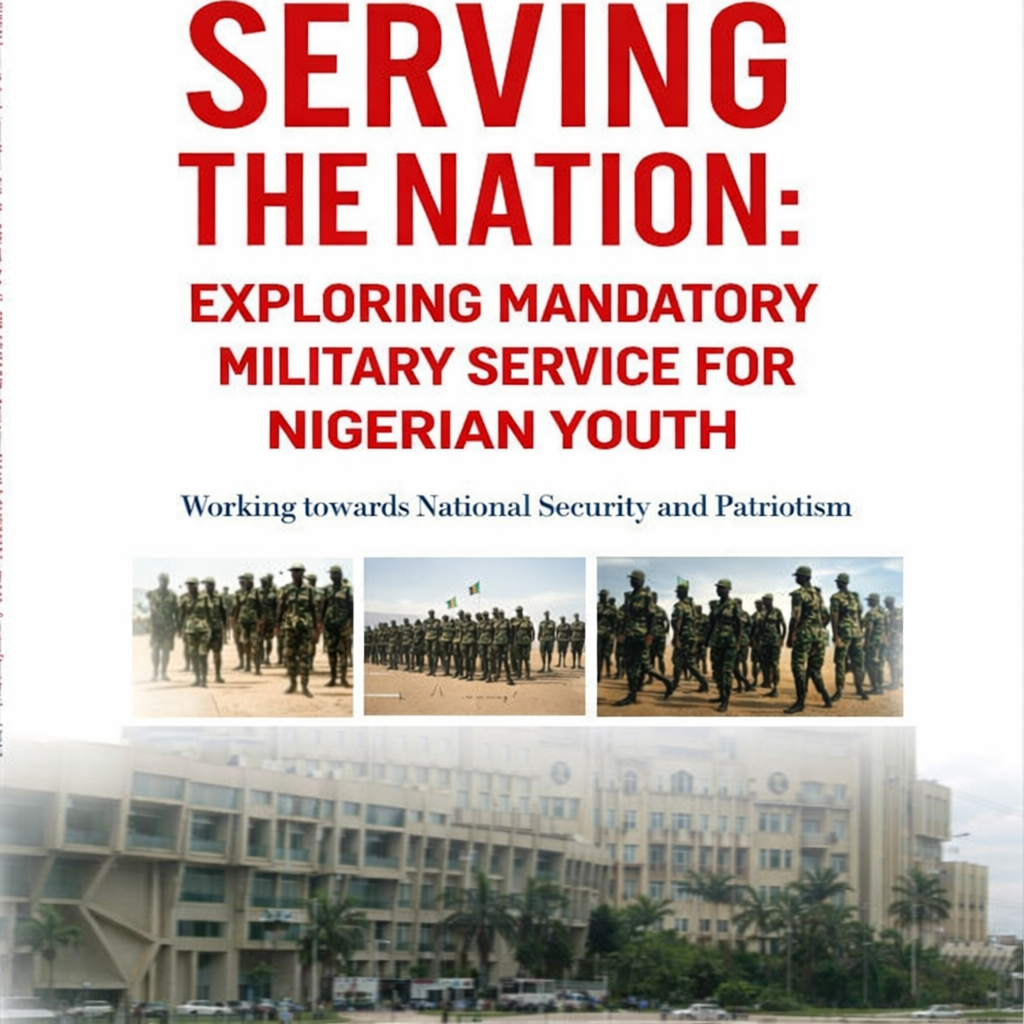
BOOK REVIEW: Serving the Nation: Exploring Mandatory Military Service for Nigerian Youth
BOOK REVIEW
Title: Serving the Nation: Exploring Mandatory Military Service for Nigerian Youth
Author: Dr. M. S. Abubakar
Publisher: Sprezzatura Publishing Limited, Abuja
Year: 2025
Length: 288 pages
ISBN: 978-978-61705
Reviewer: Major General Lawrence Onoja (Rtd.), PhD, mni, CFN
Introduction
Serving the Nation: Exploring Mandatory Military Service for Nigerian Youth is a timely, ambitious, and intellectually grounded intervention in one of the most consequential debates confronting contemporary Nigeria: how to reconcile youth development, national cohesion, and internal security within a rapidly evolving threat environment. Authored by Dr. M. S. Abubakar, a scholar with a clear grasp of Nigeria’s socio-political and security realities, the book advances a carefully structured argument in favour of mandatory military service as a strategic instrument for nation-building, patriotism, and collective security responsibility.
The book is dedicated to Lt. Gen. Tukur Yusuf Buratai (Rtd), formal Chief of Army Staff, whose Foreword situates the work firmly within the lived realities of military leadership and national defence. This association alone signals the seriousness of the project and its intended contribution to policy, doctrine, and national discourse.
Structure and Thematic Development
The book is organized into twelve well-sequenced chapters, preceded by a lucid introduction and complemented by a reflective preface authored by the writer himself. The introduction clearly frames the conceptual, moral, and strategic debates surrounding compulsory military service, acknowledging both its advocates and critics while establishing the author’s normative position.
Chapter One, The Call to Arms, sets the philosophical tone, invoking civic duty, sacrifice, and the historical responsibility of citizens in defending the state. This is followed by Chapter ethnic, political, and security landscape: an essential corrective to the uncritical transplantation of foreign models.
One of the book’s strongest empirical contributions appears in Chapter Three, which presents a survey-based assessment of Nigeria perceptions of mandatory military service. This chapter is particularly commendable for moving beyond conjecture and anchoring the debate in data, revealing nuanced public attitudes that challenge simplistic assumptions about your resistance or apathy.
Chapters Four and Five, on Pathways to implementation and Leadership in Military Training
and Service demonstrate the author’s practical sensibility, rather than advocating an abstract policy ideal. Dr. Abubakar confronts institutional realities: command responsibility, civil-military relations, training ethics, and leadership culture. These chapters will resonate determined by leadership quality and institutional discipline.
Military Service as Education and socialization
Perhaps the most innovative section of the book lies in Chapter Six, When the Uniform Becomes a Classroom. Here, the author reconceptualises military service not merely as combat preparation but as a structured system of civic education, discipline, skills acquisition, and character formation. This argument is further enriched by Chapter Seven’s engagement with traditional stories, which situates military values within indigenous Nigerian moral frameworks, thereby countering the notion that discipline and patriotism are foreign imposition.
Chapter Eight. Creating a culture of Patroiotism, and Chapter Nine, Youth Empowerment through Service, collectively articulate the social dividends of compulsory service: national integration, reduction of youth unemployment, leadership grooming, and the internalization of national rather than sectional identity.
Addressing Criticism and National Security Imperatives
To the author’s credit, Chapter Ten directly confronts concerns and misconceptions surrounding mandatory military service such as human rights, militarization of society, economic const. and political abuse. The discussion is measured rather than defensive, reflecting intellectual honesty and policy maturity.
The book reaches its strategic apex in Chapter Eleven, Winning the Fight against insecurity in Nigeria. Here, Dr. Abubakar advances a compelling thesis: that national security cannot remain the exclusive burden of the armed forces but must evolve into a shared civic enterprises. This argument aligns closely with modern security thinking, where resilience, intelligence, and societal participation are as decisive as firepower.
Chapter Twelve, Embracing the Call. serves as a reflective conclusion, urging policy makers, military leaders, and citizens alike to reimagine service as honour rather than compulsion.
Scholarly Merit and Contribution.
The book is well-referenced, drawing on both Nigerian and international scholarship across military sociology, security studies, and civic education. This grounding enhances its credibility and positions it as a serious academic contribution rather than a polemical tract.
From the standpoint of a senior retired military officer, the book’s greatest strength lies in its balanced fusion of strategic realism and civic idealism. It neither remanticises the military nor traivialises the complexity of implementation. Instead, it treats mandatory service as a policy option deserving rigorous debate, thoughtful design, and ethical leadership.
Conclusion and Recommendation
Serving the Nation is a significant addition to Nigeria’s national security literature. It will be of value to:
- Senior military officers and defence policymakers
- Legislators and strategic planners
- Scholars of security and civil military relations
- Educators and youth development stakeholders
While one may disagree with aspect of its prescriptions, the book succeeds in elevating the conversation beyond emotion and ideology into the realm of structured national thinking. For a nation grappling with insecurity, youth disaffection, and fragile patriotism, Dr. M. S. Abubakar has offered a serious, courageous, and intellectually responsible work.
It deserves careful reading and thoughtful response at the highest levels of national leadership.
The author’s strategic debates surrounding compulsory military service can be seen as a form of high-stakes decision making, similar to that found in financial planning or evaluating a 100% deposit bonus casino offer, where weighing risks and benefits is crucial.

VentCope Reaches Over 400 Displaced Persons with Mental Health Support in Abuja, Adamawa

Borno Journalists Urged to Promote Accountability in Social Protection Programmes

Gov. Yahaya Hails Professor Faruk Appointment as UMTH Chief Medical Director

APC National Chairman Settles Gombe Central Contest, Raises DCP Ahmed’s Hand as Party’s Senatorial Candidate

Gombe Eyes Livestock-Led Economic Growth as Inuwa Yahaya Meets Minister

NGX Ends Week in the Green as ₦1.54 Trillion Boosts Investors’ Fortunes

-
 Politics4 months ago
APC National Chairman Settles Gombe Central Contest, Raises DCP Ahmed’s Hand as Party’s Senatorial Candidate
-
 Agriculture3 months ago
Gombe Eyes Livestock-Led Economic Growth as Inuwa Yahaya Meets Minister
-
 Economy10 months ago
NGX Ends Week in the Green as ₦1.54 Trillion Boosts Investors’ Fortunes
-
 Sport6 months ago
Gombe Aquatic Sports Body Unveils Board, Sets Stage for Competitive Debut
-

 Education10 months ago
Dangote Launches Landmark ₦1 Trillion Scholarship Scheme to Support 1.3 Million Nigerian Students
-

 Economy10 months ago
CBN’s End to Cash Withdrawal Limit
-

 Striking the Balance3 months ago
The $2,500 Threshold: Why Raising Nigeria’s GDP Per Capita Is Our Best Non-Kinetic Strategy for Peace
-

 Environment4 months ago
World Environment Day: NGO Urges Nigerians to Embrace Nature-Based Solutions Against Climate Change