
Africa
Shiekh Kouyateh Warns Liberia’s US Deportee Deal Could Raise Regional Security Concerns

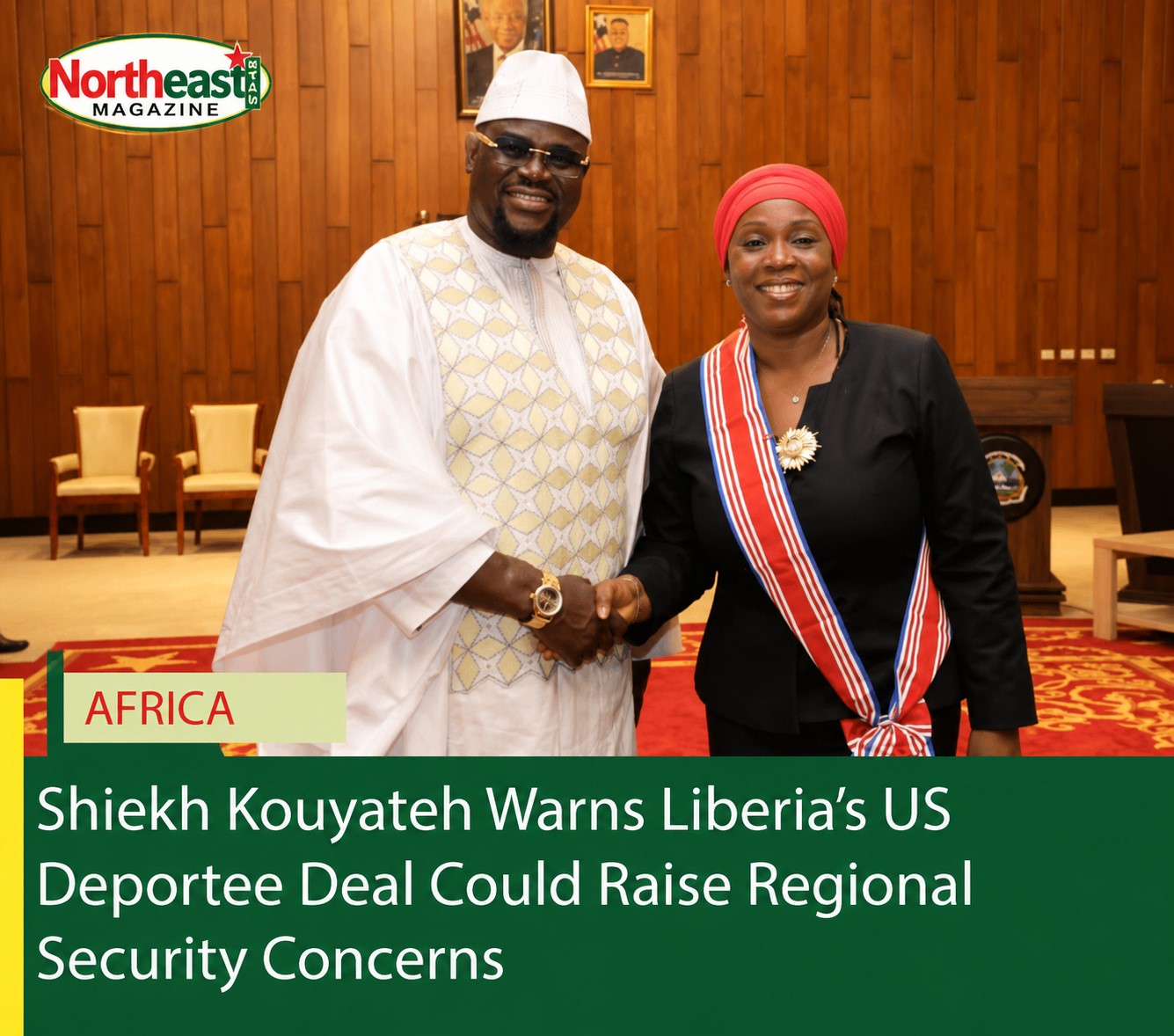
By Auwal Ahmad Umar
Ambassador Sheikh Al Moustapha Kouyateh has raised serious questions over Liberia’s reported agreement to receive about 1,200 deportees from the United States, warning that the arrangement could have implications extending beyond Liberia’s borders if the deportees are allowed to freely integrate into Liberian communities.
Kouyateh questioned both the financial terms of the reported agreement and the arrangements being made to accommodate the deportees, particularly those described by the Liberian government as “guests.”
“If Eswatini received $5.1 million for receiving 30 deportees from the U.S. government and kept them in a high correctional area, how much did the Government of Liberia receive under similar arrangements for the 1,200 deportees referred to as ‘Guests’ by Minister Piah, and where would they be kept?” he asked.
However, beyond the issue of compensation, the reported relocation raises broader questions about regional security in West Africa.
Kouyateh’s concern is that if the deportees are allowed to integrate freely among the Liberian population without adequate screening, monitoring and clearly defined restrictions, the consequences could potentially extend beyond Liberia’s borders.
Liberia is part of the Mano River region, which includes Sierra Leone, Guinea and Côte d’Ivoire, while the wider West African region continues to face serious security challenges, including violent extremism, organised crime, trafficking and cross-border criminal networks. In such an environment, any large-scale movement of individuals whose backgrounds and circumstances may not be fully known to the receiving population could attract heightened security scrutiny.
The concern is not necessarily that every deportee poses a security threat. Rather, the scale of the reported arrangement about 1,200 people raises questions about whether Liberia has the capacity to conduct comprehensive background checks, establish appropriate monitoring mechanisms and ensure that individuals with potentially serious criminal histories do not exploit existing regional vulnerabilities.
If the deportees are dispersed into communities and allowed unrestricted movement, authorities may face difficulties maintaining oversight of their activities and movements. Given the porous nature of some borders in the region, any security concerns arising in Liberia could potentially have implications for neighbouring countries as well.
Sheikh 7Kouyateh is therefore calling attention to the need for greater clarity on the legal status of the deportees, their backgrounds, the locations where they would be accommodated, the level of supervision they would receive and whether regional security agencies have been consulted about the arrangement.
The financial aspect of the agreement also remains unclear. Kouyateh’s comparison with Eswatini raises the question of whether Liberia received financial compensation and, if so, how much. The Liberian government has yet to publicly clarify the full financial and logistical terms of the reported arrangement.
The controversy therefore goes beyond the question of whether Liberia should accept deportees from the United States. It raises a broader issue of regional security preparedness and whether the movement and possible integration of a large number of deportees could create new vulnerabilities within Liberia and the wider West African security environment.
For Liberia, the key questions remain: Who are the deportees, what screening has been conducted, where will they live, how will their movements be monitored, and what safeguards are being put in place to ensure that the arrangement does not create unintended security risks for Liberia and its neighbours?
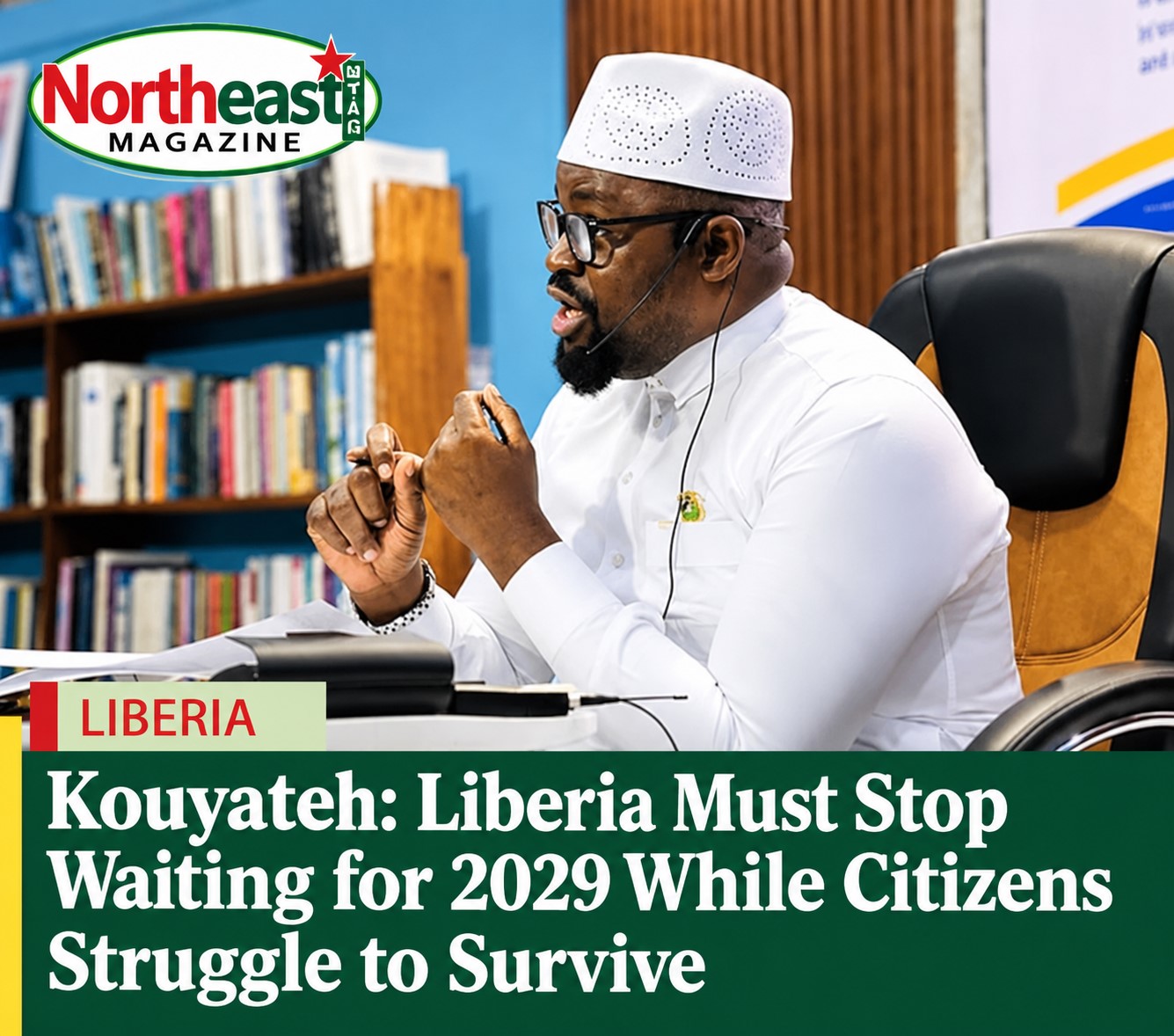
By Auwal Ahmad Umar
Sheikh Amb. Al-Moustapha Kouyateh, a Liberian statesman, senior diplomat, entrepreneur and Pan-African advocate, has criticised the country’s growing political focus on the 2029 elections, saying the immediate survival and welfare of Liberians should take priority over electoral ambitions.
Amb. Kouyateh, whose career has been associated with advocacy for Liberia’s development and broader African transformation, said it was unacceptable for political leaders to focus heavily on future elections while citizens continue to struggle with hunger, education costs and economic hardship.
“For God’s sake, we are in 2026, not 2029,” he said, questioning how many Liberians would continue to suffer before political leaders turned their attention to the pressing challenges confronting the population.
He argued that political promises about the future could not substitute for measures capable of improving the lives of citizens today.
According to him, the country’s political class should be more concerned about the immediate needs of ordinary Liberians than campaigns, elections and partisan competition.
Amb. Kouyateh also criticised what he described as the failure of successive political parties to adequately protect Liberia’s interests, particularly in the management of the country’s natural resources.
He alleged that Liberia’s resources, which he said should benefit the entire population, had increasingly been tied to concession agreements without delivering sufficient benefits to ordinary citizens.
“Liberia is a graceful country. We have land, we have resources and we have a small and productive population,” he said, while lamenting that the country still struggles with widespread poverty.
The Pan-African leader attributed part of Liberia’s challenges to what he described as a lack of patriotism among some political leaders who allegedly treat public resources as personal wealth.
He said genuine leadership should be measured by responsibility, accountability and the ability to empower citizens and develop the country, rather than by political rhetoric.
“Leadership is not talk. Leadership is responsibility,” Mr Kouyateh said, stressing that the protection of citizens should take precedence over protecting arrangements that primarily benefit powerful individuals.
He further warned that politics had increasingly been used as a tool for division and distraction, rather than as an instrument for national development.
According to him, political competition should not be allowed to deepen divisions or create hatred among Liberians at a time when many families are struggling to meet basic needs.
He questioned the logic of asking citizens to wait for political change in the hope that it would eventually translate into economic relief.
Mr Kouyateh also raised concerns about whether many Liberians facing severe economic difficulties could afford to wait until 2029 for meaningful improvements in their living conditions.
“What is the guarantee that we will even make it to 2029, when the majority are living on expectations, not prosperity?” he asked.
He called on Liberians to demand greater accountability from their leaders and to place national development, economic empowerment and citizens’ welfare at the centre of public discourse.
“Arise, Liberians. Enough is enough!” he declared.
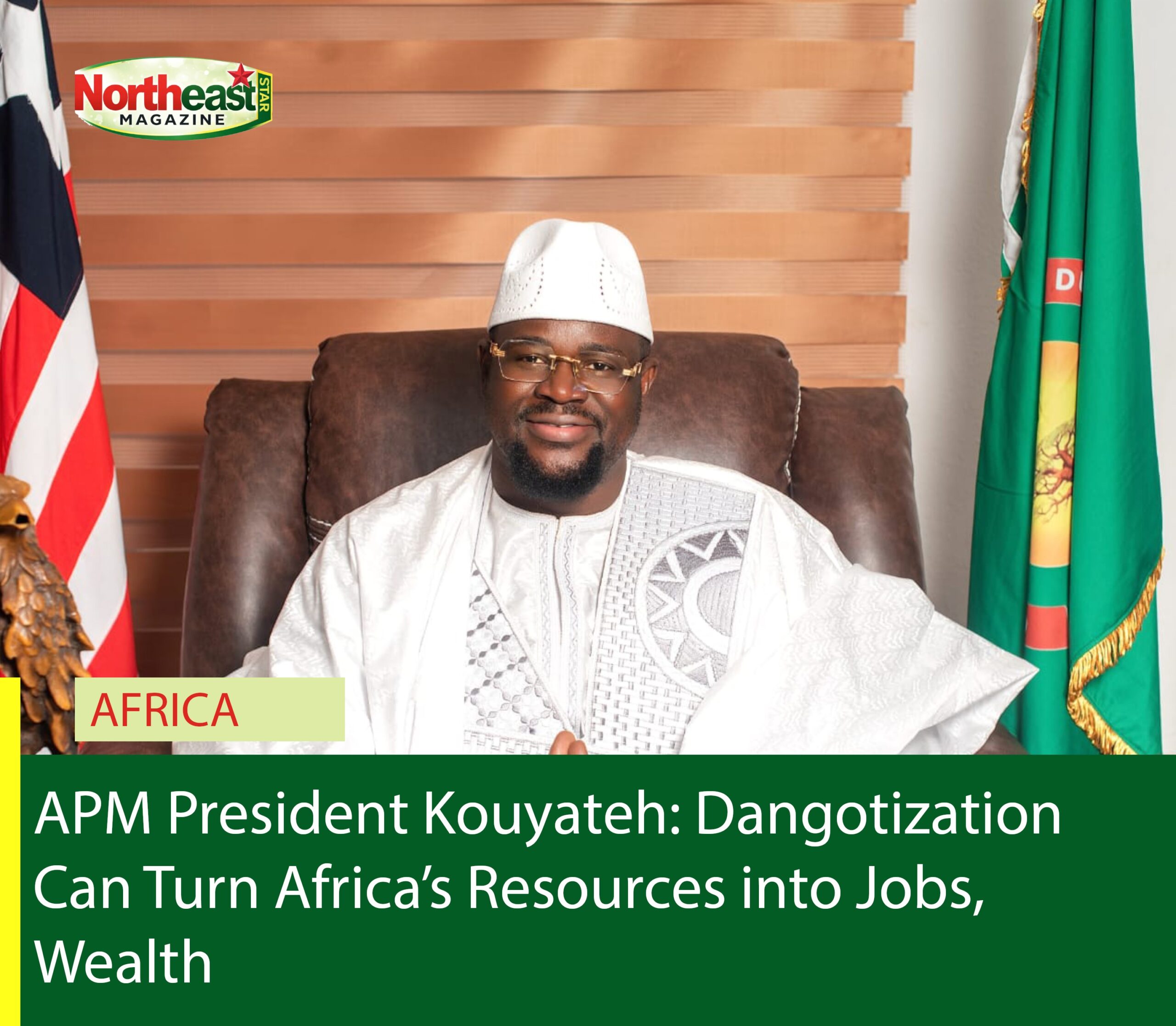
APM President Kouyateh: Dangotization Can Turn Africa’s Resources into Jobs, Wealth
By Auwal Ahmad Umar
The President of the African Peoples’ Movement (APM), Sheikh Al-moustapha Kouyateh, has called for a new economic approach that would enable African countries to transform their abundant natural resources into jobs, wealth and sustainable development, rather than continue exporting raw materials and importing finished products.
Kouyateh said the continent must embrace what he described as “Dangotization,” an economic transformation agenda focused on production, industrialisation, technology, value addition and African ownership.
He said Africa’s continued dependence on the export of unprocessed commodities had deprived the continent of huge economic opportunities that could be harnessed through local manufacturing and industrial development.
“We reject dependency. We reject the idea that Africa must only sell raw materials and buy back finished goods,” he said.
According to the APM president, Dangotization represents a shift from an economy that primarily exports raw materials to one that processes, manufactures and adds value to its own resources.
He said African countries must establish and strengthen industries capable of processing agricultural products, minerals and other natural resources into finished and semi-finished goods.
Kouyateh said such an approach would create employment opportunities for millions of young Africans while strengthening local businesses and reducing the continent’s dependence on imported products.
He also called for greater economic integration among African countries, stressing that improved infrastructure, regional trade and common standards would be necessary to support increased production and movement of goods across the continent.
“We will connect regions through trade, infrastructure, and shared standards — so Africa produces for Africa,” he said.
The APM president said African governments must also invest in skills development, innovation and entrepreneurship if the continent is to build industries capable of competing in the global economy.
He argued that Africa’s youthful population should be treated as an economic asset by equipping young people with the technical knowledge, skills and opportunities required to participate meaningfully in productive activities.
Kouyateh further stressed the importance of African ownership, saying Africans should not remain limited to providing labour or consuming products manufactured elsewhere.
“We will ensure African ownership and fair participation, so development benefits those who live here,” he said.
He said Africans must have meaningful participation in the ownership and management of industries and enterprises that utilise the continent’s resources.
According to him, economic growth should be reflected in improved living standards, employment, stronger businesses and increased opportunities for ordinary citizens.
Kouyateh also advocated an inclusive approach to economic development, saying persons with disabilities and other marginalised groups must be given opportunities to participate fully in the continent’s economic transformation.
“In that prosperity, there will be no exclusion: development must be accessible, disability-inclusive, and designed so disabled people can participate fully,” he said.
He said inclusive development should provide persons with disabilities with access to education, employment, entrepreneurship and other economic opportunities.
The APM president maintained that Africa could generate significantly greater economic value by processing its resources locally before exporting them.
He said agricultural commodities, solid minerals and other natural resources should increasingly be transformed into finished and semi-finished products within Africa.
Such a strategy, he argued, would help create jobs, expand local industries, increase government revenue and reduce the pressure created by dependence on imported goods.
Kouyateh said the ultimate objective of Dangotization was to build an Africa that could produce, process and innovate for itself while developing the capacity to compete effectively in international markets.
He said the continent had the natural resources, human capital and growing markets required to achieve economic transformation if African countries could move decisively towards production and value creation.
He summed up the philosophy behind his call for Dangotization in a simple message.

Pantami Missing as INEC Releases Final List of Gombe Governorship Candidates

Waiya Urges Tinubu’s Northern Appointees to Sell Administration’s Achievements Ahead of 2027

N10.32bn Gratuity: Gombe Pays 6,665 Retirees, Targets Lasting Solution

APC National Chairman Settles Gombe Central Contest, Raises DCP Ahmed’s Hand as Party’s Senatorial Candidate

Gombe Eyes Livestock-Led Economic Growth as Inuwa Yahaya Meets Minister

NGX Ends Week in the Green as ₦1.54 Trillion Boosts Investors’ Fortunes

-
 Politics4 months ago
APC National Chairman Settles Gombe Central Contest, Raises DCP Ahmed’s Hand as Party’s Senatorial Candidate
-
 Agriculture2 months ago
Gombe Eyes Livestock-Led Economic Growth as Inuwa Yahaya Meets Minister
-
 Economy10 months ago
NGX Ends Week in the Green as ₦1.54 Trillion Boosts Investors’ Fortunes
-
 Sport6 months ago
Gombe Aquatic Sports Body Unveils Board, Sets Stage for Competitive Debut
-
 Economy10 months ago
CBN’s End to Cash Withdrawal Limit
-
 Education10 months ago
Dangote Launches Landmark ₦1 Trillion Scholarship Scheme to Support 1.3 Million Nigerian Students
-
 Striking the Balance3 months ago
The $2,500 Threshold: Why Raising Nigeria’s GDP Per Capita Is Our Best Non-Kinetic Strategy for Peace
-
 Environment4 months ago
World Environment Day: NGO Urges Nigerians to Embrace Nature-Based Solutions Against Climate Change