Taraba
Taraba Govt Rejects N1.2trn Borrowing Claim, Says Debt Figures Misrepresented

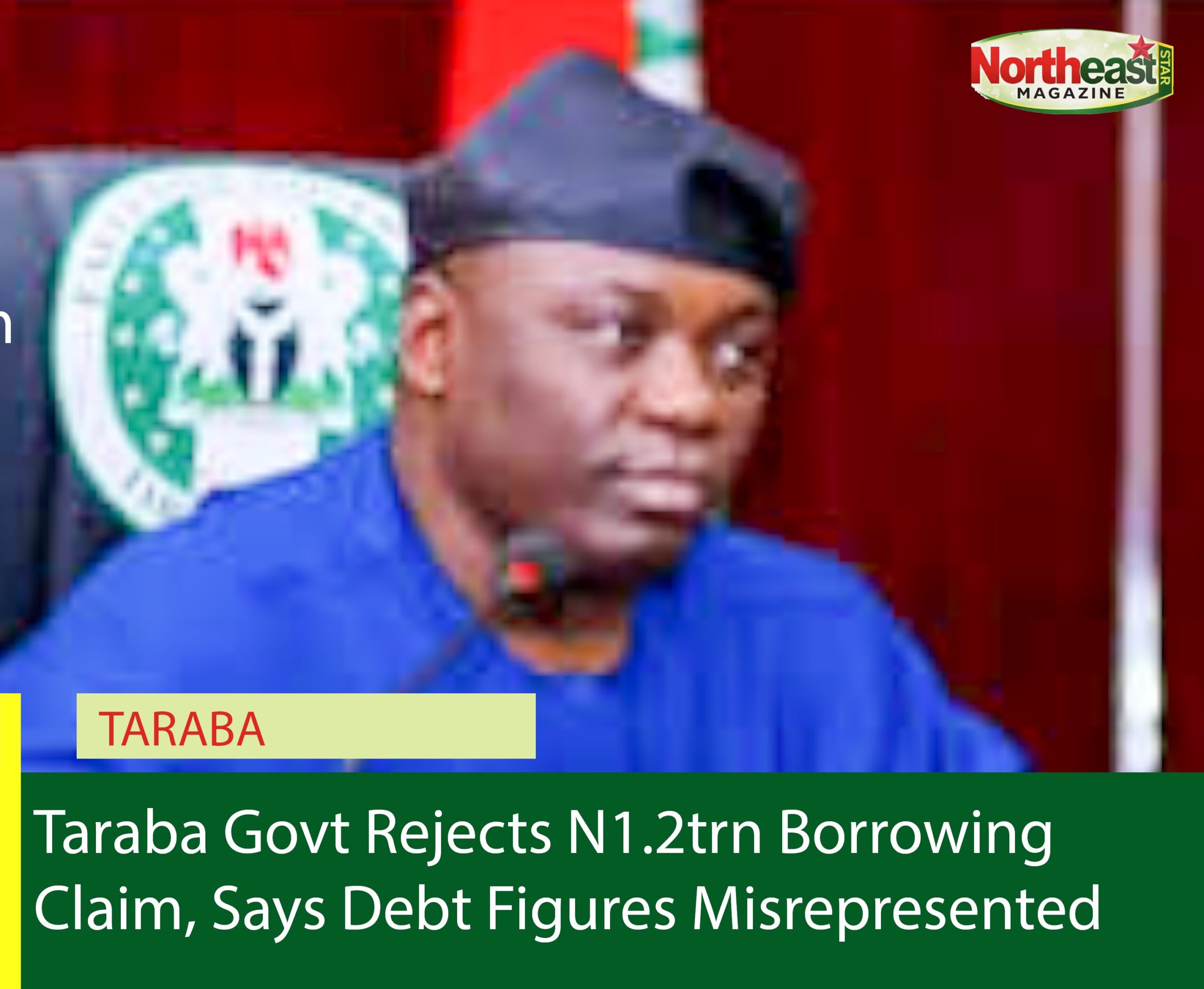
Taraba Govt Rejects N1.2 Trn Borrowing Claim, Says Debt Figures Misrepresented
By Jamila Muhammed
The Taraba State Government has rejected reports suggesting that it accumulated about N1.2 trillion in loans within three years, describing the claim as a misrepresentation of the state’s financial position.
The Commissioner for Finance, Dr Sarah Adi, made the clarification on Sunday while briefing journalists in Jalingo, the state capital.
Adi said official records from the Debt Management Office (DMO) showed that Taraba’s domestic debt was N85.51 billion at the end of December 2025.
According to her, the figure was actually lower than the N87.96 billion recorded in earlier DMO records before the administration of Governor Agbu Kefas took office.
She explained that a DMO report published in March 2023 was based on the state’s debt position as of September 30, 2022, and should therefore not be interpreted as reflecting the state’s indebtedness at the time of the publication.
On foreign loans, the commissioner said Taraba’s external debt moved from roughly $46.47 million at the end of 2022 to about $48 million by December 2025.
She described the increase as moderate, noting, however, that movements in the foreign exchange market could affect the naira value of the state’s external obligations.
Adi also clarified the controversy surrounding a N206.78 billion financing arrangement approved by the Taraba State House of Assembly in 2023.
She said the arrangement involved Zenith Bank, United Bank for Africa, Fidelity Bank and Keystone Bank, with repayments tied to specified revenue sources.
The commissioner cautioned against treating the total amount approved by the legislature as equivalent to the debt currently owed by the state.
She explained that determining the actual liability would require consideration of how much was eventually accessed, repayments already made, possible restructuring of the facilities and the outstanding balances on each loan.
“An approved facility is not necessarily the same as the amount currently outstanding. The actual position depends on what was disbursed, what has been repaid and the balance remaining on each facility,” she said.
The commissioner also disputed reports that the state had already received N350 billion through a planned capital-market financing arrangement.
She explained that the proposed programme was structured to mobilise funds progressively and remained subject to regulatory requirements, statutory procedures, market conditions and necessary disclosures.
According to her, only an initial tranche estimated at N35 billion was being considered, stressing that the broader N350 billion figure represented the size of the proposed programme rather than money already received by the state.
Adi further provided clarification on three financing agreements valued at about $268 million which Taraba signed with the ECOWAS Bank for Investment and Development (EBID) on June 26, 2026.
She said the proposed financing would support three major projects: an integrated industrial park, irrigated rice production and processing, and a 50-megawatt solar power project.
The commissioner stressed that signing the agreements did not amount to immediate access to the funds.
She said the projects would first have to satisfy various conditions, including regulatory requirements and statutory approvals, before any money could be drawn.
Adi urged the public to distinguish between different components of government financing when assessing the state’s debt position.
She identified existing debt stock, approved credit facilities, actual outstanding balances and proposed or undisbursed financing as separate categories that should not be lumped together.
“Combining figures from these different categories as though they are all existing debt would give a distorted impression of the state’s financial obligations,” she said.
The commissioner maintained that the Kefas administration’s borrowing decisions were based on the need to fund development projects while taking into account the government’s ability to repay its obligations.
She said the administration remained committed to openness and accountability in managing public finances, adding that the government was prepared to provide clarification whenever questions were raised about its financial activities.
Adi, however, urged individuals and organisations scrutinising Taraba’s finances to rely on verified records rather than combining unrelated figures to arrive at conclusions about the state’s debt.


Nigerian Army Moves to Strengthen Aviation Safety, Aircraft Reliability

Rule of Law, Nigeria’s only hope of survival (1)

KFP Seeks Greater Protection for Girls in Conflict-Affected Communities

APC National Chairman Settles Gombe Central Contest, Raises DCP Ahmed’s Hand as Party’s Senatorial Candidate

Gombe Eyes Livestock-Led Economic Growth as Inuwa Yahaya Meets Minister

NGX Ends Week in the Green as ₦1.54 Trillion Boosts Investors’ Fortunes

-
 Politics4 months ago
APC National Chairman Settles Gombe Central Contest, Raises DCP Ahmed’s Hand as Party’s Senatorial Candidate
-
 Agriculture2 months ago
Gombe Eyes Livestock-Led Economic Growth as Inuwa Yahaya Meets Minister
-
 Economy10 months ago
NGX Ends Week in the Green as ₦1.54 Trillion Boosts Investors’ Fortunes
-
 Sport6 months ago
Gombe Aquatic Sports Body Unveils Board, Sets Stage for Competitive Debut
-

 Economy10 months ago
CBN’s End to Cash Withdrawal Limit
-
 Education10 months ago
Dangote Launches Landmark ₦1 Trillion Scholarship Scheme to Support 1.3 Million Nigerian Students
-
 Striking the Balance3 months ago
The $2,500 Threshold: Why Raising Nigeria’s GDP Per Capita Is Our Best Non-Kinetic Strategy for Peace
-
 Environment4 months ago
World Environment Day: NGO Urges Nigerians to Embrace Nature-Based Solutions Against Climate Change