
Latest News
How I Returned from the Gate of the Other World (3)

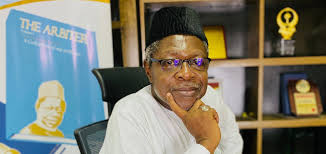
The Arbiter
How I Returned from the Gate of the Other World (3)
By Hassan Gimba
I want to believe Allah (SWT) brought me back to read my scorecard. He does that whenever He wants. All the more reason to forgive those who transgressed against you and seek forgiveness from those you have hurt. Importantly, Dr Imdad of Al Shifa Hospital told me that one should continue doing the good things they have been doing for humanity.
And this was why He answered the prayers of the multitude of people who interceded with Him on my behalf. People, some I knew, many I never knew from Adam. There were prayers in the National Mosque in Abuja; in many mosques, including the central mosque in Potiskum, and in several local governments in Yobe.
There were special prayers by members of the Islamic Movement in Nigeria in Potiskum and several other centres. Nigerian brothers in Qum and Karbala also contributed their quota. And these prayers were not only on Fridays but also at every given opportunity.
Individuals also contracted others to pray for me; even their children, from as early as when they were able to talk, prayed for me. The prayers of some kids were recorded and sent to Makkah, where they were replayed in my ear when I was sojourning between this world and the other.
My siblings, in addition to many other forms of prayer, shared and read portions of the Holy Qur’an amongst themselves and with our children. They did not leave out the youngest, who could read the holy book. The same with my in-laws in Maiduguri.
A person may be forgiven if they thought Facebook and other social media apps were created for them because the people praying for them took them over. It is heartwarming that many, many people — family, friends, associates, those known and unknown to me — were all praying for me. I was surprised to hear that some Christian associates, pastors and a church in Ghana had put me in their prayers, too.
On my birthday, April 9, social media was filled with messages of goodwill, “get well soon” wishes and prayers for more health and a long life. Many people I did not even expect were so prominent in their prayers for me. Exemplary examples, out of many, were distinguished Senator Musa Mustapha (Coolers) and Professor Abubakar Bukar Kagu, the Matawalli of Machina. The senator’s message was long and heart-touching.
In Makkah, too, prayers for me were many and earnest. Many of those who knew me and went for Umrah prayed for me. Even the Makkah dwellers we encountered, such as our landlord Ali Bukar, his family, and numerous others, did not lag behind. My two wives, Dr Aminat Zakari and Hajiya Falmata Baba Adam, together with my son Abubakar Sadik, were always performing Umrah and, most times, circumambulating the al-Ka’bah al-Musharrafah (simply Ka’aba). On all occasions, they were praying for me. But the prayers were not limited to this.
I was in the intensive care unit (ICU) of Al Shifa, and visits were twice a day — 11 am and 9 pm — for 30 minutes each. One night, my wife, Dr Aminat, visited. I was then between this world and the other one and so did not even know she came because I was not aware of my physical environment. She watched me, cried, and left, but she did not go far; she sat outside the hospital crying and praying for me.
According to her, Dr Tamer, the chief medical officer there, came down to go home. He saw her and stopped. Then she realised it was around 1:30 am. He asked her, “You are still around?” She answered him in the affirmative. It was not visiting time then, yet he asked her, “Do you want to see him?” and she said, “Yes.” He broke the rule and brought her in to see me, forgoing his need to go home and rest.
When they came to me, she was just watching me and shedding tears. To her surprise, he, too, started tearing up. Then he showed his humility and belief in Allah’s powers and will. He told her, “Please pray for him and pray for us (the medical team) … we are also praying for him.” He would tell my family not to worry when they asked for the hospital bills. “Let us take care of him first,” he would say.
I used to think Arabs were racists, but the doctors and nurses at Al Shifa have cleansed me of that thought. Here was I, a poor Black man from Nigeria who could not profit them in any way, yet they gave their all to restore my health.
Doctor Tamer is like a father figure wherever he is. He always electrifies the hospital whenever he arrives. He went out of his way to get me a visa, get insurance to underwrite my hospital bills and secure an airline well-equipped to bring me home.
Dr Nazee, who was directly in charge of me, was a bubbly chap who also, like Dr Tamer, took my case personally.
Dr Imdad, the only non-Egyptian among them, is a Pakistani with a melodious voice. He presents the impression of being the life of the party. Kind-hearted, he comes close to a patient, propping him up psychologically. I recall him telling me to eat food. “You may not like it,” he told me. “Just eat.” And that was how I found myself eating the spiceless, bland Arabian food served to me.
Dr Hassan and Dr Ahmed Alsaid are two other great doctors there.
I could not get the name of the hospital’s chief executive officer, who used to come to the hospital now and then. One day, he stood by the door and blew kisses towards me. He, too, knew about Gimba the Fighter.
Hey, do you want to know about a nurse at Al Shifa Hospital whose wonderful-great-grandparents might have fought side by side with the Prophet at the Battle of Badr or who was born around that time?
Hassan Gimba is the publisher and CEO of Neptune Prime.

By Auwal Ahmad Umar
Billiri has gained a 120MVA substation, while a separate upgrade in Gombe city gives the grid more capacity. For businesses, the measure of both projects will be how reliably electricity reaches their premises.
In Billiri, a farmer who mills grain before taking it to market needs electricity at harvest time. A trader selling perishable goods needs it long after the market closes. For both, the value of a new power substation will be measured in the hours they can keep working.
Minister of Power Engr Joseph Olasunkanmi Tegbe made that connection between electricity and livelihoods when he inaugurated a transmission substation in Billiri and an expanded facility in Gombe, the state capital, at separate ceremonies on Thursday.
“Here in Biliri, farmers need power to process their produce, traders need it to preserve the goods they sell, and artisans need it to run their tools,” Tegbe said. “For each of them, the value of this investment will be measured in the work they can do and the income they can earn.”
Tegbe said inadequate electricity infrastructure had held back businesses in both communities even as their settlements grew and trade expanded. He said President Bola Ahmed Tinubu’s administration was investing in sections of the grid where transmission constraints limited the power available for productive use.
What the projects add
The Billiri substation has two 60MVA transformers with a combined capacity of 120MVA, according to the Managing Director of the Transmission Company of Nigeria (TCN), Engr. Sule Ahmed Abdulaziz. The transformers step down electricity from 132kV to 33kV, and six outgoing lines carry it into the distribution network serving the area.
Abdulaziz said the World Bank financed the project, which Chris Ejik International Limited executed under the Federal Ministry of Power and TCN.
In Gombe city, the work centred on an existing substation. TCN installed an additional 300MVA transformer and replaced a 30MVA unit with a 100MVA transformer. The replacement more than triples the capacity of that unit to step down power for distribution.
From the grid to the shop floor
The upgrades increase the amount of electricity the two substations can handle. How much of that capacity translates into longer hours of supply for a miller or welder also depends on the condition of the lines that carry power from the substations to customers.
Governor Alhaji Muhammadu Inuwa Yahaya took up that issue in remarks delivered by the Commissioner for Energy and Mineral Resources, Sanusi Ahmed Pindiga. He thanked the federal government for the projects and urged TCN and the distribution companies to maintain their respective networks so that residents could benefit from the investment.
The governor also asked customers to report faults promptly and protect equipment in their communities. Tegbe made a similar appeal over the risk of vandalism, saying the protection of electricity infrastructure “requires the vigilance of all of us”.
By Aliyu Isah
Plan International Nigeria has called for sustained investment in teachers’ welfare, professional growth and emotional well-being as it reviewed the outcomes of a two-year education support programme in conflict-affected parts of Sokoto and Adamawa States.
The organisation made the call at the closing ceremony of the Teachers in Crisis Contexts (TiCC) project held in Abuja on Thursday, where education stakeholders examined the programme’s achievements, implementation challenges and prospects for sustaining its interventions.
Supported by the European Union, the initiative, known as Building Resilient Education Systems: Supporting Teachers’ Professional Development, Well-being and Policy Reforms in Crisis-Affected Contexts, was carried out by Save the Child Initiative (STCI) and the Forum for African Women Educationalists (FAWE), in partnership with the Nigeria Union of Teachers (NUT).
Speaking at the event, Plan International Nigeria’s Country Director, Dr Charles Usie, said the programme sought to improve teachers’ professional skills, working conditions and acceptance within communities affected by insecurity and humanitarian emergencies.
He explained that the interventions included capacity-building activities, the provision of teaching equipment and measures to help teachers integrate into schools serving vulnerable communities.
Usie, however, identified the difficulty of getting educators back into classrooms after attacks as one of the major obstacles encountered during the project.
He noted that assaults on schools and other public facilities often leave teachers traumatised, with many reluctant to return to their workplaces because of fears for their safety.
According to him, education and health facilities are frequently among the institutions exposed to attacks during emergencies, making the protection and psychological recovery of their workers a critical concern.
The country director said the project had produced an approach that could be adapted and introduced in other parts of Nigeria facing similar challenges.
He also praised STCI for its role in implementing the programme, describing the organisation as a valuable partner in humanitarian assistance and development initiatives.
However, Usie emphasised that the long-term success of such interventions would depend on government ownership, noting that development organisations could initiate and test solutions but could not independently guarantee their continuation.
He said state and federal authorities needed to incorporate successful interventions into public policies, provide adequate funding and establish institutional arrangements to ensure that the gains were not lost after external support ended.
Also speaking, Sokoto State Commissioner for Basic and Secondary Education, Prof. Ahmad Ala, reiterated the state government’s commitment to improving teachers’ skills, professional development and overall welfare.
Ala stressed that consistent investment in educators was necessary to strengthen teaching standards and improve pupils’ learning outcomes.
The closing ceremony attracted education officials and representatives of relevant institutions from Sokoto and Adamawa States, who reviewed the programme’s performance and discussed lessons that could inform future interventions.
Those present included education commissioners from both states, alongside representatives of the NUT, Teachers Registration Council of Nigeria (TRCN), Universal Basic Education Commission (UBEC), Plan International Nigeria, FAWE and STCI.
At the end of the meeting, stakeholders drew up a Sustainability Action Plan outlining measures to preserve the programme’s achievements and explore opportunities to extend successful interventions beyond the project’s lifespan.
The plan is expected to provide guidance for continued efforts to protect teachers’ welfare, strengthen their professional capacity and improve the resilience of education systems in communities affected by conflict and insecurity.

Da’awa council defends NERDC chief, seeks proof of religious bias in curriculum

What Gombe’s grid upgrade could mean for farmers and traders

Tinubu Delivered for Balanga, Deserves Your Votes in 2027—Gov. Yahaya

APC National Chairman Settles Gombe Central Contest, Raises DCP Ahmed’s Hand as Party’s Senatorial Candidate

NGX Ends Week in the Green as ₦1.54 Trillion Boosts Investors’ Fortunes

Gombe Eyes Livestock-Led Economic Growth as Inuwa Yahaya Meets Minister

-
 Politics5 months ago
APC National Chairman Settles Gombe Central Contest, Raises DCP Ahmed’s Hand as Party’s Senatorial Candidate
-
 Economy12 months ago
NGX Ends Week in the Green as ₦1.54 Trillion Boosts Investors’ Fortunes
-
 Agriculture4 months ago
Gombe Eyes Livestock-Led Economic Growth as Inuwa Yahaya Meets Minister
-
 Education12 months ago
Dangote Launches Landmark ₦1 Trillion Scholarship Scheme to Support 1.3 Million Nigerian Students
-
 Sport8 months ago
Gombe Aquatic Sports Body Unveils Board, Sets Stage for Competitive Debut
-

 Economy12 months ago
CBN’s End to Cash Withdrawal Limit
-

 Striking the Balance4 months ago
The $2,500 Threshold: Why Raising Nigeria’s GDP Per Capita Is Our Best Non-Kinetic Strategy for Peace
-

 Borno8 months ago
Police Bust Kidnap Ring in Maiduguri, Rescue 7-Year-Old, Recover ₦1.5m Ransom