
Education
Dangote Launches Landmark ₦1 Trillion Scholarship Scheme to Support 1.3 Million Nigerian Students


By Auwal Ahmad Umar
Aliko Dangote, Africa’s richest man and Chairman of the Aliko Dangote Foundation (ADF), unveiled a ₦1 trillion national scholarship program designed to expand access to education and strengthen human capital development across Nigeria on Thursday.
The initiative, which takes off in 2026, will run for 10 years with an annual commitment of ₦100 billion. More than 1.3 million students from all 774 local government areas are expected to benefit.Speaking at the launch in Abuja, Mr Dangote said the scholarship scheme aims to support Nigeria’s most vulnerable learners, noting that many young people drop out of school due to financial hardship rather than lack of ability. He described the intervention as a strategic investment in the country’s future, insisting that every child kept in school strengthens the economy and reduces inequality.
The program is structured in three components. The Aliko Dangote STEM Scholars category will support 30,000 undergraduates in public universities and polytechnics, who will receive up to ₦600,000 annually for tuition. The Aliko Dangote Technical Scholars component will support 5,000 trainees in technical and vocational institutions with essential tools and learning materials. The MHF Dangote Secondary School Girls Scholars scheme will provide uniforms, books and learning supplies to 10,000 girls in public secondary schools, with priority given to states with large out-of-school populations.
To guarantee transparency, the Foundation will use a fully digital and merit-based selection process, implemented in partnership with NELFUND, JAMB, NIMC, NUC, NBTE, WAEC and NECO. Heads of the agencies were present at the launch to affirm their support.
A Programme Steering Committee chaired by the Emir of Lafia, Justice Sidi Dauda Bage, will oversee implementation. The committee includes former vice-chancellors, senior education administrators and representatives of the Dangote family. Mr Dangote also disclosed that 25 per cent of his personal wealth has been committed to the Foundation to sustain the initiative, with progress to be reviewed under the Dangote Group Vision 2030 plan.
He emphasised that no single organisation can solve Nigeria’s education challenges alone, and he called for stronger collaboration between government, the private sector, and communities.
Vice President Kashim Shettima described the scholarship scheme as the largest private-sector education support programme in Nigeria’s history, calling it “nation-building in its purest form.” He warned that a population becomes a liability only when uneducated and said the initiative aligns with the government’s efforts to improve Nigeria’s human capital index through NELFUND, UBEC, TETFUND and expanded technical and vocational programmes.
Education Minister Prof. Tunji Alausa said the intervention fits into the Tinubu administration’s plan to transition Nigeria from a resource-dependent economy to a knowledge-driven one. He noted that by the end of the program’s first decade, more than 170,000 girls would have gained access to secondary education through the scheme.
Governor Babajide Sanwo-Olu, who represented the Nigerian Governors’ Forum, commended Mr Dangote and pledged the support of state governments.
The Emir of Lafia praised Mr Dangote’s patriotism, while the Ooni of Ife, Adeyeye Enitan Ogunwusi, described the intervention as transformational and timely. United Nations Deputy Secretary-General Amina Mohammed, speaking virtually, said the scholarship will give children the opportunity to learn and enable families to thrive.
The ₦1 trillion scholarship programme represents the most extensive private education funding initiative ever undertaken in Nigeria. According to the ADF, the scheme is expected to improve school retention, completion rates and long-term socioeconomic outcomes for beneficiaries nationwide.
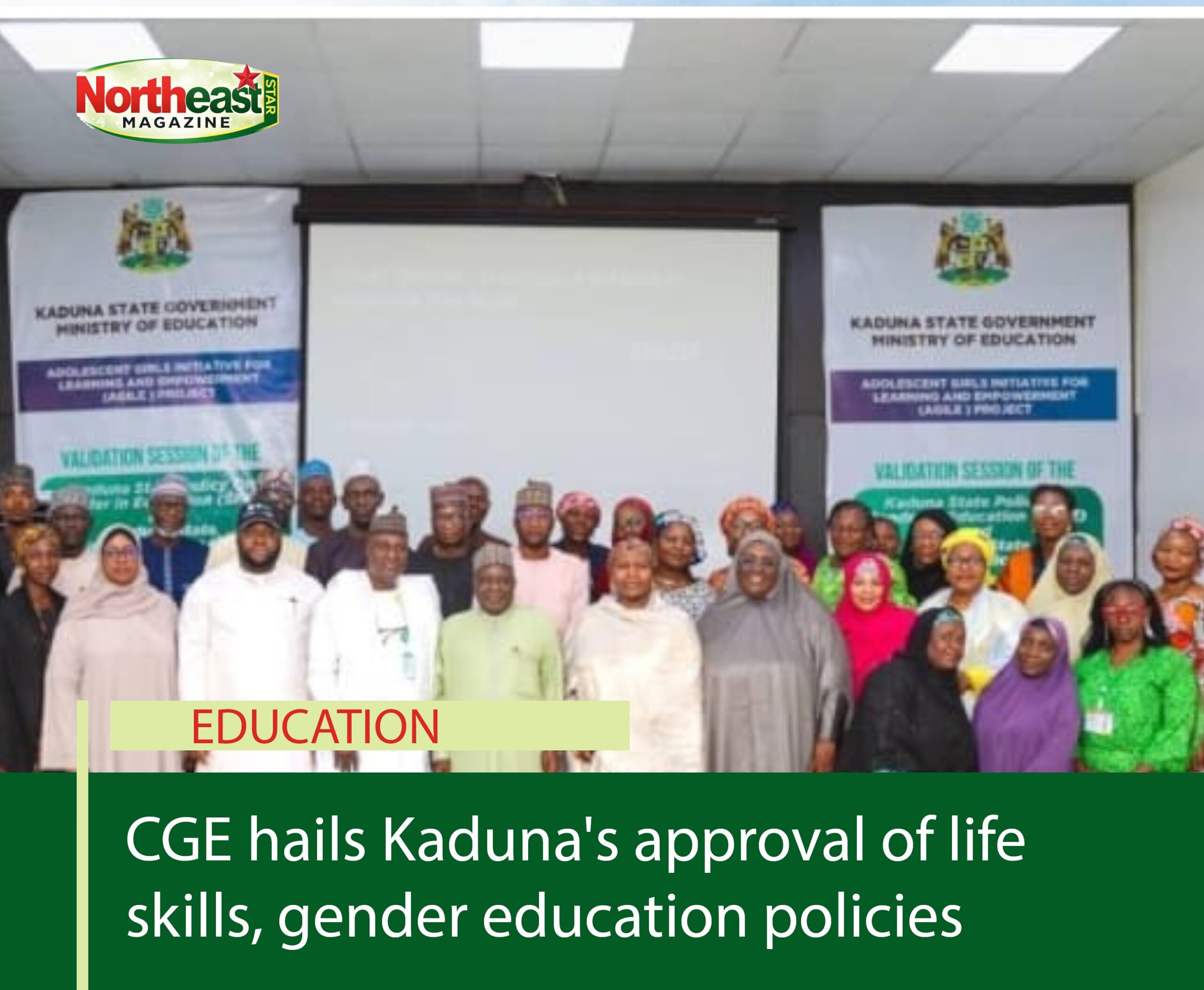
CGE hails Kaduna’s approval of life skills, gender education policies
By Aisha Gambo, Kaduna
The Centre for Girls’ Education (CGE) has commended the Kaduna State Executive Council for approving the Kaduna State Life Skills Policy and the State Policy on Gender in Education (SPGE 2026–2030).
The Executive Director of the organisation, Habiba Mohammed, made this known in a statement issued on Wednesday in Kaduna.
She said the approval marked a transition from donor-supported, time-bound interventions to a sustainable, government-led framework for delivering life skills education and promoting gender equity in schools.
According to her, the Life Skills Policy will equip young people with the knowledge, skills, attitudes and values required to succeed in education, employment and life, while the Gender in Education Policy provides a framework to promote equity, inclusion, participation, retention, completion and improved learning outcomes.
“The approval moves life skills and gender equity from the margins of the classroom into the core of Kaduna State’s education system,” she said.
Mohammed said CGE contributed to the development and validation of the policies through its system-strengthening project, which was supported by Co-Impact, the OASIS Initiative and the Malala Fund, in collaboration with the Adolescent Girls Initiative for Learning and Empowerment (AGILE) and the Kaduna State Ministry of Education.
She said the policies built on more than 18 years of the organisation’s Safe Space model, which independent evaluations showed had helped reduce child marriage, increase school enrolment and delay early marriage.
According to her, the AGILE programme in Kaduna has reached more than 127,319 girls and 6,250 boys aged 14 to 18, while over 1,400 female and male teachers have been trained as mentors.
She added that institutionalising the model through public policy would ensure that life skills education became a permanent component of the state’s education system.
Mohammed said the policies would address barriers to school access, retention and completion, particularly for girls and other vulnerable learners.
She added that they would also institutionalise life skills as a co-curricular programme, strengthen evidence-based decision-making across the state’s 23 local government areas and guarantee continuity beyond donor-funded programmes.
The executive director commended Gov. Uba Sani for providing the leadership that made the policy approval possible.
She also appreciated the Commissioner for Education, Prof. Abubakar Sani Sambo, the Kaduna State Ministry of Education, the AGILE State Project Implementation Unit, the World Bank and other stakeholders for their contributions to the process.
Mohammed reaffirmed CGE’s commitment to supporting the Kaduna State Government with technical assistance during the implementation phase, including teacher training, gender-responsive education sector budgeting and monitoring.
She said the ultimate goal was to ensure that every girl and boy in Kaduna State had the opportunity to learn, develop and thrive.
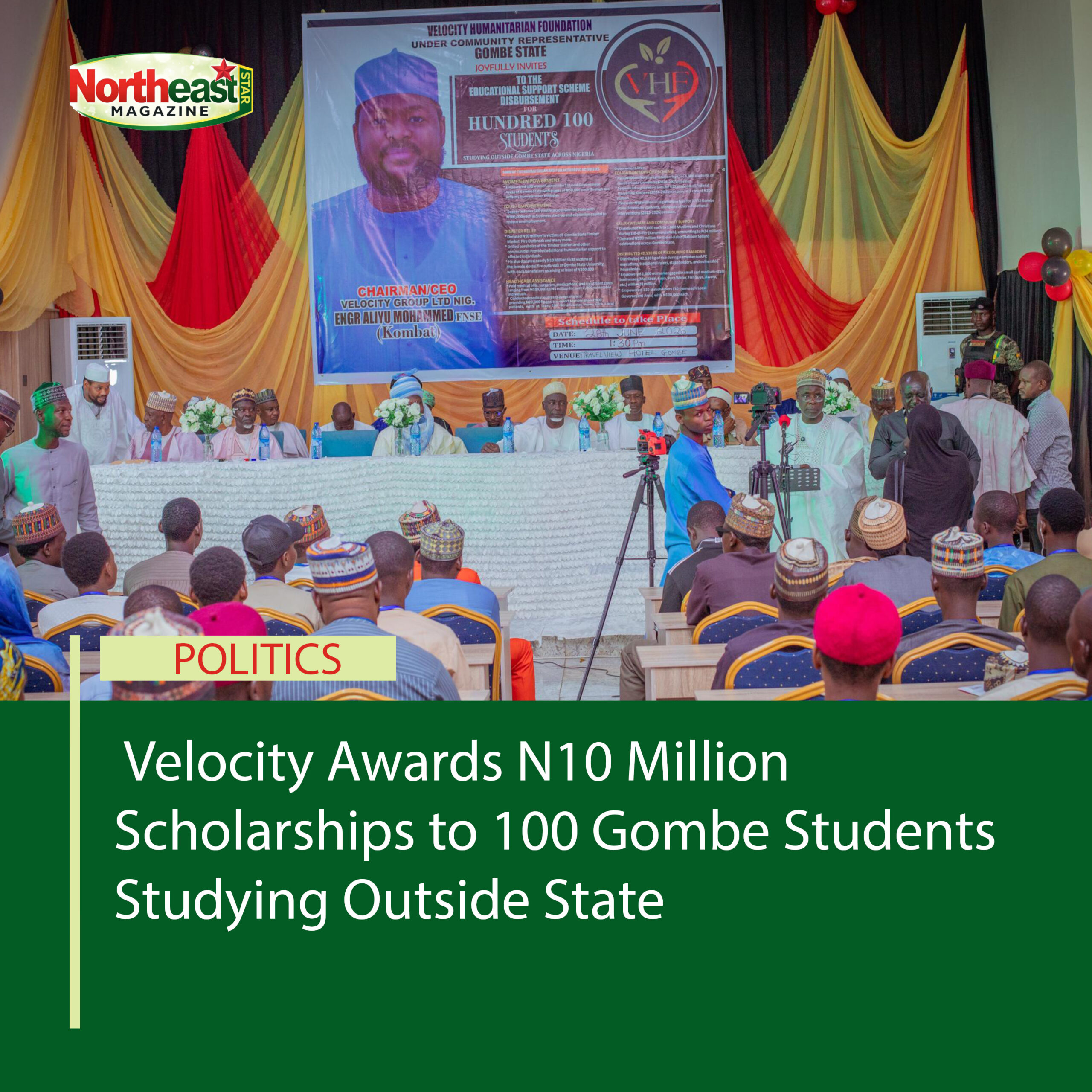
Velocity Awards ₦10 Million Scholarships to 100 Gombe Students Studying Outside State
By Auwal Ahmad, Gombe
The Velocity Humanitarian Foundation has disbursed ₦10 million in scholarships to 100 indigent students of Gombe State studying in higher institutions outside the state, as part of its commitment to expanding access to education and easing the financial burden on students.
The beneficiaries, drawn from different local government areas of Gombe State, each received ₦100,000 under the Foundation’s Educational Support Scheme (ESS), an initiative funded by philanthropist and founder of the Foundation, Engineer Aliyu Muhammad Kombat.
Speaking during the presentation ceremony on behalf of the founder, the chairman of the Velocity Humanitarian Foundation, Adamu Aliyu Ibrahim, said the organisation has consistently invested in education, healthcare and other humanitarian interventions aimed at improving the lives of residents.
“As you can see, the foundation has been rendering many services in our community. We have been paying school fees for students and settling medical bills for our citizens, among other interventions,” Ibrahim said.
He explained that the latest intervention was designed to support Gombe indigenes pursuing their education outside the state.
“We gave scholarships to 100 students, with each beneficiary receiving ₦100,000, making a total of ₦10 million. This support is specifically for Gombe State indigenes studying in institutions outside the state,” he stated.
Ibrahim disclosed that the foundation had earlier settled tuition fees for students of Gombe State University and Federal University Kashere during the 2024/2025 academic session.
“We paid the school fees of students in Gombe State University and the Federal University, Kashere, for the 2024/2025 academic session. The intervention amounted to about ₦280 million for students who could not afford their fees,” he revealed.
According to him, the selection process for the latest beneficiaries was based on proof of studentship rather than academic performance or formal applications.
“The beneficiaries were screened with their documents to confirm they are genuine students. This scholarship is not based on application or merit. Once you are a verified student from Gombe State, you qualify for consideration,” he explained.
He noted that the initiative was introduced after numerous requests from Gombe students studying in other parts of the country who felt left out of previous educational interventions.
“Many students outside the state kept calling us, saying they had seen the Foundation supporting students within Gombe and asking when it would be their turn. That informed our decision to extend the programme to them,” Ibrahim said.
Speaking on the motivation behind the foundation’s educational interventions, Ibrahim said the founder has always been passionate about giving back to society.
“The founder has always asked how he could help his people. Even many years ago, we discussed that when the opportunity came, we would dedicate ourselves to supporting those in need. Today, that vision is becoming a reality,” he added.
He urged the beneficiaries to make proper use of the financial assistance by focusing on their studies and preparing themselves to become responsible citizens capable of contributing to society.
“We expect them to use this support wisely, complete their education successfully and become people who will also help others in the future,” he said.
Also speaking, a member of the Foundation’s Community Committee, Abubakar Dazaria, described the initiative as a significant investment in the future of Gombe State.
“This is a special programme organised by the Velocity Humanitarian Foundation under the leadership of Engineer Aliyu Muhammad Kombat. It is an Educational Support Scheme designed to assist Gombe State indigenes studying outside the state,” Dazaria said.
He explained that beneficiaries were selected from various local government areas after verification of their academic records and studentship.
“Today’s disbursement of ₦10 million is just one phase of the programme.” The Educational Support Scheme is a continuous intervention, and subsequent batches will be implemented based on the decision of the Foundation’s founder,” he added.
Dazaria said the initiative reflects the foundation’s long-term commitment to supporting education and complementing government efforts to improve access to higher learning for young people in Gombe State.
Borno
Zulum Seeks Removal of FCE Gwoza Principal Officers Over Failure to Commence Academic Activities
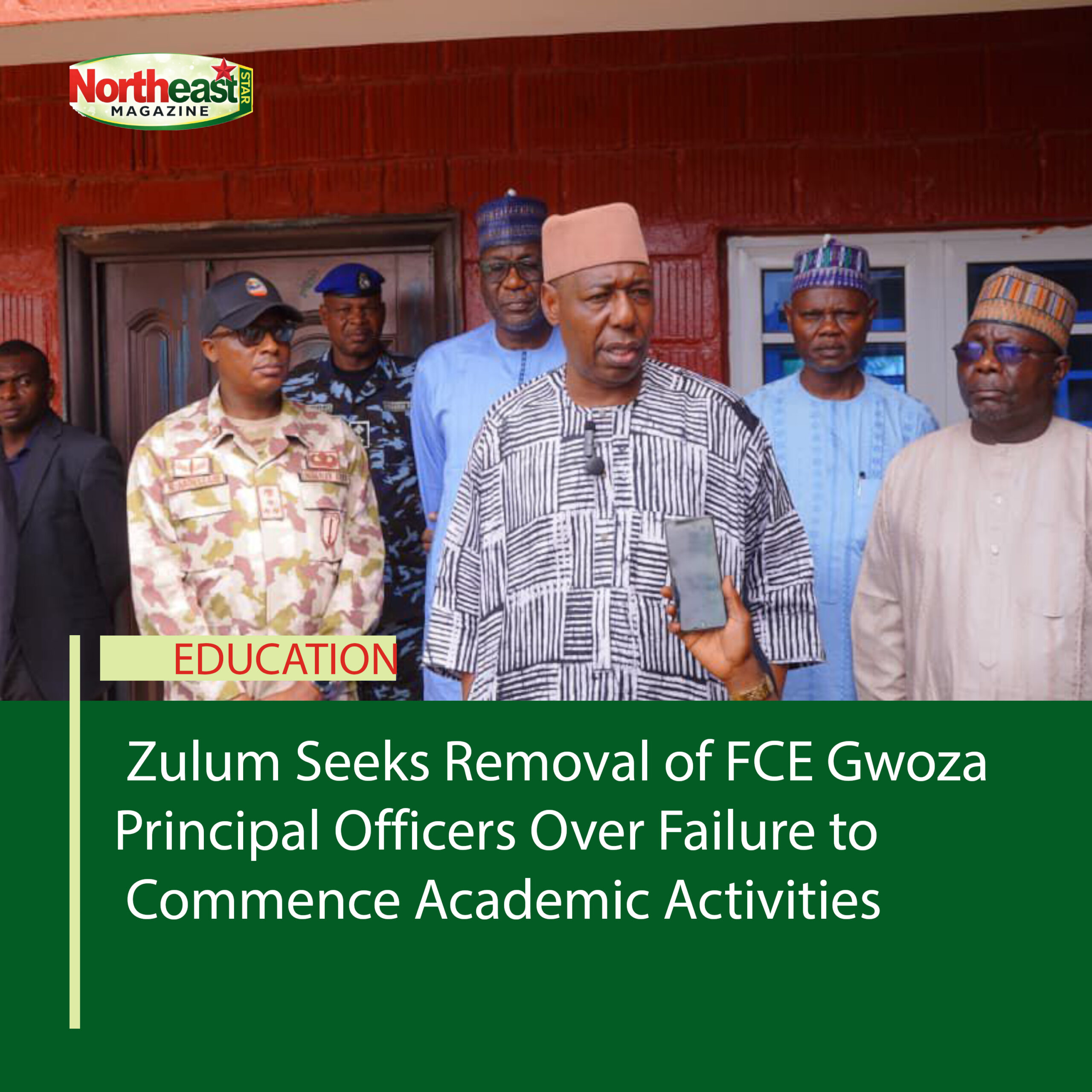
Zulum Seeks Removal of FCE Gwoza Principal Officers Over Failure to Commence Academic Activities
By tada jutha, Maiduguri
Borno State Governor Babagana Umara Zulum has expressed anger and disappointment over what he described as the poor management of the Federal College of Education (FCE), Gwoza, despite the Borno State Government’s investment of more than ₦200 million to facilitate the institution’s take-off.
During an inspection of the college, Governor Zulum faulted the institution’s leadership for failing to commence meaningful academic activities, accusing its principal officers of lacking the commitment needed to make the college operational.
The Governor recalled that the state government had released ₦200 million as a take-off grant for the 2025/2026 academic session and undertaken a comprehensive rehabilitation of the institution, which was established in 2024, to ensure it was ready to admit its first set of students.
According to him, the college, situated along the Gwoza–Mubi Road, has remained largely inactive despite the substantial support provided by the state government.
Earlier, Zulum had formally handed over the fully remodelled college to the Federal Ministry of Education during a ceremony at the Government House Council Chamber in Maiduguri. However, he said the management had failed to demonstrate the urgency and dedication required to activate the institution.
The former Teachers College Gwoza, now upgraded to a Federal College of Education, has been transformed with over 100 renovated classrooms, modern science laboratories, improved administrative offices and residential quarters for principal officers.
Beyond the rehabilitation, the Governor approved the allocation of the site in July 2023, provided a ₦200 million take-off package and constructed a housing estate comprising 12 two-bedroom apartments for academic staff. Additional staff quarters were also built to address accommodation challenges and encourage staff retention.
Despite these investments, the institution has yet to begin full academic operations.
A visibly displeased Governor Zulum questioned the commitment of the College’s leadership, saying their absence from duty reflected a lack of seriousness.
“I am not happy because this College was established about three years ago and the principal officers were appointed, especially the Provost. To my dismay, he cannot even install a 5kVA solar power system in his office. The office is deserted, none of them is here. This is a clear indication that there is no commitment to move this College forward,” he said.
He stressed that the Borno State Government would not stand by while the institution remained dormant after making significant investments.
“We have provided ₦200 million as a take-off grant and renovated almost all the buildings in the College. It is clear that there is no commitment on the part of the principal officers to drive the process and ensure academic activities commence,” the Governor added.
Governor Zulum disclosed that the state government would formally communicate its findings to the Federal Ministry of Education and recommend changes in the institution’s leadership to enable the College to begin academic programmes without further delay.
“We will forward our findings to the Federal Ministry of Education on how we can change some of the principal officers so that academic activities can resume in this school,” he stated.
The Governor reaffirmed his administration’s determination to ensure that the Federal College of Education, Gwoza, fulfils its mandate of expanding access to teacher education and contributing to educational development in Borno State and the North-East.

Gov. Inuwa Mourns CP Hassan Gwani, Describes Death as National Loss

Ashaka Cement Expansion: Inuwa Demands More Jobs for Gombe Indigenes

AC4D, Gombe Revenue Service Mobilise Stakeholders on New Tax Law, Push for Voluntary Tax Compliance

APC National Chairman Settles Gombe Central Contest, Raises DCP Ahmed’s Hand as Party’s Senatorial Candidate

The $2,500 Threshold: Why Raising Nigeria’s GDP Per Capita Is Our Best Non-Kinetic Strategy for Peace

NGX Ends Week in the Green as ₦1.54 Trillion Boosts Investors’ Fortunes
-
 Politics4 weeks ago
APC National Chairman Settles Gombe Central Contest, Raises DCP Ahmed’s Hand as Party’s Senatorial Candidate
-
 Striking the Balance6 days ago
The $2,500 Threshold: Why Raising Nigeria’s GDP Per Capita Is Our Best Non-Kinetic Strategy for Peace
-
 Economy7 months ago
NGX Ends Week in the Green as ₦1.54 Trillion Boosts Investors’ Fortunes
-

 Environment2 months ago
World Environment Day: NGO Urges Nigerians to Embrace Nature-Based Solutions Against Climate Change
-
 Sport4 months ago
Gombe Aquatic Sports Body Unveils Board, Sets Stage for Competitive Debut
-

 Economy7 months ago
CBN’s End to Cash Withdrawal Limit
-
 Politics2 months ago
APC Primary Committee Declares Gombe Senatorial Polls Credible, Transparent
-

 Column8 months ago
Formal Rebuttal to the Recent Interview Granted by Retired Major General Ali Keffi on Arise TV
Pingback: Yobe Boosts Student Support with 100% Scholarship Increase..
situs247
December 12, 2025 at 9:57 pm
Dalam beberapa tahun terakhir, sajian slot online telah maju menjadi salah satu rekreasi digital paling diminati di Indonesia.
Dengan konsep produk yang sederhana namun memberikan sensasi
kemenangan besar, slot menjadi pilihan favorit penuh pemain.