
Column
Iran, Beware the Fangs of January, the Scourge of February, and the Ides of March is a work

Iran, Beware the Fangs of January, the Scourge of February, and the Ides of March is a work (3)
by Hassan Gimba
Israel’s message to one of the intermediaries was that it would not participate in the US attack, and therefore, it asked Iran not to target Israel. This request was also met with a negative response from Iran, which explicitly stated that with the start of US military action, Israel would be attacked. This made Netanyahu threaten to attack Iran with a force “1,000 times greater than they have known”, alluding to the use of nuclear bombs. The US and Europe have been saying that Iran would use a bomb if it had one. The world has now seen who is itching to use it.
Unlike Israel, which has been in a constant state of war and attacked over eight countries last year, Iran has not attacked any country in the past 300 years, except in self-defence. Israel, in 2025 alone, attacked more countries than any other country in the world. It attacked six countries: Palestine, Iran, Lebanon, Qatar, Syria, and Yemen. It also carried out strikes in Tunisian, Maltese and Greek territorial waters with aid flotillas heading for Gaza. According to Armed Conflict Location and Event Data (ACLED), an independent conflict monitor, from January 1 to December 5, Israel carried out at least 10,631 attacks, marking one of the broadest geographic military offensives in a single year. This was in addition to repeatedly violating the ceasefire agreements made in Gaza and Lebanon, with the exception of years involving Iran.
According to ACLED, from January 1 to December 5, 2025, Israel conducted 8,332 attacks in Gaza and the occupied West Bank, 1,653 attacks in Lebanon, 379 attacks in Iran, 207 attacks in Syria, 48 attacks in Yemen, one attack in Qatar, two attacks in Tunisian waters, and one attack each in Maltese and Greek waters.
However, in a conflict, the US would try to keep its key forces, like aircraft carriers, hundreds of kilometres away to avoid Iran’s anti-ship missiles. It would also defend its regional bases vigorously. But Iran would rally its regional allies to pressure the US from multiple fronts.
Iran’s terrain would be impossible to conquer – an obvious advantage. The Persians are, of course, technologically advanced and are particularly ahead of everyone else in the realm of asymmetric warfare. The Iranian leadership foresaw the current scenario years ago. It identified the U.S. military’s most obvious weaknesses and developed an effective doctrine accordingly: hypersonic missiles, drone swarms, and a light/fast navy.
Imagine a squadron of F-18 pilots returning to land on the USS Lincoln while the carrier is desperately engaged in evasive manoeuvres under attack from swarms of drones in the air and mini-submarines below. It is not going to work; it just can’t work.
But what do Trump and Netanyahu want? According to Iran’s Foreign Minister, Abbas Araqchi, “The United States’ demands that Iran eliminate its stockpile of uranium and commit to zero enrichment are unrealistic. Their demands regarding our missile program and our support for our allies are non-negotiable. Iran will not subjugate itself to any foreign dictates. We are an independent nation, and we determine our course.”
The terms are clear and arduous. Iran is expected to fully abandon its nuclear program, stop missile development, or produce missiles whose range would not surpass 500 kilometres, cut ties with regional armed groups, and accept strict U.S. control and inspections. In return, Washington offers possible sanctions relief and the promise of no military attack. No firm guarantees. No equal ground. Sounds like demands, rather than negotiation – what the Islamic Revolutionary Guard Corps termed “surrender dressed up as diplomacy”.
The demands, when looked at carefully, are all just about Israel, and there is no talk of the Iranian people they want “to help”. The lifting of sanctions was “possible”, and a 500 km cap wouldn’t reach Israel.
Meanwhile, the US persists in providing Israel with an extensive arsenal of lethal weapons. Israel last year attacked Iran, unprovoked, killing scores of its generals and scientists.
Trump once claimed that “all nuclear sites in Iran have been completely destroyed and/or obliterated…it would take years to bring them back into service…” but in contradiction, he now insists that he wants to strike the nation’s nuclear sites. His Defence Secretary, Pete Hegseth, also claimed they dealt the “final blow” to Iran’s nuke ambitions. But now, just like with Venezuela, the narrative has changed.
Iran has responded by offering negotiations under one condition: equal rules for all regional powers. Tehran proposes a nuclear-free Middle East, including restrictions on Israel’s weapons. But America, no doubt at the behest of Israel, has rejected the proposal.
One may ask, what happened to the deal, the Joint Comprehensive Plan of Action (JCPOA) signed by Iran and the US, UK, France, Russia, China, and Germany, with the explicit intention of preventing Iran from obtaining a nuclear weapon while simultaneously reintroducing the regime into the international community?
The International Atomic Energy Agency (IAEA) was to be guaranteed access to inspect and monitor sites, including potentially “undeclared” sites, through a defined dispute-resolution system.
In return, Iran would receive substantial sanctions relief, including the unfreezing of billions of dollars in Iranian assets and foreign currency reserves.
True diplomacy, exemplified by a brilliant and well-constructed attempt by a genuine statesman, Barack Obama, brought traditional adversaries to the table to find common ground in the pursuit of global peace.
Netanyahu, in particular, aggressively criticised the deal as a “historic mistake” and urged Republicans to oppose it during a speech to Congress while Obama was still President; this pressure contributed to Trump’s decision to withdraw from the deal, which he called “the worst deal ever” in 2018.
The Europeans, Chinese, and Russians attempted to continue the deal without the U.S., but Trump not only reimposed sanctions, he also added new ones. Initially, Iran complied with the agreement; however, after about a year of inaction, it began to incrementally breach the terms and recommence enrichment programmes that had been halted under the deal.
The Siamese twins and the system handling them are aware of what they are doing. They are engaged in a strategic manoeuvre. Through the collapse of Iran, they aim to achieve three things: corner the world’s oil and gas for the US, bring China to its knees, and cut off Russia from the South. That would effectively nip the emerging multipolar world in the bud, and the world would come under the hegemon’s dictatorship, with everyone else an underling.
While they are doing all they can to isolate Iran internationally through the cancellation of invitations to international events and destroy its economy through sanctions, Iran must muster efforts to counter that, especially from an economic perspective. It can no longer rely on the old idea of rules-based order. Recent events in Gaza, in particular, along with unilateral actions against international law by the Siamese twins and their tag team leaders, have demonstrated that the rules-based international order is flawed and that transnational institutions have failed to uphold their principles, resulting in a loss of relevance.
Iran may need to consider adopting the Chinese currency, even if only for a limited period. The Chinese currency is strong and cannot be undermined in the same way that America and the West have undermined Iran’s currency.
Yet all that Trump is doing is American policy; it does not matter whether the president is a Democrat or a Republican. Trump is just being too obvious. Call it crude, unpolished, insensitive, or by whatever name; that’s the aim of America, the tiger, and Israel, the tail that wags it. It’s their policy. They are just being desperate now because the writing is on the wall: it is the desperation of a dying empire – the last kicks of a dying horse.
Concluded.
Hassan Gimba is the publisher and CEO of Neptune Prime.
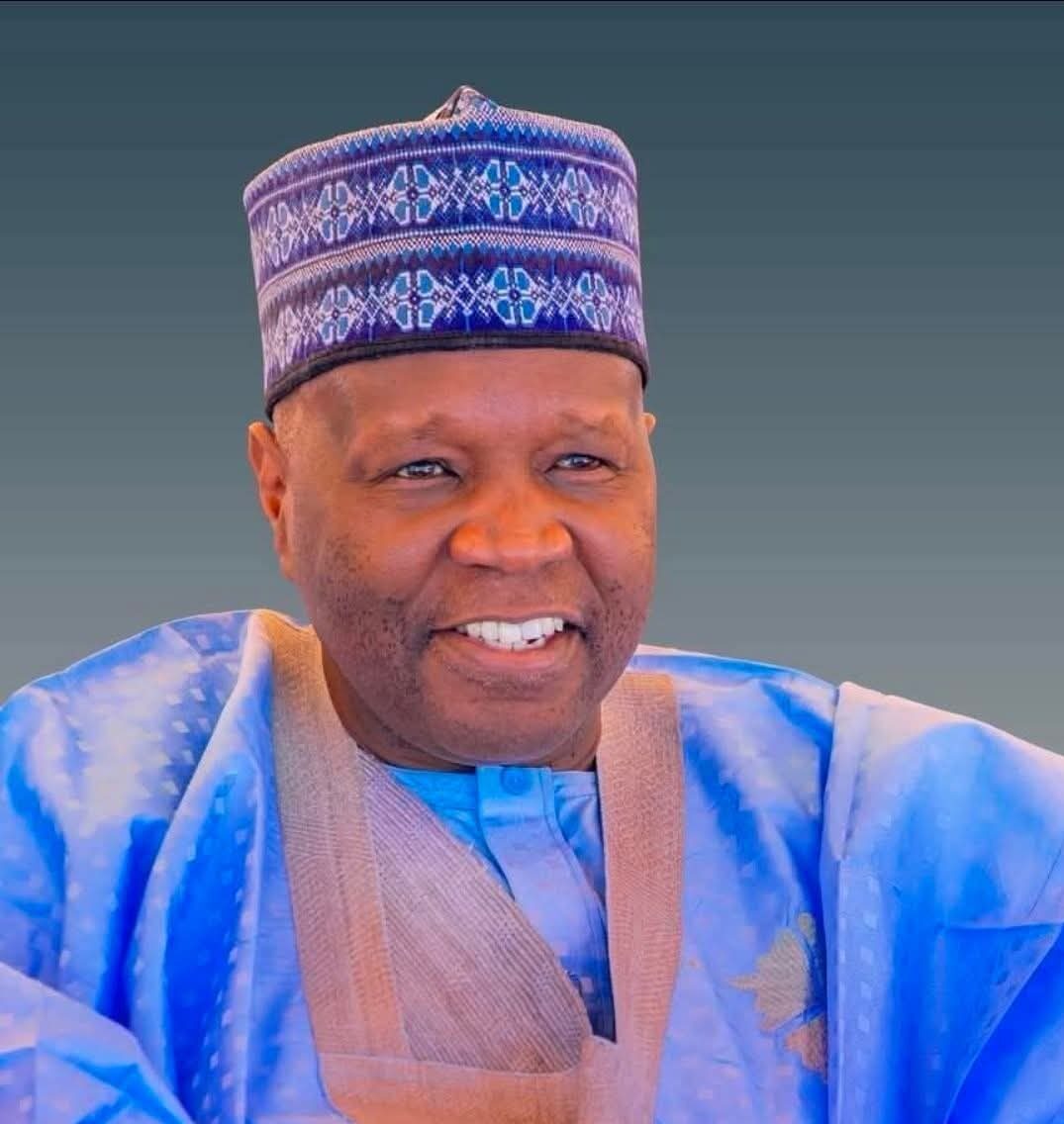
Inuwa Yahaya, NSGF and the Renewed Northern Resolve
By Ismaila Uba Misilli
The resolutions from the recent meeting of the Northern States Governors’ Forum (NSGF) in Abuja, chaired by Gombe State Governor Muhammadu Inuwa Yahaya, CON may well mark a turning point in the North’s response to its long-running security and development crises.
For a region that has spent the better part of the last decade battling insurgency, banditry, kidnapping, communal violence and economic disruption, the significance of this renewed collective resolve cannot be overstated.
What stands out in the Forum’s latest deliberations is not just the acknowledgement that the security situation has shown measurable improvement since its last meeting in December 2025 but the insistence that such gains must not breed complacency.
This is perhaps the most important lesson Northern leaders appear to have embraced: insecurity is not defeated by episodic military gains alone but by sustained political coordination, strategic financing and institutional continuity.
The decision to operationalise the Northern States Security Trust Fund, with each state contributing N1 billion monthly, is arguably one of the boldest regional security financing initiatives in recent Nigerian history.
This fund could be the game changer, as it will provide the North with a dependable mechanism for supporting intelligence gathering, rapid response logistics, surveillance systems and other complementary interventions that federal structures alone have struggled to deliver consistently.
The fact that some states have already begun making contributions sends a strong message that governors appreciate the urgency of moving from declarations to measurable commitments.
Security threats in the North do not respect state boundaries. A weak link in one state often becomes a direct threat to neighbouring territories. This situation is why the success of the Trust Fund depends on the size of the commitment and the discipline of compliance, as well as the integrity of its governance framework and the transparency of its accountability mechanisms.
Beyond security financing, the Forum’s parallel decision to invest in a permanent secretariat deserves equal attention.
The decision may seem administrative on the surface, but it is, in reality, a strategic institutional reform. Regional forums in Nigeria often lose momentum because decisions are tied too closely to individuals and political tenures. By building a functional secretariat backed by structured contributions, the NSGF, under Inuwa Yahaya, is laying the foundations for policy memory, continuity, and stronger coordination beyond electoral cycles.
This institutional strengthening is critical because the North’s challenges are too complex for ad hoc politics.
Perhaps nowhere is the need clearer than in the Forum’s sustained advocacy for state police, an issue that has moved from abstract constitutional debate to practical necessity.
The North’s security realities have exposed the limitations of an overly centralised policing architecture. Local threats require local intelligence. Communities under siege need security structures that understand their terrain, social dynamics and conflict triggers.
The NSGF’s continued push for state policing therefore reflects a realism grounded in the daily experiences of affected communities.
In this regard, President Bola Ahmed Tinubu deserves credit for engaging the National Assembly on the constitutional reforms required to make the proposal a reality. The president’s willingness to support the legal framework for state policing is quite in line with a growing national consensus that the old model is increasingly inadequate.
Still, the governors are right to look beyond the immediate manifestations of violence. One of the strongest points in the NSGF chairman’s remarks was his recognition that insecurity in the North is inseparable from poverty, illiteracy, unemployment and underdevelopment. This is a truth often repeated but rarely acted upon with the seriousness it deserves.
A region with millions of out-of-school children, high youth unemployment rates, and weak economic opportunities cannot sustainably secure itself through force alone. We must address the social conditions that create vulnerability to recruitment by criminal and extremist groups with the same urgency as military operations.
This is why investments in education, human capital development and youth enterprise are not secondary to security; they are central to it.
The same logic applies to the recurring farmer-herder conflicts that tend to intensify with the onset of the rainy season. By backing the federal government’s livestock transformation agenda, northern governors appear to be embracing a more structural solution to one of the region’s most persistent conflict drivers.
If modern livestock systems, ranching methods, and better agricultural practices are taken seriously, the North could turn a major cause of seasonal violence into a way to improve rural wealth.
What the latest NSGF meeting ultimately reveals is a growing recognition among Northern leaders that the region’s problems require a combination of security reform, institutional resilience, economic inclusion and political unity.
For too long, responses to Northern Nigeria’s crises have been fragmented, reactive and overly dependent on federal rescue. But the new posture, championed by Governor Inuwa Yahaya, suggests a shift towards shared ownership and regional responsibility.
Gombe 2027: As Major Contenders Jostle To Succeed Governor Yahaya
By Kabir Musa
As political discourse intensifies across Gombe State, public attention is increasingly shifting toward the potential successors of the current administration of Governor Inuwa Yahaya in the 2027 general election. No doubt, the governor has left an indelible footprint in the sands of history in Gombe, the “Jewel in the Savannah”, a state that’s enviably becoming the economic hub of not only the northeast but the entire northern Nigeria. Gov. Inuwa’s astronomical performance in the last seven years has further redefined possibilities.
Not only has Governor Yahaya transformed Gombe infrastructurally, Gombe has also become a melting point of ethnic and religious tolerance. Need I reiterate the importance of peace and stability in any progressing society? Yet, all the progress of the last 7 years will amount to nothing if a befitting successor who will continue with the beautiful policies and programmes of Governor Yahaya does not succeed him.
So, as the party navigates this critical juncture, the focus and indeed, the imperative for identifying a candidate who can build on Governor Yahaya’s legacy and propel Gombe State forward can never be overemphasised.
Here, the notion that a leader’s success is often measured by the competence of their successor becomes a timeless adage that’s both instructive and contingent. Given the governor’s high-stake performance in the last seven years, top contenders for his job must present credentials giving them the qualities of a successor worthy enough to take over the mantle of leadership in the state.
But as always, the quest for a worthy successor is not only delicate; it has been fraught with dangerous consequences. In this sense, therefore, Governor Yahaya’s administration is, at this material time, being put to the test, as the APC seeks to identify the successor that would carry the torch forward. The party’s decision will likely be influenced by factors such as the aspirant’s ability to maintain stability, build on existing projects, and inspire confidence among the diverse population of the state.
To land the right man for the job, a major consideration of the party must be the candidate’s vision for the state’s future, their commitment to the APC’s values, and their ability to connect with the electorate. Other key considerations must include the candidate’s track record, their network and alliances within the party, and their ability to navigate the complexities of Gombe’s politics, but most importantly, the preferred candidate must command acceptability across boards.
The chosen candidate will be expected to know how to balance the expectations of various stakeholders, including the governor, party leaders, and the people of Gombe. While this may appear simple, it is, in fact, the difference between a successor who understands his role as a runner in the governance marathon and one who works at cross purposes.
Ultimately, the APC’s decision will have far-reaching implications for the future of Gombe State. So far, several aspirants have signified interest from within the party, which suggests that the governor’s legacy is in good hands. Each of these individuals has diverse skills and experiences, which bode well for the state’s future.
However, because Governor Yahaya’s own legacy is also at stake, his ability to produce a competent successor will be seen as a reflection of his leadership and its sustainability. Therefore, a successful transition will cement his place in Gombe’s history as a leader who not only delivered results but also ensured continuity by handing over to suitable replacement.
As the APC embarks on this journey, it must take note that the people of Gombe State are observing closely, eager to see who will succeed the governor and chart the state’s course for the next chapter. So, there’s little margin for error.
The thinking then must be that the would-be successor commands a unique strength, such as experience in governance, finance, and youth empowerment. The APC has emphasised that the choice of successor will be a collective decision, prioritising continuity and stability.
As it stands, the APC is spoilt for choice with an array of hopefuls and prominent contenders currently dominating the headlines. While some have practically shown interest, albeit officially, political pundits have started mentioning names. These include the arc. Yunusa Yakubu, a distinguished architect. Yunusa Yakubu has built a reputation for designing vital public infrastructure, including schools and government conference centres. Political analysts suggest that his professional expertise in urban development, combined with a growing grassroots appeal, makes him a formidable “technocrat” candidate.
Another name going around is that of Dr Abdulsalam Yahaya Ahmed, who is being considered for his “homegrown” approach to investment. While many members of the elite focus on Abuja or Lagos, he has prioritised local development in Gombe. As a former MD/CEO of Federal Mortgage Bank and Board Member of NATFUND, he oversaw significant infrastructure projects, including but not limited to the provision of housing infrastructure (Gombe Investment housing estate, Labour Quarters, Babayo Goje housing estate, among others) and job creation for hundreds of Gombe indigenes in the Federal Government.
In his role as Executive Director, Operations, of NEDC, Dr Abdulsalam oversaw the construction and rehabilitation of many schools, hospitals and roads/bridges; the installation of solar streetlights; and the provision of boreholes as well as the distribution of palliatives where and when needed. His philanthropic efforts in food security have earned him the reputation of a leader who is deeply connected to the masses.
Also, Sa’idu Ahmed Alkali, the current Federal Minister of Transportation, brings significant national weight to the race. His experience in the federal cabinet and his established influence within the Gombe political landscape provide him with a strong foundation to mobilise support during the party primaries. He was a senator representing the Gombe North senatorial district for two terms before he was appointed minister by President Bola Tinubu’s administration.
Still from the same local government area as Senator Alkali, a prominent APC stalwart, Dr Bello Maigari (Tafidan Dukku) is said to be nursing ambition and may throw his hat in the 2027 race. Though he maintains a low profile locally, Dr Bello Maigari is a power player in the nation’s capital. Serving in various federal capacities, he is known to have a very close relationship with President Bola Ahmed Tinubu. This proximity to the presidency, coupled with his administrative experience, positions him as a high-stakes contender for 2027.
There are also some who have decided to keep their ambitions close to their chest, maybe for strategic reasons. One of them is the present accountant general of the state, Aminu Yuguda. Yuguda is believed to be in the race, as his posters have been seen in several parts of the state even as his supporters have since begun a push towards actualising such a dream. As the current accountant general of Gombe State, Aminu Yuguda holds a strategic position. His deep understanding of the state’s fiscal management and the inner workings of the current administration makes him a candidate to watch. Analysts believe his grasp of governance logistics provides him with a unique advantage.
Also, Jamilu Gwamna’s unprecedented stay in the state and the fanfare that greeted his APC membership validation and subsequent donation of a huge sum to the various organs of the party, among other factors, suggest that Dr Jamilu Ishyaku Gwamna is also in the race, though, like others, he is yet to make any official statement. Dr Jamil is a well-known figure in Gombe politics. His legacy is tied to youth empowerment. During his tenure in the power sector in Kano, he was credited with securing jobs for numerous Gombe youths. His track record as a major employer of labour in the state continues to fuel his popularity among the younger demographic.
Another strong contender, perhaps the strongest of the lot as far as those yet to declare their interest is concerned, is Prof. Isah Ali Pantami, the former Minister of Communications and Digital Economy. Pantami is a household name nationally. Known for his academic brilliance and structured leadership style, Pantami appeals to voters who prioritise intellectual sagacity and a modernised approach to governance. He also was in Gombe and was welcomed by a mammoth crowd during the APC membership revalidation exercise. This was at a time speculations were rife that he might join the opposition ADC. Yet, his recent activities, including donating to the party, appear to have to rest all the speculations and strengthen the people’s belief that he’ll be in the race.
There’s also Sarkin Fulani Gombe, a seasoned financial expert and politician. Sarkin Fulani Gombe boasts an extensive network that spans local, national, and international circles. His ability to bridge the gap between traditional influence and modern financial expertise makes him a highly influential factor in the 2027 calculations.
A smooth and seamless selection process for the Gombe APC governorship candidate can yield significant advantages. When a party presents a united front, with candidates emerging from primaries with minimal rancour, the opposition is left with fewer scandals to exploit. This is particularly crucial in Gombe, where the APC is seeking to build on Governor Inuwa Yahaya’s legacy and secure another term in office with a lineup of competent candidates.
In politics, perception is key, and a harmonious primary process can create a powerful narrative of party unity and strength. This can boost the eventual candidate’s momentum, allowing them to focus on key campaign issues rather than internal party squabbles. A united party also enhances the candidate’s credibility and legitimacy, making it more challenging for opponents to gain traction.
Conversely, a contentious primary can provide the opposition with valuable ammunition, creating divisions and weakening the party’s structure. When internal conflicts spill into the public domain, it distracts from the key campaign issues and erodes the candidate’s credibility. The opposition can capitalise on these divisions, exploiting the ruling party’s vulnerabilities and gaining an advantage in the process.
The Gombe APC can learn from past experiences, prioritising a peaceful and inclusive selection process to ensure a strong, united front for the 2027 elections. By doing so, the party can minimise opposition attack points, showcase its unity and strength, and focus on delivering its message to the people. Ultimately, a smooth transition will be crucial in securing another term in office and continuing the progress made under Governor Yahaya’s administration.
For the APC, getting it wrong is not an option. It’s, however, left to be seen how it can manage the expectations of all the array of qualified and competent contenders in its ranks.
Musa writes from T/Wada, Gombe.
The Gombe Blueprint: Cultivating Peace Through Land Reform
By Shu’aibu Usman Leman
Across the vast stretches of Nigeria, the escalating friction between farmers and pastoralists has transitioned from a localised concern into a profound threat to the nation’s social and economic stability. What was once an occasional rural dispute has increasingly evolved into violent confrontation, undermining food security and weakening the fragile stability of rural communities.
At a time when Nigeria is grappling with inflation, food shortages and economic uncertainty, disruptions in agricultural production carry consequences far beyond the villages where they occur. The farmer-herder conflict has therefore become not only a security issue but also a pressing national development challenge.
Yet within this complex national landscape, Gombe State is emerging as a compelling example of how proactive governance can transform a longstanding conflict into an opportunity for reform. The state is demonstrating that foresight, rather than force, can manage rural tensions through deliberate land-use policies and renewed engagement with traditional institutions.
Historically, farmers and pastoralists maintained a relationship characterised by mutual dependence rather than hostility. For generations across the Sahel, both groups developed a system of seasonal cooperation that allowed each to benefit from the other’s activities.
Pastoralists migrated with rainfall patterns, guiding their livestock across designated corridors and grazing fields after harvest. By doing this, cows ate leftover crops and added organic manure to the soil, which naturally got the land ready for the next planting cycle.
This delicate balance functioned as an unwritten but respected agreement that sustained agricultural productivity across large parts of northern Nigeria. Communities understood the rhythm of movement, and traditional mediation resolved conflicts long before they escalated.
However, the pressures of modern development have gradually strained their once harmonious relationship. Rapid population growth has significantly expanded farmland, pushing cultivation into areas that historically served as grazing routes.
At the same time, environmental challenges have intensified the problem.
Desertification, driven by climate change and unsustainable land use, has steadily reduced grazing resources in northern zones, forcing pastoralists to move further south in search of pasture.
These migrations frequently bring livestock into direct contact with farms at critical stages of crop development. A single incident of cattle straying into cultivated fields can easily destroy months of labour, turning minor disputes into emotionally charged confrontations.
Compounding the situation is the widespread availability of small arms and the erosion of traditional conflict-resolution mechanisms. Where elders once intervened to settle disputes swiftly, mistrust and insecurity now allow disagreements to escalate dangerously.
Recognising the dangers of reactive responses to such crises, the administration of Governor Muhammadu Inuwa Yahaya has adopted a more preventative strategy. Instead of responding only after violence erupts, the state government has begun addressing the structural causes of the conflict.
Central to this approach is the implementation of the state government’s White Paper on Grazing Reserves and Cattle Routes as well as farmer–herder relations.
This policy framework represents a deliberate effort to restore order and clarity in land management across rural communities.
Under the supervision of the White Paper Implementation Committee, chaired by Retired AIG Babaji Sunday, the state has embarked on the painstaking task of identifying and re-establishing traditional cattle routes, locally known as bolari.
By clearly demarcating these corridors, the government aims to reduce accidental encroachment and provide pastoralists with recognised pathways for livestock movement. This simple but crucial step removes one of the most common triggers of rural conflict.
Alongside the restoration of grazing routes, the state has also intensified efforts to protect grazing reserves and forest areas from illegal encroachment. Safeguarding these designated lands ensures that both farming and pastoral activities can continue without unnecessary overlap.
As preparations intensify for the 2026 farming season, the urgency of these reforms has become increasingly evident. Rather than waiting for tensions to surface during planting or harvesting periods, the state has chosen to act well in advance.
Equally significant is the government’s decision to involve traditional institutions in implementing these policies. In many rural communities, the authority of emirs, district heads and village chiefs remains stronger than that of distant bureaucratic structures.
By working closely with these leaders through sensitisation campaigns and community dialogue, the government has transformed policy directives into locally understood and accepted rules. This partnership ensures that communities respect boundaries not just out of legal obligation, but also through communal consensus.
Such engagement reinforces an important truth about rural governance: that sustainable peace often emerges from dialogue and cultural understanding rather than enforcement alone.
When communities feel ownership of the rules guiding their livelihoods, compliance becomes far more natural.
The reforms also reflect a broader shift in attitudes toward environmental management. Forest and game reserves are no longer viewed simply as idle land waiting to be exploited but as strategic assets essential for ecological stability.
Protecting these ecosystems helps slow the advance of desertification and preserves grazing areas that might otherwise disappear. In this way, environmental stewardship becomes a powerful tool for preventing future conflict.
Encouragingly, early indicators suggest that these measures are already yielding positive results. Reports from agricultural authorities point to a noticeable decline in violent encounters across several farming communities within the state.
While challenges remain, including demographic pressures and the risk of conflicts spilling over from neighbouring regions, Gombe’s experience provides a helpful lesson to other states confronting similar tensions.
Clarity in land management is indispensable, but clarity alone is insufficient without consistent implementation. Policies need political will, administrative discipline, and community involvement to work.
The emerging model in Gombe shows that the convergence of these elements can transform long-standing rural conflicts into opportunities for cooperation and shared prosperity.
If sustained, this approach could restore the delicate balance that once defined relations between the hoe and the herd, fostering a collaborative environment where farmers and herders work together to enhance agricultural productivity and reduce conflicts. More importantly, it offers hope that Nigeria’s agricultural heartlands can once again become zones of productivity rather than battlegrounds of competition.
– Shu’aibu Usman Leman is the former National Secretary of the Nigeria Union of Journalists (NUJ).

Gazargamu Emir Dies at 80 in Egypt After Prolonged Illness

Zulum Applauds Tinubu, Ribadu, Security Forces as 434 Ngoshe Abductees Regain Freedom

Zulum Moves to Complete Legacy Projects

World Environment Day: NGO Urges Nigerians to Embrace Nature-Based Solutions Against Climate Change

NGX Ends Week in the Green as ₦1.54 Trillion Boosts Investors’ Fortunes

Dangote Launches Landmark ₦1 Trillion Scholarship Scheme to Support 1.3 Million Nigerian Students
-
 Environment4 days ago
World Environment Day: NGO Urges Nigerians to Embrace Nature-Based Solutions Against Climate Change
-
 Economy6 months ago
NGX Ends Week in the Green as ₦1.54 Trillion Boosts Investors’ Fortunes
-
 Education6 months ago
Dangote Launches Landmark ₦1 Trillion Scholarship Scheme to Support 1.3 Million Nigerian Students
-

 Economy6 months ago
CBN’s End to Cash Withdrawal Limit
-
 Politics3 weeks ago
APC Primary Committee Declares Gombe Senatorial Polls Credible, Transparent
-
 Column6 months ago
Formal Rebuttal to the Recent Interview Granted by Retired Major General Ali Keffi on Arise TV
-
 Sport2 months ago
Gombe Aquatic Sports Body Unveils Board, Sets Stage for Competitive Debut
-

 Gombe6 months ago
Gombe Shines Again, Ranks Second in Northeast at 2025 PHC Leadership Challenge