
Latest News
APC Picks Ex- KEDCO Gwamna as Consensus Candidate for 2027 Gombe Governorship Race


APC Picks Ex- KEDCO Gwamna as Consensus Candidate for 2027 Gombe Governorship Race
By Auwal Ahmad Umar
The All Progressives Congress (APC) in Gombe State has settled for Dr Jamilu Ishiyaku Gwamna, a former Managing Director of Kano Electricity Distribution Company (KEDCO), as its consensus governorship candidate for the 2027 general election.
The decision was reached at an expanded stakeholders’ meeting held on Sunday and presided over by the party leader in the state and governor of Gombe, Muhammadu Inuwa Yahaya.
Party insiders said the meeting, which drew participation from key stakeholders, including party executives and elected officials, unanimously endorsed Gwamna as the party’s preferred flagbearer ahead of the polls.
The gathering also ratified consensus candidates for other key positions, including the three senatorial districts, six House of Representatives seats and all 24 State House of Assembly constituencies.
As part of the resolutions, Governor Yahaya was endorsed for the Gombe North Senatorial District, while DCP Ahmed Jarman Deba emerged for Gombe Central. Hon. Jerry Damara was adopted for Gombe South Senatorial District.
For the House of Representatives, the party selected Hon. Fatima Binta Bello for Kaltungo/Shongom, Hon. Ali Isa JC for Billiri/Balanga, and Hon. Sadam Bello for Gombe/Kwami/Funakaye. Hon. Jamilu Shabewa was picked for Dukku/Nafada, Inuwa Garba for Yamaltu/Deba, and Hon. Usman Bello Kumo for Akko Federal Constituency.
However, notable political figures were absent from the meeting. Those not in attendance included the minister of transport, Sa’idu Ahmad Alkali, and the former minister of communications and digital economy, Isa Ali Ibrahim Pantami, both of whom are believed to be aspirants for the governorship seat, as well as Senator Muhammad Danjuma Goje, who currently represents the Gombe Central Senatorial District.
Their absence has fuelled political speculation within party circles, with observers suggesting it may reflect ongoing consultations and differing interests ahead of the party’s final alignments.
Party sources, however, maintained that the consensus arrangement was designed to strengthen unity and minimise internal disputes, noting that consultations were still ongoing to ensure inclusivity across all blocs of the APC in the state.
The move signals an early consolidation strategy by the ruling party as it prepares for what is expected to be a competitive 2027 electoral contest in Gombe State.
By Auwal Ahmad Umar
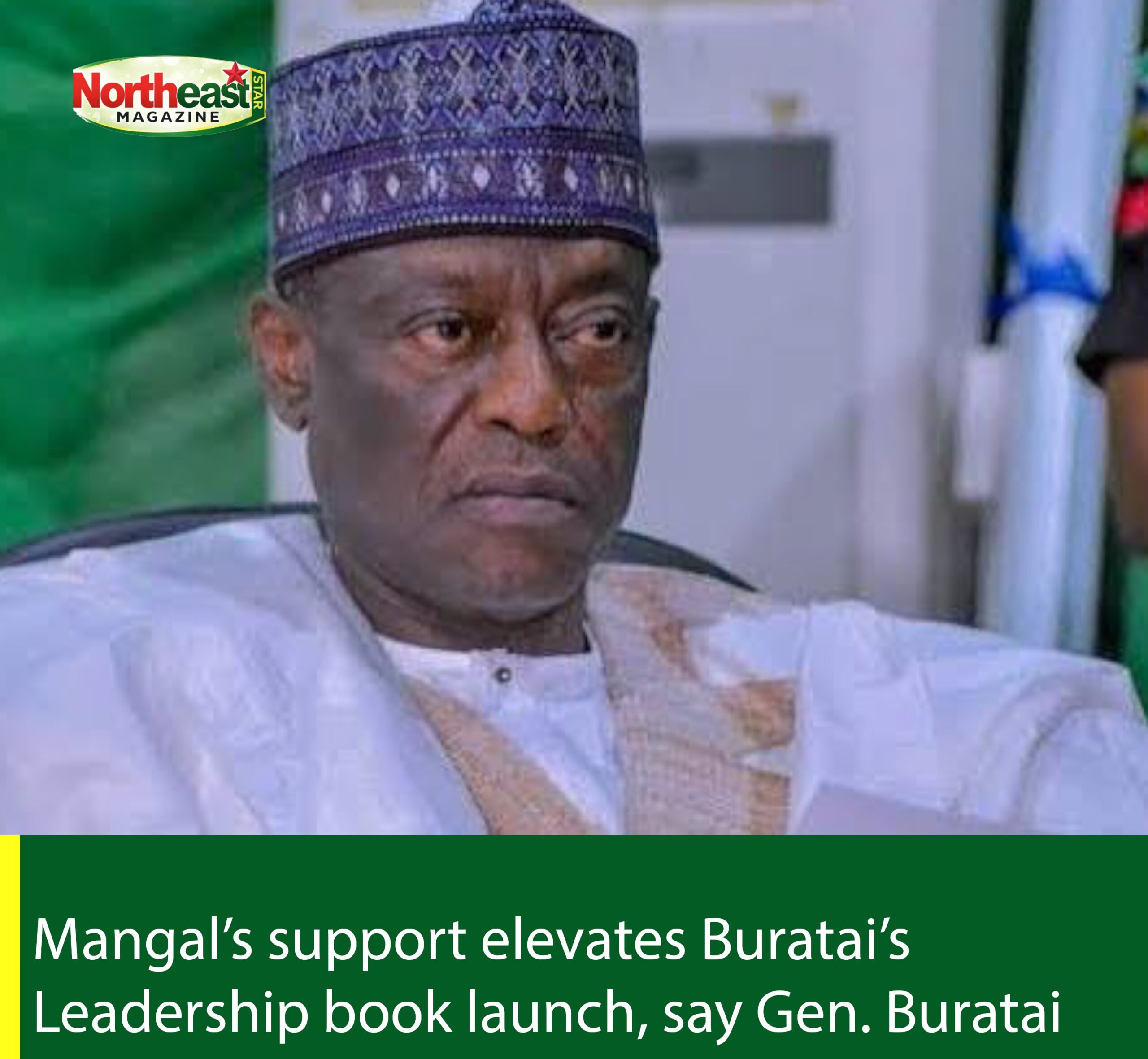
Former Chief of Army Staff, Lieutenant General Tukur Yusufu Buratai (Rtd), has expressed appreciation to Alhaji Dr. Dahiru Barau Mangal, CON, for his support towards the launch of Transformational Leadership in Action: The Buratai Era.
Mangal, founder of and a prominent businessman with interests spanning aviation, oil and gas, was the Chief Launcher of the book.
He was represented at the event by Alhaji Inuwa Baba, CON, a former presidential aide who served under multiple administrations.
Buratai described Mangal’s support as a significant contribution to the success of the book launch, noting that his participation added value to an occasion centred on leadership, service and national development.
The former Army Chief also acknowledged Mangal’s contributions to Nigeria’s private sector and his philanthropic activities across the country.
According to Buratai, Mangal’s entrepreneurial journey and commitment to supporting initiatives of national importance reflect some of the leadership values highlighted in the book.
“His support for the launch of Transformational Leadership in Action: The Buratai Era elevates the occasion beyond measure,” Buratai said.
He expressed gratitude to Mangal for accepting to serve as Chief Launcher and for his continued support.
“We are deeply grateful, Chief Launcher, for your presence and your support,” Buratai added.
By Tada Jutha, Maiduguri
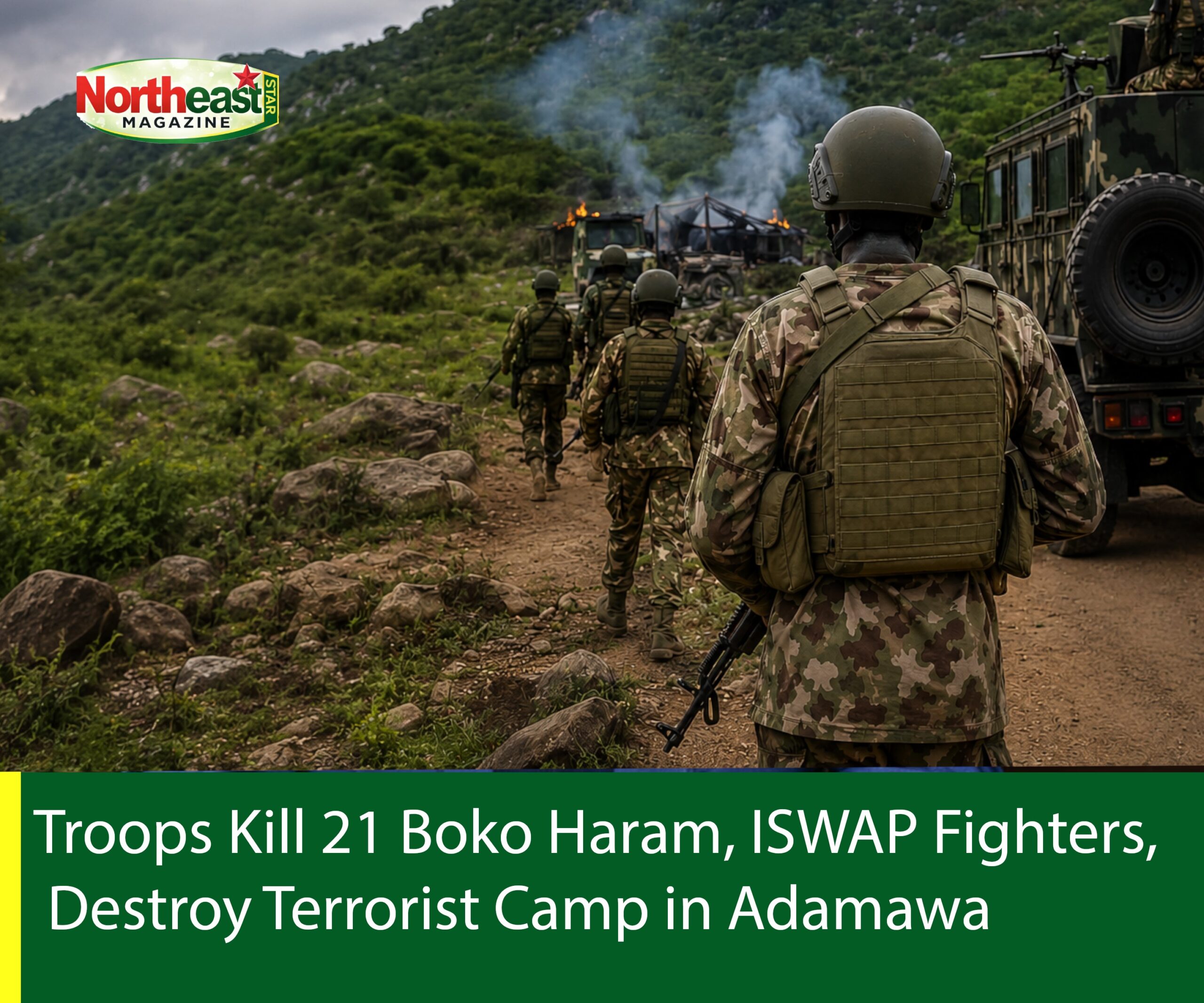
Troops conducting counter-terrorism operations in Adamawa State have killed more than 21 suspected Boko Haram and Islamic State West Africa Province (ISWAP) fighters during an offensive around the Kopre Mountain area of Hong Local Government Area.
The operation, conducted by troops of Operation Hadin Kai (OPHK) alongside the Office of the National Security Adviser’s Tactical Team and personnel of the 226 Battalion, followed intelligence indicating the presence of terrorists in the mountainous terrain.
The Acting Media Information Officer of Operation Hadin Kai, Capt. Mohammed Goni, disclosed this in a statement on Thursday.
According to him, troops moved into the difficult terrain in the early hours of Wednesday and engaged the terrorists in two separate encounters.
“More than 21 suspected terrorists were killed, while others escaped with gunshot wounds,” the military spokesman said.
Goni said the troops subsequently overran the terrorists’ camp, destroying structures, equipment and supplies believed to have been used to sustain their activities in the area.
Items destroyed during the operation included motorcycles, bicycles and jerry cans containing petrol, which the military said were part of the terrorists’ logistical network.
The troops also recovered several weapons and ammunition, including AK-47 rifles, magazines and a substantial quantity of 7.62mm ammunition.
The latest offensive is part of intensified military efforts to locate civilians abducted from communities in the North-East and disrupt terrorist networks operating across the region.
The military said the operation was linked to efforts to trace victims abducted from the Mussa community and the Lassa school following separate incidents reported in 2026.
Hong Local Government Area, characterised by rugged mountains and extensive forest cover, has remained challenging for security forces because of the terrain, which can provide hiding places for armed groups.
The military has increasingly relied on intelligence-driven operations, supported by ground troops, to locate terrorist hideouts, destroy their logistics and rescue civilians held by insurgents.
Goni assured that Operation Hadin Kai would sustain its offensive against terrorist groups, with particular attention to locating abducted persons and dismantling camps and supply routes used by the insurgents.
By Auwal Ahmad Umar
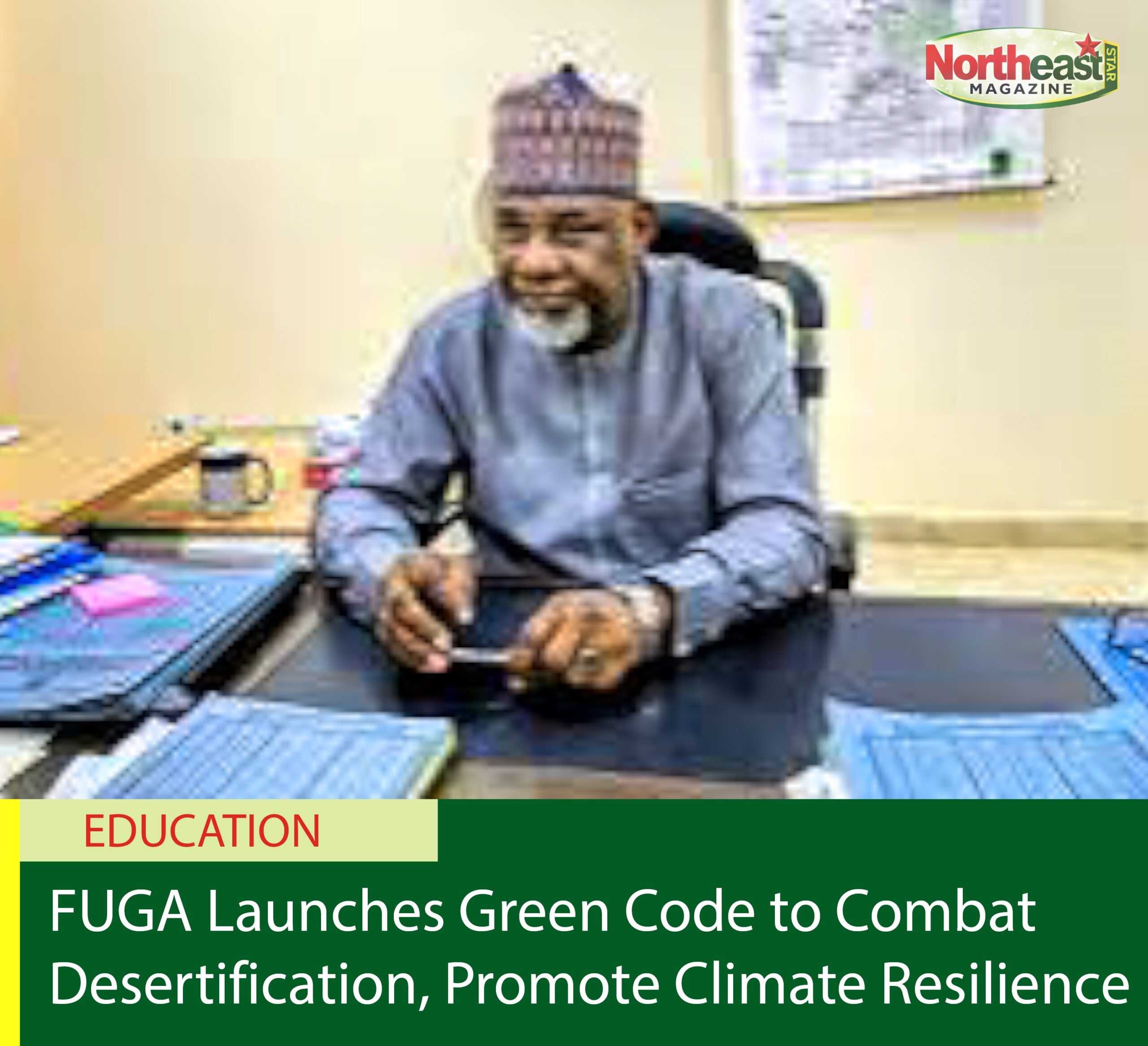
The Vice-Chancellor of the Federal University Gashua (FUGA), Professor Yaqub Ahmed Geidam, has officially launched the FUGA Green Code (FGC), an institutional environmental initiative aimed at combating desertification, restoring vegetation and promoting climate resilience through tree planting.
This was contained in a press statement signed by Adamu Saleh, Deputy Director, Information and Public Relations of the University made available to Northeast State Magazine in Damaturu.
The initiative was launched on Saturday, August 15, 2026, at the University under the theme “Restoring the Climate through Tree Planting.” The ceremony was attended by the Mai Bade, representatives of the Federal and Yobe State Governments, members of the University community, development partners, traditional leaders, students, members of the host community, and the media.
Speaking at the occasion, Professor Geidam described the FUGA Green Code as more than a tree-planting campaign, calling it a long-term institutional commitment to environmental restoration, sustainability and climate action.
He noted that the realities of climate change and desertification in Yobe State were evident in declining vegetation, exposed soil, rising temperatures, wind erosion and increasing pressure on natural resources. As a university situated within the fragile Sudano-Sahelian environment, he said, FUGA could not afford to merely discuss environmental challenges without taking practical steps to address them.
The Vice-Chancellor explained that the initiative was designed not only to increase tree cover but also to restore degraded land, protect the environment, improve the University campus, restore biodiversity and cultivate a culture of environmental responsibility among staff, students and the wider community.
He said the University was determined to transform FUGA into a model Green Campus for the Nigerian dryland environment, where sustainability would be practised and demonstrated, not just taught in classrooms.
Professor Geidam noted that purposeful action, scientific knowledge, innovation and community participation could help restore the environment despite the challenges posed by the Sahelian climate. Addressing students, he urged them to take ownership of the initiative through the FGC Student Ambassadors Programme, which is expected to produce environmental champions and climate advocates among the student population.
He challenged them to embrace the slogan “One Student, One Tree,” stressing that planting a tree was only the beginning—nurturing it to maturity was the real measure of success.
“You must become not merely tree planters, but tree custodians. Every tree you plant should become a living symbol of your contribution to the future,” he said.
Professor Geidam also called for partnerships with government agencies, development organisations, the private sector, civil society organisations, environmental institutions, traditional leaders and host communities to expand the impact of the initiative, saying such collaborations would focus on tree planting, environmental research, climate education, innovation, capacity building and community engagement.
He emphasised that the University’s environmental responsibility extended beyond its campus, noting that FUGA and its host communities shared the same environment and faced similar climate-related challenges.
He therefore expressed the University’s readiness to work with traditional institutions, farmers, youths, community organisations and other stakeholders to extend the FUGA Green Code beyond the University.
Professor Geidam assured that Management was committed to making the initiative a long-term institutional programme rather than a one-day campaign, and would support research, partnerships, student participation, staff engagement and community involvement.
He described the FUGA Green Code as the University’s response to desertification, a contribution to climate resilience and an investment in the wellbeing of present and future generations.
In his welcome address, the Chairman of the FUGA Green Code Committee, Professor James Ishaku Dantata, described the initiative as more than a tree-planting campaign a collective commitment to environmental stewardship, climate resilience, combating desertification, restoring biodiversity and building a model green campus for future generations.
Professor Dantata noted that FUGA was located within a fragile Sahel ecosystem, and that the initiative aimed to encourage members of the University community and neighbouring communities to become custodians of nature by planting, nurturing and protecting trees while promoting sustainable environmental practices.
He stressed that the success of the FUGA Green Code would not be measured by the number of trees planted on launch day, but by the number that survived through sustained care and protection, urging the University community to embrace the spirit of “Plant, Protect and Preserve.”
“As we formally launch the FUGA Green Code today, let this day be remembered as the day we collectively resolved to transform our campus into a thriving symbol of environmental sustainability and climate action,” he said.
Signed:

NUJ Urges INEC to Equip Journalists With Electoral Laws, Procedures Ahead of 2027

Mangal’s Support Elevates Buratai’s Leadership Book Launch, Says Gen. Buratai

Buratai Hails Tinubu, Emir of Kano, Mangal, Others for Supporting Book Launch

APC National Chairman Settles Gombe Central Contest, Raises DCP Ahmed’s Hand as Party’s Senatorial Candidate

Gombe Eyes Livestock-Led Economic Growth as Inuwa Yahaya Meets Minister

Gombe Aquatic Sports Body Unveils Board, Sets Stage for Competitive Debut

-
 Politics3 months ago
APC National Chairman Settles Gombe Central Contest, Raises DCP Ahmed’s Hand as Party’s Senatorial Candidate
-
 Agriculture2 months ago
Gombe Eyes Livestock-Led Economic Growth as Inuwa Yahaya Meets Minister
-
 Sport6 months ago
Gombe Aquatic Sports Body Unveils Board, Sets Stage for Competitive Debut
-

 Economy10 months ago
NGX Ends Week in the Green as ₦1.54 Trillion Boosts Investors’ Fortunes
-

 Striking the Balance2 months ago
The $2,500 Threshold: Why Raising Nigeria’s GDP Per Capita Is Our Best Non-Kinetic Strategy for Peace
-

 Economy10 months ago
CBN’s End to Cash Withdrawal Limit
-

 Education10 months ago
Dangote Launches Landmark ₦1 Trillion Scholarship Scheme to Support 1.3 Million Nigerian Students
-

 Environment4 months ago
World Environment Day: NGO Urges Nigerians to Embrace Nature-Based Solutions Against Climate Change