Economy
CBN’s End to Cash Withdrawal Limit

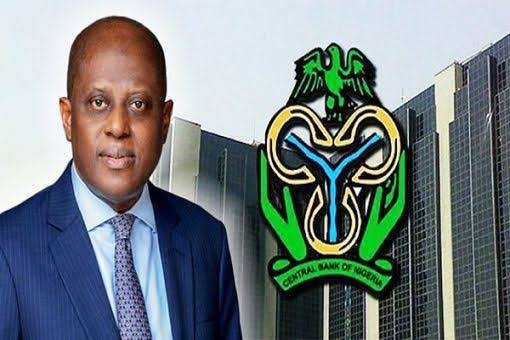
CBN’s End to Cash Withdrawal Limit
By Bulus Garba
Last week, the Central Bank of Nigeria (CBN) officially wound down one of its most talked-about financial regulations: the cash withdrawal limit policy. The rule, introduced in late 2022, had shaped the way millions of Nigerians accessed their money. The decision to discontinue it has been widely welcomed, not only because it eases everyday transactions, but also because it reflects the evolving leadership style of the current CBN Governor, Olayemi Cardoso.
The move signals that Nigeria now has a central bank willing to review its own decisions in light of new realities. It sends a message that policies, no matter how well-intentioned, are not sacred texts or cast in stone and must be periodically reassessed. Under Cardoso, the CBN is demonstrating that responsible leadership requires listening to citizens, watching the market closely, and adjusting course when necessary.
When the withdrawal limit policy was introduced, it placed strict caps on how much cash individuals and businesses could take out. Individuals were limited to ₦100,000 per week, while corporate bodies could only withdraw ₦500,000 weekly. Any attempt to exceed these limits would attract processing fees of 5 percent for individuals and 10 percent for organisations. The idea was to accelerate Nigeria’s transition toward a cashless society, reduce corruption, curb vote-buying, and create a stronger digital payment culture.
To be fair, the policy did have its benefits. It forced many Nigerians who preferred staying outside the formal banking system to open accounts, embrace fintech platforms, or rely more heavily on digital transfers and POS services. It expanded digital financial activity in a way the country hadn’t seen before. At the time, it made sense within the CBN’s broader strategy.
But even good policies must retire when their usefulness expires. Cardoso and the current management team eventually came to the conclusion that the withdrawal limit policy no longer aligned with Nigeria’s present economic realities. With that, the CBN removed the caps entirely, allowing Nigerians to access their funds without the previous weekly restrictions.
Many have described this decision as both timely and pragmatic. Critics who feared it might hinder Nigeria’s cashless ambition often overlooked one central truth: no institution understands the Nigerian money market better than the CBN. This knowledge is crucial to understanding that the bank is not abandoning the push for digital payments. It simply means recognising that Nigeria cannot force a cashless revolution overnight, especially when the infrastructure supporting such a system remains inconsistent.
The informal sector, which accounts for more than 65 per cent of Nigeria’s economy, still depends heavily on cash. From traders and farmers to artisans and transport operators, thousands of transactions happen daily in places where network failures, power outages, or digital service disruptions are common. Keeping rigid withdrawal limits under these conditions would only frustrate businesses and slow economic activity. In the long run, it could even erode confidence in the financial system.
Cardoso’s leadership has been characterised by an openness to engagement since his emergence. Since assuming office, he has worked to restore public trust at the apex bank, particularly after a turbulent period characterised by cash scarcity, conflicting signals, and widespread anxiety. His approach has focused on stabilising monetary policies, improving regulatory clarity, strengthening collaboration with the government, and sustaining efforts toward financial inclusion.
The CBN’s work with fintech innovators remains a key part of this progress. Nigeria still has a significant unbanked population, and digital platforms are playing a crucial role in bridging that gap. And no, removing the withdrawal limit does not undo the gains already made; it simply prevents financial inclusion from becoming a burden to those trying to survive in a tough economy. A cashless future is still the goal, but Cardoso is saying it must be gradual, realistic, and built on systems that work for everyone.
Feedback on the decision has been very positive. Since the announcement, many Nigerians have taken to social platforms and public conversations to praise the CBN for being responsive. Rarely does a major policy shift elicit widespread relief instead of confusion. People are calling Cardoso thoughtful, measured, and willing to listen, qualities that were badly needed at the apex bank.
Beyond easing access to cash for businesspeople in the informal sector, the decision to end the policy also sends a positive signal to investors. It indicates that the CBN is committed to economic stability, not dogmatic enforcement. It suggests that Nigeria is ready to rebuild confidence in its financial institutions and create an environment where policies serve the economy rather than stifle it.
In this sense, the winding down of the cash withdrawal limit is more than a regulatory update; it is a sign of the CBN’s evolving maturity. It demonstrates that Cardoso’s leadership is anchored on responsiveness, humility, and a firm grasp of the economic landscape. It acknowledges the needs of ordinary Nigerians while positioning the country for long-term growth.
Indeed, if the present is the tone that will define future monetary policy, then for the first time in a long while, Nigerians can look at the apex bank and feel that someone is paying attention.
Garba writes from Abuja.

Lafarge Africa Breaks ₦1 Trillion Barrier as 2025 Profit Soars by 170%
By Auwal Ahmad Umar
Lafarge Africa Plc has posted a historic financial performance for the 2025 financial year, crossing the ₦1 trillion revenue mark for the first time as profit figures surged sharply on the back of operational efficiency and strong market demand.
The cement manufacturer reported revenue of ₦1.1 trillion, representing a 53 per cent increase from the ₦696.8 billion recorded in 2024. The milestone underscores the company’s growing footprint in Nigeria’s building and construction sector.
Profit Before Tax climbed by 170 per cent to ₦411 billion, while Profit After Tax rose significantly from ₦100.1 billion in 2024 to ₦273 billion in 2025 — a 173 per cent leap.
Operating profit also strengthened, rising from ₦193 billion to ₦392 billion, driven by strong revenue growth and sustained cost-efficiency measures. Earnings per share increased from ₦6.22 to ₦17, reflecting improved returns to shareholders.
The company attributed the strong performance to higher sales volumes, disciplined cost optimisation, improved plant reliability, enhanced distribution networks, retail expansion and prudent financial management.
Speaking on the results, the Chief Executive Officer, Lolu Alade-Akinyemi, described 2025 as a defining year for the company.
“Our full-year results demonstrate the strength of our four-point strategy and disciplined execution. Crossing the ₦1 trillion net sales threshold represents a historic achievement for Lafarge Africa. The substantial growth in operating profit and profit after tax reflects our focus on operational excellence, efficiency and long-term value creation,” he said.
Alade-Akinyemi expressed optimism about the company’s outlook for 2026, noting that collaboration with Huaxin would further strengthen industrial capacity and market positioning.
“We remain prudent in capital allocation and cost management, while strategically positioning the business to take advantage of emerging opportunities. Our scale, resilience and strategic clarity provide a strong foundation for sustainable growth,” he added.
The CEO also thanked employees, customers, investors and other stakeholders for their continued support, noting that their partnership reinforces the company’s commitment to delivering consistent value.
As part of its growth drive, Lafarge Africa recently unveiled plans to expand its Ashaka cement plant in Gombe State and its Sagamu plant in Ogun State. Upon completion, the Ashaka plant’s capacity will rise to two million tonnes per annum, while Sagamu’s capacity will increase to 3.5 million tonnes annually. The expansions are expected to raise the company’s total installed production capacity to 14 million metric tonnes per annum.
Looking ahead, the company said its priorities for 2026 include improving capacity utilisation, deepening sustainability practices, strengthening value creation and maintaining industry-leading health and safety standards.
With its latest performance, Lafarge Africa has reinforced its position as a major player in Nigeria’s cement industry, setting a new benchmark for growth and profitability in the sector.
Lafarge Africa Commends Nationwide Distributors with Premium Rewards in Lagos
By Auwal Ahmad Umar
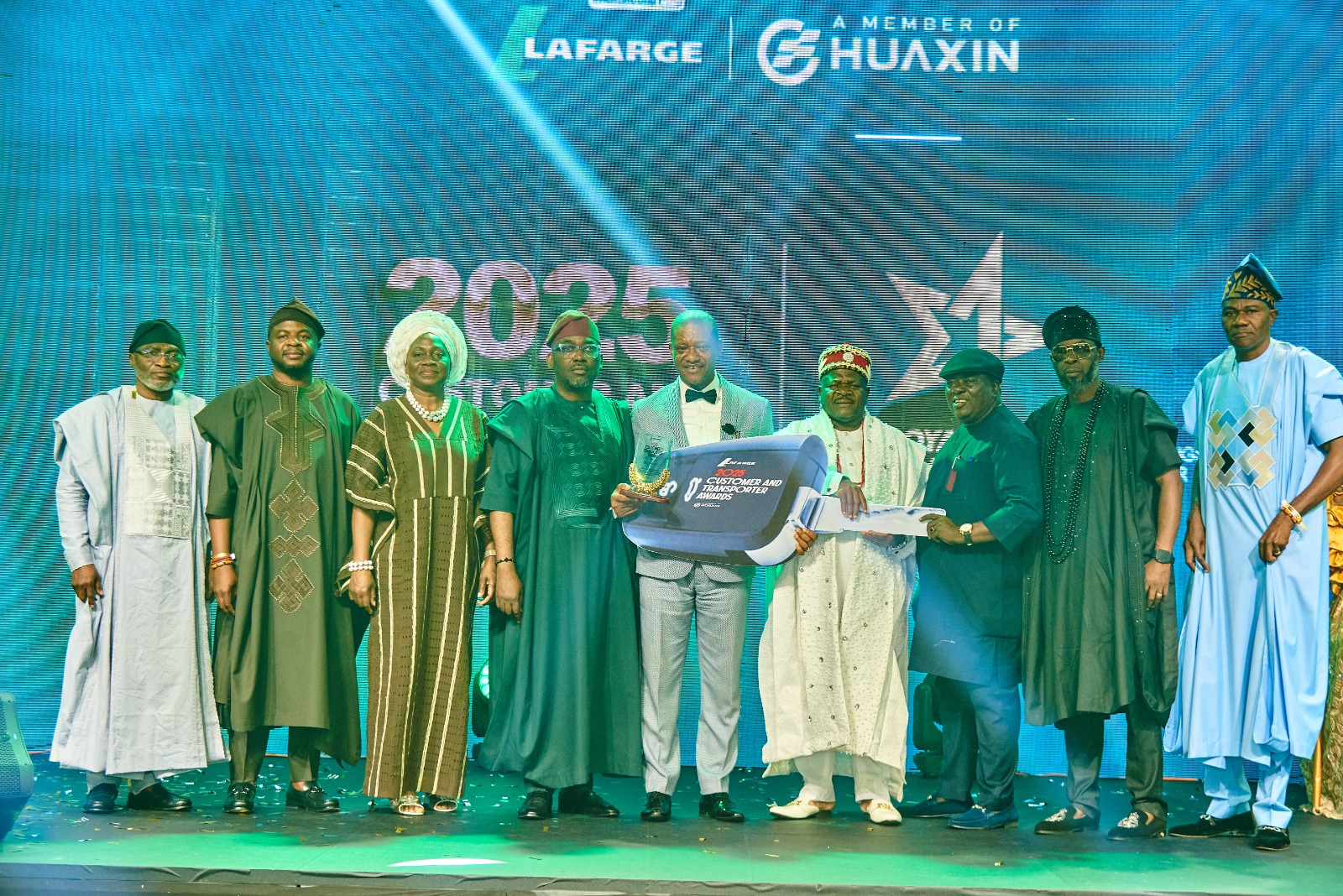
Lafarge Africa Plc has celebrated its top-performing customers and transporters at the 2025 Customer and Transporter Awards, recognising outstanding contributions that have strengthened its market presence across Nigeria.
The colourful ceremony, held on February 21 at the Landmark Event Centre in Victoria Island, Lagos, brought together major stakeholders, industry players and government officials to honour partners whose dedication has driven the company’s commercial success.
Among dignitaries present were the Lagos State Commissioner for Housing, Hon. Moruf Akinderu Fatai, and the Cross River State Commissioner for Women Affairs, alongside members of the Lafarge Africa Board including Mrs. Adenike Ogunlesi, Mrs. Olusola Oworu and Mrs. Elenda Osima-Dokubo, as well as management and staff of the company.
The annual awards, regarded as a highlight of Lafarge Africa’s commercial calendar, celebrate customers and transporters who ensure the company’s cement and building solutions reach markets nationwide. The 2025 edition spotlighted resilience, integrity and performance in a challenging economic environment.
Elder Ubong Bassey Obot of Ubotex Nigeria Limited emerged as the National Volume Champion, clinching the star prize — a 2026 Toyota Land Cruiser. Igwe Cosmas Ezeumeh Chizoba of C.C. Umeh and Sons Limited secured first runner-up with a 2026 Toyota Prado, while Chief Etim Effiong Okon of Batoframoje Enterprises took second runner-up, receiving a 2026 Toyota Fortuner.
In the transport category, B.I.G MultiQuest Nigeria Limited was named National Winner, Best Transporter, and went home with a 2026 Toyota Hilux.
Two National Growth Champions were rewarded with 15KVA generating sets, while four regional champions each received Toyota RAV4 vehicles. Other prizes presented during the ceremony included a Changan CS55, GAC S3, Hyundai Creta cars, 13KVA solar inverters, 80-inch Hisense televisions and deep freezers.
Welcoming guests, the Group Managing Director and Chief Executive Officer, Lolu Alade-Akinyemi, expressed appreciation to partners for their unwavering support and loyalty.
He said the company’s achievements in 2025 were closely tied to the strength of its partnerships, noting that Lafarge Africa expanded its retail footprint, enhanced customer experience and strengthened its ready-mix operations during the year. He added that the company also introduced innovative products such as Ecoplanet Elephant and Ecocrete, low-carbon cement and concrete solutions aimed at promoting sustainability in the building sector.
According to him, these milestones would not have been possible without the trust, market insights and consistent backing of customers and transporters.
Also speaking, Commercial Director Gbenga Onimowo described customers and transporters as “trade champions” whose commitment and belief in the company’s products have sustained its leadership in the industry. He noted that the awards were designed not only to recognise excellence but also to inspire greater achievements.
Similarly, Logistics Director Osaze Aghatise commended transport partners for serving as the vital link between the company and its customers, ensuring efficient delivery and nationwide availability of products. He said the recognition was both a celebration of performance and a motivation to maintain high standards.
The ceremony featured the presentation of multiple award categories, lively entertainment and networking opportunities, underscoring the spirit of collaboration that continues to define Lafarge Africa’s relationship with its trade partners.
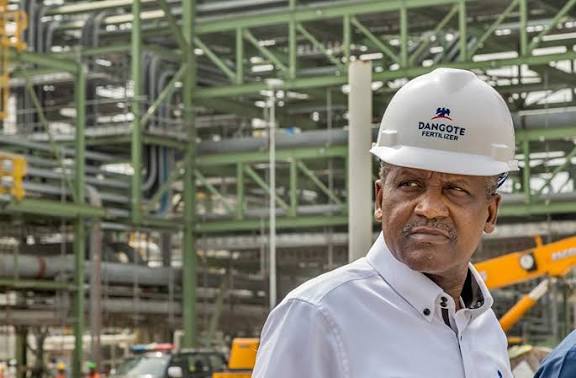
Dangote Refinery Debunks Shutdown Rumours, Assures Nigerians of Steady Petrol Supply
By Auwal Ahmad Umar
Dangote Petroleum Refinery has dismissed widespread reports suggesting it is planning a shutdown for maintenance, describing the claims as false, misleading and designed to misinform the public.
In a statement issued on Monday, the refinery clarified that its operations remain stable and uninterrupted, with the capacity to supply between 40 million and 50 million litres of Premium Motor Spirit (PMS) daily, depending on market demand. It disclosed that on January 4 alone, the facility produced 50 million litres of petrol, while 48 million litres were evacuated through its gantry.
According to the refinery, current stock levels are sufficient to cover more than 20 days of national consumption, effectively putting to rest fears of fuel scarcity.
Addressing concerns about maintenance activities, Dangote Refinery explained that routine work on some units, including the Crude Distillation Unit (CDU) and the Residual Fluid Catalytic Cracking (RFCC) unit, does not disrupt overall production. This, it said, is due to the refinery’s advanced and integrated design. Other critical units such as the Naphtha Hydrotreater, CCR Reformer and Hydrocracker remain fully operational, producing PMS, Automotive Gas Oil (diesel) and Jet A-1.
The company further revealed that from December 16, 2025, to date, daily PMS loadings from its gantry have ranged between 31 million and 48 million litres, in line with prevailing market demand. It noted that these figures are verifiable through depot loading records kept by the Nigerian Midstream and Downstream Petroleum Regulatory Authority (NMDPRA).
Dangote Refinery also reaffirmed its ex-gantry price of N699 per litre for petrol, stressing that the rate is available to all marketers and bulk buyers. It urged filling stations and large-scale consumers to patronise locally refined products, which it said are more affordable, reliable and of superior quality compared to imported fuel.
The refinery accused some fuel importers of spreading false narratives to justify recent increases in pump prices, warning that such actions undermine national interest and worsen the burden on Nigerians. It argued that without local refining capacity, petrol prices could soar as high as N1,400 per litre in a post-subsidy market.
According to the statement, the operations of the Dangote Refinery have played a key role in stabilising the downstream petroleum sector by curbing price volatility, conserving foreign exchange and strengthening Nigeria’s energy security.
Reaffirming its commitment to the country, the refinery pledged to continue supplying high-quality petroleum products, ensuring steady availability and supporting economic growth. It advised the public and industry stakeholders to ignore unverified reports and rely on credible information sources.
Dangote Petroleum Refinery concluded that it remains focused on serving the national interest by promoting energy independence, market stability and industrial development in Nigeria.

Kebbi Police Arrest 10 Over Killing, Abduction in Birnin Kebbi

Goje Not Leaving APC, Aide Dismisses Defection Rumour as ‘Cheap Political Mischief’

Alkali Resigns as Transport Minister, Eyes Governorship Bid

Dangote Launches Landmark ₦1 Trillion Scholarship Scheme to Support 1.3 Million Nigerian Students

NGX Ends Week in the Green as ₦1.54 Trillion Boosts Investors’ Fortunes

Formal Rebuttal to the Recent Interview Granted by Retired Major General Ali Keffi on Arise TV
-
 Education4 months ago
Dangote Launches Landmark ₦1 Trillion Scholarship Scheme to Support 1.3 Million Nigerian Students
-
 Economy4 months ago
NGX Ends Week in the Green as ₦1.54 Trillion Boosts Investors’ Fortunes
-
 Column4 months ago
Formal Rebuttal to the Recent Interview Granted by Retired Major General Ali Keffi on Arise TV
-

 Gombe4 months ago
Gombe Shines Again, Ranks Second in Northeast at 2025 PHC Leadership Challenge
-
 Politics4 months ago
NSGF names Ezekiel Gomos as Director-General, setting stage for stronger regional collaboration
-
 Gombe3 weeks ago
A tribute to Dr Langa Hassan Bangunji (JP) – an icon of Scholarship, Leadership and Community Service
-
 Latest News4 months ago
Anglican Church Expands Footprint with 15 New Dioceses, Total Hits 176
-
 Latest News3 months ago
Assault Fallout: Inuwa Yahaya Sacks Four Aides, Reaffirms Zero Tolerance for Violence
Pingback: Dangote Unveils Landmark N100bn Yearly Education Scheme as..