
Borno
FAO empowers small-scale farmers to boost food security, employment in N’East

FAO empowers small-scale farmers to boost food security, employment in N’East
By Tada Juth, Maiduguri
The Food and Agriculture Organization of the United Nations (FAO) has stated that efforts are being intensified to further strengthen food security and employment and rebuild resilience among the vulnerable communities in the northeast region of Nigeria.
Speaking on Thursday, during a field visit to the Gongulong insurgency-affected community on the outskirts of Maiduguri, Borno State, FAO’s Senior Emergency and Rehabilitation Officer, Dunja Dujanovic, said, “The empowerment of small-scale farmholders’ interventions is an integrated agricultural project that has been transforming people’s livelihoods since 2019.”
According to her, the agricultural integrated initiative comprises crop production and aquaculture.
She stated that the combined agricultural practices will enable the affected communities to jointly cultivate and harvest food crops, while other farmers engage in fish farming to supplement their families’ protein intakes.
Besides food security in the region, Dujanovic added, “After producing the fish, they are sold to private sector investors and other food processing centers, where fish is used as a key ingredient in fortified porridge aimed at preventing severe acute malnutrition (SAM) among children.
She explained that the intervention forms part of FAO’s three-year emergency and resilience plan of action in Nigeria, which aligns with the organization’s global strategy to reduce acute hunger worldwide.
Dujanovic noted that Nigeria remains one of FAO’s top priority countries due to the rising scale of food security challenges.
She emphasised the importance of coordination among government institutions, development partners, and other stakeholders to ensure that investments are aligned and sustainable solutions are implemented.
Recent engagements in Abuja and at the state level, she stated, have focused on identifying practical, agriculture-driven solutions capable of transforming the food crisis and narrowing the food security gaps.
She added that the current focus is on scaling up agricultural pilot initiatives and strengthening partnerships with donors and international financial institutions.
She highlighted the value addition as a critical component of the strategy, explaining that developing stronger agricultural value chains would help create jobs for youth and women while tackling unemployment among youth and women.
Dujanovic added that FAO’s efforts align with the government’s broader goal of creating 21 million jobs and lifting 35 million Nigerians out of poverty.
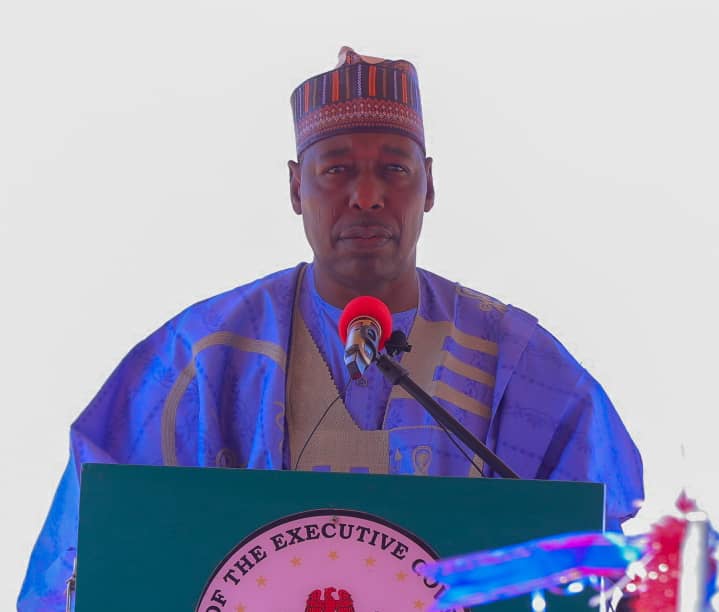
Zulum Dissolves Cabinet as Borno 2027 Succession Race Begins
By Auwal Ahmad, Maiduguri
Borno State Governor Babagana Umara Zulum has dissolved the 22-member State Executive Council in a move that signals the beginning of political realignments ahead of the 2027 general elections.
The decision, announced on Sunday, is widely considered a strategic step to allow members of the outgoing cabinet and other political appointees who may be interested in elective offices to prepare for the next electoral cycle.
In a statement issued in Maiduguri, the Secretary to the State Government, Dr Bukar Tijani, said the dissolution takes immediate effect.
He added that all former commissioners have been directed to hand over the affairs of their respective ministries, departments, and agencies to their permanent secretaries on or before Friday, April 3, 2026.
The government stated that the action aimed to create a conducive environment for any former cabinet member aspiring to contest political office in 2027.
Mr Zulum also used the opportunity to commend the outgoing commissioners for their service to the state.
He expressed appreciation for what he described as their dedication, commitment, and contributions to governance, particularly by supporting the administration’s efforts to rebuild and stabilise Borno.
The cabinet shake-up comes at a time when political conversations in the state are increasingly shifting toward the question of who succeeds the governor at the end of his tenure.
Although no formal declarations have been made, there are already indications that some former commissioners and political actors, particularly from Borno North and Borno Central Senatorial Districts, are positioning themselves for the governorship race.
The development has intensified interest in the succession debate, particularly within the ruling All Progressives Congress (APC), where consultations are reportedly accelerating.
Mr Zulum had earlier stirred political discussions when he told party supporters during the APC State Congress in Maiduguri that he did not have a preferred successor.
He believes that God will ultimately determine who becomes the next governor.
“It is the Almighty God that will determine who becomes my successor among the many aspirants from the three senatorial districts,” the governor said.
His comment has since continued to resonate in political circles, with many party loyalists and stakeholders interpreting it as a sign that the succession battle may remain open and competitive.
Political observers say the dissolution of the cabinet may not only free interested appointees to pursue their ambitions but could also mark the start of a broader power contest over the future direction of the state after Zulum.
The stakes are considered high, given the governor’s visible footprint in infrastructure development, the resettlement of internally displaced persons, education, healthcare, and post-conflict recovery since he assumed office in 2019.
For many residents and political stakeholders, the central concern is no longer just who emerges next, but whether the eventual successor will have the political will, administrative depth and public trust to sustain the pace of development already set in motion.
With 2027 still months away, Borno’s political landscape appears to be gradually entering a defining phase—one in which ambition, regional balance, party calculations, and governance legacies are expected to shape the contest ahead.

Police Bust Kidnap Ring in Maiduguri, Rescue 7-Year-Old, Recover ₦1.5m Ransom
By Tada Jutha, Maiduguri
The Borno State Police Command has arrested five suspected kidnappers and rescued a seven-year-old boy abducted in Maiduguri, recovering the ₦1.5 million ransom paid by the child’s family.
The command said the suspects had initially demanded ₦10 million from the victim’s family before lowering the ransom to ₦8 million. However, security operatives tracked down those involved in the abduction after the child’s mother paid ₦1.5 million.
Police spokesperson, ASP Nahum Daso, disclosed in Maiduguri that the incident was reported to the State Criminal Investigation Department (SCID) on Tuesday, March 24, 2026, at about 3:30 p.m., shortly after the boy was kidnapped from the Chad Basin Development Authority staff quarters.
According to him, preliminary investigation indicated that the abductors contacted the victim’s mother through a concealed telephone line and issued a series of ransom demands while negotiations were ongoing.
Daso said the breakthrough came after detectives launched a digital forensic investigation into the payment trail used for the ransom.
He explained that operatives traced the Point of Sale (POS) account that received the ₦1.5 million and arrested the operator, identified as Musa Mohammed Bashir.
The police spokesman added that the arrest of the POS operator led investigators to four other suspects believed to have coordinated the kidnapping operation in the Chad Basin and Bulabulin Alajiri areas of Maiduguri.
He said the child was rescued unharmed, taken for medical examination, and later reunited with his parents.
The police also confirmed the recovery of the ₦1.5 million ransom paid by the family from the suspects.
The Commissioner of Police in Borno State, Naziru Abdulmajid, commended the detectives for what he described as a swift and professional operation.
He reaffirmed the command’s commitment to intelligence-led policing and urged residents to remain alert and continue sharing useful information with security agencies to help tackle crime in the state.
The police said the investigation into the case is still ongoing, with further action to follow as authorities work to dismantle the suspected kidnapping network.
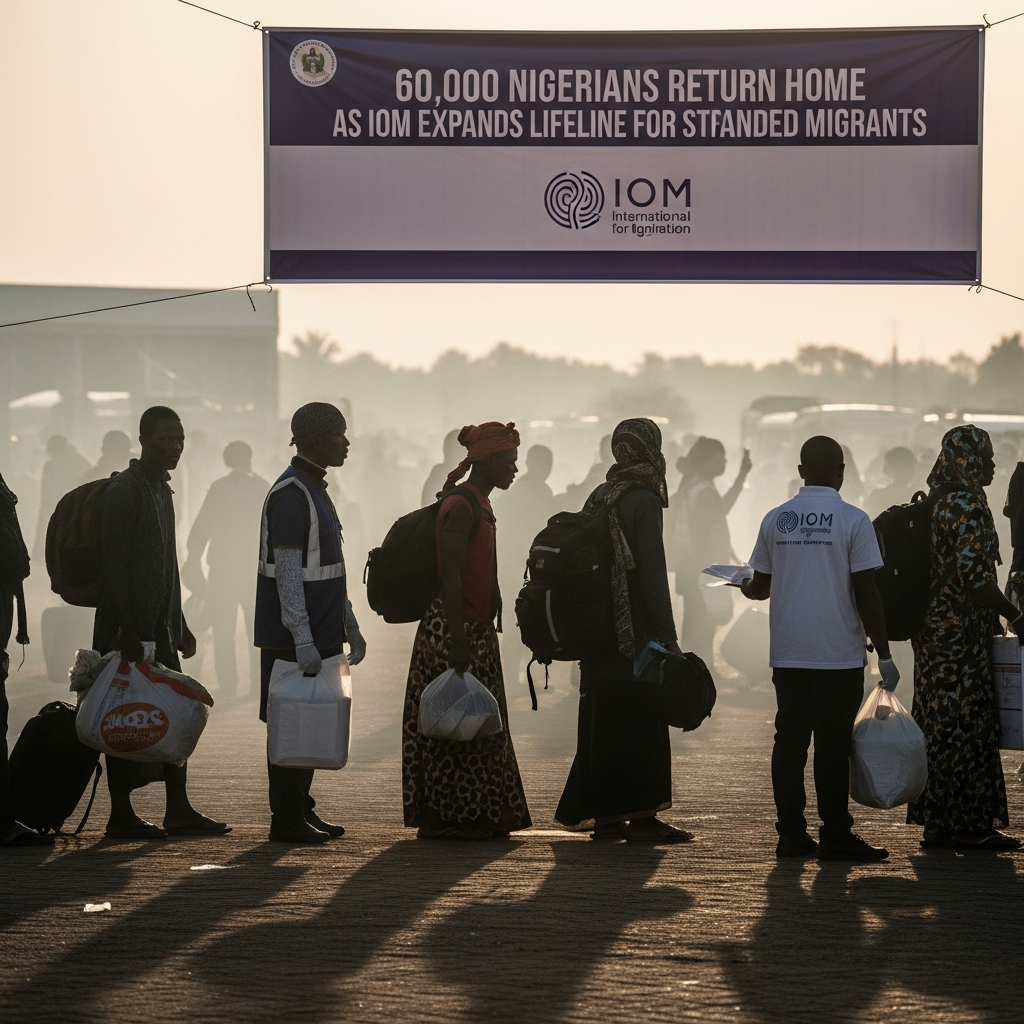
60,000 Nigerians Return Home as IOM Expands Lifeline for Stranded Migrants
By Tada Jutha, Maiduguri
No fewer than 60,000 Nigerians who were once stranded along dangerous migration routes across West and Central Africa have now safely returned home, marking a major milestone in humanitarian efforts led by the International Organization for Migration (IOM).
The returnees are being supported through structured reintegration programmes designed to help them rebuild their lives, regain stability, and restore dignity after enduring harsh conditions abroad.
IOM Chief of Mission in Nigeria, Sharon Dimanche, disclosed this in a statement issued in Maiduguri, Borno State, noting that the initiative has been ongoing since 2017. She explained that the programme provides tailored support to migrants as they transition from uncertainty to self-reliance.
“Through our reintegration support, migrants are empowered to rebuild their livelihoods and move forward with dignity,” she said, adding that many beneficiaries are already making meaningful progress in their communities.
Dimanche highlighted the recent return of 181 Nigerians from Libya on March 10, 2026, describing it as a significant step that reflects the strong collaboration between IOM, the Federal Government of Nigeria, the European Union, and its member states.
She noted that for many returnees, the journey back home represents a turning point, away from exploitation, abuse, and life-threatening migration experiences, and toward a future anchored on recovery and opportunity.
Beyond facilitating returns, the IOM has provided reintegration assistance to over 38,000 Nigerians. The support includes vocational training, business start-up grants, educational opportunities, and psychosocial care aimed at helping returnees reintegrate into society successfully.
“The return of migrants is not the end of their story,” Dimanche emphasized. “With the right support, they can rebuild their lives, grow, and contribute meaningfully to their communities.”
She added that successful reintegration not only transforms individual lives but also strengthens communities and supports long-term development.
Data from the organization shows that in 2025 alone, 14,787 Nigerians were assisted to return home safely, while more than 2,500 have already benefited from the programme in 2026.
Dimanche also raised concern over the vulnerability of many migrants, revealing that a significant number of those assisted are survivors of human trafficking, exploitation, and severe abuse along migration routes.
She stressed the need for sustained, route-based interventions that ensure access to protection services, safe return pathways, and continuous reintegration support for affected individuals.
The IOM reaffirmed its commitment to working with partners to provide life-saving assistance and create opportunities for returnees to rebuild their futures, one life at a time.

Kebbi Police Arrest 10 Over Killing, Abduction in Birnin Kebbi

Goje Not Leaving APC, Aide Dismisses Defection Rumour as ‘Cheap Political Mischief’

Alkali Resigns as Transport Minister, Eyes Governorship Bid

Dangote Launches Landmark ₦1 Trillion Scholarship Scheme to Support 1.3 Million Nigerian Students

NGX Ends Week in the Green as ₦1.54 Trillion Boosts Investors’ Fortunes

Formal Rebuttal to the Recent Interview Granted by Retired Major General Ali Keffi on Arise TV
-
 Education4 months ago
Dangote Launches Landmark ₦1 Trillion Scholarship Scheme to Support 1.3 Million Nigerian Students
-
 Economy4 months ago
NGX Ends Week in the Green as ₦1.54 Trillion Boosts Investors’ Fortunes
-
 Column4 months ago
Formal Rebuttal to the Recent Interview Granted by Retired Major General Ali Keffi on Arise TV
-

 Gombe4 months ago
Gombe Shines Again, Ranks Second in Northeast at 2025 PHC Leadership Challenge
-

 Economy4 months ago
CBN’s End to Cash Withdrawal Limit
-
 Politics4 months ago
NSGF names Ezekiel Gomos as Director-General, setting stage for stronger regional collaboration
-

 Gombe3 weeks ago
A tribute to Dr Langa Hassan Bangunji (JP) – an icon of Scholarship, Leadership and Community Service
-

 Latest News4 months ago
Anglican Church Expands Footprint with 15 New Dioceses, Total Hits 176