Health
Lassa Fever Infects Six Health Workers in One Week as Nigeria Records 65 New Cases


Lassa Fever Infects Six Health Workers in One Week as Nigeria Records 65 New Cases
By Jamila Muhammad
The Nigeria Centre for Disease Control and Prevention (NCDC) has reported that six healthcare workers contracted Lassa fever within a single week, sparking renewed concern about the risks faced by frontline medical personnel during the ongoing outbreak.
The development was disclosed in the agency’s latest Lassa Fever Situation Report for Epidemiological Week 9, which covered the period between Feb. 23 and March 1.
According to the report, the infections occurred as Nigeria continues to battle the viral haemorrhagic disease across several parts of the country.
The NCDC revealed that a total of 37 health workers have been infected with Lassa fever since the beginning of 2026, highlighting the occupational hazards confronting medical staff responding to the outbreak, which include exposure to infected patients and inadequate protective measures in healthcare settings.
During the week under review, the country recorded 65 confirmed cases of the disease, representing a slight drop compared to the 77 cases documented in the preceding week.
The confirmed infections were reported in several states, including Benue State, Ondo State, Bauchi State, Taraba State, Edo State, Plateau State and Nasarawa State.
Health authorities also recorded 460 suspected cases within the same week. Among the confirmed infections, nine deaths were reported, resulting in a case fatality rate of 13.9 per cent.
The NCDC further stated that since the start of the year, Nigeria has documented 2,446 suspected cases of Lassa fever, out of which 469 were confirmed.
So far, 109 people have died from the disease in 2026, pushing the overall case fatality rate to 23.2 percent. This figure is notably higher than the 18.7 per cent recorded during the same period in 2025.
The report added that at least 18 states and 69 local government areas across the country have reported one or more confirmed cases this year.
Data from the agency indicates that five states account for the majority of infections, with Bauchi State, Ondo State, Taraba State, Benue State, and Edo State responsible for about 86 percent of all confirmed cases recorded so far in 2026.
The NCDC attributed the rising death toll partly to delayed patient presentations at health facilities, limited awareness in some high-risk communities, and poor health-seeking behaviour among affected populations.
To tackle the outbreak, the agency said it has activated a nationwide multi-partner incident management system aimed at strengthening coordination of response activities.
The measures currently underway include intensified surveillance, active case finding, contact tracing, the distribution of personal protective equipment to hospitals, and the deployment of rapid response teams in states with high infection rates.
The Nigerian Center for Disease Control and Prevention has advised health workers across the country to stay alert and strictly observe safety procedures, including infection prevention and control measures, to minimise the risk of contracting the disease while treating patients.
Lassa fever is a viral haemorrhagic disease caused by the Lassa virus. It was first discovered in 1969 in Lassa, Borno State, and has since remained a public health concern in Nigeria and other parts of West Africa.
The infection is commonly spread through contact with the urine or droppings of infected rodents, particularly the multimammate rat known scientifically as Mastomys natalensis. People can also become infected by eating contaminated food or through direct contact with an infected person’s bodily fluids.
According to the World Health Organization, many people infected with the virus may experience mild symptoms or none at all. However, about 20 percent of cases can become severe, with symptoms such as fever, headache, vomiting, and bleeding, as well as complications affecting vital organs.
Medical experts continue to urge early diagnosis, good hygiene practices and strict adherence to infection control measures to limit the spread of the disease and safeguard healthcare workers and the public.

By Auwal Ahmad Umar
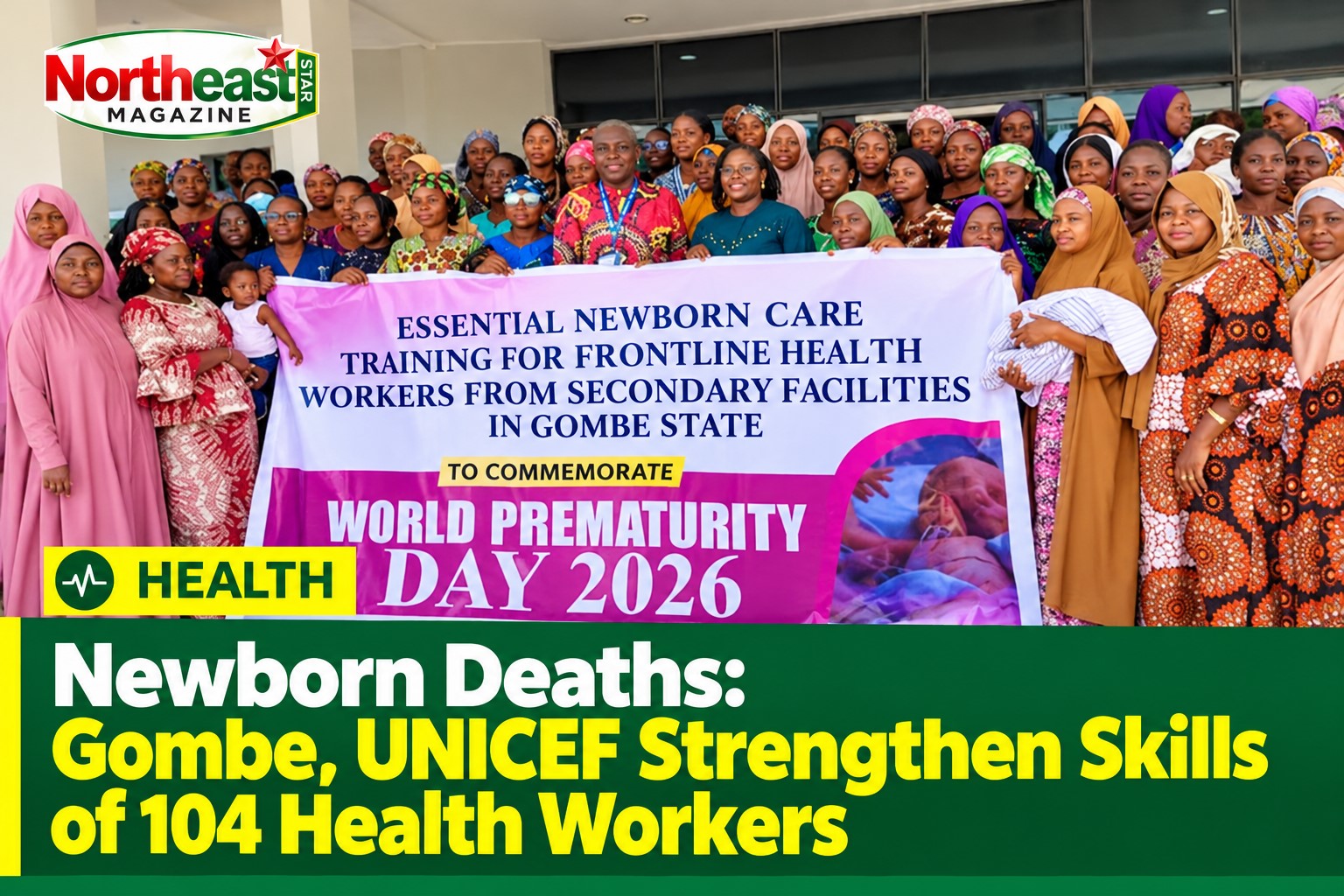
The Gombe State Government and the United Nations Children’s Fund (UNICEF) have trained 104 healthcare workers to improve the quality of newborn care and reduce preventable deaths, particularly in communities across northern Nigeria where neonatal mortality remains a major concern.
The intervention focused on equipping frontline medical personnel with the knowledge and practical skills needed to care for newborns, including premature babies and infants requiring specialised medical attention.
The latest two-day training brought together 48 healthcare workers from secondary health facilities in the state. It followed an earlier session involving 56 personnel from primary healthcare centres, bringing the total number of trained workers to 104.
Speaking in Gombe on Thursday, the Executive Secretary of the Gombe State Primary Health Care Development Agency, Abdulrahman Shuaibu, described improved newborn care as an important step towards reducing deaths that could otherwise be prevented through timely and appropriate medical intervention.
Shuaibu explained that some babies were delivered within communities before being referred to secondary hospitals for specialised treatment when complications developed.
He said healthcare workers in such facilities needed adequate training to respond effectively to newborn emergencies and provide appropriate treatment.
The agency’s executive secretary noted that neonatal and infant mortality remained a significant challenge in the state, requiring a joint response from the government, healthcare professionals and development partners.
He expressed hope that the programme would contribute to a reduction in newborn deaths across communities.
Shuaibu also urged participants to share the skills and knowledge acquired during the training with colleagues who were unable to attend, stressing that wider knowledge-sharing would help improve newborn care across more health facilities.
He said the initiative complemented the state government’s ongoing efforts to improve healthcare infrastructure and services at primary and secondary levels. He also appreciated UNICEF and other development partners for supporting health interventions in the state.
A UNICEF health officer at its Bauchi Field Office, Oluseyi Olosunde, said the training was organised to mark the 2026 World Prematurity Day.
Olosunde explained that the programme was designed to improve medical care for newborns, especially premature infants and those who require specialised attention.
He emphasised that the quality of healthcare provided to mothers and babies before, during and after delivery played a crucial role in determining survival outcomes.
The UNICEF official said the participants included nurses, midwives and doctors responsible for maternal and newborn healthcare throughout pregnancy, childbirth and the postnatal period.
He encouraged the health workers to apply the knowledge gained in their respective facilities to improve treatment outcomes and protect the lives of mothers and infants.
Olosunde expressed concern over the persistently high rate of newborn deaths in several northern Nigerian states, emphasising the importance of building the capacity of healthcare personnel to provide effective services.
Also speaking, a consultant paediatrician at the Federal Teaching Hospital, Gombe, Raymond Mercy, called on healthcare professionals to prioritise proper medical attention for newborns.
Mercy, a member of the Paediatric Association of Nigeria and the Nigerian Society of Neonatal Medicine, said Nigeria’s neonatal mortality rate was estimated at between 34 and 41 deaths per 1,000 live births.
She noted that the country’s high burden of newborn deaths underscored the urgent need to improve healthcare delivery and strengthen the capacity of medical personnel to manage complications affecting newborns.
The training forms part of broader efforts to improve maternal and child health outcomes by ensuring that healthcare workers are better equipped to provide quality care to mothers and their babies.

By Auwal Ahmad Umar
The intervention follows Gombe State’s N500 million nutrition contribution, matched by an equal amount through the Child Nutrition Fund.
The United Nations Children’s Fund (UNICEF) has supplied 11,518 cartons of Ready-to-Use Therapeutic Food (RUTF) to the Gombe State Government as part of efforts to tackle severe acute malnutrition among vulnerable children.
The consignment is expected to strengthen the state’s nutrition response by improving access to essential therapeutic food for children battling the life-threatening condition.
Speaking at the official handover ceremony, the Chief of UNICEF Bauchi Field Office, Dr Nuzhat Rafique, praised the Gombe State Government for committing N500 million as counterpart funding for nutrition interventions in 2025.
According to her, the state’s contribution was matched with an additional N500 million through the Child Nutrition Fund, providing resources for the procurement of critical nutrition supplies.
Rafique explained that the donated RUTF contained millions of sachets designed to support the recovery of children suffering from severe acute malnutrition.
She emphasised the need for proper distribution and monitoring to ensure the supplies reach the children for whom they were intended.
The UNICEF official also urged community-based organisations, including Mama2Mama and Fathers for Good Health, to step up public awareness about the appropriate use of RUTF.
She warned that the therapeutic food was specifically formulated for children with severe acute malnutrition and should not be treated as ordinary food.
Rafique further stressed that children undergoing treatment must complete their prescribed course, urging parents and caregivers to follow the guidance of health workers to achieve the best possible outcomes.
She commended the state government for establishing a committee to prevent the diversion, abuse and misuse of aid supplies, while calling for stronger accountability and monitoring systems to safeguard the donated products.
The Gombe State Commissioner for Women Affairs and Social Development, Professor Bertha Abdu, expressed appreciation to UNICEF for its continued support, particularly in programmes designed to improve the welfare of women and children.
She noted that proper nutrition was essential to children’s healthy growth, warning that nutritional deficiencies could have lasting consequences for their physical development and overall wellbeing.
Similarly, the Commissioner for Science, Technology and Innovation, Habu Dahiru, said raising children who are physically healthy and mentally fit was crucial to the state’s long-term development.
Dahiru highlighted the importance of RUTF in treating severe acute malnutrition and disclosed that the state government was complementing UNICEF’s efforts through the local production of nutrient-rich food.
He said the ministry had increased production of its locally developed nutritious food and was working with the North-East Development Commission to expand the production facility.
According to him, the expansion is intended to increase production capacity and enable the facility to meet nutritional needs in Gombe and neighbouring states.
The commissioner expressed the ministry’s willingness to deepen collaboration with UNICEF and other development partners to expand the initiative, particularly to support efforts to address moderate malnutrition.
He also assured that the government would closely supervise the distribution of the donated RUTF to prevent diversion and ensure that eligible children receive the treatment.
The Commissioner for Budget and Economic Planning, Micah Sunday, described UNICEF as a strategic development partner whose interventions have continued to support the state government’s efforts to improve children’s welfare and development.
Sunday stressed that tackling malnutrition goes beyond improving children’s physical health, explaining that adequate nutrition also plays a vital role in brain development, learning and general wellbeing.
He added that improving children’s nutritional status would help them grow into healthier, better-educated and more productive members of society.
The latest delivery is expected to boost Gombe State’s efforts to combat severe acute malnutrition and expand access to life-saving nutritional treatment for vulnerable children.
The intervention also underscores the importance of sustained government investment, partnerships with development organisations and transparent distribution systems in addressing child malnutrition across the state.

By Auwal Ahmad Umar
Gombe State Governor, Muhammadu Inuwa Yahaya, has congratulated Professor Faruk Buba on his appointment as the Chief Medical Director (CMD) of the University of Maiduguri Teaching Hospital (UMTH) by President Bola Ahmed Tinubu.
The governor described the appointment as a recognition of Professor Buba years of service in clinical medicine, medical education, research and healthcare management.
In a congratulatory message issued on Tuesday by Ismaila Uba Misilli, Director-General of Press Affairs at the Government House, Gombe, the governor expressed confidence that the new CMD would use his professional expertise and administrative experience to advance the hospital’s mandate.
Governor Yahaya also commended President Tinubu for the appointment and acknowledged the role of the Coordinating Minister of Health and Social Welfare, Professor Muhammad Ali Pate, in the process.
He said the appointment was a source of pride to Gombe State, noting that Professor Buba’s contributions to medical training, specialist healthcare and academic development had earned him recognition beyond his immediate professional environment.
Professor Buba is a Professor of Cardiology and Internal Medicine at the University of Maiduguri and an Honorary Consultant at UMTH. He has held several positions at the hospital, including Deputy Chairman of the Medical Advisory Committee (Clinical), Director of the ICT Centre and Head of the Department of Internal Medicine.
His experience in patient care, medical education and hospital administration is expected to support his new responsibilities at the tertiary health institution.
Governor Yahaya expressed optimism that the professor would deploy his knowledge and leadership skills to improve healthcare delivery, strengthen medical training and research, and enhance the hospital’s operational efficiency.
The governor further assured Professor Buba of the support and goodwill of the Gombe State Government and its people as he begins his tenure.
He urged the new CMD to use the opportunity to make meaningful contributions to Nigeria’s healthcare system, particularly by improving services for patients, supporting medical professionals and promoting research.
Governor Yahaya wished Professor Buba a successful tenure, expressing hope that his leadership would leave a lasting impact on the University of Maiduguri Teaching Hospital and the wider health sector.

Borno, AU Partner to Get 800,000 Out-of-School Children Back to Classrooms

Plan International Pushes for Lasting Support for Teachers in Crisis-Hit Communities

Newborn Deaths: Gombe, UNICEF Strengthen Skills of 104 Health Workers

APC National Chairman Settles Gombe Central Contest, Raises DCP Ahmed’s Hand as Party’s Senatorial Candidate

NGX Ends Week in the Green as ₦1.54 Trillion Boosts Investors’ Fortunes

Gombe Eyes Livestock-Led Economic Growth as Inuwa Yahaya Meets Minister

-
 Politics4 months ago
APC National Chairman Settles Gombe Central Contest, Raises DCP Ahmed’s Hand as Party’s Senatorial Candidate
-
 Economy10 months ago
NGX Ends Week in the Green as ₦1.54 Trillion Boosts Investors’ Fortunes
-
 Agriculture3 months ago
Gombe Eyes Livestock-Led Economic Growth as Inuwa Yahaya Meets Minister
-

 Sport7 months ago
Gombe Aquatic Sports Body Unveils Board, Sets Stage for Competitive Debut
-

 Education11 months ago
Dangote Launches Landmark ₦1 Trillion Scholarship Scheme to Support 1.3 Million Nigerian Students
-

 Economy11 months ago
CBN’s End to Cash Withdrawal Limit
-

 Striking the Balance3 months ago
The $2,500 Threshold: Why Raising Nigeria’s GDP Per Capita Is Our Best Non-Kinetic Strategy for Peace
-

 Environment5 months ago
World Environment Day: NGO Urges Nigerians to Embrace Nature-Based Solutions Against Climate Change