
Health
UNICEF, EU train journalists to tackle malnutrition in Northeast

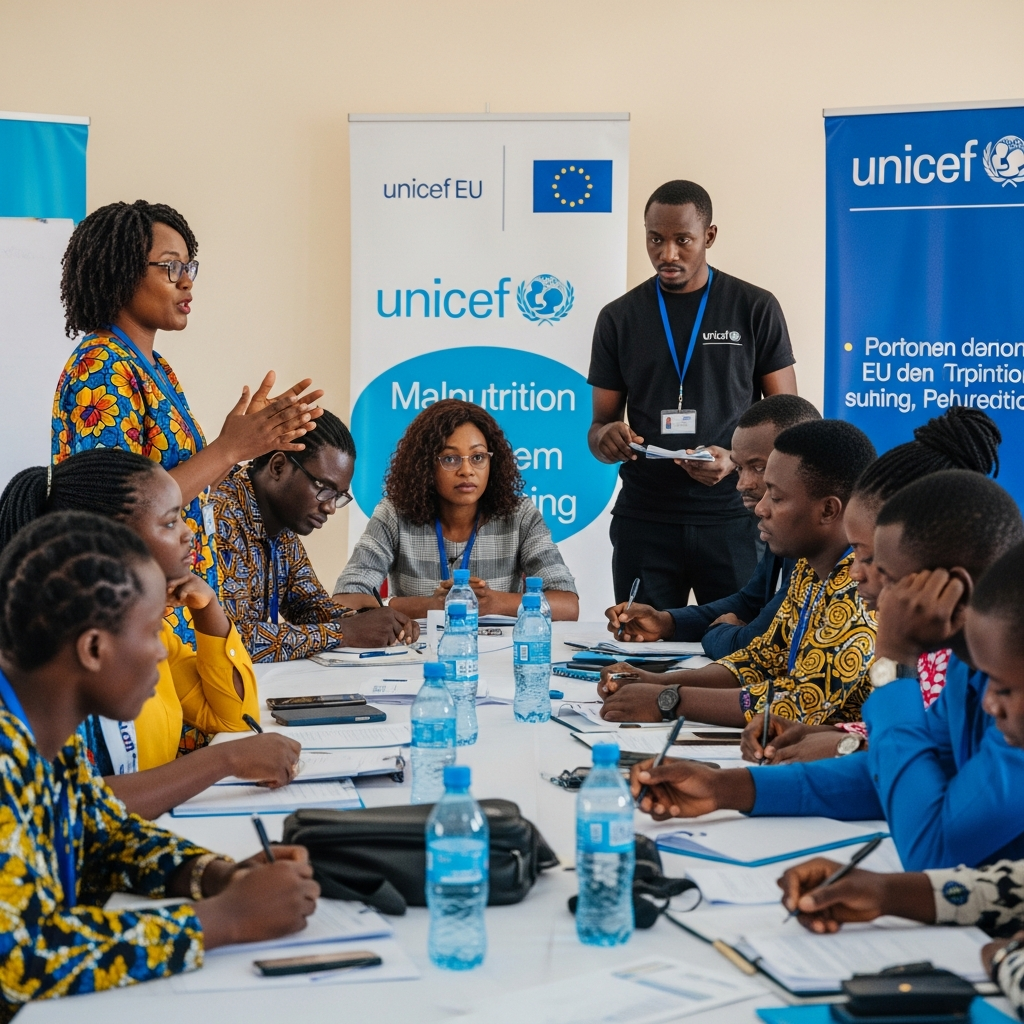
UNICEF, EU train journalists to tackle malnutrition in Northeast
By Tada Jutha, Maiduguri
The United Nations Children’s Fund (UNICEF), in collaboration with the 27-member European Union (EU), has trained journalists in tackling acute severe malnutrition (SAM) among a million children in the Northeast.
According to the Fund, the malnourished children are from the over a decade-long conflict-affected states of Borno, Adamawa and Yobe.
Declaring the training session open on Monday in Damaturu, the UNICEF Nutrition Manager, Joseph Senesie, disclosed, “The EU-funded grant is aimed at fighting the rising cases of malnutrition in the conflict-affected communities of the region.
.
The one-day media dialogue with the training of about three dozen journalists was also to enhance their understanding of how to cover what Senesie described as critical health issues on child malnutrition and other preventable diseases like cholera, polio, malaria and diphtheria.
During a two-hour field trip, the journalists before the training session assessed some of the Outpatient (OTP) health facilities, including the Central Medical Store (CMS) along Gashua Road.
At the Gwange Primary Health Care Center, the health workers demonstrated the use of Mid-Upper Arm Circumference (MUAC) coloured tapes for screening children with severe acute malnutrition (SAM). While health officials at the Mairi Primary Health Care Center showcased appetite testing protocols, which are used to determine the eligibility for outpatient care.
Speaking on the significance of tackling malnutrition in the state, the Yobe State Nutrition Officer, Hadiza Maina Adamu, disclosed, “We have over 3,400 cartons of Ready-to-Use Therapeutic Food (RUTF),” stressing that they are critical food supplements used to treat malnourished children in the state.
UNICEF Nutrition Manage attributed malnutrition to the lean season, starting from May to September 2026, within which malnutrition cases among the children continue to rise.
Senesie also expressed hope that this year’s malnutrition cases in the Northeast would not surpass previous levels, crediting EU support for enabling treatments for over 40,000 children in the previous intervention cycles.
The State’s Nutritional Officer, Hadiza Maina Adamu, who represented the Commissioner of Health and Human Services, said that the state is in an Integrated Food Security Phase Classification (IPC) Phase 3, indicating that there is a serious level of food insecurity, particularly in the desert-affected communities of Nguru, Bade, Machina, Yusufari, Yunusari and Geidam.
Hadiza further revealed, “The Global Acute Malnutrition (GAM) currently stood at 10.8%, according to the 2025 surveillance data,” stating that there is an improvement of 14% from the previous years, though the rate remains critical in the state.
She noted that since 2010, treatment services have expanded significantly to include 306 Outpatient Therapeutic Programme (OTP) sites, stabilisation centres, and 120 Targeted Supplementary Feeding Programme (TSFP) sites.
In a lead paper presented by Dr Babagana Kundi Machina, the Executive Secretary of the Yobe State Primary Health Care Board (YPHCB), emphasised that the EU grant has been instrumental in ensuring an uninterrupted supply of therapeutic food and milk, which facilitated sustained treatment and community-based screening in each of the 17 local government areas.








By Auwal Ahmad Umar
Gombe State Governor, Muhammadu Inuwa Yahaya, has congratulated Professor Faruk Buba on his appointment as the Chief Medical Director (CMD) of the University of Maiduguri Teaching Hospital (UMTH) by President Bola Ahmed Tinubu.
The governor described the appointment as a recognition of Professor Buba years of service in clinical medicine, medical education, research and healthcare management.
In a congratulatory message issued on Tuesday by Ismaila Uba Misilli, Director-General of Press Affairs at the Government House, Gombe, the governor expressed confidence that the new CMD would use his professional expertise and administrative experience to advance the hospital’s mandate.
Governor Yahaya also commended President Tinubu for the appointment and acknowledged the role of the Coordinating Minister of Health and Social Welfare, Professor Muhammad Ali Pate, in the process.
He said the appointment was a source of pride to Gombe State, noting that Professor Buba’s contributions to medical training, specialist healthcare and academic development had earned him recognition beyond his immediate professional environment.
Professor Buba is a Professor of Cardiology and Internal Medicine at the University of Maiduguri and an Honorary Consultant at UMTH. He has held several positions at the hospital, including Deputy Chairman of the Medical Advisory Committee (Clinical), Director of the ICT Centre and Head of the Department of Internal Medicine.
His experience in patient care, medical education and hospital administration is expected to support his new responsibilities at the tertiary health institution.
Governor Yahaya expressed optimism that the professor would deploy his knowledge and leadership skills to improve healthcare delivery, strengthen medical training and research, and enhance the hospital’s operational efficiency.
The governor further assured Professor Buba of the support and goodwill of the Gombe State Government and its people as he begins his tenure.
He urged the new CMD to use the opportunity to make meaningful contributions to Nigeria’s healthcare system, particularly by improving services for patients, supporting medical professionals and promoting research.
Governor Yahaya wished Professor Buba a successful tenure, expressing hope that his leadership would leave a lasting impact on the University of Maiduguri Teaching Hospital and the wider health sector.
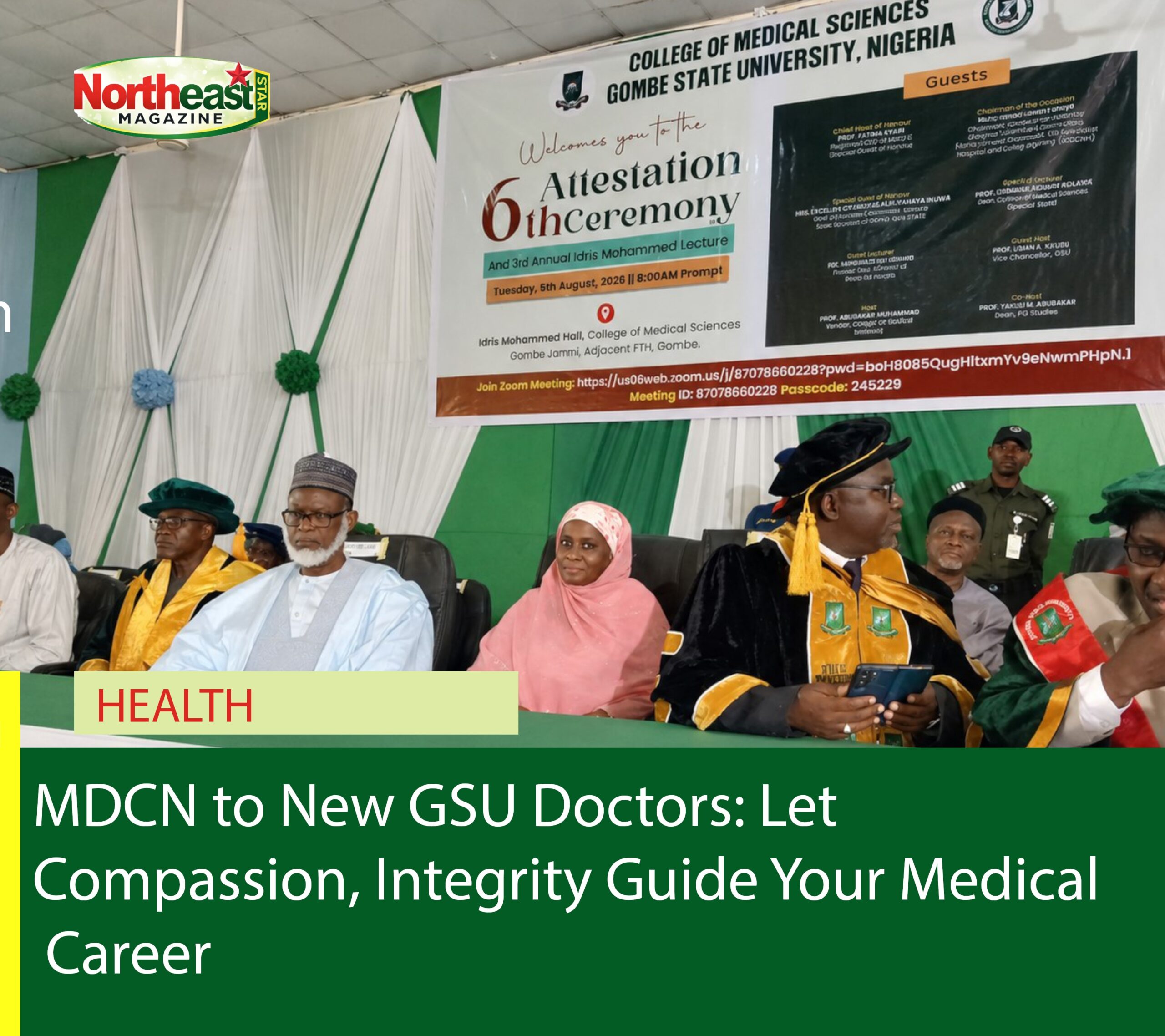
MDCN to New GSU Doctors: Let Compassion, Integrity Guide Your Medical Career
By Auwal Ahmad
The Medical and Dental Council of Nigeria (MDCN) has urged newly qualified medical doctors from Gombe State University (GSU) to build their careers on compassion, professionalism, integrity and collaboration with other healthcare workers.
The advice was delivered during the university’s sixth induction ceremony for medical graduates and the third annual Prof. Idris Mohammed Lecture organised by the College of Medical Sciences in Gombe.
Representing the MDCN Registrar, Prof. Fatima Kyari, Assistant Registrar, Dr Ali Mandaka, described the induction as a major transition from academic training to the realities of professional medical practice.
He congratulated the graduates for reaching an important milestone but reminded them that qualifying as doctors marked the beginning of a lifelong commitment to learning and service.
“The journey into medicine truly begins after graduation. Beyond academic excellence, patients expect compassion, honesty and professionalism from every doctor,” he said.
He praised the College of Medical Sciences for maintaining high standards in medical education and acknowledged the contributions of the university management and academic staff in producing competent healthcare professionals.
Mandaka reaffirmed the council’s commitment to strengthening Nigeria’s healthcare system by supporting institutions responsible for training medical personnel.
Addressing the newly inducted doctors, he urged them to place patients’ welfare at the centre of their practice, stressing that every individual seeking medical attention deserved dignity, empathy and quality care.
He also reminded them that effective healthcare depends on cooperation among different professionals, including nurses, pharmacists, laboratory scientists, physiotherapists and other members of the medical team.
According to him, no healthcare professional can function effectively in isolation, adding that mutual respect among all hospital staff is essential for quality patient care.
He encouraged the graduates to value the experience of senior colleagues while extending courtesy and respect to every worker within the hospital environment, regardless of their role.
On the next phase of their professional development, Mandaka explained that the council would issue provisional registration certificates to the graduates, enabling them to enrol on the centralised housemanship placement portal where they would apply for hospitals to undertake the compulsory one-year internship.
He noted that the internship must be completed within two years of provisional registration, warning that graduates who fail to secure placement within the stipulated period may be required to undergo an assessment by the council before proceeding.
Delivering a lecture at the event, Chairman of the National Emergency Medical Treatment Committee, Prof. Ismail Jibrin, encouraged the young doctors to approach their profession with humility, discipline and a deep sense of responsibility.
He acknowledged that medicine can be physically and emotionally demanding but said the profession offers unique opportunities to save lives, restore hope and make lasting differences in people’s lives.
Jibrin advised the graduates to remain guided by empathy and ethical conduct, especially during difficult moments in their careers, saying the trust placed in doctors comes with enormous responsibility.
A total of 45 medical graduates were inducted during the ceremony, officially qualifying them to begin the process of undertaking their mandatory housemanship in accredited health institutions across Nigeria.
The Provost of the College of Medical Sciences, Prof. Abubakar Difa, congratulated the graduates for successfully completing the demanding academic and clinical training required for the medical profession.
He also commended the parents, lecturers and other stakeholders whose support contributed to the successful training of the new doctors, expressing confidence in their ability to uphold the values of the medical profession
MDCN to New GSU Doctors: Let Compassion, Integrity Guide Your Medical Career
By Auwal Ahmad
The Medical and Dental Council of Nigeria (MDCN) has urged newly qualified medical doctors from Gombe State University (GSU) to build their careers on compassion, professionalism, integrity and collaboration with other healthcare workers.
The advice was delivered during the university’s sixth induction ceremony for medical graduates and the third annual Prof. Idris Mohammed Lecture organised by the College of Medical Sciences in Gombe.
Representing the MDCN Registrar, Prof. Fatima Kyari, Assistant Registrar, Dr Ali Mandaka, described the induction as a major transition from academic training to the realities of professional medical practice.
He congratulated the graduates for reaching an important milestone but reminded them that qualifying as doctors marked the beginning of a lifelong commitment to learning and service.
“The journey into medicine truly begins after graduation. Beyond academic excellence, patients expect compassion, honesty and professionalism from every doctor,” he said.
He praised the College of Medical Sciences for maintaining high standards in medical education and acknowledged the contributions of the university management and academic staff in producing competent healthcare professionals.
Mandaka reaffirmed the council’s commitment to strengthening Nigeria’s healthcare system by supporting institutions responsible for training medical personnel.
Addressing the newly inducted doctors, he urged them to place patients’ welfare at the centre of their practice, stressing that every individual seeking medical attention deserved dignity, empathy and quality care.
He also reminded them that effective healthcare depends on cooperation among different professionals, including nurses, pharmacists, laboratory scientists, physiotherapists and other members of the medical team.
According to him, no healthcare professional can function effectively in isolation, adding that mutual respect among all hospital staff is essential for quality patient care.
He encouraged the graduates to value the experience of senior colleagues while extending courtesy and respect to every worker within the hospital environment, regardless of their role.
On the next phase of their professional development, Mandaka explained that the council would issue provisional registration certificates to the graduates, enabling them to enrol on the centralised housemanship placement portal where they would apply for hospitals to undertake the compulsory one-year internship.
He noted that the internship must be completed within two years of provisional registration, warning that graduates who fail to secure placement within the stipulated period may be required to undergo an assessment by the council before proceeding.
Delivering a lecture at the event, Chairman of the National Emergency Medical Treatment Committee, Prof. Ismail Jibrin, encouraged the young doctors to approach their profession with humility, discipline and a deep sense of responsibility.
He acknowledged that medicine can be physically and emotionally demanding but said the profession offers unique opportunities to save lives, restore hope and make lasting differences in people’s lives.
Jibrin advised the graduates to remain guided by empathy and ethical conduct, especially during difficult moments in their careers, saying the trust placed in doctors comes with enormous responsibility.
A total of 45 medical graduates were inducted during the ceremony, officially qualifying them to begin the process of undertaking their mandatory housemanship in accredited health institutions across Nigeria.
The Provost of the College of Medical Sciences, Prof. Abubakar Difa, congratulated the graduates for successfully completing the demanding academic and clinical training required for the medical profession.
He also commended the parents, lecturers and other stakeholders whose support contributed to the successful training of the new doctors, expressing confidence in their ability to uphold the values of the medical profession.
Health
UNICEF, Gombe Launch Initiative to Combat Child Malnutrition, Call for Greater Investment in First 1,000 Days
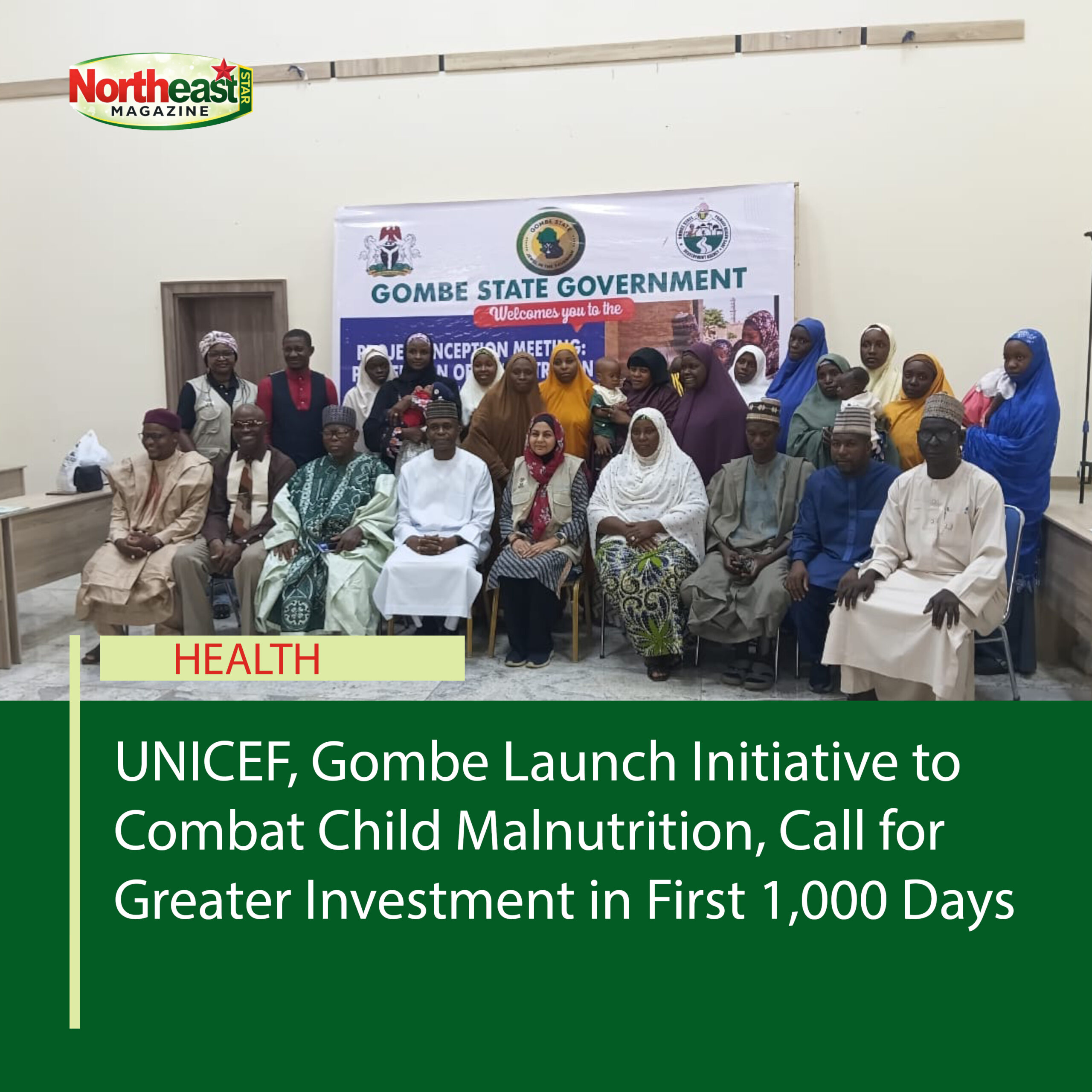
UNICEF, Gombe Launch Initiative to Combat Child Malnutrition, Call for Greater Investment in First 1,000 Days
By Auwal Ahmad Umar
The Gombe State Government, in partnership with UNICEF and the Latter-day Saints Charities (LDSC), has launched a new nutrition project aimed at preventing malnutrition among mothers and children during the first 1,000 days of life, describing the period as the foundation for a child’s lifelong health, learning and productivity.
The project, unveiled during a stakeholders’ meeting at Travel View Hotel in Gombe, seeks to strengthen maternal and child nutrition services, improve infant and young child feeding practices, and reduce child malnutrition across the state.
Speaking at the event, the UNICEF Chief of Field Office praised the Gombe State Government for its sustained commitment to improving the welfare of women and children through strategic investments and collaboration with development partners.
> **”Today represents another important milestone in our collective commitment to ensuring that every mother and every child in Gombe State have the opportunity not only to survive but to thrive,”** the UNICEF official said.
The official noted that the first 1,000 days—from conception until a child’s second birthday—are the most critical period for brain development, physical growth, immunity and lifelong health, stressing that investments made during this period produce some of the highest returns in human capital development.
> **”The first 1,000 days happen only once. If we get it right, children will survive, learn better, grow stronger and become healthier, more productive citizens who contribute to the development of Gombe State,”** the official added.
UNICEF expressed concern over the persistent burden of malnutrition in Nigeria, citing findings from the **2023–2024 National Demographic and Health Survey**, which show that malnutrition remains a significant threat to children’s wellbeing in Gombe State.
The organisation explained that the new initiative is aligned with the Federal Government’s **Nutrition 774 (N-774) Initiative**, the Health Sector-Wide Approach (SWAp), and the National Food and Nutrition Policy. It is expected to strengthen nutrition planning, accountability, financing and service delivery at both state and local government levels.
According to UNICEF, the project will focus on strengthening evidence-based planning and coordination, improving maternal and child nutrition services, reinforcing health, food and social protection systems, and promoting social and behaviour change interventions to encourage healthy nutrition practices among families.
> **”These investments will help improve maternal nutrition, increase exclusive breastfeeding, promote appropriate complementary feeding, prevent micronutrient deficiencies, strengthen community-based nutrition services and ultimately reduce child malnutrition and mortality,”** the UNICEF representative said.
The organisation emphasised that no single institution can solve the challenge of malnutrition alone, calling for stronger collaboration among government ministries, traditional and religious institutions, civil society organisations, development partners and communities.
> **”The success of this initiative will require strong political commitment, sustained domestic investment and effective collaboration across sectors including health, agriculture, education, water, sanitation, social protection, traditional institutions, religious leaders, civil society and development partners,”** the official said.
UNICEF also urged stakeholders to prioritise nutrition as a key development investment by increasing domestic funding, strengthening coordination across sectors, using reliable data for planning and accountability, and mobilising communities to adopt optimal maternal, infant and young child feeding practices.
Representing Governor Muhammadu Inuwa Yahaya at the launch, the Executive Secretary of the Gombe State Primary Health Care Development Agency, **Dr Abdulrahman Shuaibu**, reaffirmed the state government’s commitment to improving maternal and child nutrition through sustained investments in primary healthcare and strategic partnerships with development organisations.
**”The administration of Governor Muhammadu Inuwa Yahaya recognises that good nutrition is fundamental to the survival, growth and development of every child. That is why we have continued to prioritise interventions that strengthen primary healthcare, improve nutrition services and expand access to quality healthcare for women and children across the state,”** Dr Shuaibu said.
He commended UNICEF and the Latter-day Saints Charities for supporting the initiative, describing the partnership as timely and critical to the state’s efforts to reduce child malnutrition. He assured stakeholders that the government would provide the necessary leadership, coordination and resources required for the successful implementation of the project.
Dr Shuaibu further called on traditional and religious leaders, civil society organisations, development partners and community members to support the campaign by promoting exclusive breastfeeding, proper complementary feeding and other healthy nutrition practices. According to him, collective action remains essential to ensuring that every child in Gombe has the opportunity to survive, grow and realise his or her full potential.
The launch marks another step in Gombe State’s efforts to tackle malnutrition and improve child survival, with stakeholders expressing optimism that the initiative will contribute to healthier families and better development outcomes across the state.

VentCope Reaches Over 400 Displaced Persons with Mental Health Support in Abuja, Adamawa

Borno Journalists Urged to Promote Accountability in Social Protection Programmes

Gov. Yahaya Hails Professor Faruk Appointment as UMTH Chief Medical Director

APC National Chairman Settles Gombe Central Contest, Raises DCP Ahmed’s Hand as Party’s Senatorial Candidate

NGX Ends Week in the Green as ₦1.54 Trillion Boosts Investors’ Fortunes

Gombe Eyes Livestock-Led Economic Growth as Inuwa Yahaya Meets Minister

-
 Politics4 months ago
APC National Chairman Settles Gombe Central Contest, Raises DCP Ahmed’s Hand as Party’s Senatorial Candidate
-
 Economy10 months ago
NGX Ends Week in the Green as ₦1.54 Trillion Boosts Investors’ Fortunes
-
 Agriculture3 months ago
Gombe Eyes Livestock-Led Economic Growth as Inuwa Yahaya Meets Minister
-

 Sport6 months ago
Gombe Aquatic Sports Body Unveils Board, Sets Stage for Competitive Debut
-

 Education10 months ago
Dangote Launches Landmark ₦1 Trillion Scholarship Scheme to Support 1.3 Million Nigerian Students
-

 Economy10 months ago
CBN’s End to Cash Withdrawal Limit
-

 Striking the Balance3 months ago
The $2,500 Threshold: Why Raising Nigeria’s GDP Per Capita Is Our Best Non-Kinetic Strategy for Peace
-

 Environment4 months ago
World Environment Day: NGO Urges Nigerians to Embrace Nature-Based Solutions Against Climate Change