
Latest News
Tragedy in Maiduguri as Collapsing Wall Kills Five Children


Tragedy in Maiduguri as Collapsing Wall Kills Five Children
By Tada Jutha, Maiduguri
A quiet evening in the Bulumkutu community, Maiduguri, turned tragic after a house wall collapsed, killing five children and leaving another injured in Borno State.
The heartbreaking incident occurred around 8:00 p.m. on Sunday, when a wall suddenly gave way and fell on six children who were in the area. The rubble trapped the victims, all under the age of 16.
The Police Public Relations Officer of the Borno State Police Command, ASP Nahum Daso, confirmed the development on Monday, stating that five of the children died immediately, while one survived with injuries and is currently receiving treatment at the Specialist Hospital, Maiduguri.
According to him, the incident was reported through the Divisional Police Officer of the Bulumkutu Division, prompting an immediate response by security operatives.
“Yesterday, at about 8:00 p.m., we received a report of a wall collapse that trapped six children. Unfortunately, five of them lost their lives, while one sustained injuries and is presently on admission,” Daso said.
He added that the police have launched a full investigation to determine the circumstances surrounding the collapse, including whether negligence or poor construction standards played a role.
“The command has commenced an investigation into the fence collapse and all issues relating to how the children were trapped. We want to establish if there was any form of negligence,” he stated.
The police spokesperson urged residents to observe proper building standards and ensure that structures within their compounds are safe, especially during the rainy season. He also advised parents and guardians to closely monitor their children to prevent similar tragedies.
The incident comes amid growing concerns over building safety in Maiduguri. Just on July 30, 2025, heavy rainfall reportedly caused the collapse of eight buildings in parts of the metropolis, displacing several residents.
As the community mourns the young lives lost, authorities are calling for greater vigilance, improved construction practices, and increased parental supervision to avert further losses.
SAZU Graduates 12,256 Students at Combined Convocation
By Ahmed Muhammad, Bauchi
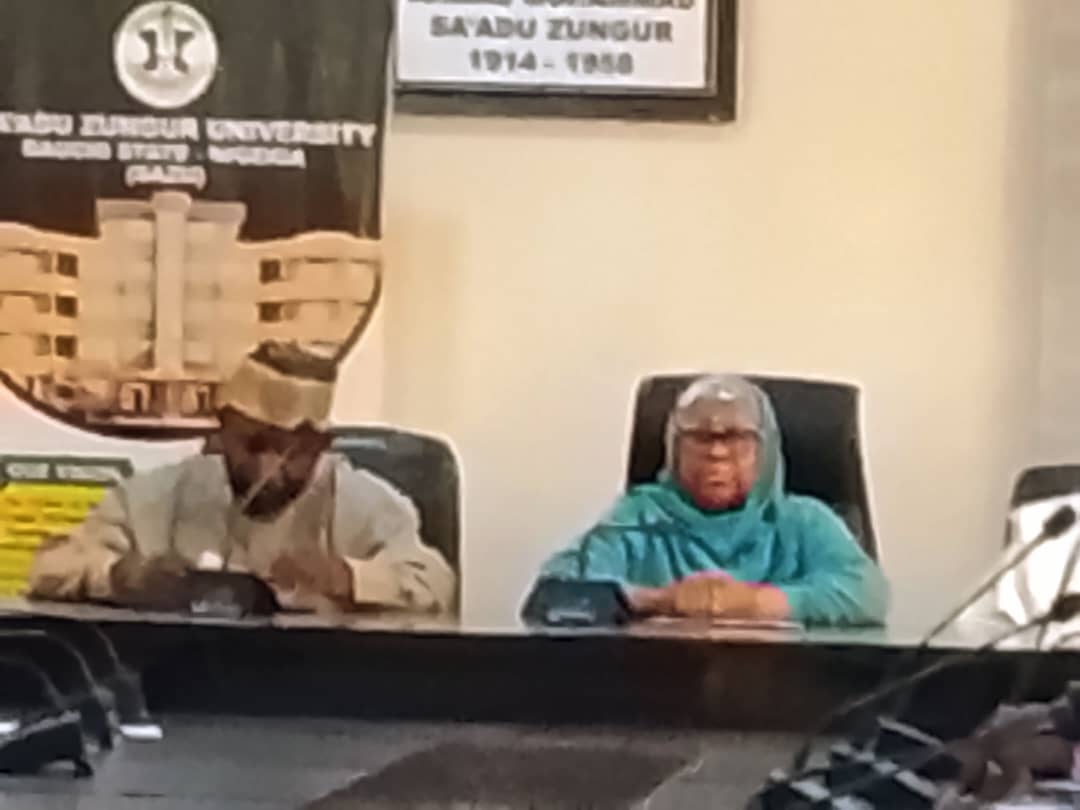
Sa’adu Zungur University (SAZU), Gadau, will graduate 12,256 students during its 8th, 9th, and 10th combined convocation ceremonies, its vicechancellor, Fatima Tahir, has said.
Ms. Tahir disclosed this on Friday during a pre-convocation press conference in Gadau, Azare Local Government Area of Bauchi State.
The graduating students come from the 2022/2023, 2023/2024, and 2024/2025 academic sessions, she said.
According to her, the total number comprises 11,813 undergraduate students and 443 postgraduate students.
She said the undergraduate graduating class includes 8,387 males, representing 71 percent, and 3,426 females, representing 29 percent.
The vice-chancellor said 216 students earned first class honours, while 3,438 graduated with second class upper division and 5,563 with second class lower division.
She added that 2,353 students obtained Third Class degrees, while 243 earned Pass degrees.
Ms. Tahir also said 10,702 of the graduating students are regulars, while 1,111 are from part-time programs.
On postgraduate studies, she said the university would award 25 PhDs, 145 academic masters, 241 professional masters, and 32 postgraduate diplomas.
She said the 2023/2024 academic session recorded the highest number of graduates, with 5,240, followed by 4,064 in 2022/2023, while 2,509 students are graduating from the 2024/2025 session.
As part of activities for the convocation, the university has scheduled a lecture to be delivered by Emeritus Prof. Abubakar Sani Sambo, a former vice-chancellor of Abubakar Tafawa Balewa University (ATBU), Bauchi.
The lecture is titled, “Education, Security, and Sustainable Development: The Role of Universities in Northern Nigeria.”
Ms Tahir said the grand finale of the convocation would hold on 28 March at the university’s stadium, where degrees would be formally conferred on the graduating students.
The convocation is expected to attract academicians, public officials, alumni, parents, and other dignitaries to celebrate the university’s latest graduating class.
FirstBank Golf Tourney Draws 210 Players to Kaduna
By Sani Yakubu, Kaduna
FirstBank’s commitment to sports development will again take center stage in Kaduna, as no fewer than 210 golfers are set to compete in the third edition of its golf tournament, scheduled to kick off on March 26 at the Kaduna Golf Club.
Officials of FirstBank disclosed this in Kaduna during a media briefing held ahead of the competition, describing the event as part of the lender’s enduring support for sports development and community engagement in Nigeria.
Speaking at the briefing, the Group Executive, Retail Banking North, Idris Ibrahim, represented by the bank’s Business Development Manager, Abdullahi Abubakar, said the financial institution had maintained a strong presence in the promotion of golf in the country for over six decades.
He said the bank had continued its collaboration with the Kaduna Golf Tournament since 2023 as part of efforts to deepen interest in the sport and strengthen the golfing culture in Kaduna and beyond.
According to him, the sponsorship goes beyond competition, noting that it reflects the bank’s broader vision of building stronger communities and nurturing long-term relationships.
“For more than 130 years, we have remained committed to initiatives that support communities and create meaningful connections,” he said.
He added that backing the tournament was also in line with the bank’s drive to deepen engagement across Kaduna State and the wider northern region.
Ibrahim noted that golf represents qualities such as discipline, honesty, concentration, perseverance and mutual respect, values he said resonate with the institution’s corporate ideals.
He said the tournament would also serve as an important platform for both seasoned and emerging golfers to showcase their skills, gain visibility and develop their careers.
He explained that the bank’s involvement in the event falls under its First@sports initiative, a platform designed to support talent development and sustain traditional sporting activities such as golf, polo and tennis in Nigeria.
He encouraged participants to compete with determination while also embracing the spirit of sportsmanship throughout the event.
Ibrahim also praised the Kaduna Golf Club for sustaining the competition and contributing to the growth of golf in the northern part of the country.
Also speaking, the captain of Kaduna Golf Club, Nazifi Jibril, said this year’s tournament would feature several categories, including men’s, ladies’, veteran ladies’, super-veterans’, and the overall best performer.
He explained that the event was originally planned for last year but had to be shifted due to unforeseen circumstances.
Jibril announced that representatives from FirstBank and the Kaduna Golf Club would jointly perform a ceremonial tee-off to officially commence the championship.
He commended the bank for sustaining its support for the event, saying the gesture had once again shown its commitment to the advancement of golf in Nigeria.
The club’s captain added that members of the Kaduna Golf Club would continue to strengthen their relationship with the bank by patronising its products and services.
Batting for Glory: Players Hail Nigeria Women’s T20i Invitational as Gateway to Growth
By Ade Oluwa, Lagos
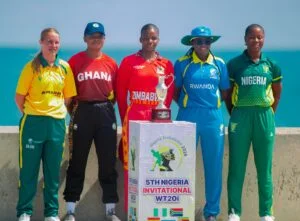
Excitement is building among participating athletes at the ongoing fifth edition of the Nigeria Women’s Invitational T20i tournamentscribing the competition as a vital avenue for skill development, exposure, and international experience.
The event, tagged the Patricia Kambarami Cup, is organised in memory of the late ICC Africa Regional Development Manager and Titans Chief Operating Officer, whose contributions to cricket development across the continent remain widely recognised.
Speaking in separate interviews at the Tafawa Balewa Square Cricket Oval in Lagos, players from different countries shared their impressions of the tournament, praising its organisation and competitive standard.
Captain of Nigeria’s women’s cricket team, Lucky Piety, expressed satisfaction with the quality of the competition, noting that it provides a strong platform for players and teams to improve.
According to her, the tournament has created room for learning and healthy competition among participating nations.
“It has been an exciting experience so far. Every team here is gaining something valuable, and for us, it’s also about enjoying the game while improving,” she said.
Piety reaffirmed Nigeria’s ambition to clinch the title, stressing that the team is determined to make the country proud.
“Our goal is clear — we want to win and give Nigerians another moment of joy, similar to what the U-19 team achieved,” she added.
But she noted that the tournament’s strong teams would make winning the trophy difficult.
“There are strong opponents here with the same ambition. We are approaching each match carefully and staying focused on our targets,” she said.
South Africa’s Filander Jae-Leigh also commended the tournament, describing it as both enjoyable and culturally enriching.
“It’s been a wonderful experience competing here in Nigeria. Beyond cricket, I’m enjoying the environment and learning about the culture,” she said.
She added that her team remains committed to executing its strategies effectively in pursuit of success.
“We’re concentrating on our game plan and aiming to finish strong in the competition,” she noted.
For Zimbabwe’s Bethei Zinyama, the tournament has offered a blend of fun and learning, highlighting the importance of international exposure.
“We’re enjoying ourselves and picking up new ideas from other teams. It’s a wonderful platform to grow,” she said.
Zinyama explained that her focus is on improving her performance and gaining wider recognition through participation.
The tournament, which kicked off on Friday, is scheduled to conclude on Sunday, March 29, at the Tafawa Balewa Square Cricket Oval, Lagos, with teams battling for top honours in what has already proven to be a thrilling contest.

Kebbi Police Arrest 10 Over Killing, Abduction in Birnin Kebbi

Goje Not Leaving APC, Aide Dismisses Defection Rumour as ‘Cheap Political Mischief’

Alkali Resigns as Transport Minister, Eyes Governorship Bid

Dangote Launches Landmark ₦1 Trillion Scholarship Scheme to Support 1.3 Million Nigerian Students

NGX Ends Week in the Green as ₦1.54 Trillion Boosts Investors’ Fortunes

Formal Rebuttal to the Recent Interview Granted by Retired Major General Ali Keffi on Arise TV
-
 Education4 months ago
Dangote Launches Landmark ₦1 Trillion Scholarship Scheme to Support 1.3 Million Nigerian Students
-
 Economy4 months ago
NGX Ends Week in the Green as ₦1.54 Trillion Boosts Investors’ Fortunes
-
 Column4 months ago
Formal Rebuttal to the Recent Interview Granted by Retired Major General Ali Keffi on Arise TV
-

 Gombe4 months ago
Gombe Shines Again, Ranks Second in Northeast at 2025 PHC Leadership Challenge
-

 Economy4 months ago
CBN’s End to Cash Withdrawal Limit
-

 Politics4 months ago
NSGF names Ezekiel Gomos as Director-General, setting stage for stronger regional collaboration
-

 Gombe3 weeks ago
A tribute to Dr Langa Hassan Bangunji (JP) – an icon of Scholarship, Leadership and Community Service
-

 Latest News4 months ago
Anglican Church Expands Footprint with 15 New Dioceses, Total Hits 176