Connect with us

Latest News

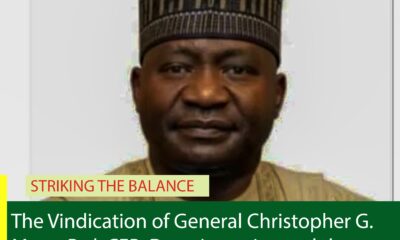
When Duty Calls Again: Advice to General Christopher Gwabin Musa, Rtd, Nigeria’s New Minister of Defence

Published

on

When Duty Calls Again: Advice to General Christopher Gwabin Musa, Rtd, Nigeria’s New Minister of Defence

 
The Senate’s confirmation of General Christopher Gwabin Musa as Minister of Defence on 3 December 2025 was more than a formality – it was a public endorsement of a leader who, just weeks earlier, had served as Nigeria’s immediate Chief of Defence Staff and earned praise from senators and security stakeholders alike for his steady hand in the Northeast and his clear eyed vision for the nation’s defence.
 
General Musa’s record as Theatre Commander of Operation HADIN KAI showed that he can translate strategy into results. Lawmakers noted his “comprehensive security reform plan” and his emphasis on “action, not just words” during the marathon screening that preceded his confirmation. It is precisely this blend of battlefield experience and forward thinking that Nigeria needs at the helm of the Defence Ministry today.
 
Why security, energy, food, and shelter are the new “must-haves.”
In his opening remarks to the Senate, General Musa reminded the chamber that a nation cannot be secure while its people go hungry, live in darkness, or lack a roof over their heads. “We cannot shoot our way out of hunger or hopelessness,” he said, underscoring that security, energy, food, and shelter are not optional extras but the foundation of any credible defence strategy. When citizens have reliable electricity, enough to eat, and a safe place to sleep, they are far less likely to be recruited by armed groups – a truth that any successful security architecture must acknowledge.
 
,
If General Musa needs a model, look no further than Rwanda’s former Defence Minister, Maj. Gen. Albert Ngauluka (2020 2024). Taking over a ministry still grappling with legacy rebel activity, Ngauluka launched a nationwide “Community Sentinel” programme that linked local farmers, traders, and village elders to a real-time intelligence network powered by affordable drones and mobile reporting apps. Within two years, cross-border rebel incursions fell by 70 %, and the country recorded its lowest homicide rate in a decade. His approach married technology with grassroots ownership – a lesson that resonates with General Musa’s own call for “technology-driven, community-rooted” security.
 
Less talk, more action – the expectation
Nigerians are clear: they want less rhetoric and more results. The recent Senate hearing left no doubt that the public views General Musa as a “seasoned professional finally empowered to deliver.”  It is not a belief that only retired generals can run a defence ministry – far from it – but rather a confidence that General Musa, with his proven track record and fresh mandate, can bridge the gap between policy and the field.
 
 
The road ahead is steep: banditry, terrorism, kidnapping, and the looming threats of climate-induced food insecurity demand swift, decisive moves. By prioritising the welfare of the soldier, integrating technology with a human touch, empowering local governments, and cutting the financial lifelines of criminal networks, General Musa can turn the high hopes placed in him into tangible peace for all Nigerians.
 
 
Below are some reflections—drawn from field research, policy analysis, and conversations with soldiers, community leaders, and private security practitioners—on how the Ministry can begin to reshape Nigeria’s security architecture. The aim is to reduce banditry, terrorism, and kidnapping, and to establish a more efficient and accountable system.
 
 
1. Prioritise the welfare of the soldier
A soldier who worries about his family’s next meal cannot focus on the mission. Upgrading barracks, ensuring reliable water, electricity, and internet, and providing regular medical care translate into higher morale and lower attrition. Expediting salary and pension payments through a transparent, digital payroll system will eliminate leakages. Creating “family hubs” at major bases—where spouses can access education, healthcare, and micro credit—will further strengthen the force.
 
 
2. Embrace technology, but keep it human-centric
Deploy an integrated command and control platform that links the Ministry, the Armed Forces, the Police, and Civil Defence in real time. Expand the use of UAVs and satellite night vision to monitor porous borders, especially around the Lake Chad basin, and pair this with community-based reporting apps that allow civilians to send geotagged alerts safely. A dedicated analytics cell staffed by data scientists and seasoned intelligence officers can turn raw data into predictive insights for resource allocation.
 
 
3. Strengthen local governance
Security cannot be outsourced to the centre alone. Empower state and local governments to form joint security committees that include traditional leaders, civil society groups, and the military. Reinvigorate community policing, ensuring officers are recruited from the communities they serve to build trust and improve intelligence flow. Regular workshops for local officials on budgeting, procurement, and basic security management will enable them to allocate resources more efficiently.
 
 
4. Allow private security to complement state forces 
Well-regulated private security companies (PSCs) can enhance national security when they operate under strict oversight. Enact a clear licensing regime that mandates transparency, background checks, and adherence to human rights standards, and maintain a public registry of approved PSCs. Contract PSCs for static guarding of critical infrastructure and logistical support, freeing regular troops for kinetic operations. Joint training with PSC personnel will ensure interoperability and adherence to rules of engagement.
 
 
5. Cut the financial lifelines of terrorism and banditry
Formalise a “no ransom” stance across all government agencies, with legal penalties for any payment made by officials or families. Strengthen the Financial Intelligence Unit’s capacity to monitor cash flows, cryptocurrency transactions, and informal money transfer networks used by militants. Offer cash for information programmes that reward civilians who provide actionable intelligence on ransom negotiations.
 
 
6. Foster regional cooperation
The threats Nigeria faces do not respect borders. Establish multinational patrol units that operate under a shared command structure, sharing intelligence and resources. Work with Chad, Niger, and Cameroon to dismantle arms smuggling routes that fuel banditry and insurgency. Offer training and equipment to neighbouring armed forces to create a network of capable partners.
 
 
Closing thoughts
 
Nigerians have high hopes for General Christopher Gwabin Musa. The belief is not that only retired generals can run a defence ministry – far from it – but that a leader with his proven track record, executive acumen, and deep field experience can bridge the gap between policy and the front line. The nation’s expectation is simple: “less talk, more action.”
 
 
By placing the soldier’s welfare at the core, harnessing technology with a human touch, empowering local governance, regulating private security, cutting terrorist financing, and strengthening regional ties, General Musa can turn the optimism of 3 December into lasting peace and stability for all Nigerians.
 
 
His record as Theatre Commander of Operation HADI KAI has already shown that he understands the importance of decisive, ground-level leadership. By placing the soldier’s welfare at the core, harnessing technology with a human touch, empowering local governance, regulating private security, cutting terrorist financing, and strengthening regional ties, he can begin to turn the tide against banditry, terrorism, and kidnapping.
 
 
The nation watches, and the clock is ticking. Let the work begin. May your tenure be marked not just by the absence of conflict, but by the presence of lasting peace and development for all Nigerians.


Dr. MS Abubakar, CAS, FICRPC.

Continue Reading
Click to comment

Leave a Reply

Your email address will not be published. Required fields are marked *

Latest News

Gombe Energy Shift: Inuwa Yahaya and the Courage to Lead Where It Matters Most

Published

on

By


Gombe Energy Shift: Inuwa Yahaya and the Courage to Lead Where It Matters Most

By Ismaila Uba Misilli

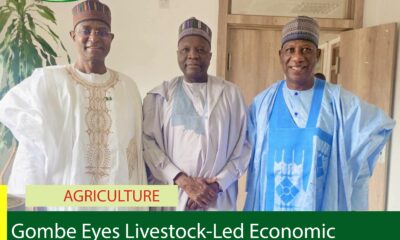
When history takes stock of leaders who chose foresight over hesitation and action over rhetoric, Governor Muhammadu Inuwa Yahaya, CON, will stand out as one who understood that energy is not merely about electricity but about productivity, dignity, economic competitiveness, and sustainable development.

The recent transfer of regulatory oversight of the electricity market in Gombe State from the Nigerian Electricity Regulatory Commission (NERC) to the Gombe State Electricity Regulatory Commission (GOSERC) is a bold statement of readiness and an administrative milestone that signals a state prepared to take ownership of its energy future and a governor determined to seize every opportunity that will unlock growth and improve the quality of life of his people.

By fulfilling all the conditions stipulated in the amended Constitution and the Electricity Act 2023, Gombe has joined the league of forward-looking states taking advantage of Nigeria’s power sector decentralization.

This achievement was not accidental. It is the product of deliberate planning, institutional foresight, and leadership that believes development must be anticipated, not awaited.

To ensure that this historic transition takes off on a sound and credible footing, Governor Inuwa Yahaya demonstrated uncommon seriousness by appointing a seasoned technocrat with deep sectoral knowledge and cognate experience, Dr. Usman Abba Arabi, as Chairman of the newly established GOSERC.

The choice of Dr. Arabi reflects the governor’s conviction that strong institutions require competent leadership, technical depth, and regulatory integrity. It is a clear signal to investors and stakeholders that the electricity market in Gombe will be guided by professionalism, transparency, and best global practices.

Governor Inuwa Yahaya’s embrace of state-level electricity regulation is anchored in his clear understanding that reliable power is the backbone of industrialization, job creation, and inclusive economic growth.

With GOSERC now in charge of intrastate electricity activities, Gombe is better positioned to design tariffs that reflect local realities, issue licenses that attract credible investors, and regulate supply and distribution with efficiency and accountability.

Beyond regulation, the governor has consistently matched policy with action. Across several local government areas, the Inuwa Yahaya administration is deploying solar mini-grid projects to expand electricity access, particularly in rural and underserved communities. These projects, in partnership with REA, will go beyond lighting homes; they will power small businesses, health centers, and water schemes, bringing tangible development to the grassroots and reducing dependence on the national grid.

At the Muhammadu Buhari Industrial Park, the administration has reinforced its industrial ambition with the ongoing construction of a 7.5 MVA injection substation, in partnership with the Niger Delta Power Holding Company, designed to provide a stable and dedicated power supply to industries. This critical infrastructure sends a strong message to investors that Gombe is serious about industrial productivity, efficiency, and ease of doing business.

Even more ambitious is the state’s proposed 100-megawatt solar power generation project, which the government intends to execute in partnership with a reputable Chinese conglomerate. This project, when realized, will significantly boost power capacity and strengthen Gombe State’s clean energy mix.

Notably, Governor Inuwa Yahaya has already engaged the African Development Bank (AfDB) on the project, proving his proactive approach to mobilizing international financing and technical partnerships for transformative infrastructure.

The governor’s energy vision was further strengthened by his recent engagement with stakeholders at the Rural Electrification Agency (REA) Forum, where he passionately wooed investors to harness Gombe State’s vast solar potential.

At the forum, Governor Inuwa Yahaya made a compelling case for Gombe as a prime destination for renewable energy investment, highlighting the state’s regulatory readiness, land availability, political will, and commitment to public-private partnerships. His message was clear: Gombe is open, ready, and serious about clean energy development.

In line with this commitment, the administration has rolled out several clean energy projects across the state. These include the installation of solar-powered streetlights in the Gombe metropolis and across local government headquarters, improving security, extending commercial activities into the night, and enhancing urban aesthetics. In addition, solar power solutions have been deployed to medical facilities across the state, ensuring uninterrupted electricity for critical healthcare services and reducing operational costs.

Together, these interventions are in line with Governor Inuwa Yahaya’s forward-looking strategy to achieve energy sufficiency, reduce dependence on the national grid, and build resilience against power disruptions.

In a country where energy deficits have long constrained growth, the Gombe governor’s approach places his state firmly on the path of sustainable development.

What truly distinguishes Governor Inuwa Yahaya’s leadership is not just the scale of these initiatives but their clarity of purpose. He understands that electricity reform is not an abstract policy exercise; it is a practical instrument for poverty reduction, youth empowerment, industrial expansion, and economic transformation.

Challenges undoubtedly remain, including coordination between federal and state regulators, ensuring the financial health of distribution companies, and strengthening institutional capacity. But Gombe State’s advantage lies in leadership that consistently demonstrates the courage to take bold decisions and the discipline to follow through.

In choosing to lead rather than lag, Governor Inuwa Yahaya has once again proven that development favors the prepared and the visionary.

The journey of Gombe toward energy sufficiency and independence is well underway, and the message is unmistakable: the state is no longer waiting for power to come; it is building its own future, deliberately and decisively.

Misilli is DG Press Affairs.

Government House, Gombe.

Continue Reading

Latest News

Tragedy in Maiduguri as Collapsing Wall Kills Five Children

Published

on

By

Tragedy in Maiduguri as Collapsing Wall Kills Five Children.

Tragedy in Maiduguri as Collapsing Wall Kills Five Children

By Tada Jutha, Maiduguri

A quiet evening in the Bulumkutu community, Maiduguri, turned tragic after a house wall collapsed, killing five children and leaving another injured in Borno State.

The heartbreaking incident occurred around 8:00 p.m. on Sunday, when a wall suddenly gave way and fell on six children who were in the area. The rubble trapped the victims, all under the age of 16.

The Police Public Relations Officer of the Borno State Police Command, ASP Nahum Daso, confirmed the development on Monday, stating that five of the children died immediately, while one survived with injuries and is currently receiving treatment at the Specialist Hospital, Maiduguri.

According to him, the incident was reported through the Divisional Police Officer of the Bulumkutu Division, prompting an immediate response by security operatives.

“Yesterday, at about 8:00 p.m., we received a report of a wall collapse that trapped six children. Unfortunately, five of them lost their lives, while one sustained injuries and is presently on admission,” Daso said.

He added that the police have launched a full investigation to determine the circumstances surrounding the collapse, including whether negligence or poor construction standards played a role.

“The command has commenced an investigation into the fence collapse and all issues relating to how the children were trapped. We want to establish if there was any form of negligence,” he stated.

The police spokesperson urged residents to observe proper building standards and ensure that structures within their compounds are safe, especially during the rainy season. He also advised parents and guardians to closely monitor their children to prevent similar tragedies.

The incident comes amid growing concerns over building safety in Maiduguri. Just on July 30, 2025, heavy rainfall reportedly caused the collapse of eight buildings in parts of the metropolis, displacing several residents.

As the community mourns the young lives lost, authorities are calling for greater vigilance, improved construction practices, and increased parental supervision to avert further losses.

Continue Reading

Latest News

Troops Kill Five Boko Haram Fighters, Rescue Three Kidnap Victims in Borno

Published

on

By

Troops Kill Five Boko Haram Fighters, Rescue Three Kidnap Victims in Borno

By Tada Jutha, Maiduguri

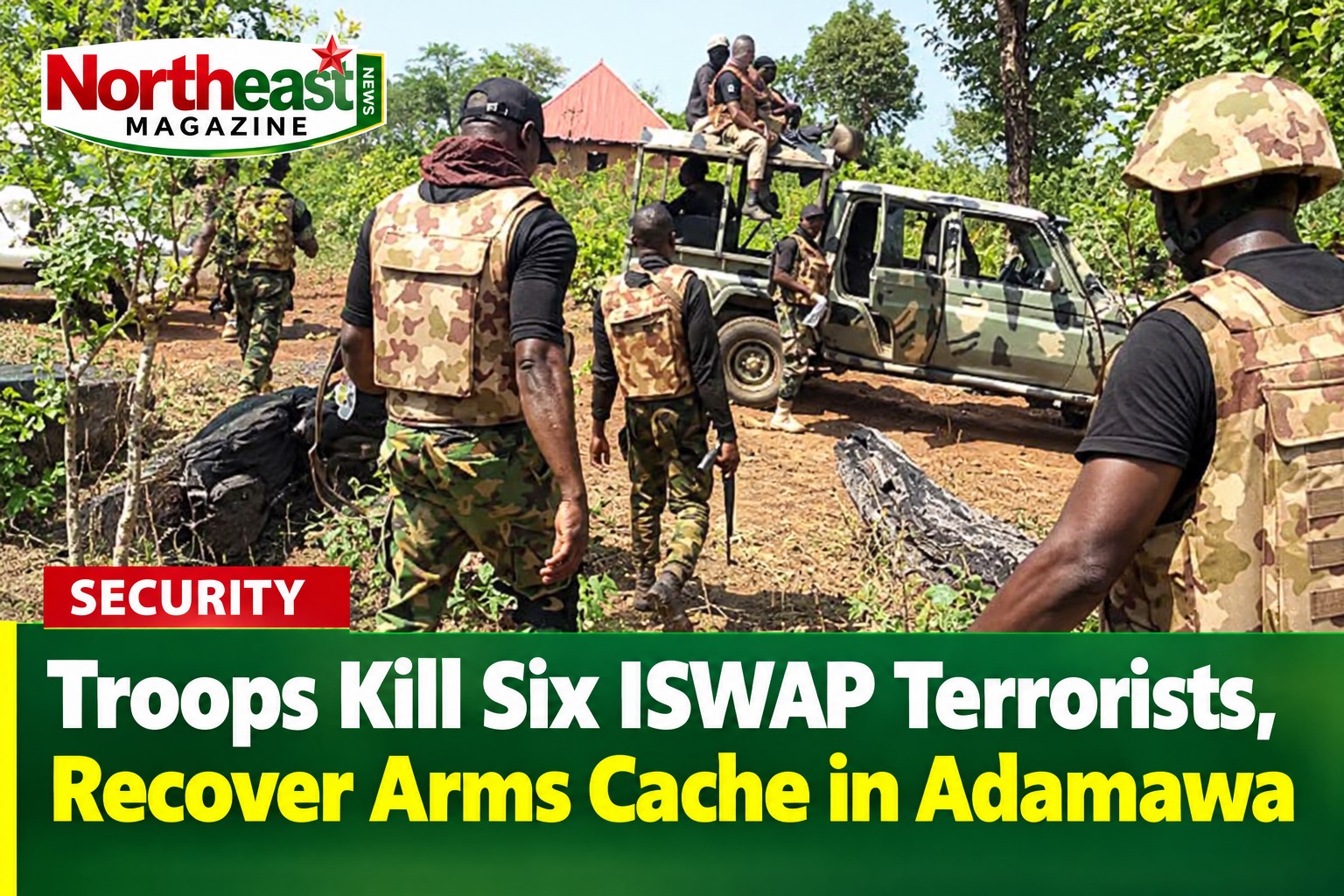
Troops of the Joint Task Force Northeast, under Operation Hadin Kai (OPHK), have neutralised five Boko Haram terrorists and rescued three kidnapped civilians in the Konduga Local Government Area of Borno State.

Following credible intelligence reports, the operation took place at the Sojiri crossing point in the early hours of Sunday, January 4, 2026.

Troops Engage Terrorists at Sojiri Axis

According to the OPHK Media Information Officer, Lieutenant Colonel Sani Uba, troops worked alongside members of the Civilian Joint Task Force (CJTF) to confront the terrorists.

He said the encounter lasted about 30 minutes and resulted in the killing of five terrorists, with no casualty recorded on the side of the troops.

Three Abducted Civilians were rescued.
Lt-Col. Uba revealed that the troops also rescued three kidnapped individuals, made up of two men and one woman.

The victims were abducted last year from communities located around the fringes of the Sambisa Forest.
Weapons and Logistics Recovered
Troops recovered an AK-47 rifle and other logistics during the operation, which they believe the terrorists used to attack nearby communities.

We have secured the recovered items and are currently providing necessary support to the rescued civilians.

The military reaffirms its commitment to civil protection.
Lt-Col. Uba said the operation reflects the military’s commitment to sustained offensive action against terrorist groups in the Northeast.

He emphasised the importance of cooperating with local security partners, noting that such collaboration continues to yield positive results.

Despite ongoing security challenges in the Lake Chad region and Sambisa Forest, the military assured that troop morale remains high and operational dominance is being maintained across the theatre.

Continue Reading

Trending

Copyright © 2025. Northeast Magazine, All Right Reserved..