
Politics
ADC Launches Nationwide Mobilisation in Gombe, Pledges a People-Driven Rescue Agenda Ahead of 2027

ADC Launches Nationwide Mobilisation in Gombe, Pledges a People-Driven Rescue Agenda Ahead of 2027
By Auwal Ahmad Umar
The African Democratic Congress (ADC) has commenced an intensive grassroots mobilisation in Gombe State, signalling what party leaders describe as a decisive push to reposition the party as a credible alternative ahead of Nigeria’s next general elections.
At the centre of the renewed drive is Muhammad Jibiri Barde, a chieftain of the party. He says the ADC is providing the political platform for a nationwide movement aimed at rescuing the country from deepening insecurity, economic hardship, and the steady collapse of public institutions.
Speaking during an interactive session with party members and supporters in Gombe, Mr. Barde said the mobilisation marks a critical phase in the evolution of the ADC, as it moves from consolidation to active political engagement at the grassroots level.
According to him, the party is now fully hosting a broad-based political movement known as Sabo Ta Fiya—loosely translated as “a fresh beginning”—which has, over the past year, quietly spread across states and regions, drawing support from politicians, professionals and citizens disillusioned with the country’s prevailing governance trajectory.
“ADC today is not just another political party,” Mr Barde said. “It is the vehicle for a rescue movement that has been building momentum across Nigeria. People are tired of excuses, tired of recycled promises, and tired of leadership that feels distant from their daily struggles.”
A Movement Finds a Political Home
Mr Barde explained that Sabo Ta Fiya began as a loose coalition of reform-minded political actors and civic stakeholders concerned about the direction of the country. Over time, he said, the movement found a more stable and structured home within the ADC, which now serves as its official political platform.
He noted that the movement enjoys the backing of several high-profile figures, including a former vice-president, former governors, ex-ministers and other influential stakeholders, though he declined to name individuals.
“What unites us is not ambition for office, but a shared belief that Nigeria can and must do better,” he said. “We have people who have served at the highest levels of government and who understand where things went wrong. They are now willing to be part of a genuine effort to correct course.”
The ADC, he said, has already issued official circulars outlining a nationwide timetable of activities designed to strengthen party structures and expand membership.
These activities include membership registration and revalidation exercises, as well as congresses scheduled to begin at the unit level and progress through wards, local government areas and states by the end of January. A non-elective national convention is also planned for February.
Mr Barde described the timeline as deliberate and strategic, saying it reflects the party’s intention to build from the bottom up rather than impose leadership or candidates from the top.
“This is about rebuilding trust in the political process,” he said. “We want members to feel a sense of ownership, from the polling unit to the national level.”
A call to Party Members and Supporters
Speaking to ADC members in Gombe State, Mr. Barde urged them to fully embrace the revalidation exercise and take responsibility for mobilising new members at the community level.
He said the success of the party’s rescue agenda depends largely on the commitment of ordinary members rather than elite endorsements.
“This is the moment for all of us to return home,” he said. “Return to the party, strengthen its structures and help build something that truly belongs to the people, not a few powerful individuals.”
He added that Gombe State holds strategic importance for the ADC’s broader plans in the Northeast, noting that the region has borne a disproportionate share of the country’s insecurity and economic decline.
“For us, Gombe is not just another state,” he said. “It represents resilience, potential and the urgent need for leadership that listens.”
Emphasis on Internal Democracy
A recurring theme in Mr Barde’s remarks was the party’s emphasis on internal democracy and inclusiveness, which he described as the ADC’s defining values.
According to him, the party operates on a strict principle of “one man, one vote”, with clear rules designed to prevent imposition, godfatherism and the marginalisation of ordinary members.
“This is not a party where decisions are taken in secret rooms,” he said. “There is no imposition. Every member has a voice, and every vote counts.”
He stressed that new members are not treated as outsiders or political tools but as equal stakeholders in the party’s future.
“Whether you joined yesterday or ten years ago, you are welcomed as a VIP,” he said. “What matters is your willingness to contribute to the collective effort of saving and repositioning the country.”
Unity and Factionalisation Claims
Responding to reports of internal divisions within the ADC in Gombe State, Mr. Barde dismisses claims of factionalization, insisting that the party remains united and focused.
“We are not aware of any faction in Gombe,” he said. “What we have are healthy conversations and growing interest, which some people may misinterpret as division.”
He added that the party’s leadership is committed to resolving disputes through dialogue and established internal mechanisms, rather than public confrontation.
“Our strength lies in our unity,” he said. “We are united, committed and determined—not just to rescue Gombe State, but to contribute meaningfully to rescuing Nigeria as a whole.”
A Grim Assessment of Governance
Mr. Barde took the occasion to deliver a scathing assessment of the current state of governance in Nigeria, citing worsening insecurity, decaying infrastructure, and the decline of critical sectors such as healthcare, education, agriculture, and trade.
He said insecurity has become a defining feature of daily life for many Nigerians, with communities living in fear of bandits, insurgencies, and violent crime.
“In too many parts of the country, people go to sleep uncertain of what the next day will bring,” he said. “This is abnormal, and we should reject it.”
He also pointed out the poor state of infrastructure, describing roads, power supplies, and water systems as grossly inadequate for a country of Nigeria’s size and ambition.
“Our infrastructure is collapsing, yet year after year, budgets are passed with little to show on the ground,” he said.
Strain on Ordinary Citizens
Mr. Barde asserts that policy failures, rising costs, and weak institutions are disproportionately impacting ordinary citizens and small-scale traders.
Markets are struggling, small businesses are closing, and young people are becoming increasingly disconnected from economic opportunities, according to him.
He stated, “People desire employment, yet the system works against them.” “Traders are overburdened, farmers are insecure, and young graduates are trapped between unemployment and underemployment.”
He argued that public institutions, which should serve as engines of development, have instead become symbols of inefficiency and frustration.
“Our hospitals lack basic equipment, our schools are underfunded, and our public offices are slow and unresponsive,” he said. “This level of neglect is unacceptable.”
ADC’s Vision for Gombe and Nigeria
Against this backdrop, Mr. Barde outlined what he described as the ADC’s people-centered vision for Gombe State and the country at large.
He said the party is committed to leadership that prioritises security, economic productivity, and social welfare and has policies designed to deliver tangible improvements rather than slogans.
“ADC stands for purposeful leadership,” he said. “Leadership that guarantees equal opportunity, quality education, functional healthcare and a productive economy for all.”
He added that agriculture, trade, and small-scale enterprises would be central to the party’s economic agenda, particularly in states like Gombe, where livelihoods depend heavily on these sectors.
“We believe that if you secure communities and support farmers and traders, you unlock growth,” he said. “Development does not happen in isolation—it starts with people.”
Looking Ahead to the Elections
With mobilisation underway, Mr. Barde said the ADC is positioning itself for sustained engagement ahead of the next general elections.
He stressed that the party’s focus is not merely on winning elections but on rebuilding confidence in democratic governance.
“Nigerians deserve a real choice,” he said. “A choice built on accountability, competence and inclusive governance, not empty promises.”
He acknowledged that the task ahead is difficult, given the dominance of established political parties, but insisted that the growing appetite for change gives the ADC a unique opportunity.
“History shows that when people come together around a clear purpose, change becomes inevitable,” he said.
As the interactive session drew to a close, party members in attendance echoed Mr. Barde’s call for grassroots engagement, with several pledging to take the mobilisation drive back to their wards and communities.
For the ADC, the coming months will test whether its rescue rhetoric can translate into organisational numbers and influence on the ground. For now, the party appears determined to make its case—starting from Gombe and extending across the country—that Nigeria’s political future does not have to look like its troubled present.

Goje Not Leaving APC, Aide Dismisses Defection Rumour as ‘Cheap Political Mischief’
By Auwal Ahmad, Gombe
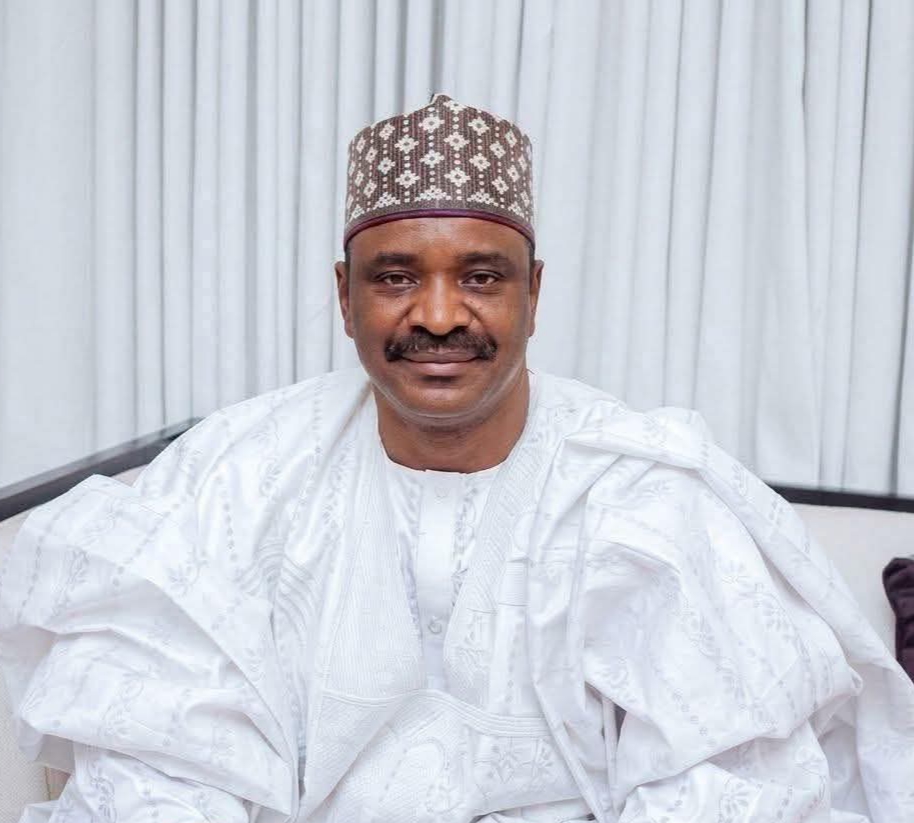
Fresh speculation over the political future of former Gombe State Governor and serving Senator, Danjuma Goje, has been dismissed as false, with his media aide insisting that the lawmaker remains firmly rooted in the All Progressives Congress (APC).
The clarification followed reports making the rounds on social media alleging that Senator Goje was preparing to dump the APC for the African Democratic Congress (ADC) ahead of the 2027 general elections.
But in a press statement made available to journalists, Goje’s Special Assistant, Ahmed Isa Kashere, described the report as “baseless disinformation” designed to mislead the public and create unnecessary political tension.
Kashere said there was no truth in the claim, stressing that the former governor had neither resigned from the ruling party nor shown any sign of abandoning it.
According to him, Senator Goje’s recent participation at the APC National Convention and his continued involvement in party affairs at the national level clearly show his loyalty and commitment to the party.
“Senator Goje has not quit the APC, nor does he intend to. This disinformation is nothing but mischief from those who seek to undermine his reputation and contributions to the party,” Kashere said.
He maintained that those behind the rumour were political detractors bent on causing confusion around the senator’s political standing and influence in Gombe State and beyond.
The aide also frowned at what he described as the growing use of “mushroom media platforms” to spread unverified claims, especially as political activities begin to gather momentum ahead of the next election cycle.
Kashere noted that Senator Goje, like many prominent politicians, has repeatedly been a target of false narratives and politically motivated speculation, particularly during periods of heightened political calculations.
“It is not surprising that mischievous elements have again resorted to using questionable media outlets to circulate such falsehood. This is not the first time such tactics are being used, not only against Senator Goje, but against several politicians as elections draw closer,” he added.
The statement comes at a time when political alignments and defections are beginning to shape conversations ahead of the 2027 polls, with major political actors across the country facing growing scrutiny over their future ambitions and party loyalties.
However, Goje’s camp insists there is no ambiguity about where he stands, saying the senator remains a committed APC stakeholder and a loyal party man.
Alkali Resigns as Transport Minister, Eyes Governorship Bid
By Auwal Ahmad Umar
The Minister of Transportation, Said Ahmed Alkali, has resigned from office following the presidential directive requiring political appointees seeking elective positions to step down ahead of the next elections.
His resignation was contained in a press statement signed by Umar Alkali Jibril, Special Assistant on Media and Publicity in the Office of the Minister of Transportation, and made available to journalists in Gombe.
Alkali is said to be leaving office to pursue his governorship ambition in the forthcoming elections, a move that is already expected to shape the political atmosphere in his home state.
In his resignation letter, the minister appreciated President Bola Ahmed Tinubu for the opportunity to serve the country, while reflecting on what he described as key milestones achieved in the transportation sector during his time in office.
“I am deeply grateful to President Bola Ahmed Tinubu for the privilege to serve our great nation. As I step down, I do so with a sense of fulfilment over the progress recorded in the transportation sector and with renewed determination to continue serving the people in a greater capacity,” Alkali said.
The statement added that the president has accepted the resignation and commended the minister for his commitment and contributions to national service.
Alkali’s resignation now clears the path for his expected entry into the governorship race, setting the stage for what could become a major political contest in the state.
2027: Pressure Mounts to Zone Gombe Central Senate Seat to Yamaltu/Deba
…Nyimatli Development Association says equity and political balance demand a return to rotational representation
By Auwal Ahmad, Gombe
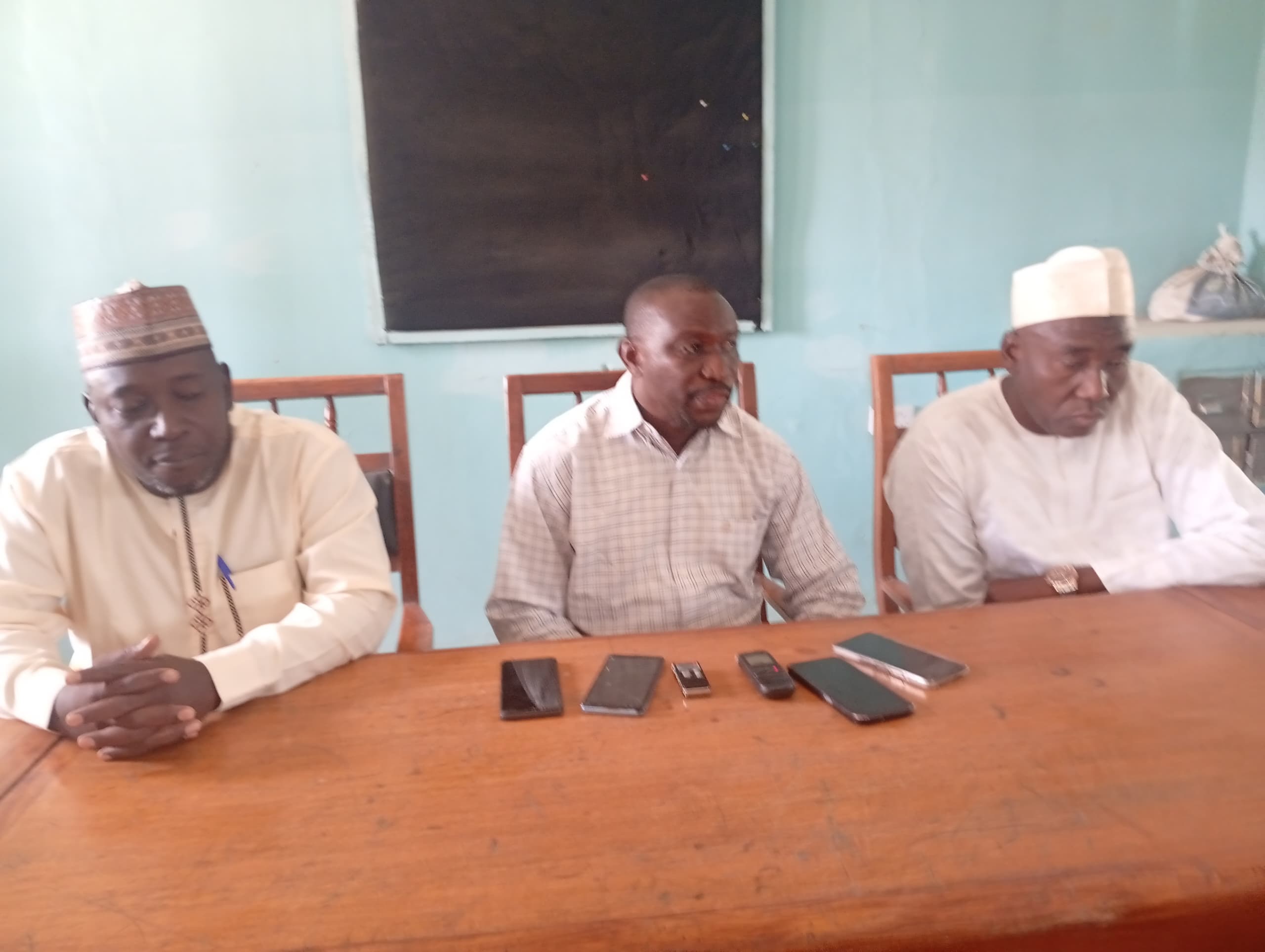
The Nyimatli Development Association (NDA) has renewed calls for the zoning of the Gombe Central senatorial seat to the Yamaltu/Deba Local Government Area ahead of the 2027 general elections.
The group made its position known during a press briefing in Gombe, where its secretary, Emmanuel Usman, spoke on behalf of the association’s executive members and stakeholders from the area.
The association said the demand was anchored on fairness, justice and the need to preserve political balance within Gombe Central Senatorial District, which is made up of Akko and Yamaltu/Deba local government areas.
Mr Usman said the call was not driven by personal ambition or hostility toward any individual but by what the group described as a legitimate demand for inclusiveness and equal political opportunity.
According to him, the district has historically been shared by the two local government areas, and political representation should reflect that reality.
He noted that although the senatorial seat had at some point moved between the two councils, the arrangement was disrupted over the years, leaving Yamaltu/Deba with what he described as a prolonged sense of exclusion.
The association argued that after years of dominance by one side of the district, it had become necessary to restore what it called a fair and acceptable power-sharing formula.
“Our demand is based on equity and justice. Gombe Central belongs to both Akko and Yamaltu/Deba, and it is only fair that the two should have equal opportunity to occupy the Senate seat,” Mr Usman said.
He said the agitation should not be mistaken for a protest against the performance of the current occupant of the seat, insisting that the issue was about political fairness rather than personality.
According to him, Yamaltu/Deba has competent and experienced individuals who are capable of providing quality representation at the National Assembly if given the opportunity.
“This is not about questioning anybody’s capacity or performance. It is about fairness and giving every part of the district a sense of belonging in the political process,” he said.
The group also called on Governor Muhammadu Inuwa Yahaya to use his influence as leader of the All Progressives Congress (APC) in Gombe State to ensure justice and inclusiveness in the build-up to the 2027 elections.
Mr Usman said the governor had the political weight and leadership standing to bring together stakeholders from Akko and Yamaltu/Deba and guide them toward a consensus that would preserve unity within the party and the district.
He said such a move would not only reduce tension but also strengthen internal cohesion and public trust in the political process.
“We believe the governor has always shown leadership in difficult moments. This is another opportunity for him to promote justice, fairness and peaceful political understanding among all sides,” he said.
The association maintained that zoning the seat to Yamaltu/Deba would help correct what it sees as a long-standing imbalance while also promoting harmony and political stability in Gombe Central.
It warned that failure to address the issue could deepen feelings of marginalisation and weaken confidence in the principle of equal representation.
The group therefore urged the APC and other political stakeholders in the state to place equity above narrow political calculations and ensure that the next senatorial contest reflects the collective interest of all communities in the district.
For the NDA, the 2027 election presents what it described as a critical opportunity to rebuild trust and reaffirm the principle that no section of Gombe Central should be shut out of representation.

Kebbi Police Arrest 10 Over Killing, Abduction in Birnin Kebbi

Goje Not Leaving APC, Aide Dismisses Defection Rumour as ‘Cheap Political Mischief’

Alkali Resigns as Transport Minister, Eyes Governorship Bid

Dangote Launches Landmark ₦1 Trillion Scholarship Scheme to Support 1.3 Million Nigerian Students

NGX Ends Week in the Green as ₦1.54 Trillion Boosts Investors’ Fortunes

Formal Rebuttal to the Recent Interview Granted by Retired Major General Ali Keffi on Arise TV
-
 Education4 months ago
Dangote Launches Landmark ₦1 Trillion Scholarship Scheme to Support 1.3 Million Nigerian Students
-
 Economy4 months ago
NGX Ends Week in the Green as ₦1.54 Trillion Boosts Investors’ Fortunes
-
 Column4 months ago
Formal Rebuttal to the Recent Interview Granted by Retired Major General Ali Keffi on Arise TV
-

 Gombe4 months ago
Gombe Shines Again, Ranks Second in Northeast at 2025 PHC Leadership Challenge
-

 Economy4 months ago
CBN’s End to Cash Withdrawal Limit
-
 Politics4 months ago
NSGF names Ezekiel Gomos as Director-General, setting stage for stronger regional collaboration
-
 Gombe3 weeks ago
A tribute to Dr Langa Hassan Bangunji (JP) – an icon of Scholarship, Leadership and Community Service
-

 Latest News4 months ago
Anglican Church Expands Footprint with 15 New Dioceses, Total Hits 176