
NGOs
AI Boom, Training Bust: Only 10% of Nigerian Journalists Skilled in Emerging Tools – SMI

AI Boom, Training Bust: Only 10% of Nigerian Journalists Skilled in Emerging Tools – SMI
By Auwal Ahmad
A new industry insight has revealed a widening gap between the rapid adoption of artificial intelligence and the capacity of Nigerian journalists to use the technology responsibly, with just a fraction of newsroom professionals receiving formal training.
This was disclosed in Abuja on Thursday by Peter Iorter, Executive Director of the Safer Media Initiative (SMI), during a capacity-building session for media practitioners focused on the ethical and effective deployment of AI tools.
The workshop, themed “AI Tools for Journalists: Effective, Responsible and Safe Use”, is part of SMI’s broader Artificial Intelligence and Media (AIM) Project, designed to equip journalists with the competencies required in a fast-evolving digital landscape.
According to Iorter, recent findings indicate that while an overwhelming majority of journalists already rely on AI in their daily work, only about 10 per cent have undergone structured training on its application.
He warned that the mismatch between usage and knowledge poses serious risks to journalism, particularly in areas such as accuracy, accountability, and professional ethics.
“Artificial intelligence is reshaping the global media ecosystem at a rapid pace. While it offers immense opportunities, it must be approached with caution and guided by ethical standards,” he said.
Iorter stressed that the absence of adequate training could lead to misuse of AI tools, potentially eroding public trust in the media if not urgently addressed through institutional policies and capacity development.
He explained that the Abuja training aims to close this knowledge gap by equipping journalists with practical skills to use AI responsibly, without compromising editorial integrity.
“Our goal is to ensure Nigerian journalists are not only keeping up with global trends but are also using these tools in a way that upholds the credibility of the profession,” he added.
The initiative, he noted, is being supported by UNESCO under its International Programme for the Development of Communication, with a key objective of developing newsroom guidelines for AI usage.
Iorter pointed out that many media organisations currently lack clear policies governing the integration of AI into editorial processes, making it imperative to establish standards that balance innovation with responsibility.
Also speaking at the session, Titilope Oparinde, a facilitator and founder of Generative AI Journalism, encouraged journalists to embrace AI as a supportive tool rather than a threat.
She noted that while AI can enhance productivity—through functions such as transcription, translation and content summarisation—it cannot replace human judgement, editorial discretion or ethical reasoning.
“Journalists who understand how to use AI will remain relevant. Those who ignore it risk being left behind,” she said, urging continuous learning within the profession.
In his contribution, Oluseyi Olufemi, Country Director of Dataphyte, underscored the importance of verifying information generated with AI tools.
He advised journalists to maintain their role as custodians of truth by rigorously fact-checking all AI-assisted outputs before publication.
Olufemi also highlighted the dual role of AI in both combating misinformation and introducing new digital safety concerns, including vulnerabilities that may disproportionately affect women and other groups.
The training forms part of ongoing efforts to promote responsible AI adoption and strengthen digital safety practices across newsrooms in Nigeria, as the media industry continues to navigate the intersection of technology and journalism.
NGOs
Politics Shouldn’t Divide Gombe: CSOs Sound Alarm Over Rising Hate Speech Ahead of Governorship Election

Politics Shouldn’t Divide Gombe: CSOs Sound Alarm Over Rising Hate Speech Ahead of Governorship Election
By Auwal Ahmad, Gombe
The Gombe Network of Civil Society Organizations (GONET) has warned that the increasing use of hate speech, online attacks and inflammatory political rhetoric by supporters of governorship aspirants could undermine the peace and unity Gombe State has enjoyed over the years.
In a statement jointly signed by its Chairman, Amb. Ibrahim Yusuf, and Secretary, Dr Benjamin Maina, the coalition expressed concern that political engagement in the state was rapidly shifting from healthy democratic competition to personal insults, cyberbullying, character assassination and dangerous incitement.
The organisation said the trend, if left unchecked, could threaten the peaceful coexistence for which Gombe, popularly known as the “Jewel in the Savannah”, is recognised.
According to GONET, elections should be fought on the strength of ideas, policies and leadership competence rather than through campaigns of hatred and misinformation.
“Politics should never become a licence for hatred. Every aspirant is a son of Gombe whose dignity deserves respect, irrespective of political affiliation. Citizens should debate policies and programmes instead of spreading abuse and false narratives,” the statement said.
The coalition warned that political violence often begins with reckless words, noting that history has repeatedly shown that inflammatory language, misinformation and sustained verbal attacks frequently precede physical violence.
It therefore urged all governorship aspirants and political leaders to publicly caution their supporters against hate speech, threats and provocative online conduct.
“True leadership is demonstrated not only by the size of one’s political following but by the discipline and restraint exhibited by supporters,” it added.
GONET also appealed to residents not to sacrifice personal relationships or divide communities over politics, reminding citizens that today’s political rivals could become tomorrow’s allies.
The group called on security agencies to strengthen intelligence gathering to identify and address deliberate incitement and cyber harassment while enforcing the law professionally, impartially and without political interference.
It further urged traditional rulers, religious leaders, youth groups, community leaders, civil society organisations and the media to promote issue-based campaigns and discourage extremist political narratives throughout the electoral season.
Reaffirming its commitment to peaceful elections, GONET stressed that while political offices are temporary, the people of Gombe would continue to live together after the elections.
It urged all stakeholders to allow campaigns to remain competitive without sacrificing mutual respect, expressing hope that wisdom would prevail over provocation and peace over political bitterness.

GONET Condemns Rising Child Abduction Cases, Calls for Stronger Protection Measures
By Auwal Ahmad Umar
The Gombe Network of Civil Society Organisations (GONET) has strongly condemned the growing wave of child abductions, kidnappings, and other forms of violence targeting children across the country, describing the trend as a serious threat to national security and human dignity.
In a press statement signed by its leadership, the network expressed deep concern over what it called the “disturbing increase” in cases of child abduction, stressing that such acts represent a gross violation of human rights and endanger the future of society.
GONET warned that children must be protected at all costs, insisting that they deserve to grow up in safe and secure environments free from fear, exploitation, and violence.
The group called on security agencies at all levels to intensify efforts in preventing such crimes, ensuring swift rescue operations for victims, and bringing perpetrators to justice without delay. It also urged stronger collaboration between communities and security operatives.
According to the statement, parents, guardians, school authorities, religious leaders, and community members must remain alert and report any suspicious movements or activities to relevant security agencies.
The organisation further appealed to government authorities to strengthen child protection systems, enhance community policing structures, and address the root causes of insecurity that continue to expose children to danger.
“As a civil society network committed to peace, human rights, and social justice, we stand in solidarity with affected families and reaffirm our commitment to advocating for the protection and welfare of every child,” the statement read.
GONET leadership, signed by Ambassador Ibrahim Yusuf, Chairman, and Dr Ben Maina, Secretary, reaffirmed that protecting children remains a collective responsibility, urging stakeholders to act decisively to safeguard the nation’s future.
The group concluded with a renewed call for unity in protecting children, describing them as “the most vulnerable and most valuable segment of society.”
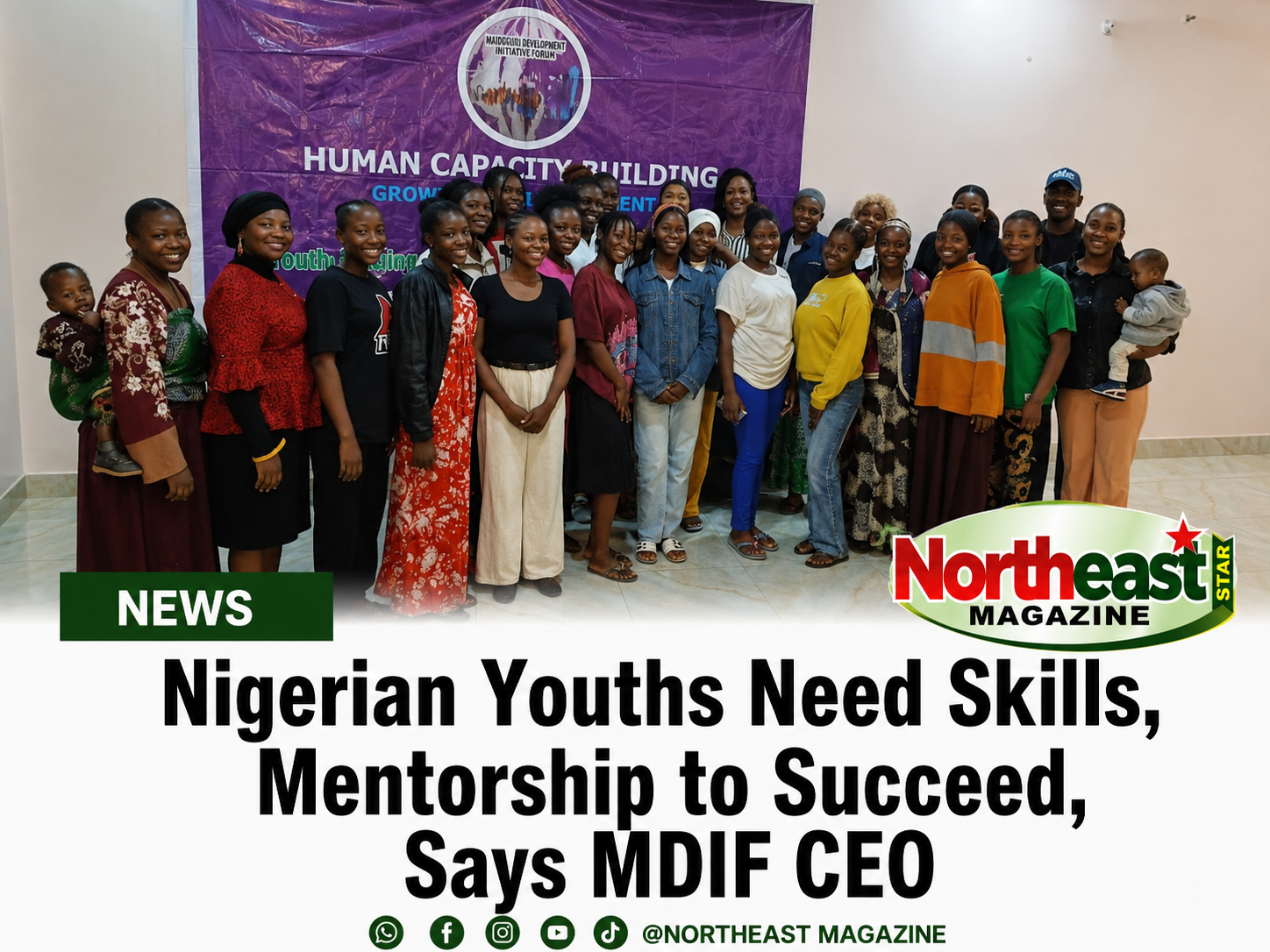
Nigerian Youths Need Skills, Mentorship to Succeed, Says MDIF CEO
By Auwal Ahmad Umar
The Chief Executive Officer of the Migration and Development Impact Foundation (MDIF), Margaret Ngozi Ukegbu, has called on Nigerian youths to embrace skill acquisition, entrepreneurship and mentorship to overcome unemployment and build successful careers.
Ukegbu spoke on Tuesday during a youth employability and wealth creation training organised by the foundation in Jos, where she urged young people to look beyond formal education and focus on practical skills capable of creating sustainable income.
She said the increasing difficulty in securing admission into tertiary institutions and the growing unemployment rate have made vocational training and entrepreneurship more important for Nigerian youths.
“With the challenges around university admissions and unemployment, young people need practical skills that can help them survive and create wealth honestly,” she said.
According to her, the foundation’s initiative was designed to equip participants with practical knowledge and entrepreneurial ideas that would help them become self-reliant while pursuing further education or formal employment.
Ukegbu warned that many young people rush into businesses without adequate planning, preparation or understanding of the market, leading to failure.
“It is not just about saying you want to start a business. Without proper preparation and understanding, many businesses collapse before they even begin,” she said.
She encouraged youths to explore legitimate side businesses and develop multiple sources of income without compromising their integrity or professional responsibilities.
Drawing from her personal experience, Ms Ukegbu said she engaged in trading while studying at the university and continued small-scale businesses during her years in public service.
“When I was in the university, I traded while studying. Even during my years in public service, I still engaged in small businesses that did not interfere with my duties to my employers,” she said.
The MDIF chief stressed that discipline, consistency, and lawful enterprise, rather than dishonest means, can achieve financial independence.
She also expressed concern about what she described as declining moral standards in the country’s political and social environment.
According to her, many young Nigerians now admire individuals with questionable reputations because society increasingly places more value on wealth and influence than on character and integrity.
“Our political space has been invaded by the wrong type of characters, and young people are beginning to see them as role models,” she said.
Ukegbu further lamented the shortage of positive mentors who are capable of guiding young people towards responsible citizenship and ethical leadership.
“There was a time when values and principles mattered greatly in this country, but many of those standards are gradually disappearing,” she added.
She urged parents, institutions and community leaders to intentionally mentor young Nigerians and promote the values of honesty, hard work and patriotism.
“Our youths are not beyond redemption. They need direction, mentorship, and opportunities to realise that success can still come through legitimate means,” she said.

Borno Govt commended for tackling farmer-herder clashes

Why RECAP Is Rooting For President Bola Tinubu’s Second Term In Office Prof. Adeniji

Yahaya Approves N54.8m for Entrance Exams, N118.7m for BECE

APC National Chairman Settles Gombe Central Contest, Raises DCP Ahmed’s Hand as Party’s Senatorial Candidate

Gombe Eyes Livestock-Led Economic Growth as Inuwa Yahaya Meets Minister

Gombe Aquatic Sports Body Unveils Board, Sets Stage for Competitive Debut

-
 Politics2 months ago
APC National Chairman Settles Gombe Central Contest, Raises DCP Ahmed’s Hand as Party’s Senatorial Candidate
-
 Agriculture3 weeks ago
Gombe Eyes Livestock-Led Economic Growth as Inuwa Yahaya Meets Minister
-
 Sport5 months ago
Gombe Aquatic Sports Body Unveils Board, Sets Stage for Competitive Debut
-

 Striking the Balance1 month ago
The $2,500 Threshold: Why Raising Nigeria’s GDP Per Capita Is Our Best Non-Kinetic Strategy for Peace
-

 Economy8 months ago
NGX Ends Week in the Green as ₦1.54 Trillion Boosts Investors’ Fortunes
-

 Environment3 months ago
World Environment Day: NGO Urges Nigerians to Embrace Nature-Based Solutions Against Climate Change
-

 Economy8 months ago
CBN’s End to Cash Withdrawal Limit
-

 Education8 months ago
Dangote Launches Landmark ₦1 Trillion Scholarship Scheme to Support 1.3 Million Nigerian Students