
NGOs
Civil Society Blasts INEC Over ADC Crisis, Warns of Threat to 2027 Elections

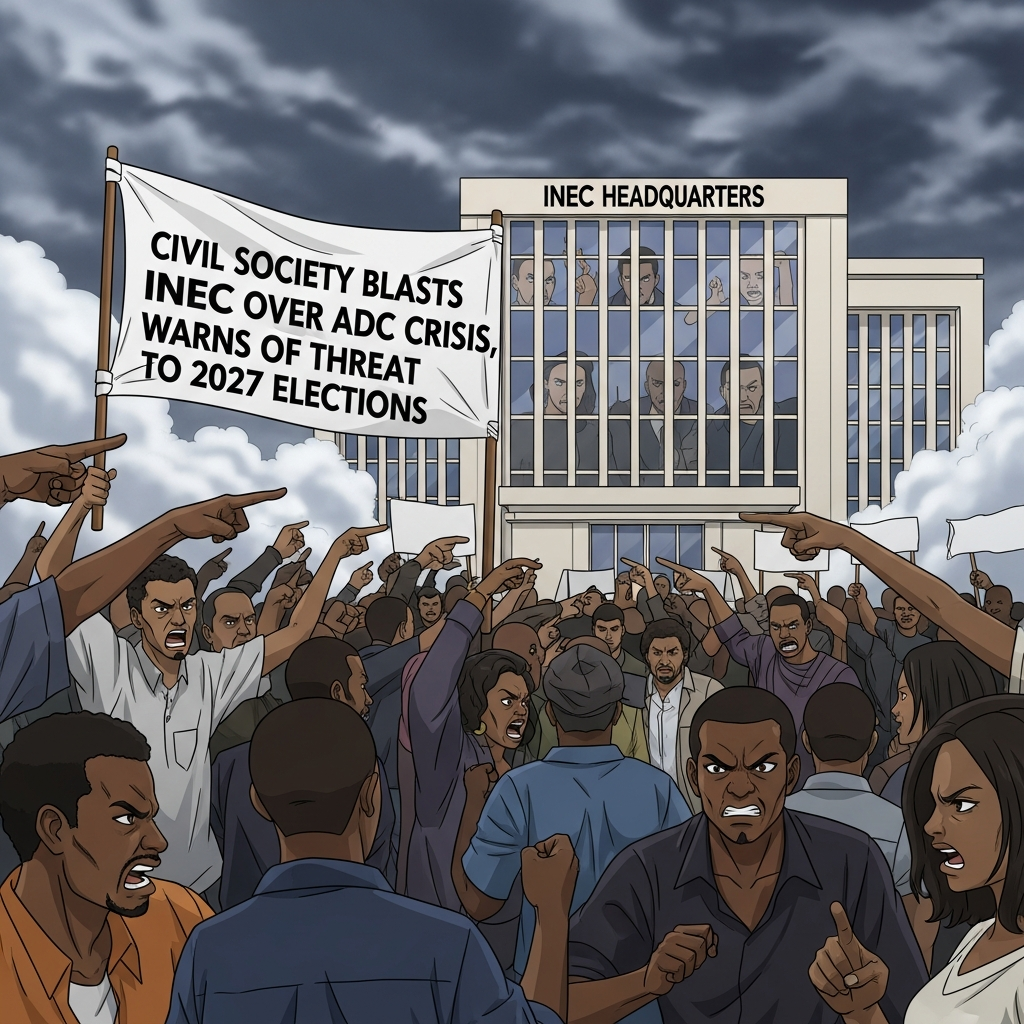
Civil Society Blasts INEC Over ADC Crisis, Warns of Threat to 2027 Elections
By Auwal Ahmad Umar
The Nigeria Civil Society Situation Room has strongly criticised the Independent National Electoral Commission (INEC) over its handling of the leadership dispute within the African Democratic Congress (ADC), warning that the Commission’s stance could undermine democratic stability ahead of the 2027 general elections.
This was contained in a press statement signed by Yunusa Z. Ya’u, Convener of the Nigeria Civil Society Situation Room, alongside Mma Odi and Celestine Odo, both Co-Conveners of the group. On Thursday, the civil society coalition expressed “deep concern and unequivocal condemnation” of INEC’s decision to align with a court directive to maintain the status quo ante bellum in the party’s leadership tussle.
While acknowledging the importance of respecting judicial authority, the group faulted what it described as INEC’s “uncritical endorsement” of the court order without adequately considering its broader implications on internal party democracy and electoral clarity.
According to the Situation Room, following the status quo directive could keep the ADC in a state of confusion about its leadership, which would hurt the party’s unity and make things like choosing candidates more difficult.
“The Commission’s posture, rather than resolving uncertainty, appears to legitimise confusion, with potential consequences for party administration and voter confidence,” the statement noted.
The group also raised concerns about what it termed the increasing politicisation of judicial interventions in party affairs. It warned that inconsistent or opaque rulings in intra-party disputes could erode trust in the judiciary and weaken democratic institutions.
It stressed that although courts remain vital arbiters of justice, their involvement in political party matters must reflect constitutional principles, respect party autonomy, and safeguard democratic stability.
The coalition further questioned INEC’s reversal of an earlier decision made in September 2025, when the electoral body reportedly accepted and uploaded the names of ADC principal officers submitted in July of the same year.
“This inconsistency raises serious concerns about regulatory certainty and the precedent it sets for future disputes,” the group said.
The Situation Room warned that allowing such ambiguity to persist could encourage prolonged litigation and deepen factional divisions within political parties, ultimately weakening Nigeria’s democratic framework.
Calling for urgent action, the coalition urged INEC to reverse its position and restore the recognised leadership of the ADC to its official portal. It also demanded greater transparency, consistency, and adherence to constitutional provisions in the commission’s handling of party disputes.
In addition, the group called for judicial restraint in internal party matters and urged stakeholders within the ADC to pursue constructive and democratic means of resolving their differences.
“As Nigeria prepares for the 2027 general elections, institutions must rise above procedural compliance and actively uphold transparency, accountability, and democratic consolidation,” the statement added.
The Situation Room, led by its convener, Yunusa Z. Ya’u, alongside co-conveners Mma Odi and Celestine Odo, reaffirmed its commitment to monitoring developments and advocating for credible electoral processes that reflect the will of Nigerians.
By Auwal Ahmad, Gombe
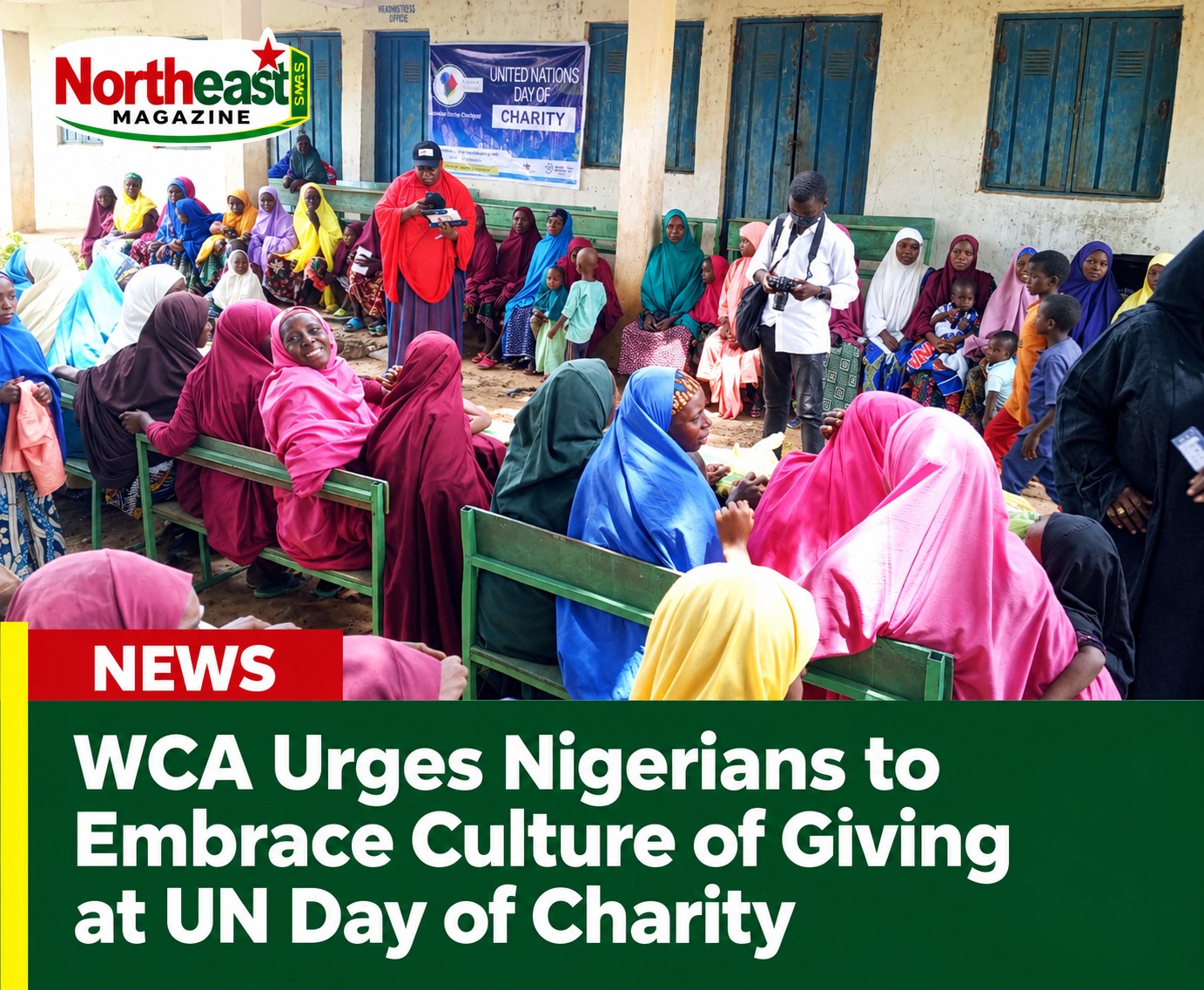
Women Community in Africa (WCA), Gombe State Chapter, has urged Nigerians to cultivate the habit of giving, saying charity can help transform lives and strengthen communities.
The organisation made the call on Saturday during activities marking the UN Day of Charity in Shongo Dirago Community, Gombe State, with the theme, “In Giving We Receive.”
The event, organised in collaboration with the Adamu Yola Foundation and Voice of Women for Peace and Development Initiative, sought to encourage people to support others irrespective of their social or economic circumstances.
Speaking at the event, WCA Gombe State Commissioner, Hon. Ruth Abner, said charity should go beyond material donations to include kindness, compassion and efforts to improve the lives of vulnerable people.
Represented at the event, Ms Abner said empowering women to contribute to their communities could create a wider impact on families and future generations.
“When we feed one, we feed many. When we touch one life, we change a generation,” she said.
She urged residents of Shongo Dirago to sustain the culture of generosity, stressing that acts of giving could promote peace, unity and community development.
Ms Abner also commended the WCA executive, volunteers, community leaders and partner organisations for supporting the programme.
She said the initiative would be followed by a virtual engagement at 7:30 p.m. to broaden discussions on charity and encourage more people to participate in acts of kindness.
She thanked the traditional and community leaders for hosting the event and urged participants to continue supporting people in need beyond the commemoration.
“Give with love, touch a life and make a difference,” she said.
Yahoo Mail: Search, organise, conquer
NGOs
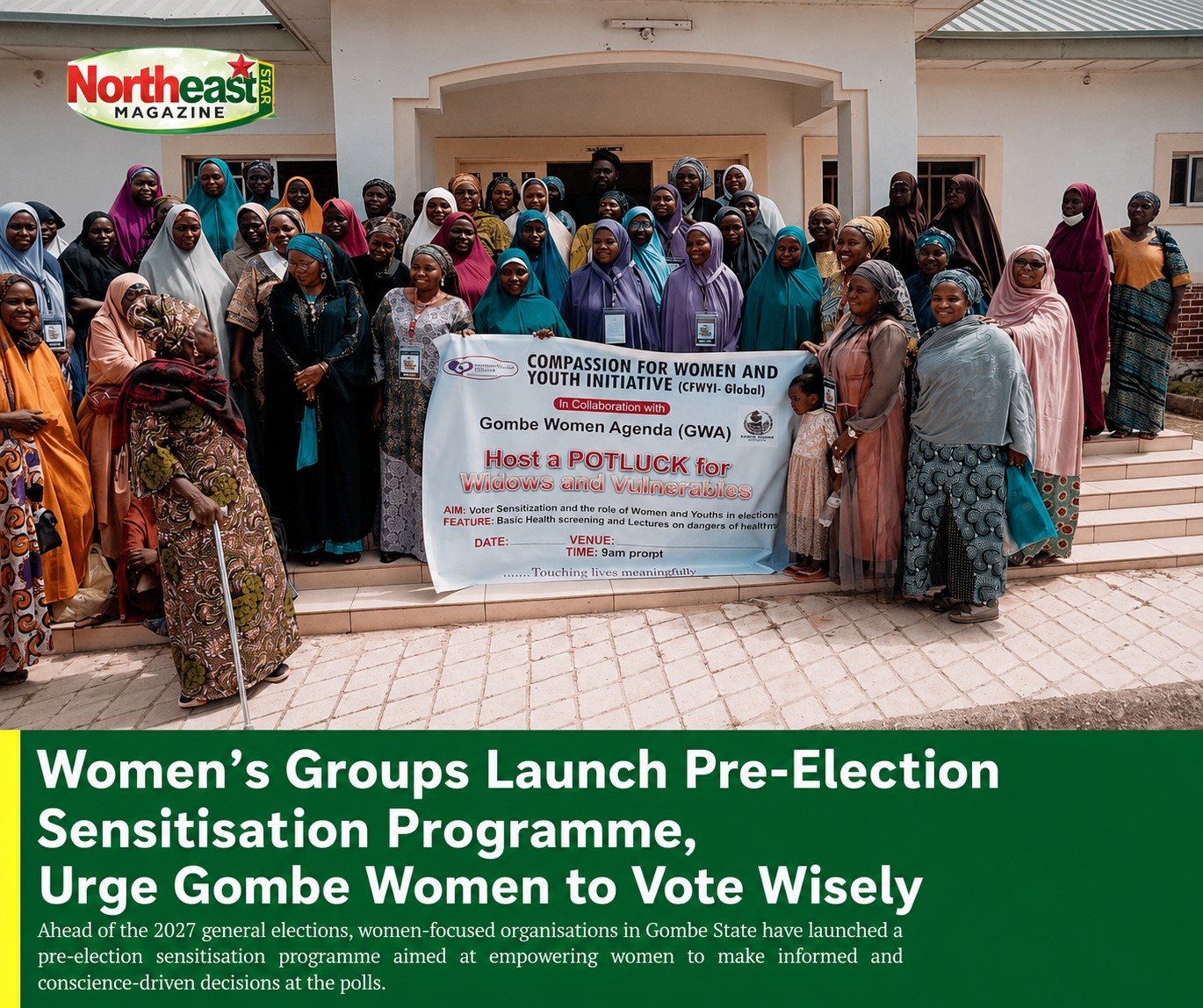
Women’s Groups Launch Pre-Election Sensitisation Programme, Urge Gombe Women to Vote Wiselythe Compassion
By Auwal Ahmad Umar
Two women-focused civil society organisations, Compassion for Women Initiative and Gombe Women Agenda, have launched a pre-election sensitisation programme in Gombe State to encourage women and youths to make informed and independent choices during elections.
The programme is aimed at reducing the vulnerability of women to vote buying and political manipulation while encouraging voters to look beyond campaign gifts and consider the long-term benefits of their choices at the ballot box.
The organisers said the initiative became necessary ahead of the forthcoming elections, particularly because economic hardship and poverty could make vulnerable women susceptible to inducements from politicians.
Speaking at the sensitisation programme, the Chairman of the Gombe Civil Society Network (GONET) and Convener of Gombe Women Agenda, Amb. Ibrahim Yusuf, represented by Auwal Ahmad Umar, said the initiative was designed to address concerns surrounding election preparations and the influence of campaign inducements on voters.
Yusuf said poverty and hunger had left many women vulnerable to politicians who use cash and other material items to influence voting decisions.
He identified money, food, clothing and other forms of material assistance as some of the incentives commonly distributed during election campaigns.
He urged women to assess candidates based on their capacity to provide good governance rather than the temporary benefits offered during campaigns.
“Any person giving you money to vote for him will not give you the dividends of democracy, which include security, quality education, healthcare and other development,” he said.
Also speaking, the State Coordinator of the Compassion for Women and Youth Initiative, Hajiya Fatima Abdullahi, said women and youths form a significant part of the electorate and must be empowered with the knowledge needed to make independent political decisions.
She explained that the programme was conceived in response to concerns that the prevailing economic difficulties could make some women more vulnerable to campaign inducements.
“We looked at the fact that the elections are coming and the preparations, as we know, for campaigns. The usual thing we are afraid of is the giveaways to the masses,” she said.
According to Abdullahi, women facing difficulties in providing food and other basic needs for their families could easily view money, food, clothing or other campaign gifts as an opportunity to address immediate challenges.
She, however, said the organisation’s strategy was not to condemn women for accepting such assistance but to ensure that receiving a gift does not dictate their choice at the polls.
“We cannot tell them not to collect. What if we make the mistake of telling them not to collect? We lose them. So, what we tell them is “collect, but vote rightly,” she said.
The Assistant Secretary of Gombe Women Agenda, Fatima Chadi, also urged women not to allow politicians or other influential individuals to dictate their voting choices through intimidation, religious sentiments or threats.
She particularly cautioned against attempts to make voters swear allegiance to a candidate in exchange for money or other benefits.
Chadi said the sensitisation programme was also intended to establish a trusted support system through which vulnerable women could discuss their challenges, receive guidance and seek assistance.
She described the initiative as a “stepping stone”, stressing that changing voting behaviour and addressing the socio-economic challenges facing women would require sustained engagement beyond a single sensitisation programme.
The organisers said they hoped the initiative would help women and youths become more discerning voters who would evaluate candidates based on their competence, policies, integrity and ability to deliver meaningful development.
NGOs
Politics Shouldn’t Divide Gombe: CSOs Sound Alarm Over Rising Hate Speech Ahead of Governorship Election
Politics Shouldn’t Divide Gombe: CSOs Sound Alarm Over Rising Hate Speech Ahead of Governorship Election
By Auwal Ahmad, Gombe
The Gombe Network of Civil Society Organizations (GONET) has warned that the increasing use of hate speech, online attacks and inflammatory political rhetoric by supporters of governorship aspirants could undermine the peace and unity Gombe State has enjoyed over the years.
In a statement jointly signed by its Chairman, Amb. Ibrahim Yusuf, and Secretary, Dr Benjamin Maina, the coalition expressed concern that political engagement in the state was rapidly shifting from healthy democratic competition to personal insults, cyberbullying, character assassination and dangerous incitement.
The organisation said the trend, if left unchecked, could threaten the peaceful coexistence for which Gombe, popularly known as the “Jewel in the Savannah”, is recognised.
According to GONET, elections should be fought on the strength of ideas, policies and leadership competence rather than through campaigns of hatred and misinformation.
“Politics should never become a licence for hatred. Every aspirant is a son of Gombe whose dignity deserves respect, irrespective of political affiliation. Citizens should debate policies and programmes instead of spreading abuse and false narratives,” the statement said.
The coalition warned that political violence often begins with reckless words, noting that history has repeatedly shown that inflammatory language, misinformation and sustained verbal attacks frequently precede physical violence.
It therefore urged all governorship aspirants and political leaders to publicly caution their supporters against hate speech, threats and provocative online conduct.
“True leadership is demonstrated not only by the size of one’s political following but by the discipline and restraint exhibited by supporters,” it added.
GONET also appealed to residents not to sacrifice personal relationships or divide communities over politics, reminding citizens that today’s political rivals could become tomorrow’s allies.
The group called on security agencies to strengthen intelligence gathering to identify and address deliberate incitement and cyber harassment while enforcing the law professionally, impartially and without political interference.
It further urged traditional rulers, religious leaders, youth groups, community leaders, civil society organisations and the media to promote issue-based campaigns and discourage extremist political narratives throughout the electoral season.
Reaffirming its commitment to peaceful elections, GONET stressed that while political offices are temporary, the people of Gombe would continue to live together after the elections.
It urged all stakeholders to allow campaigns to remain competitive without sacrificing mutual respect, expressing hope that wisdom would prevail over provocation and peace over political bitterness.

Ummah University Appoints Acting Registrar, Bursar Ahead of Academic Activities

2027: We’re Yet to Pick Presidential Candidate —Northern Igbo Assembly

Gov. Inuwa Woos Northern Academics, Women Ulamas for Knowledge-Based Solutions to Region’s Challenge

APC National Chairman Settles Gombe Central Contest, Raises DCP Ahmed’s Hand as Party’s Senatorial Candidate

Gombe Eyes Livestock-Led Economic Growth as Inuwa Yahaya Meets Minister

Gombe Aquatic Sports Body Unveils Board, Sets Stage for Competitive Debut

-
 Politics3 months ago
APC National Chairman Settles Gombe Central Contest, Raises DCP Ahmed’s Hand as Party’s Senatorial Candidate
-
 Agriculture2 months ago
Gombe Eyes Livestock-Led Economic Growth as Inuwa Yahaya Meets Minister
-
 Sport5 months ago
Gombe Aquatic Sports Body Unveils Board, Sets Stage for Competitive Debut
-

 Economy9 months ago
NGX Ends Week in the Green as ₦1.54 Trillion Boosts Investors’ Fortunes
-

 Striking the Balance2 months ago
The $2,500 Threshold: Why Raising Nigeria’s GDP Per Capita Is Our Best Non-Kinetic Strategy for Peace
-

 Economy9 months ago
CBN’s End to Cash Withdrawal Limit
-

 Education9 months ago
Dangote Launches Landmark ₦1 Trillion Scholarship Scheme to Support 1.3 Million Nigerian Students
-

 Environment3 months ago
World Environment Day: NGO Urges Nigerians to Embrace Nature-Based Solutions Against Climate Change