
National News
Catholic Diocese Calls on Federal, Kebbi Govts to Restore Security in Shanga

Catholic Diocese Calls on Federal, Kebbi Govts to Restore Security in Shanga
By Abdullahi Tukur Birnin Kebbi
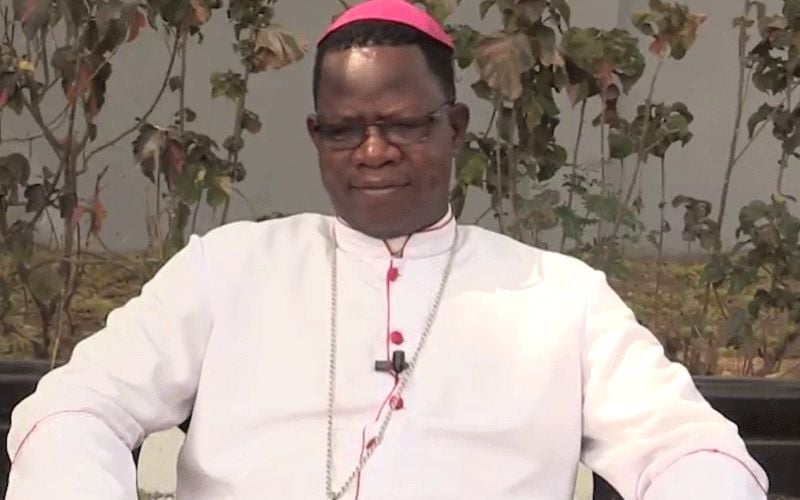
The Most Reverend Bulus Yohanna of the Catholic Diocese of Kontagora has called on the federal and Kebbi State governments to take urgent and decisive measures to restore security, protect lives and ensure the displaced people return to their homes safely.
He made the call at a press briefing held at the Saint Dominic Catholic Church in Yelwa Yauri in the Yauri local government area of Kebbi State, in relation to the recent attack in the Shanga local government area of Kebbi State.
Most Reverend Bulus said the displaced persons are in urgent need of food, clean water, medical care, and adequate shelter; they reached about five hundred people, including men, women, and children.
Most Rev. Yohanna, who was represented by the Diocesan Director of Social Communications, Rev. Father Mathew Kabirat, also called for long-time solutions which include improved security personnel in the area, rehabilitation of the affected communities, and sustainable support for the welfare of the displaced individuals.
According to him, the Catholic Diocese of Kontagora assisted the victims with shelter in which currently 491 internally displaced individuals are being taken care of at Saint Dominic Church in Yauri.
He added that the recent attack falls under their jurisdiction, and the victims are Christians, Muslims, and adherents of traditional religions; that is why we speak out in the interest of justice and humanity.
According to him, the attackers, who are suspected to be terrorists, attacked Debe Village in the Shanga local government area of Kebbi State on Easter Sunday, resulting in the deaths of 24 people, many injuries, and the destruction of properties worth millions of naira as they set ablaze a church, mosque, shops, and houses.
The cleric further explained that the violence extended to neighbouring communities in Birniwa, where the market and the emir’s residence were burnt, and in Kalkami, there was a spread of destruction.
He commended the efforts of the Yauri local government council and the Kebbi state government for donating foodstuffs, cash, and other needed items and urged other individuals, non-governmental organisations, and the international community to contribute urgently to address the humanitarian crises.

Kebbi Police Commence Statewide Clearance Operation, Recover 2 AK-47 Rifles
By Abdullahi Tukur Birnin Kebbi
In a statement by the Kebbi State Police Command’s Public Relations SP Bashir Usman said the command has responded decisively to the coordinated attack that affected the villages of Gebe, Kalkami, Kawara, Kasoshi, Awaye, Tungar Rini, Binuwa, and Dabe in the Shanga Local Government Area of the state, resulting in 44 casualties during Easter.
The statement stated that, in line with directives of the Inspector‑General of Police, IGP Olatunji Rilwan, the Command has launched a comprehensive clearance operation across the State to prevent and combat banditry and violent crimes.
According to the statement, following the attack, massive deployments of police and other security agencies have been made, leading to the return of relative calm in the affected areas, and an investigation has commenced.
It’s said that the ongoing clearance operation targets high‑risk areas, including farmlands, forests, border communities, and remote settlements. It features coordinated patrols, intelligence‑based stop‑and‑search operations, and joint actions with other security agencies.
As part of the statewide operation, the command has recovered two AK‑47 rifles along the Illo‑Kamba axis, demonstrating the effectiveness of intelligence‑led policing.
The Commissioner of Police, CP Umar M. Hadejia, therefore called on residents to remain vigilant, report suspicious movements, and cooperate fully with security agencies as well. The police encourage traditional rulers, community leaders, religious bodies, and youth groups to provide timely and credible information.

Why Nigeria Must Extend Basic Education to 12 Years — PAGED Tells Journalists
By Musa Garba, Kaduna
A civil society organisation, the Participatory Communication for Gender Development Initiative (PAGED Initiative), has renewed calls for Nigeria to expand its basic education policy from nine years to 12 years, arguing that the current structure leaves many adolescent girls vulnerable to school dropout, early marriage and long-term social exclusion.
The organisation made the appeal on Wednesday during a two-day media workshop for journalists involved in a project focused on married adolescent girls and young mothers in Kaduna, Kano and Borno states.
Speaking at the event, PAGED Initiative’s Programme Director, Ummi Bukar, said the country’s existing Universal Basic Education framework, though intended to guarantee free and compulsory learning for children, ends too early and fails to protect many girls at a critical stage of their lives.
She said the policy’s limitation to junior secondary school means that many girls are pushed out of the education system just as they approach adolescence, often without the support or protection needed to continue their studies.
According to her, broadening the policy to include senior secondary education would give more girls the opportunity to remain in school, delay harmful social pressures and improve their chances of becoming economically independent and socially empowered.
Mrs Bukar noted that in many communities, girls are frequently withdrawn from school between the ages of 13 and 15, a period she described as decisive for their education, confidence and future prospects.
She said extending compulsory education to 12 years would not only improve access to full secondary schooling, but also serve as a practical response to the persistent problem of child marriage, especially in states where girls’ education continues to face cultural and structural barriers.
She also drew attention to the weak enforcement of legal protections designed to safeguard girls, particularly the Child Rights Act, which sets 18 as the legal age for marriage and recognises the right of young mothers to return to school.
While these provisions exist on paper, she said their implementation remains largely ineffective, with very few consequences for families or individuals who violate them.
“There are laws and policies that should protect girls, but in many cases, enforcement is almost non-existent,” she said, adding that it is still rare to see accountability when underage girls are forced into marriage or denied the opportunity to continue their education.
Mrs Bukar acknowledged that governments at different levels have introduced programmes aimed at improving girls’ access to education, including increased funding, gender-focused interventions and life skills support.
However, she argued that many of those initiatives have not gone far enough because they often fail to respond to the realities faced by the girls they are supposed to help.
She said for many married adolescents and young mothers, returning to school is not simply a matter of policy approval, but of whether the system can accommodate their needs.
In many cases, she explained, girls are unable to continue their education because schools and communities do not provide practical support such as childcare arrangements, flexible learning schedules or safe and welcoming learning environments.
“It is not enough to say girls should return to school,” she said. “The education system must also be designed in a way that makes that possible for them.”
She called for a more serious commitment from policymakers, insisting that laws protecting girls’ rights must be backed by implementation, adequate funding and social support mechanisms that work in real communities.
She also urged the media to play a more deliberate role in shaping public understanding of the issues affecting adolescent girls, saying journalists have the power to influence both policy and public attitudes through responsible, gender-sensitive reporting.
According to her, the media must go beyond event coverage and become active partners in advocacy by telling stories that reflect the lived experiences of girls whose education has been disrupted by marriage, motherhood or social pressure.
Mrs Bukar said stronger collaboration among government agencies, civil society groups, traditional institutions and the media would be essential in pushing for reforms that keep girls in school and expand their opportunities.
For advocates at the workshop, the message was clear: unless Nigeria extends educational protection beyond junior secondary school and addresses the barriers that force girls out of classrooms, thousands of adolescents will continue to be left behind.
National News
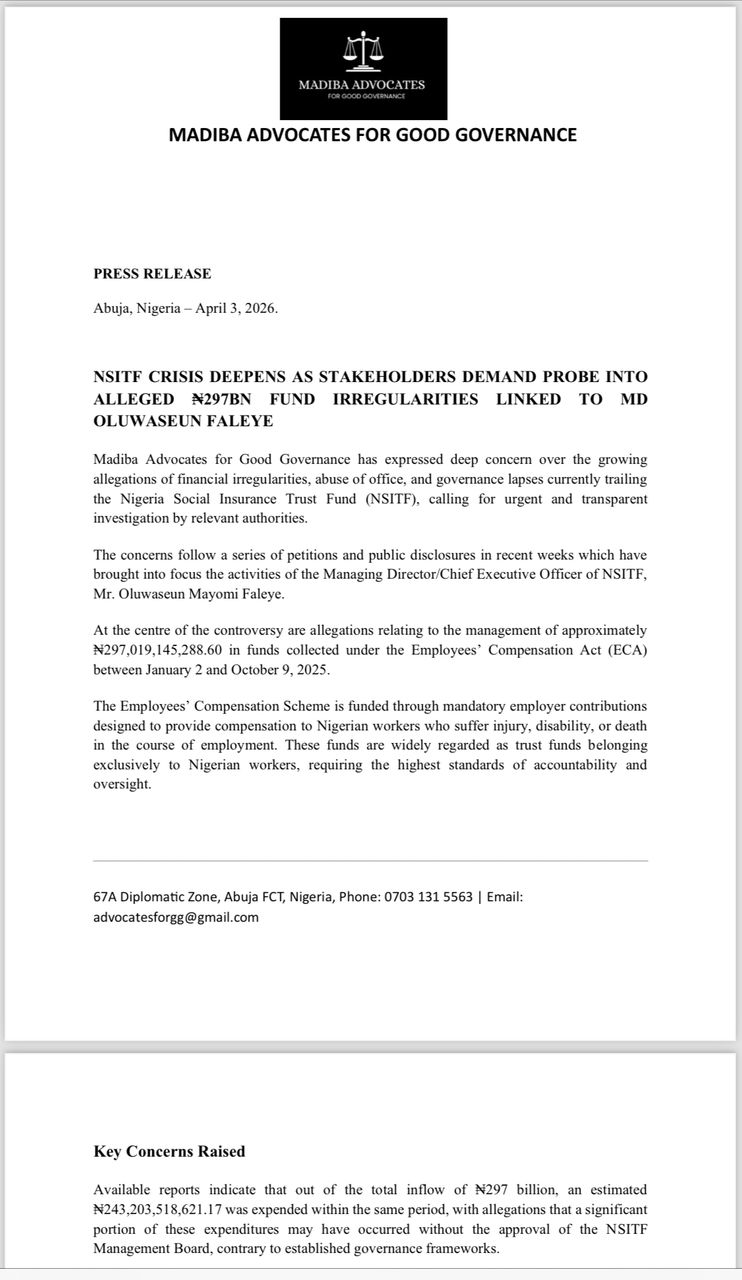
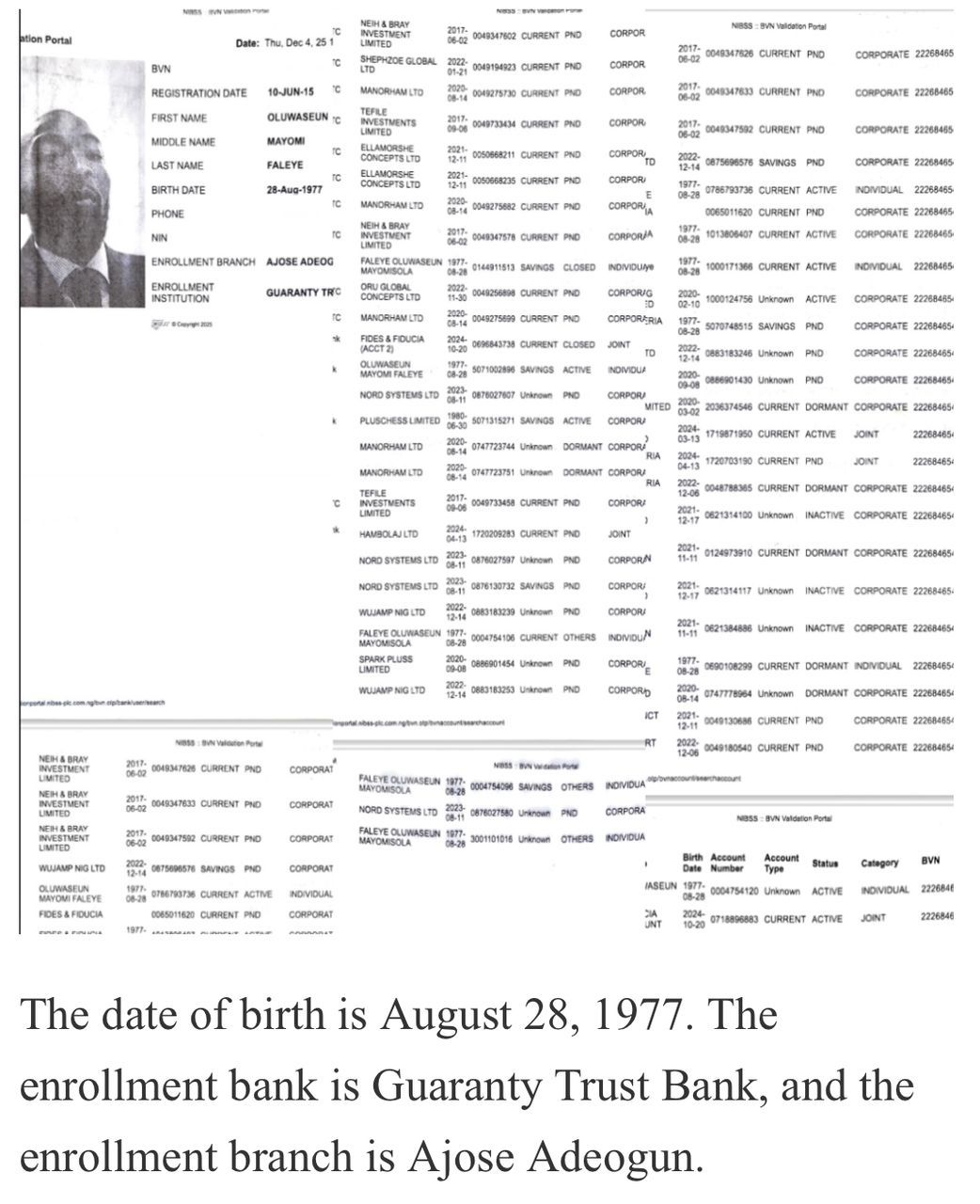
Madiba Advocates Push for Presidential Intervention Over Alleged ₦297bn NSITF Fund Irregularities linked to MD Faleye



10,000 Youths in Power: APC Hails Buni’s Bold Inclusion Drive in Yobe

Kebbi Police Commence Statewide Clearance Operation, Recover 2 AK-47 Rifles

Catholic Diocese Calls on Federal, Kebbi Govts to Restore Security in Shanga

Dangote Launches Landmark ₦1 Trillion Scholarship Scheme to Support 1.3 Million Nigerian Students

NGX Ends Week in the Green as ₦1.54 Trillion Boosts Investors’ Fortunes

Formal Rebuttal to the Recent Interview Granted by Retired Major General Ali Keffi on Arise TV
-
 Education4 months ago
Dangote Launches Landmark ₦1 Trillion Scholarship Scheme to Support 1.3 Million Nigerian Students
-
 Economy4 months ago
NGX Ends Week in the Green as ₦1.54 Trillion Boosts Investors’ Fortunes
-
 Column4 months ago
Formal Rebuttal to the Recent Interview Granted by Retired Major General Ali Keffi on Arise TV
-

 Economy4 months ago
CBN’s End to Cash Withdrawal Limit
-

 Gombe4 months ago
Gombe Shines Again, Ranks Second in Northeast at 2025 PHC Leadership Challenge
-
 Politics4 months ago
NSGF names Ezekiel Gomos as Director-General, setting stage for stronger regional collaboration
-

 Gombe4 weeks ago
A tribute to Dr Langa Hassan Bangunji (JP) – an icon of Scholarship, Leadership and Community Service
-

 Latest News4 months ago
Anglican Church Expands Footprint with 15 New Dioceses, Total Hits 176