
Businesss
Dangote Unveils ₦550m Hostel Project for FUTO Students, Donates ₦25m

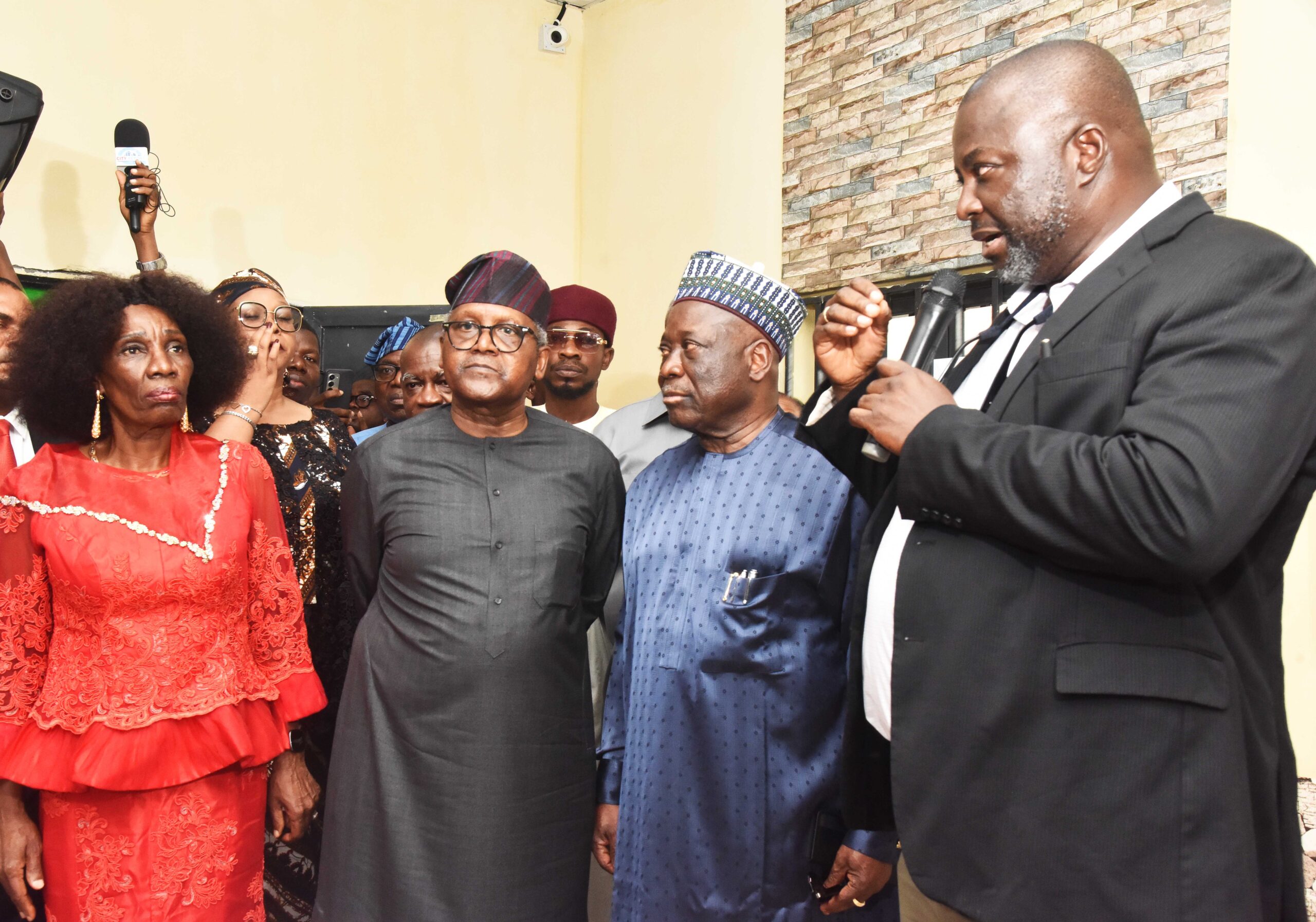
Dangote Unveils ₦550m Hostel Project for FUTO Students, Donates ₦25m
By Auwal Ahmad Umar
OWERRI — Africa’s foremost industrialist, Aliko Dangote, has announced plans to fund the construction of a ₦550 million students’ hostel at the Federal University of Technology, Owerri, in a move aimed at tackling accommodation shortages in the institution.
Dangote made the pledge on Monday while delivering a keynote lecture at the university, where he spoke on the topic ‘Enterprise, Leadership and Service to Humanity‘. He said the initiative was part of his commitment to supporting education and improving student welfare.
In addition to the hostel project, the business mogul donated ₦25 million to students through the institution’s Student Union Government to support student-related activities.
He explained that the proposed hostel would help reduce the burden of inadequate housing on campus and create a more conducive learning environment for students.
Addressing the gathering, Dangote expressed confidence in the potential of Nigerian youths, noting that they possess the creativity and skills required to thrive globally if properly nurtured.
He revealed that several young Nigerian engineers trained at his refinery and fertiliser plants had attracted international attention, with some securing lucrative opportunities in Gulf countries where they are engaged as expatriates.
According to him, Nigeria’s challenges are matched by vast opportunities, including a vibrant youth population, rich natural resources and a strong entrepreneurial culture.
He described entrepreneurship as a powerful tool for economic transformation, stressing that equipping young people with relevant skills, mentorship and funding would enable them to become employers of labour rather than job seekers.
Dangote encouraged students to remain innovative and adaptable, urging them to continuously develop themselves in order to make meaningful contributions to society.
Reflecting on his journey, he recounted starting out as a small-scale trader dealing in commodities such as cement before expanding into full-scale industrial production.
He noted that his decision to move into manufacturing was driven by the need to produce locally what was previously imported, adding that reliance on imports weakens the economy.
“Bringing in finished goods from abroad only fuels unemployment and economic pressure, while exporting raw materials without processing limits national growth,” he said.
He emphasised that industrialisation is central to job creation and economic development, urging Nigerians to take ownership of the country’s future through local investment.
Dangote further argued that sustainable development must be driven by domestic investors, drawing parallels with Asian economies, which he said were built largely through internal investments rather than dependence on foreign capital.
“If we don’t invest in our country, others will not see the reason to do so,” he added.

By Auwal Ahmad Umar
The Nigerian Midstream and Downstream Petroleum Regulatory Authority (NMDPRA) is seeking stronger police backing to clamp down on illegal petroleum operators, impersonators and other regulatory violations in Niger State.
The Authority’s Niger State Coordinator, Engr. Musa Isyaku, MNSE, made the request on Tuesday, September 15, 2026, during a meeting with the Commissioner of Police, Niger State Command, CP Adamu Abdullahi Elleman, mnips, at the Command Headquarters in Dutsen-kura, Minna.
“We need stronger collaboration with the Nigeria Police Force to effectively enforce petroleum regulations and deal with illegal and unlicensed operators,” Mr Isyaku said.
He said security support was critical to the Authority’s inspection and enforcement activities, particularly when its officials visit facilities operated by suspected illegal or unlicensed businesses.
Mr Isyaku also called for police intervention over alleged cases of individuals impersonating NMDPRA officials to extort petroleum marketers.
“We have also received concerns about individuals impersonating NMDPRA officials to extort marketers. We are seeking the Police Command’s assistance in addressing these cases,” he said.
He further raised concerns over the alleged illegal fabrication of NMDPRA identification cards and number plates, urging the police to investigate and take appropriate action.
Responding, CP Elleman assured the delegation that the Police Command would deepen its cooperation with NMDPRA and provide security support for legitimate regulatory operations.
“We are committed to strengthening our synergy with NMDPRA, particularly in enforcement, inspection and the protection of regulatory personnel,” the commissioner said.
Mr Elleman also assured the Authority that the complaints presented during the meeting would receive appropriate investigative attention.
The meeting highlighted the shared interest of NMDPRA and the Police Command in strengthening regulatory compliance, protecting legitimate petroleum businesses and curbing illegal activities across Niger State’s petroleum sector.
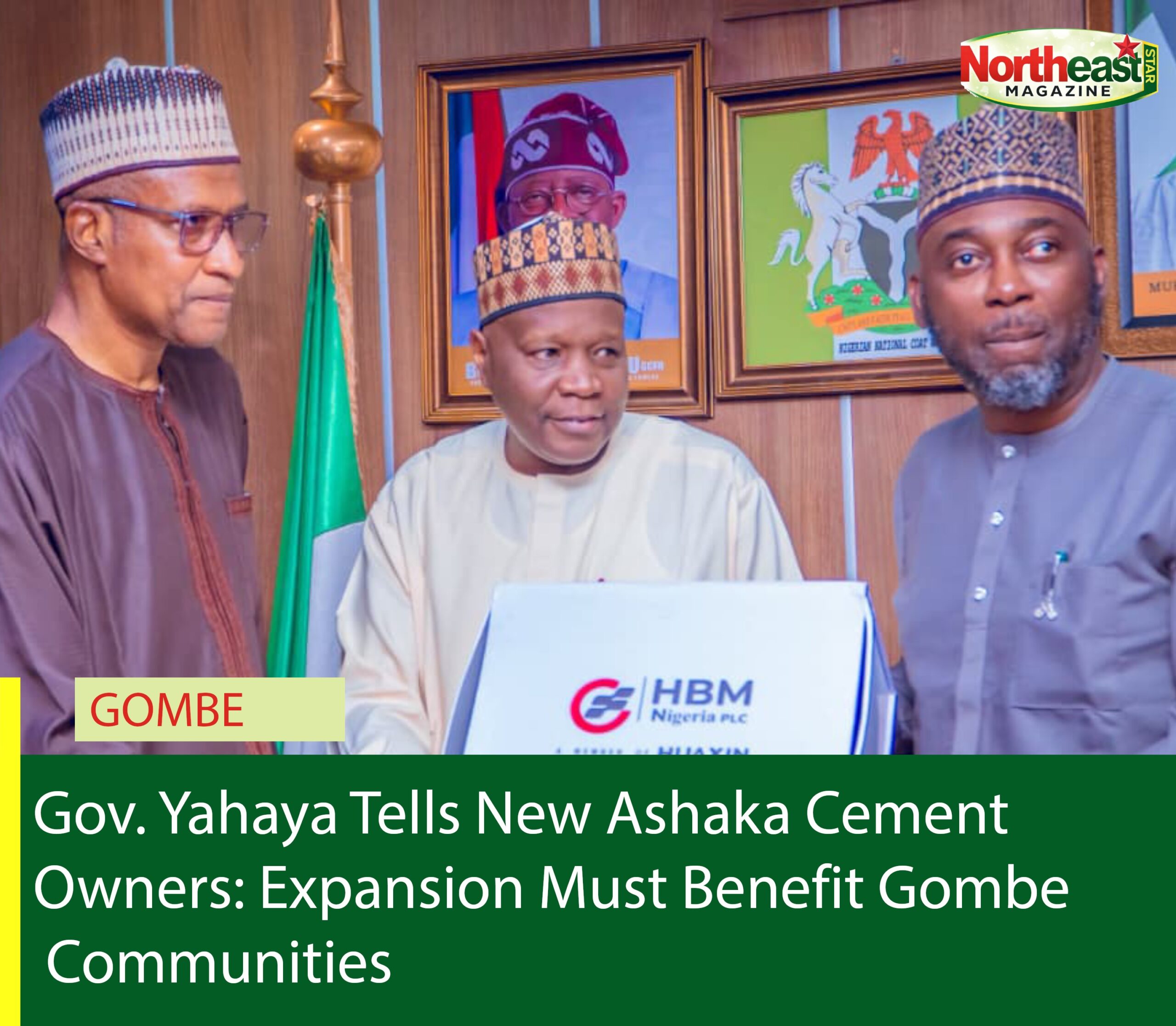
Inuwa Yahaya Tells New Ashaka Cement Owners: Expansion Must Benefit Gombe Communities
By Auwal AHmad Umar
Gombe State Governor, Muhammadu Inuwa Yahaya, has asked the new owners of Ashaka Cement Company to ensure that their planned expansion of production translates into tangible benefits for host communities and does not come at the expense of the environment.
Mr Yahaya made the demand on Monday when the Group Managing Director and Chief Executive Officer of HBM Nigeria PLC, Lolu Alade-Akinyemi, led the company’s executive management team on a courtesy visit to the governor at the Government House in Gombe.
The delegation included the Managing Director of Ashaka Cement Limited, Ibrahim Aminu.
The governor said the proposed expansion of the cement plant presented an opportunity for the company to deepen its contribution to Gombe’s economic development through employment, local sourcing, community investment and stronger corporate social responsibility programmes.
“While profit maximisation remains a legitimate objective of businesses operating in a liberal economy, companies must equally recognise and fulfil their responsibilities to the communities and environment in which they operate,” Mr Yahaya said.
He urged HBM Nigeria PLC to sustain the goodwill enjoyed by Ashaka Cement in Northern Nigeria and use its strategic position to strengthen the company’s contribution to the construction and manufacturing sectors.
Mr Yahaya specifically raised concerns over the impact of heavy trucks associated with Ashaka Cement’s operations on roads around the plant.
He said some roads constructed by the state government had suffered damage as a result of heavy-duty haulage activities and urged the company to explore ways of supporting their improvement.
The governor also assured the new owners of the state government’s continued cooperation, saying Gombe would provide an enabling environment for responsible and sustainable industrial development.
Earlier, Mr Alade-Akinyemi disclosed that HBM Nigeria PLC plans to increase Ashaka Cement’s production capacity to two million metric tonnes per annum.
He said the expansion would create additional jobs while generating more business opportunities for transporters, suppliers and other operators within the company’s value chain.
According to him, the ownership transition followed the integration of Lafarge into Huaxin Building Materials Group, a global manufacturer of cement and building materials.
He assured the governor that the change in ownership would not alter the company’s relationship with Gombe State.
“Our commitment to the government and people of Gombe State remains steadfast and ironclad,” Mr Alade-Akinyemi said.
He added that the company would prioritise local content, strategic partnerships, community development and corporate social responsibility under the new ownership.
Mr Yahaya also urged Ashaka Cement to position itself to play a major role in the construction of the Gombe-Biu Super Highway.
The governor commended President Bola Ahmed Tinubu for awarding the contract for the project, describing the highway as an important infrastructure intervention that would benefit Gombe and neighbouring states.
He said the expected use of concrete pavement on the highway presented an opportunity for Ashaka Cement to supply some of the materials required for the project.
“Ashaka Cement should position itself to supply the cement required for the construction of the super highway, particularly as the project is expected to utilise concrete pavement,” the governor said.
The governor further said the road project would improve connectivity, stimulate commerce and strengthen the operating environment for businesses and industries across the region.
Mr Alade-Akinyemi, in turn, commended the governor for what he described as purposeful leadership and efforts to promote infrastructure, economic and industrial development in Gombe.
He pledged that HBM Nigeria PLC would strengthen its partnership with the state government and increase its contribution to the state’s economy and the wellbeing of its host communities.
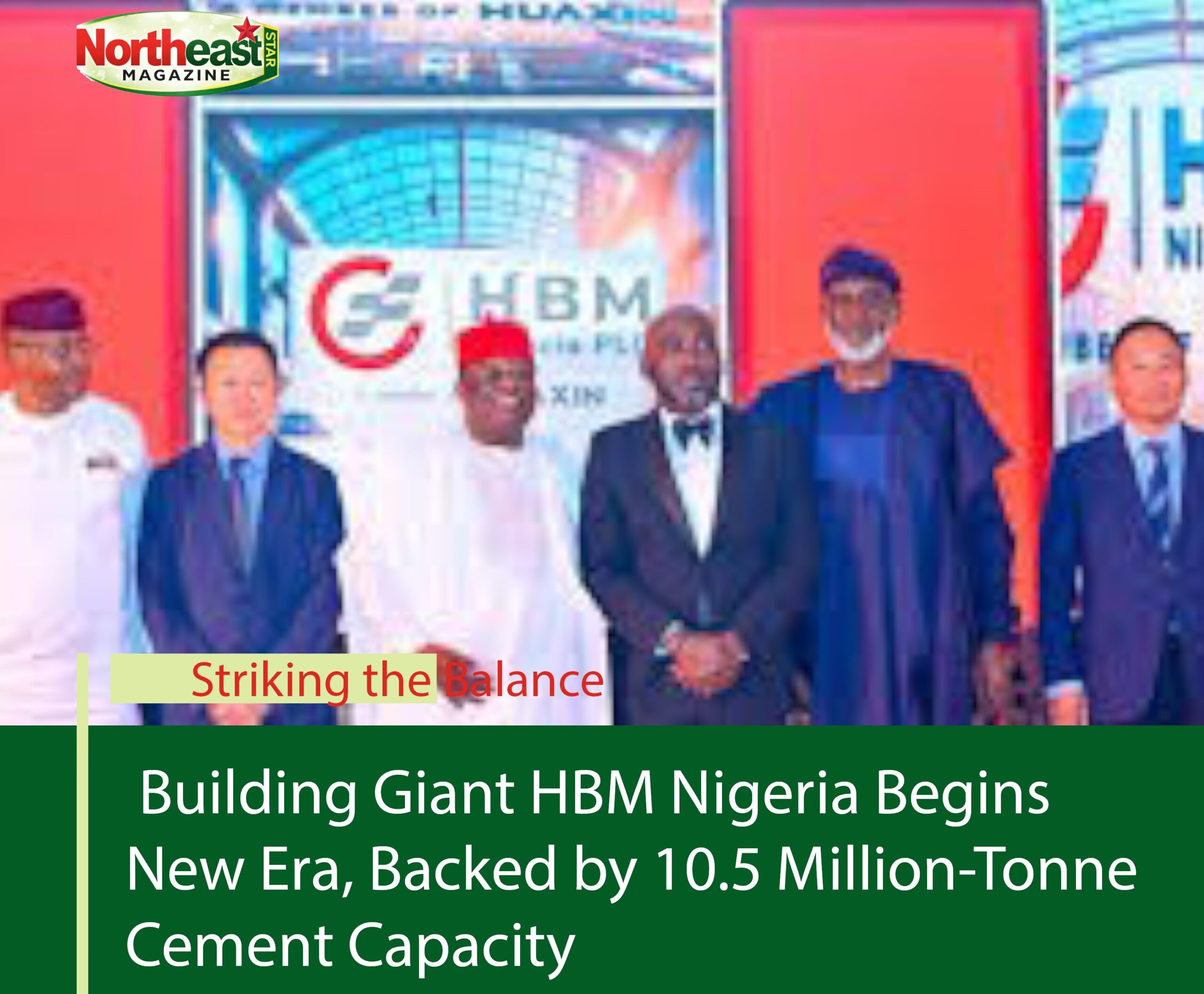
Building Giant HBM Nigeria Begins New Era, Backed by 10.5 Million-Tonne Cement Capacity
By Auwal Ahamd Umar
With an installed cement production capacity of 10.5 million metric tonnes per annum, HBM Nigeria Plc remains one of the largest building materials companies in the country, serving a broad spectrum of customers across the construction value chain.
The company operates cement manufacturing plants in Ogun, Gombe and Cross River states, alongside ready-mix concrete facilities in Lagos, Abuja and Port Harcourt, giving it one of the most extensive production and distribution networks in Nigeria’s construction sector.
Industry observers say the transition from Lafarge Africa Plc to HBM Nigeria Plc signals more than a change of name. It reflects the company’s ambition to deepen its role in supporting Nigeria’s infrastructure expansion, housing development and industrial growth while leveraging the technical expertise and global reach of its parent company, Huaxin Building Materials Group.
The new corporate identity was officially unveiled on Monday, marking a significant milestone in the company’s transformation journey and strategic alignment with its new shareholder structure.
In a statement signed by the Head of Corporate Communications, Ginikanwa Frank-Durugbor, the company said the rebranding underscores its commitment to delivering innovative building solutions while creating sustainable value for stakeholders.
As HBM Nigeria Plc embarks on this new phase, the company says it remains focused on innovation, sustainability and operational excellence, with the goal of creating long-term value for shareholders, customers and the wider Nigerian economy.
Speaking on the transition, the Group Managing Director and Chief Executive Officer, Lolu Alade-Akinyemi, described the new identity as a reflection of the company’s future-focused vision.
“HBM Nigeria Plc represents an exciting new chapter in our journey as a leading building solutions company. While our corporate identity is evolving, our commitment to Nigeria remains unwavering,” he said.
According to him, the company will continue to provide quality cement, concrete, aggregates and innovative building solutions that support infrastructure development, housing growth and industrialisation across the country.
Mr Alade-Akinyemi explained that the transition would be implemented through a phased process across the company’s nationwide operations to ensure seamless business continuity for customers, investors, employees and host communities.
The Chairman of HBM Nigeria Plc, Gbenga Oyebode, said the transition positions the company for long-term success while preserving the values and principles that have guided its operations for decades.
“We are confident that HBM Nigeria Plc will continue to create sustainable value for shareholders, strengthen stakeholder trust and deliver on its long-term ambitions,” he said.
The company noted that while the corporate identity has officially changed, the rollout of branding assets, operational integration and customer-facing communications will continue progressively across all touchpoints to ensure consistency and a seamless experience for stakeholders.
Formerly known as Lafarge Africa Plc, HBM Nigeria Plc is a member of the Huaxin Building Materials Group, a global construction materials manufacturer founded in 1907 and headquartered in Wuhan, China. The company is listed on the Nigerian Exchange Limited and remains one of the key players in Nigeria’s building and construction industry.

NUC Verifies Ummah University as Abuja Institution Targets October 2 Take-Off

From Challenges to Triumph: Armless Student Graduates from Gombe State University

Will the Rainbow’s Collision with Governors Sound the Death Knell for APC?

APC National Chairman Settles Gombe Central Contest, Raises DCP Ahmed’s Hand as Party’s Senatorial Candidate

Gombe Eyes Livestock-Led Economic Growth as Inuwa Yahaya Meets Minister

NGX Ends Week in the Green as ₦1.54 Trillion Boosts Investors’ Fortunes

-
 Politics4 months ago
APC National Chairman Settles Gombe Central Contest, Raises DCP Ahmed’s Hand as Party’s Senatorial Candidate
-
 Agriculture2 months ago
Gombe Eyes Livestock-Led Economic Growth as Inuwa Yahaya Meets Minister
-
 Economy10 months ago
NGX Ends Week in the Green as ₦1.54 Trillion Boosts Investors’ Fortunes
-
 Sport6 months ago
Gombe Aquatic Sports Body Unveils Board, Sets Stage for Competitive Debut
-

 Economy10 months ago
CBN’s End to Cash Withdrawal Limit
-
 Striking the Balance3 months ago
The $2,500 Threshold: Why Raising Nigeria’s GDP Per Capita Is Our Best Non-Kinetic Strategy for Peace
-
 Education10 months ago
Dangote Launches Landmark ₦1 Trillion Scholarship Scheme to Support 1.3 Million Nigerian Students
-

 Environment4 months ago
World Environment Day: NGO Urges Nigerians to Embrace Nature-Based Solutions Against Climate Change