
Bauchi
NAWOJ, UNICEF Rally Rural Women in Bauchi to Defend Rights, Promote Health, Justice

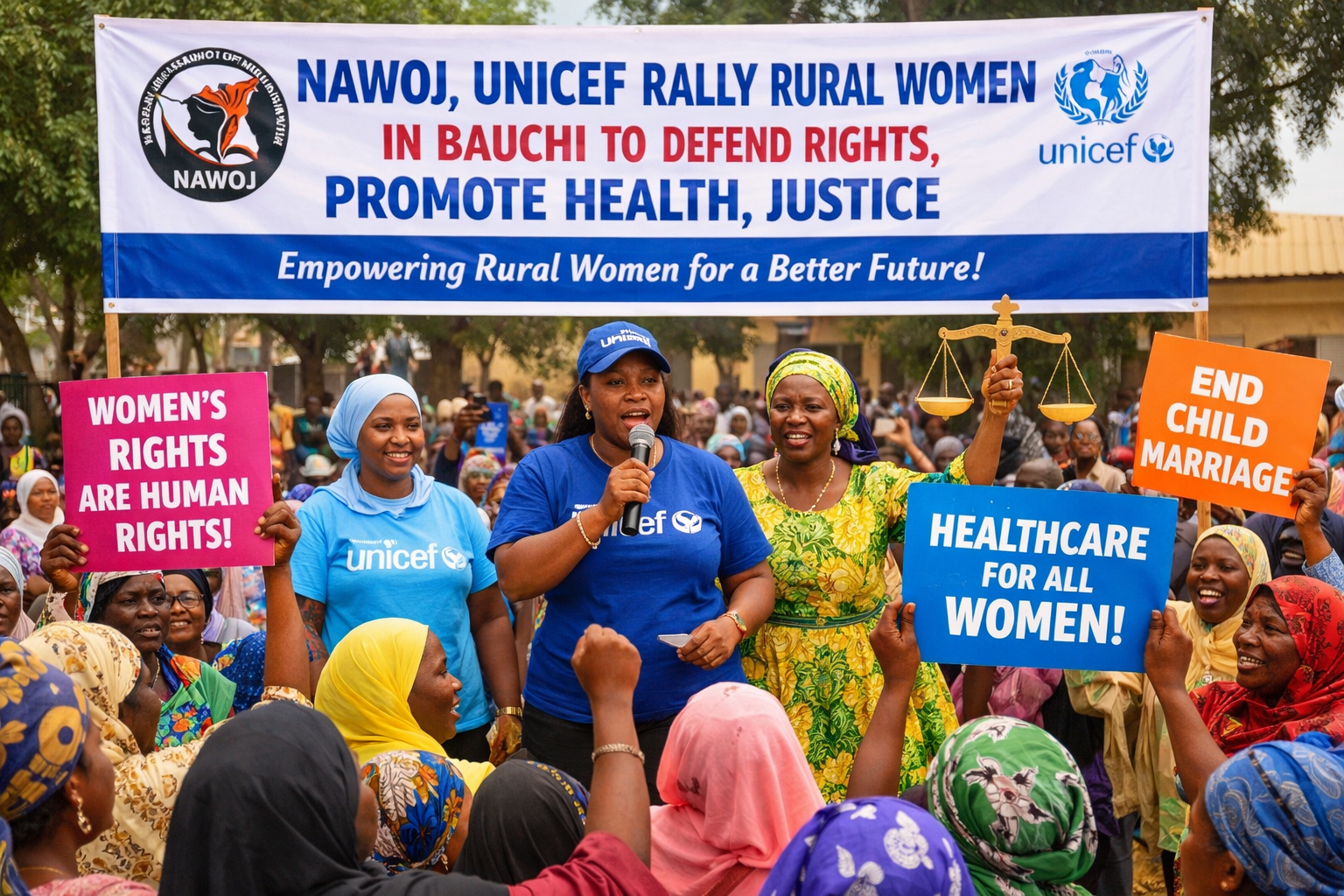
NAWOJ, UNICEF Rally Rural Women in Bauchi to Defend Rights, Promote Health, Justice
By Jamila Muhammad
The Bauchi State chapter of the Nigeria Association of Women Journalists (NAWOJ), in partnership with the United Nations Children’s Fund (UNICEF), has intensified calls for stronger protection of women’s rights, particularly in the areas of healthcare, education and access to justice.
The appeal was made during activities marking the 2026 International Women’s Day celebration held on Thursday evening in Durum Village, located in Bauchi Local Government Area of the state.
The awareness programme was designed to educate rural women about their fundamental rights and the importance of accessing quality healthcare services while also encouraging them to speak out against violence and discrimination.
Addressing participants at the event, the Chairperson of NAWOJ in Bauchi State, Hajiya Rashida Yusuf, described the annual celebration as a significant opportunity to enlighten women about their rights and empower them to make informed decisions about their wellbeing.
She explained that hosting the programme in a rural community was deliberate, noting that women living outside urban centres often lack access to critical information about their rights and available support services.
Yusuf encouraged women to play an active role in reducing child mortality by seeking medical attention at nearby health facilities and ensuring they attend recommended antenatal care appointments. She also urged mothers to prioritise routine immunisation for children under the age of five.
In her remarks, a representative of the Bauchi State Ministry of Women Affairs and Child Development, Mrs Habiba Adamu, emphasised the need for expectant mothers to give birth in properly equipped health facilities to guarantee safer deliveries.
She highlighted that the Bauchi State Government has enacted the Violence Against Persons Prohibition Act to safeguard women and other vulnerable groups from abuse and exploitation.
Adamu therefore encouraged victims of violence or abuse to promptly report such incidents to referral centres established under the Ministry of Women Affairs and Child Development so that appropriate action can be taken.
Also speaking at the event, Mrs Halima Yusuf, Deputy Public Relations Officer of the International Federation of Women Lawyers (FIDA) Bauchi chapter, reaffirmed the organisation’s dedication to defending the rights of women and children, particularly in cases involving gender-based violence.
She expressed concern that some families often conceal incidents of sexual abuse and rape, stressing that silence only encourages perpetrators. She therefore urged survivors to come forward and seek justice.
Meanwhile, the Officer-in-Charge of Durum Primary Healthcare Centre, Mr Abdulraahid Bashir, enlightened participants on the benefits of antenatal care, professional medical support during childbirth and the importance of maintaining proper hygiene.
Bashir added that improved sanitation practices were essential in preventing many diseases, especially in rural communities where access to clean water and health education may be limited.

Bauchi GBV Committee Unveils Statewide Campaign to Tackle Abuse
By Bashir Hassan Abubakar
The Bauchi State Action Committee on Gender-Based Violence (GBV) is set to launch a statewide awareness campaign aimed at educating residents on the dangers and consequences of abuse across communities.
Wife of the Bauchi State Governor, Hajiya Aisha Bala Mohammed, made the disclosure during a media interaction at the Government House, Bauchi, where she called for stronger community support in the fight against gender-based violence.
The first lady, who also serves as chairperson of the State Action Committee on GBV, commended media organisations and development partners for their continued efforts to address the growing challenge of abuse and violence in society.
She described the media as a key stakeholder in protecting vulnerable groups, raising public awareness, and promoting justice for survivors.
According to her, the planned sensitisation exercise will cover communities across the state with the aim of enlightening residents about the harmful effects of GBV and the need to report cases promptly.
Hajiya Aisha Bala Mohammed stressed that public enlightenment and collective action remain essential in reducing cases of domestic violence, rape, abduction, and other related offences.
Also speaking, the special adviser to Governor Bala Mohammed on GBV, Sha’awanatu Yusuf, disclosed that the committee has recorded 218 cases since its establishment in 2020.
She explained that the reported cases ranged from domestic violence and family disputes to rape and abduction.
Sha’awanatu Yusuf further revealed that several high-profile cases had been successfully prosecuted, with courts delivering judgements in favour of survivors, a development she described as a major step toward ensuring justice and accountability in the state.
Bauchi Boosts Healthcare Outreach as UNICEF, Canada Donate 45 Motorcycles
By Ahmad Muhmmmad, Bauchi
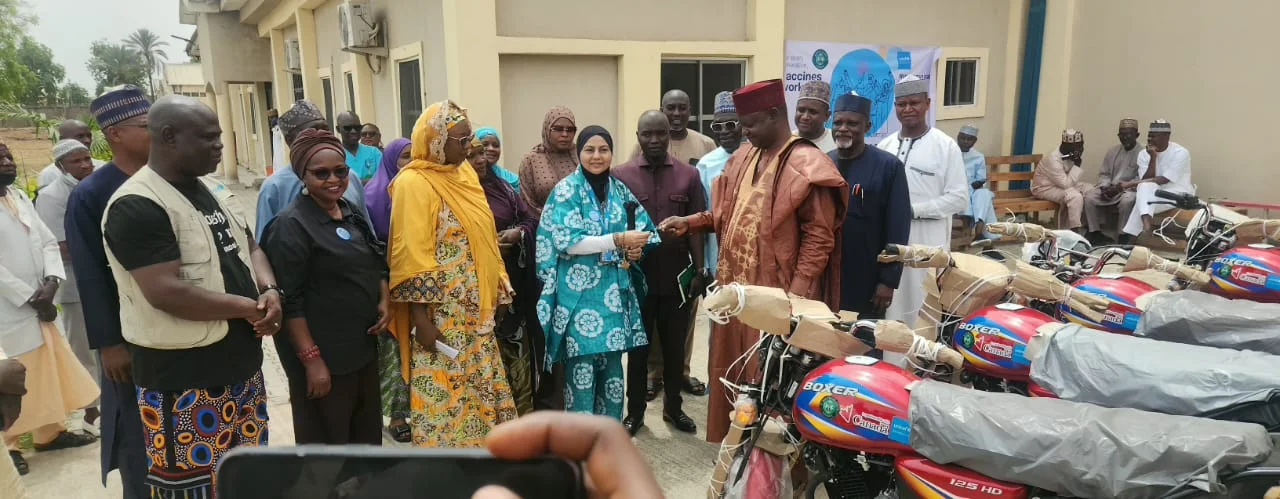
The Bauchi State Government has taken a major step to improve access to healthcare services with the receipt of 45 motorcycles donated by the government of Canada through the United Nations Children’s Fund (UNICEF).
The motorcycles, delivered via UNICEF’s Bauchi Field Office, have been allocated to all 20 local government areas to support frontline health workers in reaching communities that are often difficult to access.
Speaking at the official handover ceremony on Monday, the head of UNICEF’s Bauchi Field Office, Dr Nuzhat Rafique, said the initiative was designed to bridge critical gaps in immunisation coverage and primary healthcare delivery.
She explained that the intervention would enhance mobility for health personnel, enabling them to reach vulnerable populations, particularly in remote settlements where access to health facilities remains limited.
According to her, the support aligns with ongoing efforts to identify and vaccinate “zero-dose” children—those who have never received any routine immunisation—as well as to extend care to women who lack access to antenatal services.
“If communities cannot easily access healthcare facilities, then services must be taken closer to them. This is especially crucial for rural and underserved areas,” she said.
Rafique also raised concern over the persistently high rates of maternal and newborn deaths in parts of the North-East, stressing the need for deliberate and coordinated strategies to expand healthcare access and improve outcomes.
She reaffirmed UNICEF’s commitment to supporting Bauchi State through sustained partnerships aimed at improving the wellbeing of women, children, and adolescents.
Receiving the motorcycles on behalf of the state government, the Commissioner for Health and Social Welfare, Dr Sani Dambam, described the donation as a timely intervention that would strengthen service delivery across the state.
He assured us that the motorcycles would be deployed effectively to enhance outreach programmes and bring essential healthcare services closer to rural populations.
Dambam, however, cautioned health workers against misuse of the equipment, warning that strict disciplinary measures would be enforced to ensure accountability and proper utilisation.
Also speaking, UNICEF Health Officer Seyi Olosunde noted that the donation coincided with activities marking the global campaign to promote immunisation awareness.
He highlighted the critical role vaccines play in preventing life-threatening diseases and improving public health, adding that immunisation platforms also provide opportunities to deliver other essential health services.
Olosunde said the motorcycles would significantly improve the reach of maternal, newborn, and child healthcare services by enabling health workers to travel more easily to hard-to-reach communities.
He added that, beyond vaccination, the outreach efforts would incorporate services such as antenatal care and adolescent health support, ultimately strengthening the overall healthcare system in Bauchi State.
Bauchi Raises Alarm Over Harsh Dry Spell, Sudden Flood Risks in 12 LGAs
By Ahmad Muhammad, Bauchi
The Bauchi State Emergency Management Agency (SEMA) has issued an early warning to residents and authorities over an unusual weather pattern expected to hit parts of the state, combining a prolonged dry spell with the threat of flash floods during the 2026 rainy season.
The alert was delivered on Wednesday in Bauchi by the agency’s Director-General, Mas’ud Aliyu, during a stakeholders’ forum on seasonal climate outlook and disaster preparedness.
Aliyu explained that initial climate projections point to a severe dry spell lasting up to 21 days between June and August, a development that could disrupt farming activities across several local government areas. The councils likely to be affected include Itas-Gadau, Jama’are, Katagum, Misau, Giade, Shira, Dambam, Darazo, Ningi, Warji, Gamawa and Zaki.
He described the forecast as both unusual and concerning, noting that while the dry conditions could weaken agricultural productivity, sudden heavy rainfall within the same period may trigger flash floods in vulnerable communities.
According to him, the hardened soil caused by extended heat may struggle to absorb intense rainfall, increasing the chances of flooding even after a dry spell.
“This situation goes beyond routine weather information. It signals possible food shortages, water challenges and pressure on livestock if urgent steps are not taken,” he said.
Aliyu stressed the need for practical responses at both farm and community levels, urging experts in agriculture and environmental sciences to guide farmers on soil management, crop choices and planting timelines.
He also called for stronger coordination among local government authorities, traditional institutions and relevant agencies to ensure early warning messages reach rural communities promptly.
The SEMA boss urged the state’s Ministry of Agriculture and the Bauchi State Agricultural Development Programme to support farmers with drought-tolerant seeds, while advising the Ministry of Water Resources to prepare contingency plans, including water supply interventions.
He further appealed to the media to intensify awareness campaigns to keep the public informed about evolving weather risks.
Aliyu emphasised that community cooperation would be critical, urging residents to take precautionary measures and respond quickly to advisories.
He expressed confidence that with joint efforts involving government agencies, traditional leaders and experts from Abubakar Tafawa Balewa University, the state can better withstand the looming environmental challenges.

Nigeria Must Embrace Intelligence, Technology to Tackle Security Threats – Defence Minister

Nigerian Army Moves to Strengthen Aviation Safety, Aircraft Reliability

Rule of Law, Nigeria’s only hope of survival (1)

APC National Chairman Settles Gombe Central Contest, Raises DCP Ahmed’s Hand as Party’s Senatorial Candidate

Gombe Eyes Livestock-Led Economic Growth as Inuwa Yahaya Meets Minister

NGX Ends Week in the Green as ₦1.54 Trillion Boosts Investors’ Fortunes

-
 Politics4 months ago
APC National Chairman Settles Gombe Central Contest, Raises DCP Ahmed’s Hand as Party’s Senatorial Candidate
-
 Agriculture2 months ago
Gombe Eyes Livestock-Led Economic Growth as Inuwa Yahaya Meets Minister
-
 Economy10 months ago
NGX Ends Week in the Green as ₦1.54 Trillion Boosts Investors’ Fortunes
-
 Sport6 months ago
Gombe Aquatic Sports Body Unveils Board, Sets Stage for Competitive Debut
-

 Economy10 months ago
CBN’s End to Cash Withdrawal Limit
-

 Education10 months ago
Dangote Launches Landmark ₦1 Trillion Scholarship Scheme to Support 1.3 Million Nigerian Students
-

 Striking the Balance3 months ago
The $2,500 Threshold: Why Raising Nigeria’s GDP Per Capita Is Our Best Non-Kinetic Strategy for Peace
-

 Environment4 months ago
World Environment Day: NGO Urges Nigerians to Embrace Nature-Based Solutions Against Climate Change