
Borno
Action Health Incorporated (AHI) tackles challenges of access to healthcare services in Borno

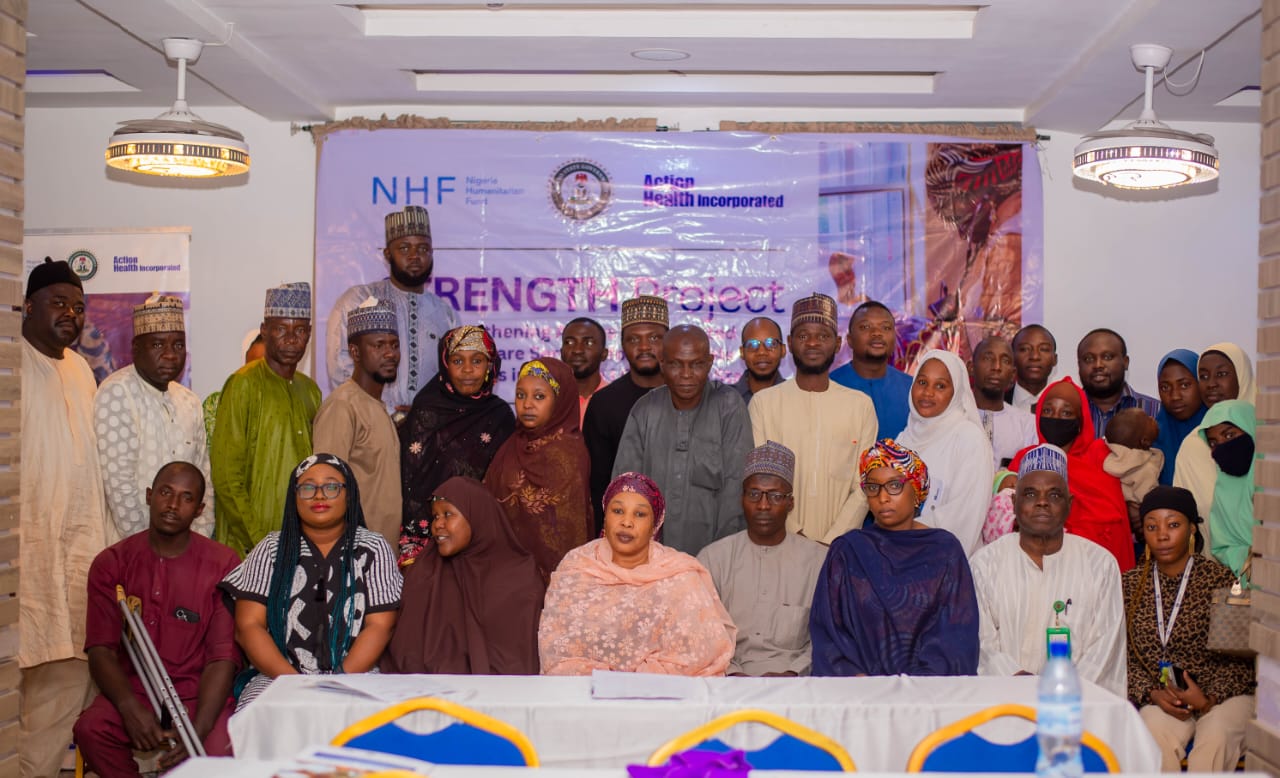
Action Health Incorporated (AHI) tackles challenges of access to healthcare services in Borno
By Tada Jutha, Maiduguri
Action Health Incorporated (AHI), with support from the Nigeria Humantrain Fund (NHF), has addressed the difficulties in getting healthcare services by offering fair and comprehensive access to quality sexual reproductive health (SRH), nutrition, and support for gender-based violence (GBV) in the Damboa Local Government Area (LGA) of Borno State.
The achieved target and challenges faced during the implementation of healthcare delivery were identified over the weekend at a closeout meeting of the Strength Project in Maiduguri.
Speaking on the inaccessible healthcare services, the AHI Coordinator, Dr Musa Williams, said: “There is limited access to secondary healthcare facilities in Damboa LGA, where residents could not have direct access to specialised medical service care, particularly among the vulnerable populations affected by insurgency.”
Williams added that the lack of blood banks also poses a significant risk to patients that require transfusions or other blood-related treatment.
Besides the lack of blood banks, the coordinator added that infrastructure deficits play a role in people with disabilities not having access to health facilities, as they do not have installed slabs, which daily restricts easy access for people with disabilities in the state.
Beyond accessing health facilities, the coordinator added: “The cultural malpractices of the traditional surgical removal of whitish cheek discolouration due to severe acute malnutrition (SAM) are also another challenge in accessing healthcare delivery services in the state.”
The Strength Project theme, “Strengthening Access to Integrated Healthcare Services for Vulnerable Populations in Damboa”, is dedicated to improving access to life-saving, integrated primary healthcare services for vulnerable populations by what he described as “strengthening the community health system and promoting preventive care”.
Williams stated that AHI has performed much higher than its initial targets on health facility services by 102%, while mobile healthcare services also hit 171 per cent.
According to him, even the skill deliveries in the council area rose by 72%.
Responding to the closeout event of AHI in the state, most of the participants demanded an extension of the Strength Project to other LGAs, despite its closure in Borno state, as cases of snake bites are on the rise in the Dikwa, Mobbar and Gwoza local council areas for intervention to save people’s lives.
Most of the women and children were provided with treated mosquito nets and antenatal and postnatal medications against malaria and other preventable diseases in the council area, devastated by the over-a-decade insurgency. While mothers and their newborns were given delivery kits. Essential drugs were also provided through medical mobile outreach in communities and hard-to-reach areas. We have provided essential drugs to three facilities and trained health care workers to support them.

Police Bust Kidnap Ring in Maiduguri, Rescue 7-Year-Old, Recover ₦1.5m Ransom
By Tada Jutha, Maiduguri
The Borno State Police Command has arrested five suspected kidnappers and rescued a seven-year-old boy abducted in Maiduguri, recovering the ₦1.5 million ransom paid by the child’s family.
The command said the suspects had initially demanded ₦10 million from the victim’s family before lowering the ransom to ₦8 million. However, security operatives tracked down those involved in the abduction after the child’s mother paid ₦1.5 million.
Police spokesperson, ASP Nahum Daso, disclosed in Maiduguri that the incident was reported to the State Criminal Investigation Department (SCID) on Tuesday, March 24, 2026, at about 3:30 p.m., shortly after the boy was kidnapped from the Chad Basin Development Authority staff quarters.
According to him, preliminary investigation indicated that the abductors contacted the victim’s mother through a concealed telephone line and issued a series of ransom demands while negotiations were ongoing.
Daso said the breakthrough came after detectives launched a digital forensic investigation into the payment trail used for the ransom.
He explained that operatives traced the Point of Sale (POS) account that received the ₦1.5 million and arrested the operator, identified as Musa Mohammed Bashir.
The police spokesman added that the arrest of the POS operator led investigators to four other suspects believed to have coordinated the kidnapping operation in the Chad Basin and Bulabulin Alajiri areas of Maiduguri.
He said the child was rescued unharmed, taken for medical examination, and later reunited with his parents.
The police also confirmed the recovery of the ₦1.5 million ransom paid by the family from the suspects.
The Commissioner of Police in Borno State, Naziru Abdulmajid, commended the detectives for what he described as a swift and professional operation.
He reaffirmed the command’s commitment to intelligence-led policing and urged residents to remain alert and continue sharing useful information with security agencies to help tackle crime in the state.
The police said the investigation into the case is still ongoing, with further action to follow as authorities work to dismantle the suspected kidnapping network.
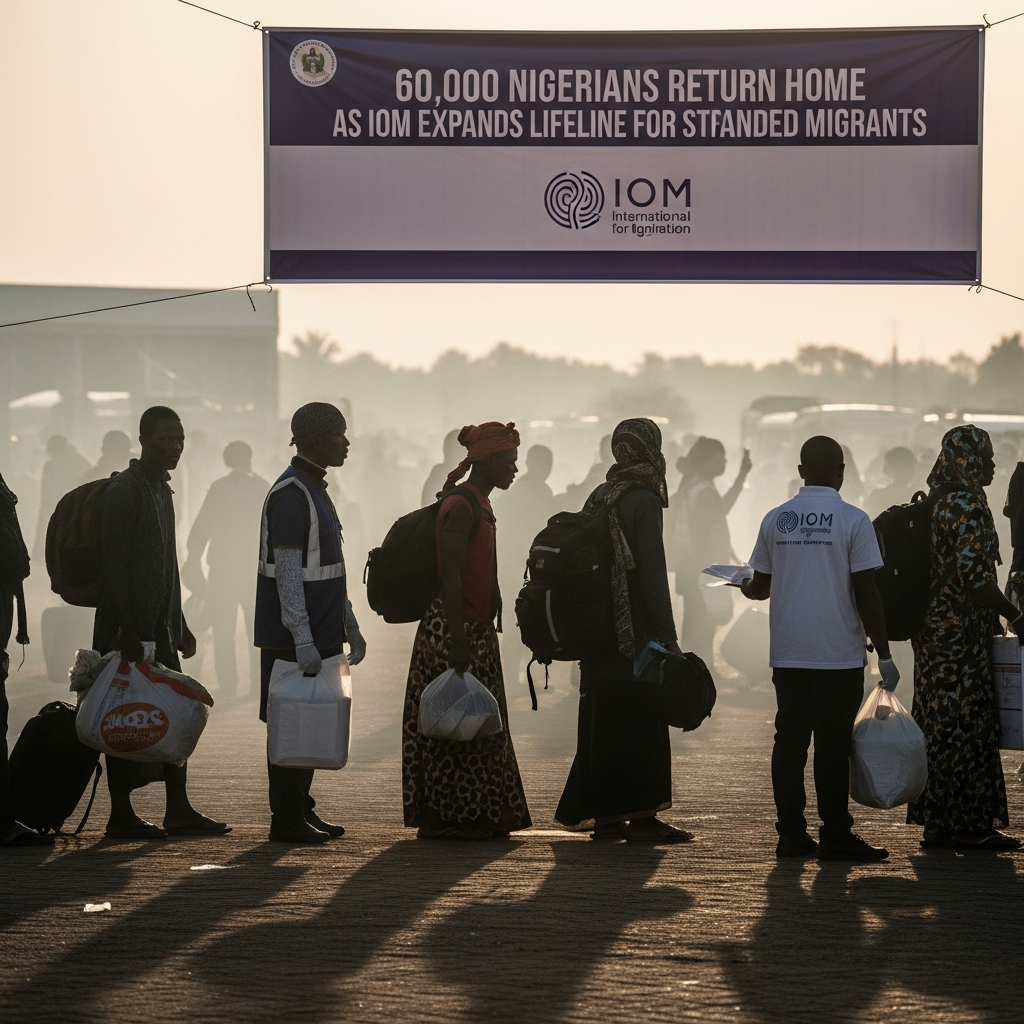
60,000 Nigerians Return Home as IOM Expands Lifeline for Stranded Migrants
By Tada Jutha, Maiduguri
No fewer than 60,000 Nigerians who were once stranded along dangerous migration routes across West and Central Africa have now safely returned home, marking a major milestone in humanitarian efforts led by the International Organization for Migration (IOM).
The returnees are being supported through structured reintegration programmes designed to help them rebuild their lives, regain stability, and restore dignity after enduring harsh conditions abroad.
IOM Chief of Mission in Nigeria, Sharon Dimanche, disclosed this in a statement issued in Maiduguri, Borno State, noting that the initiative has been ongoing since 2017. She explained that the programme provides tailored support to migrants as they transition from uncertainty to self-reliance.
“Through our reintegration support, migrants are empowered to rebuild their livelihoods and move forward with dignity,” she said, adding that many beneficiaries are already making meaningful progress in their communities.
Dimanche highlighted the recent return of 181 Nigerians from Libya on March 10, 2026, describing it as a significant step that reflects the strong collaboration between IOM, the Federal Government of Nigeria, the European Union, and its member states.
She noted that for many returnees, the journey back home represents a turning point, away from exploitation, abuse, and life-threatening migration experiences, and toward a future anchored on recovery and opportunity.
Beyond facilitating returns, the IOM has provided reintegration assistance to over 38,000 Nigerians. The support includes vocational training, business start-up grants, educational opportunities, and psychosocial care aimed at helping returnees reintegrate into society successfully.
“The return of migrants is not the end of their story,” Dimanche emphasized. “With the right support, they can rebuild their lives, grow, and contribute meaningfully to their communities.”
She added that successful reintegration not only transforms individual lives but also strengthens communities and supports long-term development.
Data from the organization shows that in 2025 alone, 14,787 Nigerians were assisted to return home safely, while more than 2,500 have already benefited from the programme in 2026.
Dimanche also raised concern over the vulnerability of many migrants, revealing that a significant number of those assisted are survivors of human trafficking, exploitation, and severe abuse along migration routes.
She stressed the need for sustained, route-based interventions that ensure access to protection services, safe return pathways, and continuous reintegration support for affected individuals.
The IOM reaffirmed its commitment to working with partners to provide life-saving assistance and create opportunities for returnees to rebuild their futures, one life at a time.
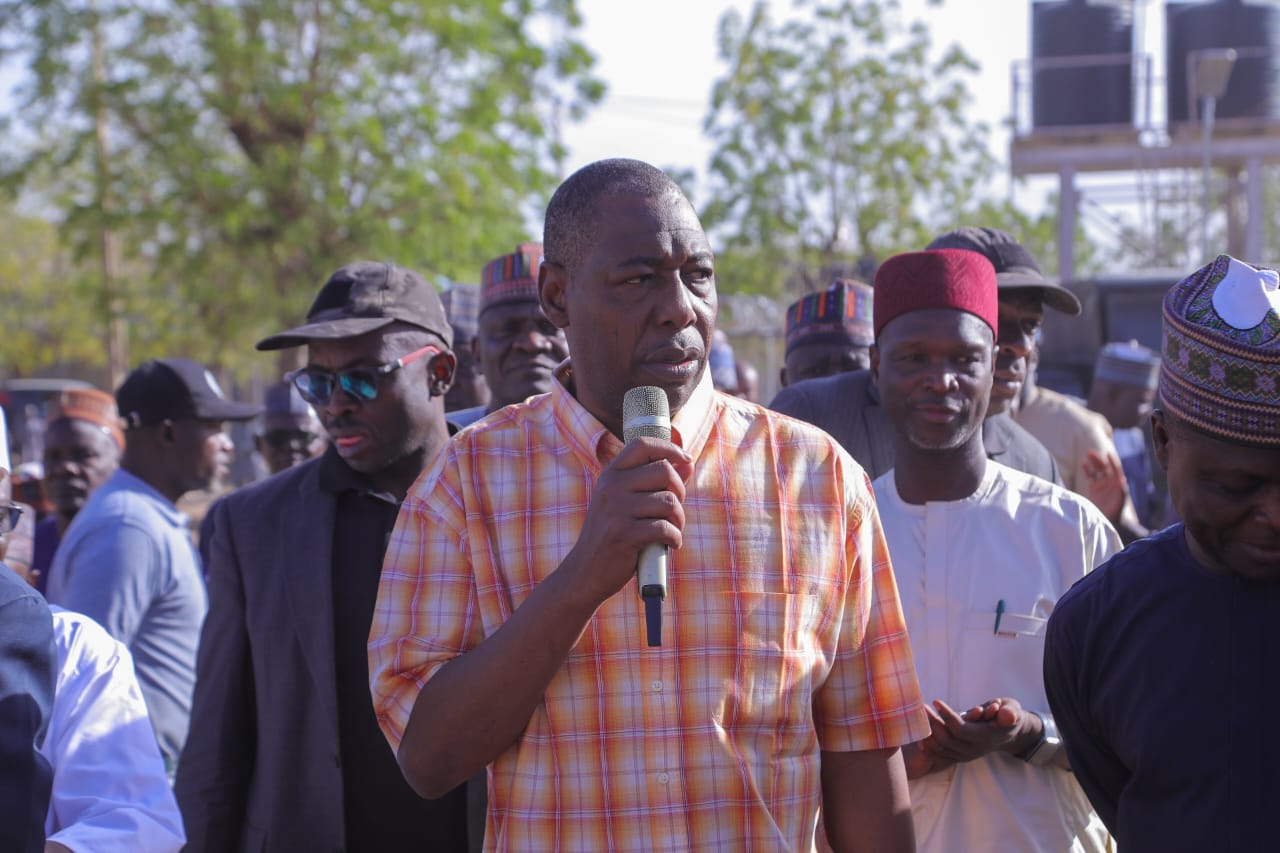
Zulum Spends Night in Pulka, Disburses N900m Relief to 30,000 Boko Haram-Affected Households
By Tada Jutha, Maiduguri
Borno State Governor Babagana Umara Zulum has approved the release of N900 million alongside large quantities of food and essential supplies to support about 30,000 households affected by recent Boko Haram attacks in Gwoza Local Government Area.
In a rare show of frontline leadership, the governor spent Saturday night in Pulka, a border community near Cameroon, where he personally coordinated security efforts following renewed attacks in Ngoshe, Pulka, and surrounding areas. The visit marks the first time a sitting governor has stayed overnight in the town, located about 22 kilometres from Gwoza.
Before overseeing the distribution of relief materials on Sunday, Zulum held a closed-door meeting with military commanders, security agencies, and members of the Civilian Joint Task Force. The discussions focused on strengthening security operations, particularly across border communities and key corridors such as the Gwoza–Bitta–Damboa axis.
Addressing residents, the governor emphasised that leadership requires sacrifice and direct engagement with the people. He noted that his administration has consistently prioritised reaching vulnerable communities rather than governing from a distance.
“True leadership is about being present where people need you the most, not remaining in comfort while others suffer,” he said, reaffirming his commitment to grassroots governance.
As part of the intervention, Zulum announced that each household head in Ngoshe would receive N30,000, while married women would be given N20,000. In addition, thousands of mattresses, clothing materials, and other relief items were distributed to ease the hardship faced by displaced families.
He further disclosed that similar support would be extended to Pulka, which has witnessed an influx of displaced persons fleeing violence in nearby communities.
The governor also acknowledged contributions from the Federal Government and business magnate Alhaji Aliko Dangote, who donated 30,000 bags of rice to assist vulnerable residents. He confirmed that Pulka would benefit from the distribution.
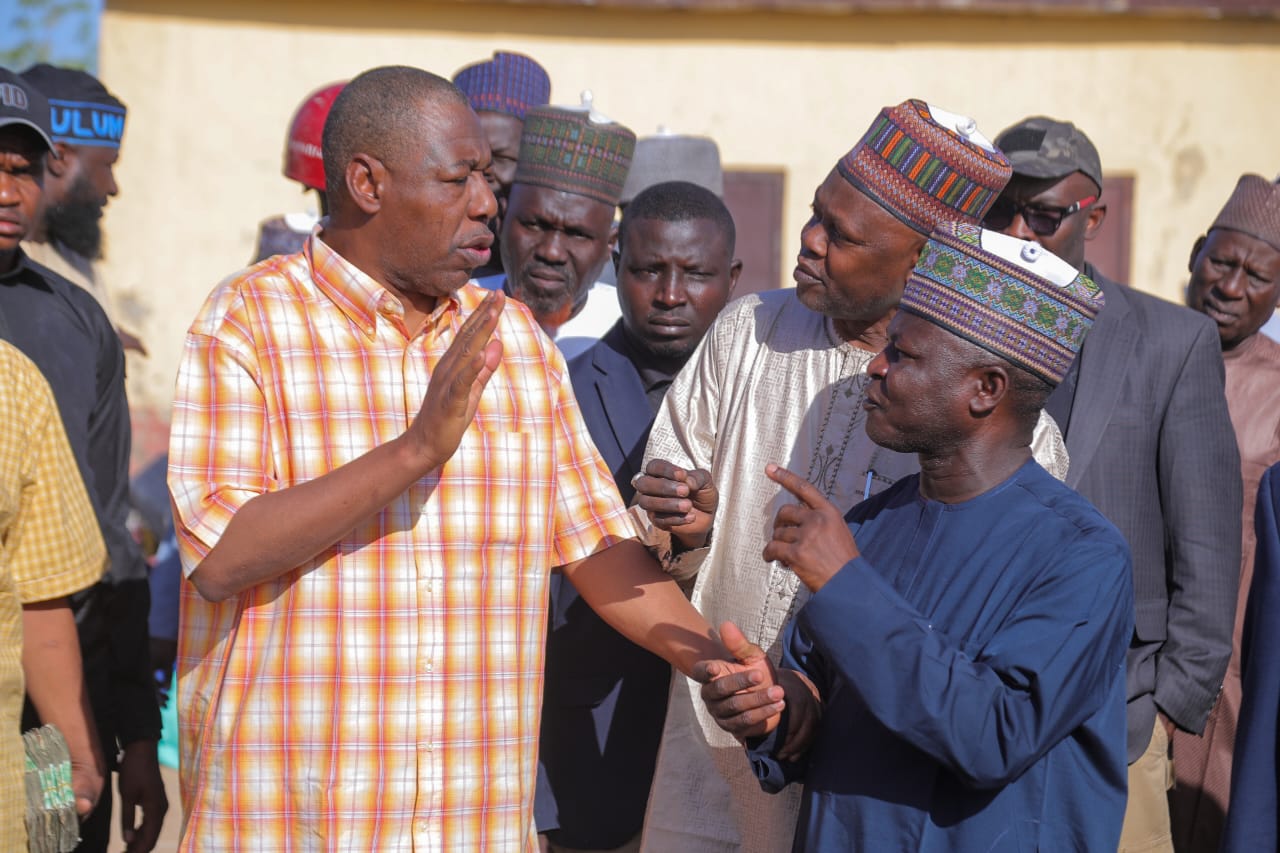
“We are not only supporting Ngoshe but also Pulka and other affected communities with both food and non-food items to cushion their suffering,” Zulum stated.
Calling for stronger community collaboration, the governor urged residents to work closely with security agencies by providing credible information that could help tackle insecurity.
“Security is a shared responsibility. Without the cooperation of the people, it will be difficult to end this crisis,” he warned.
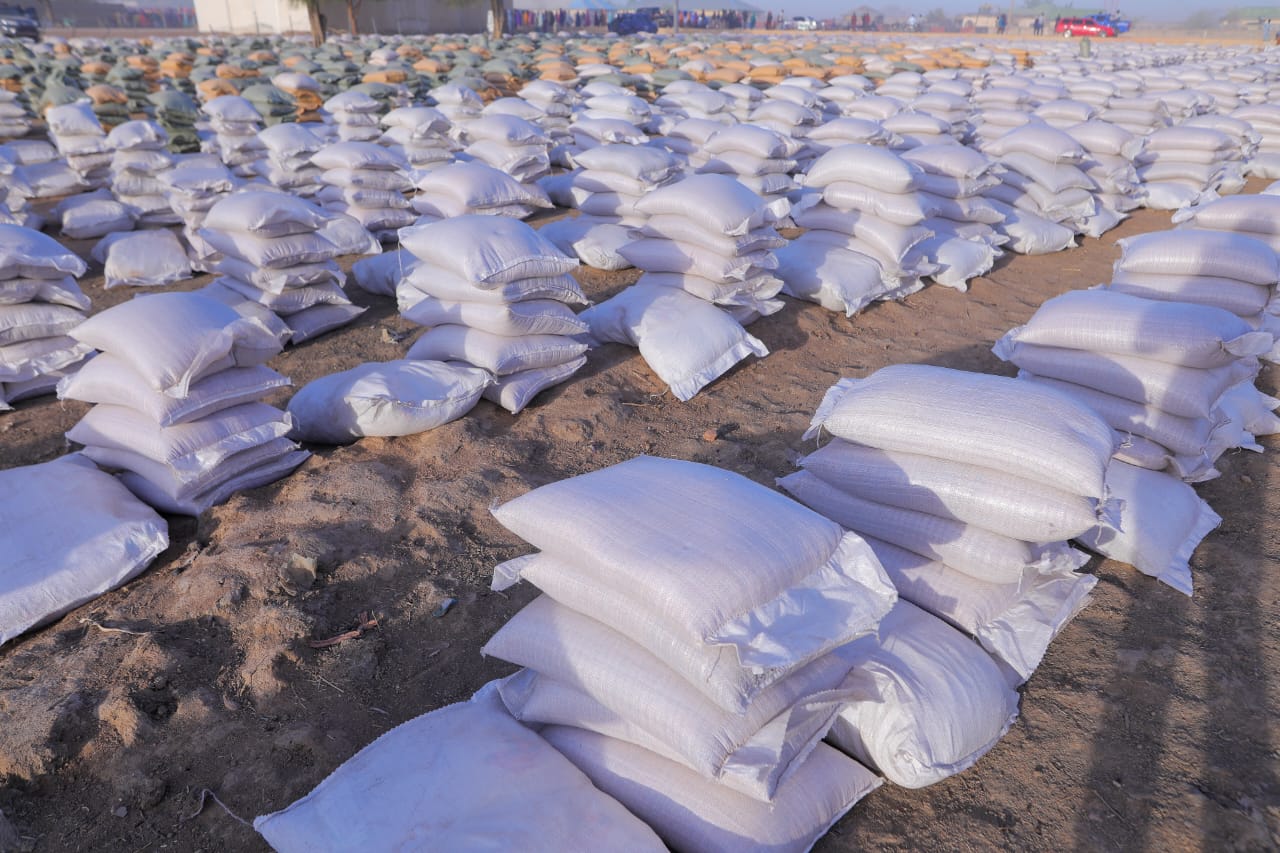
Items distributed during the exercise included bags of rice, maize, and sorghum, as well as bedding materials such as mattresses and plastic mats.
The governor was accompanied by key political and government officials, including Senator Mohammed Ali Ndume, Hon. Ahmed Usman Jaha, and Hon. Bukar Talba, among others.
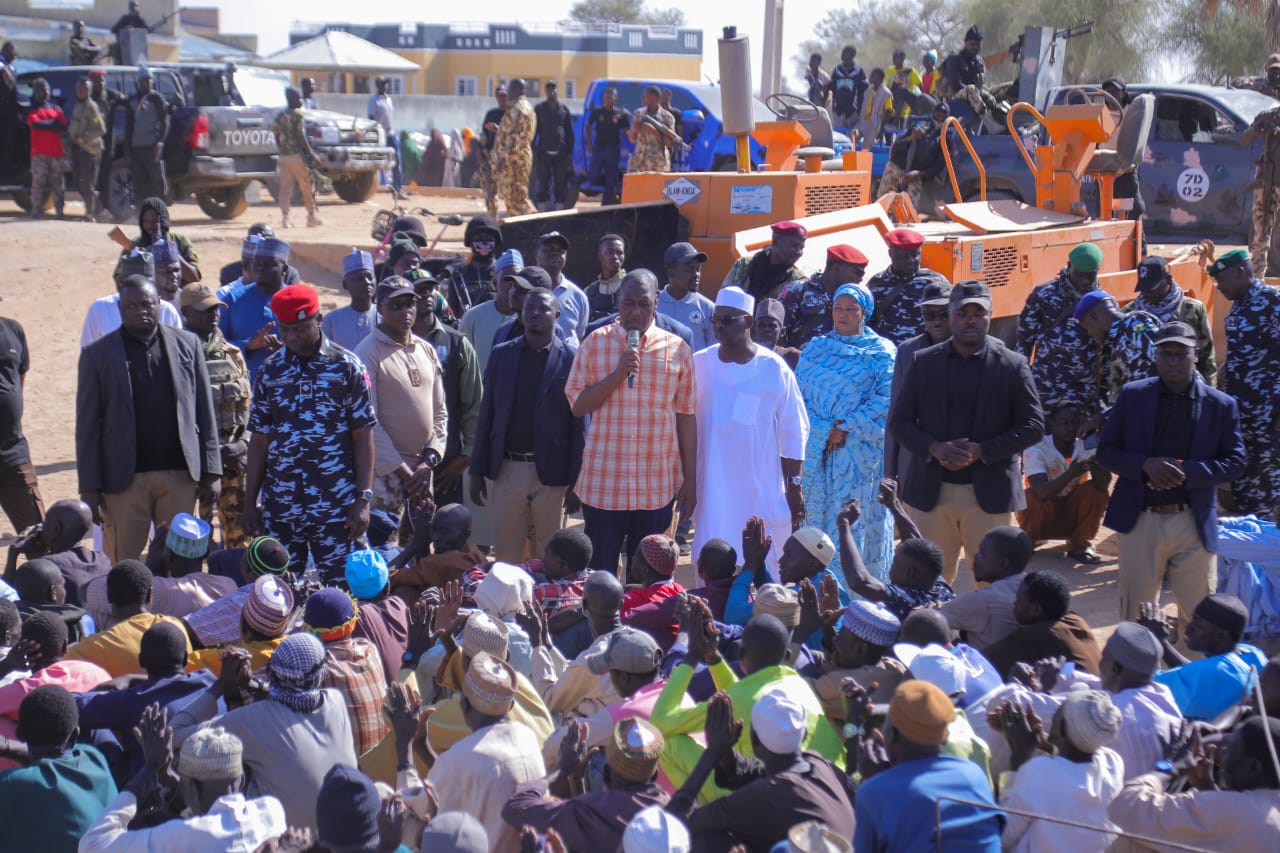
Zulum reassured the affected communities of sustained efforts by both the state and federal governments to restore peace, rebuild livelihoods, and ensure long-term stability across Borno State.

Gov. Inuwa Leads Strong Gombe APC Delegation to Abuja Convention

Gombe 2027: As Major Contenders Jostle To Succeed Governor Yahaya

Army Probes Alleged Civilian Killing in Maiduguri, Raises Security Concerns

Dangote Launches Landmark ₦1 Trillion Scholarship Scheme to Support 1.3 Million Nigerian Students

NGX Ends Week in the Green as ₦1.54 Trillion Boosts Investors’ Fortunes

Formal Rebuttal to the Recent Interview Granted by Retired Major General Ali Keffi on Arise TV
-
 Education4 months ago
Dangote Launches Landmark ₦1 Trillion Scholarship Scheme to Support 1.3 Million Nigerian Students
-
 Economy3 months ago
NGX Ends Week in the Green as ₦1.54 Trillion Boosts Investors’ Fortunes
-
 Column4 months ago
Formal Rebuttal to the Recent Interview Granted by Retired Major General Ali Keffi on Arise TV
-

 Gombe3 months ago
Gombe Shines Again, Ranks Second in Northeast at 2025 PHC Leadership Challenge
-

 Economy4 months ago
CBN’s End to Cash Withdrawal Limit
-
 Politics4 months ago
NSGF names Ezekiel Gomos as Director-General, setting stage for stronger regional collaboration
-
 Gombe2 weeks ago
A tribute to Dr Langa Hassan Bangunji (JP) – an icon of Scholarship, Leadership and Community Service
-
 Latest News3 months ago
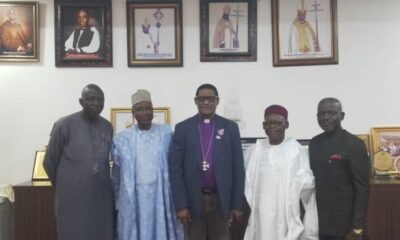
Anglican Church Expands Footprint with 15 New Dioceses, Total Hits 176