
Education
Council of Legal Education Approves Al-Ansar, 113 Universities to Run Law Programmes in Nigeria

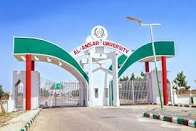
Council of Legal Education Approves Al-Ansar, 113 Universities to Run Law Programmes in Nigeria
By Auwal Ahmad Umar
The Council of Legal Education (CLE) has authorised Al-Ansar University, Maiduguri, alongside 113 other universities across Nigeria, to offer Bachelor of Laws (LL.B) degree programmes.
In an official circular released on Friday, the council clarified that only institutions listed in the document are permitted to admit students into law programmes in the country.
The circular, signed by the Secretary and Director of Administration of the Council, Aderonke Osho, cautioned universities against operating law programmes without formal approval from the regulatory body.
According to the council, any institution that runs a law programme without accreditation will face sanctions under the regulations guiding legal education in Nigeria.
It further warned prospective students and parents to verify the status of universities before seeking admission into law faculties, stressing that graduates from unapproved law programmes would not qualify for admission into the Nigerian Law School, which is mandatory for anyone seeking to practise law in the country.
“The public is further informed that any university that admits students into a law programme without the approval of the Council of Legal Education is acting contrary to the provisions regulating legal education in Nigeria and will be subject to appropriate sanctions,” the circular stated.
The council explained that the move is part of its ongoing effort to maintain quality standards in the training of legal professionals in Nigeria.
It also indicated that the list of approved institutions would be periodically reviewed and updated in line with its statutory responsibility of supervising legal education in the country.
Among the universities granted approval are Ahmadu Bello University, Zaria; University of Ibadan; University of Lagos; University of Nigeria, Nsukka; University of Maiduguri; Bayero University, Kano; Lagos State University; Rivers State University; and Gombe State University, among many others.
However, the council noted that a few institutions currently have temporary moratoriums on admission into their law programmes, including Baze University, Abuja; Lead City University, Ibadan; and the Nigeria Police Academy, Wudil, due to regulatory decisions affecting specific academic sessions.
The Council of Legal Education, established under the Legal Education Act, is the statutory body responsible for supervising legal education in Nigeria. It oversees the operations of the Nigerian Law School and ensures that universities offering law programmes meet the standards required for professional legal training in the country.

By Auwal Ahmad Umar
The university says the appointments are part of efforts to strengthen research, innovation, scholarship opportunities and institutional growth.
Al-Ansar University, Maiduguri, Borno State, has confirmed Professor Fanna Inna Abdulrahman as its substantive vice-chancellor and appointed Engr. Professor Baba Shehu Waziri as acting deputy vice-chancellor in charge of advancement, research, innovation, scholarship and enrolment.
The appointments, announced in a statement issued by the university’s management on Saturday, are expected to strengthen the institution’s leadership and expand its capacity for research, innovation and sustainable development.
While Professor Abdulrahman’s appointment was approved by the Board of Trustees, chaired by Alhaji Mohammed Adam, MFR, the Governing Council approved Professor Waziri’s appointment at its sixth special meeting on Friday, October 9, 2026.
Professor Abdulrahman, who has served as acting vice-chancellor since September 8, 2025, will hold the substantive position for a three-year tenure ending September 7, 2028. Her period as acting vice-chancellor forms part of the approved tenure.
As the university’s chief executive and chief academic officer, she will oversee academic administration, research, institutional governance, financial management and staff and student welfare.
The university said her appointment recognised her leadership, administrative competence and contributions to its development.
Professor Waziri, a professor in the Department of Civil and Water Resources Engineering at the University of Maiduguri, will assume his new role on November 1, 2026, for an initial one-year tenure ending October 31, 2027.
His appointment introduces a dedicated leadership portfolio for Advancement, Research, Innovation, Scholarship and Enrolment, known as ARISE, which the university hopes will help attract investment, strengthen research partnerships and widen access to higher education.
Under the arrangement, Professor Waziri is expected to work with the vice-chancellor and other principal officers to attract research grants, establish partnerships with local and international institutions, promote technological innovation and mobilise resources for the university’s development.
The office will also focus on expanding scholarships and educational sponsorships for deserving students, as well as developing strategies to increase enrolment.
The university said the initiative was designed to strengthen its institutional capacity through strategic partnerships, measurable targets and sustainable resource mobilisation.
Speaking on the appointments, the founder and proprietor of the university, Dr. Mohammed Kyari Dikwa, mni, congratulated the two academics and described their emergence as an important step towards realising the institution’s long-term vision.
“The University was established not merely to award degrees, but to nurture knowledgeable, morally upright, innovative and socially responsible graduates capable of contributing meaningfully to national development and humanity,” the statement quoted the founder as saying.
Dr. Dikwa, who is also the president of the Al-Ansar Foundation, said the institution was founded on the principles of knowledge, character, innovation and service to humanity.
He stressed the need to strengthen research, expand scholarship opportunities, attract development partners and improve access to quality education while ensuring the university’s financial sustainability and competitiveness.
The founder expressed confidence that the two appointments would create opportunities for institutional transformation and improved academic performance.
The university said it remained committed to providing an enabling environment for teaching, learning, research, entrepreneurship and character development, with a broader mission to contribute to the educational and socio-economic development of Borno State, the North-East and Nigeria.
The appointments come as the institution seeks to consolidate its academic programmes, strengthen governance and expand support for students.
The university’s management congratulated both appointees and expressed hope that their leadership would contribute to its continued growth and academic excellence.
By Auwal Ahmad Umar
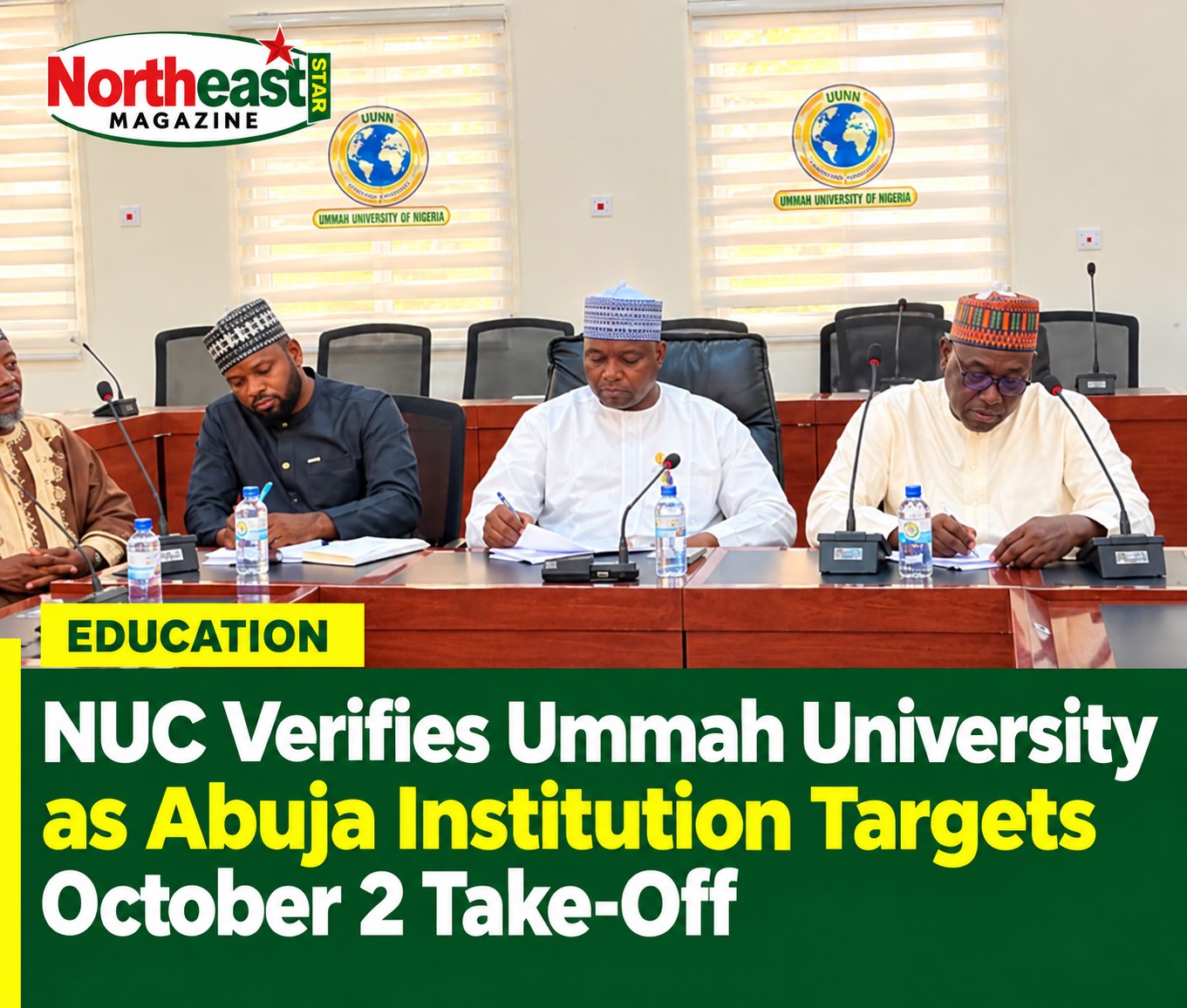
Ummah University of Nigeria, Abuja, is targeting October 2, 2026, for the commencement of academic activities as the National Universities Commission (NUC) begins a resource verification exercise to assess the institution’s readiness for take-off.
The university’s Founder and Pro-Chancellor, Dr Mohammed Kyari Dikwa, disclosed this on Wednesday while welcoming the NUC Resource Verification Team, saying the institution had invested substantially in infrastructure, academic facilities, laboratories, ICT, library resources and staffing ahead of the proposed commencement.
The verification exercise, he said, represents a crucial step in the university’s drive to secure the necessary regulatory approvals and begin academic operations.
“Our aspiration is to commence academic activities on 2nd October 2026, In shā’ Allāh, subject, of course, to the necessary regulatory processes and approvals,” he said.
For the exercise, the university is presenting three faculties — Medicine and Allied Sciences, Computing, and Management and Social Sciences with seven departments and 16 academic programmes for verification and subsequent take-off, subject to NUC approval.

By Hajji Shehu
Maryam Umar, a graduate of the Department of Economics at Gombe State University (GSU), has become an inspiration after successfully completing her university education despite being born without arms.
Maryam refused to allow her physical condition to stand in the way of her dreams. Through determination, resilience and a commitment to education, she overcame the challenges she faced and achieved this remarkable milestone.
Her achievement is a powerful reminder that physical disability does not define a person’s potential or determine how far they can go in life.
Maryam’s success stands as an example of perseverance, patience and faith in Allah, offering hope and encouragement to others facing similar challenges.
Her story also highlights the importance of inclusive education and equal opportunities for people living with disabilities to pursue their ambitions and contribute meaningfully to society.

Nigeria Must Embrace Intelligence, Technology to Tackle Security Threats – Defence Minister

Nigerian Army Moves to Strengthen Aviation Safety, Aircraft Reliability

Rule of Law, Nigeria’s only hope of survival (1)

APC National Chairman Settles Gombe Central Contest, Raises DCP Ahmed’s Hand as Party’s Senatorial Candidate

Gombe Eyes Livestock-Led Economic Growth as Inuwa Yahaya Meets Minister

NGX Ends Week in the Green as ₦1.54 Trillion Boosts Investors’ Fortunes

-
 Politics4 months ago
APC National Chairman Settles Gombe Central Contest, Raises DCP Ahmed’s Hand as Party’s Senatorial Candidate
-
 Agriculture2 months ago
Gombe Eyes Livestock-Led Economic Growth as Inuwa Yahaya Meets Minister
-
 Economy10 months ago
NGX Ends Week in the Green as ₦1.54 Trillion Boosts Investors’ Fortunes
-
 Sport6 months ago
Gombe Aquatic Sports Body Unveils Board, Sets Stage for Competitive Debut
-

 Economy10 months ago
CBN’s End to Cash Withdrawal Limit
-

 Education10 months ago
Dangote Launches Landmark ₦1 Trillion Scholarship Scheme to Support 1.3 Million Nigerian Students
-

 Striking the Balance3 months ago
The $2,500 Threshold: Why Raising Nigeria’s GDP Per Capita Is Our Best Non-Kinetic Strategy for Peace
-

 Environment4 months ago
World Environment Day: NGO Urges Nigerians to Embrace Nature-Based Solutions Against Climate Change