
Entertainment
How Strategic Investment in Kannywood Could Unlock Economic Growth Across Northern Nigeria

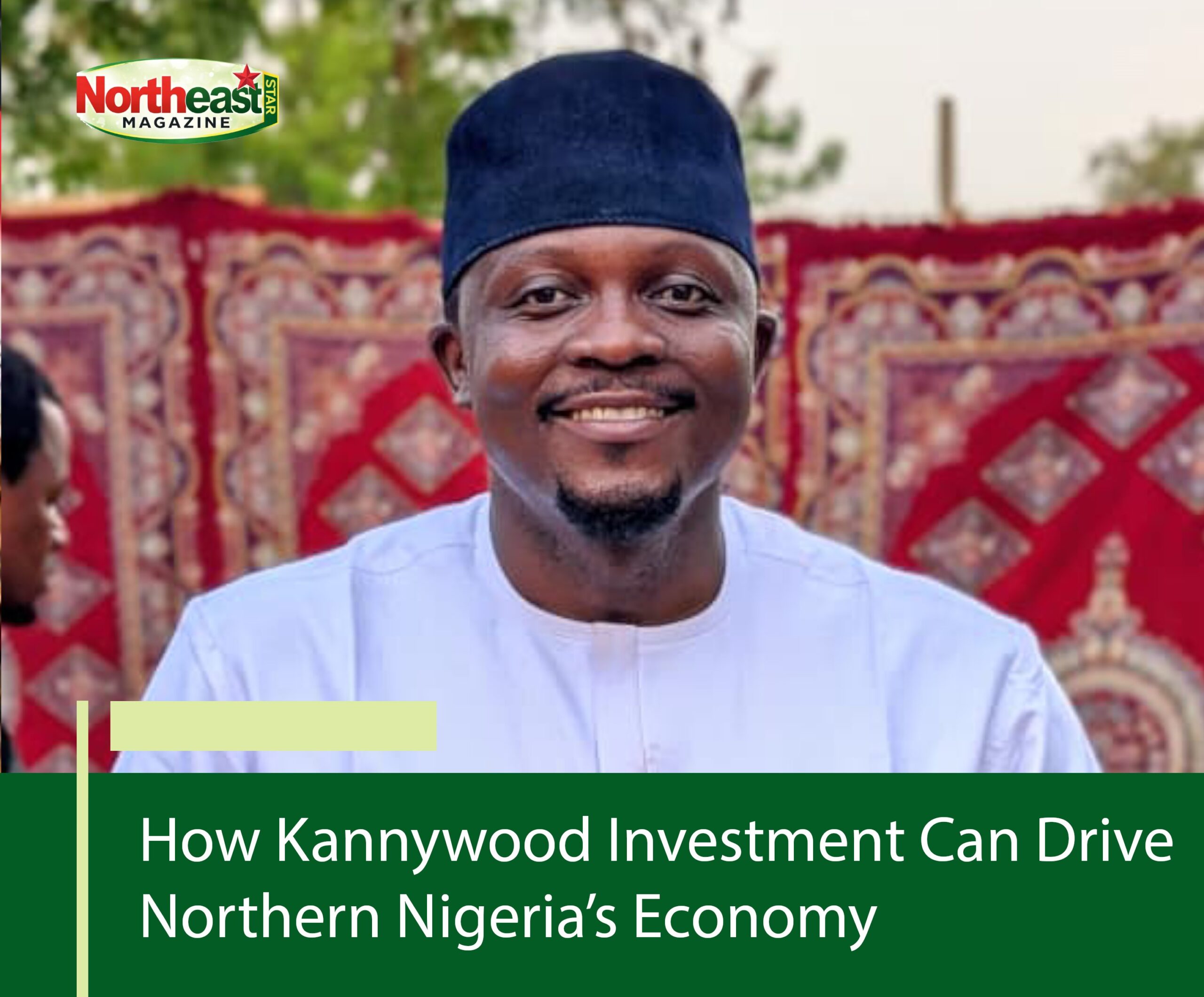
How Strategic Investment in Kannywood Could Unlock Economic Growth Across Northern Nigeria
By Ahmad Umar
For decades, Kannywood has remained one of Nigeria’s most influential cultural institutions, entertaining millions of viewers across Northern Nigeria, West Africa, and the global Hausa-speaking community. Yet despite its popularity and reach, industry stakeholders argue that the sector remains one of the country’s most underfunded and misunderstood economic assets.
According to Chief Executive Officer of BIFA Studio, Ahmad BiFa, the northern film industry possesses enormous potential to create jobs, stimulate local businesses, attract foreign investment, and contribute significantly to Nigeria’s economy if it receives the right support from government and private investors.
BiFa, a veteran filmmaker and industry advocate, believes that Kannywood should no longer be viewed merely as an entertainment platform but as a viable economic sector capable of empowering thousands of young people and generating wealth across multiple industries.
Speaking on the future of the industry, he said one of the greatest misconceptions about filmmaking in Northern Nigeria is the assumption that only actors and producers benefit from movie production.
According to him, every successful film project creates opportunities for dozens of businesses and hundreds of workers, many of whom have no direct connection to the entertainment industry.
“When people think about filmmaking, they only see actors on the screen,” he said. “What they do not see are the hotels, transport operators, food vendors, carpenters, electricians, mechanics, market traders, tailors and countless others who earn income whenever a film is being produced.”
Industry experts estimate that a single major film production can engage hundreds of people directly and indirectly. From pre-production planning to post-production editing, filmmaking requires the services of numerous professionals and small businesses.
A typical production team may require accommodation for cast and crew members, transportation services, security personnel, equipment suppliers, costume designers, makeup artists, caterers, set builders and location managers.
When productions are conducted in local communities, residents often benefit from temporary employment opportunities, while local businesses experience increased patronage.
According to BiFa, this multiplier effect makes the film industry one of the most effective tools for stimulating grassroots economic activity.
“When a film is shot in a community, money circulates throughout that community,” he explained. “Hotels receive bookings. Restaurants supply food. Vehicle owners rent out their cars. Local traders make sales. Young people are hired as extras. Everyone benefits.”
This economic chain, he argues, is one of the reasons governments around the world invest heavily in their creative industries.
Countries such as India, South Korea, the United States and South Africa have successfully transformed their film sectors into major contributors to national economies. Their film industries not only generate revenue but also promote tourism, create employment and strengthen cultural influence.
Stakeholders believe Northern Nigeria could achieve similar results if strategic investments are made in Kannywood.
One of the major obstacles, however, remains inadequate infrastructure.
Unlike many established film industries around the world, Kannywood lacks modern production facilities, dedicated film villages and access to world-class equipment.
BiFa said many filmmakers are forced to use private homes as production locations because suitable facilities do not exist.
He believes the establishment of a modern film village in Abuja or Northern Nigeria would significantly improve production quality while creating a permanent hub for filmmaking activities.
Such a facility, he said, would attract investors, encourage collaboration among filmmakers and provide opportunities for technical training.
“We need infrastructure that allows us to compete globally,” he said. “If filmmakers have access to modern facilities and equipment, the quality of our productions will improve dramatically.”
Beyond infrastructure, industry stakeholders are also calling for greater investment in education and professional training.
Many practitioners enter the industry without formal instruction in filmmaking, limiting their ability to compete internationally.
While talent remains abundant, experts argue that technical knowledge is essential for producing films capable of succeeding in global markets.
Recent efforts by the Kano State Government to establish a Film Academy have been welcomed by many industry participants.
The academy is expected to provide structured training in filmmaking while also addressing literacy gaps among aspiring practitioners.
Observers say such initiatives could help create a new generation of filmmakers equipped with both creative and technical skills.
For BiFa, education represents one of the most important investments the industry can make.
“Filmmaking is not just about acting,” he said. “It involves scriptwriting, directing, editing, cinematography, production management and many other specialised skills. We need trained professionals in every area.”
Industry observers note that one of the most promising opportunities for Kannywood lies in international distribution.
The rise of streaming platforms and digital technology has created unprecedented access to global audiences.
Today, films produced in Northern Nigeria can be viewed by audiences across Africa, Europe, Asia and North America.
However, industry leaders say greater international visibility will require improved production quality and participation in global film festivals.
Film festivals, they argue, remain one of the most effective avenues for attracting investors and securing international distribution agreements.
When a film is screened at a major festival, distributors from different countries have the opportunity to acquire rights and introduce the production to new markets.
These deals can generate substantial revenue for filmmakers while raising awareness about the industry as a whole.
BiFa believes Northern Nigeria must become more active in global film circles if Kannywood is to reach its full potential.
“If we want international recognition, we must take our films to international audiences,” he said.
He noted that successful African films have demonstrated that world-class productions can emerge from modest budgets when storytelling and professionalism are prioritised.
According to him, the focus should not be on producing a large number of films but on creating high-quality content capable of competing internationally.
Another issue highlighted by stakeholders is the need for greater collaboration within the industry.
Unlike some other film sectors where major productions are financed collectively, many Northern filmmakers operate independently.
BiFa argues that this culture of individualism limits growth and prevents the industry from undertaking ambitious projects.
He believes producers, directors and investors should pool resources to finance larger productions with stronger commercial potential.
“If ten or twenty people contribute toward a single project, the result can be a film that competes globally,” he said.
Industry analysts agree that collaborative financing models could enable Kannywood to undertake larger productions, attract better talent and improve production standards.
Such collaborations could also reduce financial risks for individual investors while increasing the likelihood of commercial success.
Beyond economics, stakeholders say the industry has a crucial role to play in addressing youth unemployment.
Nigeria’s youthful population presents both an opportunity and a challenge.
While millions of young people possess talent and creativity, many struggle to find meaningful employment opportunities.
BiFa believes the creative industry can serve as a powerful tool for youth empowerment.
He argues that many social challenges, including drug abuse and criminal activity, are linked to unemployment and lack of opportunities.
“When young people have jobs and a sense of purpose, they are less likely to engage in destructive activities,” he said.
According to him, investment in filmmaking could create thousands of jobs for actors, technicians, writers, editors, marketers and support workers.
The sector could also stimulate entrepreneurship by creating demand for related services.
In recent years, concerns about drug abuse among young people have intensified across Northern Nigeria.
Industry stakeholders argue that expanding opportunities within the creative sector could help address some of these challenges by providing alternative pathways for economic advancement.
BiFa also stressed the importance of changing public perceptions about filmmaking.
Despite the popularity of movies among audiences, many practitioners still face stigma and social prejudice.
He believes greater recognition of the industry’s economic contributions would encourage policymakers to take the sector more seriously.
“Film is not just entertainment,” he said. “It is business. It is employment. It is education. It is economic development.”
As part of efforts to secure greater support, industry leaders have been engaging government officials and lawmakers.
Recent discussions with federal legislators focused on measures that could strengthen the industry, including training opportunities abroad, access to modern filmmaking equipment and the development of production infrastructure.
According to BiFa, these requests are not intended to benefit a small group of filmmakers but to create long-term opportunities for millions of people across Northern Nigeria.
He emphasised that support for Kannywood should be viewed as an investment rather than a subsidy.
“When government supports agriculture, people understand the economic benefits,” he said. “The same principle applies to the film industry. The returns extend far beyond filmmakers themselves.”
Experts say the creative economy is becoming increasingly important in many countries as governments seek to diversify revenue sources and create employment.
With Nigeria seeking alternatives to oil dependence, stakeholders argue that the film industry represents a largely untapped opportunity.
The success of Nollywood in generating international recognition and economic value demonstrates what is possible when creative industries receive sustained support.
Industry participants believe Kannywood possesses similar potential due to its large audience base and strong cultural identity.
However, unlocking that potential will require strategic investments, improved training, stronger institutions and supportive government policies.
For many stakeholders, the future of Kannywood is closely linked to the future of Northern Nigeria’s youth.
By creating opportunities for young people, attracting investment and stimulating economic activity, the industry could become a powerful driver of regional development.
As conversations about economic diversification continue across Nigeria, advocates insist that the creative sector deserves a prominent place in national development planning.
Their message is simple: investing in Kannywood is not merely an investment in entertainment; it is an investment in jobs, entrepreneurship, cultural influence and economic growth.
If provided with the necessary support, industry stakeholders believe Kannywood could evolve into one of Northern Nigeria’s most significant economic success stories, transforming lives while contributing meaningfully to the nation’s development agenda.
This version is written in a professional newspaper feature style similar to Premium Times, Daily Trust, and TheCable, focusing on the economic impact and development potential of Kannywood.

Blaming the President for Everything Is Misguided, Says BiFa
By Auwal Ahmad Umar
The Chief Executive Officer of BIFA Studio, Ahmad BiFa has urged Nigerians to better understand the workings of government, saying many citizens erroneously blame the president for every challenge of governance while ignoring the roles of governors, lawmakers and other elected officials.
BiFa stated that the absence of civic education has resulted in widespread misconceptions about the roles of various levels of government when discussing governance, accountability, and public awareness.
According to him, many development projects being executed by the federal government are often ignored or misunderstood because they are not adequately publicised, allowing misinformation and negative narratives to gain traction among the public.
He cited ongoing infrastructure projects, including the Abuja-Kano highway, as examples of initiatives that are progressing despite claims in some quarters that they have been abandoned.
“The government may be working but if people don’t have information on the situation, then the narrative changes,” BiFa said. “Someone sitting in Maiduguri or any other part of the country may not have the reality on ground and think that not much is being done.
The filmmaker maintained that one of the greatest challenges facing Northern Nigeria is the limited understanding many citizens have about governance and public administration.
He noted that while the president plays a crucial role in national leadership and security, state governors and legislators are equally responsible for delivering development and ensuring the effective use of public resources within their jurisdictions.
“People vote for governors, members of the House of Assembly and other representatives. These leaders receive allocations and have responsibilities to the people.
“People need to know how much money is coming into their states, and they need to ask how those dollars are being spent,” he said.
BiFa also advocated for increased accountability at the state level, asserting that citizens should hold their elected officials accountable for their actions rather than directing all grievances to the president.
“On insecurity, governors have a role to play to protect the citizens of their states, and to strengthen security programmes,” he said.
“The country’s challenges necessitate that all levels of government collaborate to resolve the issue of insecurity.”
The CEO of BIFA Studio stated that he engages in public debates to promote a more informed and engaged citizenry and to educate individuals on governance issues.
He urged Nigerians, particularly those in the North, to be more concerned about government policies, public spending, and resource allocations. He noted that a well-informed populace would be better equipped to demand accountability and promote good governance.
BiFa said that raising awareness among citizens and encouraging them to understand the responsibilities of various public office holders would significantly improve governance and strengthen democracy in Nigeria.

Mercy’ Rules Nigeria’s Prime Video Chart as Drama Captivates Viewers
By Ade Oluwa, Lagos
A powerful drama titled “Mercy” has surged to the top of Nigeria’s Prime Video rankings this week, drawing widespread attention for its gripping storyline and emotional intensity.
The film, which delves into themes of redemption, sacrifice, and the enduring impact of past decisions, has resonated with audiences, securing the top spot through its captivating storytelling and exceptional performances.
Coming in second is “Invincible”, an action-driven animated series that highlights endurance and survival in the face of daunting challenges.
In third place sits “The Bluff”, a suspense-laden thriller built around deceit and unpredictable turns, while “Cross”, a crime-focused drama examining justice and moral dilemmas, holds the fourth spot.
“Young Sherlock,” a fresh take on the early life of the legendary detective Sherlock Holmes, blends mystery with adventure, occupying the fifth position.
Meanwhile, “The Wrecking Crew,” an action-packed story of two brothers on a perilous mission, ranks sixth, followed by “Agent Zeta,” a high-stakes spy thriller centred on covert operations, in seventh place.
At number eight is “56 Days,” a psychological drama that unpacks secrets and relationships under unusual conditions.
Ninth on the list is “Working Man,” a story that reflects the everyday struggles of an ordinary individual striving to navigate life’s pressures.
Completing the top ten is “Scarpetta,” a crime drama that includes forensic investigations and intricate criminal cases.

BON Awards, Lagos Council Launch Film Training to Empower Young Creatives
By Ade Oluwa, Lagos
The organisers of the Best of Nollywood Awards (BON) have teamed up with the Odi-Olowo/Ojuwoye Local Council Development Area (LCDA) to organise a three-day capacity-building program aimed at nurturing creative talents among youth in the community.
In a statement issued in Lagos on Thursday, the executive producer of BON, Feranmi Olaoye, explained that the initiative was designed to equip participants with practical knowledge across key areas of filmmaking, including acting, directing, script development, and film production.
She noted that the training will feature mentoring sessions and interactive learning opportunities led by respected figures in the Nigerian film industry, such as Biodun Stephens, Jide Awobona and Judith Audu.
According to Olaoye, the program is tailored to provide young people with both the technical skills and professional insights needed to thrive in a highly competitive entertainment industry.
She emphasised that the initiative aligns with BON’s overarching goal of identifying and nurturing grassroots talent, particularly among young individuals who are passionate about storytelling but lack access to formal training platforms.
“This program goes beyond teaching the fundamentals of filmmaking; it aims to create opportunities for young artists to establish enduring careers in Nollywood,” she stated.
Olaoye further stated that the training would serve as a gateway for participants to explore diverse opportunities in Nigeria’s film industry and beyond.
Scheduled to take place from March 25–28, the program is expected to inspire and prepare participants for future engagements within the creative space.

NUJ Urges INEC to Equip Journalists With Electoral Laws, Procedures Ahead of 2027

Mangal’s Support Elevates Buratai’s Leadership Book Launch, Says Gen. Buratai

Buratai Hails Tinubu, Emir of Kano, Mangal, Others for Supporting Book Launch

APC National Chairman Settles Gombe Central Contest, Raises DCP Ahmed’s Hand as Party’s Senatorial Candidate

Gombe Eyes Livestock-Led Economic Growth as Inuwa Yahaya Meets Minister

Gombe Aquatic Sports Body Unveils Board, Sets Stage for Competitive Debut

-
 Politics3 months ago
APC National Chairman Settles Gombe Central Contest, Raises DCP Ahmed’s Hand as Party’s Senatorial Candidate
-
 Agriculture2 months ago
Gombe Eyes Livestock-Led Economic Growth as Inuwa Yahaya Meets Minister
-
 Sport6 months ago
Gombe Aquatic Sports Body Unveils Board, Sets Stage for Competitive Debut
-

 Economy10 months ago
NGX Ends Week in the Green as ₦1.54 Trillion Boosts Investors’ Fortunes
-

 Striking the Balance2 months ago
The $2,500 Threshold: Why Raising Nigeria’s GDP Per Capita Is Our Best Non-Kinetic Strategy for Peace
-

 Economy10 months ago
CBN’s End to Cash Withdrawal Limit
-

 Education10 months ago
Dangote Launches Landmark ₦1 Trillion Scholarship Scheme to Support 1.3 Million Nigerian Students
-

 Environment4 months ago
World Environment Day: NGO Urges Nigerians to Embrace Nature-Based Solutions Against Climate Change