
Latest News
Iran, Beware the Fangs of January, the Scourge of February, and the Ides of March

Iran, Beware the Fangs of January, the Scourge of February, and the Ides of March
By Hassan Gimba (1)
The Arbiter
A few days ago, I woke in the night, anxious and checking the news, half-expecting America and Israel to have attacked Iran.
Given this tension, the central issue is the longstanding American-Israeli effort to destabilize Iran. Even though it cannot be exhausted in one article, I’d like you to come along as we look over the underlying hostility, the motives behind American and Israeli actions, and why both countries believe only a fractured, weakened Iran will serve their interests.
Talk of de-escalation and the apparent lowering of tensions is largely superficial. America—the dog—and Israel—the tail that wags it—will never rest until they see a Balkanized Iran; regime change to install a malleable monarchy is just a ruse. It’s the first step to Iran’s destruction, but first, the people must be tricked into thinking they will have a new government.
The tag team of Donald Trump and Benjamin Netanyahu will not be satisfied with merely installing a malleable regime, because they represent a concept whose custodians plan in decades and think in centuries. As long as Iran remains intact, a future “antagonistic” government could replace their pliable proxy—and that is unacceptable to them. What they aspire to is a shattered Iran, fragmented and at odds with itself.
America wants to neutralize Iran in order to limit China’s growing influence and weaken Russia. Iran currently acts as a buffer and supplies vital energy resources to China. For Israel, Iran obstructs its ambition for a so-called “Greater Israel.” Aware of Iran’s strength and resilience, Netanyahu has worked relentlessly to push America into confronting Iran on his country’s behalf.
China now sources almost all its oil from Iran, with Venezuela no longer a viable alternative. Should America succeed in cutting off Iran’s crude oil exports to China, the Land of the Dragon would lose a critical fuel supply that sustains its economy. Without it, China’s economic stability could face significant threats.
For these reasons, America and Israel—long-time Siamese twins with converging interests—have kept Iran in their sights. During the recent periods of unrest, Iran accused the CIA and Mossad of fomenting it, and both countries reportedly contemplated military action “to save Iranians” with the protests as an excuse. Following events in Venezuela involving Nicolás Maduro, Trump even considered a “limited” and “targeted” strike on Ayatollah Ali Khamenei. Although he publicly declared America to be “locked and loaded,” several factors restrained his actions.
One such factor was Iran’s disruption of internet services and the jamming of Elon Musk’s Starlink system, rendering GPS unreliable. The absence of satellite navigation and insider support could hinder the effective operation of American and Israeli aircraft and missiles, making them susceptible to easy neutralisation.
Another deterrent was Iran’s acquisition of advanced weaponry from China and Russia, as well as the testing of its own Intercontinental Ballistic Missiles (ICBM). This proved Iran could hit back, raising the risk of Mutually Assured Destruction (MAD), recalling the Cold War.
There was also palpable fear in Tel Aviv. After Iranian missiles inflicted significant damage during the 12-day conflict last June, Netanyahu’s aircraft—the Wing of Zion—was reportedly flown to Crete, Greece, with some commentators suggesting he was on board. Israel was unprepared for a direct military confrontation with Iran, goading America, instead, into it. Instead, it favored indirect tactics, including fomenting internal unrest.
Reports indicate that most Gulf states, with the exception of the UAE, informed America that they would not permit the use of their bases for an attack on Iran. Turkey’s president, Recep Tayyip Erdoğan, also urged Trump to avoid military action.
These factors collectively compelled Trump to pause. Initially, he remarked that “they have stopped shooting people,” later adding that “they have stopped the killing of about 800 people,” the majority of whom were reportedly American and Israeli operatives.
Still, Iran must punish lawbreakers according to its laws—just as America, Israel, and all sovereign nations committed to the rule of law do. Failing to act would only embolden the saboteurs and invite other unpatriotic citizens to commit more destabilizing acts.
History is replete with examples of nations weakened by impunity. In Nigeria, people often forgive or even treat Boko Haram members and bandits better than their victims. Perpetrators are “rehabilitated,” while those who lost homes and loved ones are rarely compensated.
That is the civilian reality. Imagine the fate of soldiers, police, and security agents. I remember a harrowing video of a woman in Maiduguri, Borno State, accused—despite her denials—of being a DSS agent, brutally beheaded by Boko Haram. It was devastating.
But to appreciate the long-term planning of the concept the duo of Trump and Netanyahu represent, consider the recent “escape” of about 3,000 ISIS detainees from prisons run by American-backed Syrian Democratic Forces (SDF) in Syria and America’s reported attempt to relocate another 7,000 ISIS prisoners to Iraq, which borders Iran. This could be interpreted as laying the groundwork for a future proxy force to destabilize Iran and push for regime change or fragmentation.
Meanwhile, Trump, who claimed he wanted to help Iranians, recently warned that he would destroy the people if anything happened to him. He remarked, “If anything happens, they’re going to wipe [Iran] off the face of the earth,” and “I’ve left a notification for that.”
Neither Trump nor his ally, Netanyahu, backed down due to a desire for peace. Trump still wants to strike Iran because it is what Netanyahu seeks. Military action remains firmly on the table. They may not have been ready before, but preparations are clearly underway. US carrier groups, fighter jets, and command units—what Trump called “the Armada”—are moving closer, assembling enough firepower for air, sea, cyber, and special-forces operations designed to prevent Iran from mounting an adequate response. However, it could also be a show of force meant to intimidate Iran not to pass judgement on the 800 arrested agents.
However, US activist Calla Walsh captured their mindset succinctly when she said, “Israel (and America) doesn’t need you to like Israel; it only needs you to support them in destroying Iran.”
Others echo this warning, urging the Persians to remain vigilant, as these Siamese twin warmongers appear eager to strike—whether through the fangs of January, the scourge of February, or, at the latest, the ides of March.
Beyond open warfare, covert operations and crushing sanctions aimed to make Iranians suffer economically and so rise against their government; they want to isolate Iran globally. However, despite repeated provocations from both parties urging Iran to fire the first salvo, Iran has resisted taking the bait, remaining consistent with its policy of avoiding war. Yet its leaders have vowed to retaliate decisively if attacked.
The Foreign Ministry stated that Iran is prepared to respond “with everything we have.” President Masoud Pezeshkian warned on X that any American attack would provoke a “severe and regret-inducing” response. Yahya Rahim Safavi, adviser to Imam Khamenei, declared, “We are preparing for the final battle with Israel,” stressing that “we are in a war phase” with no ceasefire or agreements in place.
Major General Mohammad Pakpour, head of the Islamic Revolutionary Guard Corps (IRGC), reinforced the point Thursday, saying Iranian forces “have their hands on the trigger” and warned against miscalculation, citing lessons from June.
Next, we will examine the choices available for both sides and how a military confrontation might unfold. It is worth noting that Israel reportedly contemplated the use of nuclear weapons in its last war with Iran—a doctrine known as the Samson Option. Should such an incident occur, Israel would become only the second nation, after the United States in Hiroshima and Nagasaki in 1945, to deploy atomic weapons in warfare.
Lest I Forget
What is wrong with our politicians that they almost always fail the test of trust, or ‘amana,’ in Hausa? People who were literally licking the feet of governors turn against them the moment the governors elevate them to that seat.
God willing, we will examine how Governor Mai Mala Buni of Yobe State and Vice President Kashim Shettima are exceptional in maintaining trust and remaining loyal to their predecessors.
Hassan Gimba is the publisher and CEO of Neptune Prime.
By Auwal Ahmad Umar
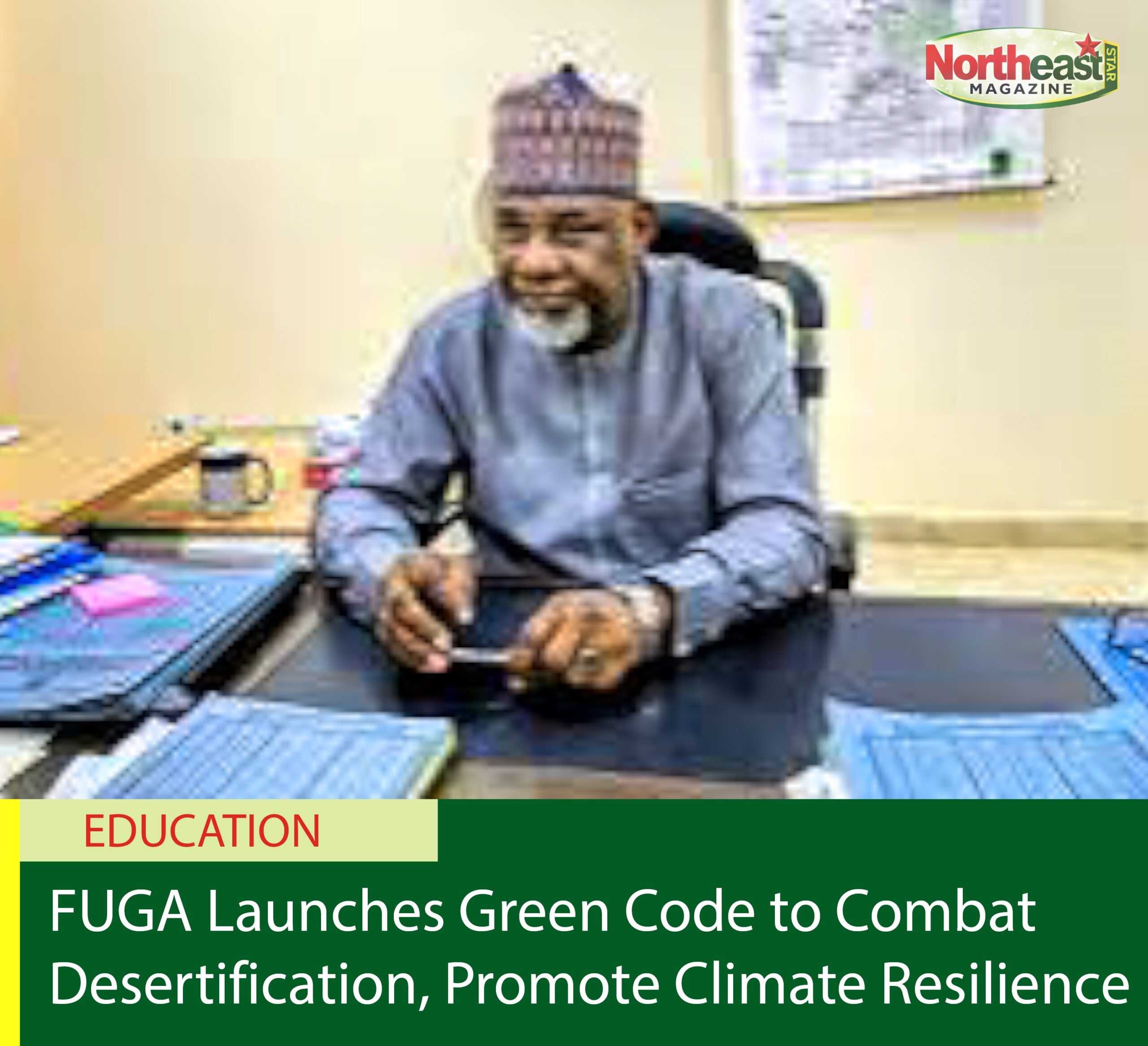
The Vice-Chancellor of the Federal University Gashua (FUGA), Professor Yaqub Ahmed Geidam, has officially launched the FUGA Green Code (FGC), an institutional environmental initiative aimed at combating desertification, restoring vegetation and promoting climate resilience through tree planting.
This was contained in a press statement signed by Adamu Saleh, Deputy Director, Information and Public Relations of the University made available to Northeast State Magazine in Damaturu.
The initiative was launched on Saturday, August 15, 2026, at the University under the theme “Restoring the Climate through Tree Planting.” The ceremony was attended by the Mai Bade, representatives of the Federal and Yobe State Governments, members of the University community, development partners, traditional leaders, students, members of the host community, and the media.
Speaking at the occasion, Professor Geidam described the FUGA Green Code as more than a tree-planting campaign, calling it a long-term institutional commitment to environmental restoration, sustainability and climate action.
He noted that the realities of climate change and desertification in Yobe State were evident in declining vegetation, exposed soil, rising temperatures, wind erosion and increasing pressure on natural resources. As a university situated within the fragile Sudano-Sahelian environment, he said, FUGA could not afford to merely discuss environmental challenges without taking practical steps to address them.
The Vice-Chancellor explained that the initiative was designed not only to increase tree cover but also to restore degraded land, protect the environment, improve the University campus, restore biodiversity and cultivate a culture of environmental responsibility among staff, students and the wider community.
He said the University was determined to transform FUGA into a model Green Campus for the Nigerian dryland environment, where sustainability would be practised and demonstrated, not just taught in classrooms.
Professor Geidam noted that purposeful action, scientific knowledge, innovation and community participation could help restore the environment despite the challenges posed by the Sahelian climate. Addressing students, he urged them to take ownership of the initiative through the FGC Student Ambassadors Programme, which is expected to produce environmental champions and climate advocates among the student population.
He challenged them to embrace the slogan “One Student, One Tree,” stressing that planting a tree was only the beginning—nurturing it to maturity was the real measure of success.
“You must become not merely tree planters, but tree custodians. Every tree you plant should become a living symbol of your contribution to the future,” he said.
Professor Geidam also called for partnerships with government agencies, development organisations, the private sector, civil society organisations, environmental institutions, traditional leaders and host communities to expand the impact of the initiative, saying such collaborations would focus on tree planting, environmental research, climate education, innovation, capacity building and community engagement.
He emphasised that the University’s environmental responsibility extended beyond its campus, noting that FUGA and its host communities shared the same environment and faced similar climate-related challenges.
He therefore expressed the University’s readiness to work with traditional institutions, farmers, youths, community organisations and other stakeholders to extend the FUGA Green Code beyond the University.
Professor Geidam assured that Management was committed to making the initiative a long-term institutional programme rather than a one-day campaign, and would support research, partnerships, student participation, staff engagement and community involvement.
He described the FUGA Green Code as the University’s response to desertification, a contribution to climate resilience and an investment in the wellbeing of present and future generations.
In his welcome address, the Chairman of the FUGA Green Code Committee, Professor James Ishaku Dantata, described the initiative as more than a tree-planting campaign a collective commitment to environmental stewardship, climate resilience, combating desertification, restoring biodiversity and building a model green campus for future generations.
Professor Dantata noted that FUGA was located within a fragile Sahel ecosystem, and that the initiative aimed to encourage members of the University community and neighbouring communities to become custodians of nature by planting, nurturing and protecting trees while promoting sustainable environmental practices.
He stressed that the success of the FUGA Green Code would not be measured by the number of trees planted on launch day, but by the number that survived through sustained care and protection, urging the University community to embrace the spirit of “Plant, Protect and Preserve.”
“As we formally launch the FUGA Green Code today, let this day be remembered as the day we collectively resolved to transform our campus into a thriving symbol of environmental sustainability and climate action,” he said.
Signed:
Latest News
Sheikh Al-Moustapha Kouyateh Pushes Pan-African Agenda, Calls for Industrialised and Sovereign Africa
Sheikh Al-Moustapha Kouyateh Pushes Pan-African Agenda, Calls for Industrialised and Sovereign Africa
By Auwal Ahmad
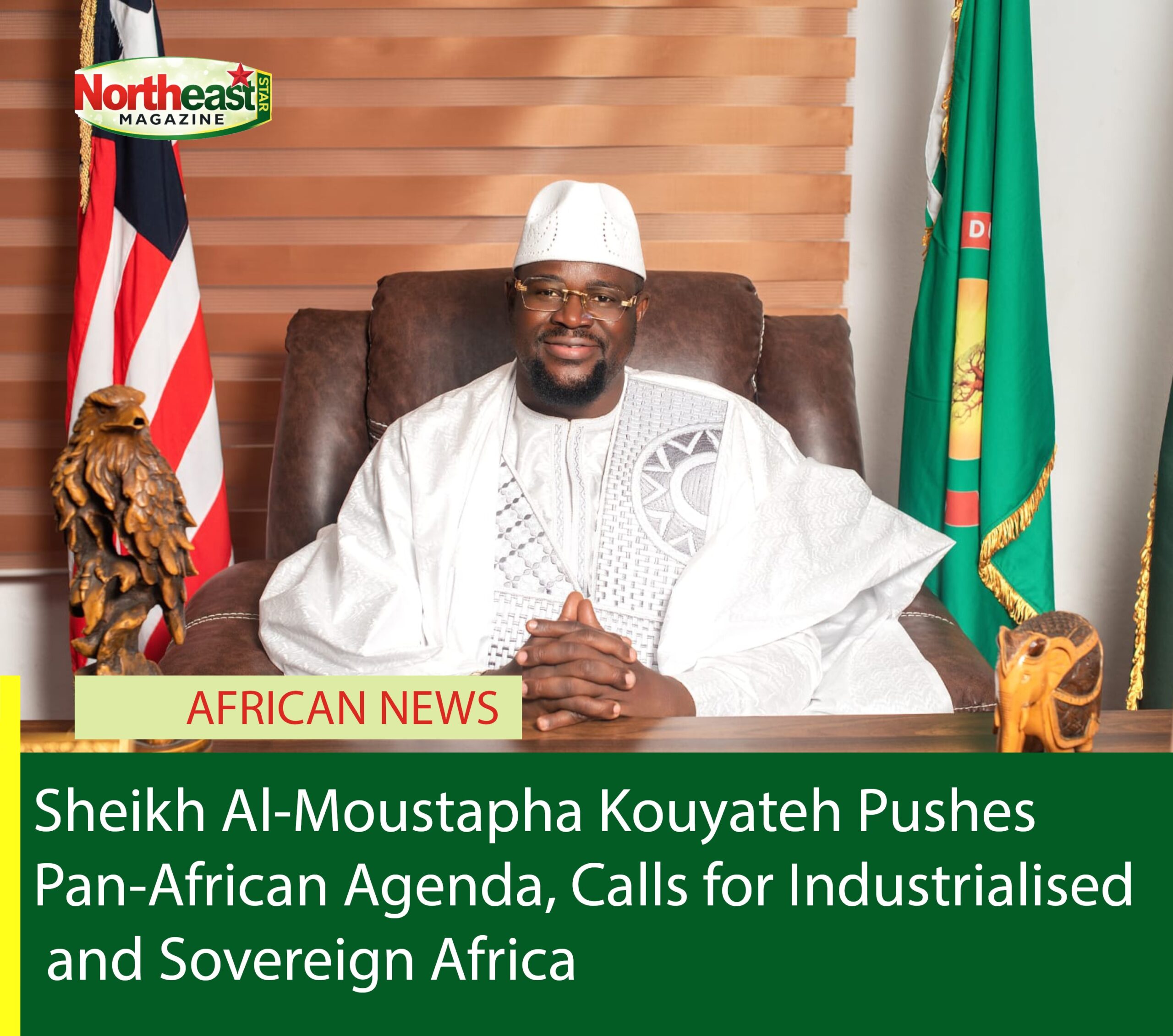
Sheikh Al-Moustapha Kouyateh, widely known as “Farafina Mansa,” has renewed his call for a united, economically independent and industrialised Africa, urging African nations to prioritise local value addition, accountable leadership and reconciliation as the foundation for sustainable development.
The prominent Pan-African advocate, who previously served as Liberia’s Ambassador-at-Large, High Representative for Special Missions and Special Envoy to the President, has built his public profile around a vision that seeks to transform Africa from a supplier of raw materials into a continent driven by manufacturing, innovation and economic self-reliance.
Speaking through his long-standing advocacy, Kouyateh argues that Africa’s vast natural resources should serve as a catalyst for prosperity on the continent rather than enriching foreign economies.
“Africa must control its own destiny by processing its resources locally, creating industries, jobs and wealth for its people,” Kouyateh has consistently maintained in articulating his development philosophy.
At the centre of Kouyateh’s agenda are four principles he describes as essential for Africa’s future: reconciliation, empowerment, accountability and development.
According to him, lasting peace and national cohesion are prerequisites for political stability and economic progress. He believes African countries must first address internal divisions before pursuing broader continental integration.
He also advocates empowering Africans to take greater control of their economies through industrial growth and local ownership of strategic sectors, while insisting that public officials must remain accountable for the management of national resources.
For Kouyateh, development should ultimately translate into improved living standards for ordinary citizens rather than benefiting only political or business elites.
One of the concepts closely associated with Kouyateh’s advocacy is what he calls “Dangotization”—an economic model that encourages African countries to process their raw materials locally instead of exporting them in their unprocessed form.
The idea, inspired by Africa’s growing industrial capacity, promotes investment in manufacturing, value addition and domestic industries capable of generating employment and strengthening economic sovereignty across the continent.
Supporters of the approach argue that it could reduce Africa’s dependence on imported finished goods while increasing revenue from its abundant natural resources.
Kouyateh served for more than two years in Liberia’s government as Ambassador-at-Large and Special Envoy, during which he said he declined remuneration attached to the office.
He explained that the decision reflected an earlier pledge made during his 2014 Senate campaign in Montserrado County to dedicate much of his income to public-interest causes, including education, healthcare and governance reforms.
During his tenure, however, Kouyateh became an outspoken critic of the management of Liberia’s natural resources, arguing that concession agreements involving key mineral assets delivered insufficient benefits to Liberians.
He also raised concerns about transparency in contracts involving major international mining companies, including references to agreements with ArcelorMittal.
His remarks generated political debate and drew criticism from sections of Liberia’s political establishment. After declining calls by lawmakers to retract some of his statements and apologise publicly, he eventually left office following a vote of no confidence.
Following his exit from government, Kouyateh intensified his Pan-African activities through the establishment of the African People’s Movement (APM), an organisation that promotes African unity, economic independence and responsible governance.
The movement is described by its promoters as one inspired by leading Pan-African thinkers, including Professor PLO Lumumba, and seeks to advance policies that encourage continental integration beyond national and ethnic boundaries.
Its vision centres on an Africa capable of transforming its own resources, strengthening regional cooperation and ensuring that economic growth directly benefits African citizens.
Kouyateh continues to advocate for deeper cooperation among African nations, arguing that sustainable prosperity depends on industrialisation, responsible leadership and stronger economic integration.
His message consistently emphasises reconciliation among peoples, economic empowerment, transparency in governance and development that creates opportunities for future generations.
For many supporters, the man known as “Farafina Mansa” remains one of the contemporary voices championing an Africa that is politically sovereign, economically resilient and firmly in control of its own development path.
Latest News
Ex-Gombe Deputy Governor Hails Velocity Foundation for Empowering Christian Clergy in Gombe

Ex-Gombe Deputy Governor Hails Velocity Foundation for Empowering Christian Clergy in Gombe
By Auwal Ahmad Umar
Former Deputy Governor of Gombe State, Charles Iliya, has praised the humanitarian efforts of the Velocity Humanitarian Foundation, describing its support for Christian clergy as a significant contribution to peacebuilding, religious tolerance and community development in the state.
Speaking at an empowerment programme organised by the foundation, Iliya said the initiative reflects the founder’s commitment to promoting unity and improving the welfare of religious leaders, regardless of faith or background.
He noted that the intervention would enable Christian clerics to strengthen their service to their congregations while encouraging peaceful coexistence among people of different religious beliefs.
According to him, the foundation’s decision to extend assistance to Christian leaders demonstrates that genuine humanitarian service should not be influenced by ethnic or religious considerations.
Iliya said such interventions complement government efforts aimed at improving the living conditions of vulnerable residents and fostering social cohesion across communities.
He urged the Velocity Humanitarian Foundation to sustain its charitable programmes, stressing that many disadvantaged families and religious leaders would continue to benefit from its interventions.
The former deputy governor also appealed to wealthy individuals, corporate organisations and other philanthropists to emulate the foundation by investing in initiatives that promote inclusiveness, social welfare and sustainable community development.
Also speaking, the Gombe State Chairman of the All Progressives Congress (APC), Alhaji Mohammed Inuwa Dantata, commended the foundation for demonstrating that compassion and humanitarian service should rise above political, ethnic and religious differences.
He said the foundation’s support for Christian clergy sends a strong message of unity and mutual respect, values he described as critical to maintaining peace and stability in Gombe State.
Dantata encouraged beneficiaries to make effective use of the assistance provided to improve their lives and communities, while urging the foundation to broaden its humanitarian outreach to include more vulnerable groups across the state.
Representing the foundation, Abubakar Danzariya said the organisation remains committed to supporting vulnerable people irrespective of their religion, ethnicity or political affiliation.
He explained that the empowerment of Christian clergy aligns with the foundation’s broader vision of reducing hardship, promoting social justice and strengthening harmony among diverse communities in Gombe State.
According to him, the founder of the foundation, Engr. Aliyu Muhammad Kombat, believes that every citizen deserves equal opportunities and access to support that can improve their standard of living.
Danzariya said the foundation would continue to implement programmes in education, healthcare, youth and women empowerment, humanitarian assistance and community development as part of its long-term strategy for improving livelihoods.
He added that the interventions are designed to produce sustainable results by enhancing the well-being of vulnerable residents and creating opportunities for self-reliance.
Danzariya also appreciated community leaders, Christian organisations and volunteers who partnered with the foundation to ensure the successful implementation of the programme.
He reaffirmed the commitment of Engr. Kombat to building a more peaceful, united and prosperous society through sustained humanitarian interventions that reach people without discrimination.

Shiekh Kouyateh Warns Liberia’s US Deportee Deal Could Raise Regional Security Concerns

Daura Emirate Confers ‘Sarkin Maganin Kasar Hausa Babba’ Title on Dr Mukhtar Jibrin

Gombe Reconstitutes Heritage Committee to Preserve State’s Historical Assets

APC National Chairman Settles Gombe Central Contest, Raises DCP Ahmed’s Hand as Party’s Senatorial Candidate

Gombe Eyes Livestock-Led Economic Growth as Inuwa Yahaya Meets Minister

Gombe Aquatic Sports Body Unveils Board, Sets Stage for Competitive Debut

-
 Politics2 months ago
APC National Chairman Settles Gombe Central Contest, Raises DCP Ahmed’s Hand as Party’s Senatorial Candidate
-
 Agriculture4 weeks ago
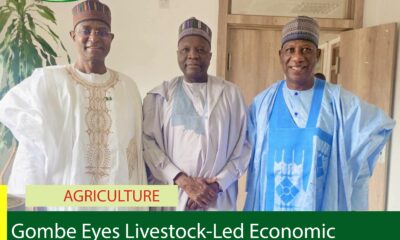
Gombe Eyes Livestock-Led Economic Growth as Inuwa Yahaya Meets Minister
-
 Sport5 months ago
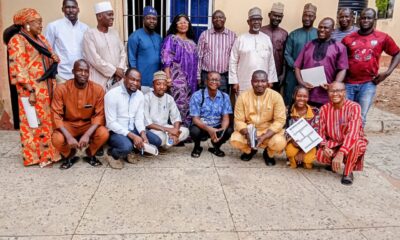
Gombe Aquatic Sports Body Unveils Board, Sets Stage for Competitive Debut
-
 Striking the Balance1 month ago
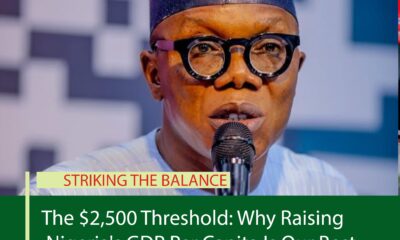
The $2,500 Threshold: Why Raising Nigeria’s GDP Per Capita Is Our Best Non-Kinetic Strategy for Peace
-

 Economy8 months ago
NGX Ends Week in the Green as ₦1.54 Trillion Boosts Investors’ Fortunes
-

 Economy9 months ago
CBN’s End to Cash Withdrawal Limit
-
 Environment3 months ago
World Environment Day: NGO Urges Nigerians to Embrace Nature-Based Solutions Against Climate Change
-
 Education9 months ago
Dangote Launches Landmark ₦1 Trillion Scholarship Scheme to Support 1.3 Million Nigerian Students