
Latest News
N-HYPPADEC Donates Two Boreholes to Gombe Community Ahead of Major Water Intervention

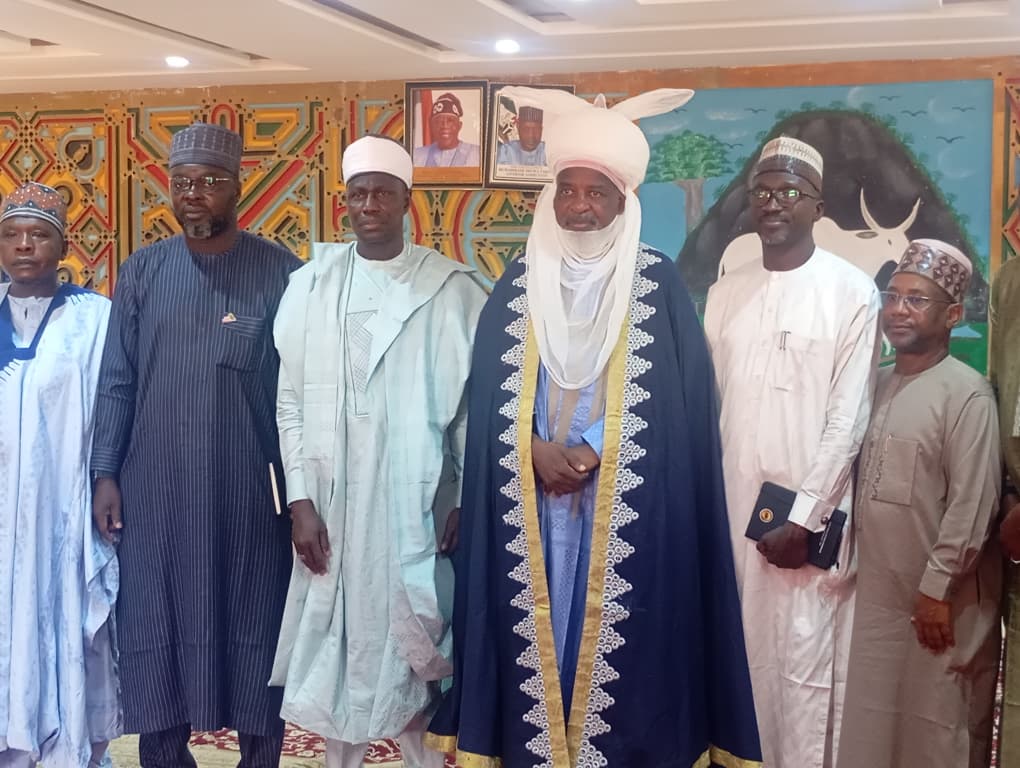
N-HYPPADEC Donates Two Boreholes to Gombe Community Ahead of Major Water Intervention
By Auwal Ilyasu, Gombe
The National Hydroelectric Power Producing Areas Development Commission (N-HYPPADEC) has donated two boreholes to the Dukku Local Government Area (LGA) of Gombe State as an immediate relief measure to address persistent water scarcity in the community.
The intervention comes ahead of a full-scale plan by the commission to rehabilitate and expand the Dukku water supply scheme, following a recent technical assessment of the area.
Gombe State Commissioner for Water, Environment, and Forest Resources, Mohammed Saidu Fawu, confirmed that the boreholes will be constructed at no cost to the state government, describing the move as a critical short-term response to the acute water challenges faced by residents.
According to him, the boreholes will be powered by hybrid systems, significantly reducing reliance on electricity and diesel and ensuring more sustainable access to water.
“This immediate intervention will go a long way in alleviating the suffering of the people. The cost of accessing water in Dukku is currently very high, with residents relying heavily on vendors transporting water over long distances,” Fawu stated.
He noted that the donation underscores the commission’s commitment to fast-tracking solutions while laying the groundwork for a long-term upgrade of the town’s water infrastructure.
Director of Operations at N-HYPPADEC, Engr. Ilyasu Abdullahi Wara, had earlier indicated that the commission is working towards a comprehensive intervention that will address the root causes of water scarcity in the area.
The planned project includes upgrading existing facilities, improving raw water intake from nearby sources, and expanding storage capacity to meet growing demand.
Wara emphasized that the commission is targeting rapid mobilization to the site within weeks, given the urgency of the situation and the need to act before the onset of the rainy season.
Chairman of Dukku LGA, Adamu Muhammad Waziri, alongside the Emir of Dukku, Alhaji Haruna Abdulkadir Rashid, commended N-HYPPADEC for the timely intervention, noting that the community has endured years of inadequate water supply.
Residents of Dukku largely depend on boreholes and water vendors, often at high cost, making the commission’s intervention a critical lifeline as efforts intensify to deliver a sustainable and long-term water solution.
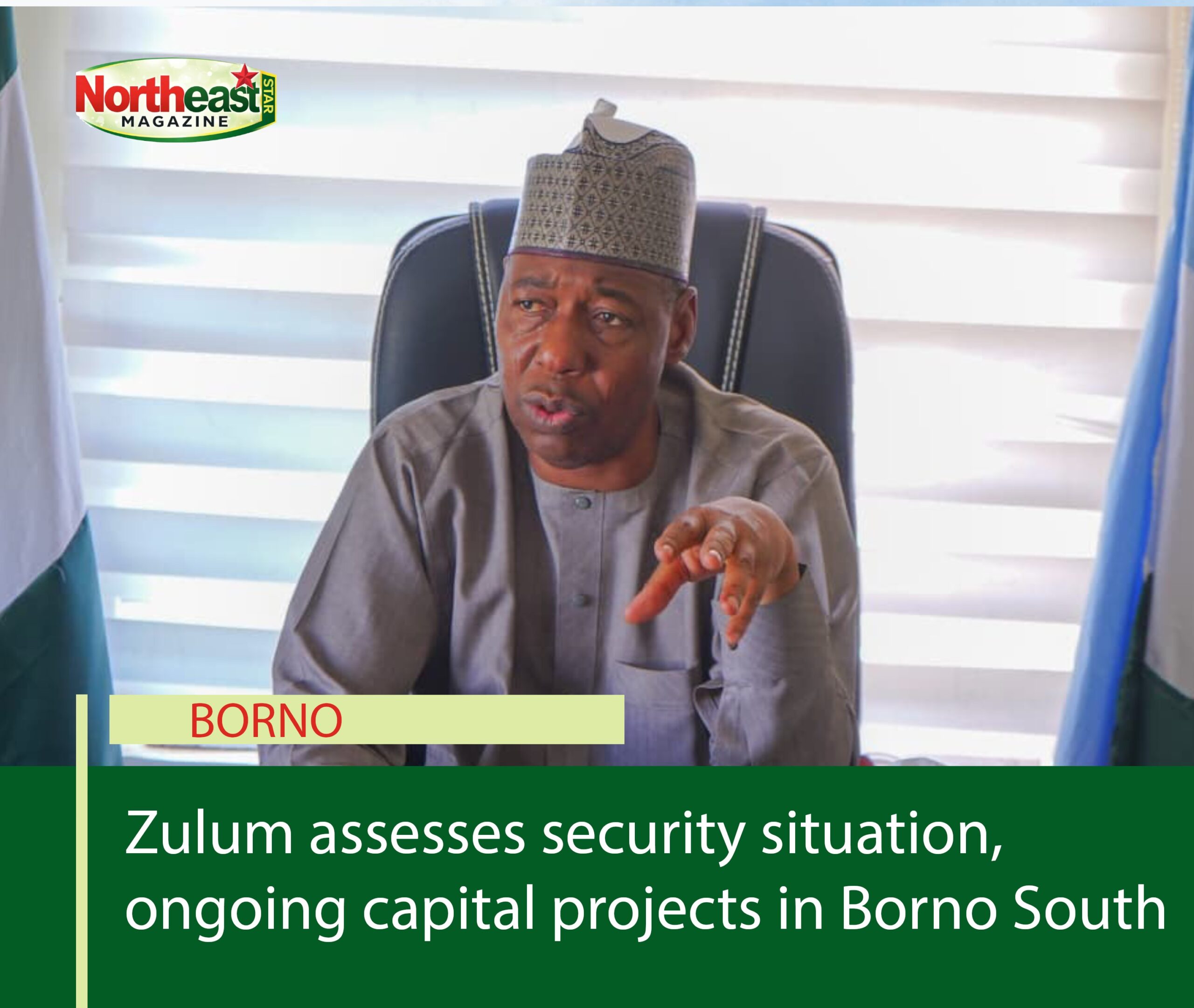
Zulum assesses security situation, ongoing capital projects in Borno South
By Tada Jutha, Maiduguri
Borno State Governor Babagana Zulum performed his official government duties on Thursday from the Zonal Department of Monitoring, Evaluation and Special Projects (MESP) office in Biu, Biu local government area.
This underscores his administration’s commitment to grassroots governance and bringing government closer to the people.
The Biu MESP zonal office, which operates under the Governor’s Office, was established and commissioned by Governor Zulum in 2022 to strengthen public service delivery, enhance accountability, improve project monitoring and evaluation, and accelerate infrastructural development across the Southern Borno senatorial zone.
Similar zonal offices have also been established in Monguno and Bama to serve the Northern and Central Senatorial Districts, respectively.
Thursday’s engagement marked the first time Governor Zulum officially operated from the Biu Zonal Office since its establishment, making it a significant milestone in the decentralisation of government operations.
The Governor, while in the office, met with the Sector 2 Commander of Operation Hadin Kai, Brigadier General Edet Effiong, and the Brigade Commander, 29 Taskforce Brigade, Benishiekh, on how to consolidate the recent gains in the counterinsurgency operations.
The governor’s decision to conduct official state business from the facility reflects his leadership philosophy of taking governance to the grassroots rather than confining government activities to Maiduguri.
Throughout the past seven years, Zulum has maintained a unique style of governance, travelling extensively across all 27 local government areas to personally assess projects and engage directly with the community.
In addition to operating from the Government House, the governor has, since assuming office in 2019, regularly conducted official functions from the Musa Usman Secretariat, which serves as his second operational office for attending to state affairs.
Zulum is currently on a working tour of Southern Borno. On Wednesday, he flagged off the 2026 Wet Farming Season and launched the sales and distribution of 200 truckloads of NPK fertiliser at 50 per cent subsidised rates, alongside the distribution of free agrochemicals, knapsack sprayers, certified seeds, water pumps and 10,000 bicycles to smallholder farmers in Kwaya Kusar Local Government Area.
During the visit to Biu, the governor also announced the employment of 100 unemployed graduates from Biu Local Government Area as part of measures to tackle youth restiveness, political thuggery and other social vices. The announcement was made during a courtesy visit to the Emir of Biu, Alhaji (Dr) Mustapha Umar Mustapha II.
The governor also met with members of the National Youth Service Corps (NYSC) serving in Biu, where he announced a welfare package of ₦50,000 for each corps member.
As part of the intervention, corps members who are nursing mothers will receive an additional ₦200,000 each, while the NYSC Zonal Inspector was given ₦250,000. Other NYSC officials, including the liaison officer, received ₦100,000 each in recognition of their service and commitment.
Latest News
Foreign Drug Courier Arrested as Military Warns of Cross-Border Support for Boko Haram, ISWAP
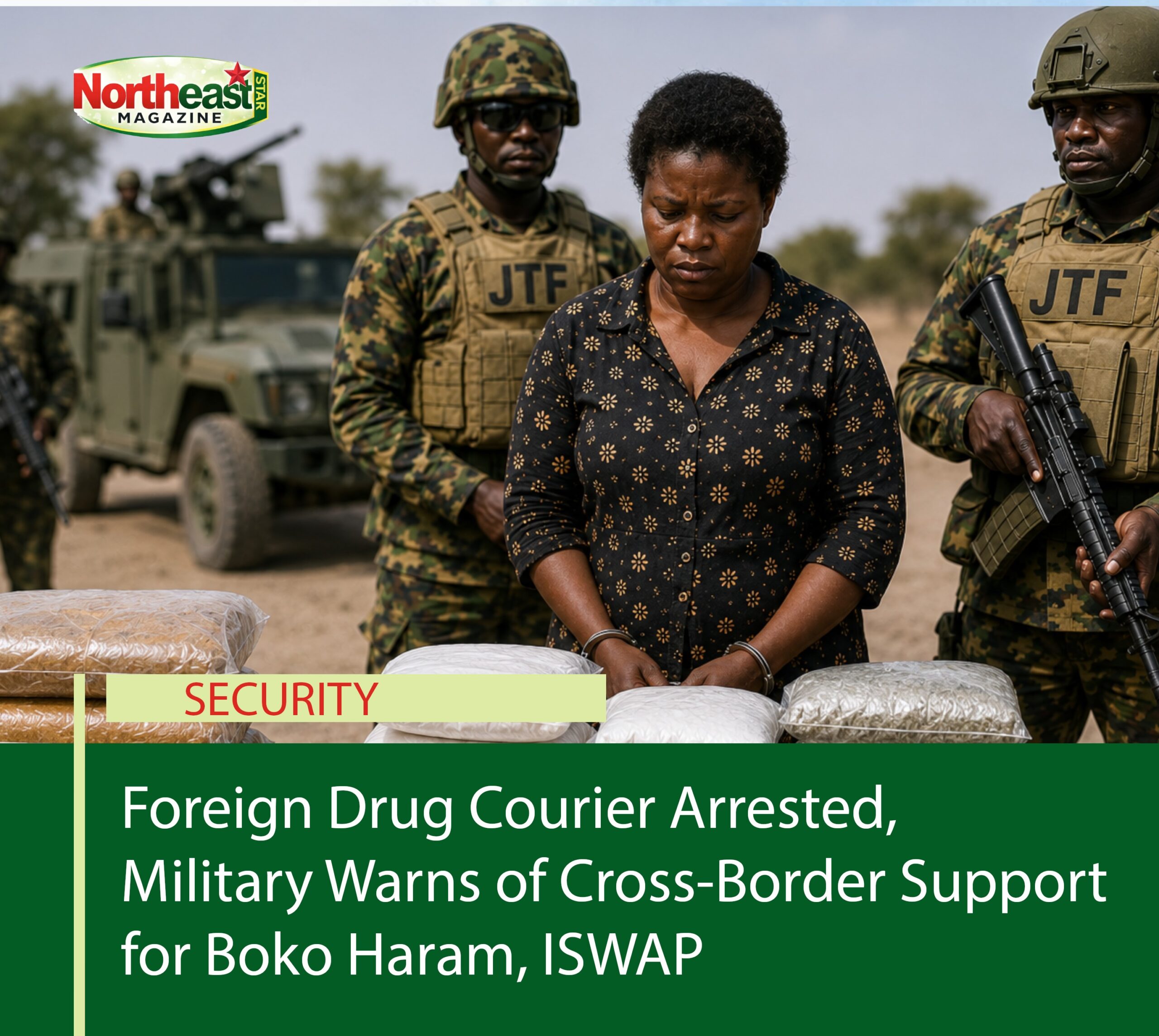
Foreign Drug Courier Arrested as Military Warns of Cross-Border Support for Boko Haram, ISWAP
By Tada Jutha, Maiduguri
The arrest of a Chadian woman allegedly transporting illicit drugs and other prohibited items to Boko Haram and Islamic State West Africa Province (ISWAP) fighters has once again drawn attention to the growing challenge posed by cross-border support networks fuelling insurgency in Nigeria’s northeast.
Security experts have repeatedly warned that the involvement of foreign nationals in terrorist logistics complicates counter-insurgency operations, particularly in the Lake Chad Basin, where Nigeria shares porous borders with Chad, Niger and Cameroon.
The movement of drugs, weapons, finances and other supplies across these borders enables terrorist groups to sustain attacks, recruit fighters and evade security operations, making regional cooperation essential to ending the insurgency.
Against this backdrop, troops of Sector 3, Northeast Joint Task Force (JTF), Operation Hadin Kai (OPHK), have arrested a 48-year-old Chadian national, Mrs Rachael Samuel, for allegedly transporting illicit drugs, alcoholic beverages and other prohibited substances believed to be destined for Boko Haram and ISWAP terrorists operating in the Lake Chad Islands.
The Acting Media Information Officer of Operation Hadin Kai, Captain Mohammed Goni, disclosed in a statement that the operation marked another major breakthrough in the military’s campaign to dismantle the logistics networks sustaining terrorist activities across the North-east.
According to him, the suspect was intercepted on Thursday during an intelligence-led operation along the Maiduguri-Monguno highway while travelling towards Kwatan Doron Baga in Kukawa Local Government Area of Borno State.
He identified the suspect as a Chadian citizen from Kelo in Chari-Baguirmi Province, adding that preliminary investigations indicate the recovered items were intended for terrorist elements operating within the Lake Chad region, which spans Nigeria, Chad, Niger and Cameroon.
Items recovered from the suspect included seven compressed bundles of suspected cannabis weighing about 30 kilogrammes, two 10-litre containers of hydromercuric chloride, popularly known as “Suck and Die”, one carton containing 48 bottles of dry gin, 61 bottles of herbal alcoholic beverages, a mobile phone, two Automated Teller Machine (ATM) cards, cash and other personal effects. The military estimated the street value of the seized items at several millions of naira.
Captain Goni said the suspect remains in military custody while the recovered exhibits have been secured pending transfer to the appropriate law enforcement agencies for further investigation and prosecution.
He noted that the interception demonstrates the military’s resolve to deny terrorists access to supplies that sustain their operations.
According to him, intelligence reports have consistently shown that terrorist groups frequently rely on illicit drugs and intoxicants to stimulate fighters, suppress fear and facilitate violent attacks. Preventing the consignment from reaching its destination, he said, has disrupted a critical component of the terrorists’ logistics chain.
The Theatre Command commended the troops for their vigilance and professionalism, assuring Nigerians that operations against terrorists and their collaborators, including cross-border networks, would continue without relent.
The military also appealed to members of the public to continue providing timely and credible intelligence to security agencies to support ongoing efforts aimed at restoring lasting peace and security across the North-east.
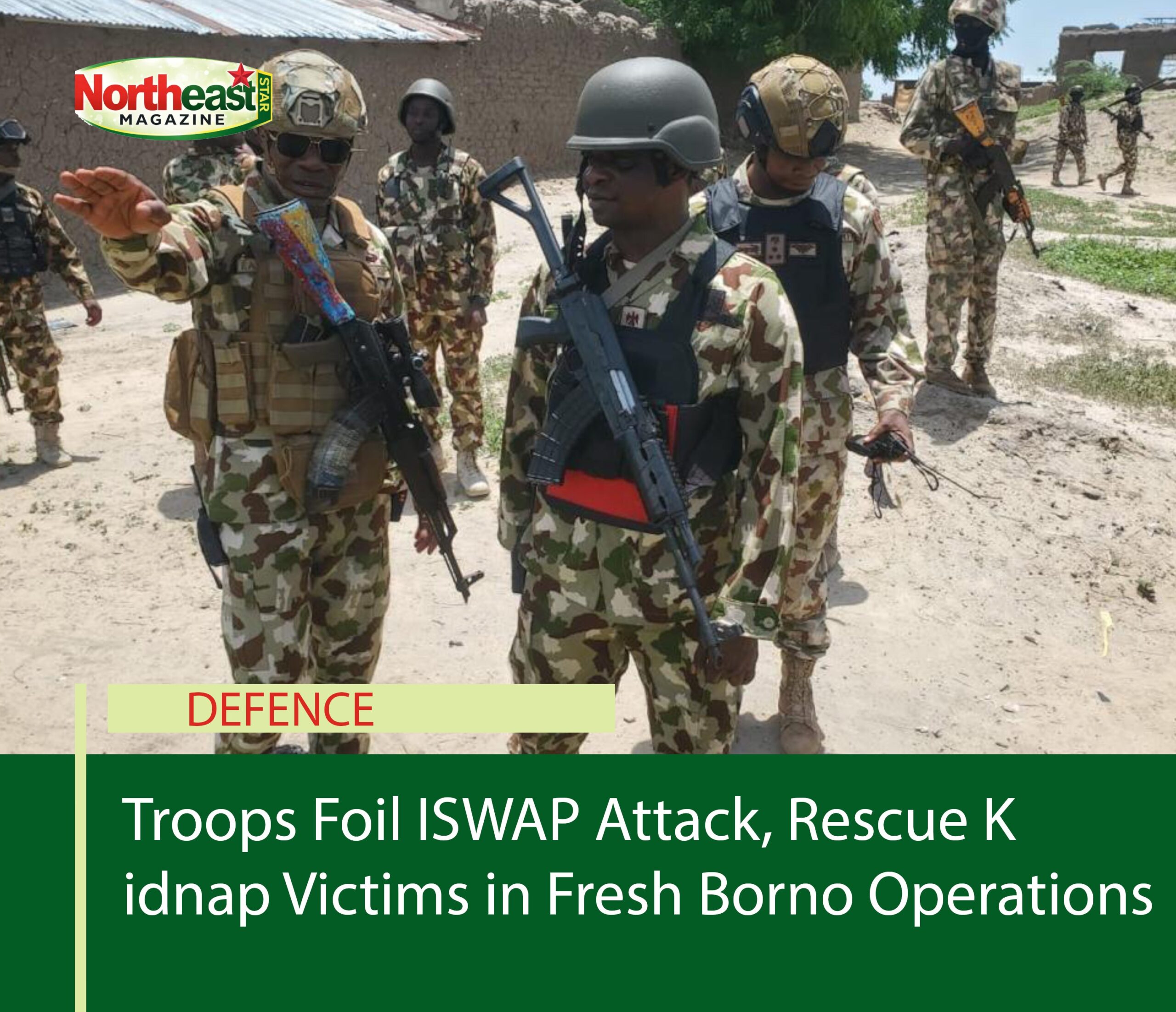
Troops Foil ISWAP Attack, Rescue Kidnap Victims in Fresh Borno Operations
By Tada Jutha, Maiduguri
Troops of the Joint Task Force North-East under Operation Hadin Kai has repelled an attempted attack by suspected Islamic State West Africa Province (ISWAP) fighters on the Logomani community in the Ngala Local Government Area of Borno State and rescued two kidnapped victims during separate operations across the region.
The latest operations, carried out in Borno and Adamawa states, also resulted in the arrest of suspected terrorist logistics suppliers and the recovery of arms, ammunition, cash and other materials believed to support insurgent activities.
According to the Acting Media Information Officer of Operation Hadin Kai, Captain Mohammed Goni, troops have maintained operational pressure on terrorist groups through sustained search-and-rescue missions, intelligence-driven operations and coordinated security efforts aimed at restricting the movement and activities of insurgents across the Northeast.
Captain Goni said troops of the 115 Task Force Battalion rescued two abducted persons during a search-and-rescue mission in Askira/Uba Local Government Area of Borno State on 7 July.
He disclosed that the victims were found in a terrorist hideout, while troops recovered ₦1.2 million suspected to be proceeds of criminal activities, alongside food items and other logistics believed to have been used to sustain terrorist operations.
The rescued victims have since been moved to a secure location, where they are receiving medical attention and psychosocial support.
In another major operation, troops stationed at the Forward Operating Base in Logomani, Ngala Local Government Area, successfully repelled a coordinated assault by ISWAP fighters who attempted to overrun the military base before targeting the border community near Cameroon.
Although the attackers briefly breached part of the base’s defensive perimeter during the fierce exchange of gunfire, the troops regrouped quickly, launched a counter-attack and forced the insurgents to retreat after inflicting heavy casualties.
Captain Goni said many of the fleeing terrorists escaped with gunshot wounds.
He, however, confirmed that one soldier was killed during the battle, while two military gun trucks and some combat equipment were damaged.
He added that the base remains under the full control of Operation Hadin Kai troops, with additional reinforcements deployed and further defensive measures put in place to strengthen security around the location.
Elsewhere, troops of the 232 Battalion arrested a suspected notorious criminal during an intelligence-led operation in Gombi Local Government Area of Adamawa State.
Subsequent operations led to the recovery of an AK-47 rifle, two magazines and 28 rounds of 7.62mm special ammunition. The suspect remains in military custody as investigations continue to uncover other members of the criminal network.
In Mobbar Local Government Area of Borno State, troops of the 149 Battalion arrested two suspected suppliers of logistics to terrorist groups.
Items recovered from the suspects included cash, a Volkswagen Golf vehicle, construction materials, household supplies and other items believed to have been intended for insurgents.
The military said the suspects are being interrogated while investigations continue.
Meanwhile, troops of the 24 Task Force Brigade, working alongside members of the Civilian Joint Task Force, carried out a clearance operation around Wulgo, a known terrorist enclave.
During the operation, troops recovered a sack containing assorted illicit drugs abandoned by fleeing insurgents, further demonstrating the sustained military pressure on terrorist groups operating within the theatre.
The military reaffirmed its commitment to sustaining offensive operations across the northeast, stressing that ongoing intelligence-driven missions and coordinated ground operations would continue to dismantle terrorist networks and improve security in the region.

FG, States, LGAs Share ₦2.55 tn June Revenue as FAAC Reports Higher Tax, Oil Receipts

The $2,500 Threshold: Why Raising Nigeria’s GDP Per Capita Is Our Best Non-Kinetic Strategy for Peace

Bala Magaji’s Defection Deals Blow to Gombe PDP

APC National Chairman Settles Gombe Central Contest, Raises DCP Ahmed’s Hand as Party’s Senatorial Candidate
The $2,500 Threshold: Why Raising Nigeria’s GDP Per Capita Is Our Best Non-Kinetic Strategy for Peace

NGX Ends Week in the Green as ₦1.54 Trillion Boosts Investors’ Fortunes
-
 Politics3 weeks ago
APC National Chairman Settles Gombe Central Contest, Raises DCP Ahmed’s Hand as Party’s Senatorial Candidate
-
 Striking the Balance19 hours ago
The $2,500 Threshold: Why Raising Nigeria’s GDP Per Capita Is Our Best Non-Kinetic Strategy for Peace
-
 Economy7 months ago
NGX Ends Week in the Green as ₦1.54 Trillion Boosts Investors’ Fortunes
-

 Environment1 month ago
World Environment Day: NGO Urges Nigerians to Embrace Nature-Based Solutions Against Climate Change
-

 Education7 months ago
Dangote Launches Landmark ₦1 Trillion Scholarship Scheme to Support 1.3 Million Nigerian Students
-
 Sport3 months ago
Gombe Aquatic Sports Body Unveils Board, Sets Stage for Competitive Debut
-

 Economy7 months ago
CBN’s End to Cash Withdrawal Limit
-

 Politics2 months ago
APC Primary Committee Declares Gombe Senatorial Polls Credible, Transparent