
Column
Nigerian Opposition: What You Have to Do

Nigerian Opposition: What You Have to Do
By Prince Charles Dickson PhD
“And Jesus said to Judas… what you are going to do, do quickly.”
There is a hard, almost rude lesson in that line. History does not wait for the timid to finish their committee meeting. Politics, especially Nigerian politics, is not kind to hesitation dressed as strategy. It rewards those who understand timing, nerve, structure, and the brutal arithmetic of power. That is where the Nigerian opposition now stands: not at the edge of impossibility, but at the edge of urgency.
The first truth is the one opposition politicians do not enjoy hearing at rallies where microphones are loud and introspection is scarce. They are not getting it right. The evidence is not only in Tinubu’s strength, but in their own disorder. INEC said on February 5, 2026, that there were now 21 registered political parties and warned that persistent internal leadership crises within parties pose a serious threat to democratic consolidation. Eight days later, the commission formally released the notice and timetable for the 2027 general elections. In other words, this is no longer the season of abstract grumbling. The whistle has gone. The race is live.
Yet the opposition often behaves like students who entered the examination hall with righteous anger but forgot their pens. Too much of its energy is spent on lamentation, rumours, courtroom oxygen, personality feuds, and that old Nigerian hobby of mistaking noise for architecture. You cannot defeat an incumbent machine by forming a WhatsApp coalition of wounded egos and calling it national salvation. Voters may clap for drama, but they still ask the unromantic question: who is in charge, what is the plan, and why should we trust you with the keys?
Now comes the more uncomfortable truth. The opposition is not facing an ordinary incumbent. It is facing Bola Ahmed Tinubu, a man whose political DNA was forged in opposition. He is not merely benefiting from power; he understands opposition as craft, pressure, infiltration, timing, persistence, and theatre. In his June 12, 2025 Democracy Day speech, he taunted rivals by saying it was “a pleasure to witness” their disarray, while also reminding Nigerians that he once stood almost alone against an overbearing ruling machine. This was not casual banter. It was a warning shot from a politician who knows both the grammar of resistance and the machinery of incumbency.
That is why copying Tinubu’s old template will not be enough. Yes, the coalition instinct is understandable. In July 2025, major opposition figures including Atiku Abubakar and Peter Obi aligned under the ADC banner, presenting themselves as a bulwark against one-party drift, with David Mark as interim chairman. But here is the problem: Tinubu’s own coalition history worked not simply because men gathered in one room and glared at the ruling party. It worked because there was a disciplined merger logic, state-level anchoring, message coordination, and a ruthless understanding of elite bargaining. What the present opposition sometimes offers instead is photocopy politics with low toner: a coalition of convenience trying to frighten a man who practically wrote the Nigerian handbook on political accommodation, defection management, and patient conquest.
This is also why the opposition’s moral complaint, though not baseless, cannot be its only language. Yes, concerns about democratic shrinkage are real. Tinubu himself publicly denied that Nigeria is moving toward a one-party state, even as defections from opposition parties to the APC intensified and his own party welcomed them. But to say “democracy is in danger” is not yet the same thing as building a democratic alternative. Nigerians do not eat constitutional anxiety for breakfast. They want a credible opposition that can protect pluralism and still explain food prices, jobs, security, power supply, transport costs, and what exactly it would do on Monday morning after taking office.
On the government’s side, the picture is mixed enough to make both triumphalism and apocalypse look unserious. Reuters reported this week that the World Bank expects Nigeria’s economy to grow by about 4.2% in 2026, with external buffers improving and the debt-to-GDP ratio falling for the first time in a decade. Inflation had eased to 15.06% in February from roughly 33% in late 2024. Those are not imaginary numbers, and any fair-minded analysis must admit that Tinubu’s reforms have altered the macroeconomic conversation. But the same report warned that the Iran war has pushed fuel prices up by more than 50%, with obvious consequences for transport, food, and household pain. Add the continuing insecurity, underscored again this week by the killing of a Nigerian army general in Borno, and the government begins to look like a man who has repaired the roof but left half the house still flooding. That is not collapse. It is not command either. It is meandering reform under political stress.
So what must the opposition do, and do quickly? First, it must stop making Tinubu the only subject of the campaign. Anti-Tinubu is not a manifesto. It is a mood. Moods trend; structures win. Second, it must settle leadership questions early and publicly, because no voter wants to hire a rescue team still fighting over the steering wheel. Third, it needs an issue coalition, not just an elite coalition. Security, inflation, youth jobs, electricity, federalism, and institutional reform must become a coherent national offer, not a buffet of press conference talking points. Fourth, it must build from the states upward. Presidential romance without subnational organisation is political karaoke: loud, emotional, and usually off-key by the second verse.
Fifth, it must look seriously at the legal terrain. The Electoral Act 2026 has made party organisation even more central. PLAC notes that the new law tightens party registration rules, removes deemed registration, expands INEC’s regulatory discretion, and preserves the fact that candidates still need political parties as the vehicle for contesting most elective offices because independent candidacy is not permitted. In plain language, parties matter even more now. A fragmented opposition is therefore not just aesthetically untidy. It is strategically suicidal.
Still, there are dangers in the opposite direction too. A desperate anti-Tinubu mega-bloc could become a cargo truck of incompatible ambitions. If all it offers is the promise to defeat one man, it may reproduce the same habits it condemns once power arrives. Nigeria does not need a ruling party so swollen that democracy gasps for air. But it also does not need an opposition whose only ideology is turn-by-turn revenge. The health of democracy lies somewhere between monopoly and mob. It requires competition with content, not merely competition with bitterness. Tinubu himself, in that same June 12 speech, defended multiparty politics even while mocking the opposition’s disorder. That irony should not be wasted. He has thrown them both an insult and an assignment.
So, yes, the opposition is right to worry. But worry is not strategy. Outrage is not organisation. Coalition is not coherence. And history is not sentimental. The man they are up against is ruthless, seasoned, and intimate with the dark arts of democratic combat. He knows the game. Some of his opponents are still learning the rules from old newspaper cuttings.
Which brings us back to the scripture. What you are going to do, do quickly. Not recklessly. Not hysterically. Quickly. Settle your house. Name your purpose. Offer something fresher than recycled indignation. Build a machine that is not merely anti-Tinubu but pro-Nigeria in a way ordinary Nigerians can feel in their pockets and in their pulse. Otherwise, the opposition will keep arriving at battle dressed in borrowed armour, only to discover that the tailor works for the man they came to unseat—May Nigeria win!
By Hassan Gimba
Originally published in December 2021, this article is being republished because its concerns about the rule of law, insecurity, and the fear ordinary Nigerians experience remain relevant today. It serves as a timely reminder of the urgent need to protect citizens, uphold justice, and restore peace and security across the country.
Our current situation of a glaring failure of the rule of law must disturb any Nigerian who has come of age. The average citizen today lives in fear. When you retire into your house, you pray to God to deliver you from evil marauders who have removed peace from the calmness of the night. When the sun rises, you again rely on God to protect you from those who have made the law their own.
In Nigeria today, the rule of law has taken flight. Charlatans carrying guns that are daily becoming accessible to any riff-raff who want to own any quantity can erect a checkpoint on any federal road and operate for hours, kidnapping, killing and maiming passengers. Sometimes they set cars on fire with commuters, comprising women, children, infants, and the elderly and sick, trapped inside.
They can walk for hours unhindered, despite our drones and Tucanos, with tens, sometimes hundreds, of their prisoners from the main road into the bushes. Many times, they videotape such operations, up to the torturing of their captives and send them to all to see on social media. They rape their female victims – single or married – irrespective of their age or physical condition. The unlucky men who tingle their fancies get sodomised, too. And nothing happens because the rule of law does not affect them.
Many of the women who make it out alive come out pregnant or, worst of all, with some diseases. Those “captured” with a heavy pregnancy that would not allow them to move quickly or far got shot dead. This scenario happened to Pharmacist Hannatu Mohammed in Zaria in August this year. Kidnappers killed her because she could not move fast enough because of her pregnancy. She left behind two children.
There was this story of a captive who gave birth to twins in the camp of these bandits. They threw the newborns to their dogs for breakfast. The woman went mad. Another case was that of a newborn who was fed sleeping pills once it started crying.
In all these cases and many more, reported and unreported, that cannot be catalogued here because of their number, the living victims and their families cry alone; friends and family mourn the dead. They receive nothing – no justice and no mention of compensation or even condolence – because those who should protect and care for them are engrossed in feeding their fantasies. The rule of law can go to blazes!
In November this year, gunmen raided the staff quarters of the University of Abuja and made it a hell for two hours. They abducted six people, including two professors, a deputy registrar and three family members. The Minister of the FCT, Muhammad Bello, however, told the university’s governing council that the crime was carried out to raise doubts about security in the nation’s capital and to attract publicity. How did he know that? Did he confer with the bandits, or confirm their motives? Another question: what are the other uncountable and routine crimes perpetrated daily in the country meant to achieve – like the raids on the Nigerian Defence Academy (NDA), police stations, prisons (I do not call them “Correctional” because I doubt if they have corrected anybody) and other government facilities?
What are the daily blockades of roads, killings, burning, maiming and kidnapping of passengers meant to achieve? What about the attack on the rail tracks, abduction of school children, raiding of airports and houses of individuals to kidnap – to achieve what?
It has now reached an unfortunate and unpardonable level that kidnappers negotiate terms of release with kidnapped victims’ loved ones. There are stories that even the military and paramilitary forces pay for their kidnapped members to be released. The forces of anarchy have cowed the enforcers of the rule of law.
Well, true or false, bandits who raid wherever they want and kidnap whoever they wish are now a government unto themselves. They collect taxes from farmers before the locals may till their farms. Farmers also pay “taxes” before they can harvest from their farms.
Nigeria’s situation fills all reasonable humans with dread. Last week, just when we were shocked at the unprovoked incineration of passengers on a bus, another sad news hit the airwaves. The people of Maza-Kuka in Ba’are village of Mashegu Local Government Area in Niger State were made to cry when 16 worshippers were shot dead while observing the early morning prayers in a mosque.
Without the rule of law, no nation can survive as an entity. All failed states are so because non-state actors have overwhelmed constituted authority.
Many can swear by whatever they worship; Nigeria is on the brink, and at any moment the nation can tip over. The search now is for who will pull us back. In this treatise, I will discuss this.
How did we find ourselves in this sorry pass? One school of thought believes our security forces are well below the required number and, therefore, overstretched in most cases. Others theorise they lack technological facilities, coupled with low motivation because of poor welfare.
But is it? Nigeria, with a population of about 200 million, has a force strength of close to 400,000. That is one police officer per 500, or 0.2 per cent of the populace. The United Nations’ (UN) standard for the police-to-people ratio is one police officer for every 450 citizens. Perhaps ours should be one law enforcement officer for 45 people.
Togo, with a population of 8 million, has 4,000 police officers. That is one police officer per 2,000, or 0.05 per cent of the population, but God help you if you break any law in the country. Benin Republic, with a populace of 11.5 million, has 10,000 police. That is 0.08 per cent, or one police officer for every 1,150 citizens. But try to break the law in that country and see. These are just two West African countries that have shown the rule of law can thrive, not because security forces watch the population eagle-eyed.
Yes, our police lack the technological edge to deal with modern crimes, and, worst of all, their welfare and training are not the best. Their salary is paltry, and, even at that, they don’t always get paid when due.
But the failure of the rule of law here is not so much about the number of our security agents as about their low morale, their poor application of themselves to duty – very like all public service employees, disruption of morals in the citizenry, and the historical failure to punish offenders. Above all is the dearth of a responsive leadership to bind us into a nation of law-abiding, love-your-brother people.
Therefore, we can say moral decadence is at the root of our problems as a nation. However, the right leadership can correct it. We shall look at this. We shall also look at how failing to punish criminals has affected our collective security and the way out in our next instalments.
Lest I Forget
By Hassan Gimba
On Thursday, July 30, 2026, Saudi Arabia announced the formation of a 14-member Multinational Maritime Defence Coalition, ostensibly to guarantee freedom of navigation in the Bab el-Mandeb Strait and the Gulf of Aden. Its practical objective is to break the Houthi naval blockade of Saudi Arabia declared on July 20.
The founding members are Saudi Arabia, Turkey, Kuwait, Bahrain, Qatar, Jordan, Egypt, Pakistan, Djibouti, Somalia, Sudan, Yemen, Bangladesh and, yes, Nigeria.
Turkey, which has one of Europe’s largest militaries, brings NATO membership, a powerful navy and a strong economy. Pakistan, a nuclear power, is also being courted by the United States for its strategic importance in the Global South. Nigeria, meanwhile, may be regarded as the coalition’s African representative.
But the Houthis have survived a decade of Saudi-led military operations, including years of airstrikes and a naval blockade, without capitulating.
A maritime coalition unwilling to conduct effective ground operations in Yemen faces the same strategic limitations that previous anti-Houthi arrangements encountered. Saudi Arabia previously recruited black fighters from Sudan, only for many to be killed in a conflict that had little to do with them.
Even naval escorts and convoy systems cannot guarantee the safety of ships. The shore-based missiles and drones used by the Houthis cannot be neutralised from the sea alone.
The Houthis have also demonstrated their ability to challenge superior military powers, with the US military losing F/A-18 Super Hornet fighter jets and MQ-9 Reaper drones during operations in the region. Washington attributed some losses to accidents, mechanical failures and operational pressures rather than direct Houthi action.
Iran understands this dynamic. That may explain why Tehran’s response to the coalition appears to be one of patience rather than alarm. The Houthis survived the first Saudi-led coalition; Iran will calculate their chances against a second.
The proposed coalition could, however, be stillborn. Several countries that might be expected to support Saudi Arabia have either declined to join or expressed reservations. The UAE and Oman, for instance, have not signed the founding statement.
The United States has also rejected Saudi Arabia’s proposal, while European countries have been unable to establish a similar coalition. Yemen’s Houthi-linked Al-Masirah has described the proposed alliance as incapable of breaking the blockade or protecting targets within the range of Yemeni missiles and drones.
Even the British shipping publication Lloyd’s List reportedly questioned the coalition’s effectiveness, describing it as more of a political message than a naval force capable of changing the security situation in the region.
But where does Nigeria fit into all this?
Nigeria does have a five-year defence pact with Saudi Arabia, signed on December 9, 2025, covering military cooperation, intelligence sharing and counter-terrorism efforts. But can Nigeria mobilise Africa, or even West Africa, behind such an undertaking?
Nigeria is still battling Boko Haram, banditry, kidnappings and other armed groups at home. What would it mean for the country to confront an adversary whose missiles and drones have challenged the military capabilities of the United States, Israel and Saudi Arabia?
Saudi Arabia has American military bases, sophisticated weapons and enormous financial resources, yet it has struggled to defeat the Houthis. What, then, is Nigeria’s own there?
Nigeria has not even dredged the Niger River, yet it wants to help protect the Red Sea and Bab el-Mandeb Strait. What is Nigeria’s own there?
I would not object if Nigeria had derived substantial benefits from its relationship with Saudi Arabia. But what exactly have we received?
For instance, Nigerians do not obtain Saudi visas on arrival, except under privileged circumstances involving holders of Schengen, UK or US visas.
The King Salman Humanitarian Aid and Relief Centre has conducted periodic free medical missions in Nigeria, including eye-care programmes under Saudi Noor, specialised procedures such as hearing implants at the National Hospital, Abuja, and cardiac interventions in Kano. These, however, are temporary humanitarian programmes conducted in partnership with Nigerian public hospitals rather than permanent Saudi government facilities.
The Saudi German Hospital network also has a presence in Nigeria. Still, it is a private healthcare group founded by the Batterjee family and is not owned or operated by the Saudi government.
Saudi Arabia has supported the construction of numerous mosques in Nigeria through non-governmental organisations, royal donors and religious bodies. But where are the Saudi-funded hospitals, primary, secondary or tertiary institutions dedicated to engineering, medicine and modern sciences?
Meanwhile, Saudi Arabia has funded hospitals, schools and other infrastructure projects across several African countries. These include hospitals and schools in Zambia, a $75 million Mother and Child Referral Hospital in Guinea, the rehabilitation of the King Khalid University Hospital in Bujumbura, Burundi, and an 800-bed specialised gynaecological and paediatric hospital in Lusaka.
The Saudi government has also funded the $50 million Riyadh Referral Hospital in Sierra Leone and invested $28 million in regional public schools in Niger Republic. It has built a scientific secondary school and a higher college for teacher preparation in Benin Republic, with similar projects reported in Mozambique, Burkina Faso, Malawi, Senegal and Cameroon.
Yet none of these countries has been called upon to help Saudi Arabia fight the Houthis.
Perhaps that was partly what Burkina Faso’s President Ibrahim Traoré had in mind when he reportedly declined a Saudi offer to build 200 mosques and instead requested investments in schools, hospitals and job-creating infrastructure. He argued that Burkina Faso already had enough underutilised mosques and wanted the funding redirected towards vocational centres, hospitals and other development projects.
Saudi Arabia has enormous resources with which to entice countries to support its strategic interests. But there would be no need for all this brouhaha if Riyadh stopped doing the bidding of the United States and Israel, eased the restrictions imposed on Yemen and allowed the Yemeni people to breathe.
Then, to us: What is Nigeria’s “own” in fighting the Houthis for Saudi Arabia?
What have the Houthis done to Nigeria?
This is a fight we know little about, a conflict that does not concern us directly. Before committing Nigerian resources, personnel and lives to it, perhaps the government should first answer this simple question in pidgin English: Wetin be Nigeria’s own for di mata?
Concluded.
Hassan Gimba, ANIPR, is the Publisher and CEO of Neptune Prime.

Nigeria Must Embrace Intelligence, Technology to Tackle Security Threats – Defence Minister

Nigerian Army Moves to Strengthen Aviation Safety, Aircraft Reliability

Rule of Law, Nigeria’s only hope of survival (1)

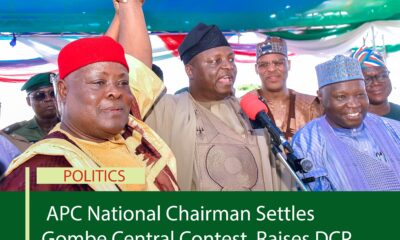
APC National Chairman Settles Gombe Central Contest, Raises DCP Ahmed’s Hand as Party’s Senatorial Candidate

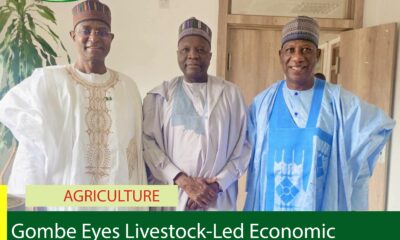
Gombe Eyes Livestock-Led Economic Growth as Inuwa Yahaya Meets Minister

NGX Ends Week in the Green as ₦1.54 Trillion Boosts Investors’ Fortunes

-
 Politics4 months ago
APC National Chairman Settles Gombe Central Contest, Raises DCP Ahmed’s Hand as Party’s Senatorial Candidate
-
 Agriculture2 months ago
Gombe Eyes Livestock-Led Economic Growth as Inuwa Yahaya Meets Minister
-
 Economy10 months ago
NGX Ends Week in the Green as ₦1.54 Trillion Boosts Investors’ Fortunes
-
 Sport6 months ago
Gombe Aquatic Sports Body Unveils Board, Sets Stage for Competitive Debut
-

 Economy10 months ago
CBN’s End to Cash Withdrawal Limit
-
 Education10 months ago
Dangote Launches Landmark ₦1 Trillion Scholarship Scheme to Support 1.3 Million Nigerian Students
-
 Striking the Balance3 months ago
The $2,500 Threshold: Why Raising Nigeria’s GDP Per Capita Is Our Best Non-Kinetic Strategy for Peace
-

 Environment4 months ago
World Environment Day: NGO Urges Nigerians to Embrace Nature-Based Solutions Against Climate Change