Column
A Discerning Bullet & The Fallacy of Christian Genocide in Plateau State

A Discerning Bullet & The Fallacy of Christian Genocide in Plateau State
By Lawal Ishaq Esq.
On 29th March this year, Jos City was thrown into confusion when the forgotten ugly madness of the ethno-religious crisis reared its sad face. This time around, the trigger was a discerning bullet* shot randomly by some evil gum-wielding men; the exact number and the means of their conveyance are still not clear. This discerning bullet shot randomly was meant to kill only Christians and did, despite the undisputed fact that there were Muslim youths in the same location with the supposed targeted Christian youths.
This is the height of ridiculous lies and theories being told in Plateau State for long. It is on record that these bullets didn’t discern between Christians and Muslims, as the bullets killed both. In telling the lies, the manipulative Christian propagandists lined up some dead bodies affected by the bullets and shamelessly included the body of a Muslim victim in a red T-shirt. His people and friends identified his body from the picture the liars were circulating on social media and raised alarm that the young man is a Muslim, not a Christian, as was being falsely spread. It turned out that out of about 29 victims of the supposed discerning bullet aimed to kill only Christians, up to four Muslims fell as well. This is understandable due to the fact that the spot targeted is notorious for the congregation of wayward youths sharing and taking all sorts of hard and intoxicating drugs.
Despite these obvious facts, the liners and propagandists of Christians Genocide on the Plateau kept portraying the sad event of Sunday, 29th March, as a continuation of the falsely claimed Christian genocide. Let’s not forget that scores of Muslim youth, notably okada and Keke Napep operators, were ambushed, killed and their bodies either burnt to ashes or disposed of in shallow graves or thrown into the rivers of Gada Biyu, Farin Gada, Unguwar Ruiuba and many other Christian-dominated areas in Jos.
This brought the bear the lies of Christian genocide in Plateau orchestrated by Professor Joash Amuputan, the current INEC chairman, in his infamous legal brief of 2022.
No doubt lives are being lost through violent means in the Plateau every day. However, if any of the happenings of illegal life-taking in the state is going to be referred to as a genocide, then the event of 28th to 30th November 2008 in Jos was the event that is more qualified to be referred to as genocide – Muslim genocide, to put it appropriately. In three days in November 2008, over 600 Muslims were shot dead, as by the Muslim leadership in Jos and corroborated by some international human rights agencies such as Human Rights Watch.
Going a bit back to the 2001 Jos crisis, the state government-owned Commission of Inquiry set up in 2001 under Justice Niki Tobi confirmed the claim of Muslim genocide in Plateau State as well in its report.
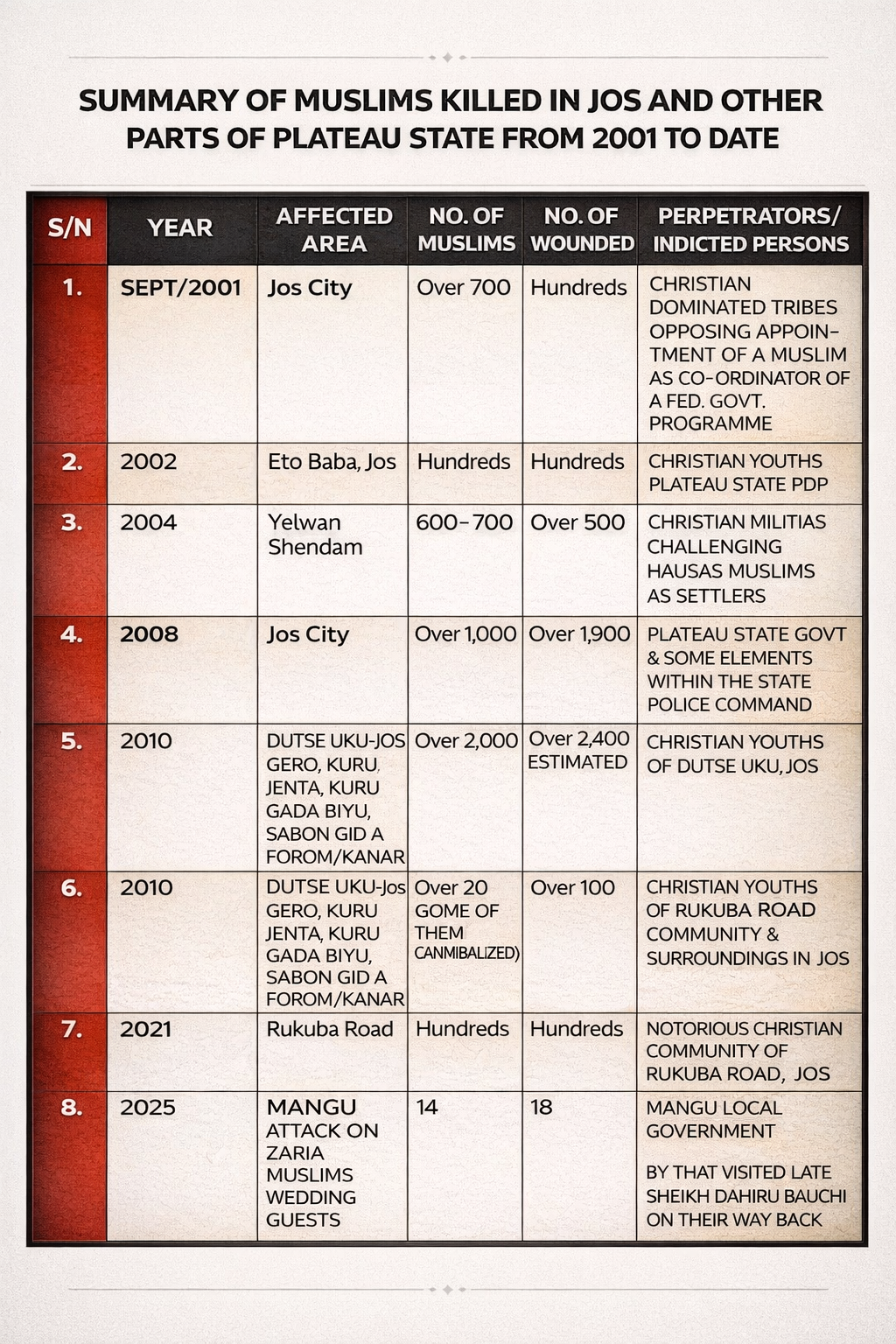
Sadly, the Muslims don’t have the media or are not out for propaganda. As such, their mass killing is always unreported or underreported. (See a table of Muslims massacred in different incidents in Plateau with dates and figures).
I was listening to a video clip of an Islamic imam delivering a sermon last Friday in which he logically stated that it is impossible for Muslims to carry out genocide of Christians in a place like Plateau because Muslims are not only in the minority; we are highly marginalised, which incapacitated us following decades of marginalisation and neglect. Muslims are barely living in Plateau State because since the creation of the present Plateau, there has not been a single Muslim civilian governor, deputy governor, secretary to the state government or chief of staff in the state. The Imam asked, ‘How can a minority oppress the majority to the extent of committing genocide against them when they are not even close to the machinery of power? ‘ If Muslims were interested in committing any genocide against the Christians, they could have conveniently done so in places where they are the majority, like Kano or Sokoto!
It is sad that a few people are still telling their people that it is possible to have a plateau without Muslims. This is a nightmare, not a dream. As opined by some eight thinking social media content creators, the day we realise that Christians cannot chase Muslims from Plateau State and vice versa, that day will be the beginning of peaceful coexistence in the state. This fact should be repeated and carried as wide as possible so that we may have a peaceful plateau.
Enough of these lies and propaganda, please. Let’s live and let. Live!
Barr. Lawal Wrote from Jos Plateau State.

By Hassan Gimba
On Thursday, July 30, 2026, Saudi Arabia announced the formation of a 14-member Multinational Maritime Defence Coalition, ostensibly to guarantee freedom of navigation in the Bab el-Mandeb Strait and the Gulf of Aden. Its practical objective is to break the Houthi naval blockade of Saudi Arabia declared on July 20.
The founding members are Saudi Arabia, Turkey, Kuwait, Bahrain, Qatar, Jordan, Egypt, Pakistan, Djibouti, Somalia, Sudan, Yemen, Bangladesh and, yes, Nigeria.
Turkey, which has one of Europe’s largest militaries, brings NATO membership, a powerful navy and a strong economy. Pakistan, a nuclear power, is also being courted by the United States for its strategic importance in the Global South. Nigeria, meanwhile, may be regarded as the coalition’s African representative.
But the Houthis have survived a decade of Saudi-led military operations, including years of airstrikes and a naval blockade, without capitulating.
A maritime coalition unwilling to conduct effective ground operations in Yemen faces the same strategic limitations that previous anti-Houthi arrangements encountered. Saudi Arabia previously recruited black fighters from Sudan, only for many to be killed in a conflict that had little to do with them.
Even naval escorts and convoy systems cannot guarantee the safety of ships. The shore-based missiles and drones used by the Houthis cannot be neutralised from the sea alone.
The Houthis have also demonstrated their ability to challenge superior military powers, with the US military losing F/A-18 Super Hornet fighter jets and MQ-9 Reaper drones during operations in the region. Washington attributed some losses to accidents, mechanical failures and operational pressures rather than direct Houthi action.
Iran understands this dynamic. That may explain why Tehran’s response to the coalition appears to be one of patience rather than alarm. The Houthis survived the first Saudi-led coalition; Iran will calculate their chances against a second.
The proposed coalition could, however, be stillborn. Several countries that might be expected to support Saudi Arabia have either declined to join or expressed reservations. The UAE and Oman, for instance, have not signed the founding statement.
The United States has also rejected Saudi Arabia’s proposal, while European countries have been unable to establish a similar coalition. Yemen’s Houthi-linked Al-Masirah has described the proposed alliance as incapable of breaking the blockade or protecting targets within the range of Yemeni missiles and drones.
Even the British shipping publication Lloyd’s List reportedly questioned the coalition’s effectiveness, describing it as more of a political message than a naval force capable of changing the security situation in the region.
But where does Nigeria fit into all this?
Nigeria does have a five-year defence pact with Saudi Arabia, signed on December 9, 2025, covering military cooperation, intelligence sharing and counter-terrorism efforts. But can Nigeria mobilise Africa, or even West Africa, behind such an undertaking?
Nigeria is still battling Boko Haram, banditry, kidnappings and other armed groups at home. What would it mean for the country to confront an adversary whose missiles and drones have challenged the military capabilities of the United States, Israel and Saudi Arabia?
Saudi Arabia has American military bases, sophisticated weapons and enormous financial resources, yet it has struggled to defeat the Houthis. What, then, is Nigeria’s own there?
Nigeria has not even dredged the Niger River, yet it wants to help protect the Red Sea and Bab el-Mandeb Strait. What is Nigeria’s own there?
I would not object if Nigeria had derived substantial benefits from its relationship with Saudi Arabia. But what exactly have we received?
For instance, Nigerians do not obtain Saudi visas on arrival, except under privileged circumstances involving holders of Schengen, UK or US visas.
The King Salman Humanitarian Aid and Relief Centre has conducted periodic free medical missions in Nigeria, including eye-care programmes under Saudi Noor, specialised procedures such as hearing implants at the National Hospital, Abuja, and cardiac interventions in Kano. These, however, are temporary humanitarian programmes conducted in partnership with Nigerian public hospitals rather than permanent Saudi government facilities.
The Saudi German Hospital network also has a presence in Nigeria. Still, it is a private healthcare group founded by the Batterjee family and is not owned or operated by the Saudi government.
Saudi Arabia has supported the construction of numerous mosques in Nigeria through non-governmental organisations, royal donors and religious bodies. But where are the Saudi-funded hospitals, primary, secondary or tertiary institutions dedicated to engineering, medicine and modern sciences?
Meanwhile, Saudi Arabia has funded hospitals, schools and other infrastructure projects across several African countries. These include hospitals and schools in Zambia, a $75 million Mother and Child Referral Hospital in Guinea, the rehabilitation of the King Khalid University Hospital in Bujumbura, Burundi, and an 800-bed specialised gynaecological and paediatric hospital in Lusaka.
The Saudi government has also funded the $50 million Riyadh Referral Hospital in Sierra Leone and invested $28 million in regional public schools in Niger Republic. It has built a scientific secondary school and a higher college for teacher preparation in Benin Republic, with similar projects reported in Mozambique, Burkina Faso, Malawi, Senegal and Cameroon.
Yet none of these countries has been called upon to help Saudi Arabia fight the Houthis.
Perhaps that was partly what Burkina Faso’s President Ibrahim Traoré had in mind when he reportedly declined a Saudi offer to build 200 mosques and instead requested investments in schools, hospitals and job-creating infrastructure. He argued that Burkina Faso already had enough underutilised mosques and wanted the funding redirected towards vocational centres, hospitals and other development projects.
Saudi Arabia has enormous resources with which to entice countries to support its strategic interests. But there would be no need for all this brouhaha if Riyadh stopped doing the bidding of the United States and Israel, eased the restrictions imposed on Yemen and allowed the Yemeni people to breathe.
Then, to us: What is Nigeria’s “own” in fighting the Houthis for Saudi Arabia?
What have the Houthis done to Nigeria?
This is a fight we know little about, a conflict that does not concern us directly. Before committing Nigerian resources, personnel and lives to it, perhaps the government should first answer this simple question in pidgin English: Wetin be Nigeria’s own for di mata?
Concluded.
Hassan Gimba, ANIPR, is the Publisher and CEO of Neptune Prime.
Striking the Balance
The Vindication of General Christopher G. Musa, Rtd, CFR: Duty, Integrity, and the Price of Service
By MS Abubakar
In Nigeria’s recent history, few public officers have been tried in the court of public opinion as swiftly and as harshly as General Christopher Gwabin Musa, CFR. A soldier’s soldier. A professional. A man who, by his own admission, has only ever sought to serve Nigeria.
Today, that same man stands as the Honourable Minister of Defence of the Federal Republic of Nigeria. His return to national service is not just a political appointment. It is, in every sense of the word, a vindication — by God, by history, and by those who once counted him an adversary.
The 2023 ECOWAS Moment: Obedience in a Storm
To understand the weight of that vindication, we must go back to July 2023. General Abdourahamane Tchiani overthrew President Mohamed Bazoum of the Republic of Niger.
As Chairman of ECOWAS, President Bola Ahmed Tinubu, GCFR, was confronted with a grave constitutional crisis on Nigeria’s northern border. After diplomatic options stalled, ECOWAS Heads of State authorised the use of force as a last resort to restore constitutional order in Niger.
The task of military planning and mobilisation fell to the then Chief of Defence Staff, General C.G. Musa. He was not making policy. He was executing the lawful orders of his Commander-in-Chief, as required by the 1999 Constitution and the Armed Forces Act.
That is where the trouble began.
Within days, a narrative emerged, especially on social media and in some Northern circles, that the CDS was pursuing a personal agenda. Commentators claimed General Musa was “out to avenge” Christians of Southern Kaduna, particularly those affected by violence in Zangon-Kataf and environs over the years. The accusation was simple and damaging: the act was not a national duty. This was ethnic and religious reprisal in uniform.
The allegation went viral. Clips were shared. Sermons were preached. Editorials were written.
What was missing in that storm was a voice of institutional defence. The National Security Adviser and the then Honourable Minister of Defence, both Muslims, chose to remain silent. No clarification. No public pushback. An officer carrying out constitutional orders was left to defend his name alone.
The Second Storm: The Banditry Debate
If the Niger episode was about loyalty, what followed was about conviction.
Shortly after, General Musa made his position on insecurity public and unequivocal: there should be no negotiations with terrorists and bandits. His argument was rooted in operational experience from the Northeast and Northwest. Negotiations, he insisted, had only emboldened criminal networks. What was required was sustained kinetic action, community defence, and the dismantling of the bandit economy.
For that stance, he paid a price. He was retired from service. To many observers at the time, it looked like the end of a career. The system had moved on.
But public memory is long. And the security situation did not improve by pretending the problem away.
The First Vindication: Called Back to Serve
Then, “out of the blues”, President Tinubu recalled him. Not as CDS, but to a higher political office: Honourable Minister of Defence.
That recall was more than a second chance. It was an institutional admission. The same convictions that were once deemed too hardline were now needed at the centre of national security policy. The same officer, once accused of bias, was now trusted to superintend the entire defence architecture of a multi-ethnic, multi-religious nation.
That is divine vindication. When men write you off, history writes you back in.
The Second Vindication: Respect Across the Border
But God’s vindication was not the only one. There is also the vindication of man. And in this case, the most unlikely of men.
I was reliably informed by a source within the office of General Abdourahamane Tchiani, President of Niger, that General Musa is held in very high esteem by the Nigerien junta.
Not in spite of 2023, but because of how he conducted himself.
According to the account, two things stand out to them: his professionalism as a military officer and his personal character of integrity and empathy. Even across the divide of a threatened military intervention, the Nigerien leadership distinguishes between the office, the orders, and the man.
They do not see a religious crusader. They see a professional soldier who did his duty without malice.
Let it be clear: I am not a personal staff member of the minister nor a contractor with the Ministry of Defence. I have no contract to protect and no brief to sell. I write this simply as a Nigerian reflecting on how providence can clear the name of the innocent and how character outlives propaganda.
Why This Matters for Nigeria
The Musa episode reveals three truths about Nigeria that we must confront if we want peace.
1. We criminalise obedience.
A soldier obeys lawful orders. That is the foundation of civil-military relations. When we attack officers for carrying out policy, and we stay silent when they do, we create an incentive for future officers to be timid. A timid military is a danger to democracy.
2. We reduce national issues to ethno-religious contests.
The quickest way to delegitimise any Northern Christian officer is to label “him as “anti-Muslim”. The quickest way to delegitimise any Northern Muslim officer is to tag him as “pro-establishment.” General Musa was accused because of where he comes from, not what he did. That is dangerous. It means no officer from any minority community in the North can rise without suspicion.
3. We forget that conviction has a cost.
His position on bandits — no negotiation, no ransom — was unpopular with some, but it was consistent. Today, that position is closer to government policy than it was two years ago. Vindication often comes late because truth is often early.
An Admonition to Northern Nigeria
This brings me to my final point.
Northern Nigeria is not a monolith. It is a multi-cultural, multi-faith society. Hausa, Fulani, Kanuri, Nupe, Tiv, Idoma, Jukun, Berom, Bajju, Kataf, and over a hundred other groups call it home. Christians and Muslims have lived, traded, farmed, and fought side by side for centuries.
We cannot build a peaceful North by casting people as “outsiders” in their own land. We cannot develop if every appointment, every promotion, and every military operation is read through the lens of faith or ethnicity.
No Nigerian should be castigated, ridiculed, victimised, harassed, or blackmailed because of their faith or ethnicity. No officer should be called a “religious avenger” for doing his job. No citizen should be told he does not belong because his surname or his church is different.
The North will only witness peace and development when we accept people as they are and allow them to contribute their quota. When a Kataf child and a Fulani child can go to the same school without fear. When a Christian officer and a Muslim officer can both rise to CDS without their religion becoming a headline.
That is the Nigeria General Musa has served. That is the Nigeria we must all serve.
Conclusion: The Measure of a Man
Leadership is not tested in peace. It is tested in controversy.
General Christopher G. Musa was accused, retired, and counted out. He is now back, not by lobbying, but by record. He is respected, not just in Abuja, but even in Niamey, by those who once faced him across a border.
That is what vindication looks like.
It is God restoring. It is history correcting. It is adversaries admitting, quietly, that the man was professional all along.
May we learn from this. May we judge our public officers by their service to Nigeria, not by the tribe of their father or the church or mosque they attend.
For in the end, Nigeria does not belong to one faith or one ethnic group. Nigeria belongs to all of us. And it is only when we all belong that Nigeria will work for all of us.
New Gombe Executive Council and the Imperative of Consolidation
By Ismaila Uba Misilli
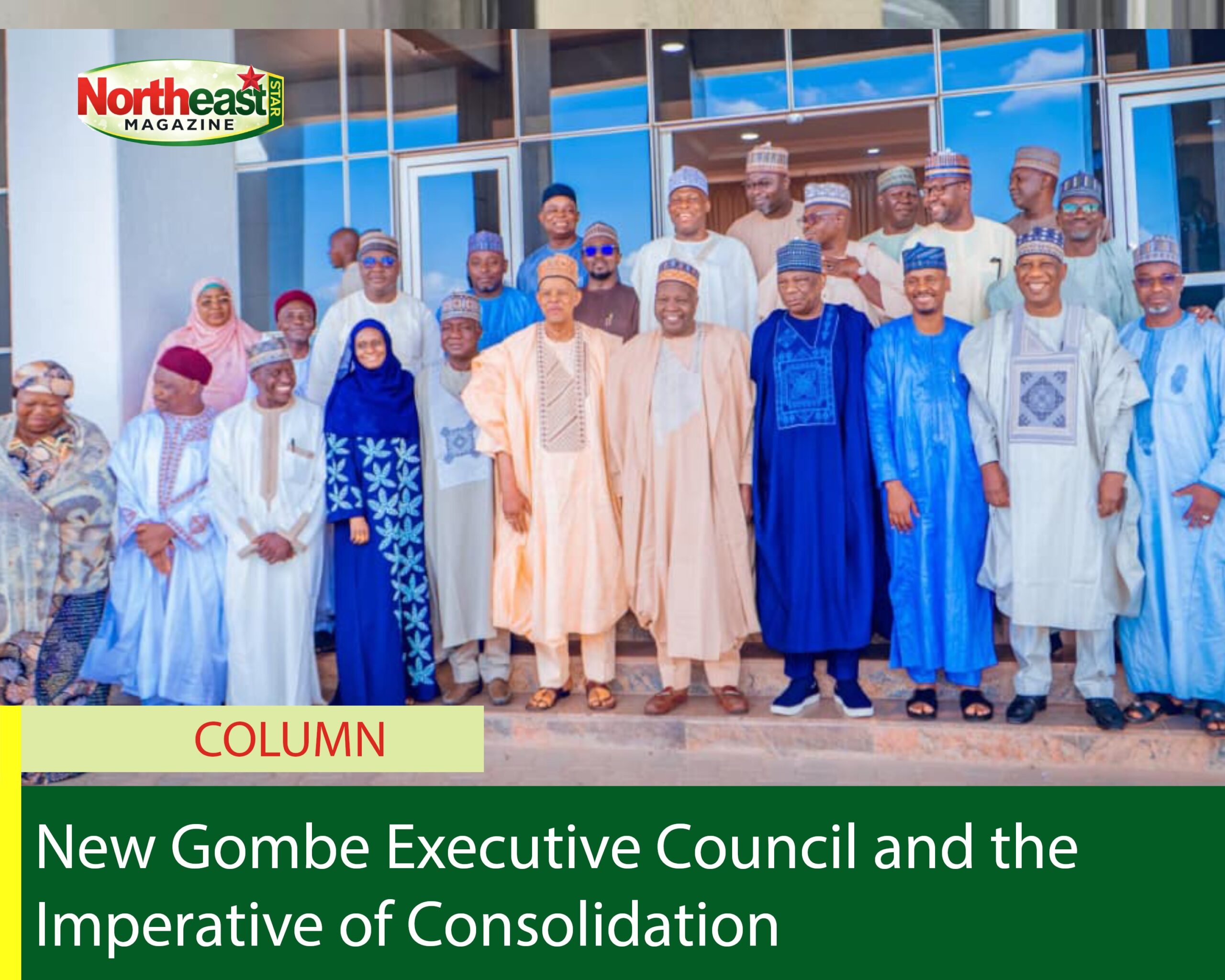
The recent inauguration of a new Gombe State Executive Council by Governor Muhammadu Inuwa Yahaya, CON, signals the beginning of a critical phase in the life of an administration that has transformed Gombe State over the past seven years and is now focused on consolidating those gains before the expiration of its tenure.
The task before the new cabinet, as stressed by the Governor, is enormous, but so too is the opportunity. This moment is the time to consolidate, innovate and deliver.
Every decision, every policy and every intervention must move Gombe State closer to its aspiration of becoming one of Nigeria’s most prosperous, inclusive and forward-looking states as envisioned by Governor Inuwa Yahaya.
The Governor has left no one in doubt about his expectations. Speaking during the swearing-in of 23 Commissioners, 13 Special Advisers, the Head of Civil Service and a Permanent Secretary, he delivered a clear and unmistakable message: there is no honeymoon period in governance; there is only the responsibility to perform.
That message was reinforced during his maiden interactive session with the newly inaugurated commissioners, where he charged them to hit the ground running, work in close synergy, recover lost ground where necessary, remain focused on the administration’s development agenda and resist every form of distraction.
With less than a year remaining in the administration’s second term, every day matters. Every ministry must become a centre of innovation, execution and measurable impact.
Demonstrating strategic foresight, Governor Inuwa Yahaya has also restructured government to respond to emerging realities. The creation of the Ministry of Livestock Development, in line with President Bola Ahmed Tinubu’s Renewed Hope Agenda, positions Gombe to harness the vast economic opportunities in the livestock value chain.
Similarly, the establishment of the Ministry of Humanitarian Affairs and Poverty Reduction reflects a deliberate commitment to addressing social vulnerability, strengthening safety nets and improving the welfare of the most disadvantaged members of society.
Although many of the commissioners are returning members of the cabinet, they are entering a new phase with renewed responsibilities. They inherit an administration that has built a strong foundation through prudent financial management, strategic planning and disciplined execution.
Under Governor Inuwa Yahaya’s leadership, Gombe State has recorded remarkable progress in road infrastructure, healthcare, education, agriculture, environmental sustainability, investment promotion, rural electrification and public financial management, among others.
These achievements have earned the state national and international recognition for transparency, fiscal discipline, healthcare reforms, environmental stewardship and ease of doing business.
But governance is a continuum. Yesterday’s achievements cannot become today’s resting place. The real challenge before the Executive Council is not merely to preserve these gains but to accelerate them, ensuring that every policy and every project translates into tangible improvements in the lives of the people.
This explains why the Governor placed such strong emphasis on synergy. Modern governance demands collaboration. Ministries, departments and agencies must work as one coordinated team rather than isolated institutions. Development challenges: Integrated planning, seamless coordination, and shared responsibility are essential for addressing interconnected development challenges and achieving sustainable solutions; sustainable solutions require integrated planning, seamless coordination, and shared responsibility.
Equally significant is the Governor’s insistence on discipline, accountability and dedication. Public office is a sacred trust, not a privilege. Every commissioner has been charged to demonstrate integrity in the management of public resources, transparency in decision-making and responsiveness to the needs of the people. In the end, citizens will judge government not by speeches but by visible results.
As always pointed out by Governor Inuwa Yahaya, the expectations of the people of Gombe are high. They expect better roads, quality healthcare, improved schools, expanded access to potable water, reliable electricity, increased agricultural productivity, more employment opportunities, stronger security and an economy that creates prosperity for all. Above all, they expect a government that listens, responds and delivers.
Meeting these expectations requires leadership that is accessible, proactive and solution-orientated. Commissioners must remain connected to the people, engage stakeholders regularly, monitor projects closely, eliminate bureaucratic bottlenecks and ensure that every ministry operates with clearly defined targets, measurable outcomes and a culture of performance.
The pledges by the commissioners to remain loyal, united and committed to Governor Inuwa Yahaya’s vision are reassuring. However, loyalty in public service finds its highest expression in performance. The confidence reposed in them by the Governor can only be justified through hard work, innovation, integrity and measurable service delivery.
As the administration enters this decisive phase, the Executive Council has a rare opportunity to help shape an enduring legacy.
History often judges harshly governments that merely manage time. It remembers those who maximise it. For the new Executive Council, the mandate is clear: consolidate the gains, accelerate development, deepen reforms and finish strong. The time to deliver is now.
It is a known fact that Governor Inuwa Yahaya has provided the vision, established the direction and created the enabling environment. The responsibility now rests squarely on the shoulders of the Executive Council to translate that vision into even greater achievements.

2027: We’re Yet to Pick Presidential Candidate —Northern Igbo Assembly

Gov. Inuwa Woos Northern Academics, Women Ulamas for Knowledge-Based Solutions to Region’s Challenge

Northern Governors Mourn Bamanga Tukur, Hail His Decades of Service to Nigeria

APC National Chairman Settles Gombe Central Contest, Raises DCP Ahmed’s Hand as Party’s Senatorial Candidate

Gombe Eyes Livestock-Led Economic Growth as Inuwa Yahaya Meets Minister

Gombe Aquatic Sports Body Unveils Board, Sets Stage for Competitive Debut

-
 Politics3 months ago
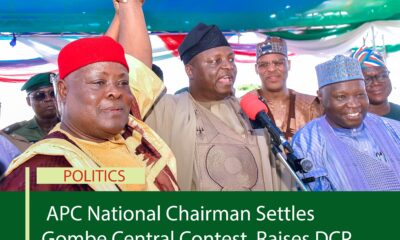
APC National Chairman Settles Gombe Central Contest, Raises DCP Ahmed’s Hand as Party’s Senatorial Candidate
-
 Agriculture2 months ago
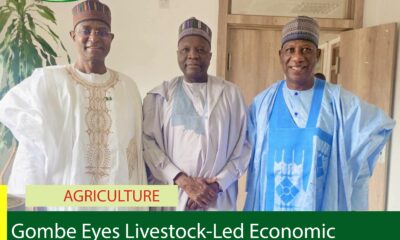
Gombe Eyes Livestock-Led Economic Growth as Inuwa Yahaya Meets Minister
-
 Sport5 months ago
Gombe Aquatic Sports Body Unveils Board, Sets Stage for Competitive Debut
-

 Economy9 months ago
NGX Ends Week in the Green as ₦1.54 Trillion Boosts Investors’ Fortunes
-
 Striking the Balance2 months ago
The $2,500 Threshold: Why Raising Nigeria’s GDP Per Capita Is Our Best Non-Kinetic Strategy for Peace
-

 Economy9 months ago
CBN’s End to Cash Withdrawal Limit
-
 Education9 months ago
Dangote Launches Landmark ₦1 Trillion Scholarship Scheme to Support 1.3 Million Nigerian Students
-
 Environment3 months ago
World Environment Day: NGO Urges Nigerians to Embrace Nature-Based Solutions Against Climate Change