
Latest News
Northeast Under Renewed Siege as Insurgent and Bandit Attacks Threaten Fragile Peace

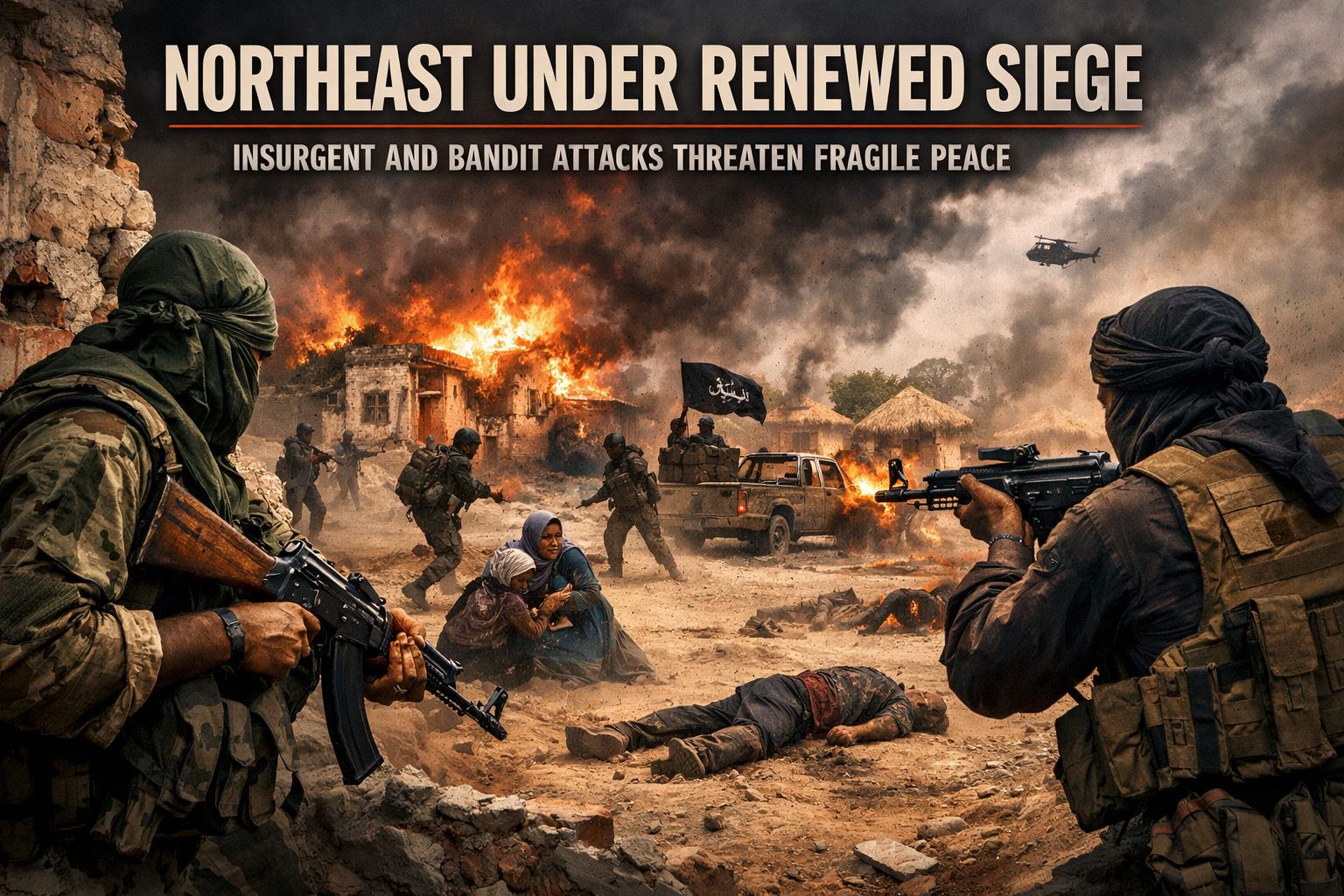
Northeast Under Renewed Siege as Insurgent and Bandit Attacks Threaten Fragile Peace
Fresh violence across Borno, Yobe and Bauchi is displacing communities again while neighbouring states struggle to cope with humanitarian pressure.
By Auwal Ahmad Umar
Across the Northeast, the fragile calm that followed years of insurgency is once again under strain.
In farming villages scattered across Borno, Yobe and Bauchi states, residents who only recently began rebuilding homes destroyed by violence are now fleeing gunfire and uncertainty.
From insurgent raids in Borno to bandit attacks in parts of Bauchi, a pattern of insecurity has re-emerged that security analysts say reflects a troubling evolution of violence across the region.
For communities that endured more than a decade of conflict, the resurgence of attacks has revived painful memories and deepened fears that the region’s recovery remains fragile.
“People thought the attacks had reduced,” said Bukar Madu, a farmer from northern Borno who recently fled his village after gunmen stormed the area.
“When the shooting started, everyone ran into the bush. Families left their houses without carrying anything.”
For many residents, the renewed insecurity represents not just a return to violence but also a threat to livelihoods, food production and community stability.
A Region Still Recovering From a Long War
Nigeria’s Northeast has endured one of the most destructive security crises in the country’s history.
Since the insurgency began more than a decade ago, thousands of lives have been lost and millions of people have been forced to flee their homes.
Entire communities were destroyed, as militant groups targeted villages, markets, schools, and government facilities.
At the height of the conflict, large parts of the Borno, Yobe, and Adamawa states were under the control of insurgent groups.
Nigeria and its neighbouring countries experienced the displacement of millions of residents.
Although sustained military operations eventually reclaimed several towns and weakened insurgent networks, the conflict did not disappear.
Instead, armed groups adjusted their strategies.
Rather than occupying territory, militants began relying on hit-and-run attacks, ambushes and raids in remote communities.
This shift made insurgency less visible in major towns but continued to endanger rural populations.
Security experts say this evolution explains why attacks can still occur even after years of counter-insurgency operations.
Borno: Communities on the Frontline
Among the six northeastern states, Borno remains the epicentre of insurgent activity.
The state’s geography, large forests, sparsely populated villages and porous international borders have long provided opportunities for militant groups to operate.
Several rural communities have reported attacks in recent months.
Residents report that armed fighters frequently launch sudden attacks, specifically targeting villages with limited security presence.
For Bukar Madu, the attack on his community came late at night.
“We heard gunshots, and people started shouting,” he recalled.
“Everyone was trying to escape.”
According to him, several families fled to nearby bushes, while others sought refuge in neighbouring towns.
Some residents have since relocated to camps for displaced individuals.
Local leaders say attacks like this disrupt not only community life but also agriculture.
Farming remains the primary source of income for many rural households.
When farmers cannot safely reach their fields, entire communities face economic hardship.
“If farmers are afraid to go to their land, the harvest will suffer,” Mr Madu said.
A Pattern of Renewed Insurgent Attacks
Security analysts say the recent attacks across parts of Borno suggest that insurgent groups are continuing to test the strength of security operations.
According to Ibrahim Usman, a security analyst who studies conflict dynamics in northern Nigeria, militant groups have become more flexible in their tactics.
“Instead of trying to hold territory, they now rely on mobility,” he said.
“They strike quickly and withdraw before security forces can respond.”
This strategy allows insurgents to maintain a presence even in areas where military operations have improved security conditions.
Usman said insurgent networks often use forest corridors and rural routes to move between communities.
“These movements make it difficult to eliminate their activities,” he explained.
Yobe: Living With the Fear of Uncertainty
Neighbour Yobe State has experienced fewer large-scale attacks than Borno, but insecurity remains a concern in several rural areas.
Residents report occasional sightings of armed groups moving through nearby forests.
Although such sightings do not always lead to attacks, they create anxiety among communities that still remember the years of violence.
For traders who travel between villages, uncertainty about security conditions has become a constant challenge.
Bukar Madu, who also trades agricultural goods in parts of Yobe, said people now avoid travelling at night.
“Most people try to return home before evening,” he said.
“Nobody wants to be on the road if something happens.”
Security officials say patrols have increased in vulnerable areas.
However, the region’s vast rural terrain remains difficult to monitor.
Experts warn that insurgent groups sometimes exploit these landscapes to move undetected between locations, making it challenging for security forces to effectively respond to threats in these rural areas.
Bauchi: Banditry Expands Into Rural Communities
While insurgency dominates headlines in Borno and Yobe, Bauchi State has been facing a different security challenge.
Armed bandit groups have increasingly targeted villages in rural areas, particularly in the Alkaleri Local Government Area.
Residents say gunmen often arrive on motorcycles and raid communities at night.
The attacks usually involve looting livestock and food supplies before the assailants retreat into nearby forests.
For Musa Aliyu, a farmer displaced by one such attack, the violence came without warning.
“We heard gunshots, and people started shouting,” he said.
“Everyone ran into the bush to escape.”
Mr Aliyu said several families lost their homes and livestock.
Some residents have since moved to neighbouring communities.
Bandit attacks across northern Nigeria have displaced thousands of people in recent years.
Security experts say the spread of banditry into new areas poses a serious risk if not addressed quickly.
Humanitarian Pressure on Gombe
Although Gombe State has remained relatively peaceful compared with neighbouring states, it is increasingly experiencing the impacts of violence elsewhere.
Families fleeing attacks in Bauchi have crossed into Gombe seeking safety.
Host communities and temporary shelters are now accommodating displaced residents.
This invasion into the Gombe community has disrupted the lives of many in Kashere town, as the school being used to shelter the displaced persons has been shot, with many of their students now staying at home and at risk of going into drug abuse and other menaces.
For the displaced, it is a painful tale of not knowing when they will return home; it is particularly sad for the economy of the country, as many productive people are now staying idle, waiting for food and other support to stay afloat in life.
For Haruna Yakubu, a volunteer assisting displaced families, the situation is challenging.
“Many people arrived here with nothing,” he said.
“They left their homes suddenly and could not take anything with them.”
According to him, food, shelter and healthcare remain the most urgent needs.
Local authorities say they’re working with humanitarian organisations to assist displaced families.
However, the growing number of arrivals is placing pressure on limited resources, which may lead to inadequate support for displaced families in accessing essential services like food, shelter, and healthcare.
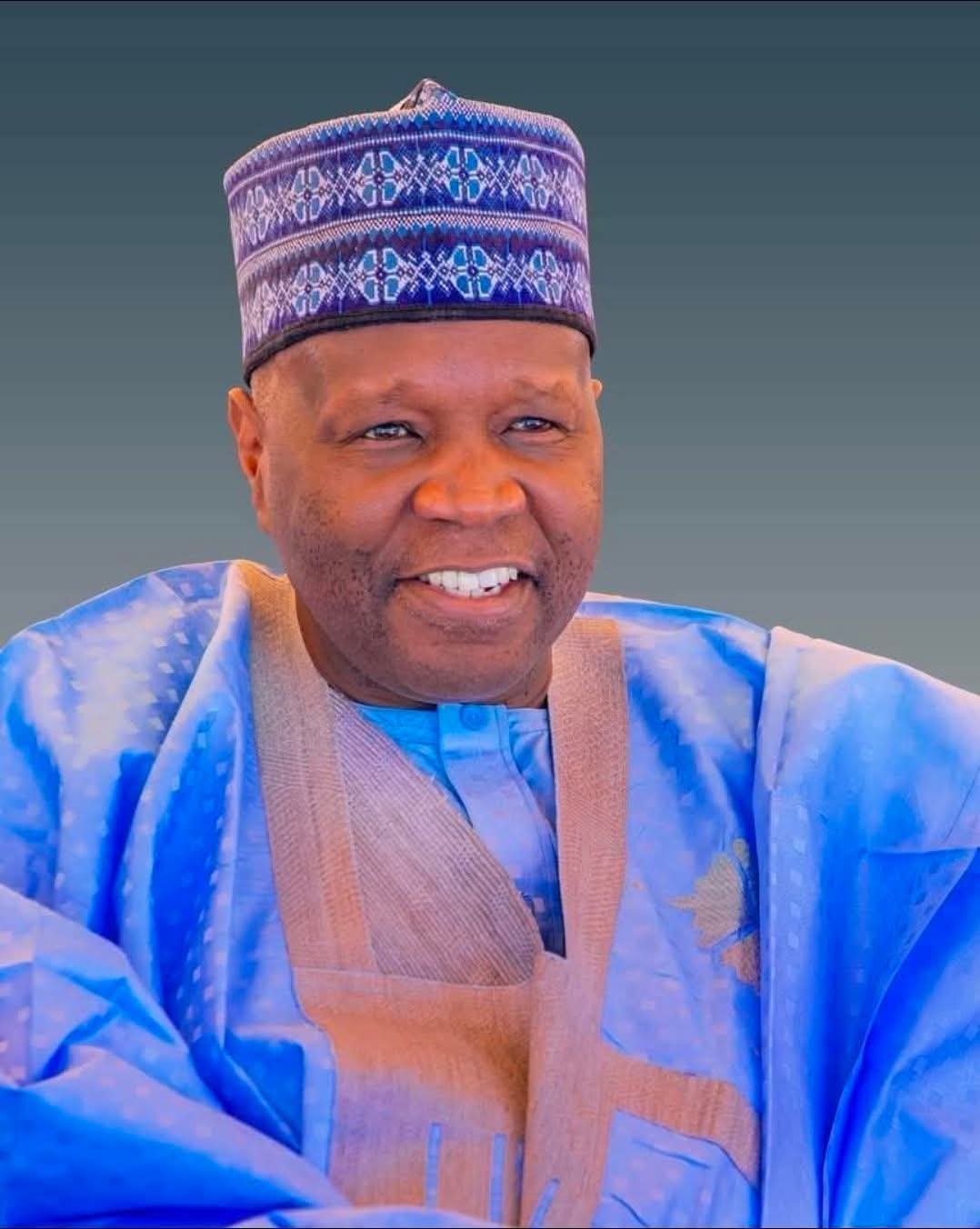
Gombe Rises to No. 2 Nationwide in Fiscal Transparency Ranking
By Auwal Ahmad Umar
Gombe State has achieved a significant breakthrough in public sector governance, ranking second across Nigeria in the 2025 Subnational Audit Efficacy (SAE) Index released by the Paradigm Leadership Support Initiative.
This was contained in a press statement signed by Ismaila Uba Misilli, Director-General, Press Affairs, Government House Gombe, and made available to newsmen in Gombe on Sunday.
The ranking, published by the accountability-focused non-profit established in 2016, highlights Gombe as one of the country’s leading states in financial transparency and audit performance, scoring an impressive 68 per cent. The achievement marks a sharp leap from its previous 16th position, reflecting sustained improvements in fiscal oversight.

According to the report, the state recorded notable progress in strengthening the independence of its audit system. It noted that legal frameworks guiding public audits are now being effectively implemented, with the Office of the Auditor-General receiving funding directly from the Consolidated Revenue Fund. This arrangement, the report explained, enhances financial autonomy and reduces executive interference in audit processes.
The assessment further showed that improvements in audit systems at both the state and local government levels contributed significantly to the overall score, accounting for 55 per cent and 13 per cent, respectively.
A review of Gombe’s performance over time indicates a steady upward trajectory since 2019, aligning with governance reforms introduced under the administration of Governor Muhammadu Inuwa Yahaya. The reforms have focused on promoting transparency, prudent resource management, and a results-orientated public service.
Reacting to the latest ranking, the state government reaffirmed its commitment to deepening transparency and strengthening institutional frameworks to sustain the progress recorded.
“Over the years, Gombe State has continued to earn recognition in good governance, transparency, accountability and public sector reforms, reflecting our consistent commitment to institutional excellence,” the statement read.
It added that the new ranking further reinforces the state’s position as a model for fiscal discipline and accountable governance in Nigeria, with a continued focus on ensuring that public resources translate into tangible development outcomes for citizens.
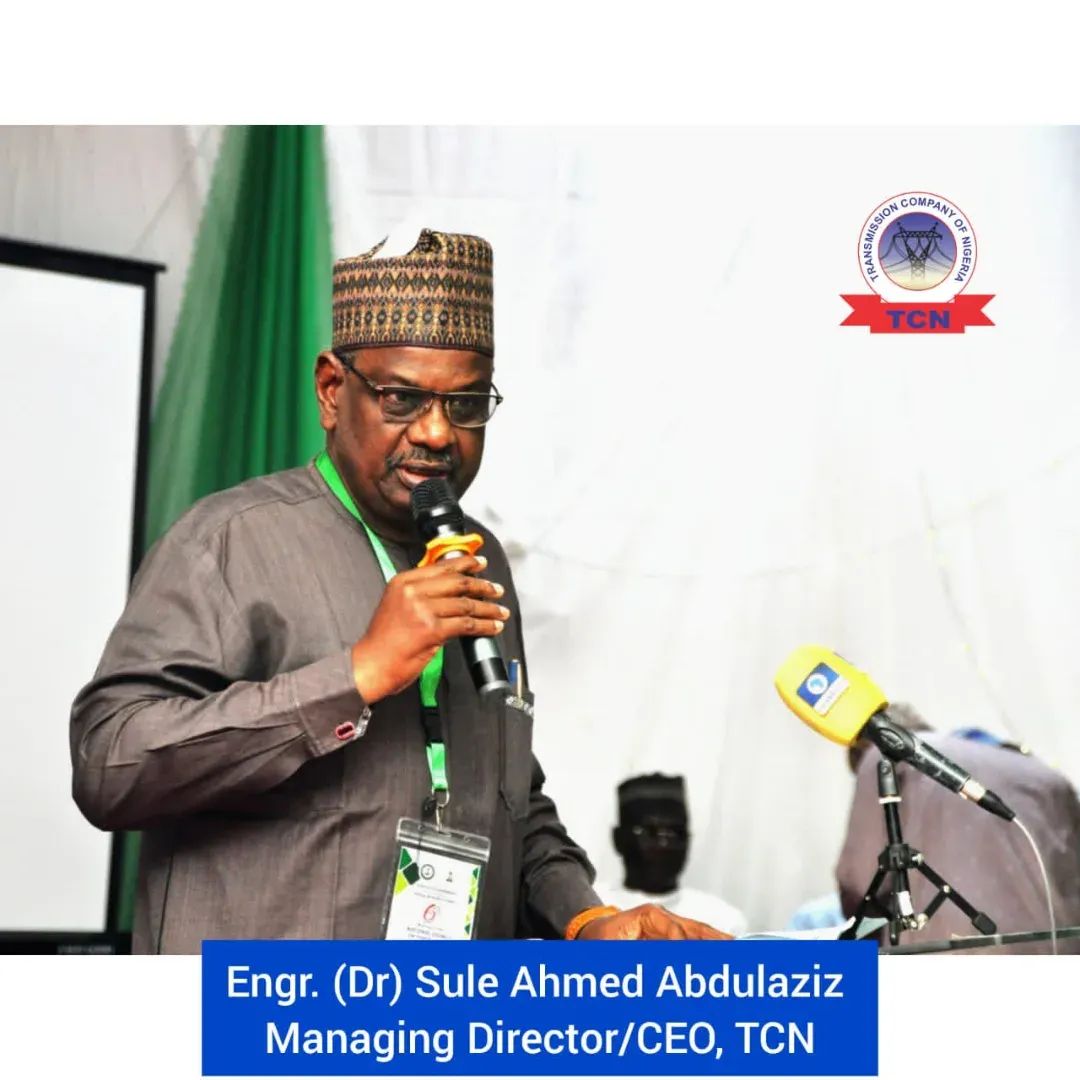
TCN: The Vote of Confidence In Tinubu’s Abdulaziz Reappointment
By Caleb Johnson
Nigeria’s electricity sector is understandably in an upbeat mood following the reappointment of Sule Ahmed Abdulaziz as Managing Director of the Transmission Company of Nigeria (TCN) by Bola Ahmed Tinubu for another five-year term.
The reappointment, coming to a sector as sensitive and strategic as electricity transmission, goes beyond just some routine gestures. The president has, with the decision passed, a clear vote of confidence on Abdul’aziz. Coming from a president known for placing a premium on performance and results, the gesture becomes even more significant. Yet, few observers of Nigeria’s power sector would argue that Abdulaziz does not deserve the recognition.
Since assuming leadership of TCN, Abdulaziz has approached the task with quiet determination. Right from the beginning, Abdul’aziz has rolled up his sleeves, placed his head firmly on the workbench, and set about delivering the mandate entrusted to him. And in truth, his assignment as the head of TCN, managing Nigeria’s national transmission grid is at once simple and complicated.
Simple, because the problem he was brought to address does not require complex theoretical benchmarks to measure success. Power transmission is measurable in real, practical terms: how much electricity the grid can evacuate, how stable the system is, and how efficiently energy moves from generation plants to distribution networks.
The complication, however, lies in the difficult operating environment. Nigeria’s transmission infrastructure has long suffered from underinvestment, aging equipment, and growing demand. Delivering meaningful results under such circumstances, therefore, requires not only technical expertise but also resilience, managerial discipline, and the ability to coordinate multiple moving parts across a vast national grid.
Yet, despite the precariousness of the task, it is noteworthy that under Abdulaziz, TCN has not only remained operationally stable but has also recorded measurable progress across several fronts.
One of the most celebrated achievements during his tenure is the expansion of Nigeria’s national electricity transmission capacity. Through deliberate upgrades and targeted infrastructure investments, the country’s transmission wheeling capacity has grown significantly. Today, the grid is capable of wheeling about 8,700 megawatts of electricity, a substantial improvement from previous years. Earlier grid simulations also confirmed the network’s ability to transmit over 6,000 megawatts reliably, marking an important step toward strengthening Nigeria’s energy backbone.
This expansion did not occur by chance. It was driven by concrete infrastructure improvements, including the installation of additional power transformers, the construction and upgrading of substations, and the reinforcement of key transmission lines across the country. Each of these interventions contributed incrementally to improving the grid’s capacity to evacuate power generated from plants.
Indeed, it was during Abdulaziz’s stewardship that Nigeria recorded a historic milestone in electricity transmission. In March 2025, the country achieved its highest ever power transmission on record. On that occasion, TCN successfully transmitted 5,801.84 megawatts of peak generation nationwide. The grid also delivered 128,370.75 megawatt-hours of daily energy, another record in the country’s electricity history.
These numbers may appear technical, but they tell the story of man whose determination has culminated in Nigeria’s transmission network gradually improving in its ability to move electricity efficiently from generators to distribution companies. For a country where the inability to evacuate generated power has often been cited as a major bottleneck, this progress is significant.
Another important aspect of Abdulaziz’s tenure has been the aggressive installation of new transformers and the reinforcement of transmission infrastructure nationwide. Between January 2024 and November 2025, a total of 82 power transformers were commissioned across various substations in the country. These installations added more than 8,500 megavolt-amperes (MVA) to the national grid’s capacity.
Transformer installations may not always attract headlines, but they are critical components of electricity infrastructure. By improving voltage stability and enhancing the grid’s ability to evacuate electricity from generating stations, these installations directly contribute to a more reliable power system.
Equally noteworthy is Abdulaziz’s progress in advancing major power infrastructure projects funded by international development partners. Under his leadership, transmission projects valued at over $1.16 billion have moved forward with support from institutions such as the World Bank, the African Development Bank, and Agence Française de Développement.
Among these initiatives is the Abuja Feeding Scheme, designed to strengthen electricity supply to Nigeria’s federal capital territory through additional substations and reinforced transmission lines. Other projects include the construction of new high-voltage transmission lines and substations aimed at improving the reach and resilience of the national grid.
Beyond physical infrastructure, Abdulaziz has also overseen important steps toward the modernisation and digitisation of TCN’s operational systems. Modern grid management increasingly depends on automation and digital monitoring, and TCN has taken strides in this direction.
Under his administration, several substations have been digitised and automated, improving operational efficiency and system responsiveness. The introduction of Generation Load Drop Sensitivity (GLDS) technology has also strengthened grid management by enabling faster responses to sudden fluctuations in electricity supply or demand. These innovations have reportedly contributed to a significant reduction in grid disturbances, estimated at about 76 percent over a five-year period.
Another area where Abdulaziz’s leadership has been evident is in strengthening grid stability through systematic maintenance and rehabilitation programmes. His administration launched initiatives such as the Nigeria Electricity Grid Maintenance, Expansion and Rehabilitation Programme (NEGMERP), which focuses on upgrading aging infrastructure and ensuring that existing facilities remain functional and efficient.
Through improved system planning and better grid visibility enabled by integrated technologies, TCN has been able to adopt a more proactive approach to maintenance and expansion. The result is a transmission network that is gradually becoming more resilient and better equipped to handle Nigeria’s growing electricity demand.
Abdulaziz’s influence has also extended beyond Nigeria’s borders. He has played a role in strengthening regional electricity cooperation within West Africa. As chairman of the executive board of the West African Power Pool, he has contributed to initiatives aimed at integrating electricity markets across the subregion.
Under his watch, the North Core Project has continued to advance, linking the transmission networks of Nigeria, Niger, Benin, and Burkina Faso. The project is designed to facilitate cross-border electricity trade and improve energy security across West Africa.
Taken together, these achievements reinforce the age-old belief that when the right individuals are placed in positions that align with their competence and experience, results tend to follow.
Leadership in public institutions often determines whether policies remain on paper or translate into real outcomes. In Abdulaziz’s case, the evidence suggests that the latter has been the case. His tenure has been marked more by measurable incremental improvements that collectively strengthen Nigeria’s power transmission capacity.
President Tinubu’s decision to retain him for another term therefore sends a clear message about the importance of continuity in critical sectors. In infrastructure development, consistency in leadership often allows long-term projects to mature and deliver their intended benefits.
While it is appropriate to commend the president for keeping faith with a performer, it is equally important to remember an old saying: the reward for good work is often more work. The expectations surrounding Abdulaziz’s second term will undoubtedly be higher.
Nigeria’s electricity challenges remain formidable. Demand continues to outpace supply, infrastructure gaps still exist, and the national grid must continue expanding to accommodate future generation capacity.
But with a foundation already laid during his first tenure, the coming years present an opportunity to consolidate gains and push the transmission network to even greater levels of efficiency and reliability.
For now, however, the reappointment stands as a recognition of work done and a call to even greater service in the years ahead.
Johnson writes from Abuja
SAZU Graduates 12,256 Students at Combined Convocation
By Ahmed Muhammad, Bauchi
Sa’adu Zungur University (SAZU), Gadau, will graduate 12,256 students during its 8th, 9th, and 10th combined convocation ceremonies, its vicechancellor, Fatima Tahir, has said.
Ms. Tahir disclosed this on Friday during a pre-convocation press conference in Gadau, Azare Local Government Area of Bauchi State.
The graduating students come from the 2022/2023, 2023/2024, and 2024/2025 academic sessions, she said.
According to her, the total number comprises 11,813 undergraduate students and 443 postgraduate students.
She said the undergraduate graduating class includes 8,387 males, representing 71 percent, and 3,426 females, representing 29 percent.
The vice-chancellor said 216 students earned first class honours, while 3,438 graduated with second class upper division and 5,563 with second class lower division.
She added that 2,353 students obtained Third Class degrees, while 243 earned Pass degrees.
Ms. Tahir also said 10,702 of the graduating students are regulars, while 1,111 are from part-time programs.
On postgraduate studies, she said the university would award 25 PhDs, 145 academic masters, 241 professional masters, and 32 postgraduate diplomas.
She said the 2023/2024 academic session recorded the highest number of graduates, with 5,240, followed by 4,064 in 2022/2023, while 2,509 students are graduating from the 2024/2025 session.
As part of activities for the convocation, the university has scheduled a lecture to be delivered by Emeritus Prof. Abubakar Sani Sambo, a former vice-chancellor of Abubakar Tafawa Balewa University (ATBU), Bauchi.
The lecture is titled, “Education, Security, and Sustainable Development: The Role of Universities in Northern Nigeria.”
Ms Tahir said the grand finale of the convocation would hold on 28 March at the university’s stadium, where degrees would be formally conferred on the graduating students.
The convocation is expected to attract academicians, public officials, alumni, parents, and other dignitaries to celebrate the university’s latest graduating class.

Plateau Raids: Troops Kill Terror Suspects, Recover Ammunition in Wase, Qua’an Pan

2027: APC Stakeholder Pushes for Power Shift to Yobe South, Backs Bomai’s Governorship Bid

Madiba Advocates Push for Presidential Intervention Over Alleged ₦297bn NSITF Fund Irregularities linked to MD Faleye

Dangote Launches Landmark ₦1 Trillion Scholarship Scheme to Support 1.3 Million Nigerian Students

NGX Ends Week in the Green as ₦1.54 Trillion Boosts Investors’ Fortunes

Formal Rebuttal to the Recent Interview Granted by Retired Major General Ali Keffi on Arise TV
-
 Education4 months ago
Dangote Launches Landmark ₦1 Trillion Scholarship Scheme to Support 1.3 Million Nigerian Students
-
 Economy4 months ago
NGX Ends Week in the Green as ₦1.54 Trillion Boosts Investors’ Fortunes
-
 Column4 months ago
Formal Rebuttal to the Recent Interview Granted by Retired Major General Ali Keffi on Arise TV
-

 Economy4 months ago
CBN’s End to Cash Withdrawal Limit
-

 Gombe4 months ago
Gombe Shines Again, Ranks Second in Northeast at 2025 PHC Leadership Challenge
-
 Politics4 months ago
NSGF names Ezekiel Gomos as Director-General, setting stage for stronger regional collaboration
-
 Gombe4 weeks ago
A tribute to Dr Langa Hassan Bangunji (JP) – an icon of Scholarship, Leadership and Community Service
-

 Latest News4 months ago
Anglican Church Expands Footprint with 15 New Dioceses, Total Hits 176