
National News
Why Nigeria Must Extend Basic Education to 12 Years — PAGED Tells Journalists


Why Nigeria Must Extend Basic Education to 12 Years — PAGED Tells Journalists
By Musa Garba, Kaduna
A civil society organisation, the Participatory Communication for Gender Development Initiative (PAGED Initiative), has renewed calls for Nigeria to expand its basic education policy from nine years to 12 years, arguing that the current structure leaves many adolescent girls vulnerable to school dropout, early marriage and long-term social exclusion.
The organisation made the appeal on Wednesday during a two-day media workshop for journalists involved in a project focused on married adolescent girls and young mothers in Kaduna, Kano and Borno states.
Speaking at the event, PAGED Initiative’s Programme Director, Ummi Bukar, said the country’s existing Universal Basic Education framework, though intended to guarantee free and compulsory learning for children, ends too early and fails to protect many girls at a critical stage of their lives.
She said the policy’s limitation to junior secondary school means that many girls are pushed out of the education system just as they approach adolescence, often without the support or protection needed to continue their studies.
According to her, broadening the policy to include senior secondary education would give more girls the opportunity to remain in school, delay harmful social pressures and improve their chances of becoming economically independent and socially empowered.
Mrs Bukar noted that in many communities, girls are frequently withdrawn from school between the ages of 13 and 15, a period she described as decisive for their education, confidence and future prospects.
She said extending compulsory education to 12 years would not only improve access to full secondary schooling, but also serve as a practical response to the persistent problem of child marriage, especially in states where girls’ education continues to face cultural and structural barriers.
She also drew attention to the weak enforcement of legal protections designed to safeguard girls, particularly the Child Rights Act, which sets 18 as the legal age for marriage and recognises the right of young mothers to return to school.
While these provisions exist on paper, she said their implementation remains largely ineffective, with very few consequences for families or individuals who violate them.
“There are laws and policies that should protect girls, but in many cases, enforcement is almost non-existent,” she said, adding that it is still rare to see accountability when underage girls are forced into marriage or denied the opportunity to continue their education.
Mrs Bukar acknowledged that governments at different levels have introduced programmes aimed at improving girls’ access to education, including increased funding, gender-focused interventions and life skills support.
However, she argued that many of those initiatives have not gone far enough because they often fail to respond to the realities faced by the girls they are supposed to help.
She said for many married adolescents and young mothers, returning to school is not simply a matter of policy approval, but of whether the system can accommodate their needs.
In many cases, she explained, girls are unable to continue their education because schools and communities do not provide practical support such as childcare arrangements, flexible learning schedules or safe and welcoming learning environments.
“It is not enough to say girls should return to school,” she said. “The education system must also be designed in a way that makes that possible for them.”
She called for a more serious commitment from policymakers, insisting that laws protecting girls’ rights must be backed by implementation, adequate funding and social support mechanisms that work in real communities.
She also urged the media to play a more deliberate role in shaping public understanding of the issues affecting adolescent girls, saying journalists have the power to influence both policy and public attitudes through responsible, gender-sensitive reporting.
According to her, the media must go beyond event coverage and become active partners in advocacy by telling stories that reflect the lived experiences of girls whose education has been disrupted by marriage, motherhood or social pressure.
Mrs Bukar said stronger collaboration among government agencies, civil society groups, traditional institutions and the media would be essential in pushing for reforms that keep girls in school and expand their opportunities.
For advocates at the workshop, the message was clear: unless Nigeria extends educational protection beyond junior secondary school and addresses the barriers that force girls out of classrooms, thousands of adolescents will continue to be left behind.
National News
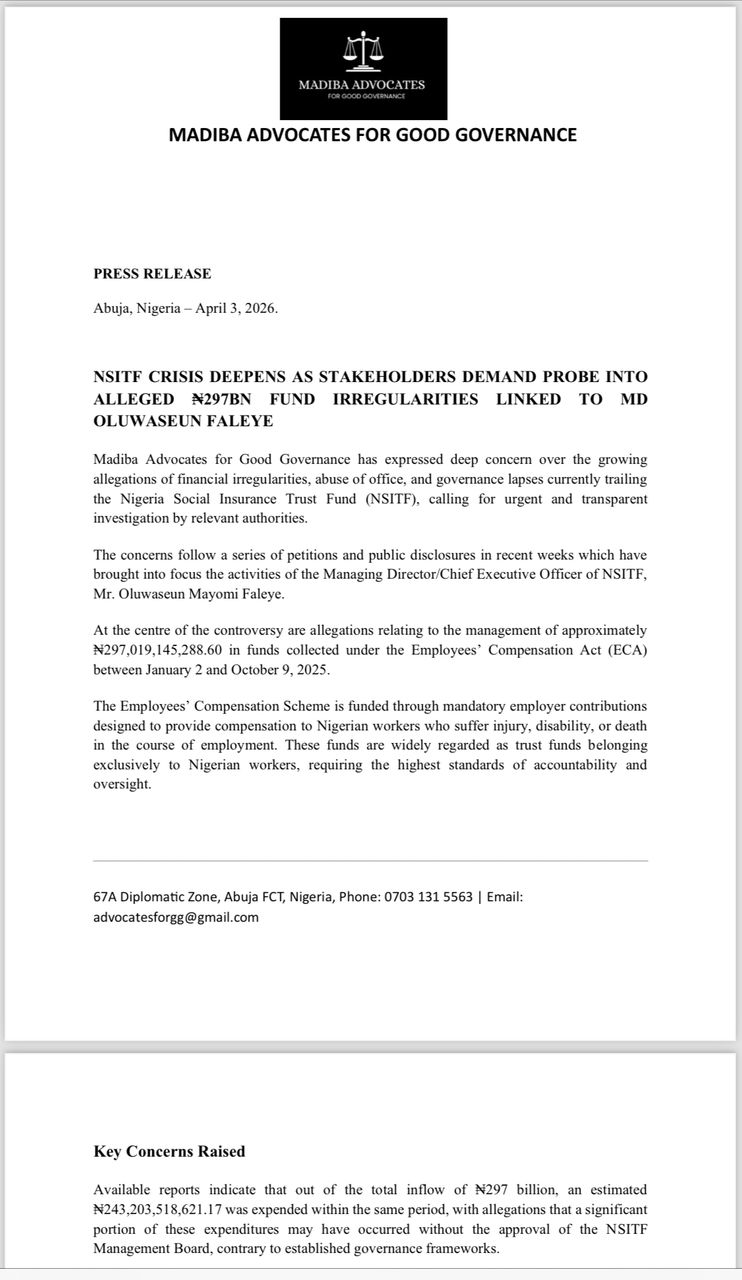
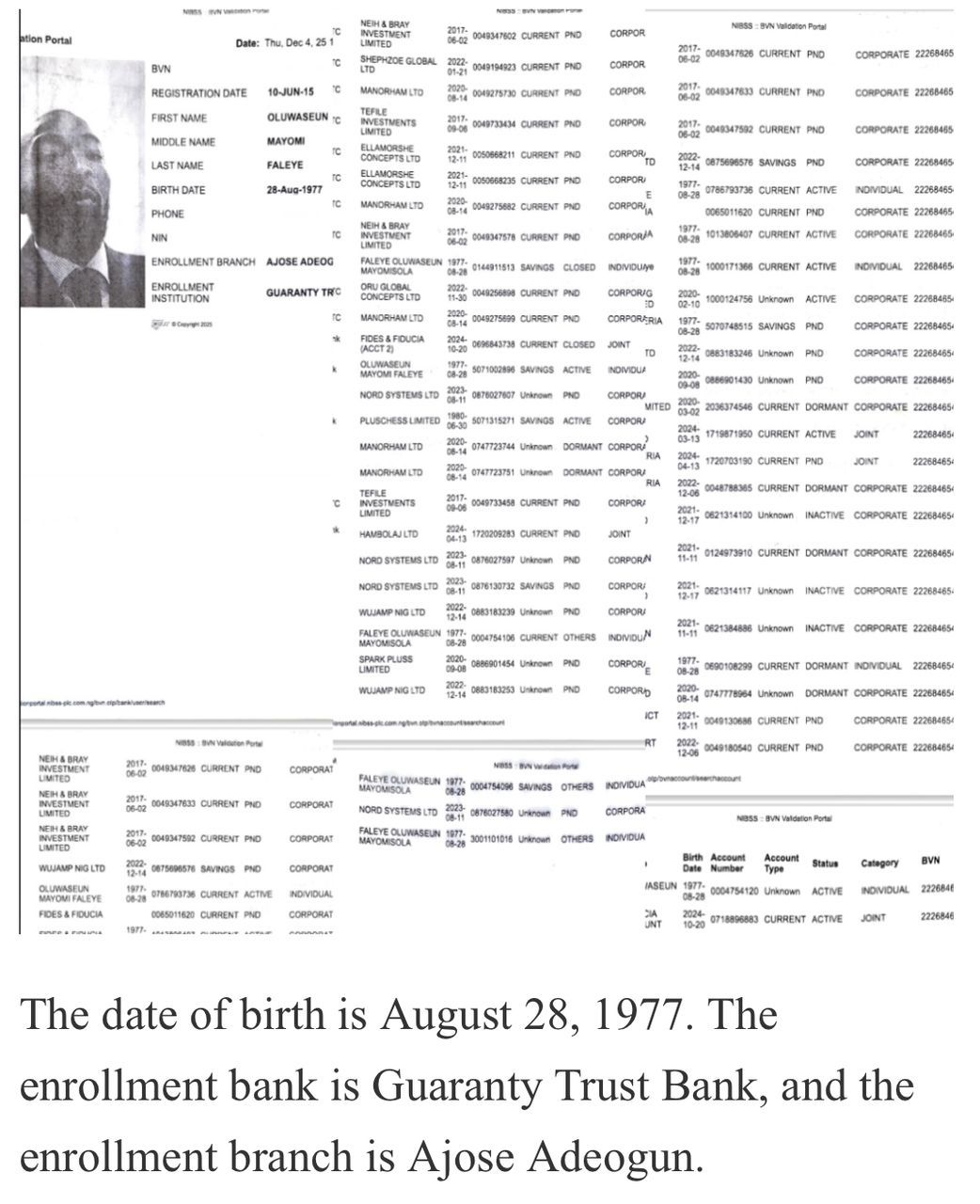
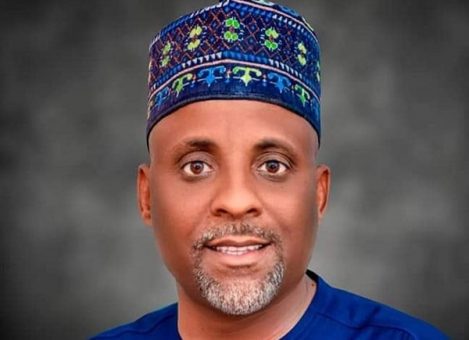
Madiba Advocates Push for Presidential Intervention Over Alleged ₦297bn NSITF Fund Irregularities linked to MD Faleye



NUJ Slams Wike Over Alleged Threat to Journalist, Demands Public Apology
By Tada Jutha, Maiduguri
The President of the Nigeria Union of Journalists (NUJ), Comrade Alhassan Yahya Abdullahi, has strongly condemned what he described as threatening and intimidating remarks made by the Minister of the Federal Capital Territory (FCT), Nyesom Wike, against journalists in Nigeria.
In a statement issued on Monday and made available to journalists in Maiduguri, Abdullahi said the union was deeply disturbed by the minister’s comments, which he said amounted to a direct attack on press freedom and democratic values.
He noted that the union was particularly alarmed by a statement allegedly made by Wike against Channels Television journalist, Seun Okinbaloye, describing it as reckless, violent and unacceptable.
According to the NUJ President, “Members of the NUJ expressed their profound shock and outrage at the reckless and violent statement made by Minister Nyesom Wike against Channels Television journalist, Seun Okinbaloye.”
He added that the alleged remark, “If there’s any way to break the screen, I would have shot him,” was not only disturbing but also a serious attempt to intimidate journalists and discourage independent reporting.
Abdullahi said the union had initially refrained from issuing a public reaction, hoping the minister would reflect on the weight of his words and offer a prompt retraction and apology. However, he said the continued silence from the FCT Minister had only heightened the union’s concern.
“The regrettable absence of any such retraction or apology strongly suggests that the statement was not a momentary lapse but rather a deliberate and intentional act designed to intimidate,” he said.
He further argued that such comments from a senior government official risk creating a hostile atmosphere for journalists who are simply carrying out their professional duties in the public interest.
The NUJ President warned that any attempt to silence critical journalism through threats or intimidation poses a serious danger to democracy and the right of citizens to access credible information.
“It sends a dangerous message that critical reporting will be met with hostility and threats of violence, which is entirely antithetical to the spirit of a free and open society,” Abdullahi stated.
The union therefore called on Wike to tender an immediate and unreserved apology over the alleged comment, while also urging the Federal Government to publicly distance itself from any form of threat against journalists.
Abdullahi said the government must take concrete steps to reassure media professionals about their safety and guarantee an environment where they can operate without fear of harassment, violence, or reprisals.
He also appealed to media organisations, civil society groups and all defenders of democratic values to unite in rejecting what he described as a blatant assault on press freedom in the country.
According to him, the safety of journalists remains central to the survival of democracy, insisting that any effort to muzzle the media must be firmly resisted.
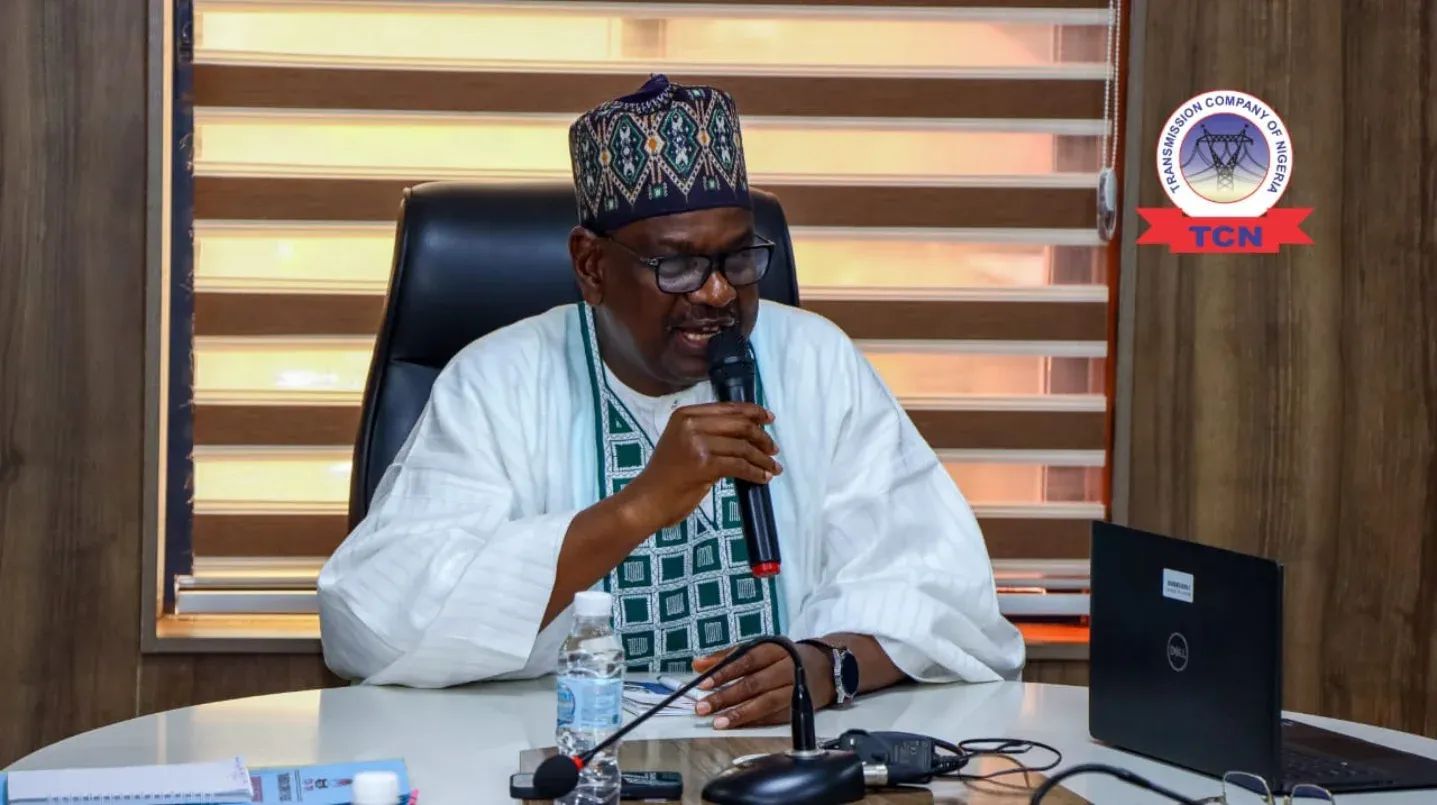
Power Sector Expert Hails TCN Boss’ Reappointment, Says Move Will Deepen Grid Reforms
By Auwal Ahmad
A power sector expert from Bauchi State, Engineer Auwal Gwallaga, has welcomed the reappointment of Engineer Dr. Sule Ahmed Abdulaziz as the Managing Director of the Transmission Company of Nigeria (TCN), describing the decision as a strong vote of confidence in his leadership.
Responding to the development, Gwallaga said the renewed appointment was well-earned, noting that Abdulaziz had shown commitment, professionalism, and strategic direction in managing the country’s transmission network.
He said the TCN boss had, over the years, demonstrated the capacity needed to steer one of the most critical institutions in Nigeria’s electricity value chain, especially at a time when the country is pushing for improved power delivery and infrastructure expansion.
According to him, Abdulaziz’s leadership has inspired confidence among stakeholders in the energy sector and helped sustain efforts aimed at strengthening the national grid.
Gwallaga expressed optimism that the second term would provide an opportunity to consolidate ongoing reforms, accelerate the upgrading of transmission facilities, and improve the stability of electricity supply across the country.
“The reappointment of the TCN Managing Director is well-deserved. His track record in driving the growth and modernisation of Nigeria’s power transmission infrastructure speaks for itself,” he said.
He added that the decision was not surprising, given what he described as Abdulaziz’s visible contributions to the expansion and development of the nation’s power transmission capacity.
The electricity expert further said continuity in leadership at the Transmission Company of Nigeria would be vital in sustaining key projects and policies designed to meet the country’s rising energy needs.
He maintained that with the right support and policy consistency, the TCN under Abdulaziz could deliver greater improvements in transmission efficiency and national power stability.
The reappointment, he said, has been widely anticipated by many industry observers who see it as a step toward consolidating gains already recorded in the sector.

Gov. Inuwa Yahaya Dissolves Gombe Executive Council

Why Nigeria Must Extend Basic Education to 12 Years — PAGED Tells Journalists

Inuwa Yahaya Pays Last Respect as Gombe Mourns Elder Statesman Manu Malala

Dangote Launches Landmark ₦1 Trillion Scholarship Scheme to Support 1.3 Million Nigerian Students

NGX Ends Week in the Green as ₦1.54 Trillion Boosts Investors’ Fortunes

Formal Rebuttal to the Recent Interview Granted by Retired Major General Ali Keffi on Arise TV
-
 Education4 months ago
Dangote Launches Landmark ₦1 Trillion Scholarship Scheme to Support 1.3 Million Nigerian Students
-
 Economy4 months ago
NGX Ends Week in the Green as ₦1.54 Trillion Boosts Investors’ Fortunes
-
 Column4 months ago
Formal Rebuttal to the Recent Interview Granted by Retired Major General Ali Keffi on Arise TV
-

 Economy4 months ago
CBN’s End to Cash Withdrawal Limit
-

 Gombe4 months ago
Gombe Shines Again, Ranks Second in Northeast at 2025 PHC Leadership Challenge
-

 Politics4 months ago
NSGF names Ezekiel Gomos as Director-General, setting stage for stronger regional collaboration
-

 Gombe4 weeks ago
A tribute to Dr Langa Hassan Bangunji (JP) – an icon of Scholarship, Leadership and Community Service
-

 Latest News4 months ago
Anglican Church Expands Footprint with 15 New Dioceses, Total Hits 176