
Borno
From Empire to Identity: How the Kanem-Borno Cultural Summit Rekindles a Thousand-Year African Legacy

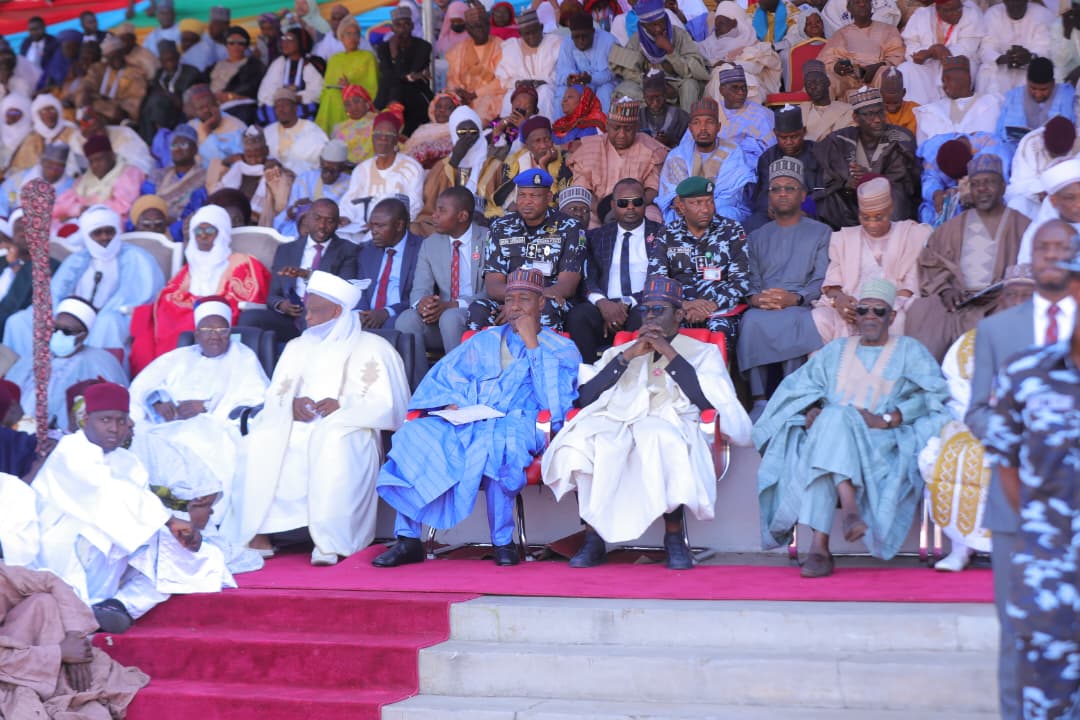
From Empire to Identity: How the Kanem-Borno Cultural Summit Rekindles a Thousand-Year African Legacy
By Tada jutha, Maiduguri
Long before modern borders carved Africa into nation-states and colonial maps fractured shared histories and kinship, the Kanema-Borno Empire stood as one of the most enduring civilisations the continent had ever known. Rising from the sands around Lake Chad in the 9th century, Kanem-Borno was not merely a kingdom; it was a living network of culture, trade, scholarship, and identity that stretched across what are today Nigeria, Chad, Niger, Cameroon, Libya, and beyond.
The Sayfawa dynasty ruled the empire for more than a thousand years. Islamic scholarship strengthened it, and trade routes across the Sahara Desert connected Central Africa to North Africa and the Mediterranean world. Its rulers built institutions, fostered learning, and cultivated a shared Kanuri identity that transcended geography. Even as empires elsewhere rose and fell, Kanem-Borno adapted, migrated, and survived.
Yet history, though powerful, is not immune to disruption. Colonial partitions, post-independence political upheavals, economic marginalisation, climate change around Lake Chad, and, more recently, violent extremism have fractured communities that once spoke the same language, shared the same customs, and traced their lineage to the same ancestral roots. The Kanuri people, once bound by empire, found themselves separated by borders, policies, and insecurity.
It is against this backdrop of history, loss, and resilience that the Kanem-Borno Cultural Summit (KBCS) emerges not as a mere celebration but as a deliberate act of remembrance and reconstruction.
A Modern Gathering Rooted in Ancient Memory
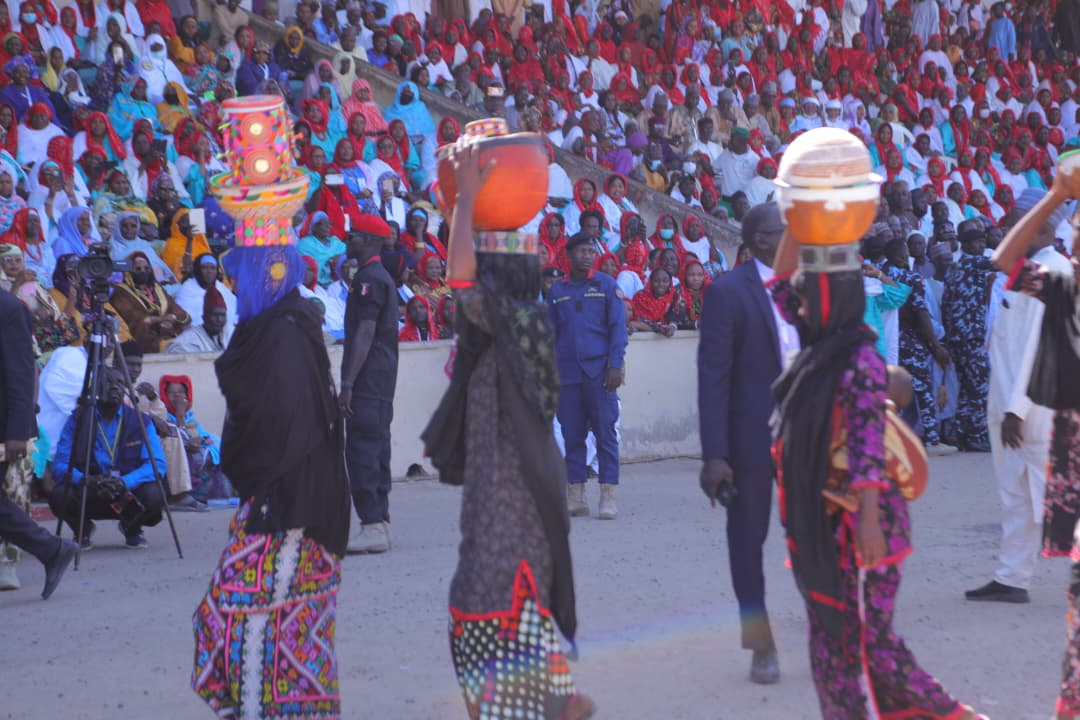
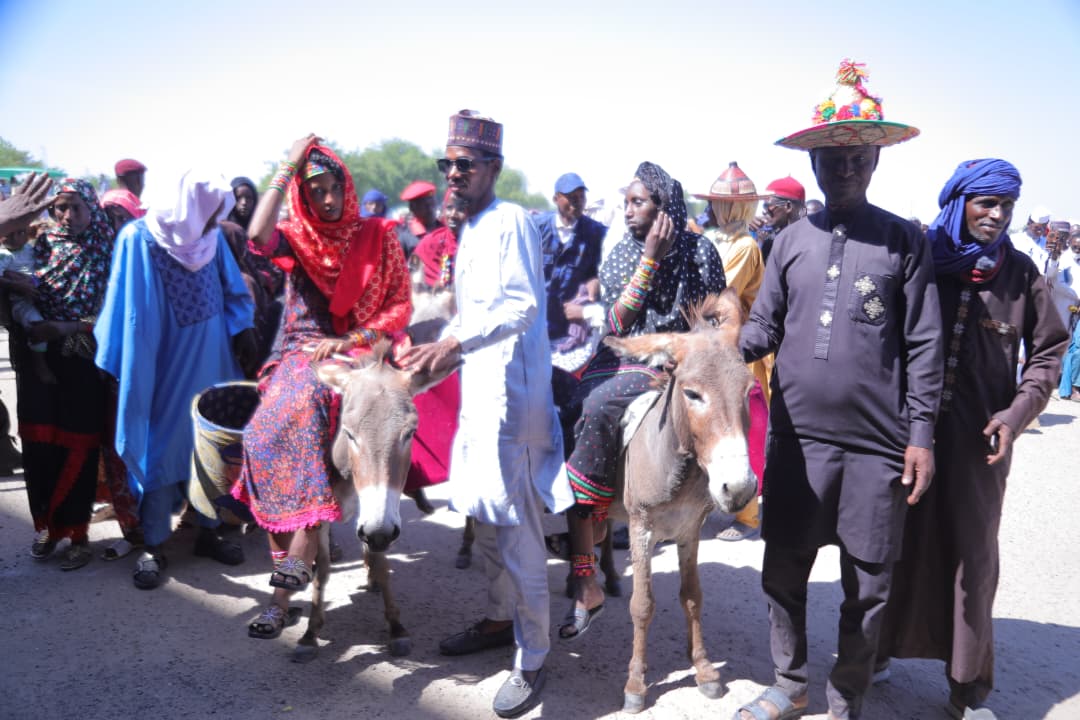
On a Thursday in Maiduguri, the heartland of the old empire, history returned—not in the form of conquest or coronation, but through dialogue, dance, and shared identity. Thousands of Kanuri kinsmen and women from ten African countries converged at the Mohammed Indimi International Conference Centre to celebrate this year’s Kanem-Borno Cultural Summit.
Hosting the gathering, Borno State Governor, Professor Babagana Umara Zulum, described the summit as a strategic effort to revive cultural heritage and deploy it as a tool for peacebuilding and sustainable development across Africa.
“This summit”, Zulum said, “represents a deliberate effort to rebuild transnational kinship networks based on a shared identity, to create a supportive global community that can tackle the myriads of challenges collaboratively.”
The statement carried weight. Borno State, once the epicentre of the Kanem-Borno Empire, has in recent decades become synonymous with insurgencies, displacements, and humanitarian crises. Yet here it was—repositioning itself not just as a survivor of conflict, but as a convener of continental unity.
A Continental Reunion of the Scattered People
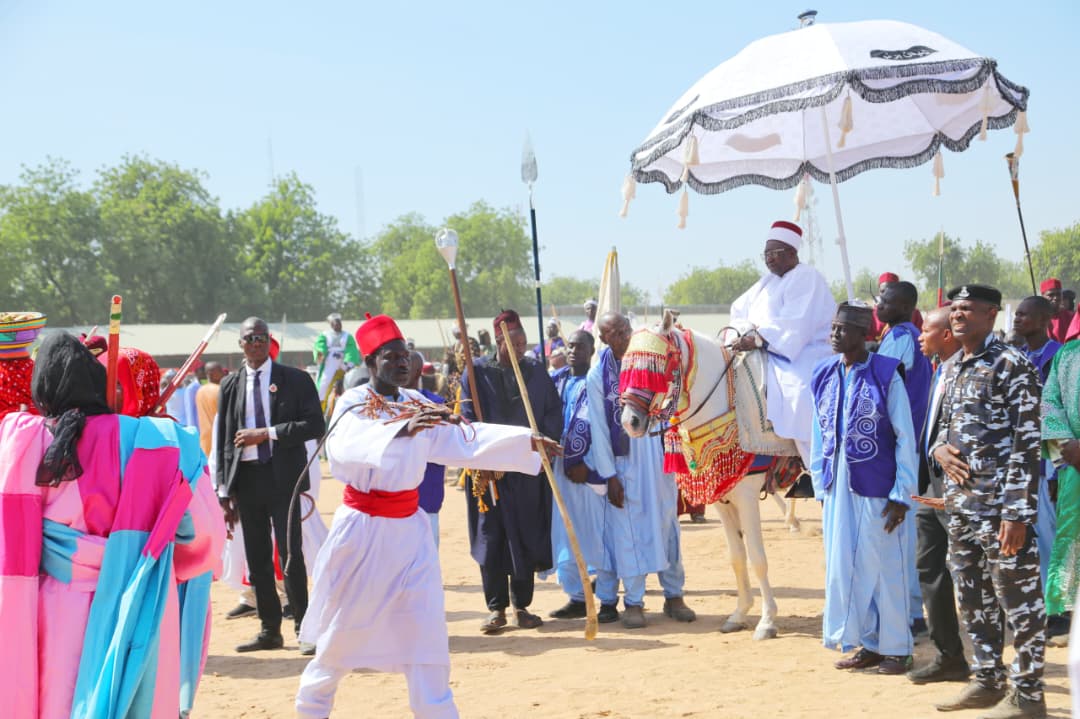
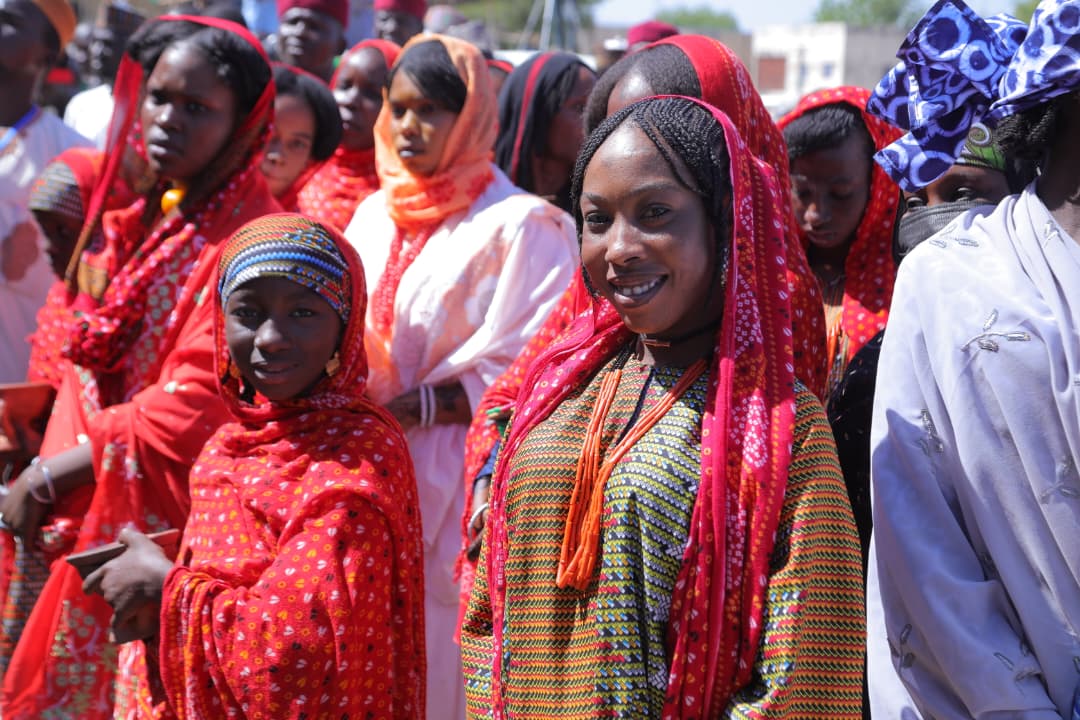
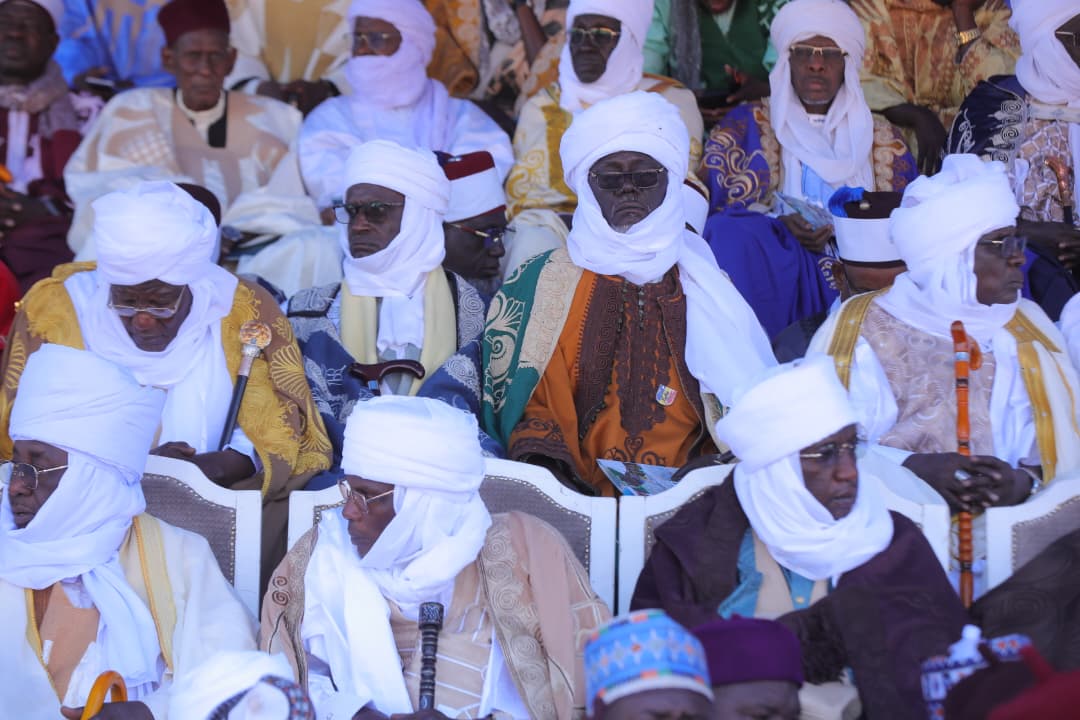
The summit attracted 161 traditional rulers, top government officials, scholars, and cultural custodians, alongside thousands of Kanuri participants from Ghana, Sudan, Gabon, Niger, Central African Republic, Senegal, Libya, Chad, Cameroon, and Benin.
For many attendees, the gathering was deeply emotional. Families separated for generations by borders met under one roof. Elders spoke in Kanuri dialects shaped by geography but united by origin. Youths, some born in exile or diaspora, encountered their heritage not through textbooks, but through living culture.
Governor Zulum urged participants to go beyond celebration and invest in shared development.
“You are to invest in a shared future,” he told the gathering, “to ensure that the illustrious legacy of the Kanem-Borno remains an inspiration for future generations among the member countries.”
Culture as a Tool for Healing and Development
The summit’s program reflected this vision. Beyond speeches, it featured traditional dances, cultural displays, and ceremonial performances, with colourful contingents dressed in costumes representing different regions of the old empire. Each dance told a story—of harvest, migration, royalty, and resistance. Each drumbeat echoed centuries of memory.
But culture, as Zulum emphasised, is not only about the past.
Speaking in the Kanuri language, the governor challenged participants to focus on educational exchange, entrepreneurial collaboration, and socio-economic initiatives capable of uplifting Kanuri communities across borders.
This approach reframes culture not as nostalgia but as capital—social capital that can foster trust, economic networks, and collective problem-solving in a region still grappling with insecurity and underdevelopment.
Reclaiming the Narrative of the Kanem-Borno Empire
In reflecting on the significance of the summit, Zulum reminded the audience of the empire’s historical stature.
“The Kanem-Borno Empire was one of the greatest and longest-lasting empires in African history,” he said. “It flourished for over 1,000 years, approximately from the 9th to the 19th century, in the region of Lake Chad.”
This reminder was more than academic. In a global narrative that often marginalises African civilisations, reclaiming the Kanem-Borno story is an act of intellectual and cultural resistance. It asserts that African societies were organised, scholarly, and globally connected long before colonialism.
Investing in Unity Through Education
Perhaps the most tangible outcome of the summit was Governor Zulum’s announcement of scholarships for 150 students from countries that once formed the Kanem-Borno Empire. The gesture symbolised a belief that education remains the strongest bridge between past glory and future possibility.
In a region where conflict has disrupted schooling for millions, the scholarship initiative serves both symbolic and practical purposes—fostering unity while empowering a new generation of leaders, scholars, and entrepreneurs who understand their shared heritage.
Regional and Traditional Endorsement
The summit also enjoyed high-level regional endorsement. The President of Chad, Mahamat Idriss Déby Itno, represented by the Governor of Lac Province, Major General Saleh Haggar Tidjani, proposed that the summit be institutionalised and rotated among member countries every ten years.
Such a proposal elevates the KBCS from an event to a movement—one capable of shaping diplomatic, cultural, and developmental cooperation across borders.
Other dignitaries in attendance underscored the summit’s national and international relevance. They included Yobe State Governor Mai Mala Buni; former Vice President Ambassador Babagana Kingibe; the Sultan of Sokoto, Alhaji Muhammadu Sa’ad Abubakar III; Senators Mohammed Tahir Monguno and Mohammed Ali Ndume; and Kaka Shehu Lawan.
Also present were members of the House of Representatives, speakers of the Borno and Yobe State Houses of Assembly, emirs and chiefs from across Nigeria, commissioners, lawmakers, and senior government officials.
Their presence reinforced the idea that culture, when properly harnessed, can complement governance and diplomacy.
Beyond Ceremony: A Blueprint for Post-Conflict Identity
What sets the Kanem-Borno Cultural Summit apart is its timing. Coming after years of insurgency that fractured trust and displaced communities, the summit represents a post-conflict identity project—a conscious attempt to heal wounds through shared memory.
In rebuilding Borno, Governor Zulum’s administration has focused on infrastructure, resettlement, and security. The KBCS adds another layer: psychological and cultural reconstruction. It tells the Kanuri people that they are more than victims of conflict; they are heirs to an empire that once shaped Africa.
A Legacy Reawakened
As the summit drew to a close, the drums fell silent, but the message endured. The Kanem-Borno Empire may no longer exist as a political entity, but its spirit—rooted in unity, resilience, and cultural pride—remains alive.
In reviving this legacy, the Kanem-Borno Cultural Summit offers more than celebration. It offers a roadmap: one where history informs development, culture fosters peace, and identity transcends borders.
From empire to identity, from memory to movement, the story of Kanem-Borno is being retold—not as a relic of the past, but as a living force shaping Africa’s future.

By Tada Jutha, Maiduguri
Police in Borno State have arrested six people suspected of stealing a man’s phone and using it to withdraw N5.65 million from his bank account.
The suspects were arrested by operatives of the Command’s Crack Unit after Commissioner of Police Naziru Abdulmajid ordered an investigation, police spokesperson ASP Nahum Daso said in a statement.
The incident happened on October 13, when Abba K., of Damboa Road in Maiduguri, boarded a commercial tricycle. He later noticed that his Infinix Smart 8 phone was missing from his pocket.
Police said investigators used digital forensics and intelligence gathering to identify and arrest the six suspects. They allegedly confessed to taking the phone and withdrawing N5.65 million from the victim’s account, which they shared among themselves.
The police said they recovered both the phone and the full amount. The suspects are expected to be charged in court after the investigation is completed.
The Command urged commuters to stay alert on public transport and report suspicious activity to the nearest police station.
By Tada Jutha, Maiduguri
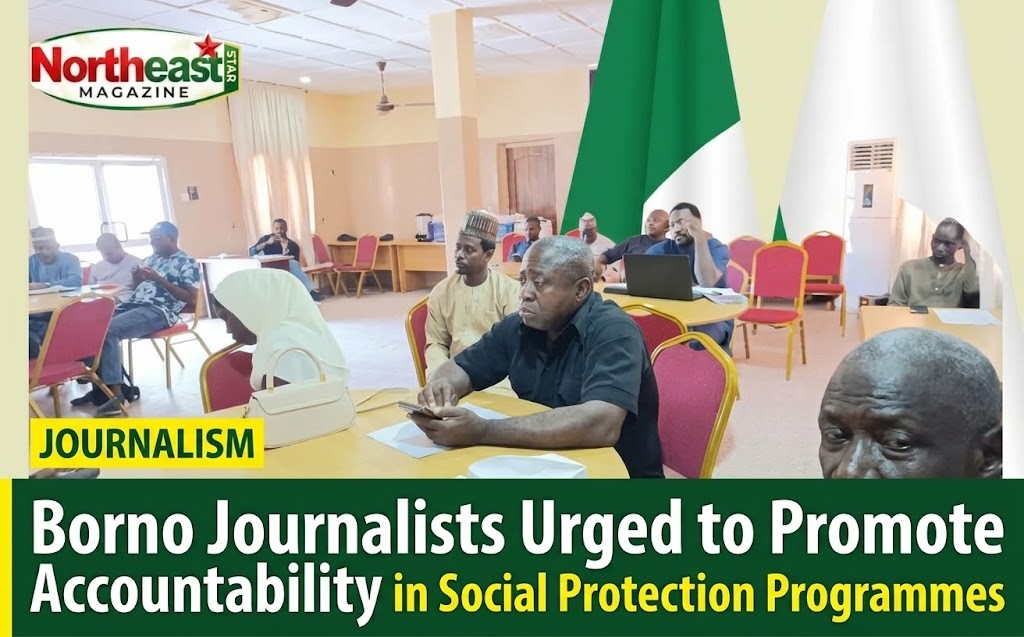
Journalists in Borno State have been urged to use their various media platforms to promote transparency, strengthen public accountability and raise awareness of social protection programmes designed to improve the welfare of vulnerable citizens.
The call was made on Wednesday at a media capacity-building workshop organised by the Sirri Care Foundation (SCAF) in Maiduguri, the Borno State capital.
The workshop forms part of an accountability initiative implemented by GIZ, commissioned by the German Federal Ministry for Economic Cooperation and Development (BMZ), and funded by the European Union to strengthen inclusive social protection systems in the state.
Speaking at the event, the Executive Director of SCAF, Dr Susan Tanwie, described the media as a critical partner in ensuring that government policies and social protection interventions reach the people they are intended to benefit.
Tanwie, whose organisation serves as a consulting NGO for the project, said journalists have an important responsibility to amplify the concerns of citizens, monitor the implementation of social welfare programmes and hold relevant authorities accountable for their commitments.
She explained that the initiative seeks to address the limited awareness among citizens about existing social protection programmes, their entitlements and the procedures for accessing available support.
According to her, effective media engagement would help bridge the information gap and empower citizens to understand their rights and demand improved service delivery.
The project team leader, Samuel Orahi, also urged journalists to prioritise social accountability in their reports, noting that the relationship between government and citizens is founded on mutual responsibilities.
“What we are basically talking about is that social contract that the government has with those who are the right-holders,” Orahi said during an interactive session with participants.
He explained that citizens, through the electoral process, entrust elected leaders with the responsibility of protecting their interests and providing essential services, including education, healthcare, social welfare and other forms of assistance.
Orahi stressed that the media must help citizens understand these obligations while scrutinising the extent to which public institutions fulfil their responsibilities.
He further noted that the initiative was particularly timely, given the political campaign period, when discussions about government performance, public welfare and service delivery become increasingly important.
He encouraged journalists to use such opportunities to deepen public understanding of social protection policies and ensure that issues affecting vulnerable groups receive adequate attention in the media.
The workshop provided an opportunity for journalists to examine how responsible reporting, public engagement and sustained scrutiny of government interventions could contribute to a more transparent and inclusive social protection system in Borno State.
By Auwal Ahmad Umar
The university says the appointments are part of efforts to strengthen research, innovation, scholarship opportunities and institutional growth.
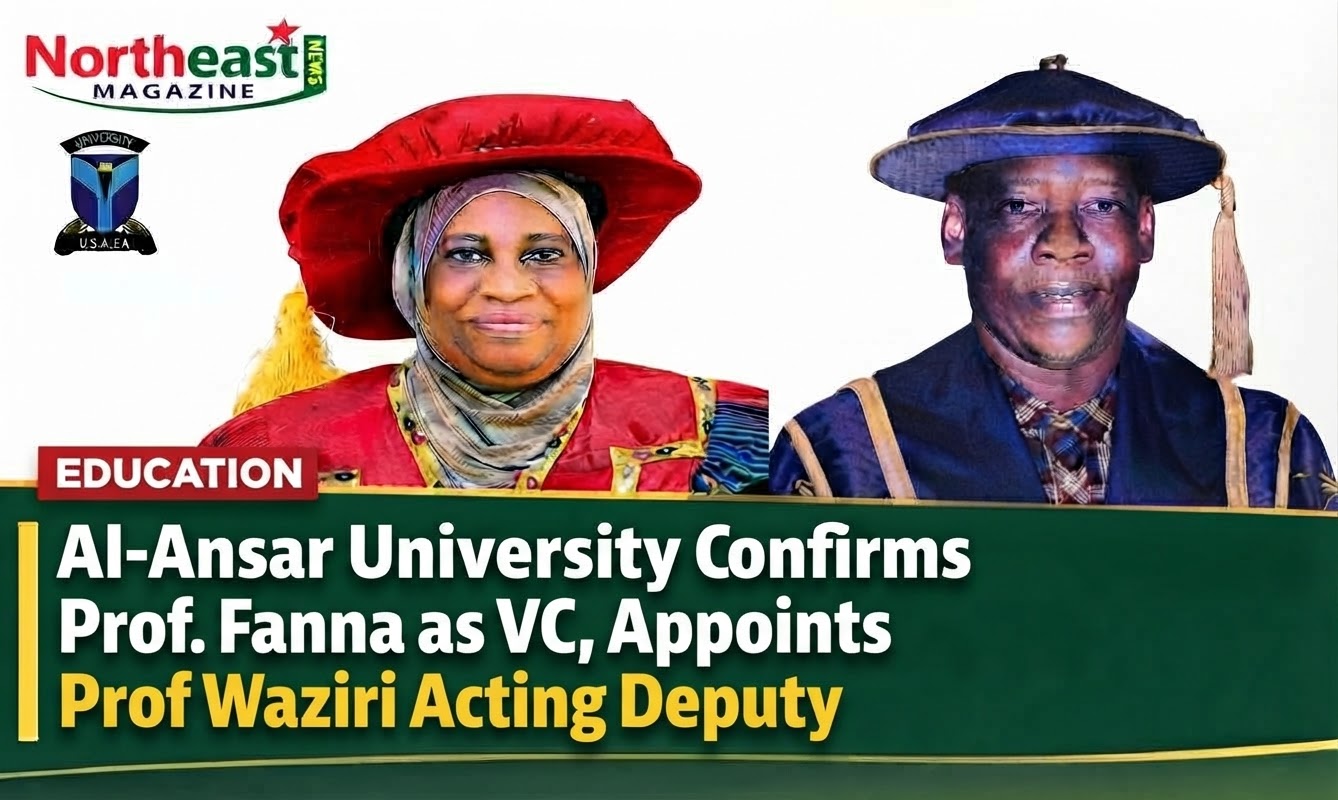
Al-Ansar University, Maiduguri, Borno State, has confirmed Professor Fanna Inna Abdulrahman as its substantive vice-chancellor and appointed Engr. Professor Baba Shehu Waziri as acting deputy vice-chancellor in charge of advancement, research, innovation, scholarship and enrolment.
The appointments, announced in a statement issued by the university’s management on Saturday, are expected to strengthen the institution’s leadership and expand its capacity for research, innovation and sustainable development.
While Professor Abdulrahman’s appointment was approved by the Board of Trustees, chaired by Alhaji Mohammed Adam, MFR, the Governing Council approved Professor Waziri’s appointment at its sixth special meeting on Friday, October 9, 2026.
Professor Abdulrahman, who has served as acting vice-chancellor since September 8, 2025, will hold the substantive position for a three-year tenure ending September 7, 2028. Her period as acting vice-chancellor forms part of the approved tenure.
As the university’s chief executive and chief academic officer, she will oversee academic administration, research, institutional governance, financial management and staff and student welfare.
The university said her appointment recognised her leadership, administrative competence and contributions to its development.
Professor Waziri, a professor in the Department of Civil and Water Resources Engineering at the University of Maiduguri, will assume his new role on November 1, 2026, for an initial one-year tenure ending October 31, 2027.
His appointment introduces a dedicated leadership portfolio for Advancement, Research, Innovation, Scholarship and Enrolment, known as ARISE, which the university hopes will help attract investment, strengthen research partnerships and widen access to higher education.
Under the arrangement, Professor Waziri is expected to work with the vice-chancellor and other principal officers to attract research grants, establish partnerships with local and international institutions, promote technological innovation and mobilise resources for the university’s development.
The office will also focus on expanding scholarships and educational sponsorships for deserving students, as well as developing strategies to increase enrolment.
The university said the initiative was designed to strengthen its institutional capacity through strategic partnerships, measurable targets and sustainable resource mobilisation.
Speaking on the appointments, the founder and proprietor of the university, Dr. Mohammed Kyari Dikwa, mni, congratulated the two academics and described their emergence as an important step towards realising the institution’s long-term vision.
“The University was established not merely to award degrees, but to nurture knowledgeable, morally upright, innovative and socially responsible graduates capable of contributing meaningfully to national development and humanity,” the statement quoted the founder as saying.
Dr. Dikwa, who is also the president of the Al-Ansar Foundation, said the institution was founded on the principles of knowledge, character, innovation and service to humanity.
He stressed the need to strengthen research, expand scholarship opportunities, attract development partners and improve access to quality education while ensuring the university’s financial sustainability and competitiveness.
The founder expressed confidence that the two appointments would create opportunities for institutional transformation and improved academic performance.
The university said it remained committed to providing an enabling environment for teaching, learning, research, entrepreneurship and character development, with a broader mission to contribute to the educational and socio-economic development of Borno State, the North-East and Nigeria.
The appointments come as the institution seeks to consolidate its academic programmes, strengthen governance and expand support for students.
The university’s management congratulated both appointees and expressed hope that their leadership would contribute to its continued growth and academic excellence.

Newborn Deaths: Gombe, UNICEF Strengthen Skills of 104 Health Workers

Governor Yahaya Urges Journalists to Embrace Technology Without Compromising Ethics

Borno Police Arrest Six Over Phone Theft, Recover N5.65m

APC National Chairman Settles Gombe Central Contest, Raises DCP Ahmed’s Hand as Party’s Senatorial Candidate

NGX Ends Week in the Green as ₦1.54 Trillion Boosts Investors’ Fortunes

Gombe Eyes Livestock-Led Economic Growth as Inuwa Yahaya Meets Minister

-
 Politics4 months ago
APC National Chairman Settles Gombe Central Contest, Raises DCP Ahmed’s Hand as Party’s Senatorial Candidate
-
 Economy10 months ago
NGX Ends Week in the Green as ₦1.54 Trillion Boosts Investors’ Fortunes
-
 Agriculture3 months ago
Gombe Eyes Livestock-Led Economic Growth as Inuwa Yahaya Meets Minister
-
 Sport7 months ago
Gombe Aquatic Sports Body Unveils Board, Sets Stage for Competitive Debut
-

 Education10 months ago
Dangote Launches Landmark ₦1 Trillion Scholarship Scheme to Support 1.3 Million Nigerian Students
-

 Economy11 months ago
CBN’s End to Cash Withdrawal Limit
-

 Striking the Balance3 months ago
The $2,500 Threshold: Why Raising Nigeria’s GDP Per Capita Is Our Best Non-Kinetic Strategy for Peace
-

 Environment5 months ago
World Environment Day: NGO Urges Nigerians to Embrace Nature-Based Solutions Against Climate Change