
Health
Gombe Rallies Against Cervical Cancer as Coalition Pushes HPV Vaccination Drive

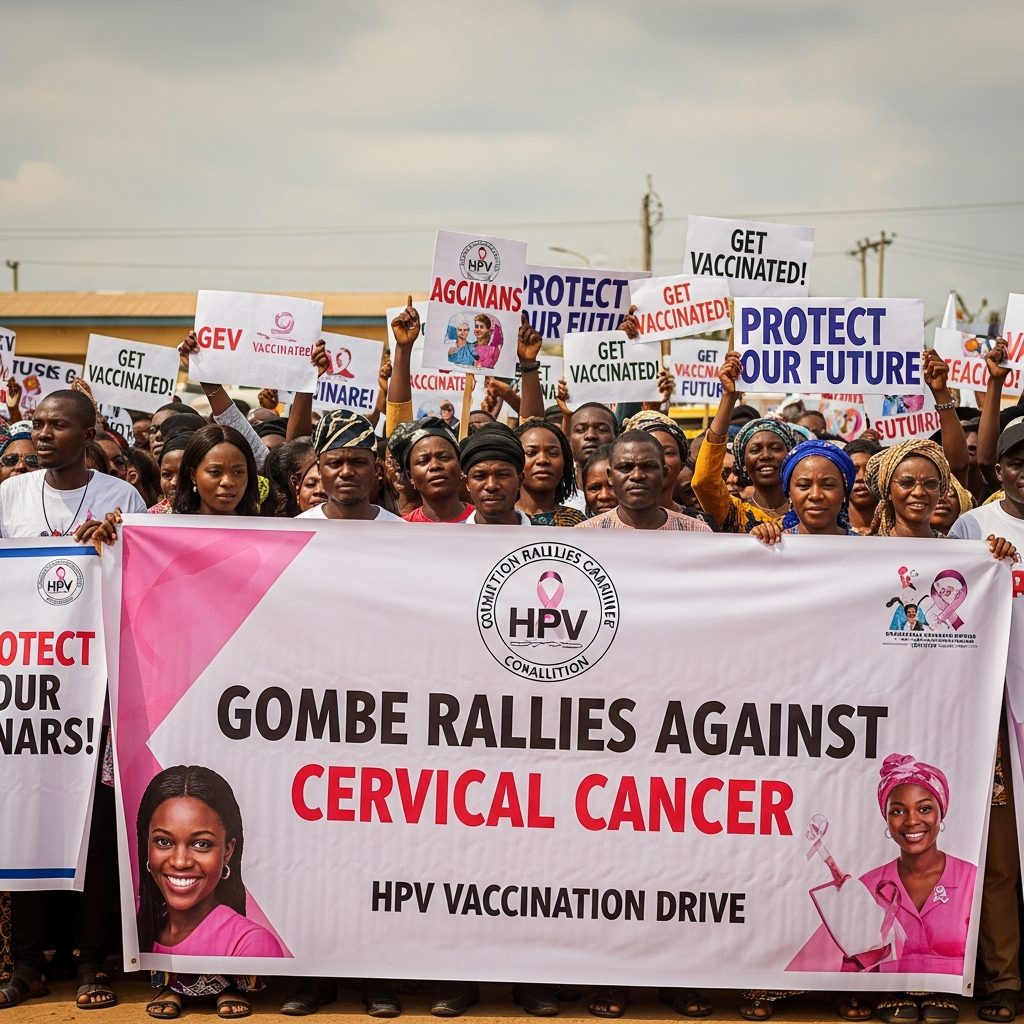
Gombe Rallies Against Cervical Cancer as Coalition Pushes HPV Vaccination Drive
By Auwal Ahmad Umar
The fight against cervical cancer gained fresh momentum in Gombe State as the Arewa Cancer Control Coalition, in partnership with health authorities, rolled out a large-scale awareness campaign promoting Human Papillomavirus (HPV) vaccination and preventive care.
The outreach programme, which drew health experts, community leaders and residents, focused on educating the public, particularly young girls and parents, on the life-saving benefits of early vaccination and routine screening.
Speaking at the event, President of the International Papillomavirus Society of Nigeria (IPVS), Professor Muhammad Manga, commended the Federal Government for strengthening access to vaccines and cancer care services. He highlighted ongoing efforts led by Professor Muhammad Ali Pate, the Coordinating Minister of Health and Social Welfare, noting that free diagnosis and treatment initiatives are being expanded through national institutions and global partnerships.
Professor Manga urged residents, especially girls aged 9 to 14, to take advantage of the ongoing campaign by visiting nearby health facilities for vaccination. According to him, achieving at least 90 percent coverage among eligible girls is critical to meeting the global target set by the World Health Organization for eliminating cervical cancer.
He also called on religious and community leaders to play a more active role in sensitising rural communities, stressing that increased awareness among parents and women would significantly boost vaccine uptake and reduce preventable deaths.
“Parents and guardians must ensure that girls from the age of nine receive the HPV vaccine. This is a crucial step toward safeguarding the future health of our young population,” he said.
In his remarks, the Director of Disease Control and Immunisation at the Gombe State Primary Health Care Development Agency, Dr. Musa Mustapha, emphasised the need for regular screening alongside immunisation.
He noted that early detection remains key to effective treatment, urging residents to support the initiative and embrace preventive healthcare practices.
The campaign is part of broader efforts to curb the spread of HPV and reduce the burden of cervical cancer, particularly among young women who remain most at risk.
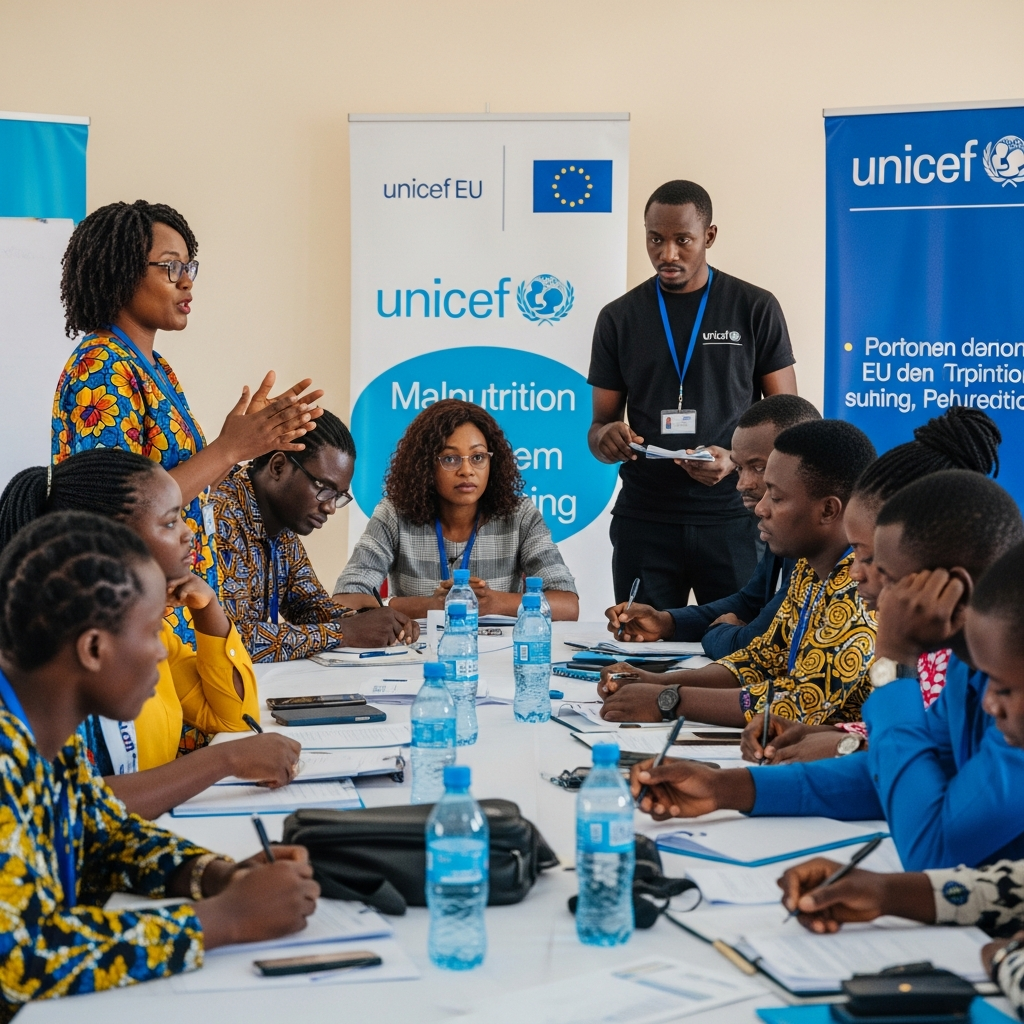
UNICEF, EU train journalists to tackle malnutrition in Northeast
By Tada Jutha, Maiduguri
The United Nations Children’s Fund (UNICEF), in collaboration with the 27-member European Union (EU), has trained journalists in tackling acute severe malnutrition (SAM) among a million children in the Northeast.
According to the Fund, the malnourished children are from the over a decade-long conflict-affected states of Borno, Adamawa and Yobe.
Declaring the training session open on Monday in Damaturu, the UNICEF Nutrition Manager, Joseph Senesie, disclosed, “The EU-funded grant is aimed at fighting the rising cases of malnutrition in the conflict-affected communities of the region.
.
The one-day media dialogue with the training of about three dozen journalists was also to enhance their understanding of how to cover what Senesie described as critical health issues on child malnutrition and other preventable diseases like cholera, polio, malaria and diphtheria.
During a two-hour field trip, the journalists before the training session assessed some of the Outpatient (OTP) health facilities, including the Central Medical Store (CMS) along Gashua Road.
At the Gwange Primary Health Care Center, the health workers demonstrated the use of Mid-Upper Arm Circumference (MUAC) coloured tapes for screening children with severe acute malnutrition (SAM). While health officials at the Mairi Primary Health Care Center showcased appetite testing protocols, which are used to determine the eligibility for outpatient care.
Speaking on the significance of tackling malnutrition in the state, the Yobe State Nutrition Officer, Hadiza Maina Adamu, disclosed, “We have over 3,400 cartons of Ready-to-Use Therapeutic Food (RUTF),” stressing that they are critical food supplements used to treat malnourished children in the state.
UNICEF Nutrition Manage attributed malnutrition to the lean season, starting from May to September 2026, within which malnutrition cases among the children continue to rise.
Senesie also expressed hope that this year’s malnutrition cases in the Northeast would not surpass previous levels, crediting EU support for enabling treatments for over 40,000 children in the previous intervention cycles.
The State’s Nutritional Officer, Hadiza Maina Adamu, who represented the Commissioner of Health and Human Services, said that the state is in an Integrated Food Security Phase Classification (IPC) Phase 3, indicating that there is a serious level of food insecurity, particularly in the desert-affected communities of Nguru, Bade, Machina, Yusufari, Yunusari and Geidam.
Hadiza further revealed, “The Global Acute Malnutrition (GAM) currently stood at 10.8%, according to the 2025 surveillance data,” stating that there is an improvement of 14% from the previous years, though the rate remains critical in the state.
She noted that since 2010, treatment services have expanded significantly to include 306 Outpatient Therapeutic Programme (OTP) sites, stabilisation centres, and 120 Targeted Supplementary Feeding Programme (TSFP) sites.
In a lead paper presented by Dr Babagana Kundi Machina, the Executive Secretary of the Yobe State Primary Health Care Board (YPHCB), emphasised that the EU grant has been instrumental in ensuring an uninterrupted supply of therapeutic food and milk, which facilitated sustained treatment and community-based screening in each of the 17 local government areas.

Lassa Fever Infects Six Health Workers in One Week as Nigeria Records 65 New Cases
By Jamila Muhammad
The Nigeria Centre for Disease Control and Prevention (NCDC) has reported that six healthcare workers contracted Lassa fever within a single week, sparking renewed concern about the risks faced by frontline medical personnel during the ongoing outbreak.
The development was disclosed in the agency’s latest Lassa Fever Situation Report for Epidemiological Week 9, which covered the period between Feb. 23 and March 1.
According to the report, the infections occurred as Nigeria continues to battle the viral haemorrhagic disease across several parts of the country.
The NCDC revealed that a total of 37 health workers have been infected with Lassa fever since the beginning of 2026, highlighting the occupational hazards confronting medical staff responding to the outbreak, which include exposure to infected patients and inadequate protective measures in healthcare settings.
During the week under review, the country recorded 65 confirmed cases of the disease, representing a slight drop compared to the 77 cases documented in the preceding week.
The confirmed infections were reported in several states, including Benue State, Ondo State, Bauchi State, Taraba State, Edo State, Plateau State and Nasarawa State.
Health authorities also recorded 460 suspected cases within the same week. Among the confirmed infections, nine deaths were reported, resulting in a case fatality rate of 13.9 per cent.
The NCDC further stated that since the start of the year, Nigeria has documented 2,446 suspected cases of Lassa fever, out of which 469 were confirmed.
So far, 109 people have died from the disease in 2026, pushing the overall case fatality rate to 23.2 percent. This figure is notably higher than the 18.7 per cent recorded during the same period in 2025.
The report added that at least 18 states and 69 local government areas across the country have reported one or more confirmed cases this year.
Data from the agency indicates that five states account for the majority of infections, with Bauchi State, Ondo State, Taraba State, Benue State, and Edo State responsible for about 86 percent of all confirmed cases recorded so far in 2026.
The NCDC attributed the rising death toll partly to delayed patient presentations at health facilities, limited awareness in some high-risk communities, and poor health-seeking behaviour among affected populations.
To tackle the outbreak, the agency said it has activated a nationwide multi-partner incident management system aimed at strengthening coordination of response activities.
The measures currently underway include intensified surveillance, active case finding, contact tracing, the distribution of personal protective equipment to hospitals, and the deployment of rapid response teams in states with high infection rates.
The Nigerian Center for Disease Control and Prevention has advised health workers across the country to stay alert and strictly observe safety procedures, including infection prevention and control measures, to minimise the risk of contracting the disease while treating patients.
Lassa fever is a viral haemorrhagic disease caused by the Lassa virus. It was first discovered in 1969 in Lassa, Borno State, and has since remained a public health concern in Nigeria and other parts of West Africa.
The infection is commonly spread through contact with the urine or droppings of infected rodents, particularly the multimammate rat known scientifically as Mastomys natalensis. People can also become infected by eating contaminated food or through direct contact with an infected person’s bodily fluids.
According to the World Health Organization, many people infected with the virus may experience mild symptoms or none at all. However, about 20 percent of cases can become severe, with symptoms such as fever, headache, vomiting, and bleeding, as well as complications affecting vital organs.
Medical experts continue to urge early diagnosis, good hygiene practices and strict adherence to infection control measures to limit the spread of the disease and safeguard healthcare workers and the public.

2027: APC Stakeholder Pushes for Power Shift to Yobe South, Backs Bomai’s Governorship Bid

Madiba Advocates Push for Presidential Intervention Over Alleged ₦297bn NSITF Fund Irregularities linked to MD Faleye

Troops Nab Terror Suspects, Arrest Armed Civilians, Detain Foreign National in Fresh Northeast Security Sweep

Dangote Launches Landmark ₦1 Trillion Scholarship Scheme to Support 1.3 Million Nigerian Students

NGX Ends Week in the Green as ₦1.54 Trillion Boosts Investors’ Fortunes

Formal Rebuttal to the Recent Interview Granted by Retired Major General Ali Keffi on Arise TV
-
 Education4 months ago
Dangote Launches Landmark ₦1 Trillion Scholarship Scheme to Support 1.3 Million Nigerian Students
-
 Economy4 months ago
NGX Ends Week in the Green as ₦1.54 Trillion Boosts Investors’ Fortunes
-
 Column4 months ago
Formal Rebuttal to the Recent Interview Granted by Retired Major General Ali Keffi on Arise TV
-

 Economy4 months ago
CBN’s End to Cash Withdrawal Limit
-

 Gombe4 months ago
Gombe Shines Again, Ranks Second in Northeast at 2025 PHC Leadership Challenge
-
 Politics4 months ago
NSGF names Ezekiel Gomos as Director-General, setting stage for stronger regional collaboration
-

 Gombe3 weeks ago
A tribute to Dr Langa Hassan Bangunji (JP) – an icon of Scholarship, Leadership and Community Service
-

 Latest News4 months ago
Anglican Church Expands Footprint with 15 New Dioceses, Total Hits 176