
Gombe
UNICEF Urges Ethical Journalism to Protect Children, Promote Healing in Crisis-Hit Regions

UNICEF Urges Ethical Journalism to Protect Children, Promote Healing in Crisis-Hit Regions
By Auwal Ahmad
The United Nations Children’s Fund (UNICEF) has urged journalists covering Nigeria’s North-East and North-Central regions to adopt ethical reporting practices that prioritise the safety and dignity of children and other vulnerable groups affected by conflict.
Sussan Akila, a Communication Specialist with UNICEF, made the call during a two-day training for journalists drawn from the regions, where insecurity and humanitarian crises continue to shape news coverage.
While acknowledging the risks and limitations journalists face in accessing conflict areas, Ms Akila commended media practitioners for their persistence in informing the public despite the challenges. However, she emphasised that journalists have a responsibility that extends beyond breaking news, acknowledging that the way they report stories can have a significant impact on the lives of victims.
According to Ms Akila, the media plays a powerful role in shaping public discourse and influencing how society responds to crises. She warned that careless reporting, particularly involving children, can expose victims to further harm or stigma. Ms Akila cautioned that we must handle elements like photographs, video footage, and headlines with caution, as they have the potential to either protect survivors or worsen their situation.
“Journalists have the power to shape narratives. The way we tell stories can make survivors feel safe or put them at risk,” she said.
She urged reporters to reflect on the consequences of their choices, especially when dealing with sensitive issues such as sexual violence or abuse involving minors. Emphasising empathy, Ms Akila encouraged journalists to consider how they would handle stories involving their children or family members.
She questioned the ethics of publishing identifiable images or details of child victims simply to attract attention or boost readership. “Would you publish the face of your child in such circumstances? These are the questions we must ask ourselves,” she said, adding that ethical reporting begins with recognising the humanity of those affected and treating them with respect.
Ms Akila further noted that while journalists may move on after filing a story, the consequences of their reporting often remain with victims for years. She warned that exposing a child’s identity or sharing sensitive details could have lasting effects, including stigma and psychological trauma that may follow the individual into adulthood.
“The story may end for the reporter, but its impact continues in the life of the victim and within the community,” she said.
She described journalists as more than observers, noting that they also have a role to play in supporting recovery and healing in communities affected by violence. According to her, responsible reporting can help reduce stigma, promote understanding and encourage support for victims, particularly children and women.
The training, she explained, is designed to help journalists examine how their work affects individuals and communities and to improve standards in reporting sensitive issues. Participants are expected to engage in discussions and share experiences aimed at developing safer and more responsible reporting approaches.
Ms Akila expressed optimism that the sessions would equip journalists with practical tools to tell stories without causing additional harm.
“Ethical reporting is not only about accuracy. It is about doing what is right for children and for society,” she said.
UNICEF has continued to partner with media organisations to promote child-sensitive journalism, especially in regions affected by conflict, where reporting can either contribute to recovery or deepen existing wounds.
Gov. Inuwa Yahaya Dissolves Gombe Executive Council
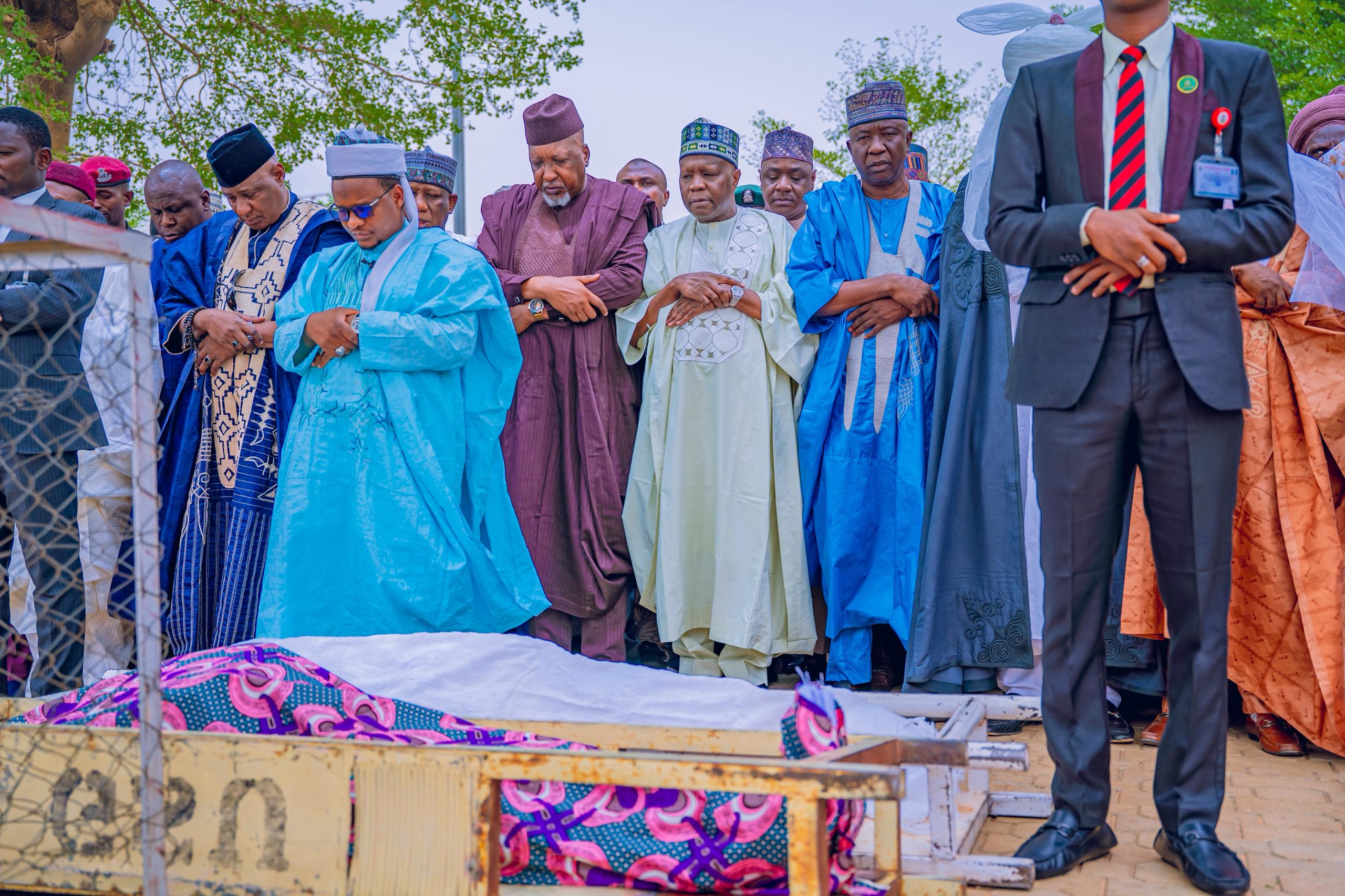
Inuwa Yahaya Pays Last Respect as Gombe Mourns Elder Statesman Manu Malala
By Auwal Ahmad Umar
Gombe State was thrown into mourning following the death of respected elder statesman and community leader, Alhaji Manu Malala, who passed away in Gombe after a prolonged illness.
Governor Muhammadu Inuwa Yahaya led top government officials and sympathisers to the Bubayero Central Mosque, the Emir’s Palace, and Gombe, where the funeral prayer (Janazah) for the late elder statesman was held.
In a condolence message, the governor described the deceased as a patriotic leader, a grassroots mobiliser, and a committed public servant whose life was devoted to service, humility, and the advancement of his community.
Governor Inuwa Yahaya said the late Manu Malala left behind a legacy of dedication and sacrifice, noting that he played key roles in public service and governance in Gombe State.
He recalled that the deceased served meritoriously in several capacities, including as local government secretary and a member of the Civil Service Commission Board, among other assignments that contributed significantly to public administration and community development.
The governor further praised the late elder statesman for his strong influence in grassroots politics and community leadership, saying his wisdom, experience and ability to unite people across political and social lines made him a highly respected figure in the state.
According to him, the passing of Alhaji Manu Malala is not only a painful loss to his immediate family but also a huge setback for Gombe State, especially for those who benefited from his guidance, counsel and commitment to public service.
On behalf of the government and people of Gombe State, Governor Inuwa Yahaya extended heartfelt condolences to the Deputy Chairman of Dukku Local Government, Hon. Umar Manu Malala, his siblings and the entire Manu Malala family for the painful loss.
He prayed to Almighty Allah to forgive the shortcomings of the deceased, accept his lifetime of service to humanity, and grant him Aljannat Firdaus.
The death of Alhaji Manu Malala has continued to draw tributes from political associates, community leaders, and residents, many of whom remember him as a man of peace, integrity, and unwavering dedication to serving society.
Experts call for action to eliminate cervical cancer
Some health experts have called for accelerated action to eliminate cervical cancer in Nigeria as a public health challenge as well as achieving the 90–70–90 targets by 2030 and placing Nigeria on a path to eliminating cervical cancer within the next century.
The call was made during a stakeholders’ engagement in Gombe on Saturday, titled “2026 Gombe HPV Forum”, which was organised by the Papillomavirus Society of Gombe Nigeria (PSGN) in partnership with the Arewa Cancer Control Coalition (ACCC), Call of Cancer Initiative (COCI), Gratefield, the APIN public health initiative, and the International Papillomavirus Society (IPVS) Nigeria.
Dr Mohammed Manga, President of the International Papillomavirus Society (IPVS) Nigeria, said that though the government has made efforts towards eliminating cervical cancer, he stressed that a lot was still needed to achieve the global target in the country.
Manga, a professor of medical microbiology, said that the efforts of the government in tackling the health challenge were commendable.
According to him, over 14 million girls within the past three years have been immunised, stating that such exercise remains unprecedented and is the largest on the African continent.
He stated that the setting up of the national taskforce on cervical cancer elimination was proof of the commitment of the government towards tackling the threat posed by cervical cancer.
He added that the initiative to have a national cancer fund where certain cancers that have been diagnosed received some support for treatment and diagnosis was good and impactful.
While calling for more awareness to dismiss the misconceptions around the HPV vaccine, Manga said that the availability of some interventions was not as optimum as they should be.
Dr. Ishaq Lawal, a gynaecologist with the Federal Teaching Hospital Birnin Kebbi and the chairman of the Board of Trustees and the Cervical Cancer Nigeria Initiative, said there were about 600,000 global cases of cervical cancer recorded annually, and over 300,000 die annually.
Lawal said the fact that over 7,000 persons die of cervical cancer in Nigeria annually showed that there was a lot more that should be done to reduce the level of cervical cancer in the country.
Dr Halimah Usman Farooq, an associate professor of gynaecology, Department of Obstetrics and Gynaecology, College of Medicine, Gombe State University, called on stakeholders to accelerate national action toward ending cervical cancer, one of the most preventable yet deadly cancers affecting women across the continent.
Farooq said a stronger commitment was needed towards ensuring that no woman dies from a disease that can be prevented, detected early, and treated.

Gov. Inuwa Yahaya Dissolves Gombe Executive Council

Why Nigeria Must Extend Basic Education to 12 Years — PAGED Tells Journalists

Inuwa Yahaya Pays Last Respect as Gombe Mourns Elder Statesman Manu Malala

Dangote Launches Landmark ₦1 Trillion Scholarship Scheme to Support 1.3 Million Nigerian Students

NGX Ends Week in the Green as ₦1.54 Trillion Boosts Investors’ Fortunes

Formal Rebuttal to the Recent Interview Granted by Retired Major General Ali Keffi on Arise TV
-
 Education4 months ago
Dangote Launches Landmark ₦1 Trillion Scholarship Scheme to Support 1.3 Million Nigerian Students
-
 Economy4 months ago
NGX Ends Week in the Green as ₦1.54 Trillion Boosts Investors’ Fortunes
-
 Column4 months ago
Formal Rebuttal to the Recent Interview Granted by Retired Major General Ali Keffi on Arise TV
-

 Economy4 months ago
CBN’s End to Cash Withdrawal Limit
-

 Gombe4 months ago
Gombe Shines Again, Ranks Second in Northeast at 2025 PHC Leadership Challenge
-
 Politics4 months ago
NSGF names Ezekiel Gomos as Director-General, setting stage for stronger regional collaboration
-
 Gombe4 weeks ago
A tribute to Dr Langa Hassan Bangunji (JP) – an icon of Scholarship, Leadership and Community Service
-
 Latest News4 months ago
Anglican Church Expands Footprint with 15 New Dioceses, Total Hits 176