
Latest News
Yobe Tops National PHC Leadership Awards, Bags $1.2m for Grassroots Health Reforms


Yobe Tops National PHC Leadership Awards, Bags $1.2m for Grassroots Health Reforms
Yobe State has clinched the top honor at the 2025 National Primary Health Care (PHC) Leadership Challenge Awards, emerging as the Overall Best Performing State in recognition of its sustained efforts to strengthen healthcare delivery at the grassroots.
The award was presented during the third edition of the PHC Leadership Challenge Award Night held in Abuja on Friday. Yobe State received a grand prize of $700,000 for its overall performance and an additional $500,000 after winning the Zonal Best Performing State award for the Northeast, bringing its total winnings to $1.2 million.
The prestigious initiative was organized by the Nigeria Governors’ Forum (NGF) in collaboration with the Federal Ministry of Health and Social Welfare, the National Primary Health Care Development Agency (NPHCDA), and UNICEF, with support from the Bill and Melinda Gates Foundation. The program is designed to promote accountability, encourage innovation, and stimulate healthy competition among states in improving primary healthcare outcomes.
Yobe’s selection was based on key performance benchmarks, particularly its strong showing in quality of care and patient satisfaction across primary healthcare facilities.
Across the six geopolitical zones, states that won the zonal best-performing awards, each with a prize of $500,000, include Nasarawa (North-Central), Zamfara (North-West), Abia (South-East), Rivers (South-South), and Osun (South-West).
The first runners-up in each zone—Gombe, Kwara, Kaduna, Anambra, Bayelsa, and Ogun states—each received $400,000.
In total, $6.1 million was awarded to states, with the funds expected to be ploughed back into strengthening primary healthcare infrastructure, improving service delivery, and building human resource capacity. The initiative aligns with the Federal Government’s National Health Sector Renewal Investment Initiative (NHSRII), which places primary healthcare at the center of achieving universal health coverage.
Vice-President Kashim Shettima, while congratulating the award recipients, praised state governors for their leadership and commitment to improving health outcomes nationwide. Represented by the Coordinating Minister of Health and Social Welfare, Prof. Ali Pate, the Vice-President said constructive competition such as the PHC Leadership Challenge ultimately benefits the entire country.
He highlighted notable progress in the health sector since governors entered into a long-term sector-wide agreement with President Bola Ahmed Tinubu two years ago, noting that at least 20 states exceeded their health targets in 2024 alone.
According to him, state governments have also significantly increased health budget allocations, now estimated at ₦2.6 trillion, compared to previous years.
“Health is central to national development. Wherever you find positive health, someone has deliberately invested in it,” he said, urging both federal and state governments to deepen their commitments to the sector.
Shettima called on states to further scale up health spending, projecting that total national health investment should reach ₦3.5 trillion in the next fiscal year, considering available resources.
He acknowledged ongoing challenges around the affordability of healthcare services but noted that the Federal Government was taking steps to reduce the cost of medicines, diagnostics, and medical tests, especially for vulnerable Nigerians. He encouraged states to actively support these interventions.
The vice president also outlined the broader benefits of health sector investment, including a healthier and more productive population, stronger human capital, job creation, and industrial growth. He cited the establishment of Africa’s first factory producing long-lasting insecticide-treated nets as an example of how health investments can stimulate local manufacturing.
Speaking on behalf of the winning states, Abia State Governor Alex Otti commended the organizers and development partners for sustaining the initiative, assuring that states would push for even higher standards in 2026.
He stressed that health spending should not be viewed purely as an investment expecting financial returns but as a fundamental necessity for human survival and well-being.
Also reacting, Zamfara State Governor Dauda Lawal said the $500,000 won by his state would be channelled into refurbishing selected primary healthcare centers.
“It is encouraging when your efforts are recognized. This additional funding will go straight into improving PHC facilities in Zamfara,” he said, adding that despite funding constraints, his administration would continue to prioritize the health sector.
The 2025 PHC Leadership Challenge Awards once again underscored the growing emphasis on primary healthcare as the backbone of Nigeria’s health system and a critical pathway to better health outcomes for millions of citizens.
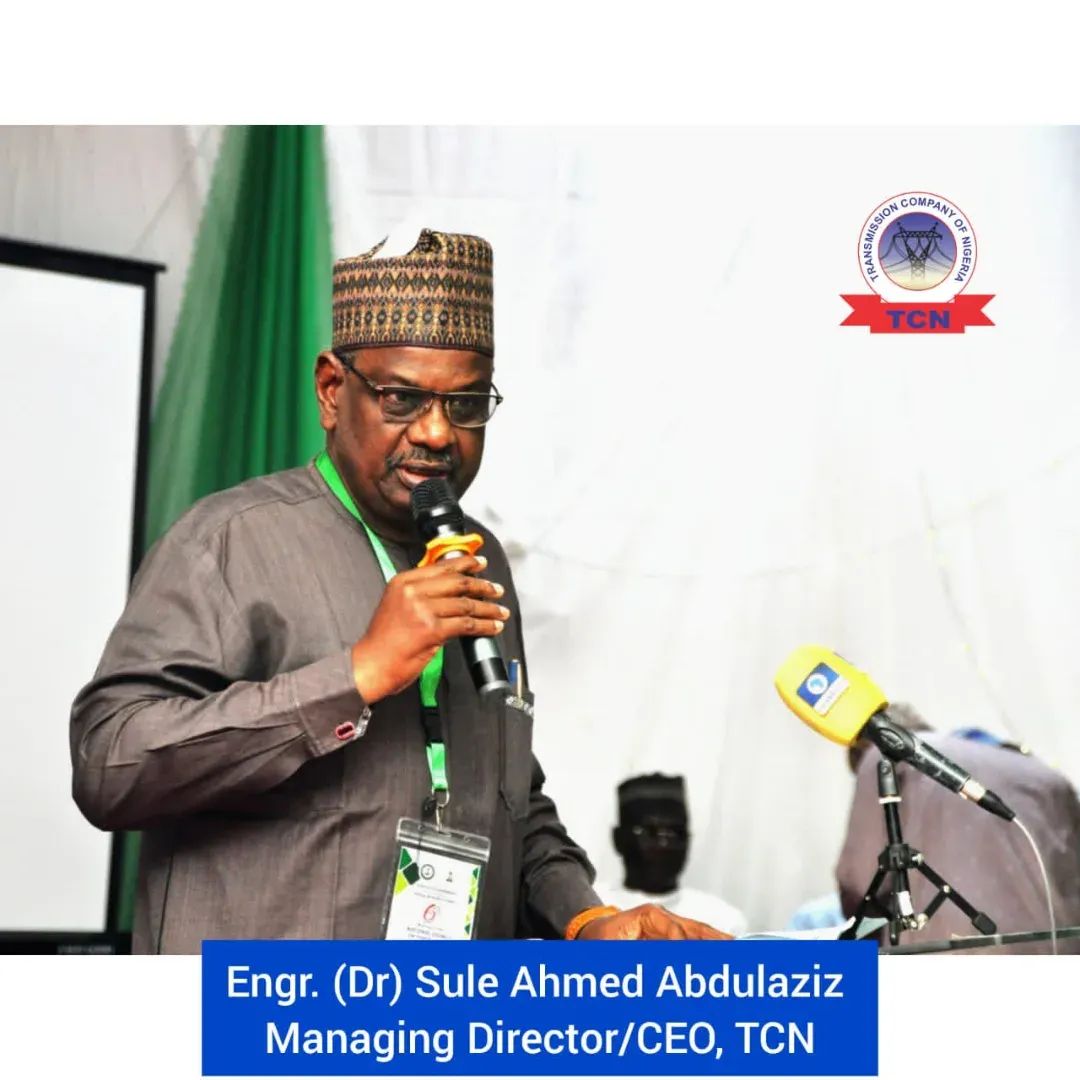
TCN: The Vote of Confidence In Tinubu’s Abdulaziz Reappointment
By Caleb Johnson
Nigeria’s electricity sector is understandably in an upbeat mood following the reappointment of Sule Ahmed Abdulaziz as Managing Director of the Transmission Company of Nigeria (TCN) by Bola Ahmed Tinubu for another five-year term.
The reappointment, coming to a sector as sensitive and strategic as electricity transmission, goes beyond just some routine gestures. The president has, with the decision passed, a clear vote of confidence on Abdul’aziz. Coming from a president known for placing a premium on performance and results, the gesture becomes even more significant. Yet, few observers of Nigeria’s power sector would argue that Abdulaziz does not deserve the recognition.
Since assuming leadership of TCN, Abdulaziz has approached the task with quiet determination. Right from the beginning, Abdul’aziz has rolled up his sleeves, placed his head firmly on the workbench, and set about delivering the mandate entrusted to him. And in truth, his assignment as the head of TCN, managing Nigeria’s national transmission grid is at once simple and complicated.
Simple, because the problem he was brought to address does not require complex theoretical benchmarks to measure success. Power transmission is measurable in real, practical terms: how much electricity the grid can evacuate, how stable the system is, and how efficiently energy moves from generation plants to distribution networks.
The complication, however, lies in the difficult operating environment. Nigeria’s transmission infrastructure has long suffered from underinvestment, aging equipment, and growing demand. Delivering meaningful results under such circumstances, therefore, requires not only technical expertise but also resilience, managerial discipline, and the ability to coordinate multiple moving parts across a vast national grid.
Yet, despite the precariousness of the task, it is noteworthy that under Abdulaziz, TCN has not only remained operationally stable but has also recorded measurable progress across several fronts.
One of the most celebrated achievements during his tenure is the expansion of Nigeria’s national electricity transmission capacity. Through deliberate upgrades and targeted infrastructure investments, the country’s transmission wheeling capacity has grown significantly. Today, the grid is capable of wheeling about 8,700 megawatts of electricity, a substantial improvement from previous years. Earlier grid simulations also confirmed the network’s ability to transmit over 6,000 megawatts reliably, marking an important step toward strengthening Nigeria’s energy backbone.
This expansion did not occur by chance. It was driven by concrete infrastructure improvements, including the installation of additional power transformers, the construction and upgrading of substations, and the reinforcement of key transmission lines across the country. Each of these interventions contributed incrementally to improving the grid’s capacity to evacuate power generated from plants.
Indeed, it was during Abdulaziz’s stewardship that Nigeria recorded a historic milestone in electricity transmission. In March 2025, the country achieved its highest ever power transmission on record. On that occasion, TCN successfully transmitted 5,801.84 megawatts of peak generation nationwide. The grid also delivered 128,370.75 megawatt-hours of daily energy, another record in the country’s electricity history.
These numbers may appear technical, but they tell the story of man whose determination has culminated in Nigeria’s transmission network gradually improving in its ability to move electricity efficiently from generators to distribution companies. For a country where the inability to evacuate generated power has often been cited as a major bottleneck, this progress is significant.
Another important aspect of Abdulaziz’s tenure has been the aggressive installation of new transformers and the reinforcement of transmission infrastructure nationwide. Between January 2024 and November 2025, a total of 82 power transformers were commissioned across various substations in the country. These installations added more than 8,500 megavolt-amperes (MVA) to the national grid’s capacity.
Transformer installations may not always attract headlines, but they are critical components of electricity infrastructure. By improving voltage stability and enhancing the grid’s ability to evacuate electricity from generating stations, these installations directly contribute to a more reliable power system.
Equally noteworthy is Abdulaziz’s progress in advancing major power infrastructure projects funded by international development partners. Under his leadership, transmission projects valued at over $1.16 billion have moved forward with support from institutions such as the World Bank, the African Development Bank, and Agence Française de Développement.
Among these initiatives is the Abuja Feeding Scheme, designed to strengthen electricity supply to Nigeria’s federal capital territory through additional substations and reinforced transmission lines. Other projects include the construction of new high-voltage transmission lines and substations aimed at improving the reach and resilience of the national grid.
Beyond physical infrastructure, Abdulaziz has also overseen important steps toward the modernisation and digitisation of TCN’s operational systems. Modern grid management increasingly depends on automation and digital monitoring, and TCN has taken strides in this direction.
Under his administration, several substations have been digitised and automated, improving operational efficiency and system responsiveness. The introduction of Generation Load Drop Sensitivity (GLDS) technology has also strengthened grid management by enabling faster responses to sudden fluctuations in electricity supply or demand. These innovations have reportedly contributed to a significant reduction in grid disturbances, estimated at about 76 percent over a five-year period.
Another area where Abdulaziz’s leadership has been evident is in strengthening grid stability through systematic maintenance and rehabilitation programmes. His administration launched initiatives such as the Nigeria Electricity Grid Maintenance, Expansion and Rehabilitation Programme (NEGMERP), which focuses on upgrading aging infrastructure and ensuring that existing facilities remain functional and efficient.
Through improved system planning and better grid visibility enabled by integrated technologies, TCN has been able to adopt a more proactive approach to maintenance and expansion. The result is a transmission network that is gradually becoming more resilient and better equipped to handle Nigeria’s growing electricity demand.
Abdulaziz’s influence has also extended beyond Nigeria’s borders. He has played a role in strengthening regional electricity cooperation within West Africa. As chairman of the executive board of the West African Power Pool, he has contributed to initiatives aimed at integrating electricity markets across the subregion.
Under his watch, the North Core Project has continued to advance, linking the transmission networks of Nigeria, Niger, Benin, and Burkina Faso. The project is designed to facilitate cross-border electricity trade and improve energy security across West Africa.
Taken together, these achievements reinforce the age-old belief that when the right individuals are placed in positions that align with their competence and experience, results tend to follow.
Leadership in public institutions often determines whether policies remain on paper or translate into real outcomes. In Abdulaziz’s case, the evidence suggests that the latter has been the case. His tenure has been marked more by measurable incremental improvements that collectively strengthen Nigeria’s power transmission capacity.
President Tinubu’s decision to retain him for another term therefore sends a clear message about the importance of continuity in critical sectors. In infrastructure development, consistency in leadership often allows long-term projects to mature and deliver their intended benefits.
While it is appropriate to commend the president for keeping faith with a performer, it is equally important to remember an old saying: the reward for good work is often more work. The expectations surrounding Abdulaziz’s second term will undoubtedly be higher.
Nigeria’s electricity challenges remain formidable. Demand continues to outpace supply, infrastructure gaps still exist, and the national grid must continue expanding to accommodate future generation capacity.
But with a foundation already laid during his first tenure, the coming years present an opportunity to consolidate gains and push the transmission network to even greater levels of efficiency and reliability.
For now, however, the reappointment stands as a recognition of work done and a call to even greater service in the years ahead.
Johnson writes from Abuja
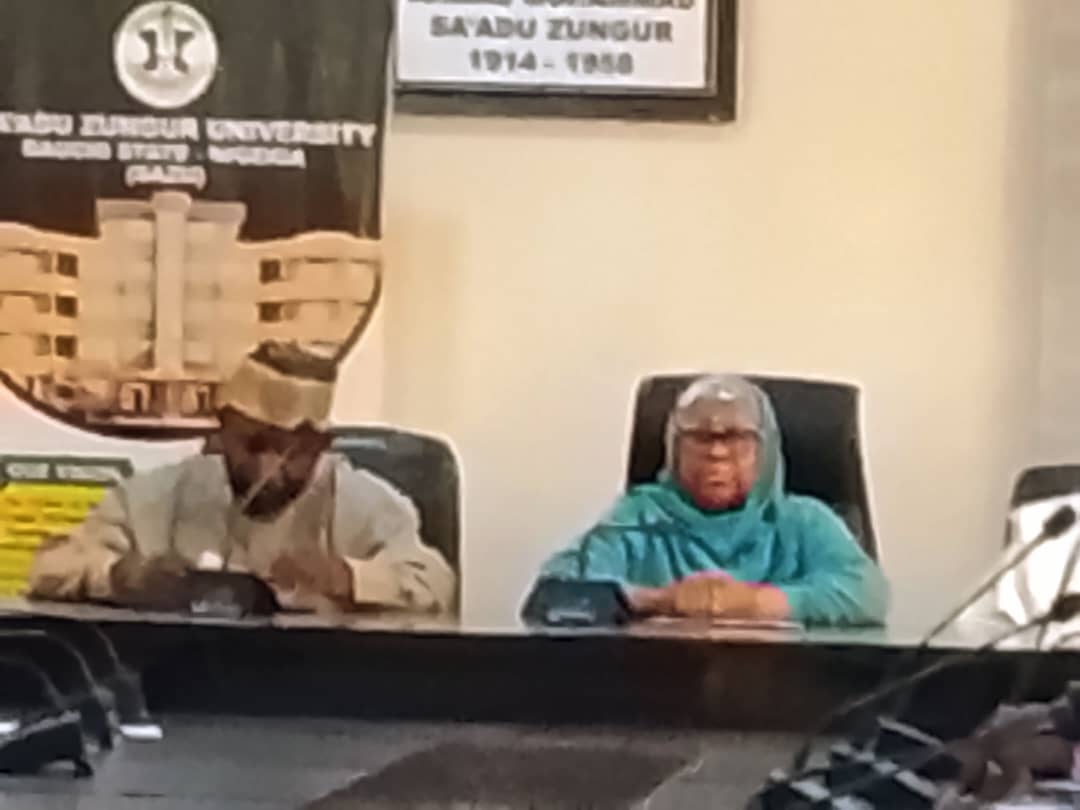
SAZU Graduates 12,256 Students at Combined Convocation
By Ahmed Muhammad, Bauchi
Sa’adu Zungur University (SAZU), Gadau, will graduate 12,256 students during its 8th, 9th, and 10th combined convocation ceremonies, its vicechancellor, Fatima Tahir, has said.
Ms. Tahir disclosed this on Friday during a pre-convocation press conference in Gadau, Azare Local Government Area of Bauchi State.
The graduating students come from the 2022/2023, 2023/2024, and 2024/2025 academic sessions, she said.
According to her, the total number comprises 11,813 undergraduate students and 443 postgraduate students.
She said the undergraduate graduating class includes 8,387 males, representing 71 percent, and 3,426 females, representing 29 percent.
The vice-chancellor said 216 students earned first class honours, while 3,438 graduated with second class upper division and 5,563 with second class lower division.
She added that 2,353 students obtained Third Class degrees, while 243 earned Pass degrees.
Ms. Tahir also said 10,702 of the graduating students are regulars, while 1,111 are from part-time programs.
On postgraduate studies, she said the university would award 25 PhDs, 145 academic masters, 241 professional masters, and 32 postgraduate diplomas.
She said the 2023/2024 academic session recorded the highest number of graduates, with 5,240, followed by 4,064 in 2022/2023, while 2,509 students are graduating from the 2024/2025 session.
As part of activities for the convocation, the university has scheduled a lecture to be delivered by Emeritus Prof. Abubakar Sani Sambo, a former vice-chancellor of Abubakar Tafawa Balewa University (ATBU), Bauchi.
The lecture is titled, “Education, Security, and Sustainable Development: The Role of Universities in Northern Nigeria.”
Ms Tahir said the grand finale of the convocation would hold on 28 March at the university’s stadium, where degrees would be formally conferred on the graduating students.
The convocation is expected to attract academicians, public officials, alumni, parents, and other dignitaries to celebrate the university’s latest graduating class.
FirstBank Golf Tourney Draws 210 Players to Kaduna
By Sani Yakubu, Kaduna
FirstBank’s commitment to sports development will again take center stage in Kaduna, as no fewer than 210 golfers are set to compete in the third edition of its golf tournament, scheduled to kick off on March 26 at the Kaduna Golf Club.
Officials of FirstBank disclosed this in Kaduna during a media briefing held ahead of the competition, describing the event as part of the lender’s enduring support for sports development and community engagement in Nigeria.
Speaking at the briefing, the Group Executive, Retail Banking North, Idris Ibrahim, represented by the bank’s Business Development Manager, Abdullahi Abubakar, said the financial institution had maintained a strong presence in the promotion of golf in the country for over six decades.
He said the bank had continued its collaboration with the Kaduna Golf Tournament since 2023 as part of efforts to deepen interest in the sport and strengthen the golfing culture in Kaduna and beyond.
According to him, the sponsorship goes beyond competition, noting that it reflects the bank’s broader vision of building stronger communities and nurturing long-term relationships.
“For more than 130 years, we have remained committed to initiatives that support communities and create meaningful connections,” he said.
He added that backing the tournament was also in line with the bank’s drive to deepen engagement across Kaduna State and the wider northern region.
Ibrahim noted that golf represents qualities such as discipline, honesty, concentration, perseverance and mutual respect, values he said resonate with the institution’s corporate ideals.
He said the tournament would also serve as an important platform for both seasoned and emerging golfers to showcase their skills, gain visibility and develop their careers.
He explained that the bank’s involvement in the event falls under its First@sports initiative, a platform designed to support talent development and sustain traditional sporting activities such as golf, polo and tennis in Nigeria.
He encouraged participants to compete with determination while also embracing the spirit of sportsmanship throughout the event.
Ibrahim also praised the Kaduna Golf Club for sustaining the competition and contributing to the growth of golf in the northern part of the country.
Also speaking, the captain of Kaduna Golf Club, Nazifi Jibril, said this year’s tournament would feature several categories, including men’s, ladies’, veteran ladies’, super-veterans’, and the overall best performer.
He explained that the event was originally planned for last year but had to be shifted due to unforeseen circumstances.
Jibril announced that representatives from FirstBank and the Kaduna Golf Club would jointly perform a ceremonial tee-off to officially commence the championship.
He commended the bank for sustaining its support for the event, saying the gesture had once again shown its commitment to the advancement of golf in Nigeria.
The club’s captain added that members of the Kaduna Golf Club would continue to strengthen their relationship with the bank by patronising its products and services.

Easter: Gov. Yahaya Urges Nigerians to Embrace Hope, Peace, Unity

2027: Goje’s Supporters Reject Moves to Replace Him in Gombe Central

2027 Elections: SDP Opens Contest to Aspirants, Promises Transparent Primaries

Dangote Launches Landmark ₦1 Trillion Scholarship Scheme to Support 1.3 Million Nigerian Students

NGX Ends Week in the Green as ₦1.54 Trillion Boosts Investors’ Fortunes

Formal Rebuttal to the Recent Interview Granted by Retired Major General Ali Keffi on Arise TV
-
 Education4 months ago
Dangote Launches Landmark ₦1 Trillion Scholarship Scheme to Support 1.3 Million Nigerian Students
-
 Economy4 months ago
NGX Ends Week in the Green as ₦1.54 Trillion Boosts Investors’ Fortunes
-
 Column4 months ago
Formal Rebuttal to the Recent Interview Granted by Retired Major General Ali Keffi on Arise TV
-

 Economy4 months ago
CBN’s End to Cash Withdrawal Limit
-

 Gombe4 months ago
Gombe Shines Again, Ranks Second in Northeast at 2025 PHC Leadership Challenge
-
 Politics4 months ago
NSGF names Ezekiel Gomos as Director-General, setting stage for stronger regional collaboration
-
 Gombe3 weeks ago
A tribute to Dr Langa Hassan Bangunji (JP) – an icon of Scholarship, Leadership and Community Service
-
 Latest News4 months ago
Anglican Church Expands Footprint with 15 New Dioceses, Total Hits 176