
Education
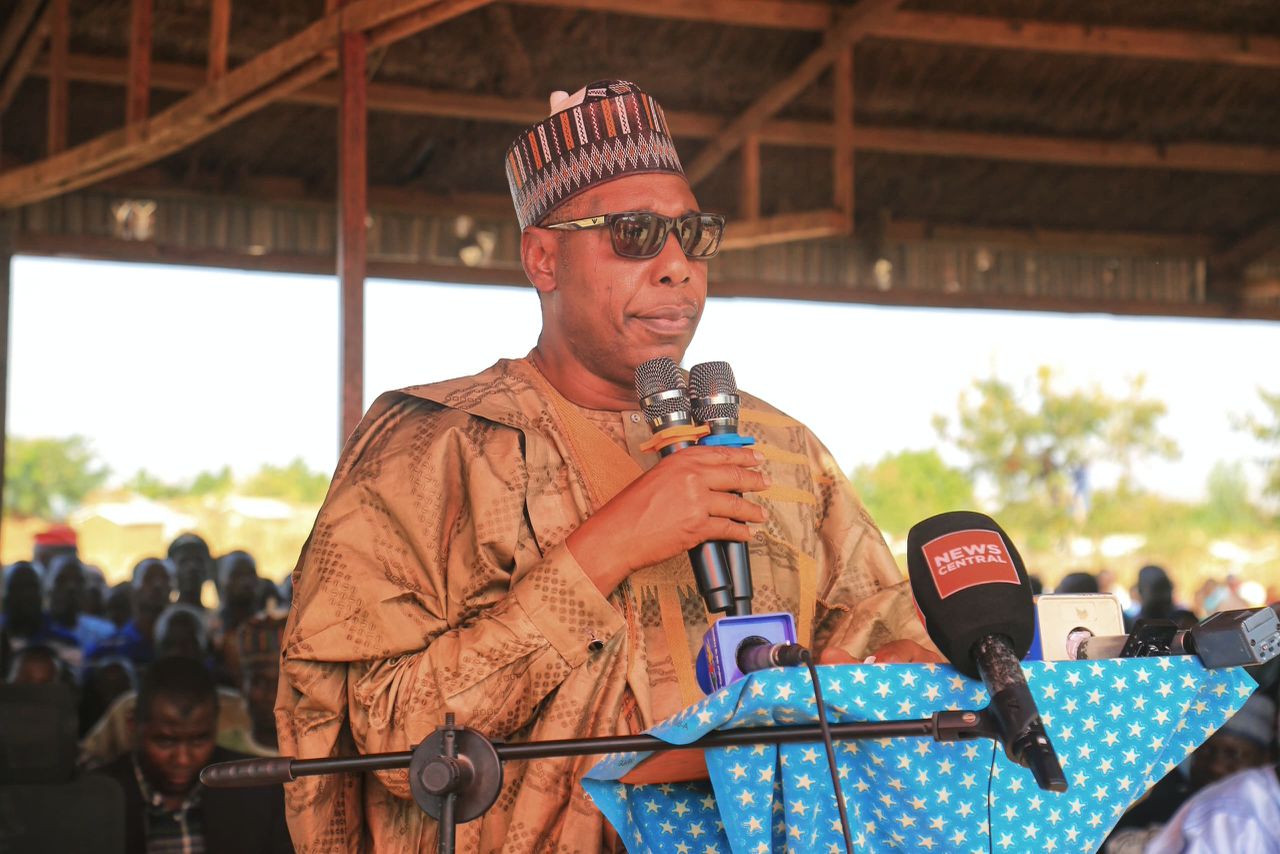
Zulum’s Model Schools Impress FG, Minister Pushes for Digital, Safer Learning Nationwide

Zulum’s Model Schools Impress FG, Minister Pushes for Digital, Safer Learning Nationwide
By Tada Jutha, Maiduguri
The Minister of Education, Professor Maruf Olatunji Alausa, has urged Chairmen of State Universal Basic Education Boards (SUBEBs) to prioritise upgrading schools to deliver a digitalised and secure learning environment across Nigeria.
Alausa, who addressed the SUBEB chairmen and secretaries at their 28th quarterly meeting in Maiduguri described every classroom as “a powerful tool against poverty and unemployment” in all 744 local councils.
He emphasised that closing gaps in access to education must now be driven by modern, technology-enabled systems.
He explained that the push for digital transformation in basic education would help the 37 state boards standardise school structures and ensure they are equipped with modern teaching and learning facilities.
Citing Borno State as an exemplary model, the minister praised Governor Babagana Zulum’s “exceptional leadership”, noting that he has built and furnished 410 secondary schools, including 104 mega schools spread across the state’s 25 Local Government Areas.
According to him, these investments are providing a digitalised and solid learning foundation capable of reducing poverty and unemployment, particularly among young people and women.
“This is a symbol of excellence and resilience from the governor and his people in the education sector,” Alausa said.
In her remarks, the Executive Secretary of the Universal Basic Education Commission (UBEC), Hajiya Aisha Garba, acknowledged persistent challenges in implementing basic education policies, especially those aimed at expanding access.
She revealed that despite ongoing digitalisation efforts, the commission has only been able to reach about two million children.
Garba urged SUBEB members to intensify efforts to rebuild and modernise schools, stressing that transforming basic education remains essential to unlocking children’s potential and strengthening key sectors of the national economy.

Dangote Invests N241m in Education, Empowers 3,700 Students in Lagos Communities
By Auwal Ahmad Umar
Dangote Petroleum Refinery and Dangote Fertiliser Limited have strengthened their commitment to community development with the donation of educational materials worth N241 million to 3,704 students in host communities in Ibeju-Lekki, Lagos.
The intervention, unveiled during the sixth edition of the Dangote Scholarship Award Programme, targeted both primary and secondary school students. A total of 1,348 pupils across five primary schools received school bags, uniforms, sandals, and sanitary items, while 2,356 students from four secondary schools also benefited from similar support.
The initiative aims to ease the burden on families, improve school attendance, and create a more conducive learning environment for students in the area.
Speaking at the ceremony, the Vice President, Oil and Gas at Dangote Group, Edwin Devakumar, described education as a powerful driver of societal progress. He noted that the scholarship programme, launched in 2019, has continued to expand in scope and impact, despite a temporary pause in 2020 due to the COVID-19 pandemic.
He disclosed that 442 students are benefiting from the 2025 scholarship cycle. According to him, the program has grown steadily over the years, beginning with 56 beneficiaries in 2019 and increasing to hundreds of students annually across the secondary and tertiary levels.
Devakumar explained that beyond scholarships, the company is investing in skills development to prepare young people for employment. He revealed that 22 youths from host communities recently completed internationally recognised City & Guilds of London training in electrical and mechanical engineering, with 19 of them already absorbed in the company’s workforce.
He emphasised that Dangote’s developmental approach is rooted in shared prosperity.
We firmly believe that the success of our business must coexist with the development of our communities. Through education, skills training, and job creation, we are helping to build a future where young people can achieve their full potential,” he said.
The programme also received support from the Aliko Dangote Foundation, which contributed to the distribution of school kits.
Reacting to the initiative, the Executive Chairman of Lekki Local Council Development Area (LCDA), Engr. Rasaki Bamidele Kasali, praised the company for its timely and helpful support. He acknowledged the benefits to 15 local communities and requested similar assistance for nearby areas.
He noted that the rapid development of Lekki as an economic hub makes such interventions even more critical for inclusive growth.
Similarly, the Onilekki of Lekki Land, HRM Oba Kazeem Olumuyiwa Ogunbekun, praised Dangote Group for its consistency in supporting local communities. He said the company’s efforts over the years have improved livelihoods and strengthened relationships with residents.
Beneficiaries of the program also shared stories about impact. One of the vocational training graduates, Yusiot Taiwo, described the opportunity as life-changing, noting that it paved the way for his employment with Dangote Fertiliser. Another beneficiary, Saheed Olukayode, said the support had reignited his academic ambitions and encouraged him to pursue higher education.
Dangote Group reiterated its resolve to sustain investments in education, skills acquisition, and community development, ensuring that its operations continue to create meaningful opportunities for people in its host communities.
Education
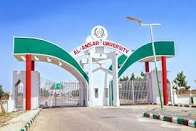
Council of Legal Education Approves Al-Ansar, 113 Universities to Run Law Programmes in Nigeria
Council of Legal Education Approves Al-Ansar, 113 Universities to Run Law Programmes in Nigeria
By Auwal Ahmad Umar
The Council of Legal Education (CLE) has authorised Al-Ansar University, Maiduguri, alongside 113 other universities across Nigeria, to offer Bachelor of Laws (LL.B) degree programmes.
In an official circular released on Friday, the council clarified that only institutions listed in the document are permitted to admit students into law programmes in the country.
The circular, signed by the Secretary and Director of Administration of the Council, Aderonke Osho, cautioned universities against operating law programmes without formal approval from the regulatory body.
According to the council, any institution that runs a law programme without accreditation will face sanctions under the regulations guiding legal education in Nigeria.
It further warned prospective students and parents to verify the status of universities before seeking admission into law faculties, stressing that graduates from unapproved law programmes would not qualify for admission into the Nigerian Law School, which is mandatory for anyone seeking to practise law in the country.
“The public is further informed that any university that admits students into a law programme without the approval of the Council of Legal Education is acting contrary to the provisions regulating legal education in Nigeria and will be subject to appropriate sanctions,” the circular stated.
The council explained that the move is part of its ongoing effort to maintain quality standards in the training of legal professionals in Nigeria.
It also indicated that the list of approved institutions would be periodically reviewed and updated in line with its statutory responsibility of supervising legal education in the country.
Among the universities granted approval are Ahmadu Bello University, Zaria; University of Ibadan; University of Lagos; University of Nigeria, Nsukka; University of Maiduguri; Bayero University, Kano; Lagos State University; Rivers State University; and Gombe State University, among many others.
However, the council noted that a few institutions currently have temporary moratoriums on admission into their law programmes, including Baze University, Abuja; Lead City University, Ibadan; and the Nigeria Police Academy, Wudil, due to regulatory decisions affecting specific academic sessions.
The Council of Legal Education, established under the Legal Education Act, is the statutory body responsible for supervising legal education in Nigeria. It oversees the operations of the Nigerian Law School and ensures that universities offering law programmes meet the standards required for professional legal training in the country.
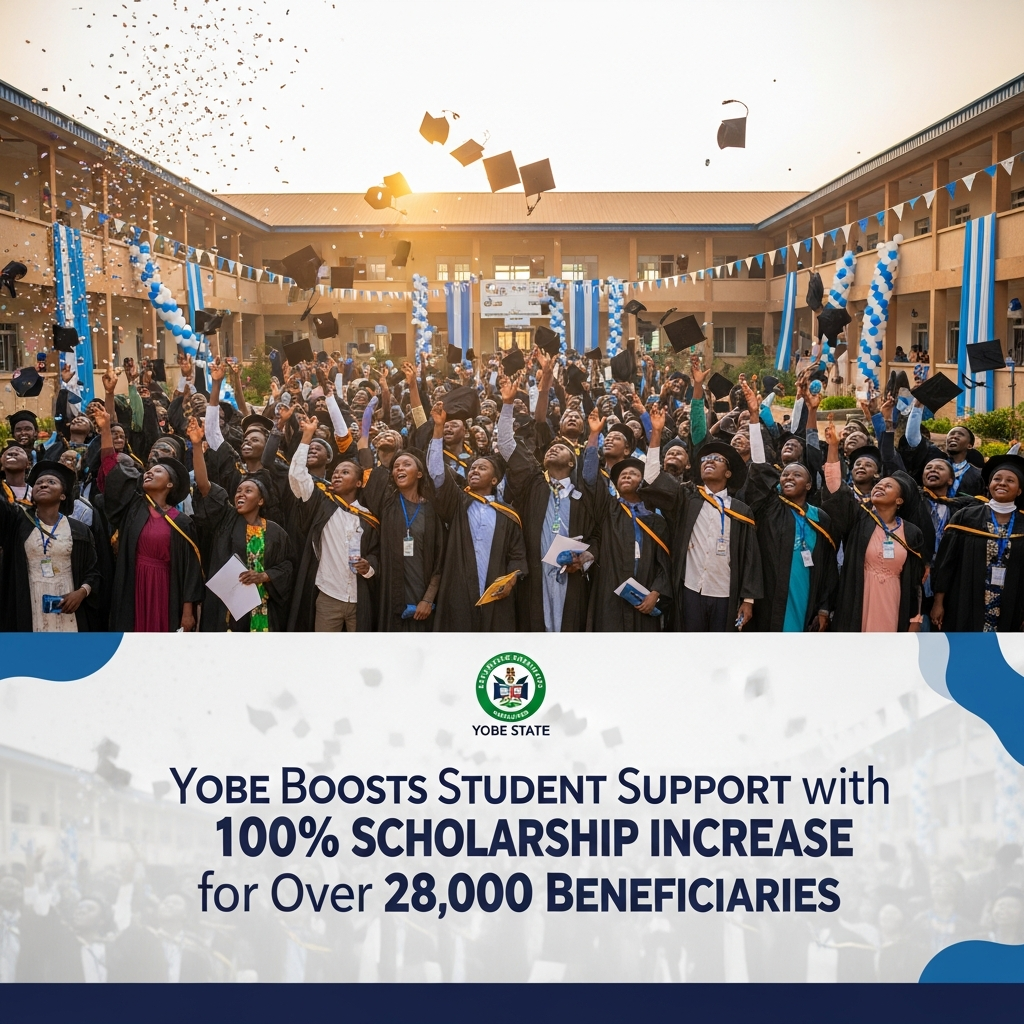
Yobe Boosts Student Support with 100% Scholarship Increase for Over 28,000 Beneficiaries
By Njadvara Musa, Damaturu
The Yobe State Government has commenced the disbursement of scholarships and bursaries to 28,346 eligible students for the 2025/2026 academic session, marking one of the largest educational support interventions in the state’s history.
Governor Mai Mala Buni, represented by the Executive Secretary of the Yobe State Scholarship Board (YOSB), Dr Kagu Abubakar, announced the rollout on Friday in Damaturu. He explained that the administration had doubled scholarship payments this year to cushion the rising cost of education and ensure students complete their studies without financial hurdles.
Under the expanded scheme, postgraduate students will now receive ₦110,000 per session, up from ₦55,000. Undergraduate students are set to get ₦46,000, while HND, NCE, and National Diploma students will receive ₦34,000—an increase from ₦17,000. Students enrolled in other diploma and certificate programmes will receive ₦26,000, compared to ₦13,000 previously.
Dr Abubakar noted that the 100 per cent increment reflects the government’s commitment to mitigating current economic pressures and easing the financial burden on families.
He described the initiative as the most impactful educational support by any state government in the country since 2001.
According to him, Yobe State University (YSU) accounts for the highest number of beneficiaries, with 7,636 students approved for funding—an indication of the institution’s increasing enrolment across the 17 local government areas.
He added that the scholarships also cover students in other universities, polytechnics, colleges of education, and specialised institutions nationwide, ensuring widespread access to higher education, especially for vulnerable groups.

2027 Elections: SDP Opens Contest to Aspirants, Promises Transparent Primaries

Inuwa Yahaya, NSGF and the Renewed Northern Resolve

AI Boom, Training Bust: Only 10% of Nigerian Journalists Skilled in Emerging Tools – SMI

Dangote Launches Landmark ₦1 Trillion Scholarship Scheme to Support 1.3 Million Nigerian Students

NGX Ends Week in the Green as ₦1.54 Trillion Boosts Investors’ Fortunes

Formal Rebuttal to the Recent Interview Granted by Retired Major General Ali Keffi on Arise TV
-
 Education4 months ago
Dangote Launches Landmark ₦1 Trillion Scholarship Scheme to Support 1.3 Million Nigerian Students
-
 Economy4 months ago
NGX Ends Week in the Green as ₦1.54 Trillion Boosts Investors’ Fortunes
-
 Column4 months ago
Formal Rebuttal to the Recent Interview Granted by Retired Major General Ali Keffi on Arise TV
-

 Economy4 months ago
CBN’s End to Cash Withdrawal Limit
-

 Gombe4 months ago
Gombe Shines Again, Ranks Second in Northeast at 2025 PHC Leadership Challenge
-
 Politics4 months ago
NSGF names Ezekiel Gomos as Director-General, setting stage for stronger regional collaboration
-
 Gombe3 weeks ago
A tribute to Dr Langa Hassan Bangunji (JP) – an icon of Scholarship, Leadership and Community Service
-
 Latest News4 months ago
Anglican Church Expands Footprint with 15 New Dioceses, Total Hits 176