NGOs
UNICEF, Federal Information Ministry Train Journalists on Ethical Reporting of Children’s Issues


UNICEF, Federal Information Ministry Train Journalists on Ethical Reporting of Children’s Issues
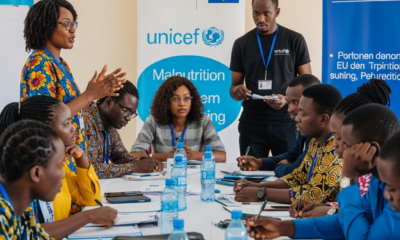
The United Nations Children’s Fund (UNICEF), in partnership with the Federal Ministry of Information and National Orientation, has organised a training workshop to strengthen ethical reporting on issues affecting children.
The two-day workshop, which began on Monday in Gombe, brought together journalists from the North-Central and North-East regions. The programme aims to promote responsible and child-sensitive journalism.
Declaring the workshop open, the Assistant Director of the Child Rights Bureau at the Federal Ministry of Information and National Orientation, Mr Toye Falayi, said the training seeks to improve child protection through responsible media reporting.
Falayi urged participants to actively engage during the sessions so the programme can achieve its objectives.
He also commended UNICEF for partnering with the ministry to promote journalism that protects the rights and welfare of children.
Speaking on “Privacy, Dignity and Protection of Identity”, one of the facilitators, Dr Geoffrey Njoku, advised journalists to avoid sensational reporting when covering stories involving children.
He stressed that reporters must always prioritise the safety and well-being of children in order to prevent situations that could expose them to trauma or harm.
Another facilitator, Dr. Jide Johnson, who presented a paper titled “Media as Protector or Violator,” reminded journalists that the media plays a critical role in safeguarding children through responsible reporting.
Johnson urged journalists to exercise caution when interviewing or reporting about children to ensure their dignity and reputation are protected.
Also speaking, veteran broadcaster Mr Nansel Nimyel highlighted the responsibilities of both print and broadcast media when covering child-related issues.
He warned journalists against revealing the identities or locations of children in their reports, noting that such actions could expose them to danger or social stigma.
Nimyel further urged media practitioners to maintain professionalism and ethical standards, stressing that careless reporting can have lasting negative consequences for children.






AI Boom, Training Bust: Only 10% of Nigerian Journalists Skilled in Emerging Tools – SMI
By Auwal Ahmad
A new industry insight has revealed a widening gap between the rapid adoption of artificial intelligence and the capacity of Nigerian journalists to use the technology responsibly, with just a fraction of newsroom professionals receiving formal training.
This was disclosed in Abuja on Thursday by Peter Iorter, Executive Director of the Safer Media Initiative (SMI), during a capacity-building session for media practitioners focused on the ethical and effective deployment of AI tools.
The workshop, themed “AI Tools for Journalists: Effective, Responsible and Safe Use”, is part of SMI’s broader Artificial Intelligence and Media (AIM) Project, designed to equip journalists with the competencies required in a fast-evolving digital landscape.
According to Iorter, recent findings indicate that while an overwhelming majority of journalists already rely on AI in their daily work, only about 10 per cent have undergone structured training on its application.
He warned that the mismatch between usage and knowledge poses serious risks to journalism, particularly in areas such as accuracy, accountability, and professional ethics.
“Artificial intelligence is reshaping the global media ecosystem at a rapid pace. While it offers immense opportunities, it must be approached with caution and guided by ethical standards,” he said.
Iorter stressed that the absence of adequate training could lead to misuse of AI tools, potentially eroding public trust in the media if not urgently addressed through institutional policies and capacity development.
He explained that the Abuja training aims to close this knowledge gap by equipping journalists with practical skills to use AI responsibly, without compromising editorial integrity.
“Our goal is to ensure Nigerian journalists are not only keeping up with global trends but are also using these tools in a way that upholds the credibility of the profession,” he added.
The initiative, he noted, is being supported by UNESCO under its International Programme for the Development of Communication, with a key objective of developing newsroom guidelines for AI usage.
Iorter pointed out that many media organisations currently lack clear policies governing the integration of AI into editorial processes, making it imperative to establish standards that balance innovation with responsibility.
Also speaking at the session, Titilope Oparinde, a facilitator and founder of Generative AI Journalism, encouraged journalists to embrace AI as a supportive tool rather than a threat.
She noted that while AI can enhance productivity—through functions such as transcription, translation and content summarisation—it cannot replace human judgement, editorial discretion or ethical reasoning.
“Journalists who understand how to use AI will remain relevant. Those who ignore it risk being left behind,” she said, urging continuous learning within the profession.
In his contribution, Oluseyi Olufemi, Country Director of Dataphyte, underscored the importance of verifying information generated with AI tools.
He advised journalists to maintain their role as custodians of truth by rigorously fact-checking all AI-assisted outputs before publication.
Olufemi also highlighted the dual role of AI in both combating misinformation and introducing new digital safety concerns, including vulnerabilities that may disproportionately affect women and other groups.
The training forms part of ongoing efforts to promote responsible AI adoption and strengthen digital safety practices across newsrooms in Nigeria, as the media industry continues to navigate the intersection of technology and journalism.
Civil Society Blasts INEC Over ADC Crisis, Warns of Threat to 2027 Elections
By Auwal Ahmad Umar
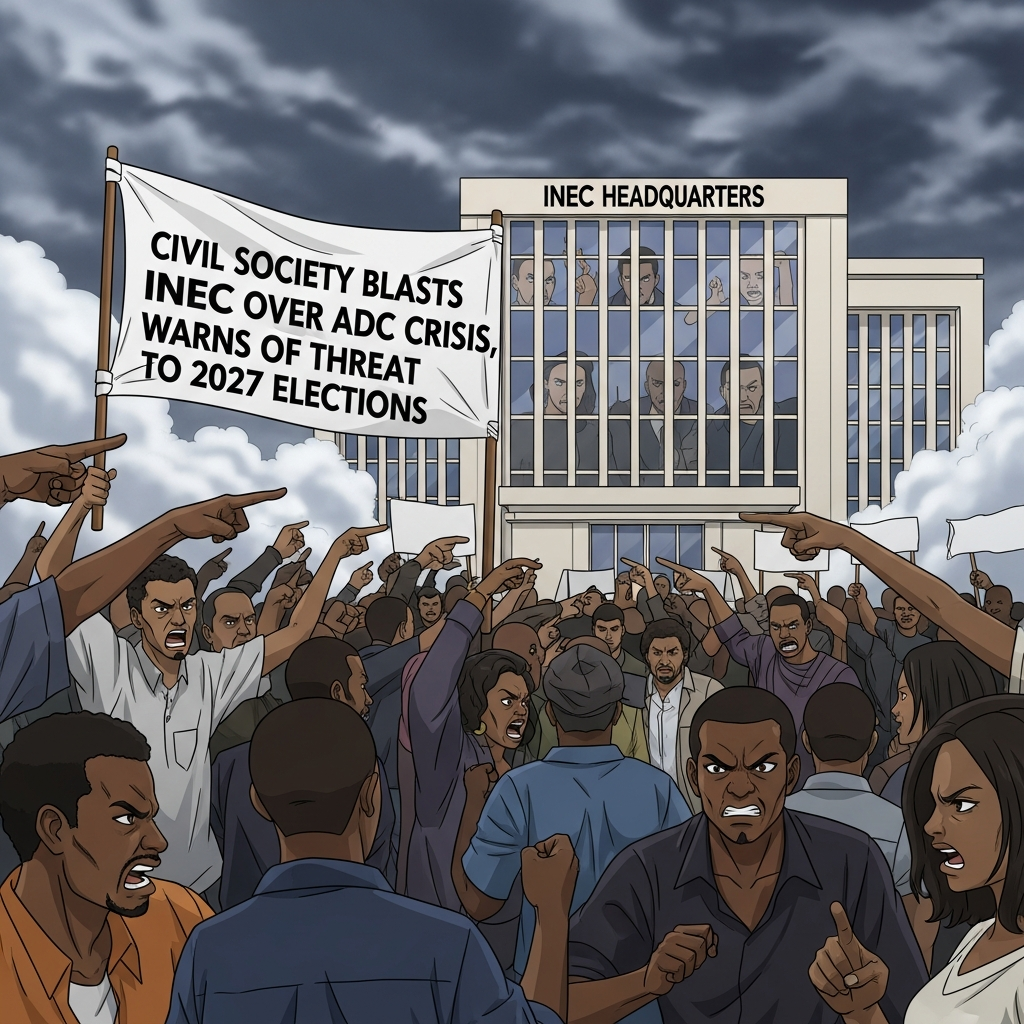
The Nigeria Civil Society Situation Room has strongly criticised the Independent National Electoral Commission (INEC) over its handling of the leadership dispute within the African Democratic Congress (ADC), warning that the Commission’s stance could undermine democratic stability ahead of the 2027 general elections.
This was contained in a press statement signed by Yunusa Z. Ya’u, Convener of the Nigeria Civil Society Situation Room, alongside Mma Odi and Celestine Odo, both Co-Conveners of the group. On Thursday, the civil society coalition expressed “deep concern and unequivocal condemnation” of INEC’s decision to align with a court directive to maintain the status quo ante bellum in the party’s leadership tussle.
While acknowledging the importance of respecting judicial authority, the group faulted what it described as INEC’s “uncritical endorsement” of the court order without adequately considering its broader implications on internal party democracy and electoral clarity.
According to the Situation Room, following the status quo directive could keep the ADC in a state of confusion about its leadership, which would hurt the party’s unity and make things like choosing candidates more difficult.
“The Commission’s posture, rather than resolving uncertainty, appears to legitimise confusion, with potential consequences for party administration and voter confidence,” the statement noted.
The group also raised concerns about what it termed the increasing politicisation of judicial interventions in party affairs. It warned that inconsistent or opaque rulings in intra-party disputes could erode trust in the judiciary and weaken democratic institutions.
It stressed that although courts remain vital arbiters of justice, their involvement in political party matters must reflect constitutional principles, respect party autonomy, and safeguard democratic stability.
The coalition further questioned INEC’s reversal of an earlier decision made in September 2025, when the electoral body reportedly accepted and uploaded the names of ADC principal officers submitted in July of the same year.
“This inconsistency raises serious concerns about regulatory certainty and the precedent it sets for future disputes,” the group said.
The Situation Room warned that allowing such ambiguity to persist could encourage prolonged litigation and deepen factional divisions within political parties, ultimately weakening Nigeria’s democratic framework.
Calling for urgent action, the coalition urged INEC to reverse its position and restore the recognised leadership of the ADC to its official portal. It also demanded greater transparency, consistency, and adherence to constitutional provisions in the commission’s handling of party disputes.
In addition, the group called for judicial restraint in internal party matters and urged stakeholders within the ADC to pursue constructive and democratic means of resolving their differences.
“As Nigeria prepares for the 2027 general elections, institutions must rise above procedural compliance and actively uphold transparency, accountability, and democratic consolidation,” the statement added.
The Situation Room, led by its convener, Yunusa Z. Ya’u, alongside co-conveners Mma Odi and Celestine Odo, reaffirmed its commitment to monitoring developments and advocating for credible electoral processes that reflect the will of Nigerians.
Bauchi Moves to Tackle Water Crisis as Stakeholders Endorse New WASH Policy
By Musa Garba
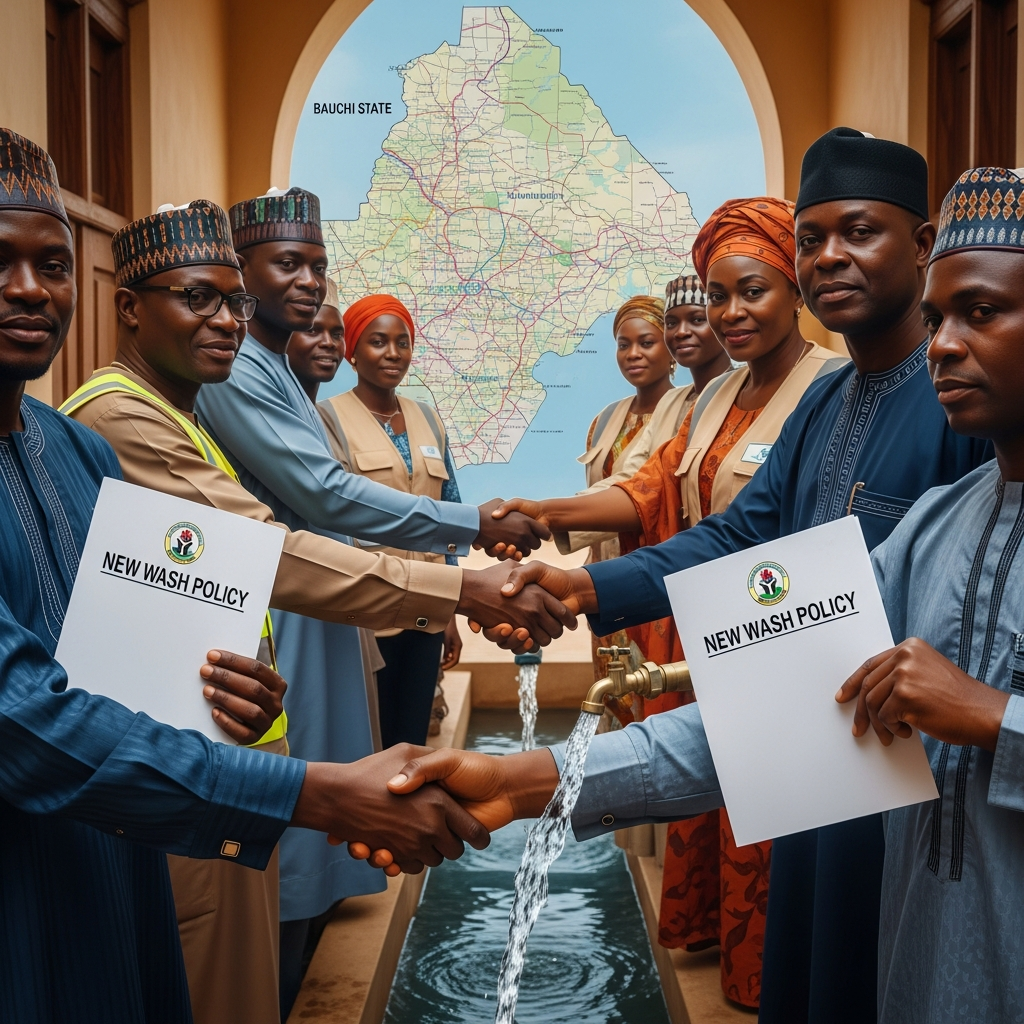
Stakeholders in Bauchi State have validated the state’s Water, Sanitation and Hygiene (WASH) Policy 2026–2030, setting the stage for a coordinated push to improve access to clean water and sanitation services across the state.
The validation workshop held on Friday in Bauchi reviewed and endorsed the policy, which is expected to serve as a strategic guide for addressing persistent challenges in water supply, sanitation infrastructure, and hygiene practices, especially in underserved communities.
Speaking at the event, the Permanent Secretary in the Bauchi State Ministry of Water Resources, Samaila Tela, said the document was developed to provide a sustainable pathway for delivering WASH services to residents across the state.
He explained that the validation process was necessary to allow stakeholders to critically review the policy and ensure that it reflects the realities and priorities of communities.
Tela said the framework offers a broad roadmap aimed at expanding access to safe, reliable and inclusive water, sanitation and hygiene services, while also strengthening the institutions responsible for delivering them.
According to him, the policy also places an emphasis on improving infrastructure, encouraging positive hygiene behaviour, and building resilience against climate-related threats that affect the sector.
He said effective implementation of the policy would not only improve public health but also protect the environment and open up economic opportunities for local communities.
Also speaking, a representative of WaterAid Nigeria, Mashat Mallo, said the policy gives priority to expanding water supply services in rural communities and small towns, where access remains limited.
He noted that the strategy includes the rehabilitation of broken water systems, the extension of piped water networks, and the deployment of renewable energy solutions, such as solar-powered water schemes, to improve service delivery.
Mallo added that the policy also proposes the construction of WASH (water, sanitation, and hygiene) facilities in schools, health centers, and public spaces, particularly in rural and periurban areas where sanitation gaps remain pronounced.
He said the framework aligns with Nigeria’s commitment to Sustainable Development Goal 6, which seeks to ensure access to clean water and sanitation for all.
The validation workshop was organised by the Women’s Development Association for Self-Sustenance (WODASS) with support from WaterAid Nigeria, bringing together government officials, development partners, and sector stakeholders to fine-tune the policy before its implementation.
With the endorsement of the document, expectations are now high that Bauchi State will move from policy formulation to action in addressing long-standing water and sanitation deficits.

Plateau Raids: Troops Kill Terror Suspects, Recover Ammunition in Wase, Qua’an Pan

2027: APC Stakeholder Pushes for Power Shift to Yobe South, Backs Bomai’s Governorship Bid

Madiba Advocates Push for Presidential Intervention Over Alleged ₦297bn NSITF Fund Irregularities linked to MD Faleye

Dangote Launches Landmark ₦1 Trillion Scholarship Scheme to Support 1.3 Million Nigerian Students

NGX Ends Week in the Green as ₦1.54 Trillion Boosts Investors’ Fortunes

Formal Rebuttal to the Recent Interview Granted by Retired Major General Ali Keffi on Arise TV
-
 Education4 months ago
Dangote Launches Landmark ₦1 Trillion Scholarship Scheme to Support 1.3 Million Nigerian Students
-
 Economy4 months ago
NGX Ends Week in the Green as ₦1.54 Trillion Boosts Investors’ Fortunes
-
 Column4 months ago
Formal Rebuttal to the Recent Interview Granted by Retired Major General Ali Keffi on Arise TV
-

 Economy4 months ago
CBN’s End to Cash Withdrawal Limit
-

 Gombe4 months ago
Gombe Shines Again, Ranks Second in Northeast at 2025 PHC Leadership Challenge
-
 Politics4 months ago
NSGF names Ezekiel Gomos as Director-General, setting stage for stronger regional collaboration
-
 Gombe4 weeks ago
A tribute to Dr Langa Hassan Bangunji (JP) – an icon of Scholarship, Leadership and Community Service
-

 Latest News4 months ago
Anglican Church Expands Footprint with 15 New Dioceses, Total Hits 176